REVIEW · SICILY
Etna: Trekking to the summit craters at 3,340 meters
Book on Viator →Operated by Sicilying SRL · Bookable on Viator
Etna rewards early risers with real volcanic views. I love the trained volcanologist guide and the built-in safety setup, including a helmet and wind jacket for high-altitude conditions. One catch: part of your access may cost extra, since the cable car/4×4 are not included and weather can cancel the trip.
This is a half-day-to-full-day style trek (about 6 hours) from the Catania area, moving up toward the crater zone at roughly 3,340m. You’ll get a photo break overlooking the summit craters, plus time in major Etna landmarks like the Cratere Centrale, Crateri Barbagallo, and Valle del Bove. With a group size capped at 20 and an English-speaking guide, it’s the kind of outing where questions actually get answered.
In This Review
- Key things that make this Etna summit trek worth it
- Etna’s summit craters: what the hike really feels like
- The volcanologist guide: the difference between sight-seeing and understanding
- Timing from Catania: an early start, planned for daylight
- The climb to 3,300–3,400m: Cratere Centrale and Crateri Barbagallo
- Valle del Bove stop: 30 minutes of Etna history in one view
- Summit craters photo break: when the views are the point
- Gear and safety: jacket, poles, helmet, and why it matters
- Price and real value: $78.10 plus an extra €82 on site
- Group size and pace: how the day stays manageable
- Who should book this Etna trek (and who should think twice)
- Should you book this Etna summit crater trekking tour?
- FAQ
- How high do we reach on this Mount Etna trek?
- How long is the tour?
- Is lunch included?
- What’s included in the price?
- Is the cable car and 4×4 included?
- Do you offer pickup from Catania?
- Where does the tour start and end?
- What language is the tour in?
- What happens if weather is bad?
- Can I cancel for a full refund?
Key things that make this Etna summit trek worth it
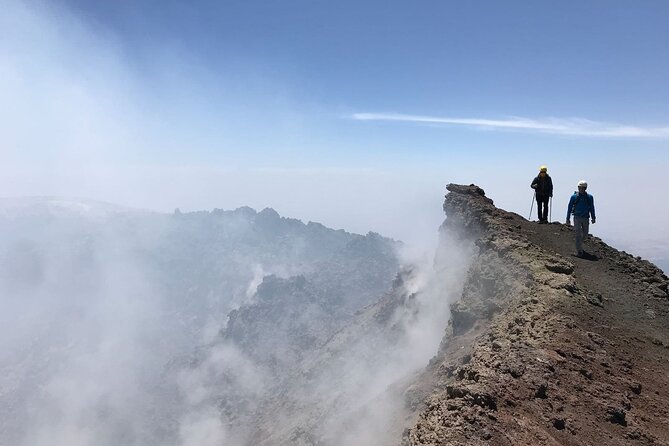
- Volcanologist-led geology on foot: You’re not just walking—you’re getting context for what you’re seeing.
- Provided trekking gear: Windbreaker jacket, trekking poles, helmet, and insurance are included.
- Photo stop at the summit craters: You’ll pause specifically for views, not just keep marching.
- Valle del Bove included with free admission: A 30-minute stop where Etna’s volcanic history feels close.
- Small-group pace (max 20): Enough space to move steadily and stay safe on uneven terrain.
- Extra on-site access cost to plan for: Cable car and 4×4 are listed as additional at €82 per person.
Etna’s summit craters: what the hike really feels like
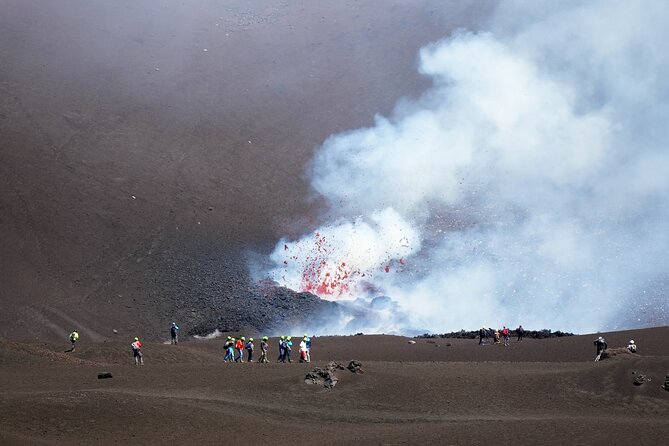
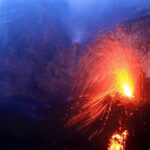
This trek is all about altitude and presence. You’ll be working your way up toward Etna’s crater area, with the day designed around reaching the big view zones rather than doing a long, winding route with no payoff.
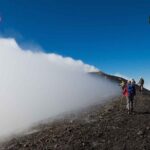
At the top, Etna doesn’t look like a normal mountain. The terrain can feel rough, wind can cut fast, and the rock underfoot changes as you go higher. That’s exactly why this tour makes a point of including a helmet, poles, and a windbreaker: it’s preparing you for practical conditions, not just selling a view.
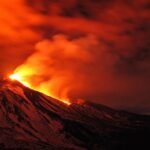
Also, you’re heading toward the volcanic area connected to the crater that erupted during the 2001 event. That matters because it turns the hike into something more than scenery. You’re watching evidence of how Etna reshapes itself—layer by layer, eruption by eruption—while your guide helps put the signs into plain words.
You can also read our reviews of more hiking tours in Sicily
The volcanologist guide: the difference between sight-seeing and understanding
I think the best part of this kind of Etna day is when the guide can translate chaos into clear patterns. In one Etna hike review, the guide named Fabricio stood out for sharing fascinating knowledge and keeping everyone safe. The pacing also got adjusted to fit the group, which is important when you’re climbing at elevation.
That guidance is especially valuable on Etna because you’re surrounded by volcanic features that can look similar from a distance. A trained guide helps you connect what you see—crater zones, channels, and depressions—to the bigger story of the volcano. You’ll also get information during the stops, not just at the start, so the walk stays meaningful.
And safety isn’t a vibe here. You’ll get protective equipment, and the guide’s job is to manage the group’s movement in a place where footing and weather matter. If you like your tours with a real educator behind the mic, this setup hits the right balance.
Timing from Catania: an early start, planned for daylight
You can expect hotel pickup in Catania around 7:30 AM, then trekking begins around 9:00 AM. The schedule aims to get you up to the summit area in daylight so you can actually see what you came for—especially important on Etna, where fog and wind can change the experience fast.
The tour runs about 6 hours total. That makes it feel like a full activity day, but not so long that you’re exhausted before the best views happen. It’s a good rhythm: ride up, climb with purpose, pause for key viewpoints, then head back.
One practical note: the activity ends back at the meeting point. If you’re using hotel pickup, double-check how the return works for you (pickup back to your hotel vs. meeting point return). The day is scheduled, but logistics can still vary depending on your pickup route.
The climb to 3,300–3,400m: Cratere Centrale and Crateri Barbagallo
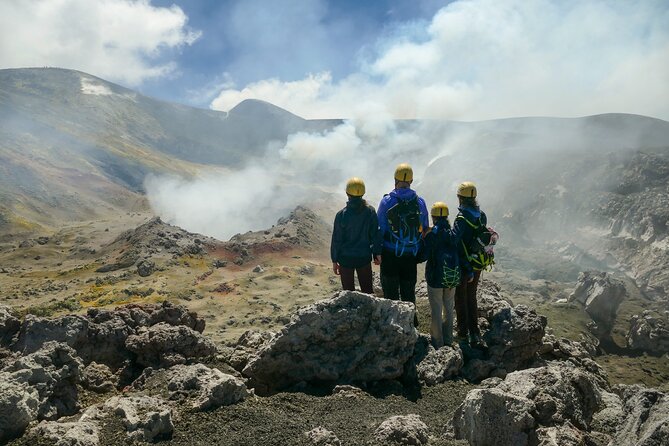
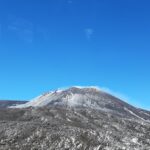
The core of the experience is the trek up to about 3,300m (and up to around 3,400m, depending on the day’s route). Along the way, you’re visiting named Etna areas, including Cratere Centrale and Crateri Barbagallo.
These names matter because they signal that you’re not just hiking around Etna’s general slopes. You’re targeting specific crater-related zones where the volcanic landscape has a stronger chance of showing you the features your guide is describing.
What’s the trade-off? You’ll spend real energy climbing at high altitude. This isn’t a stroll. The tour says most travelers can participate, which suggests it’s accessible for a range of fitness levels, but you should still be ready for uphill walking, wind exposure, and uneven ground. If you know you struggle with steep climbs, plan for a slower pace from the start.
Valle del Bove stop: 30 minutes of Etna history in one view
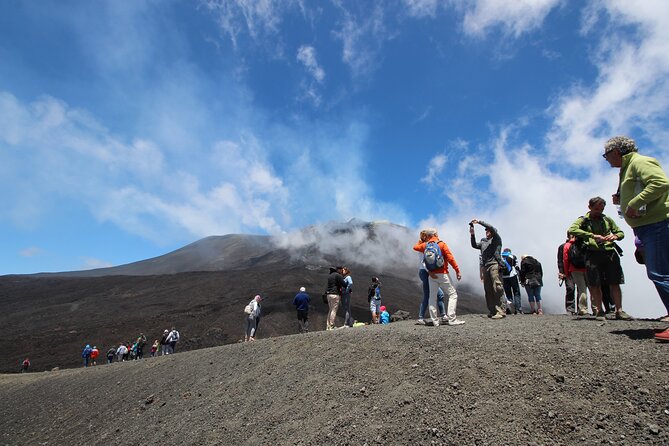
One of your stops is Valle del Bove, with 30 minutes on-site and free admission. This is one of Etna’s most famous volcanic spots, and it works well as a break from the constant forward motion of the climb.
Why it’s a good stop: Valle del Bove gives you a wider perspective. Even if you’re tired, it’s the kind of place where the geography helps your brain understand scale—how the volcano’s structure shapes what you’re walking through.
Also, a 30-minute pause is practical. It’s long enough for photos and for the guide to point out what you should pay attention to, without dragging the schedule. You get to re-energize and then keep going.
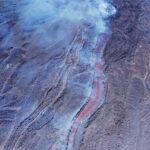
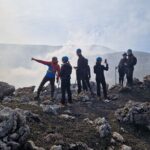
Summit craters photo break: when the views are the point
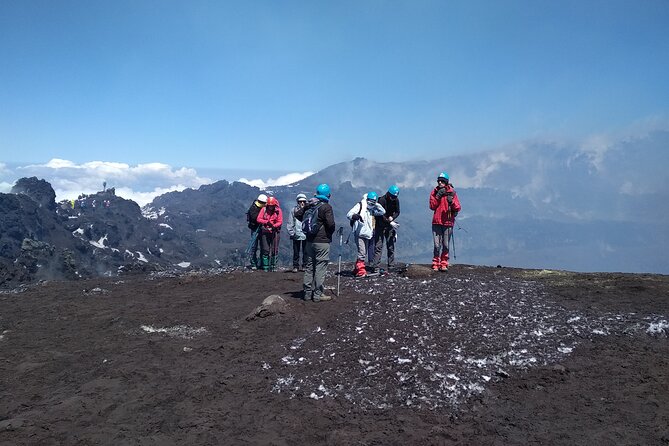
The highlights include a photo break overlooking the summit craters. That pause is not just a courtesy stop—it’s built into the experience so the day has a clear visual payoff.
When you’re moving in high wind and on rough ground, it’s easy to feel like you’re only “enduring” the mountain. The photo break resets that. You shift from effort to observation, and you get a moment where you can take in Etna in context—crater edges, surrounding features, and the sense of the volcano’s active character.
Bring your camera, but also accept that you’ll want a couple minutes where you’re not trying to “capture everything.” With altitude and wind, the best photos often happen when you pause, breathe, and frame calmly.
Gear and safety: jacket, poles, helmet, and why it matters
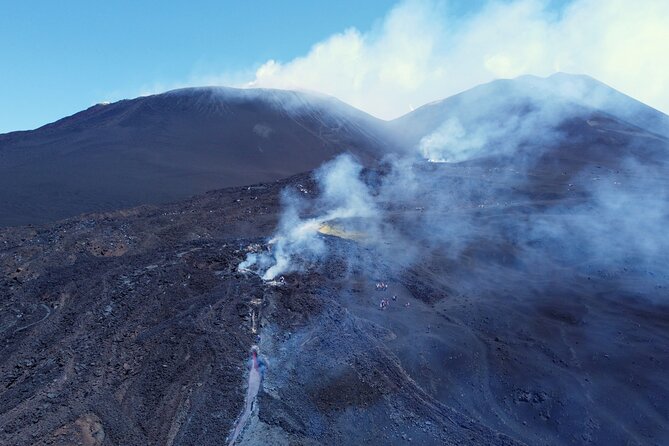
This tour includes practical equipment: a windbreaker jacket, trekking poles, a protective helmet, plus insurance.
Here’s why that list is smarter than it sounds:
- Windbreaker: At 3,000m-plus, you can feel temperature swings and gusts quickly. Windproof helps you stay comfortable enough to keep moving.
- Trekking poles: They help with balance and reduce strain on steep sections. If you’ve ever regretted not bringing poles on a rocky climb, you’ll appreciate having them.
- Helmet: This is the “serious mountain” signal. It’s there for your safety in a zone where the environment can be unstable.
- Insurance: It’s one less thing to worry about when you’re doing a higher-altitude activity.
If you’re the type who likes to travel light, this is a big value perk. You’re not dealing with rental shops or trying to guess what will fit your needs for a crater hike.
Price and real value: $78.10 plus an extra €82 on site
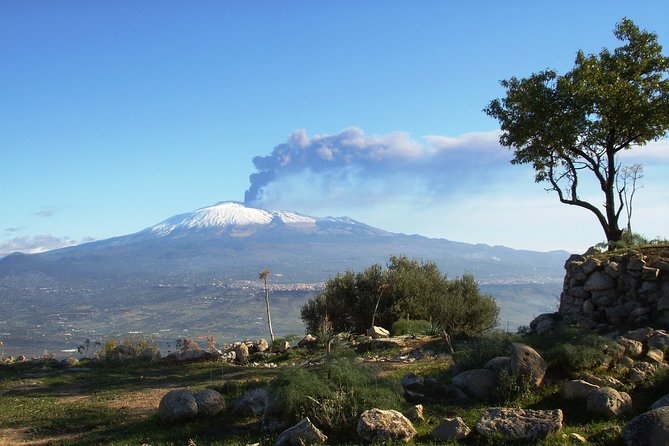
The listed price is $78.10 per person, and the tour includes a lot of the costly “essentials” for this kind of day: volcanologist guidance, gear (jacket, poles, helmet), and insurance.
But there’s an important add-on: the round-trip cable car ticket and 4×4 vehicle are not included, and you pay €82 per person on site.
So how do you judge value fairly? You add the €82 to the base price, and you treat that as part of getting up to the crater area. You’re paying for access logistics plus the guide and safety gear. The included equipment alone often offsets the hassle of renting or buying what you’d need for an Etna climb.
Also, factor in that you’re choosing a guided activity with a capped group size and structured stops. That’s not just “walking time”—it’s guided time, plus the photo and Valle del Bove viewpoint built into the schedule.
Group size and pace: how the day stays manageable
There’s a maximum of 20 travelers, which usually means you’re less likely to get bunched up. On steep and uneven ground, smaller groups tend to mean safer spacing and easier communication with the guide.
The review about Fabricio also points to a key strength of good Etna guides: adjusting the pace to the group. That’s exactly what you want here. If your group splits into slow and fast hikers, people get stressed or start rushing. A guide who manages pacing keeps the experience enjoyable, not a contest.
If you prefer a controlled pace—short pauses, clear instructions, and steady movement—this structure is a good fit.
Who should book this Etna trek (and who should think twice)
This tour suits you if:
- You want a volcanologist-led experience rather than a generic hike.
- You like crater-area hiking and don’t mind uphill effort at altitude.
- You want included equipment so you can travel with less hassle.
It might be less ideal if:
- You don’t do well with steep, high-altitude walking.
- You hate waiting around for access logistics like cable car/4×4 (since the extra €82 is paid on site).
- You’re very weather-sensitive. The tour requires good weather, and poor conditions can trigger cancellation and rescheduling.
Also, because the experience ends back at the meeting point, it’s easiest if you’re comfortable with day-trip logistics around the Catania area.
Should you book this Etna summit crater trekking tour?
Yes, I’d book it if your goal is to understand Etna while seeing it from the crater zone. The combination of a trained volcanologist guide, included safety gear, and structured stops (including the crater photo break and Valle del Bove) makes this feel purposeful rather than random hiking.
I’d also book it with eyes open about costs and conditions. Plan for the extra €82 per person for cable car and 4×4, and keep your fingers crossed for weather. If your schedule is flexible, the payoff is big: real high-altitude crater views plus real explanation from someone who knows what you’re looking at.
If you’re on a tight schedule, or you’re not comfortable with strenuous climbs at altitude, choose a lower-effort Etna option instead. But for many people—especially those who like geology and guided outdoor walks—this one is a strong, practical choice.
FAQ
How high do we reach on this Mount Etna trek?
The experience is described as reaching 3,300m and also as going up to around 3,340m / 3,400m depending on the day’s route.
How long is the tour?
It lasts about 6 hours (approx.).
Is lunch included?
No. Lunch is not included.
What’s included in the price?
Included items are a volcanological guide, windbreaker jacket, trekking poles, protective helmet, and insurance.
Is the cable car and 4×4 included?
No. The round-trip cable car ticket and 4×4 vehicle cost €82 per person and are paid on site.
Do you offer pickup from Catania?
Yes. Hotel pick-up from your accommodation in Catania is offered around 7:30 AM.
Where does the tour start and end?
The meeting point is Monte GebelSP92, 19, 95032 Belpasso CT, Italy, and the activity ends back at the meeting point.
What language is the tour in?
The tour is offered in English.
What happens if weather is bad?
The tour requires good weather. If it’s canceled due to poor weather, you’ll be offered a different date or a full refund.
Can I cancel for a full refund?
Yes. You can cancel for a full refund if you cancel at least 24 hours in advance of the experience’s start time, and cancellation is free.