REVIEW · REUNION ISLAND
Hike: On the Piton de la Fournaise volcano
Book on Viator →Operated by Bureau Montagne Reunion · Bookable on Viator
You hike inside an active volcano’s rules. This guided walk on Réunion Island takes you from the enclosure down into lava terrain and back up toward the summit crater of Piton de la Fournaise. I like that it is not just a viewpoint stop, it is a real hike with a professional mountain guide and a built-in response when the volcano changes the access rules.
What I love most is the Bureau Montagne Réunion guidance, because it helps you read what you are stepping on. I also love the geology focus: you get the story of how the island and the crater formed, which feels more meaningful than a checklist-style tour. In the feedback I read, the guide Renaud came up again and again for making the ascent make sense.
One consideration: it is a steep, cold-at-altitude hike (often above 2000 m) on sharp volcanic terrain, and the tour runs in French only. If you do not have solid French, or if you struggle with steep footing and quick weather shifts, you’ll have a tougher time.
In This Review
- Key things that make this Piton de la Fournaise hike worth your time
- Volcano on Réunion: why Piton de la Fournaise feels different
- The 7:30 am start, 9 km route, and what “500 m gain” really means
- Enclosure descent: learning the volcano before you reach the main cone
- Ascent toward the summit crater: the hike turns more serious
- When the enclosure is closed: Plaine des Sables as your eruption plan B
- The guide quality and why small groups make a difference here
- What you get (and what you bring) for a colder, harsher day
- Value for money: where $77.82 feels fair
- Who should book this Piton de la Fournaise hike
- Should you book it?
- FAQ
- How long is the Piton de la Fournaise hike?
- How far and how much elevation does the hike include?
- When does the tour depart?
- What time does the hike start and where is the meeting point?
- Is this a guided hike or can you do it alone?
- What happens if access to the enclosure is prohibited?
- Do you go off-trail?
- What food is included, and what should I bring?
- How difficult is the terrain?
- What language is required for the hike?
- What weather requirements apply?
Key things that make this Piton de la Fournaise hike worth your time
- Professional mountain guidance from Bureau Montagne Réunion on an active volcano
- Small-group pacing with a maximum of 12 people
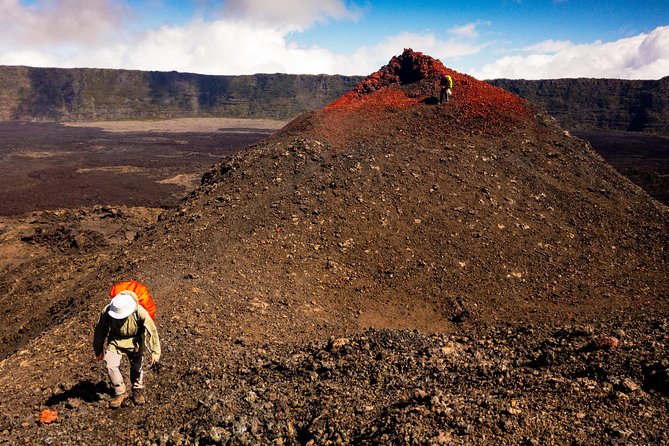
- Real volcano terrain: enclosure descent, lava-flow walking, then ascent toward the summit crater
- Meaningful geology explanations about the island’s formation and crater history
- Plan B when access is restricted: off-trail options only for professionals, plus an alternative route in Plaine des Sables
Volcano on Réunion: why Piton de la Fournaise feels different
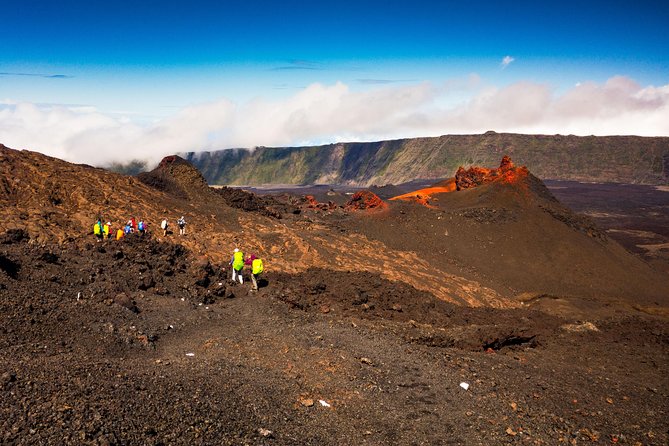
Piton de la Fournaise is not a museum volcano. It is active, and the hike reflects that reality through the way access can change on the day you go. You start with a route shaped by what is currently allowed, then you follow your guide toward the main cone and summit crater as far as permitted.
The big win here is the guide-led interpretation. You are not just walking through cool scenery; you are learning what you are seeing—lava flows, the enclosure area, and the way the crater fits into the volcano’s story. That is why a guided approach matters on an active site: the terrain is doing the talking, and a good guide helps you understand the language of rock.
You’ll also like the practical structure: a guaranteed departure on set days, a small group limit, and a plan for disruption if the enclosure gets closed. When a volcano is involved, that planning is not extra—it is peace of mind.
You can also read our reviews of more hiking tours in Reunion Island
The 7:30 am start, 9 km route, and what “500 m gain” really means
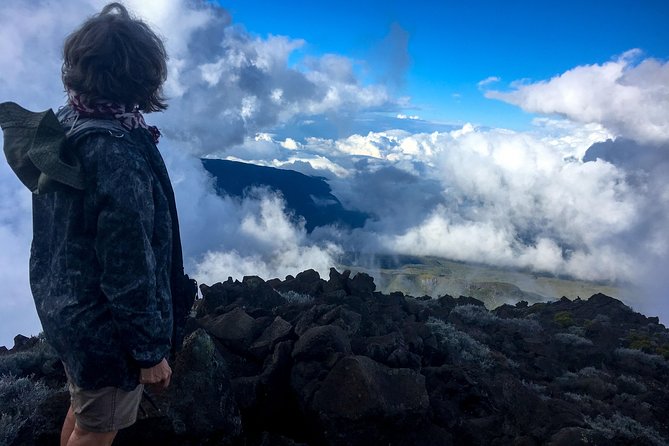
This hike clocks in at about 6 hours and covers roughly 9 km with around 500 m of elevation gain. On paper, that gain sounds manageable, but the terrain is steep and volcanic. In other words, your legs feel it more than a gentle switchback hike would.
You start at Parking du Pas de Bellecombe on Rte du Volcan in Sainte-Rose, with a 7:30 am start time. Early timing helps because weather can swing fast at higher altitude. It also helps you avoid turning the hike into a long, cold wait while the volcano does whatever it is doing.
One more practical point: the tour is described as requiring strong physical fitness. That is not to scare you off—it is to set expectations. Expect steep sections and uneven footing, and plan to move steadily rather than quickly.
Enclosure descent: learning the volcano before you reach the main cone

The hike begins with a descent into the enclosure. This is an important part of the experience because it puts you in the working geography of the volcano early. Instead of saving the explanation for later, your guide sets the scene as you move down.
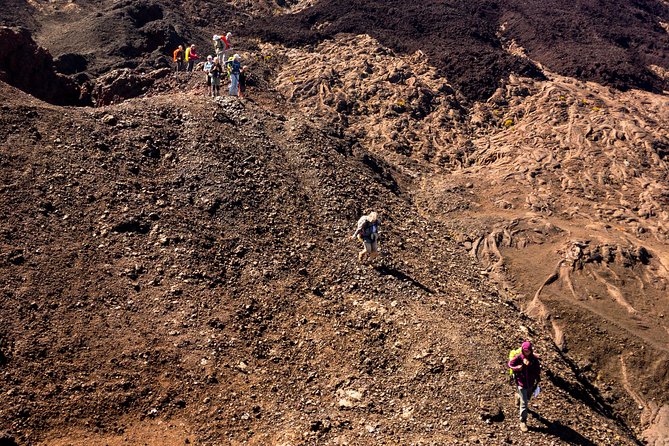
From there, you walk through lava flows to reach the base of the main cone. This is where the hike becomes more than motion. You are seeing the results of eruptions, and you get help connecting the visible shapes to the volcano’s activity over time.
You should expect off-trail access to be handled carefully. The experience notes that off-trail portions exist but are reserved for professionals. Translation: your guide can take you to places where it is allowed to move beyond the standard paths, but only in controlled, expert-guided ways.
Ascent toward the summit crater: the hike turns more serious
Once you reach the base of the main cone, the hike shifts into ascent toward the summit crater. This is the part that tests your stamina and footing. The gain may not be enormous, but you are working uphill on steep ground.
At these elevations, the tour explicitly warns about cold conditions and rapidly changing weather—rain, fog, and wind are all possible. That matters for how you plan your day. You do not want to think of this as a mild morning walk. Think layers, wind protection, and a mindset that the weather can change mid-hike.
Also remember the terrain detail: in the event of a fall, the lava is described as sharp. You do not need to panic, but you do need respect. Stay focused, keep your footing solid, and let your guide set the pace.
When the enclosure is closed: Plaine des Sables as your eruption plan B
Because this is an active volcano, access can be affected by official decisions. The enclosure can be closed by prefectural order if eruption activity happens there. When that happens, the tour does not just cancel your effort—it redirects you.
Your specialist route then focuses on Plaine des Sables. The goal is either to catch a glimpse of the current eruption or to discover evidence of past eruptions and how the volcano has evolved. So you still get a guided, volcano-centered experience even when the route to the crater area is restricted.
I like this approach because it keeps the day meaningful. You are not standing around hoping for the best. You have a structured alternative that still connects you to the volcano’s actual story, just from a different vantage point.
The guide quality and why small groups make a difference here
This is a small-group hike, with a maximum of 12 people. That is not just a comfort perk. On steep volcanic terrain, smaller groups are easier to manage and safer to navigate, especially when weather changes quickly.
The hike is led by a professional mountain guide from Bureau Montagne Réunion. In the feedback people share, the guides are credited for turning the ascent into a learning experience—especially around how the island formed and how the crater came to be. One name that stood out was Renaud, described as excellent and making the hike feel like it had purpose.
Another key detail: you’ll be hiking in French only, and the tour notes that you need a good understanding of the language. If your French is shaky, you might still physically handle the route, but you may miss a big part of why this hike is so satisfying.
What you get (and what you bring) for a colder, harsher day
Included in the tour:
- A snack and a local drink
- A professional mountain guide
Not included:
- Lunch: bring a picnic
Even if you do not usually eat a lot on hikes, plan on treating the snack as a mid-hike boost rather than a full meal replacement. Then pack your picnic for when the timing works best for your group.
For what to bring, the tour info points to the real challenges: cold at altitude, quick weather changes, steep terrain, and sharp volcanic ground. So I’d plan for warmth and rain readiness. Bring layers you can put on fast, and dress for wind. Comfortable, grippy hiking shoes matter more here than you might expect, because the ground is uneven and steep.
If you have a bigger day pack, keep it simple. You want to stay moving comfortably for about 6 hours with a demanding route.
Value for money: where $77.82 feels fair
At $77.82 per person, this is not the cheapest excursion on Réunion Island. But it is also not a generic walk. You are paying for a professional mountain guide, a small-group format, and a route that is tied to real access rules around an active volcano.
The value gets stronger because the experience includes a meaningful plan for disruptions. If the enclosure is closed, you get a professional-led alternate route in Plaine des Sables rather than losing the whole day.
Also consider the learning factor. The hike is designed to teach the geological history of the island within the volcano’s mineral world. When the guide is good—and the feedback points to that—the hike becomes a story you can repeat, not just a photo set.
Who should book this Piton de la Fournaise hike
Book this if you want:
- A guided volcano hike rather than a casual drive-and-look-out
- Small-group pacing and a guide who explains what you are seeing
- A route with a built-in alternative if eruption access changes
It is especially suitable for hikers who are comfortable with steep terrain and who can handle weather swings. The recommended minimum age is 12 years old, and minors under 12 require contact for details. The tour also notes you cannot accept minors under 18 without an adult.
If you do not have strong French, or if your fitness level is more casual (flats and easy trails), you may struggle. And if cold + fog + wind will ruin your day, plan to bring real wind-and-warmth gear.
Should you book it?
I’d book this if you want a Piton de la Fournaise experience with purpose: guided geology, controlled access, and a response plan when the volcano changes the rules. The small group size and professional leadership are the kind of details that matter on an active site, not just on paper.
Skip it if you want an easy walk, if French is a barrier, or if you are uncomfortable with cold, steep, uneven volcanic terrain. But if you can handle that reality, this is one of the more satisfying ways to spend a morning on Réunion Island—because you come away understanding what you walked through.
FAQ
How long is the Piton de la Fournaise hike?
It lasts about 6 hours (approximately), including the hiking time.
How far and how much elevation does the hike include?
The route is about 9 km with around 500 m of elevation gain.
When does the tour depart?
Departures are guaranteed every Wednesday and Sunday, with timing based on the first registered.
What time does the hike start and where is the meeting point?
The start time is 7:30 am. The meeting point is Parking du Pas de Bellecombe, Rte du Volcan, Sainte-Rose 97439, Réunion.
Is this a guided hike or can you do it alone?
This experience is guided by a professional mountain guide from Bureau Montagne Réunion.
What happens if access to the enclosure is prohibited?
If the enclosure is closed by prefectural order, your specialists offer an alternative route in Plaine des Sables to glimpse the current eruption or to discover past eruptions and volcano history.
Do you go off-trail?
The tour notes that off-trail portions exist but access is reserved for professionals.
What food is included, and what should I bring?
You get a snack and a local drink. You should bring a picnic for lunch.
How difficult is the terrain?
It is described as very steep, and conditions can be harsh at higher altitude. The tour also warns that lava can be sharp in the event of a fall.
What language is required for the hike?
Hiking is in French only, and the tour requires a good understanding of French.
What weather requirements apply?
The experience requires good weather. If it’s canceled due to poor weather, you’ll be offered a different date or a full refund.