REVIEW · SICILY
Etna – Trekking to the summit craters (only guide service) experienced hikers
Book on Viator →Operated by Guide Vulcanologiche Etna Nord · Bookable on Viator
Etna can be loud, but your hike is controlled. This trek to the summit craters on Etna’s north side (Etna Nord) is built for strong legs and big views, with a licensed volcano guide and provided gear. I also love the Piano Provenzana start: less crowded than the south, and way more connected to the volcanic terrain. One drawback to plan for is the long, steep descent, which can feel tougher than the climb.
You start early, ride up by authorized 4×4, then walk on loose volcanic ground at altitude. The guides adjust the route based on gas, heat, and fractures, aiming for the most active craters that are still safe. If you want a guaranteed top-of-the-top number every day, this is not that kind of experience—it’s a volcano, and your guides follow the rules day by day.
In This Review
- Key Points I’d Circle Before You Go
- Choosing Etna Nord: Why Piano Provenzana Feels More Real
- Price That Actually Includes the Hard Bits
- The 7:45 Start and the 4×4 Panoramic Climb to 2,960 m
- Summit Crater Trek: Four Main Craters and a Route That Changes Daily
- The Long Descent You’ll Feel in Your Knees (and Boots)
- Your Guide Team: Small Groups, Real Explanations, Safety First
- What to Pack (Even With the Supplied Gear)
- Who This Etna Summit Trek Suits Best
- Should You Book the Etna Summit Craters Trek?
- FAQ
- How long is the Etna summit crater trekking experience?
- Where do we meet, and when does it start?
- What’s included in the price?
- What’s not included, and what extra costs might come up?
- How big are the groups?
- Do the guides always take you to the very highest crater points?
- Is it suitable for children, pregnancy, or contact lens users?
Key Points I’d Circle Before You Go
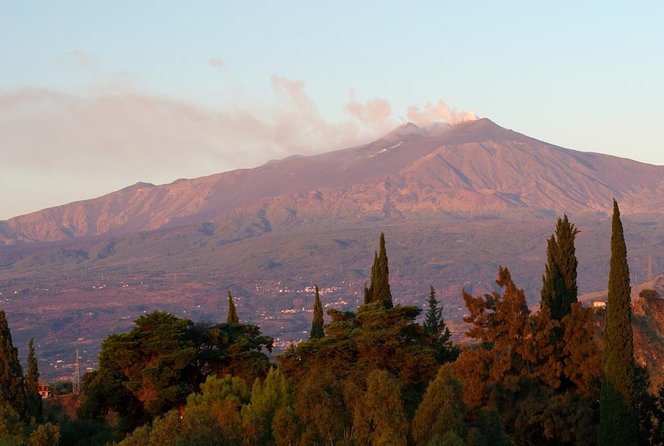
- Piano Provenzana on the north side: easier access by car, fewer crowds, and set right in a dramatic post-eruption area.
- Authorized 4×4 rides + guided hike: you’re not just thrown into the wild; the guides stay with you the whole way.
- Licensed volcanology guide: the trip is organized around safety and real explanation of what you’re seeing.
- Altitude + crater edges: good fitness matters, and dizziness can happen near crater rims.
- Return down feels like the workout: steep downhill on scoria and sandy sections stresses knees if you’re not ready.
- Max 12 people: small groups make it easier for pacing and break stops.
Choosing Etna Nord: Why Piano Provenzana Feels More Real
If you’re picturing Etna as a single viewpoint and a photo stop, Etna Nord will reset your expectations. Starting at Piano Provenzana, you’re on the calmer north flank where the crowds are typically lighter and the volcanic terrain feels more hands-on. You’re also moving through a part of Etna shaped hard by the 2002 eruption, and the area still looks like it belongs to another planet.
I like that the meeting area isn’t hidden behind mystery logistics. Piano Provenzana is easy to reach by private car on paved public roads, with parking areas and café stops for breakfast. In colder months it’s a ski resort, so you’ll see how the local infrastructure keeps turning volcanic terrain into usable terrain.
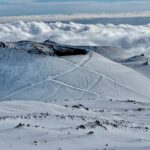
The practical note: in winter, you may need snow chains or winter tires to get there. Also, expect weather up high to be colder and windier than you’d guess from the coast.
You can also read our reviews of more guided tours in Sicily
Price That Actually Includes the Hard Bits
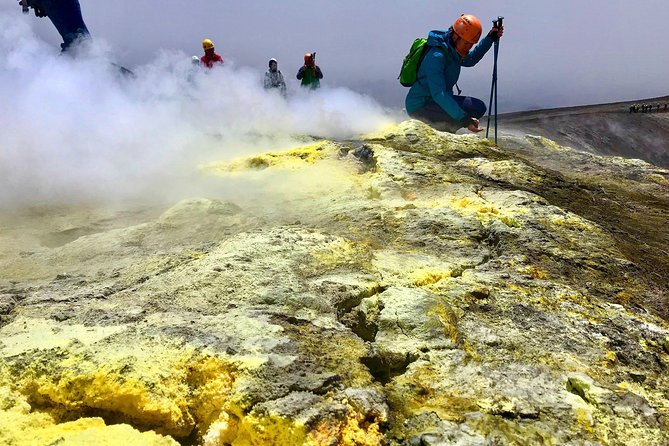
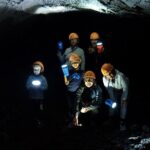
At $139.13 per person, this doesn’t look cheap until you check what’s baked into the price. You get a licensed volcano guide, admission to Mount Etna, and a full kit for the hike: trekking poles, trekking shoes, helmets, a warm jacket, extra socks, and even an extra backpack. Add insurance coverage for accidents, and the value starts making sense—this is mostly about safety and getting you geared up for high altitude and loose rock.
What’s not included is also important. You may pay a separate off-road vehicle one-way from 1800 m up to 2825 m for €50 on the spot. There’s also mention that if you choose to return by bus from 2850 m to 1800 m, it can cost €70 instead of €50. Translation: read the day-of plan and be ready for a couple of extra euros, depending on how the route ends up.
One more cost detail that can surprise people: you’ll likely handle parking yourself. The day parking fee is €5 on weekdays and €8 on Sundays and public holidays. None of that ruins the value, but it does mean this is a real outing, not just a ticket and a casual walk.
The 7:45 Start and the 4×4 Panoramic Climb to 2,960 m
This tour is built around an early start. You meet at CHIOSCO BAR MARENEVE DI FERRARO Etna Nord – Piano Provenzana with a 7:45 a.m. meet time, and departures typically run between 8:00 and 8:15. If you’re booking for the May-to-October season, there’s also an afternoon departure option at 1:00 p.m.
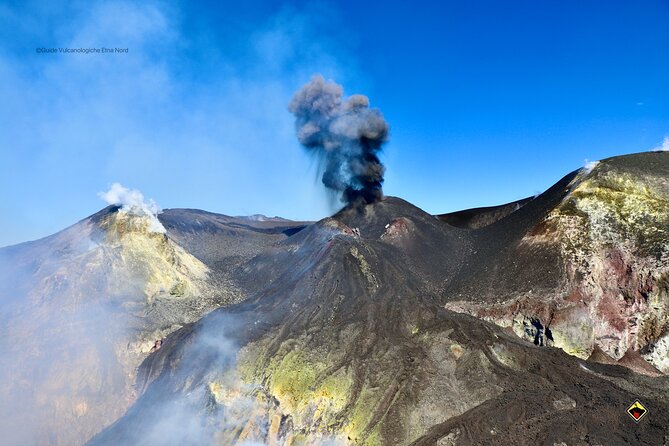
You don’t waste energy hiking from the parking lot. You board authorized 4×4 vehicles with the guide, heading up the northern flank through lava fields and lateral craters. This is where you gain altitude fast—up to about 2,960 m—so when your feet hit the trail, you’re already near the summit zone.
The drive itself is part of the experience. On the panoramic track (about 9.5 km in the north route), you’ll cross areas with forests, recent lava flows, and volcanic features like eruptive fractures and deep lateral craters (over 40 m deep). On clear days, you can see far across Sicily—Aeolian Islands, Strait of Messina, multiple seas, and even distant mountain ranges if visibility is unusually good. When the weather is average, you still get the geology: black rock, scoria textures, and the terrain’s logic.
Summit Crater Trek: Four Main Craters and a Route That Changes Daily
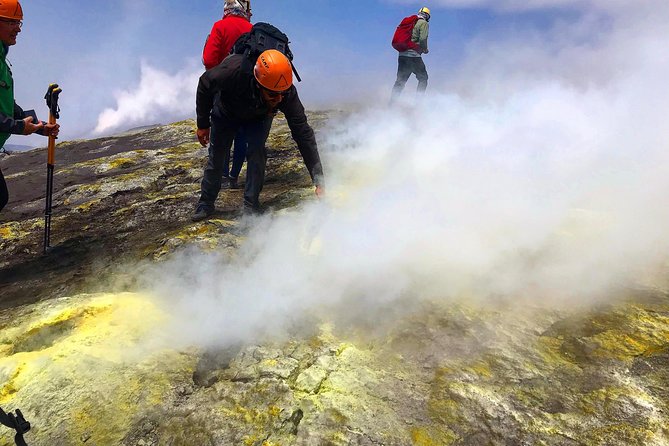
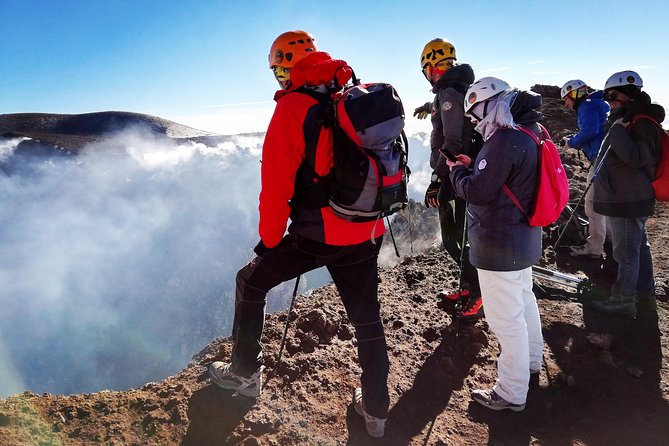
From around 2,960 m, the guided summit hike begins. This is the core of the trek, with a 5 km walk and about 550 m of ascent toward the summit area and its four main craters: North-East, Voragine, Bocca Nuova, and South-East.
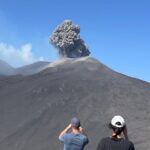
Here’s the key idea: activity varies daily. Your guides choose the safest route toward the most active yet secure crater(s). That means you’re not following a rigid checklist like a theme park. Instead, you’re reacting to real-time conditions such as gas, heat, and fractures. If gas is pushing, you might adjust. If ground conditions change, you might shift. It’s still guided the whole way, but the exact path can move.
Altitude ranges roughly from 2,960 m up to about 3,323 m, so good physical fitness is genuinely required. Mild altitude effects are possible, and the crater-edge walking can trigger dizziness in susceptible people. If you’ve ever had vertigo, take that seriously and tell the guide early.
One fair warning: you might not always reach the highest points you see in marketing-style summaries. The volcano follows its own schedule, and the guides must comply with safety ordinances. If conditions are intense, they can stop short of the absolute maximum safe height.
The Long Descent You’ll Feel in Your Knees (and Boots)
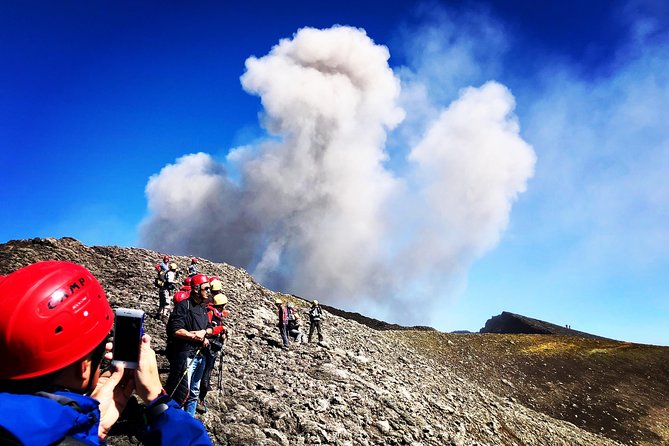
The return is where this hike earns its reputation. After reaching roughly the 3,300 m area, you descend on foot from about 3,300 down to around 1,800 m. The walking distance is about 7 km, but the negative gain is around 1,500 m. That combo is why the descent can feel harder than the climb—even if you’re strong on uphill switchbacks.
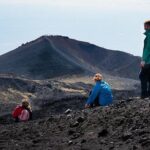
The surface is loose. You’ll walk over soft scoria and sandy gullies through recent lava. There’s also a section through Piano delle Concalze, then about 2.5 km of ski slopes, which can feel rougher and stony underfoot compared to what you expect at altitude.
This is also where gear choices matter. Reviews and day-to-day safety both point to long socks and pants that cover your ankles, because little lava stones and sand can work their way into boots. The good news is you get a warm jacket and extra socks from the tour kit, plus trekking poles to help with balance. Still, wear what keeps you steady when the ground turns slick or grainy.
You can also read our reviews of more hiking tours in Sicily
Your Guide Team: Small Groups, Real Explanations, Safety First
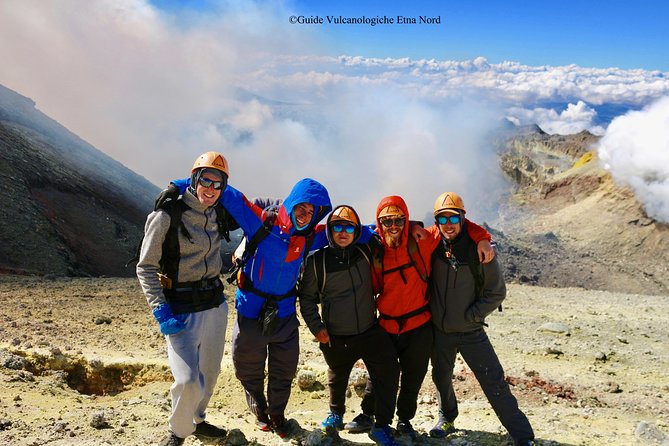
The tour is capped at a maximum of 12 travelers, and that small size shows in pacing. Several guides are mentioned by name across experiences: Paolo, Nikos, Raphael, Poldo, Daniele, and Vincenzo. Different personalities, same structure: practical guidance, frequent explanation, and a focus on keeping everyone moving safely.
What stands out is how often guides are praised for safety and attentiveness. People mention feeling never left behind, and that the hike pace includes breaks timed to what’s happening on the mountain. That’s not fluff—it matters when your lungs are working harder at altitude and the ground is inconsistent.
The guide also does more than talk geology. They manage the day’s reality: possible route changes, stopping at safe points if conditions shift, and keeping the group together through crater-edge sections. The guide isn’t just a teacher; they’re your decision-maker in a dynamic environment.
What to Pack (Even With the Supplied Gear)
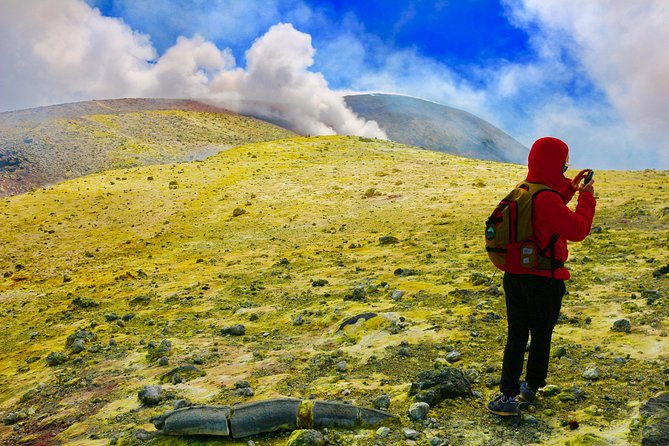
You’ll get a lot from the tour kit, but you still need to bring the essentials that keep you comfortable. Hat and gloves are not included, and you’ll feel it—especially with wind at higher altitude. Add to that: good socks, long pants, and a wind-resistant layer if you run cold.
I’d also plan for contact lens issues. The tour notes recommend not using contact lenses because of volcanic gases and ash. If you wear glasses, this is a great day for them. If you wear lenses, bring a backup plan.
Other common practical move: double-check your footwear plan. The tour provides trekking shoes, but you still want to arrive in clothing that makes you confident on a steep downhill. Sunscreen matters too, since altitude increases sun intensity. And bring your water habits in mind: Piano Provenzana has places to refill bottles before you head up.
Who This Etna Summit Trek Suits Best
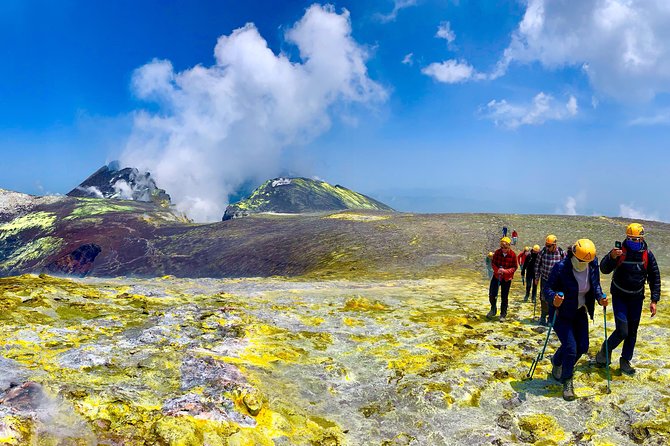
This excursion is clearly aimed at experienced hikers with strong physical fitness. It’s not suitable if you have certain medical conditions, specifically breathing issues or hypertension. If you’re unsure, it’s worth checking with your doctor before you commit to an active volcano hike at altitude.
It’s also not for everyone in terms of risk tolerance. The route includes crater edges, volcanic gases, and unstable rock textures made of inconsistent material. If you’re prone to dizziness, make that known before you start. The guide can adjust pacing and keep you aware of what’s coming next.
Age matters. The activity is not suitable for children under 12. Pregnancy restrictions are strict after the third month—pregnant women past that point are not allowed to take part. If those don’t apply to you, the next question is knees. The descent is long and steep, and trekking poles help, but your body still has to handle it.
Should You Book the Etna Summit Craters Trek?
Book this if you want the full Etna experience: a summit-crater walk guided by a licensed volcano expert, with route choices that react to real volcanic conditions. I think it’s a strong fit if you’re planning a Sicily trip that includes Catania or the Etna area and you want one day that feels hands-on, not staged.
Don’t book it if you:
- want an easy hike or hate steep downhill
- get dizzy at crater edges
- have breathing problems or hypertension
- can’t handle cold and wind up high (bring warm layers)
Also, be realistic about the summit height. The guides can go only as far as safety allows, and volcanic activity can change what’s reachable that day. The best way to keep your expectations happy is to focus on the goal: crater views and geology from the summit area, not a guaranteed exact altitude number.
If you’re prepared, this is one of those Sicily experiences that turns a volcano into a story you can feel in your legs.
FAQ
How long is the Etna summit crater trekking experience?
The trek is about 5 hours 30 minutes on average, and the overall hike duration is roughly around 6 hours. On-the-day conditions can affect timing, but plan for a full morning/half-day outing.
Where do we meet, and when does it start?
Meet at CHIOSCO BAR MARENEVE DI FERRARO Etna Nord – Piano Provenzana (Via Provenzana, 95015 Linguaglossa CT, Italy). The start time is 7:45 a.m., with departures typically between 8:00 and 8:15.
What’s included in the price?
Included: licensed volcano guide, trekking poles, trekking shoes, helmets, warm jacket, extra socks, extra backpack, insurance in case of accidents, and entry/admission to Mount Etna.
What’s not included, and what extra costs might come up?
Not included: transport from your accommodation, hat and gloves, parking ticket (fees vary), and an off-road vehicle one-way from 1800 m up to 2825 m for €50 paid on the spot. There can also be bus return costs if you choose that option.
How big are the groups?
This activity has a maximum of 12 travelers. Smaller groups are typically used to keep the experience more personal.
Do the guides always take you to the very highest crater points?
The route is chosen daily based on safety and current volcanic conditions, including gas, heat, and fractures. If conditions change, guides may stop earlier where it’s still safe to reach.
Is it suitable for children, pregnancy, or contact lens users?
No for children under 12. Pregnancy is not allowed after the third month. Contact lenses are not recommended due to volcanic gases and ash that could cause issues.