REVIEW · SICILY
Etna Summit 3000 m cable car included
Book on Viator →Operated by Etna Est · Bookable on Viator
Etna feels like a living laboratory. This is a guided climb that starts with an included cable car to 2500m and then takes you up on foot toward the summit craters. I like that you’re not just walking for photos; the volcanological/alpine guide explains what’s happening as you move over lava and volcanic ash.
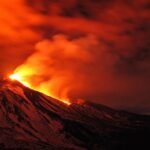
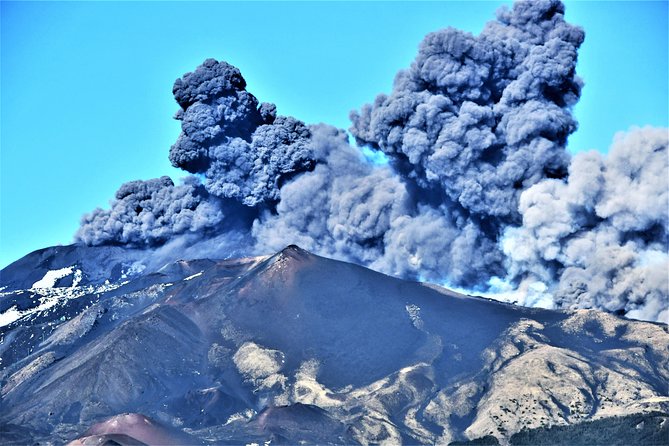
The view from Europe’s highest active volcano is the big payoff, and you also get a stop at the 2001 crater at 2700m, still fuming. The one consideration is that this is a long, physical uphill day, and volcanic gas (plus fog or sulphur mist) can be an issue if you’re sensitive or not used to mountain terrain.
In This Review
- Key highlights to look for
- Meeting at Terrazza dell’Etna: the 8:30am start that matters
- Cable car up to 2500m: less time in transit, more time on Etna
- The hike to 3000m: volcanic sand, lava flows, and real footing
- Summit crater area: views, fog, and sulphur in the air
- The descent and lunch break: 2500m back, then a crater with activity
- Timing, group size, and what to wear (including winter reality)
- Price and what you’re really paying for at $120.68
- Guides make or break it: Luca, Max, Giuseppe, and the science talk
- Who should book this Etna 3000m hike (and who should skip it)
- Should you book Etna Summit 3000m with the cable car?
- FAQ
- What time does the tour start?
- Where do I meet for the excursion?
- How long is the Mount Etna summit excursion?
- Is the cable car to the summit included?
- What’s included in the price?
- Is lunch included?
- How big is the group?
- Is this tour suitable for children?
- What are the cancellation terms?
Key highlights to look for
- Cable car round-trip is included so you start high and spend more time walking where it counts
- A real volcano guide (alpine/volcanological) who answers questions as conditions change
- Summit craters at the base give you that rare, up-close scale of a living volcano
- The 2001 crater stop at 2700m means you see active fumarole-style features
- Small group max 20 people, often kept manageable for pacing and regrouping
Meeting at Terrazza dell’Etna: the 8:30am start that matters
Your day begins at 8:30am at La Terrazza Dell’Etna Etna Sud, Piazza Vittorio Emanuele, in Nicolosi. The meeting point is close to the Bar/Restaurant Terrazza dell’Etna, and you’ll meet at their desk a short walk down the street. It’s an early start, but it’s also what makes the hike feel structured instead of rushed.
One practical reason I like this setup: the guide can get the group moving quickly toward the cable car, instead of waiting around. That time matters on Etna. The conditions at the summit can shift fast, and when that happens your experience gets shaped by how flexible your group is and how well you’re prepared to keep moving.
Also note the tour is in English (with a possibility of a multi-lingual guide). If you care about understanding what you’re seeing—lava types, crater activity, why parts of the route look the way they do—this kind of explanation is the difference between a hike and a true volcano walk.
You can also read our reviews of more tours and experiences in Sicily.
Cable car up to 2500m: less time in transit, more time on Etna
The core of the “efficient” feeling here is that you’re not doing all the ascent on foot. After a briefing with the volcanological/alpine guide, you take the round-trip cable car ticket (included; listed as €50) up to about 2500 m.
What this means for you in real terms:
- You reach the higher terrain faster, so the hike doesn’t feel like one long slog.
- You’ll start your walking on volcanic ground rather than gradually climbing from town.
- The route becomes about balance: enough altitude to feel the volcano, but still manageable within a roughly 6-hour overall schedule.
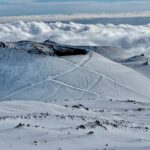
One more thing: once you’re out of the cable car area, conditions can change quickly. In late autumn, for example, the trail can turn snowy soon after the cable car ride. If that’s your travel month, plan for winter-style footing and consider bringing what helps you stay stable.
The hike to 3000m: volcanic sand, lava flows, and real footing
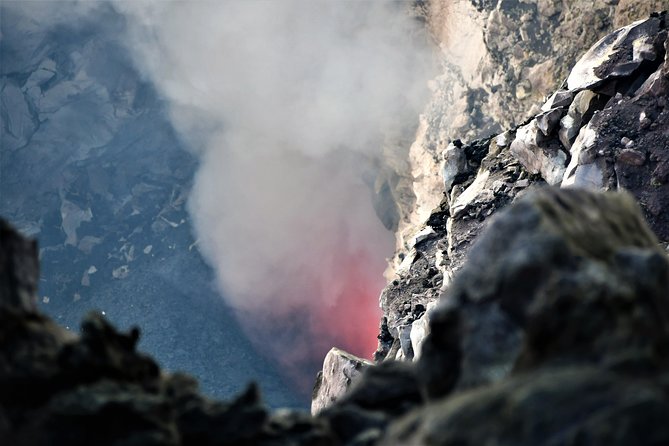
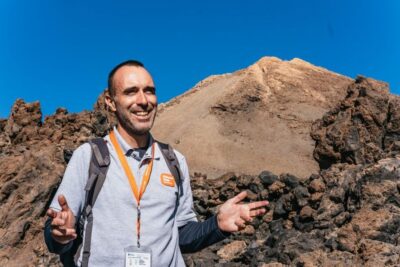
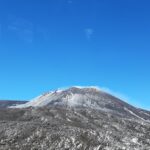
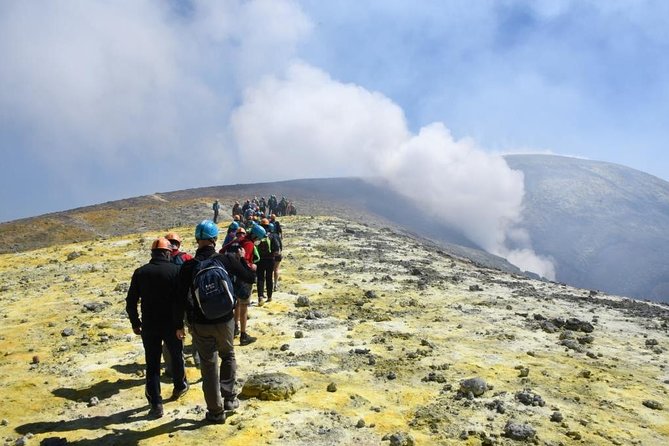
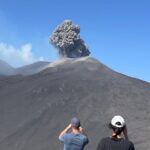
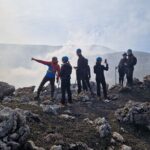
From 2500m, the trek climbs up to 3000 m a.s.l. You’ll walk through volcanic sand areas and past old and recent lava flows. That mix is part of the point. Etna doesn’t look the same everywhere because it’s constantly being reshaped by eruptions and new deposits.
This portion is where the “Europe’s highest active volcano” idea stops being a slogan and starts being tangible. Up high, you’re walking on ground that has a story—scorched textures, layered rock, and stretches of ash-like material where the surface can feel looser than you expect.
The tour is listed as suitable for moderate physical fitness, but don’t treat that as “easy.” You’re going uphill in a volcanic zone. If you’re comfortable hiking on uneven ground, you’ll likely do well. If you’re not used to mountains, you may find this slow-and-steady climb demanding.
Good to know: trekking shoes are included. Still, I’d think of this day as a proper hike, not a casual stroll. Come with your legs ready, and keep your pace controlled so you can enjoy what the guide is showing you instead of just fighting fatigue.
Summit crater area: views, fog, and sulphur in the air
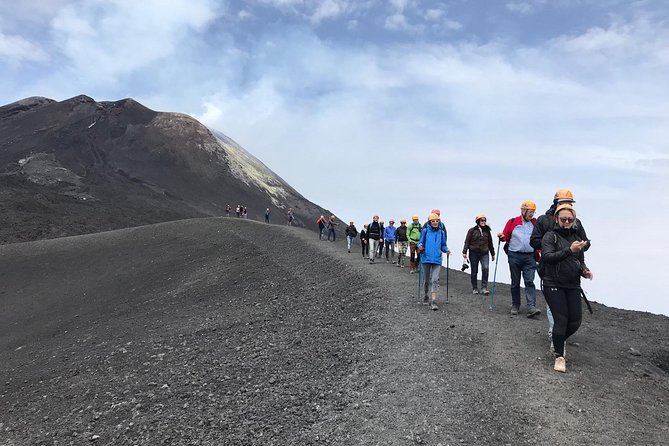
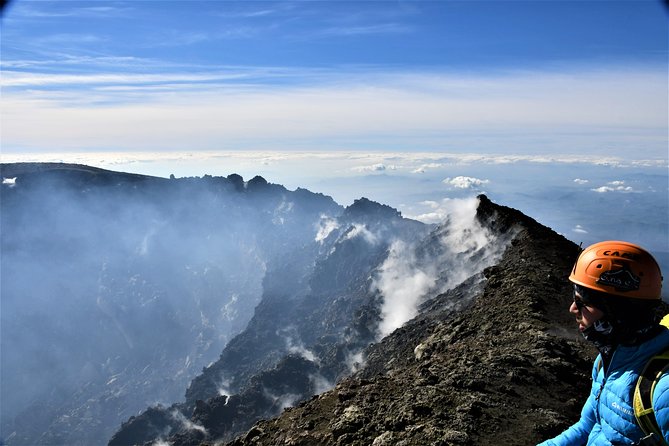
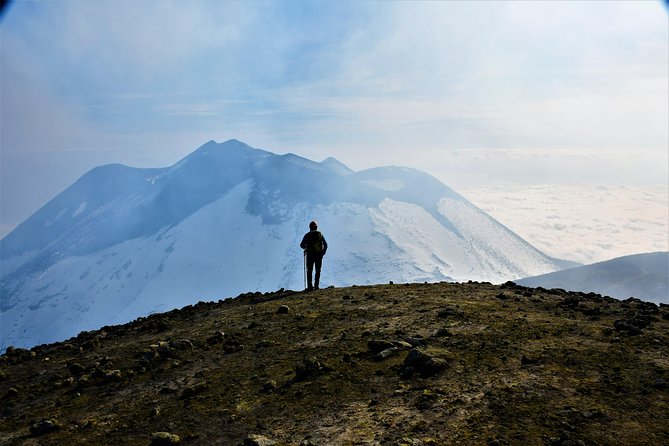
Reaching the base of the summit craters is the emotional peak of the day. The tour is designed so you don’t just glance at the volcano—you get time to observe the suggestive scenery from near the summit crater area and feel the scale of an active system.
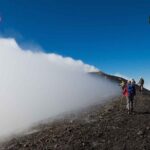
This is also the part that can be dramatic weather-wise. If you hit fog or sulphur mist, it can cut visibility. The upside is that a skilled guide keeps the experience meaningful by adjusting to what you can see—asking and answering questions while you’re still out there.
One practical tip from how guides run the hike: ask questions early and keep listening. The explanations are tied to what’s directly around you—what lava flow you’re seeing, why some areas look darker or more broken up, and how crater zones behave. If your goal is to understand Etna, this is the moment to lean in.
And yes, the air near volcanic zones can carry an odor. If you’re sensitive to smells, take slow breaths when you’re moving through heavier sulphur conditions and follow the guide’s pacing. You’ll still get the views; you just might notice them differently than you imagined.
The descent and lunch break: 2500m back, then a crater with activity
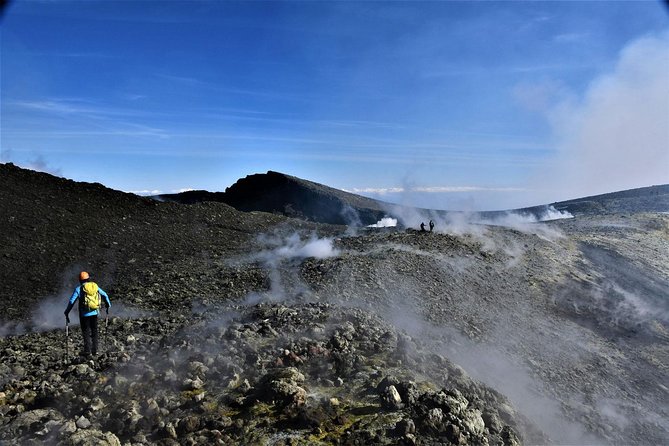
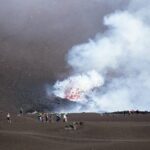
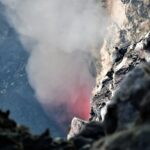
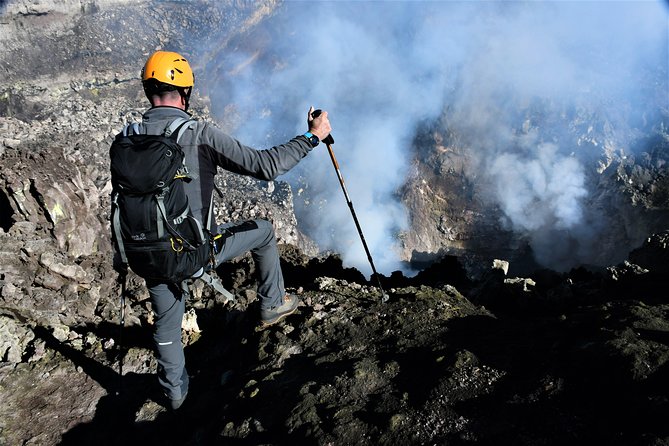
After the summit-crater area, you begin descending back toward 2500m. The day doesn’t just turn into “downhill and done.” There’s a structured break for lunch (food and drinks are not included), and you’ll also make a stop at the 2001 crater at about 2700m.
This is a strong value moment for a few reasons:
- The 2001 crater stop adds a second “wow” zone beyond the summit area.
- You get to see features that are still active (the crater is described as still fuming).
- The guide has a chance to tie the crater activity into what you saw on the ascent.
If you’re trying to decide what to pack for lunch: bring what keeps you comfortable in cool or windy conditions. You’ll be pausing, but you won’t be “chilling” like in a café. Your comfort affects how much you enjoy the views during the break.
When you’re done with the crater visit and the descent, you return to the starting point and end the excursion back at the meeting location. This is a full-morning-to-midday plan in timing, but don’t schedule anything tight afterward unless you’re comfortable with travel delays.
Timing, group size, and what to wear (including winter reality)
The whole outing is about 6 hours. That’s the kind of duration that can quietly expand on summit hikes because of weather shifts, careful pacing, and regrouping in volcanic terrain. The goal here is to keep you moving, but not rushing.
The group size is capped at 20 travelers, which helps a lot. Smaller groups mean your guide can manage the route and keep everyone together through the trickier patches—especially when ground conditions change or visibility drops.
What to wear:
- Comfortable, grippy footwear for volcanic sand and rock.
- Layers. Weather can shift, and even in months that sound mild, you can end up dealing with colder air and possibly snow right after the cable car.
- If you have trekking poles, they can be useful for stability in slick or snowy conditions. A winter example from the experience: trekking poles were specifically helpful when snow appeared soon after leaving the cable car.
Also remember that this tour is not recommended for people who are not fit, and for kids it has limits. Children must be accompanied by an adult, and it’s not recommended for children under 9 unless they’re already used to walking in mountain terrain.
Price and what you’re really paying for at $120.68
At $120.68 per person, this isn’t a budget excursion, but it also isn’t “paying for a view from a bus window.” Here’s what you’re getting that pushes the value:
- Round-trip cable car ticket included (listed as €50)
- A volcanological/alpine guide
- Trekking shoes included
- A structured route that takes you from around 2500m up to 3000m and includes the 2001 crater stop
You’re also not paying extra for entrance fees—admission is listed as free in the tour summary. The cost you do need to plan for is food and drinks, since lunch is a break but not included.
The tradeoff: there’s no hotel pickup or drop-off, so you need to get yourself to Nicolosi’s meeting point. That’s normal for summit excursions, but it’s still part of the true “price” in time and transport planning.
If you’re comparing Etna tours, think in terms of how much of the day is truly spent on volcano terrain versus getting there slowly. This format uses the cable car to focus time where you want it, and that makes the price feel more justified.
Guides make or break it: Luca, Max, Giuseppe, and the science talk
A summit hike lives or dies by the guide. This experience is built around volcanological explanation, and the guides with this company have been credited for being friendly, funny, and highly engaged.
For example, you may meet Luca, who was described as highly informative and great at supporting a child through tougher sections while staying aware of everyone’s pace. That kind of attention matters because volcanic terrain isn’t just steep—it’s also uneven, and energy management is everything.
You might also be guided by Max, known for answering questions even in fog and sulphur mist. One highlight you should know about: there was a day where clouds were dispersed enough to see more at the summit area. That’s not something you can count on, but it shows how a good guide is watching conditions and working with what’s available.
Giuseppe is another name you could see, with solid geology-focused explanations and a strong emphasis on the fact that Etna is constantly changing. That last point is important: the guide’s job is to help you connect your route to the volcano’s ongoing behavior, not just recite facts.
Who should book this Etna 3000m hike (and who should skip it)
Book it if:
- You want a guided summit experience with real explanation, not just a photo stop.
- You’re comfortable with a moderately strenuous hike and uneven, volcanic footing.
- You like structured days where someone else handles pacing and route decisions.
Consider skipping or choosing a gentler alternative if:
- You’re not confident on mountain terrain or you don’t have moderate physical fitness.
- You need a fully “comfortable” outing. This includes uphill walking and time at altitude.
- You’re traveling with children under 9 and they’re not used to mountain hikes.
One more fit check: if you’re sensitive to smell or breathing in sulphur conditions, plan to go slowly when gas is noticeable and follow the guide’s lead. You’ll still likely enjoy the day, but it might not feel as easy as a regular hike.
Should you book Etna Summit 3000m with the cable car?
I’d book this if your dream is to experience Etna at altitude with a guide who can translate what you’re seeing into something understandable. The included cable car makes the day feel like an actual climb rather than a half-day bottleneck, and the 2001 crater stop gives you more than one “active volcano moment.”
You should think twice if you’re trying to squeeze it into a tight schedule with no flexibility, or if you’re not ready for a steady uphill hike on volcanic ground. Also, if your travel dates are in colder months, be prepared for winter conditions around the higher terrain—stability matters.
If you want an honest, high-impact Etna day in about 6 hours, this is a strong choice.
FAQ
What time does the tour start?
The tour starts at 8:30am.
Where do I meet for the excursion?
You meet at La Terrazza Dell’Etna Etna Sud, Piazza Vittorio Emanuele, 95030 Nicolosi CT, Italy.
How long is the Mount Etna summit excursion?
It runs for about 6 hours.
Is the cable car to the summit included?
Yes. The round-trip cable car ticket is included, and the climb begins up to about 2500m and then continues on foot to 3000m.
What’s included in the price?
Included are an alpine or volcanologic guide, trekking shoes, and the round-trip cable car ticket.
Is lunch included?
Lunch is not included. There is a break to have lunch during the descent.
How big is the group?
The group size is capped at a maximum of 20 travelers.
Is this tour suitable for children?
Children must be accompanied by an adult. It is not recommended for children under 9 years old, except for children that are used to walking on mountains.
What are the cancellation terms?
You can cancel for a full refund up to 24 hours before the experience’s start time. Free cancellation is available under that rule.