REVIEW · CATANIA
Etna: Trekking to the summit craters at 3340 meters
Book on GetYourGuide →Operated by Sicilying S.R.L. · Bookable on GetYourGuide
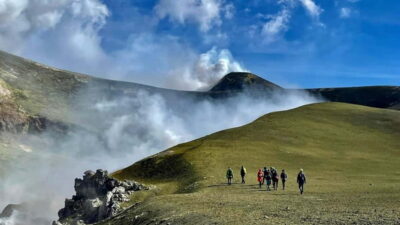
Etna’s summit feels like walking on the Moon. This 6-hour hike is one of the most direct ways to see an active volcano up close, from high-altitude lunar terrain to crater edges and volcanic conduits. You start at Rifugio Sapienza (about 1,900 m), then work your way toward the summit craters near 3,340 m for views that make your brain go quiet.
I especially love the mix of geology and boots-on-the-ground adventure: you don’t just look at Etna, you walk through fresh lava terrain and volcanic ash/sand. Second, the included safety and comfort kit matters on Etna—helmet and trekking poles help you feel steady on loose slopes.
One possible drawback to plan for: weather can affect how far you’re allowed to go, so the absolute top might be off-limits sometimes. Also, expect a solid pace—great for strong hikers, but you may want more breaks if your knees get cranky.
In This Review
- Key Things You’ll Notice on This Etna Summit Trek
- Etna’s Summit Craters: What Makes This Hike Worth the Effort
- From Rifugio Sapienza to 2,500 m: Cable Car First, Then the Rugged Lift
- The 2-Hour Trek to the Summit Craters (Around 3,300–3,340 m)
- Central Crater Edge: Seeing the Conduits Up Close
- Continuing Toward the Southeast Crater: Recent Eruption Ground
- Lunch at Around 3,000 m: A Necessary Reset
- Barbagallo Craters and the Lava Channel Walk
- Valle del Bove: The Ancient Caldera View That Puts Etna in Perspective
- Pace, Fitness, and the Reality of Loose Volcanic Ground
- What’s Included (and Why the Gear Is Not Just a Checkbox)
- Language and Group Size: Small Groups Help at a Crater Edge
- Weather and Access Changes: One Thing You Can’t Force on a Volcano
- Who Should Book This Etna Trek—and Who Should Choose Something Else
- Price and Value: The Real Cost Breakdown
- Should You Book This Etna Summit Crater Trek?
- FAQ
- How long is the Etna summit craters trek?
- How high do you hike on this tour?
- Where does the tour start?
- What transport is included before the trek?
- What does the price include?
- What costs are paid on site?
- What languages is the guide available in?
- Is the tour suitable for kids?
- What should I bring and wear?
- Are there any rules during the hike?
Key Things You’ll Notice on This Etna Summit Trek
- A real summit-crater walk up to about 3,340 m, not just a viewpoint stop
- Volcanology guide focus on what you’re seeing and why it formed
- Cable car + 4×4 minibus to reduce the steep slog and keep the hike time meaningful
- Central crater edge views of the conduits called the chasm and the new mouth
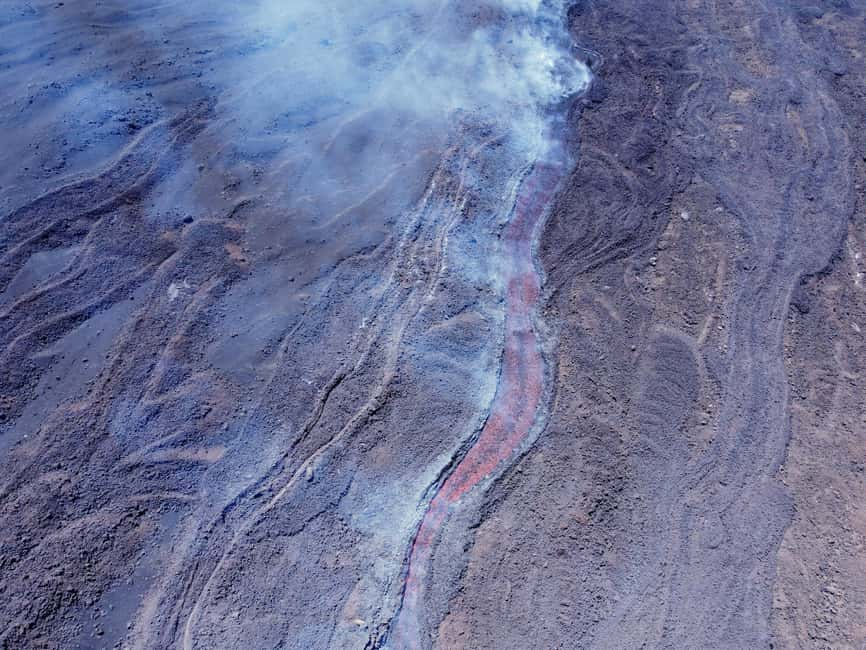
- Descent through volcanic formations, including a lava channel/canyon and a lava-tube moment
- Valle del Bove caldera viewpoints, tied to Etna’s big ancient collapse story
Etna’s Summit Craters: What Makes This Hike Worth the Effort
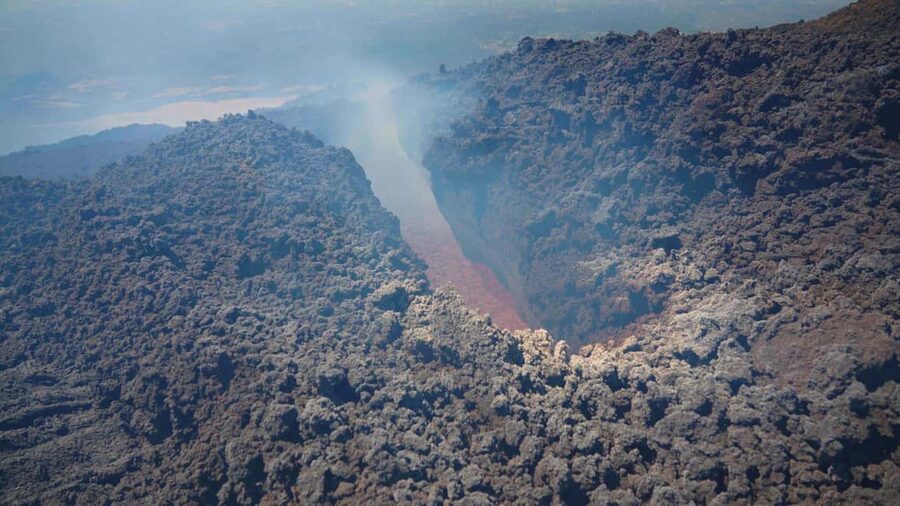
Mount Etna is famous because it’s active. That sounds obvious until you’re standing in volcanic terrain that looks like a sci-fi set built from ash, sand, and cooled lava. The payoff on this trek is that you get multiple “chapters” of the volcano in one outing: high summit craters, older eruption areas, and dramatic caldera viewpoints.
What you’re doing isn’t a casual nature walk. You’re moving through environments that change minute by minute. One section can feel like walking on coarse sand; another can feel like a battlefield of hardened rock. The best part is that a volcanology guide ties it together so it becomes more than scenery.
If you like hands-on travel—seeing, walking, and understanding—this is a strong fit. You’ll be close enough to feel how the volcano shapes the ground, not just how it looks from a distance.
You can also read our reviews of more hiking tours in Catania
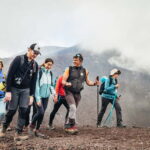
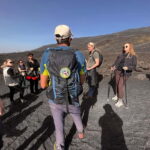

From Rifugio Sapienza to 2,500 m: Cable Car First, Then the Rugged Lift
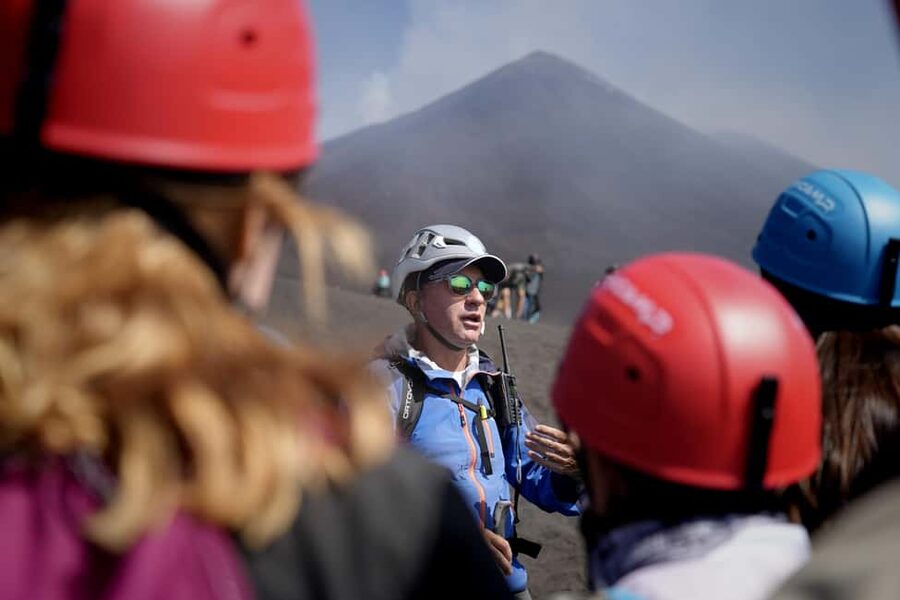
Your day starts around the Rifugio Sapienza area (about 1,900 m). You park comfortably at the Rifugio Sapienza square and head to the Monte Gebel souvenir shop area to meet up. It’s a good setup: you avoid being rushed through the base logistics and can focus on getting ready.
Then it’s straight up in two stages:
- Cable car to about 2,500 m (about 15 minutes)
- 4×4 minibuses up to about 2,850 m (with short road transfer time)
This matters for value. It saves your legs for the real work: the crater walk. It also gives you altitude step-by-step, which is usually easier than going from sea level to “volcano-top” in one jump.
Good to know: you’ll also skip the ticket line for the cable car portion, which keeps the morning flowing.
The 2-Hour Trek to the Summit Craters (Around 3,300–3,340 m)
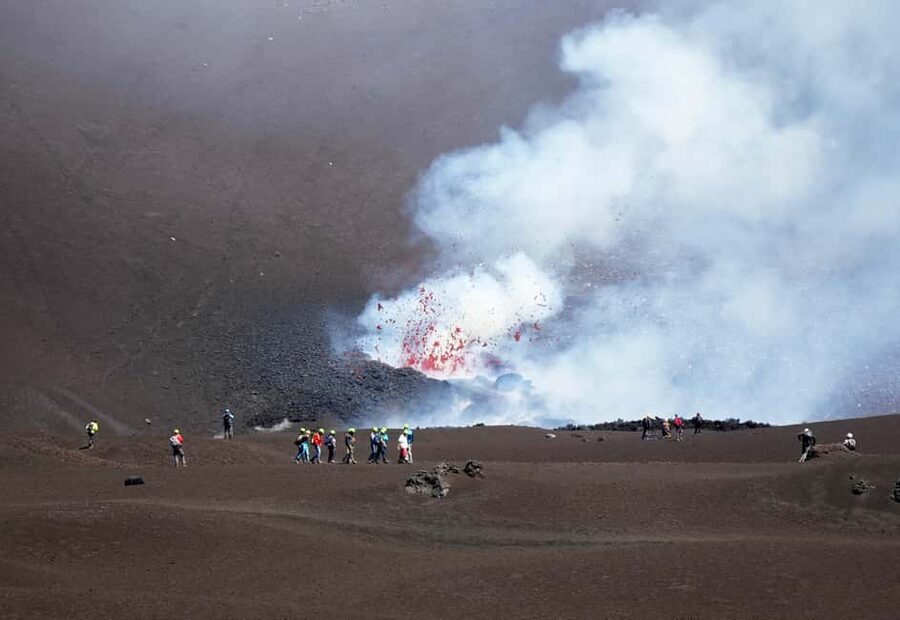
Once you’re dropped off near the higher zone, you start your main hike toward the central crater area at roughly 3,300+ meters. The route is about 2 hours of walking, and it’s the part where Etna stops being a concept and becomes a place you’re in.
Expect a trail that mixes:
- Very recent lava flows (the color and texture are different from older rock)
- Volcanic sand and lapilli (small volcanic fragments)
- Uneven ground that looks solid until you step in a softer patch
This is where your included gear earns its keep. You’ll have trekking poles and a helmet, both of which make a difference on uneven, loose surfaces. And even if it feels fine at the base, the air can shift fast at higher altitude, so layering matters.
Also: bring water. The guidance is at least 1.5 liters per person, and you’ll be glad you listened when you’re breathing a little harder on sandy slopes.
Central Crater Edge: Seeing the Conduits Up Close
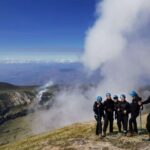
When you reach the summit craters (about 3,340 m), you’re not just taking photos from far away. You’ll walk along the edge of the central crater and admire two main conduits: the chasm and the new mouth.
This stop is powerful because it turns “active volcano” into something visual. You can see how the volcano’s internal pathways connect to what’s erupted and where the ground changes. Your volcanology guide helps translate what you’re looking at—so you’re not left guessing which rock is new and which is older.
Photo fans will love this segment. The views are wide, and the crater geometry gives you lots of angles. It’s also the moment most likely to feel like the top of the trip: you’ll stop, learn, look, and then start descending when it’s time.
Continuing Toward the Southeast Crater: Recent Eruption Ground
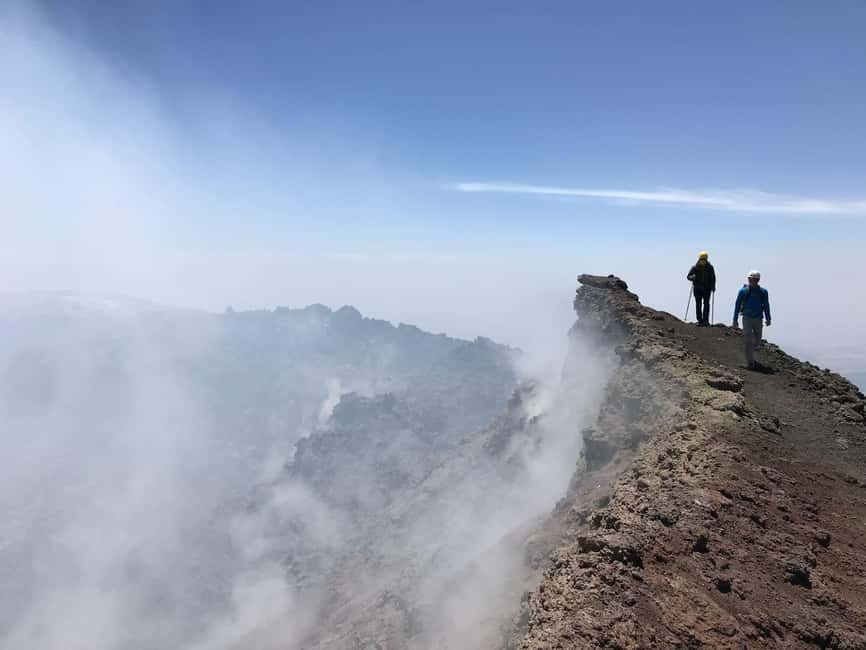
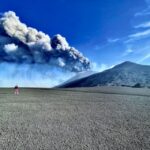
After the central-crater edge portion, you continue toward the southeast crater, described as the source of many eruptions in recent decades. This part matters because it shows Etna as a changing system, not a museum piece.
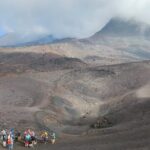
The terrain here feels more “worked over.” You’re moving through areas shaped by repeated activity, so the ground patterns can look sharper and more chaotic than older sections. The view component is also strong—you’ll get a sense of how the crater areas relate to each other across the slopes.
Plan to take your time for photos, but also listen to your guide about when to move. At this altitude, it’s easy to get distracted and then realize you’re low on energy.
Lunch at Around 3,000 m: A Necessary Reset
Once you start descending down a sandy slope, you’ll reach about 3,000 m, where you stop for a well-deserved lunch break.
Lunch isn’t included, so you’ll pay for food yourself. The upside is that this pause gives you a real recovery block. This is where you hydrate, snack, and let your legs cool down before the later descent sections.
If you’re the type who gets lightheaded when you’re tired, this is the time to address it: drink first, snack second, then sit and breathe. Volcano walks reward practical habits.
Barbagallo Craters and the Lava Channel Walk
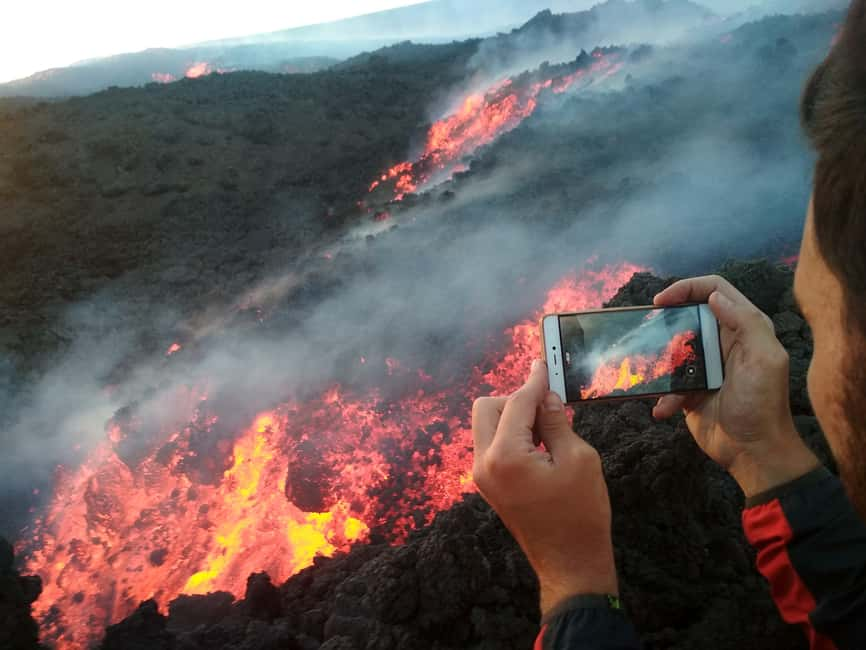
After the break, the trek continues down to the northern base of the Barbagallo craters, tied to a lateral eruption from 2002/2003. Here, you’ll walk around the perimeter and then descend toward the mouth of a lava flow channel—a canyon formed by moving lava. You’ll enter it.
This is one of those sections that feels physical in a different way than open slopes. The walls guide your movement and change the feel of the air. It’s also where the highlight about walking through a lava tube fits in. Even if the exact form varies by access conditions, you’ll get a contained, volcanic-surface experience that adds variety beyond “walk and view.”
It’s not a theme-park tunnel. It’s volcanic terrain under your feet, and that’s the point.
Valle del Bove: The Ancient Caldera View That Puts Etna in Perspective
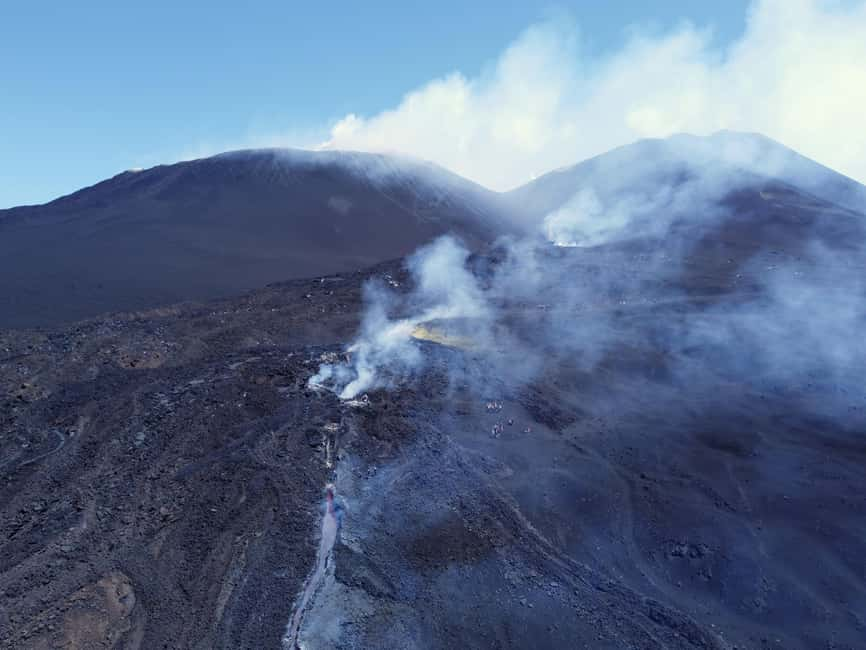
Next comes the viewpoint of Valle del Bove, an ancient caldera that formed around 9,000 years ago through the collapse of Etna’s older eruptive centers. You’ll have a short stop here, enough time to take photos and absorb the scale.
This stop is where Etna becomes more than current activity. The guide framing helps you connect the day’s crater edges and lava features to a much bigger geological story: an older structure collapsed, and what remains becomes the stage for later eruptions.
Then you continue toward a lateral crater formed during the 2001 eruption, and you finish your descent back to the cable car, which returns you to the starting area.
Pace, Fitness, and the Reality of Loose Volcanic Ground
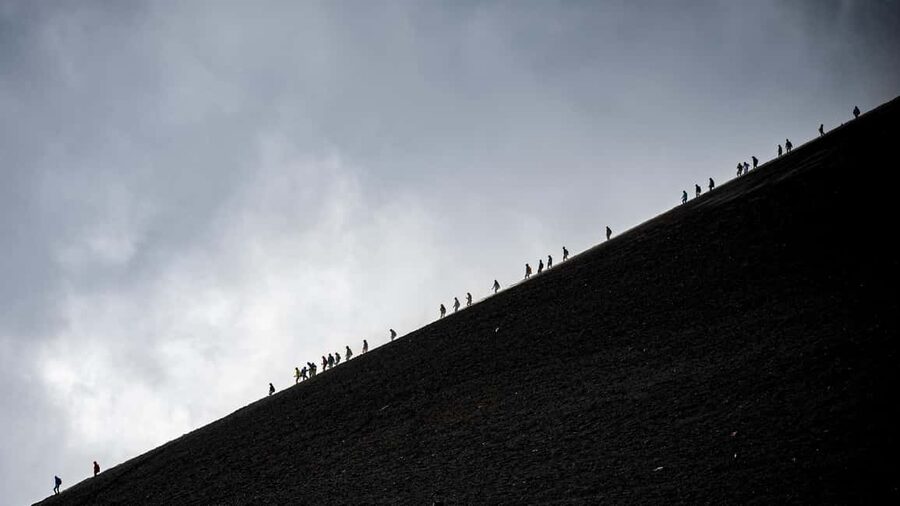
This is a demanding outing, even with the cable car and 4×4. A strong factor in your success is not just fitness—it’s your comfort with uneven footing and loose surfaces.
One helpful review note you should take seriously: the hike can feel fast, with limited time to linger on the trail. You may get most of your quiet viewing time at the summit rather than constantly along the way. That’s great if you like moving and learning on the fly, but if you’re injury-prone or prefer longer pauses, go in with that mindset.
Also: you might finish earlier than scheduled if conditions allow. That’s not something you should count on, but it explains why the group tends to move confidently once you’re in the hiking sections.
Not suitable if you:
- Have heart problems
- Deal with altitude sickness
- Have high blood pressure
- Are pregnant
- Are under 9 years old (and yes, age rules matter here)
- Are over 95 years
And if you have knee issues, bring the right expectations. You’ll be descending sandy and uneven sections, which can be tougher than climbing.
What’s Included (and Why the Gear Is Not Just a Checkbox)
For a tour priced around $77 per person (with key extras paid on site), the included items are genuinely useful:
- Volcanology guide
- Windbreaker
- Trekking poles
- Protective helmet
- Insurance
- The Etna hike itself
That’s a nice bundle for a few reasons. First, volcanic weather can turn quickly—wind up high isn’t the same as wind at the base. Second, trekking poles help your balance on slope transitions. Third, a helmet is exactly the kind of boring safety item you’ll appreciate once you’re in rocky volcanic terrain.
The only major exclusions are simple:
- Round-trip cable car and 4×4 vehicles you pay on site (listed as €82 adults, €51 children up to 10)
- Lunch
So the real value equation becomes: you’re paying for expert guidance and safety gear, while the transport ride components are additional. If you were already planning to use the cable car anyway, the “on top” costs feel more fair.
Language and Group Size: Small Groups Help at a Crater Edge
The tour operates with a live guide in English, French, or Italian. You’ll also see options for private or small groups, which can make a big difference when the terrain narrows or when access changes due to conditions.
Small groups usually mean:
- Easier pacing control
- More attentive guidance around what to look for
- Less time waiting when the group needs to regroup
At the summit-crater edge, that attention is not a luxury. It’s part of staying safe and getting the most out of the experience.
Weather and Access Changes: One Thing You Can’t Force on a Volcano
Etna is active, and the mountain isn’t always in the mood for a perfect itinerary. If weather becomes a problem, access can change. One example from a past booking described a situation where they couldn’t reach the very top due to meteorological reasons, but the guide still organized a strong alternative experience.
That’s the best way to think about it: don’t treat this as a guarantee of the exact top footprint every day. Treat it as an Etna experience guided by real-world access rules. If you go in flexible, you’ll be happier.
Who Should Book This Etna Trek—and Who Should Choose Something Else
This is a great match if you:
- Want a real summit-crater hike at altitude with a guide explaining the “why”
- Like geology and want context, not just a walk
- Are comfortable with a brisk hike and loose volcanic ground
- Can manage layers, hydration, and basic mountain safety
Skip it or reconsider if you’re:
- Under 9 years old
- Pregnant
- Managing heart issues, high blood pressure, or altitude sensitivity
- Looking for a gentle, low-impact stroll
And if you’re hoping for a relaxed, slow-paced hike with long sightseeing stops at every segment, this may feel a bit intense. Plan for movement. You’ll earn the summit views.
Price and Value: The Real Cost Breakdown
The headline price around $77 covers the hike, volcanology guide, and the key comfort/safety kit (windbreaker, helmet, poles, insurance). That’s a strong baseline.
Then you add the on-site transport for the cable car and 4×4 vehicles: €82 for adults or €51 for children up to 10. Lunch is also on you.
Is it good value? For the experience you’re getting—altitude progression, crater-edge learning, and lava/threshold terrain—it usually pencils out well, especially if you don’t want to plan multiple transport pieces yourself. The big “value win” is that you’re paying for expertise and equipment that make a difference at altitude and on uneven volcanic ground.
Should You Book This Etna Summit Crater Trek?
Book it if you want the closest, most structured way to experience Etna as an active volcano—craters, lava formations, and guided explanation—within a single 6-hour outing. The included gear is practical, and the crater-edge stops make this more than just a hike.
Don’t book it if you’re dealing with health or altitude concerns listed by the operator, or if you need a slow, break-heavy pace. And go in with flexibility: weather can change summit access, because this is a living volcano, not a controlled attraction.
If you’re ready for a real mountain day and you like learning while you walk, this is one of Sicily’s best ways to get under Etna’s skin.
FAQ
How long is the Etna summit craters trek?
The total experience lasts about 6 hours.
How high do you hike on this tour?
You trek to the summit craters at around 3,340 meters.
Where does the tour start?
You meet around the Rifugio Sapienza area, where you can park at Rifugio Sapienza square and head to the Monte Gebel souvenir shop.
What transport is included before the trek?
You take a cable car up to about 2,500 meters, then 4×4 minibuses up to about 2,850 meters.
What does the price include?
The tour includes the Etna hike, a volcanology guide, windbreaker, trekking poles, protective helmet, and insurance.
What costs are paid on site?
Round-trip cable car and 4×4 vehicle tickets are paid on site (listed as €82 for adults and €51 for children up to 10). Lunch is also not included.
What languages is the guide available in?
The guide is available in English, French, and Italian.
Is the tour suitable for kids?
It is not suitable for children under 9 years old.
What should I bring and wear?
Bring long pants and plan on layered clothing. You’re also advised to bring at least 1.5 liters of water per person.
Are there any rules during the hike?
Alcohol and drugs are not allowed.