REVIEW · CATANIA
Catania: Mount Etna Adventurous Hiking Tour with Equipment
Book on GetYourGuide →Operated by Etna Guide Tours · Bookable on GetYourGuide
Volcano hiking beats any postcard view. On Mount Etna, you’ll trek hidden trails with safety gear included and real off-the-beaten-path routes as you rise toward 2,400 metres. I especially love how the guides make the geology feel practical, not like a lecture.
One watch-out: the first stretch is a proper uphill push, and once you’re high up it can get cold and windy fast.
- Off-the-beaten-path Etna hiking that feels wild, not staged
- Valle del Bove panoramic time at the top of the day
- Grotta Pitagora lava-tube walk during the descent
- Volcanic sand channels that turn your footing into a workout
- Guide-led crater storytelling with plenty of room for questions
- All safety equipment handed out for your exact hike
In This Review
- Catania to Etna: the morning drive that sets the tone
- Safety gear on volcanic ground: what’s included and why it matters
- Silvestri Craters safety briefing: how the guide keeps the hike fun and controlled
- From roughly 1,970 m to 2,000 m: the off-trail climb that gets your legs working
- Barbagallo Crater and the push toward 2,400 m
- Lunch with a view: Valle del Bove caldera time
- Grotta Pitagora: stepping into a natural lava tube
- Volcanic sand channels and the descent workout
- Back near Catania: the late-day decompression stop
- Price and what $88 really covers
- Who should take this Etna hike, and who should not
- What to bring (and what to leave behind) for an Etna day
- Should you book this Mount Etna adventurous hiking tour?
- FAQ
- Where do I meet for the tour in Catania?
- What time does the hike start, and how long is the tour?
- How high does the hike go on Mount Etna?
- What safety equipment is included?
- Is food included in the price?
- What level of fitness is needed?
- What languages are the guide(s)?
- Is the tour ever changed or cancelled due to weather?
Catania to Etna: the morning drive that sets the tone
You start in Catania at Piazza Stesicoro at 8:30 AM, and you’re not just parked at the base waiting for the tour to begin. A minibus carries you up toward the mountain, and along the way you stop at Piazza Sant’Alfio for about 20 minutes—enough time for coffee and a quick snack break.
This part matters because Etna is a long day, and the altitude starts working on you long before the steep climbing. If you can fuel early—things like arancini or a Sicilian parmigiana sandwich are common choices—you’ll feel more steady once the hike really starts.
Safety gear on volcanic ground: what’s included and why it matters
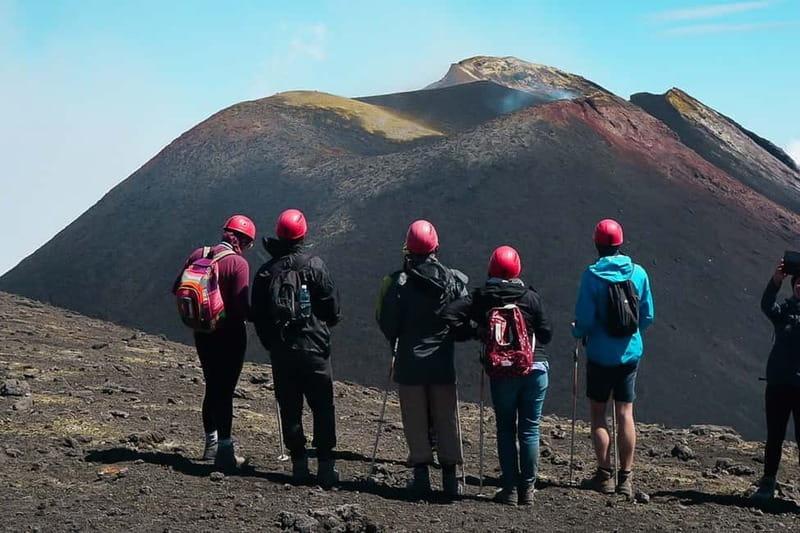
What I like most here is the hands-on safety approach. You get your hiking basics ready for the terrain: trekking shoes, trekking poles, a helmet, and a windproof jacket. That’s not just convenience. On volcanic rock and loose ash, the small stuff becomes big stuff.
Volcanic trails can feel deceptively easy at first—until you hit the slippery patches and the uneven steps. Poles help you stay balanced, and helmets are a reminder that this is a real environment, not a paved walkway. You’ll also appreciate the windproof layer when you’re up near 2,400 metres, where weather can shift quickly.
If you’re used to comfortable city shoes, treat this as a signal to take the equipment seriously. I’d rather be slightly over-prepared than trying to improvise on slick ground.
You can also read our reviews of more hiking tours in Catania
Silvestri Craters safety briefing: how the guide keeps the hike fun and controlled
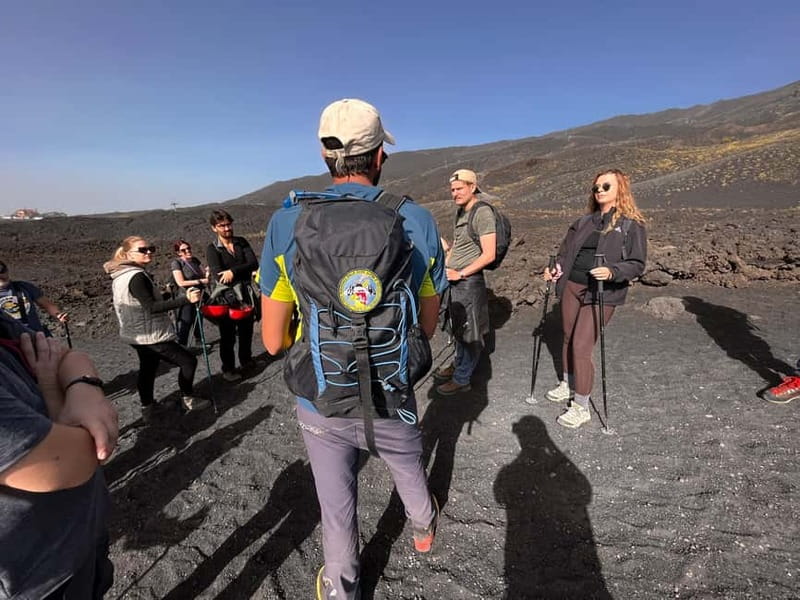
At the Silvestri area, you get a 30-minute safety briefing before you move. This is where the guide sets expectations for the terrain—how to place your feet, how to manage the slope, and what to do when paths get narrow or uneven.
A big reason this works is how guides handle pacing. Names you might see leading these tours include Alessio, Alessandro, Giuliano, Julian, and Ernesto—and they’re all operating with the same goal: keep the group moving steadily while answering questions. You’re not stuck listening; you can ask about eruptions, crater formation, and what you’re actually walking over.
I also like that the briefing isn’t just rules. It turns the hike into a kind of outdoor classroom, where you start noticing the evidence of past activity in the ground beneath you.
From roughly 1,970 m to 2,000 m: the off-trail climb that gets your legs working
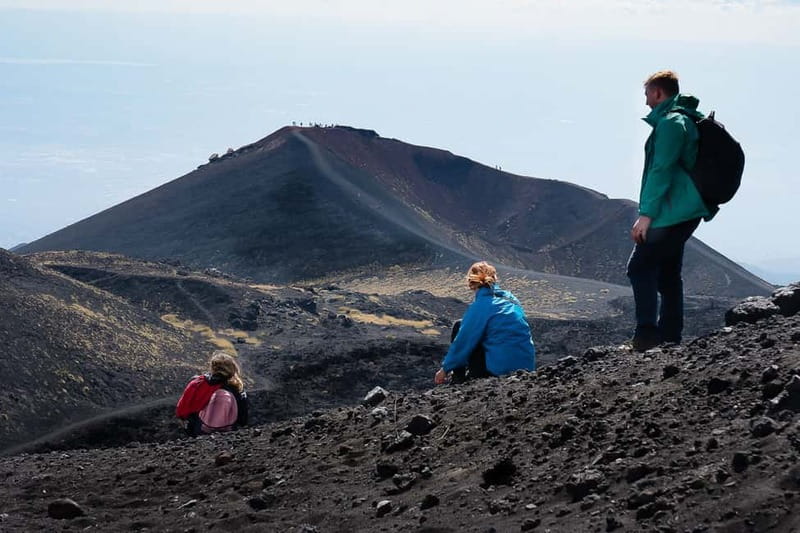
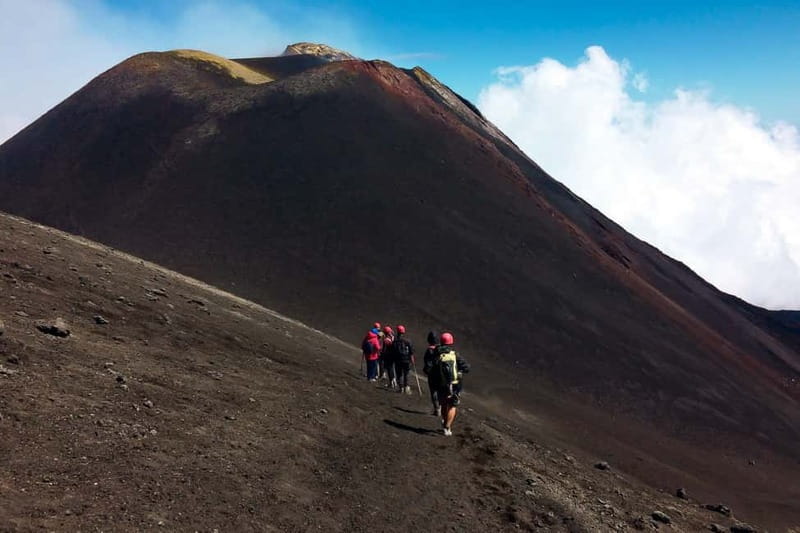
The hike begins around 1,970 metres above sea level and you head toward the Silvestri Craters at about 2,000 metres. That early climb is the “yes, this is real hiking” moment. Even if you’re athletic, you’ll feel the altitude and the uphill rhythm.
Here’s how I’d frame it for you: this isn’t a casual nature stroll. It’s moderate climbing with long walking time, and the pace is designed for groups that can handle stamina more than technical skills.
If you tend to rush when you feel breathless, slow down. The guides will help you keep a rhythm, but you’ll get more from the day if you treat the ascent like a steady effort, not a sprint to the summit views.
Barbagallo Crater and the push toward 2,400 m
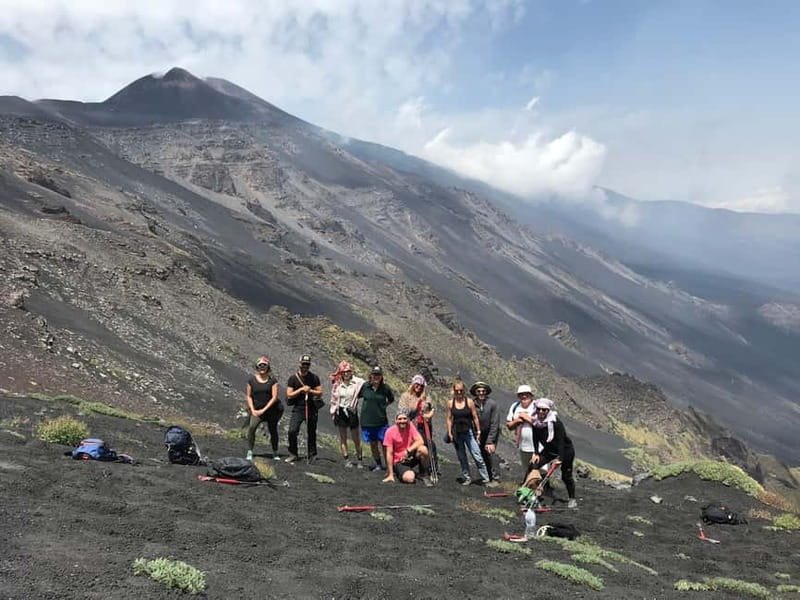
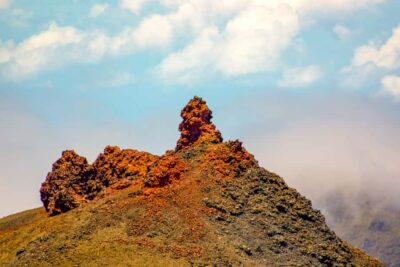
From Silvestri, you move off the beaten path toward the Barbagallo Crater, connected to the July 2001 eruption. This is where Etna stops feeling like a landmark and starts feeling like a living record.
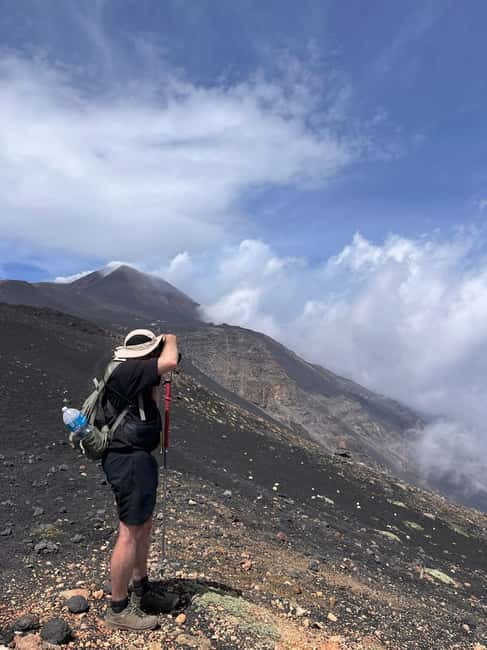
You climb again, reaching around 2,400 metres. At this altitude, you’re working but the rewards arrive fast: bigger skies, sharper views, and that unreal sense that the whole area is shaped by volcanic movement over thousands of years.
You’ll also likely notice how the terrain changes. Volcanic areas often look uniform from a distance, but up close you see different textures of rock and ash. The guide’s job is to connect what you see with what caused it—without turning it into a textbook.
Lunch with a view: Valle del Bove caldera time
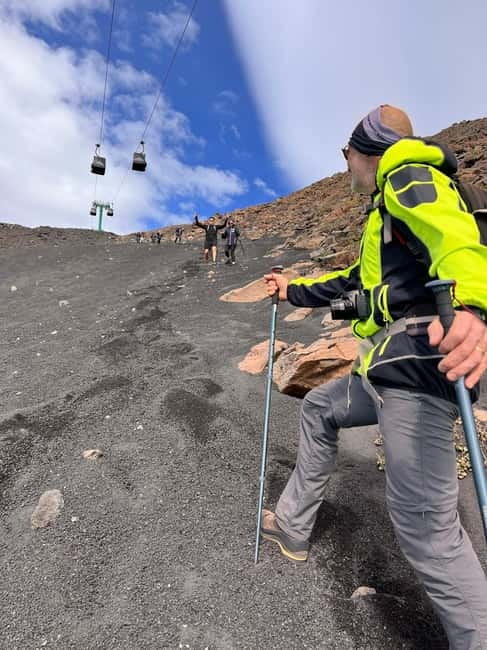
Once you reach your high point, you get panoramic views of Valle del Bove, which is described as the grandest caldera on Mount Etna. This is the part I’d circle on the day if I were planning your schedule.
You stop for a lunch break around 30 minutes, surrounded by volcanic scenery. Since food and drinks aren’t included, I recommend planning your energy like a hiker, not a sightseeing tourist. Bring what you like—sandwiches or snacks—or buy food earlier during the scheduled stop. There’s also time later at the Etna Sud tourist station for a break, so you’re not locked into eating only once.
The best move: eat something you can digest easily at altitude. If you go heavy and greasy, you might regret it as the descent begins.
Grotta Pitagora: stepping into a natural lava tube
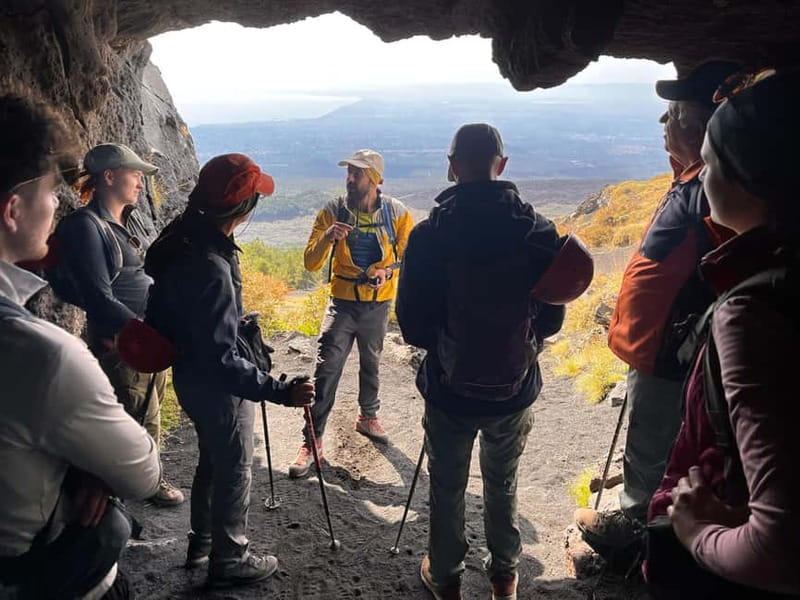
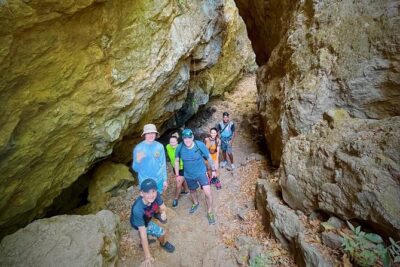
Around 1:15 PM, the descent begins on a different route. One of the highlights is walking through Grotta Pitagora, a natural lava tube cave.
Inside, you can expect a change in temperature and sound. Even if you’ve toured caves before, lava tubes have their own feel because you’re seeing the result of molten rock moving and cooling in a long-ago process. It’s also a practical kind of moment: you get a break from open wind while still staying active.
The cave portion adds variety to the hike. A day of only “up and down outside” can start to blend together. This one interrupts the pattern, and it makes the whole experience feel more like exploration.
Volcanic sand channels and the descent workout
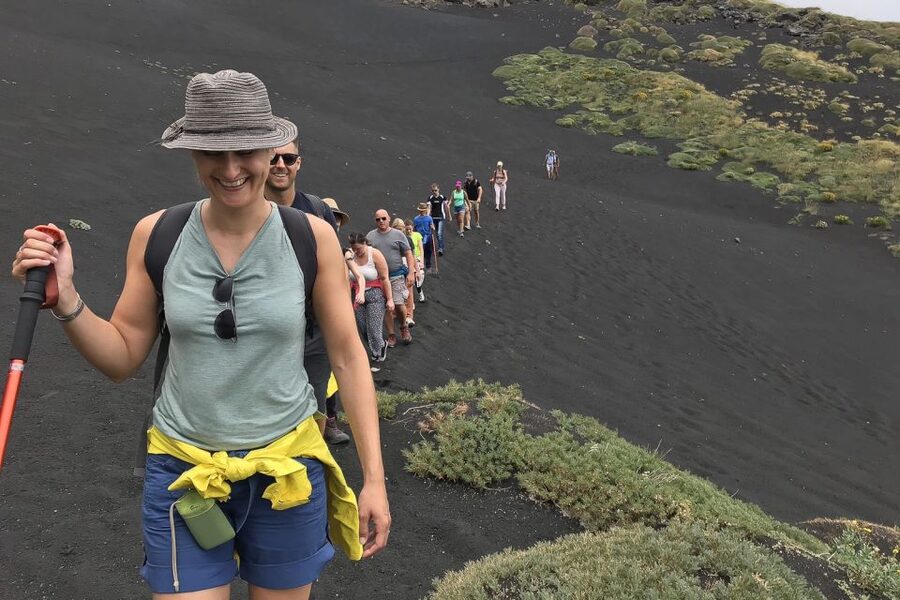
After the cave, you’ll experience that fun, slightly chaotic part: a dash across volcanic sand channels. This is where your poles earn their keep.
Volcanic sand doesn’t behave like normal dirt. It can shift underfoot, and the footing requires small adjustments—step placement, balance, and calm breathing. You might feel your legs burn a bit more here than during the uphill, because descending makes you work differently.
The guide keeps the group moving and helps you pick lines that feel safest. Still, treat it like a workout. If you rush, the terrain punishes you.
And yes—you’ll likely end the day dusty and dirty. That’s part of the deal when you’re walking on real volcanic ground instead of only passing lookouts.
Back near Catania: the late-day decompression stop
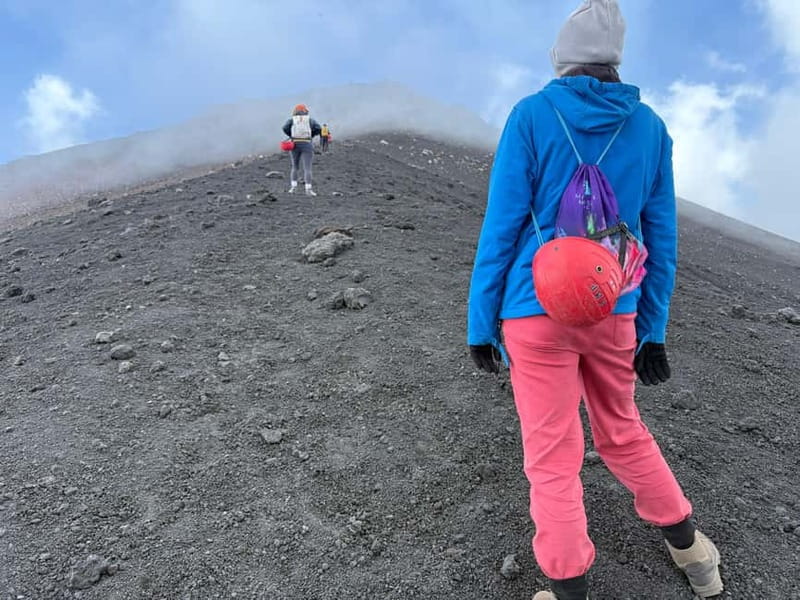
After the main descent and foot time, you’ll return toward the Catania area in the late afternoon. There’s also a stop back at Bar Ristorante Crateri Silvestri near the Silvestri meeting point area, which is handy for regrouping, hydrating, and getting your shoes cleaned off enough to survive the ride.
The drop-off options include Piazza Stesicoro at the end of the day. It’s a nice finish: you get the outdoor experience, then you’re not stuck stranded in the countryside.
Price and what $88 really covers
At $88 per person for about 7 hours, this tour holds together because the main “cost drivers” are included:
- Certified hiking guide
- Round-trip transfer between Catania and the mountain area
- Safety equipment (helmet, windproof jacket, trekking shoes, trekking poles)
- Insurance coverage
Food and drinks are not included, so you’re still responsible for your meals. But the schedule gives you places to eat or buy snacks—especially in the morning and during breaks.
Value-wise, this is one of those tours that makes sense even if you don’t hike at home. You’re not paying to be driven up with no work. You’re paying for equipment, guidance, and a route that’s designed around actually walking the mountain.
Who should take this Etna hike, and who should not
This is best for adventurous hikers who can handle moderate physical challenges and long walking time. The climb can be tough at the start if you’re not used to uphill effort, but it’s manageable if you’re healthy and normally train for long walks.
I’d especially recommend it if you want:
- Volcano geology explained in a human way
- Crater and lava-tube walking, not just viewpoints
- A day that feels outdoorsy and real, even if you’re a first-time hiker
It’s not suitable for people who are:
- Pregnant
- Using a wheelchair or having mobility impairments
- Dealing with heart problems
- Having respiratory issues
- Over 264 lbs / 120 kg
If any of those apply, you’ll be better off choosing a gentler Etna experience that matches your health needs and movement limits.
What to bring (and what to leave behind) for an Etna day
Here’s what you should pack based on the tour requirements:
- Comfortable clothes
- Socks
- Thermal clothing (you can expect cold and wind at altitude)
And a couple practical rules:
- Avoid oversize luggage
- Unaccompanied minors aren’t allowed
- Kids must be accompanied by an adult
Also, I strongly suggest you dress for movement: layers you can adjust, and socks that won’t bunch inside hiking shoes. Your comfort at 2,400 metres is mostly about warmth control and steady footing.
Should you book this Mount Etna adventurous hiking tour?
Book it if you want an Etna day that mixes real hiking, included safety gear, and geology learning you can actually connect to the ground under your feet. The route choice—craters up high, then Grotta Pitagora and volcanic sand channels down—gives you variety in a single day, and that keeps the experience from turning repetitive.
Skip it if you’re looking for a relaxed, low-effort outing. The terrain is uneven, the climb is meaningful, and the wind can be sharp at altitude. If you’re unsure, focus on your ability for long walks and plan to show up with the right layers.
FAQ
Where do I meet for the tour in Catania?
You can meet at Piazza Stesicoro, 32 or at Bar Ristorante Crateri Silvestri. The city-center start time is 8:30 AM.
What time does the hike start, and how long is the tour?
The tour runs for about 7 hours. The meeting in Catania is at 8:30 AM, and the Etna tourist station pickup is 10:30 AM.
How high does the hike go on Mount Etna?
The route reaches up to around 2,400 metres above sea level.
What safety equipment is included?
You’re provided with trekking shoes, trekking poles, a helmet, and a windproof jacket.
Is food included in the price?
No. Food and drinks are not included, but there is a stop for sandwiches on the way to Etna, plus time for a lunch break during the hike.
What level of fitness is needed?
The tour is for people comfortable with moderate physical challenges and long walks in nature. It can be challenging at the start, but it’s suitable if you’re normally trained for long walks.
What languages are the guide(s)?
The tour is guided in English and Italian.
Is the tour ever changed or cancelled due to weather?
Yes. The program may change because of adverse weather or access restrictions by authorities. If cancellation is due to bad weather, you’re refunded.
If you want, tell me your hiking background (and roughly when you’re going, season-wise). I’ll help you judge how cold/windy you should plan for and how to pace yourself on that first uphill stretch.