REVIEW · CATANIA
Mount Etna: Guided Trek 3,000 Meters to the Summit
Book on GetYourGuide →Operated by Etna Est · Bookable on GetYourGuide
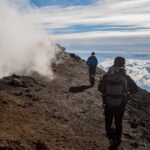
Etna feels like a living planet. This guided trek climbs to 3,000 meters on Europe’s tallest active volcano, with a volcanologist guide walking you through lava flows, summit craters, and the drama of a volcano that still breathes above you. You’ll pair the hike with a cable car ride and a stop at the 2001 Crater, which continues to fume at 2,700 meters.
What I like most is that you’re not just getting a view. You get real context as you walk—our guides (like Luca) keep the story clear and the pace steady, so the altitude feels earned, not rushed. And the day’s shape is smart: cable car first, then summit walking, then an easier descent with stops that break up the effort.
One consideration: conditions on Etna can change fast. The guide may adjust schedules for weather, environmental causes, or volcanic risk, and parts of the path can be exposed with no-trail sand and rock sections—so it’s not a casual stroll.
In This Review
- Key Things I’d Bookmark Before You Go
- Etna Summit Trek at 3,000 Meters: What This Day Feels Like
- Meeting Point at La Terrazza Dell’Etna: Start Smart
- Cable Car Up: Fast Elevation Without Wasting Your Legs
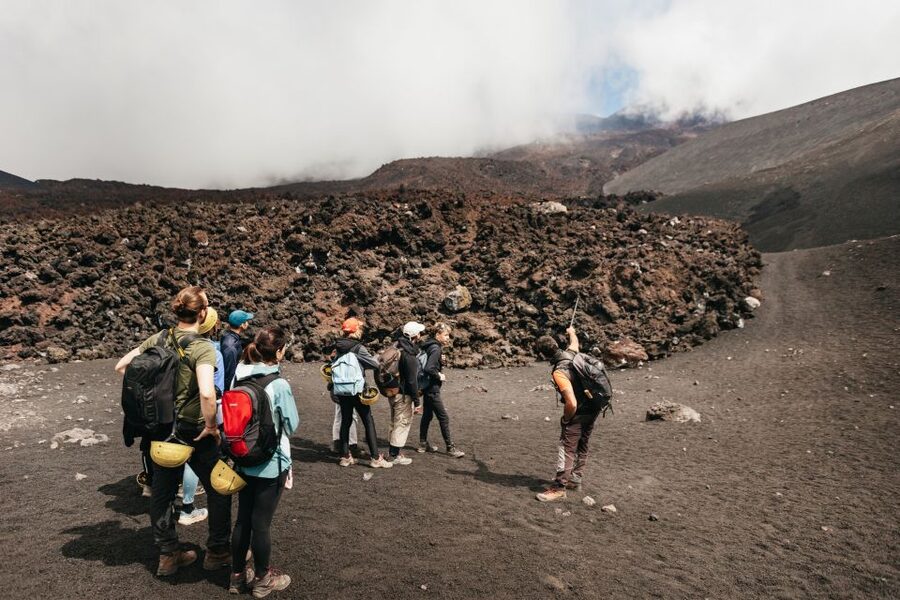
- The Summit Hike to 3,000 Meters: Where the Terrain Gets Real
- Old and Recent Lava Flows: Learning While You Walk
- Descent Plans and Lunch Stop: You’re Not Done After the Summit
- The 2001 Crater Stop at 2,700 Meters: See the Volcano Still Active
- Cable Car Back Down and Wrap-Up: Finish With Energy Left
- What’s Included (and What You Should Double-Check)
- Price and Value: Is $113.29 Worth It?
- Who This Trek Is Best For (and Who Should Skip It)
- Packing Checklist That Actually Helps
- Weather, Volcanic Risk, and Guide Discretion: Plan Flexibility
- Guides Matter: Luca, Marco, Manuel, and the Pace Factor
- Should You Book This Etna Summit Trek?
- FAQ
- What time length should I expect for the Etna guided trek?
- Where does the tour meet and end?
- Is the cable car ticket included in the price?
- What hike altitude does the tour reach?
- What should I bring for comfort and safety?
- Is this tour suitable for kids or people with mobility issues?
Key Things I’d Bookmark Before You Go
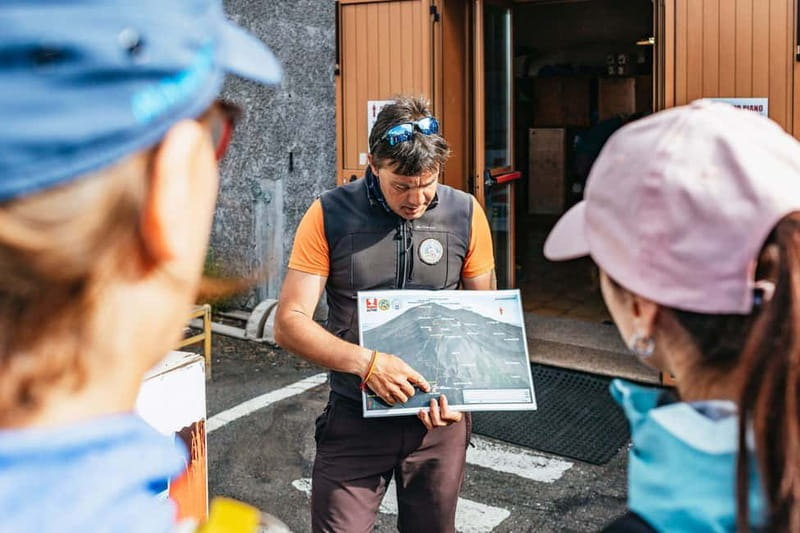
- A volcanologist guide helps you connect what you’re seeing to how Etna works
- Cable car time built in gets you higher without burning the whole day on stairs
- 3,000-meter summit craters means real altitude, wind, and rock underfoot
- The 2001 Crater stop gives you a close look at a still-active feature at 2,700 m
- Helmets and trekking poles are included, which matters on uneven volcanic ground
- Contact lenses are forbidden due to volcanic ash risk, so plan your eyewear
Etna Summit Trek at 3,000 Meters: What This Day Feels Like
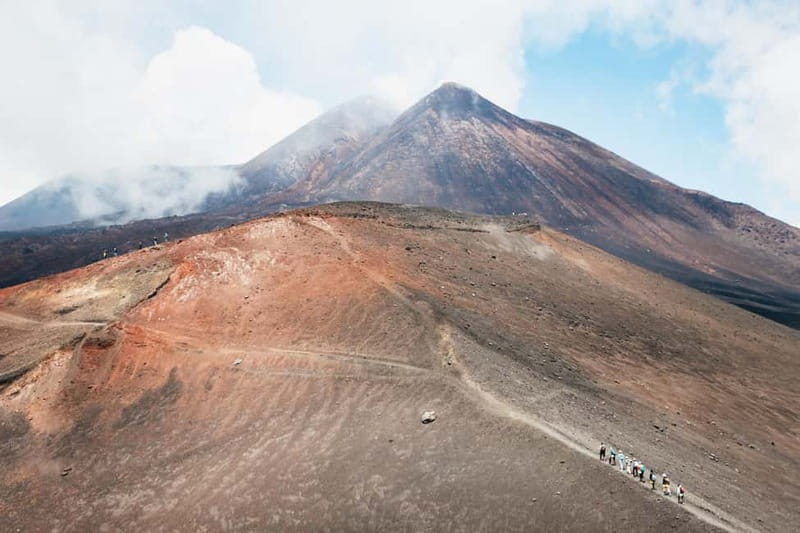
Mount Etna is one of those places where the scale hits you before the explanation even starts. You’re looking at a volcano that’s still active, not a museum model. And when you hike up near the summit craters, the ground starts to make sense in a very physical way: ash, rock, lava surfaces, and the odd geometry of eruption paths.
This tour is built for that effect. You get a volcanologist guide who turns the scenery into cause-and-effect. Instead of just pointing at craters, the guide explains how the region forms and what the different volcanic surfaces mean. That’s what makes the walk feel more than scenic—more like you’re learning the volcano’s language while you hear it breathe in real time.
Also, the day has good structure. You don’t waste the whole 6 hours just fighting elevation. You ride the cable car up to a high starting point, hike to the summit crater area, then come down with a lunch break along the way. It’s a classic “go high, move on your feet, then recover” plan.
You can also read our reviews of more guided tours in Catania
Meeting Point at La Terrazza Dell’Etna: Start Smart
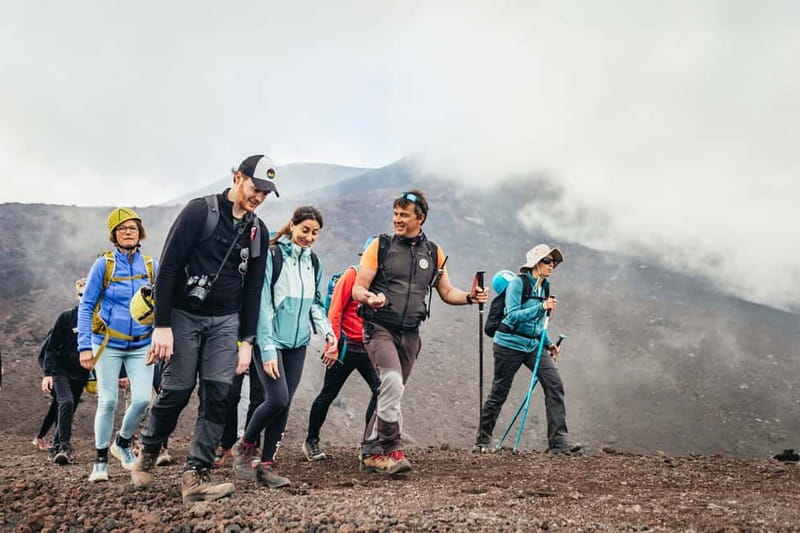
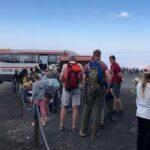
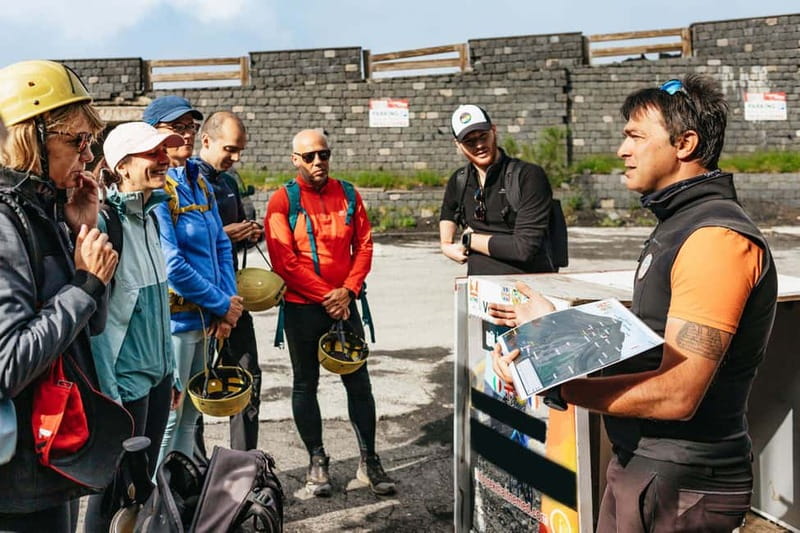
Your day begins at La Terrazza Dell’Etna. That matters because you’re not spending your morning hunting for parking or guessing bus times. You meet, get a briefing, and then you move as a group toward the cable car.
The briefing is more than paperwork. The guide sets expectations about the trek, the terrain, and the way volcanic ash and wind can affect comfort up high. If you’ve never walked on volcanic surfaces, this helps you avoid the classic mistake: showing up in shoes that feel fine on pavement but turn annoying on rock and ash.
If you’re the type who likes to be ready early, arrive a bit ahead. It’s a mountain day, and the smoother your start, the more you’ll enjoy the summit part.
Cable Car Up: Fast Elevation Without Wasting Your Legs
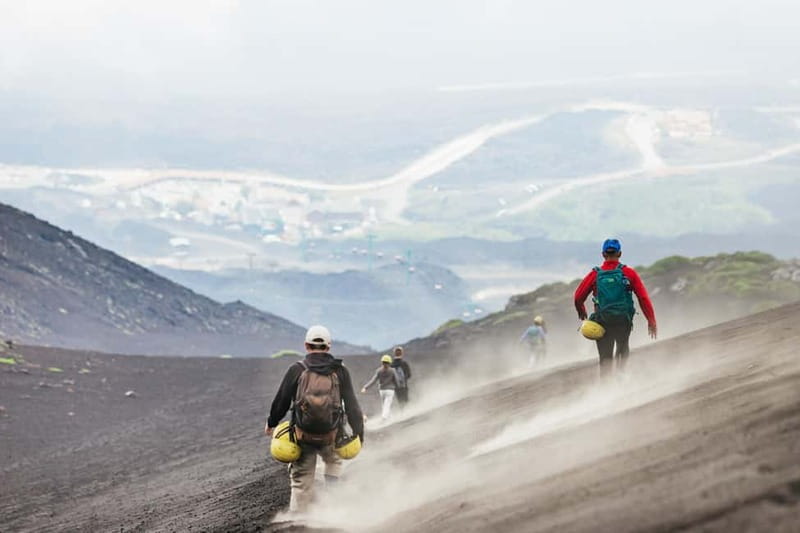
The itinerary includes a cable car ride of about 20 minutes to get you up to roughly 2,500 meters. Then you step out and begin hiking toward the summit crater zone.
This is a smart compromise. If you had to walk from low altitude the whole way, you’d spend most of the day just climbing. Instead, the cable car gives you the high-altitude experience while protecting your energy for the real work: summit walking.
Practical tip: on Etna, wind is often the story, not just the temperature. Sunglasses help, and warm layers become important quickly once you’re higher and exposed. The tour explicitly asks you to bring warm clothing, plus sunglasses, sunscreen, and hiking shoes.
The Summit Hike to 3,000 Meters: Where the Terrain Gets Real
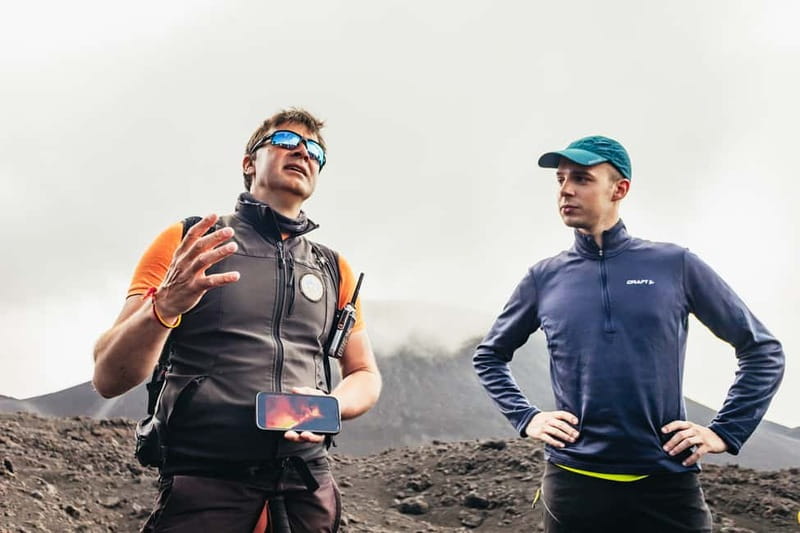
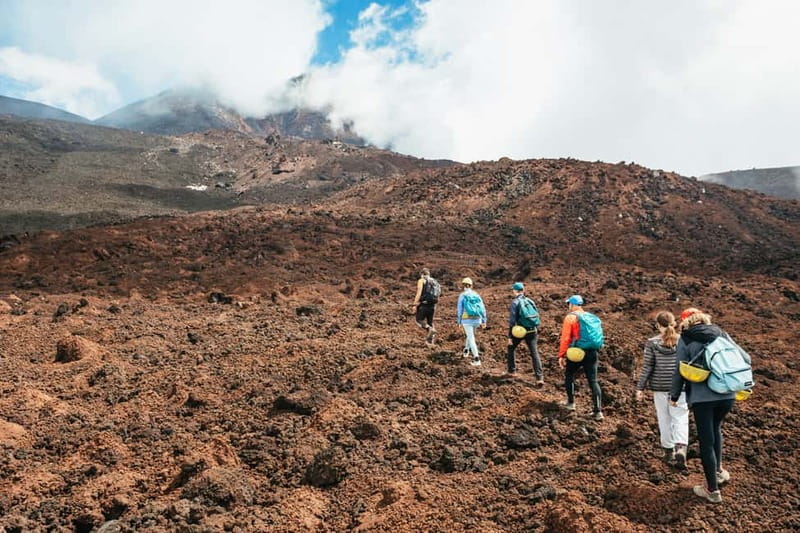
Once you disembark at around 2,500 meters, you hike toward 3,000 meters. This is the core of the tour. Expect otherworldly volcanic ground, and expect that not everything is smooth and friendly.
The tour notes that some parts of the path can be exposed, and it’s suitable for people with medium physical training who are comfortable walking on sand and rock when there aren’t always trails to follow like in a manicured park. In other words: you’ll be walking on volcanic surfaces that can be unstable underfoot.
Two things make this easier:
- You’re not doing it alone. Your guide keeps you moving with the group, and they’re monitoring the conditions.
- Gear is provided. You’ll get trekking poles and helmets. Poles help your knees on uneven ground and give you extra stability when the ground shifts.
In the best cases—clear weather with enough visibility—you can feel your effort turn into awe right as you reach the crater base. Several guides (like Luca and Marco, depending on the day) are praised for pacing. The vibe you want is steady, not sprint-y. The tour is designed so you hike in chunks: about 2 hours, then later another stretch, with stops built into the plan.
Old and Recent Lava Flows: Learning While You Walk
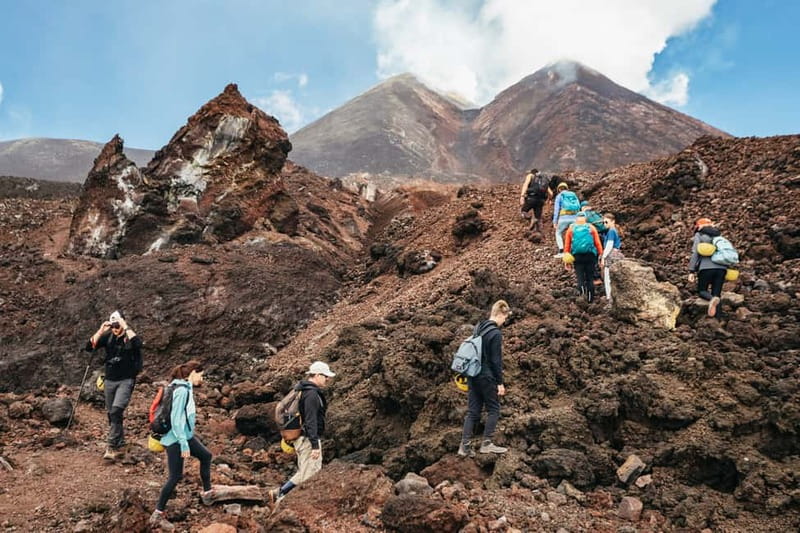
One of the most valuable parts of this day is that the guide uses what you’re passing to teach you what Etna has been doing recently and longer-term. As you move across the volcanic terrain, you’re also moving through time—old lava flow areas and more recent eruption evidence.
This is where a volcanologist guide earns their keep. You start seeing differences you’d miss on your own. The guide helps you connect eruption behavior to the shapes and materials you’re stepping on.
And if you’re worried about understanding, don’t be. The guides do a good job keeping it engaging and practical. Some groups mention humor and storytelling, and people also highlight how guides explain both geology and the region around Etna, not just the crater itself.
You can also read our reviews of more hiking tours in Catania
Descent Plans and Lunch Stop: You’re Not Done After the Summit
After you reach the summit crater base area, you descend back to around 2,500 meters. Then there’s a break for lunch, though it’s not included, so bring packed food.
This lunch break isn’t just a reward. It’s also where you reset mentally and physically. At altitude, even when you feel strong, your body can get tired faster than you expect. Eating here helps you enjoy the rest of the day rather than power through it like a checklist.
As you descend, the wind and temperature can shift. The trek description is clear that you should pack extra layers. People also recommend windproof protection because the top can get chilly even in conditions that feel mild lower down.
The 2001 Crater Stop at 2,700 Meters: See the Volcano Still Active
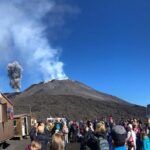
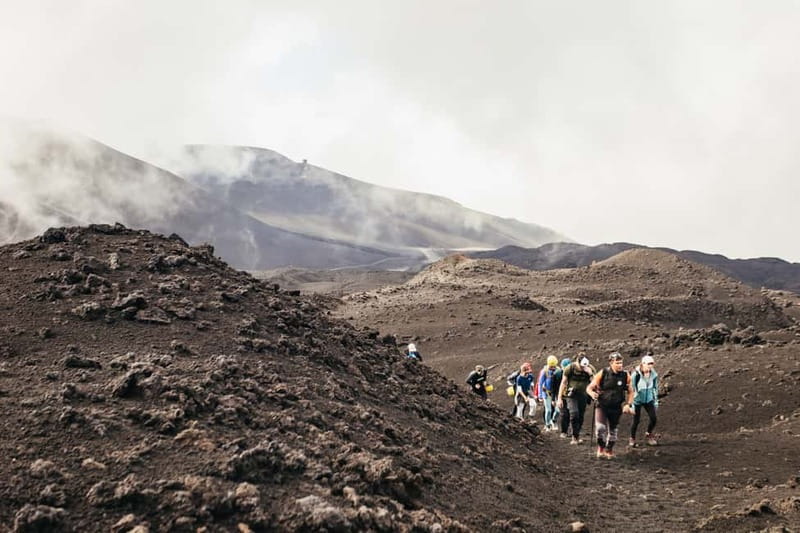
During the descent, you stop at the 2001 Crater at about 2,700 meters. The big deal is simple: it still fumes.
This stop is one of the most meaningful moments of the tour because it makes Etna feel current. It’s not a historic stage set; it’s a feature still interacting with the atmosphere. If wind direction shifts, you might notice the gas smell or see fumes more clearly—so a face covering can be a good idea, especially when wind carries gases toward you.
One thing I’d plan for: comfort. The tour recommends extra clothing and warmer layers, and some reviews also suggest covering your face when gases blow your way. That’s not about drama; it’s about staying comfortable enough to look and listen while you’re there.
Cable Car Back Down and Wrap-Up: Finish With Energy Left
At the end, you return by cable car to La Terrazza Dell’Etna. The tour duration is about 6 hours, and the structure generally keeps you moving without dragging you into an all-day grind.
The payoff is that you can end the hike feeling like you experienced the summit region, not just rode a lift and walked a short path.
What’s Included (and What You Should Double-Check)
Included:
- Guide
- Helmets
- Trekking poles
- Cable car ticket
- Insurance
Not included:
- Hotel pickup and drop-off
- Cable car ticket (noted as 50 EUR to be paid on site)
- Lunch
That cable car detail is worth a quick check before you go. The tour info both says cable car ticket is included and also says it’s paid on site. In practice, this is the kind of thing that gets clarified in your booking confirmation. I’d treat your confirmation message as the source of truth and plan for the possibility that you’ll be asked to pay on site.
Either way, this is still strong value for what you’re getting: a guide plus summit-height hiking gear, plus protection in the form of insurance.
Price and Value: Is $113.29 Worth It?
At $113.29 per person, you’re paying for a very specific set of things:
- A guide with specialized expertise (not just a generic hiking leader)
- Summit-height gear support (helmets, poles)
- A full day timeline that gets you to dramatic altitudes
You’re also paying for the fact that this is a working volcano with real logistics and risk management. People often underestimate how much safety planning matters on unstable ground and in rapidly changing weather. This tour includes insurance, which is part of the overall value.
Yes, there may be extra costs depending on how your cable car ticket is handled, and lunch is on you. But for many people, the cost-to-experience ratio is exactly why Etna is worth targeting as a day trip: it’s not a slow, standard sightseeing route. It’s a physical encounter with an active place.
Who This Trek Is Best For (and Who Should Skip It)
This is a good fit if you:
- Have medium fitness and can walk on sand/rock
- Are comfortable with exposed sections and uneven ground
- Want a guide who explains what you’re seeing, including volcanic features like the 2001 Crater
It’s not for you if you have:
- Heart problems
- Vertigo
- Respiratory issues
- Mobility impairments
- If you’re pregnant
- If you’re traveling with children under 10
Also note the eyewear rule: contact lenses are forbidden due to volcanic ash spread by wind. If you wear contacts, switch to glasses for the day.
If you’re unsure about your comfort with altitude, ask questions before booking. The tour is designed for people who can handle height plus wind.
Packing Checklist That Actually Helps
Here’s what the tour specifically asks you to bring, and what I’d treat as non-negotiable for comfort:
- Hiking shoes
- Sunglasses
- Sunscreen
- Warm clothing
- A packed lunch
- 1.5 liters of water minimum, plus snacks
- Extra layers: an extra T-shirt, long trousers, pullover/anorak, gloves, hat (recommended)
- A 10 to 20-liter backpack
Two small tips that come up in real-world use on Etna:
- Wear high socks and make sure your trousers cover the top of your boots to keep pebbles out.
- Add a face covering for times when gases blow your way.
And yes, trekking poles are recommended even though they’re included—because using them correctly helps you stay steady on descent.
Weather, Volcanic Risk, and Guide Discretion: Plan Flexibility
Schedules are subject to change. Weather, environmental causes, or volcanic risks can interrupt or change the route at the guide’s discretion. That’s not a reason to avoid the tour—it’s part of how you stay safe on a live volcano.
If the weather is windy or visibility is reduced, your experience may feel a bit different than you hoped. The good news is that a good guide adapts so you still get the best possible version of the day.
Guides Matter: Luca, Marco, Manuel, and the Pace Factor
People often remember their guide more than the altitude number. And in this case, the standout names that keep appearing are Luca, Marco, and Manuel—each mentioned for keeping the trip organized, adapting to conditions, and explaining Etna clearly.
What you want from the guide is pacing that fits mixed groups. Multiple people praise that the pace is neither too slow nor too fast, and that guides keep everyone moving safely even when weather turns.
On hard days, Manuel is praised for taking care of people in tough conditions like rain, frost, or snow (even in late spring). That’s a reminder to pack for the possibility of colder, windier conditions than you expect.
Should You Book This Etna Summit Trek?
Book it if you want:
- A true Etna summit experience, not just a viewing stop
- A guided, science-based approach with a volcanologist
- A hiking day with structure: cable car up, summit walking, then a calmer descent with lunch
Consider skipping or choosing a gentler option if you:
- Have vertigo, respiratory issues, heart concerns, or mobility limits
- Don’t like exposed, uneven surfaces
- Are relying on contact lenses (you’ll need glasses)
- Can’t handle wind and cold at altitude even with layers
If you’re deciding between Etna tours, this one’s strength is that it combines serious altitude with expert guidance. When conditions cooperate, it’s the kind of day that makes you look at a volcano with respect—and understanding—long after you’re back down.
FAQ
What time length should I expect for the Etna guided trek?
The tour runs for about 6 hours. You’ll also see a note that starting times vary based on availability.
Where does the tour meet and end?
The meeting point is La Terrazza Dell’Etna. The tour ends back at the same meeting point.
Is the cable car ticket included in the price?
The information provided is inconsistent: one section lists the cable car ticket as included, while another says the cable car ticket is paid on site for 50 EUR. Check your booking confirmation for the final answer.
What hike altitude does the tour reach?
The tour describes hiking from around 2,500 meters up to 3,000 meters, with a stop at the 2001 Crater at about 2,700 meters during the descent.
What should I bring for comfort and safety?
Bring hiking shoes, sunglasses, sunscreen, warm clothing, and a packed lunch. You’re also advised to carry water (at least 1.5 liters) and a 10 to 20-liter backpack.
Is this tour suitable for kids or people with mobility issues?
No. It’s not suitable for children under 10, and it’s also not suitable for people with mobility impairments, vertigo, heart problems, or respiratory issues.