REVIEW · LOMBOK
2 Day Guided Hiking to Mount Rinjani Senaru Crater Rim
Book on Viator →Operated by Tour and Travel · Bookable on Viator
Lombok’s crater rim starts before dawn. On this 2-day guided hike to the Senaru Crater Rim of Mount Rinjani, you’re in the thick of jungle, waterfalls, and big crater views, with sunrise and sunset moments over Segara Anak. It also adds a cultural layer through Senaru and the Sasak people, so you get more than just steps and scenery.
I especially like the way this tour keeps things small (max 6 travelers) and how the day plan is built around real energy points. You’re not just hiking in the abstract; you’ll be supported by local guides and porters and fed with lunch and dinner included, including traditional Indonesian food. The experience is the kind where names like Baba, Hardy, and Tuman come up for a reason: people feel looked after from the start.
The main drawback is that this is still a proper hike. You need moderate physical fitness, and the second day includes a long 4–5 hour descent, so plan for tired legs and slowing down where needed—especially since the trek is also weather dependent.
In This Review
- Key things I’d mark on your map before you go
- Senaru to the Crater Rim: What This Two-Day Plan Really Does
- Day 1 in Motion: Coffee Plantations, Jungle Gate Moments, and Team Support
- Setting Up for Sunset: Camping Under Starlight Without Losing the Plot
- Day 2 Sunrise Over Segara Anak: The Photo Window You’ll Wait For
- The Descent Back to Senaru: A 4–5 Hour Reality Check for Your Knees
- Sasak Culture in Senaru: Why This Tour Feels More Human Than Scenic Only
- Price and Value: Where Your $165 Goes (and What to Budget Extra)
- Getting the Timing Right: Start Time, Weather Dependence, and Group Limits
- Who Should Book This Senaru Crater Rim Hike
- Should You Book This Tour?
- FAQ
- FAQ
- How long is the Senaru Crater Rim hike?
- Where does the hike start and end?
- What time does the tour start?
- How many people are in the group?
- What’s included in the price?
- Do I need to tip the guide or porter?
Key things I’d mark on your map before you go
- Start time matters: you’re set up for an early start from Senaru (around 6:30 am).
- Coffee plantation warm-up: the day begins with a cool-morning walk through coffee plantations and greenery.
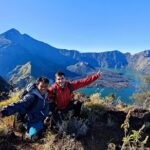
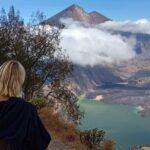
- Crater-rim payoff: expect sunrise and strong photo time around Segara Anak Lake.
- Camp and night sky: you’ll camp under the starlit night as part of the two-day rhythm.
- Real cultural context: time in Senaru connects you with Sasak life and village traditions.
- Small-group feel: max 6 travelers keeps the pace more manageable and attention more personal.
Senaru to the Crater Rim: What This Two-Day Plan Really Does
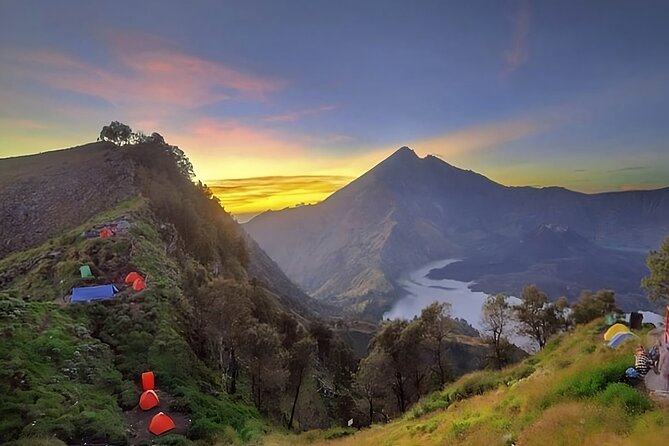
This is a classic Rinjani experience, but with a practical twist: you’re not stuck inside one generic nature routine. The schedule is built around the big natural moments—sunrise, sunset, and those crater views over Segara Anak—while still leaving room for the human side of Lombok, especially Sasak culture.
Day 1 gets you moving through lush areas and toward the trekking rhythm. Day 2 leans into the payoff (early light over the lake), then finishes with the reality check: a long downhill return to Senaru village. That mix is why I like this format. You get a full arc—effort, reward, and then a proper descent.
Also, this tour is designed for small groups. When you’re hiking with fewer people (max 6), the guide can adjust pace, manage breaks, and keep an eye on everyone without turning the day into a conveyor belt.
Day 1 in Motion: Coffee Plantations, Jungle Gate Moments, and Team Support
Your day begins in Senaru, meeting at Senaru, Bayan, North Lombok. The day starts around 7:30–8:00 am at the Rinjani Trekking Centre in Senaru, though the overall start time is listed as 6:30 am. In other words: it’s an early-morning start even before the hike truly begins.
The first stretch is described as a walk through coffee plantations and lush greenery, lasting about 30 minutes, with a short break at a tropical rainforest gate. I like this because it isn’t an instant assault on altitude. It’s a gentle ramp-up while you’re still fresh and warming up.
From there, the experience shifts into the thicker Rinjani trekking vibe: thick jungle, waterfall moments, and the feeling of moving through a living mountain environment. You’ll also be living the team-based side of this trek—local guides for safety and context, plus porters who help manage the heavy parts. That matters because the point isn’t to turn the hike into logistics stress.
This is also when the eco angle is part of the pitch: the idea is to follow practices that keep the trail and camps more responsible. You’re not asked to be a mountain monk, but you are expected to behave like someone sharing a sensitive place.
Setting Up for Sunset: Camping Under Starlight Without Losing the Plot
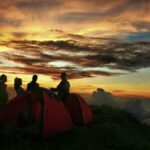
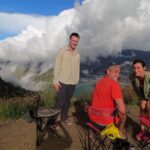
The two-day format is built for a camp night, with the tour description calling out camping under a starlit sky. That’s one of those details that sounds poetic until you remember it’s actually useful. Camping overnight helps you time the big light moments—sunrise and sunset—without needing extreme speed.
Day 1 is where you’re positioned for that night-and-morning rhythm. You’ll be out in the Rinjani environment long enough that your body learns the pace: pause, breathe, keep moving, don’t rush just because the group looks eager.
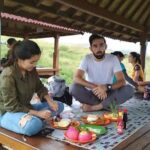
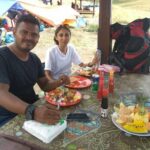
Food is part of the experience too. Dinner is included, and the tour says the meal is traditional Indonesian cuisine. In plain terms: you’ll likely feel better the next morning when you’re not running on packaged snacks alone.
This is also where the guide makes a difference beyond just pointing the way. Good local guidance helps you read the trail conditions, understand why you’re stopping at certain times, and connect what you see to the people living nearby. Names like Baba and Tuman show up in the conversation around this kind of support, which is a sign that guides here aim for more than route management.
Day 2 Sunrise Over Segara Anak: The Photo Window You’ll Wait For
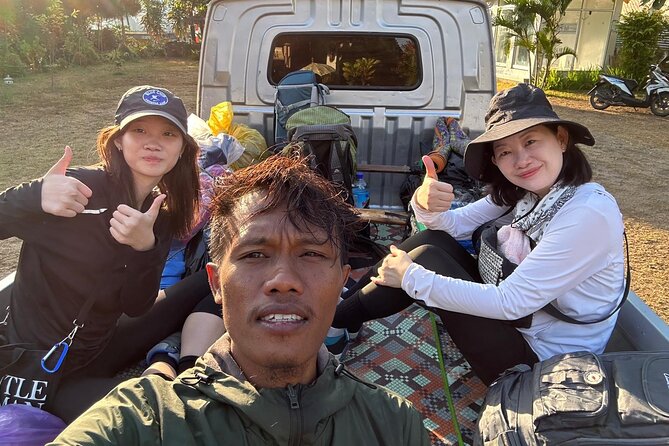
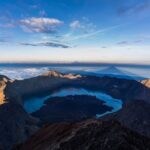
Day 2 starts after breakfast, and then it turns into sunrise time. The schedule specifically mentions enjoying the sunrise and taking pictures with the scenery of Segara Anak Lake. If you care about photos, this is the portion to plan your energy around.
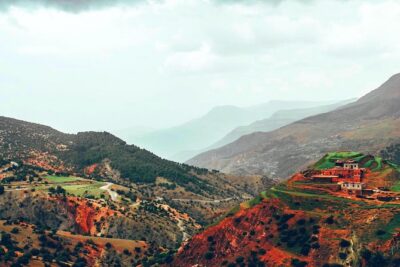
The crater rim area gives you that Rinjani-style scene where the lake becomes the anchor point. Segara Anak is the name you’ll keep hearing, and it’s easy to see why it’s the centerpiece: you’re looking down and out from a high vantage, and the whole scene feels both dramatic and strangely calm once the morning light hits.
This part of the day also works well if you’re traveling for meaning, not only views. The tour’s framing connects the sunrise and the rim experience with the Sasak people and their surroundings. Even when the itinerary doesn’t spell out each ritual moment, you’ll get context through village life and the general cultural atmosphere of Senaru.
One practical note: sunrise means early again. Even if the hiking is finished later, your schedule is still built around light. If you’re the type who needs a strict bedtime to function, set expectations now.
The Descent Back to Senaru: A 4–5 Hour Reality Check for Your Knees
After sunrise and lake photos, you’ll head down to Senaru village. The itinerary mentions 4–5 hours back down, including breaks and lunch on the way, with lunch between stops referred to as pos2 or pos extra.
This is the part many people underestimate because it’s “downhill,” which sounds easier. Downhill can be tough on knees and ankles, and it’s easy to burn out if you try to keep the same pace you used uphill. The good news is that you get breaks, and lunch is included, so you’re not forced into an energy crash mid-descent.
I also like that the tour doesn’t pretend the descent is trivial. A guided return of this length is valuable because you’re still on a trail where footing and pacing matter. Your guide is also the one helping you manage the flow of the group—especially useful when you’re tired.
If you know you tend to get sore going downhill, treat this as a day for steady movement. Don’t race to “prove” anything; the mountain does not care about your pride.
Sasak Culture in Senaru: Why This Tour Feels More Human Than Scenic Only
This experience explicitly positions itself as more than hiking. It talks about meeting the Sasak people, visiting traditional villages, and witnessing ancient rituals. The itinerary detail doesn’t list every village stop with names, but the cultural focus is still clear in the way the tour is described.
Why does that matter? Because Rinjani isn’t just a natural attraction sitting in isolation. Senaru is a living place with traditions, and the people around the mountain have their own rhythm and meaning. Even small exchanges—how people live, how the day is organized, how rituals fit into the wider culture—can make the hike feel grounded.
This is also one reason a guide is more valuable here than a generic map. A local guide can connect what you’re seeing to the community nearby, and that turns “wow” into something you can understand.
If you want a trek with a story—something tied to the place rather than just an achievement—you’ll probably find this part of the tour worth the early start.
Price and Value: Where Your $165 Goes (and What to Budget Extra)
The price is listed at $165 for a roughly two-day guided trek. That doesn’t sound cheap until you compare what’s usually bundled into a guided volcano hike: a guide, support staff, and meal planning for days in the field.
Here, you also get lunch and dinner included, plus the tour description includes camping and a guided cultural component. The group size limit (max 6 travelers) is another value driver. Smaller groups generally mean less waiting, fewer bottlenecks, and a more attentive experience—things you feel on the trail.
What’s not included is also clearly stated: tipping to the guide and porter, and the cost excludes any extra porter to carry your own luggage. That means you should think about budgeting beyond the base ticket. If you’re traveling light, you might not need an extra porter, but it’s still smart to plan for tipping as part of the real cost of a supported trek.
Finally, the tour uses mobile tickets. That’s small, but it reduces hassle when you’re moving between offices, meeting points, and registration checkpoints.
Getting the Timing Right: Start Time, Weather Dependence, and Group Limits
A key detail is timing. The start time is listed as 6:30 am, and the day 1 trek-centre start is between 7:30 and 8:00 am. So even if the hike starts later, your day begins early enough that you’ll want to be organized the night before.
Weather is another deciding factor. The tour notes that it requires good weather, and if it’s canceled due to poor conditions, you’ll be offered a different date or a full refund. That’s not a bonus; it’s just reality on a volcano hike. If you’re on a tight schedule, keep a little flexibility in your travel plan.
Also, you’re hiking with a small cap: maximum 6 travelers. That’s an actual comfort upgrade when you’re dealing with uneven terrain and slow moments. You’re not swallowed by a huge group that forces you to follow one pace.
Moderate physical fitness is required. And while that’s a helpful phrase, the day structure makes it feel real: you’ll walk through jungle sections and then finish with a multi-hour downhill return.
Who Should Book This Senaru Crater Rim Hike
This tour fits best if you want three things together: crater rim sunrise/sunset, real trekking effort over two days, and a cultural connection to Senaru and Sasak life. If that mix is what you’re after, the two-day structure makes sense.
You’ll likely enjoy it if you:
- Prefer a small group experience over big-group tourism
- Are comfortable with an early start and a long descent day
- Want the payoff of Segara Anak Lake viewpoints at the right light
You might want to skip this if you:
- Have limited tolerance for downhill strain on legs
- Want an easy, casual walk with minimal physical challenge
- Can’t be flexible if weather forces date changes
Should You Book This Tour?
If you’re choosing between a casual hike and a real guided volcano outing, this is the “real” option—but still manageable with moderate fitness and a supportive team. The base price looks fair for a two-day guided experience with lunch and dinner included, small-group size, and the crater-rim sunrise payoff.
My recommendation: book it if you can handle early mornings and a 4–5 hour downhill day, and if you care about more than just photos. If your main goal is comfort above all else, or you’re unsure about your leg tolerance, you’ll probably be happier with something less demanding.
FAQ
FAQ
How long is the Senaru Crater Rim hike?
The tour is listed as 2 days (approx.).
Where does the hike start and end?
It starts at Senaru, Bayan, North Lombok Regency, West Nusa Tenggara, Indonesia and ends back at the same meeting point.
What time does the tour start?
The start time is listed as 6:30 am.
How many people are in the group?
The tour has a maximum group size of 6 travelers.
What’s included in the price?
Lunch and dinner are included.
Do I need to tip the guide or porter?
Tipping to the guide and porter is not included in the price, and extra porter service for carrying your luggage is also not included.