REVIEW · METEORA
3-Hour Hiking and Scramble Guided Tour of Great Saint in Meteora
Book on Viator →Operated by Visit Meteora · Bookable on Viator
Meteora turns hiking into rock work. This 3-hour hike and scramble on Great Saint delivers real height and real views—plus the kind of safety gear you want when the trail stops being just a trail. I like the setup: professional help, crisp instructions, and a plan that gets you up, over, and back without rushing. The main catch is simple: this is for a strong fitness level, with scrambling and balancing on rocky sections.
You start from the Kastraki area (8:30 am), meet your guide, and get geared up right away, so the tour feels focused from the first minute. You’ll likely hear memorable local context along the way, and in past groups, guides like Chris and Costas have been praised for being warm, engaged, and safety-minded. The other consideration is that this is outdoors and weather matters—so go with the assumption that conditions drive how smooth your hike feels.
In This Review
- Key highlights to know before you go
- A 3-hour Meteora scramble with real safety gear
- Kastraki meetup at 8:30: gear up and get your game plan
- The Holy Spirit rock route: scrambling where it matters
- The 360-degree payoff: where the photos happen (and where the breath happens)
- Descending back down: staying sure-footed on the way out
- Price and value: what $90.36 includes (and why it’s not just a view)
- Who this Great Saint hike is best for (and who should skip it)
- Weather, small groups, and English-led guidance
- Should you book the 3-Hour Great Saint hike and scramble?
- FAQ
- How long is the Great Saint hiking and scramble tour?
- What should I expect in terms of difficulty?
- What equipment is provided?
- Is the tour offered in English?
- Is hotel pick-up included?
- Where does the tour start and end?
Key highlights to know before you go
- Small group size (max 6): more personal coaching when the route gets scrambly
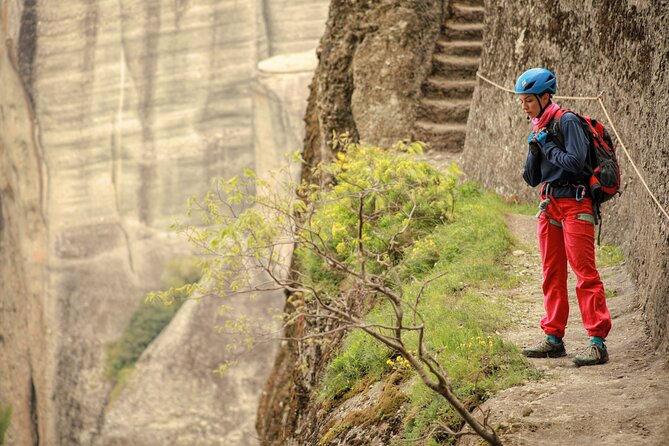
- Helmets + harness + via ferrata equipment: safety gear is part of the experience, not an add-on
- 360-degree views from Great Saint: big panorama payoff for a short time investment
- Scrambling and balancing on rock formations: expect feet-on-rock moves, not just walking
- Professional English-speaking mountain guide: clear guidance when you need it
- Bottled water included: you’ll start the hike topped up
A 3-hour Meteora scramble with real safety gear
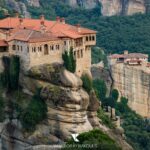
Meteora is famous for monasteries on top of towers of rock. This tour takes you into the “how do people even reach that?” world by turning a hike into a controlled scramble. If you like active travel—movement, altitude, handholds, and that moment when you realize the view is bigger than your phone screen—this is your kind of morning.
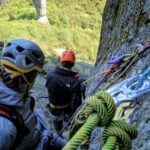
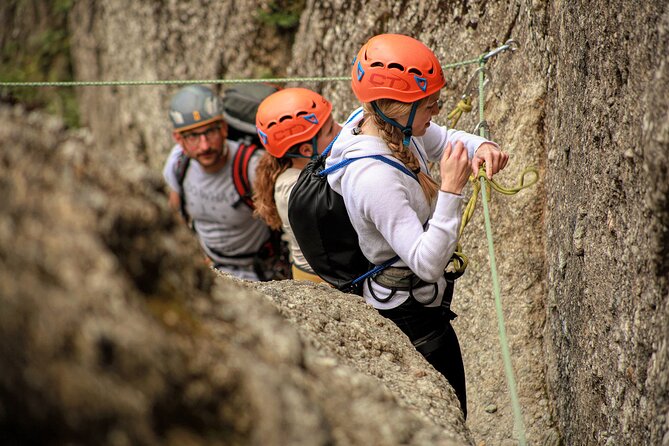
What makes it feel like good value is that the tour doesn’t treat safety as a formality. You’re given a climbing harness, helmet, and via ferrata equipment before you start. That matters because the hardest part here isn’t the distance; it’s the technical bits where footing and balance are the whole game.
The time frame is also smart. At about 3 hours, you’re getting the experience without losing your entire day to travel and logistics. That’s especially useful if you’re doing other Meteora sights the same trip day or staying near Kastraki.
You can also read our reviews of more guided tours in Meteora

Kastraki meetup at 8:30: gear up and get your game plan
Your tour starts at Qastiro Meteoramesohori, Kastraki 422 00, Greece, with a start time of 8:30 am. You’ll meet at the center of the old habitation of Kastraki village, where your guide will handle the basics: a safety briefing and the equipment handoff. You’ll also have the option of pick-up service if you prefer it, though it isn’t listed as included.
This “gear first” approach is the part I appreciate most. It means you’re not hiking for 20 minutes wondering how serious the scramble is. Instead, you learn how to move on the rocky sections while you’re still fresh and before adrenaline gets too loud.
The group is small—maximum 6 travelers—so you’re not lost in a crowd. With a smaller group, your guide can adjust explanations in real time, like how to place your feet, when to keep three points of contact, and how to take a breath before the next awkward step. Based on past feedback, guides like Chris and Costas have been recognized for being kind and attentive, which is exactly what you want on a technical route.
The Holy Spirit rock route: scrambling where it matters
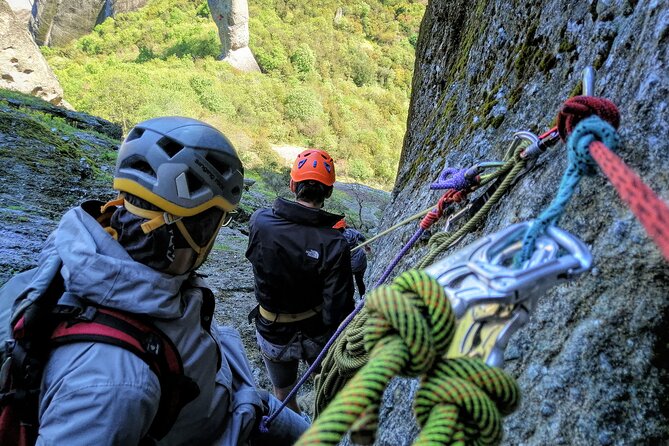
After Kastraki, you’ll hike up the trail and hit the fun part: rock formations that require scrambling and balancing skills. This isn’t a casual stroll. It’s more like the trail asks your body to cooperate—calves and thighs working, eyes scanning for stable footing, and hands sometimes helping you move where walking alone won’t cut it.
Here’s the practical mindset that helps: treat it like a guided “movement lesson,” not a race. Your guide stays with you and supports the group throughout the technical sections. That support is key, especially if you’re comfortable hiking but less used to climbing-style steps.
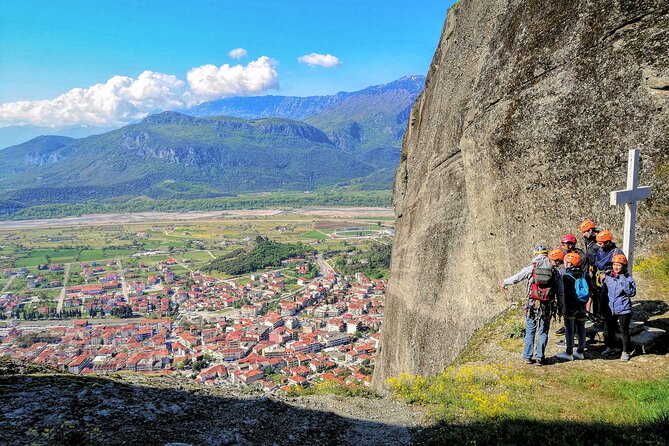
As you near the top, the effort pays off. At the top of Great Saint, you’ll get a 360-degree view of Meteora’s monasteries and rock formations. This is the moment where the whole morning clicks. The scramble suddenly feels like the point, because you’re not just looking at Meteora—you’re seeing how the pieces connect in every direction.
The 360-degree payoff: where the photos happen (and where the breath happens)
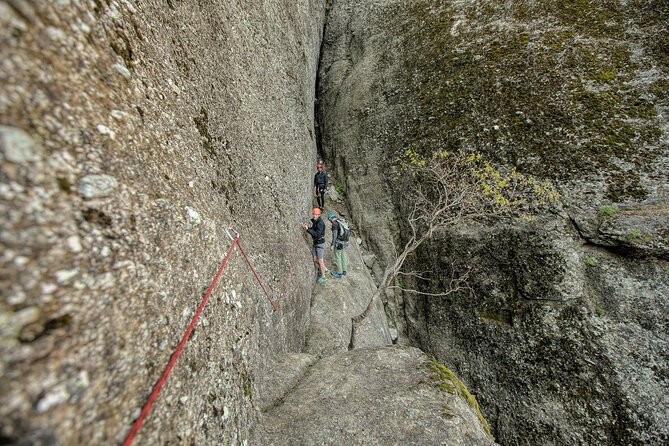
At the top of Great Saint, you’ll stop long enough to catch your breath and enjoy the view. This isn’t just “reach the summit and keep walking.” You’ll have time to take in what you came for, then begin descending back down the trail.
For photos, I’d plan to pause rather than sprint. The best light and composition often take longer than your legs do. Also, if you feel steady at the top, take a second to look around slowly—left, right, and then straight down. Meteora’s scale hits differently when you see the height and spacing of the rock towers from multiple angles.
From past group experiences, this tour has been described as a highlight of trips to Greece, mainly because the view feels earned. That “earned” part is real: you don’t get this panorama by standing in one place all morning. You get it after you’ve worked for it.
Descending back down: staying sure-footed on the way out
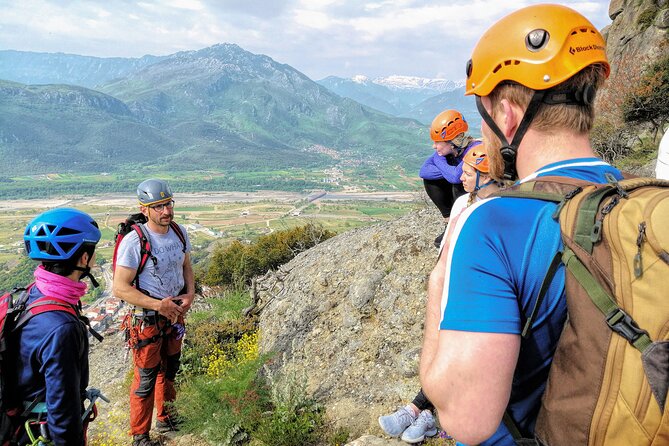
The route isn’t finished once you’ve reached the top. You’ll descend back down the trail, and this is where a lot of people quietly struggle—not because it’s impossible, but because descending uses different muscle control than climbing.
Even if you feel strong on the way up, keep your pace controlled. On rocky ground, the safer strategy is smaller steps and deliberate foot placement. Your guide will be there, but your attitude matters too: calm, focused, and not distracted by “I already did the hard part.”
Also, remember that you’re still in a 3-hour tour. That means the day moves with a plan—safety checks, time at the top, and enough buffer to get everyone back comfortably. Past praise for the staff’s attentiveness makes sense here: when you’re on a technical descent, people want someone watching the line and keeping the group moving at the right speed.
You can also read our reviews of more hiking tours in Meteora
Price and value: what $90.36 includes (and why it’s not just a view)
At $90.36 per person for about 3 hours, this tour isn’t the cheapest thing in Meteora. But it does include several components that change the value equation:
- A professional English-speaking mountain guide
- Climbing harness, helmet, and via ferrata equipment
- Bottled water
Those gear and safety pieces are a big deal. If you’ve ever done active tours elsewhere, you know the cost often reflects equipment that isn’t just “nice to have.” Here, you’re being outfitted so you can tackle scrambling sections with proper protection and support.
What’s not included is also clear:
- Gratuities (optional)
- Hotel pick up/drop off
So if you’re staying somewhere that requires extra transport time to reach the Kastraki meeting point, you’ll want to plan for that. If you can walk or take a short ride to the meeting area, this becomes even better value because you’re not paying hidden time costs.
One more small signal: this tour tends to get booked about 36 days in advance on average, which usually means you should pick a date you’re happy with rather than waiting for a last-minute whim.
Who this Great Saint hike is best for (and who should skip it)
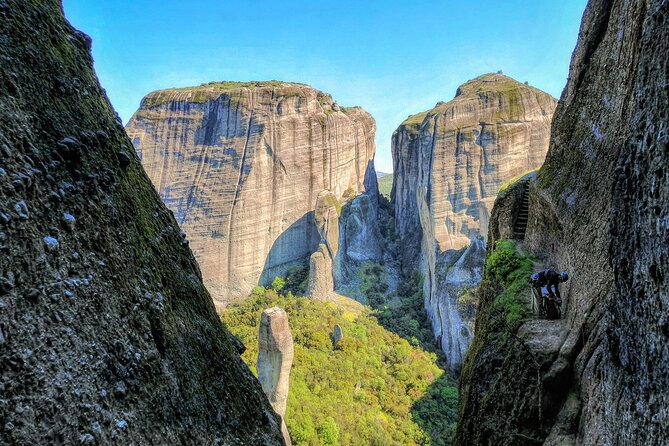
This is an active tour. The rules of thumb are straightforward: you’ll want strong physical fitness, and you should feel okay with scrambling and balancing on rocky terrain. If you’re someone who gets anxious when the ground turns uneven, you might want to choose a different Meteora activity with less technical movement.
That said, the tour isn’t “only for hardcore climbers.” Feedback from real groups includes a wide age range—an 11-year-old enjoyed it alongside 60-year-olds. That tells me the route can work for people who are willing to learn and follow safety guidance, not just those who are athletic by default.
I’d suggest it for you if you:
- enjoy active mornings and don’t mind working your legs
- want guided support for technical steps
- like the idea of “short time, big payoff” in Meteora
- want a less crowded, more hands-on way to experience the rock towers
Weather, small groups, and English-led guidance
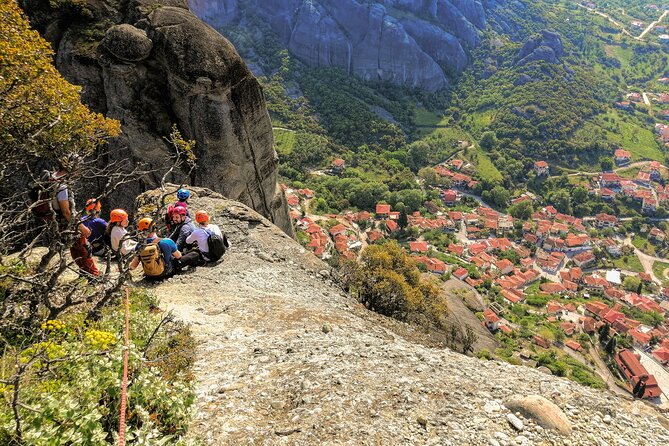
Because this is outdoors with technical scrambling, good weather is required. If conditions aren’t right, the experience can be canceled and you’ll be offered another date or a full refund. In practical terms: check the forecast and keep your morning flexible if you’re traveling in shoulder seasons.
The group size—max 6 travelers—does more than limit crowds. It improves the experience. In a small group, your guide can watch your form, give quick corrections, and keep everyone moving at a safe pace. That’s part of why the tour has received a strong rating and consistent praise for staff care.
It’s also offered in English, and you’ll get the briefing and guidance in that language. If you prefer clear instructions you can understand quickly, this matters more than you might think when you’re dealing with anything physical and safety-related.
Should you book the 3-Hour Great Saint hike and scramble?
Book it if you want the Meteora experience that feels active and earned. The combination of via ferrata gear, a professional English-speaking guide, and the 360-degree view from Great Saint is a strong package for a short window of time. If your travel style leans toward movement over sightseeing buses, this fits nicely.
Skip it if technical scrambling makes you uneasy or if you’re not confident in your physical fitness. Even with a guide’s support, this route is still built around scrambling and balancing—so you’ll enjoy it most when that sounds fun, not stressful.
If you’re deciding between many Meteora choices, I’d treat this as your “action day.” It’s short, it’s structured, and it gives you a view that feels connected to the work you put in getting there.
FAQ
How long is the Great Saint hiking and scramble tour?
It runs for about 3 hours.
What should I expect in terms of difficulty?
The tour requires a strong physical fitness level and includes challenging rock formations where you’ll scramble and balance.
What equipment is provided?
You’ll be provided with a helmet, harness, and via ferrata equipment, plus bottled water.
Is the tour offered in English?
Yes. The tour is offered in English.
Is hotel pick-up included?
Hotel pick-up/drop-off is not included, though there is an optional pick-up service.
Where does the tour start and end?
You meet at Qastiro Meteoramesohori in Kastraki (422 00, Greece) and the tour ends back at the same meeting point.