REVIEW · SICILY
Excursion on the summit craters of Etna, with cable car and 4×4 bus
Book on Viator →Operated by Etna Together · Bookable on Viator
Etna feels real when you reach it on foot. This excursion starts high at Rifugio Sapienza and ramps you up step by step to the summit zone, with professional Alpine and volcanological guides authorized for active volcanoes. You’ll love the chance to stand near Etna’s four active craters—fumaroles, explosions, and even puffs of ash and steam. The one consideration is that weather can turn the summit portion into a windy, low-visibility slog.
My other big win is the pacing and the “transport ladder”: cable car up, 4×4 minibuses higher, then trekking where it counts, before a sandy descent that gets you back down without repeating the steep climb. The top is at about 3,340 meters, and a helmet becomes mandatory once you pass roughly 2,900 meters. Plan for a physical day: it’s for people with moderate fitness, and it’s absolutely forbidden if you have cardiovascular problems.
This is also good value for what you’re getting. Around $168.58 includes the return cable car, the 4×4 ticket, guided time, insurance, and the safety essentials (including helmet requirements), so you’re paying for the whole summit workflow, not just a walk. One caution: even though the experience is offered in English, you should expect that guide storytelling can be more comfortable in Italian than in perfect English.
In This Review
- Key things to know before you go
- The altitude ladder: cable car, 4×4 minibuses, then summit trekking
- Valle del Bove: a named stop that helps break up the day
- Etna’s active craters up close: fumaroles, ash puffs, and real excitement
- The descent on sand: where the 2002/2003 eruption craters come in
- Guides and language: what “English offered” means in practice
- What to wear and pack: trekking shoes, wind layers, and the helmet reality
- Price and value: what you’re really paying for at $168.58
- Weather can change the day: plan for wind, visibility, and flexibility
- Who this Etna summit crater trek is for (and who should skip it)
- Should you book this Etna summit crater excursion?
- FAQ
- How long is the Etna summit craters excursion?
- Where does the tour start, and what time does it begin?
- Is pickup from my accommodation included?
- What’s included in the price?
- Do I need a special level of fitness?
- What happens if the tour is canceled due to weather?
Key things to know before you go
- Step-up altitude routing: cable car to about 2,500 m, then 4×4 minibuses to about 2,800 m
- Summit crater access: up to around 3,340 m to witness four active craters and constant fumaroles
- Helmet rule from ~2,900 m: safety gear is not optional once you’re in the higher zone
- Trekking over fresh volcanic terrain: very recent lavas and lunar-like paths, linked to activity as recent as January 2024
- Fun-but-real descent: a mainly sandy downhill route that still visits craters from 2002/2003
- Small groups: maximum 15 travelers, so you’re not just a nameless face in a crowd
The altitude ladder: cable car, 4×4 minibuses, then summit trekking
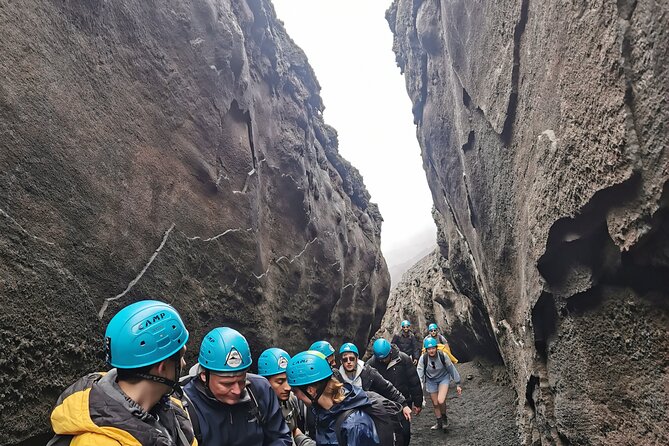
You start at about 1,900 meters in the Rifugio Sapienza area, Nicolosi Nord. From there, the day is built like a staircase rather than one long grind. First you ride the cable car up to around 2,500 meters. That alone is a huge help if you’re not trying to spend your whole day gaining elevation the slow way.
Next comes the 4×4 part: special off-road minibuses take you higher, up to about 2,800 meters. This matters because it changes what the trekking feels like. Instead of starting at low altitude and climbing for hours, you’re already close to the summit zone when you begin the real walking.
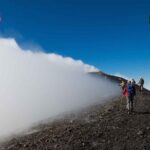
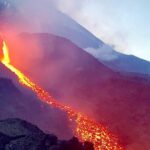
Then the trekking starts for the push to roughly 3,340 meters. You’ll be moving through areas described as lunar landscapes and over very recent lava flows, with a clear emphasis on what makes Etna active right now. That’s part of the thrill: you’re not just walking past old history. You’re walking through terrain shaped by activity as recent as January 2024.
You can also read our reviews of more tours and experiences in Sicily.
Valle del Bove: a named stop that helps break up the day
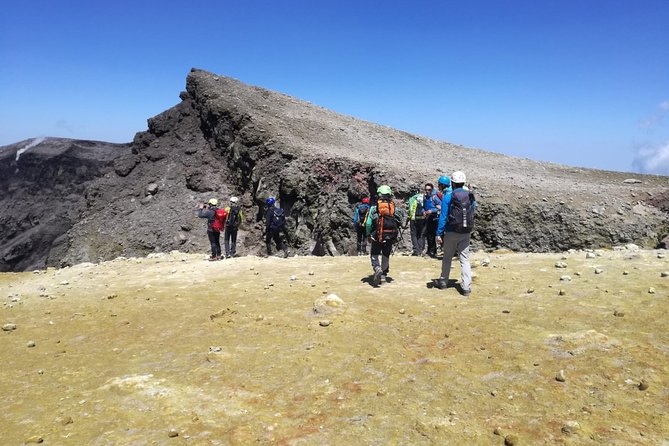
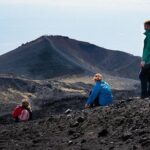
The route includes a stop at Valle del Bove (listed as the first stop). Even if you only get a short pause there, it’s a useful mental reset between transport segments. It also helps the day feel less like pure transit and more like an actual guided excursion.
Because the total time is about 5 hours 30 minutes, every stop needs to work fast. This stop seems designed for that: you get a point to look, regroup, and let the group stay together before continuing upward and onward.
Etna’s active craters up close: fumaroles, ash puffs, and real excitement
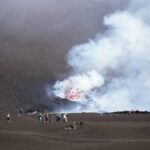
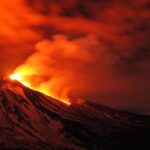
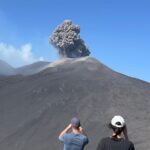
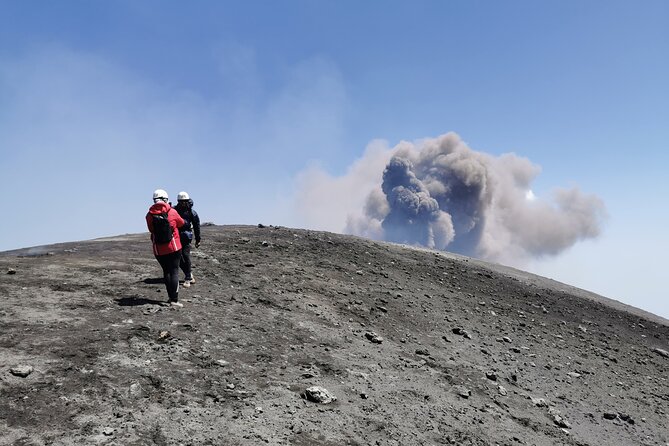
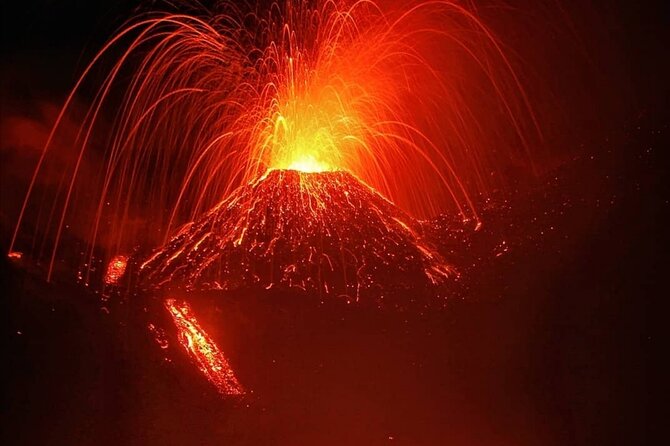
The summit portion is the headline. At about 3,340 meters, you can admire the spectacle of four active craters—with nonstop fumaroles, continuous explosions, and surprising puffs of ash and steam.
This is exactly why an authorized volcano guide is more than a nice-to-have. On an active volcano, you’re not just chasing views. You’re learning how to interpret what you’re seeing while staying aligned with the safety rhythm of the group.
One practical detail: the experience makes helmet use mandatory from around 2,900 meters. That’s not just paperwork. It tells you that conditions can be unpredictable as you get higher. And based on what can happen at the top, you should expect wind exposure too. The summit zone can be harsh, and when conditions get bad, visibility can drop fast.
So go in with the right mindset. If the air is clear, you’ll get that dramatic crater atmosphere. If it’s windy or hazy, don’t be surprised if the summit moment feels less comfortable than the photos you might’ve seen.
The descent on sand: where the 2002/2003 eruption craters come in
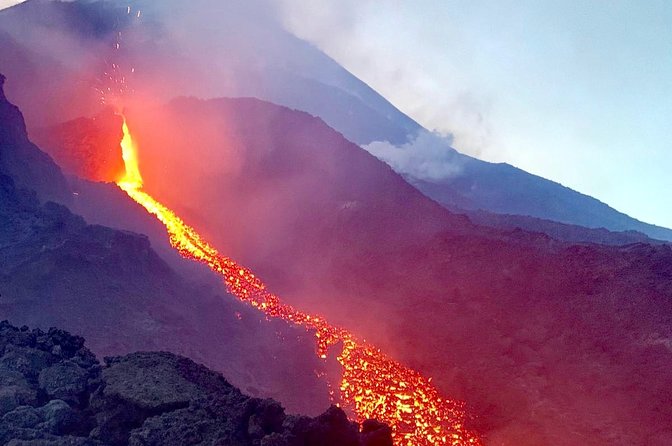
After the crater time, the descent is mainly on a sandy surface. This part can feel surprisingly different from the climb. It’s not a smooth, paved downhill. You’ll be walking on loose ground, which can be tiring in a different way—but it also tends to be the “fun” phase if your footing is steady.
The route doesn’t just send you straight down to the cable car. You pass through craters linked to recent eruptions from 2002/2003, plus other points of volcanic interest up to about 2,500 meters. That means the day stays active even as you’re going downhill—more like a guided loop than a simple up-and-back.
Once you reach around 2,500 meters again, you return via cable car to the starting point. That cable car return is a relief after summit terrain, and it helps keep the whole experience inside that ~5.5-hour window.
Guides and language: what “English offered” means in practice
You’ll be accompanied by Alpine and volcanological guides, described as the only professional figures qualified and authorized to accompany active volcanoes. That wording matters. It signals a structured safety approach and a guide team that’s meant to work in real conditions, not just interpret geology from a distance.
Still, pay attention to language expectations. The experience is offered in English, but you may find that the guide storytelling comes through more comfortably in Italian than in your preferred language. If you care about understanding every detail, I’d come prepared with simple questions you can ask quickly—like what you’re seeing as fumaroles or how the craters are behaving that day.
If your goal is mainly to witness active volcanic phenomena safely and efficiently, you’ll likely be fine even if you don’t catch every explanation. The physical experience does a lot of the talking.
What to wear and pack: trekking shoes, wind layers, and the helmet reality
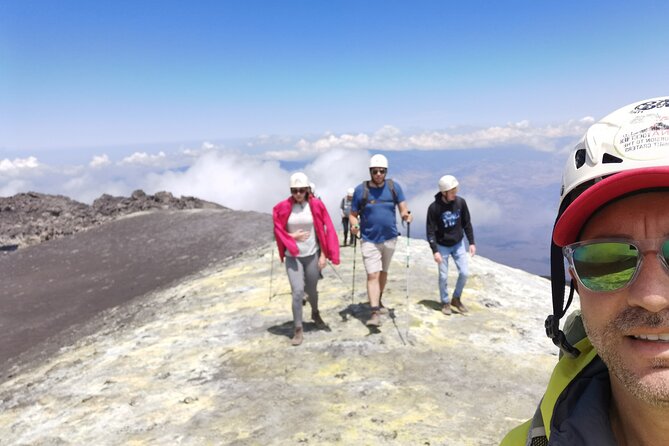
This outing is short on paper and long on exertion. You’ll cover high altitude terrain, so dress like you’ll be cold and exposed. Recommended equipment includes hiking shoes with good traction, plus windbreakers.
A few practical tips based on how the day is described:
- Wear footwear designed for uneven ground. You’ll trek after 2,800 meters and descend on sandy surfaces.
- Bring wind layers even if the morning looks mild. The summit zone is known for tough wind conditions.
- Consider trekking poles. Poles are available on request, and they can help your knees on the descent.
- Be ready for required helmet use from roughly 2,900 meters. That’s part of the safety plan, so plan to comply quickly.
Lunch is not included. There is a chance to buy something to eat directly at the meeting point before you leave, but you’ll want to handle food early. With a start time of 9:00 am, waiting too long can leave you stuck deciding between hunger and rushing.
Price and value: what you’re really paying for at $168.58
At $168.58 per person, the price isn’t just for a viewpoint. It’s covering the whole Etna summit workflow:
- return cable car ticket
- 4×4 minibus ticket up to about 2,800 meters
- alpine/volcanological guide accompaniment
- trekking poles on request
- protective helmet requirements at higher altitude
- insurance
That matters because two things are expensive on active volcano days: access and coordination. The cable car and the 4×4 segments are part of how you reach the summit efficiently. And guide expertise is what keeps a group safe while they move through active zones.
Also note the group size cap of 15 travelers. Smaller groups usually mean you spend less time waiting around and more time actually moving through the experience.
Finally, this tour tends to sell early—on average it’s booked about 25 days in advance. If Etna is a top priority in your Sicily plan, don’t treat this as a last-minute add-on.
Weather can change the day: plan for wind, visibility, and flexibility
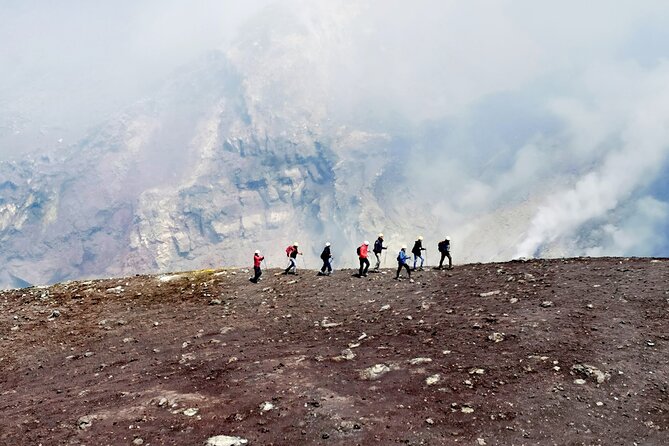
This excursion requires good weather. If it’s canceled due to poor conditions, you’ll be offered a different date or a full refund. That’s the big reality on Etna: your schedule depends on what the mountain allows.
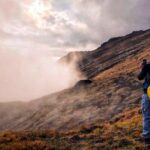
Even when the tour runs, conditions at higher altitude can swing quickly. The summit can be extremely windy with limited visibility, and that can affect how comfortable you feel up there and how long you want to linger.
So aim for flexibility in your trip plan. If you’ve booked other major activities immediately after your 5.5-hour Etna outing, leave a buffer. Etna doesn’t care about your hotel checkout time.
Who this Etna summit crater trek is for (and who should skip it)
This is for you if you want an active volcano experience with real access, not just a distant view. You’ll like it if you enjoy walking and can handle high-altitude terrain without drama.
You’ll need moderate physical fitness. And there’s a clear hard stop: it’s absolutely forbidden for anyone with cardiovascular problems. If that’s part of your situation, don’t try to negotiate with altitude and exertion.
You’ll also enjoy it more if you understand the pacing. Even with cable car and 4×4 help, the day includes trekking at altitude and a sandy descent. This isn’t a casual stroll.
If you’re traveling with a group and want a guided, safety-first plan with small-group attention, the maximum 15 travelers setup is a big plus. It feels controlled rather than chaotic.
Should you book this Etna summit crater excursion?
I’d book it if Etna is on your must-do list and you’re prepared for a real physical day in a real active-volcano setting. The value is strong because so much is included: transport up and down, authorized volcanic guiding, and the safety gear framework that kicks in at higher altitudes.
Skip it if wind and visibility issues would ruin your expectations, or if you’re sensitive to high altitude exertion. Also skip if you’re dealing with cardiovascular concerns—this one is not negotiable.
If you can travel with flexibility and you want to see active craters at around 3,340 meters, this is one of the clearer ways to do it efficiently. You’ll trade comfort for authenticity, and you’ll get plenty of that authentic, active-volcano energy in return.
FAQ
How long is the Etna summit craters excursion?
It’s about 5 hours 30 minutes.
Where does the tour start, and what time does it begin?
The meeting point is in Nicolosi (Monte Gebel Di Mariangela Carbonaro, Contrada Cantoniera, Nicolosi, CT 95030). Start time is 9:00 am.
Is pickup from my accommodation included?
Pickup is not included. It’s an extra service for an additional cost of 30 euros per person.
What’s included in the price?
Included are the return cable car ticket, the 4×4 minibus ticket, an alpine/volcanological guide, trekking poles on request, a protective helmet (mandatory from altitude 2900 metres), insurance, and recommended equipment such as hiking shoes and windbreakers.
Do I need a special level of fitness?
You should have a moderate physical fitness level. It’s absolutely forbidden for anyone suffering from cardiovascular problems.
What happens if the tour is canceled due to weather?
If it’s canceled due to poor weather, you’ll be offered a different date or a full refund.