REVIEW · RIO DE JANEIRO
Rio: Tijuca Forest Small Group Hike to Caves and Waterfalls
Book on GetYourGuide →Operated by Jungle Me · Bookable on GetYourGuide
A rainforest hike with serious Rio payoffs. I love how this route mixes waterfall time with cave-and-ruins wandering, and I love the small-group feel led by guides like Pietro and Vinnie. One thing to consider: it’s a real uphill/downhill slog at times, so you’ll want solid shoes and a calm pace.
In Tijuca National Park, you’re not just walking through trees—you’re walking through the park’s comeback story, including old plantation-era trails and 19th-century remnants. Expect a guided day that moves between nature stops and historical ones, with multiple chances to cool off.
The moderate hike is about 2.5–3 hours of walking (6.2 km / 3.8 mi total, 448 m / 1,469 ft elevation gain). If you want a lazy stroll, or if you’re dealing with heart issues, this likely won’t fit.
In This Review
- Quick hits: what makes this Tijuca hike worth it
- Tijuca Forest, the park that rebuilt itself
- Hotel pickup from Copacabana and Ipanema: less fuss, more trail time
- 19th-century trails and the coffee-plantation leftovers underfoot
- Cascatinha Taunay: the biggest waterfall in the park
- Mayrink Chapel (1850): quiet stone in the middle of green chaos
- Cova da Onça suspension bridge and the art of slow looking
- Eucalyptus forest and an old slave cemetery: the hard part you shouldn’t skip
- Morcego’s Grotto and the bat cave: cool air, cave rules, real respect
- Baronesa Cascade: another waterfall break, another photo mood
- Viewpoints and the Wallace Fountain: Rio’s history shows up in the details
- The pace: how a “moderate” hike still gets your heart rate up
- Wildlife sightings: beautiful when it happens, never the guarantee
- Guides and small-group energy: why people come back impressed
- Price and value: how $69 adds up (and when it doesn’t)
- What to bring for comfort in Tijuca
- Who should book this Tijuca caves and waterfalls hike
- Should you book this Tijuca caves and waterfalls tour?
- FAQ
- How long is the Tijuca Forest hike and waterfall tour?
- How hard is the hike?
- Does the tour include hotel pickup in Rio?
- Are food and drinks included?
- What should I bring to hike in Tijuca?
- Is it suitable for wheelchair users or heart conditions?
Quick hits: what makes this Tijuca hike worth it
- Cascatinha Taunay, the largest waterfall in the park, plus a real waterfall shower moment
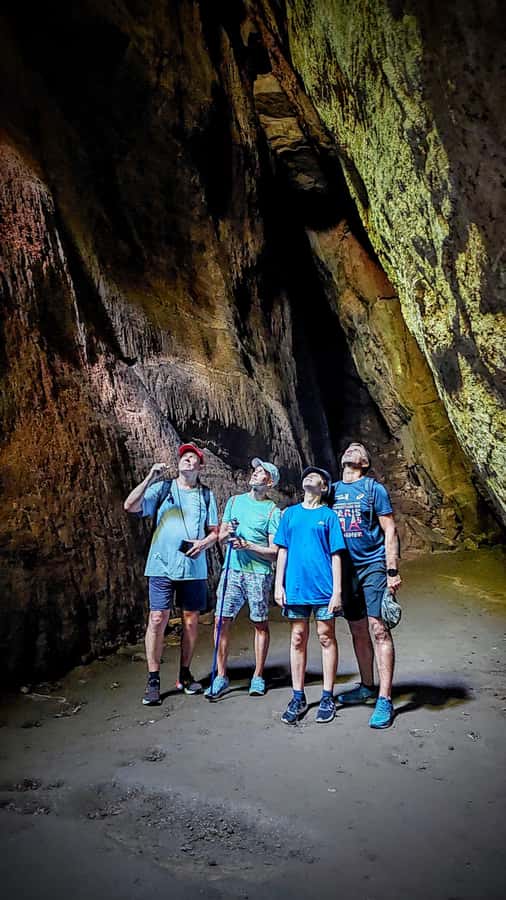
- Morcego’s Grotto, described as Brazil’s largest gneiss cave, with cave-country wonder
- Coffee-plantation trails from the 1800s, inside the world-famous replanted urban forest story
- Mayrink Chapel (1850), an atmospheric stop that breaks up the greenery
- A mix of bridges, caves, waterfalls, and viewpoint breaks, not just one long slog
Tijuca Forest, the park that rebuilt itself
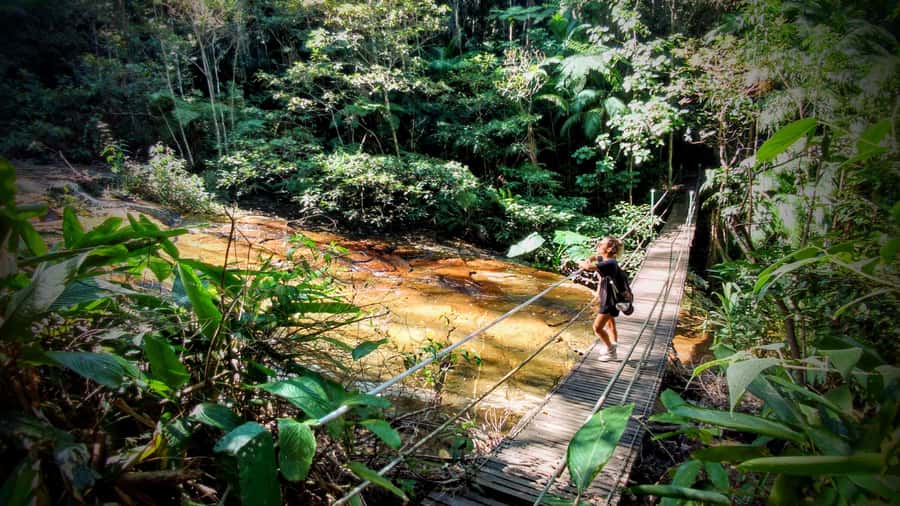
Tijuca National Park is one of Rio’s best reminders that cities and nature can share space. This hike takes you into that story at ground level, moving through a forest that grew back after coffee plantations once dominated the area.
I like that the tour doesn’t treat the rainforest like wallpaper. You get context on why these paths exist, how the ecosystem works, and what you’re actually seeing—plants, geology, and wildlife patterns—during the walk.
You also get to enjoy the “Rio in the clouds” vibe. Even though you’re near the city, the higher parts of Tijuca can feel cooler and quieter, especially when the group keeps a steady, respectful pace.
You can also read our reviews of more hiking tours in Rio De Janeiro


Hotel pickup from Copacabana and Ipanema: less fuss, more trail time
This is the kind of day trip that starts with convenience. If you’re staying in the South Zone hotels listed for pickup, you get transportation to the park and back—so you’re not spending your morning on bus routes and taxis.
The neighborhoods covered include Copacabana, Ipanema, Leblon, Leme, Flamengo, Santa Teresa, Gloria, Catete, and Praia de Botafogo (plus the Urca area). If your exact hotel isn’t in the pickup zone, you’ll be directed to a nearby meeting point.
Small note: some people describe the van as a bit cramped. If you’re tall or broad-shouldered, pick a seat with extra room when you can, and don’t be surprised if the ride feels tight for a short transfer.
19th-century trails and the coffee-plantation leftovers underfoot
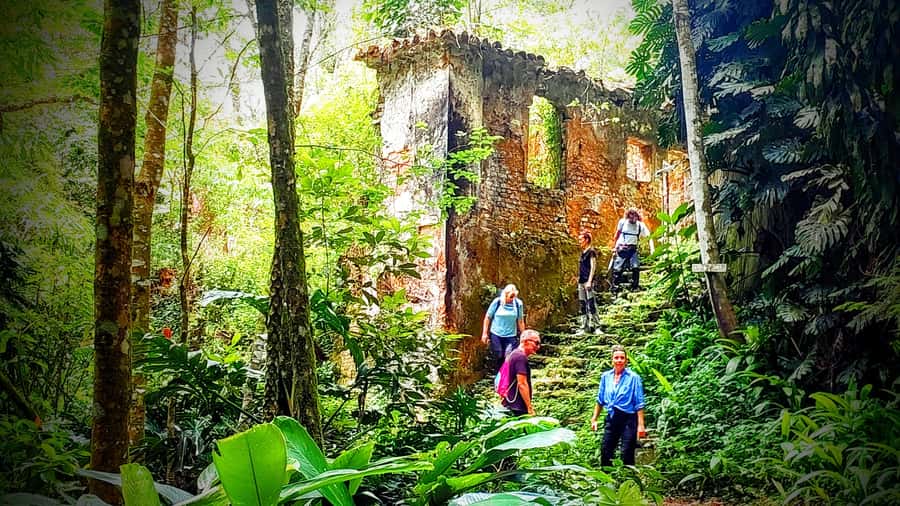
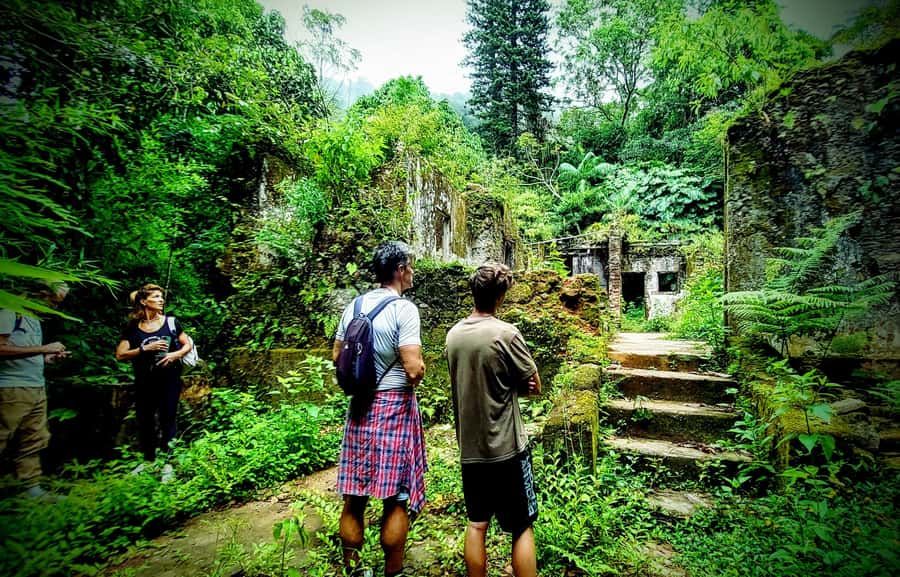
One of the strongest reasons to do this hike with a guide is that the route is built around specific historical layers. The paths trace a period when this area was used for coffee plantations, and the tour explains how that era shaped the landscape.
You’ll hear the big-picture claim that Tijuca is the world’s largest replanted urban forest, and you’ll also connect that to the specific places you stop at. It makes the forest feel less like random greenery and more like a living museum—without turning it into a lecture.
This history also helps you see the park’s design choices. Some trails and built features feel purposeful because they were used when the land had a different job.
Cascatinha Taunay: the biggest waterfall in the park
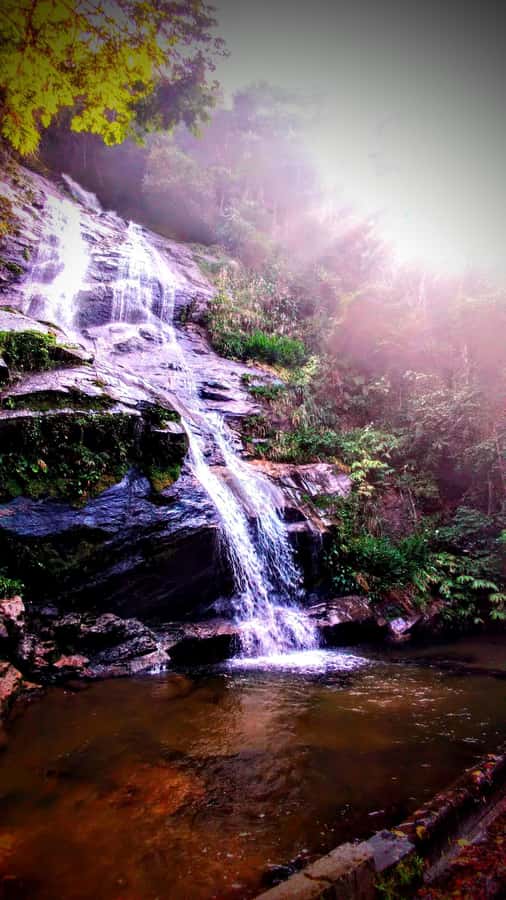
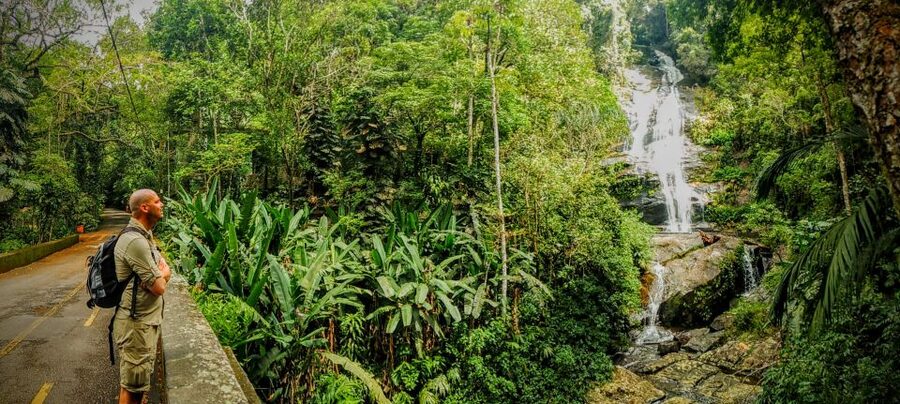
At some point on the route, you’ll reach Cascatinha Taunay, set up as the largest waterfall in Tijuca National Park. This is where the day shifts from walking to payoff.
The best part is the timing and setup: you’re guided to the waterfall area, then you get time to take photos and actually feel the water’s spray. The tour description calls it out as a waterfall-shower moment, and it’s exactly the kind of stop where you can cool down and reset.
Drawback to keep in mind: waterfalls don’t always look the same. Water volume depends on conditions, and the forest mood shifts with weather. If it’s misty or rainy, the scene can look more dramatic, but you’ll also want to be comfortable in slippery spots.
Mayrink Chapel (1850): quiet stone in the middle of green chaos
Before the hike gets too far into cave-and-falls mode, you stop at Capela Mayrink, dated to 1850. It’s a short stop, but it’s worth it because the chapel gives you a different kind of atmosphere than the waterfalls and trails.
I like this part of the itinerary because it breaks up the physical rhythm. You’re moving through rainforest, then suddenly you’re pausing at a human-made marker—something that connects Brazil’s past to the forest’s recovery.
If you enjoy architecture details, take a moment to look at the setting: the chapel sits inside a landscape that now looks completely natural, but it’s still tied to human history.


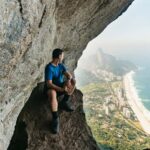

Cova da Onça suspension bridge and the art of slow looking
Some of the most memorable moments on rainforest hikes are the ones that aren’t loud. The tour includes stops like the Cova da Onça suspension bridge, which is exactly that kind of “pause and look” place.
Bridges force you to slow down. You naturally check your footing, scan the valley, and notice how the forest changes depth and density as you look from above. It’s also a good photo break that doesn’t require the same effort as climbing to a viewpoint.
If your goal is nature photography, this is one of those stops where you can get shots that feel different from the standard waterfall angles.
Eucalyptus forest and an old slave cemetery: the hard part you shouldn’t skip
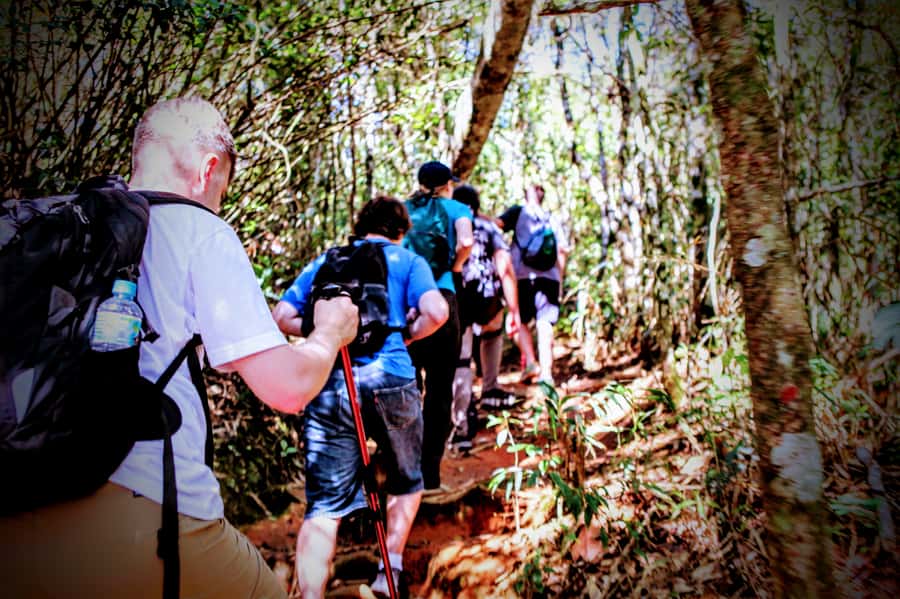
Not every stop is cozy. The route includes an eucalyptus forest area that houses an old slave cemetery.
This is a heavy historical marker. I appreciate that the tour treats it as part of the real Tijuca story, not as a footnote you breeze past. If you’re sensitive to difficult history, you’ll probably feel that weight here—but skipping it would make the day less honest.
The practical side: you’re still hiking in humid conditions, so keep moving during this segment, but don’t treat it like a quick restroom stop. It deserves a moment of respect.
Morcego’s Grotto and the bat cave: cool air, cave rules, real respect
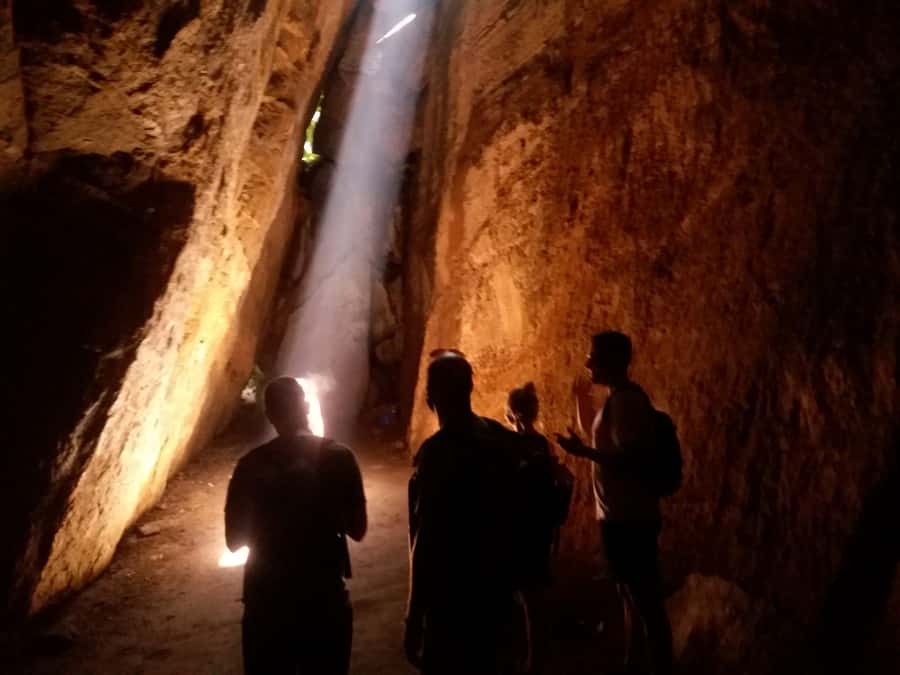
Then you get into cave country with stops like Morcego’s Grotto, described as the largest gneiss cave in Brazil. This is the kind of location where the air can feel cooler and the atmosphere feels more enclosed than the rest of the hike.
Later, there’s also a stop connected to the bat cave. One review detail that’s useful for your expectations: bats may be hibernating, so you shouldn’t count on dramatic bat sightings. The bigger win is the cave itself—how it looks, how it feels, and how the guide explains its place in the ecosystem.
If you’re thinking of getting close for photos, remember: don’t disturb wildlife. The best cave experience is usually the one where you quietly observe and let the ecosystem do its thing.
Baronesa Cascade: another waterfall break, another photo mood
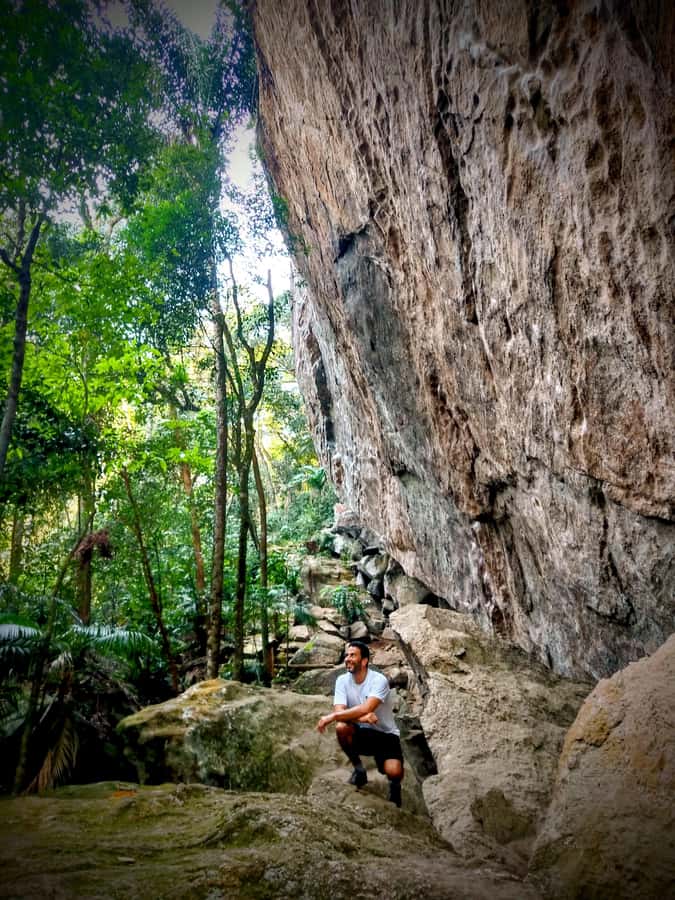
After the cave and bridge rhythm, the route brings you to Cascata da Baronesa (Baronesa Cascade). Like Cascatinha Taunay, it’s a guided waterfall moment, paired with time to enjoy the scenery and take photos.
I like that the hike includes more than one waterfall stop. It helps the day feel varied, and it gives you a chance to compare how each waterfall behaves depending on the conditions that day.
Practical note: even if the “big moments” are on schedule, wet rock is part of rainforest math. Wear shoes that grip and keep your steps deliberate on uneven ground.
Viewpoints and the Wallace Fountain: Rio’s history shows up in the details
The tour also includes cultural and scenic stops that connect the rainforest to Rio’s broader story.
You’ll see the Wallace Fountain, a gift from English philanthropist Richard Wallace. The sculpture represents goodness, charity, sobriety, and simplicity, and it was produced in France in 1870. It’s a reminder that Rio’s public art and European connections can show up even on a day focused on jungle.
There are also viewpoint breaks along the way—stops like Mirante da Palmira and another viewpoint—where you can catch wider vistas. On a clear day, these moments make the uphill work feel worth it. On mistier days, they’re still good for perspective, even if the view is softened.
The pace: how a “moderate” hike still gets your heart rate up
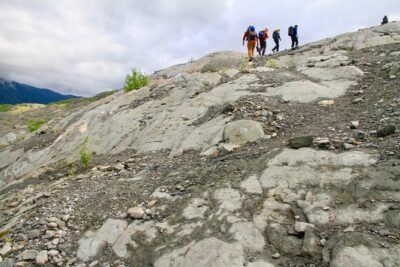
This hike is labeled moderate, but it’s moderate with real terrain. You’re looking at 6.2 km / 3.8 mi total, with a 448 m / 1,469 ft elevation gain, and about 2.5–3 hours of hiking during the full 6-hour experience.
The surface is described as rough rainforest terrain with up and downhill. So even if you’re not climbing mountains, you’ll still want stamina for repeated changes in grade.
If you’re unsure how you’ll handle it, use this rule: if you can walk briskly for 45–60 minutes on uneven ground, you’ll likely be okay. If you get winded easily on hills, scale your expectations and tell your guide at the start so they can set a supportive pace.
Weather matters too. One practical example from the real-world experience: it can rain, and guides may bring ponchos. Still, bring a light rain layer so you’re not stuck waiting for comfort.
Wildlife sightings: beautiful when it happens, never the guarantee
Here’s the honest rainforest reality: wildlife sightings can be hit or miss.
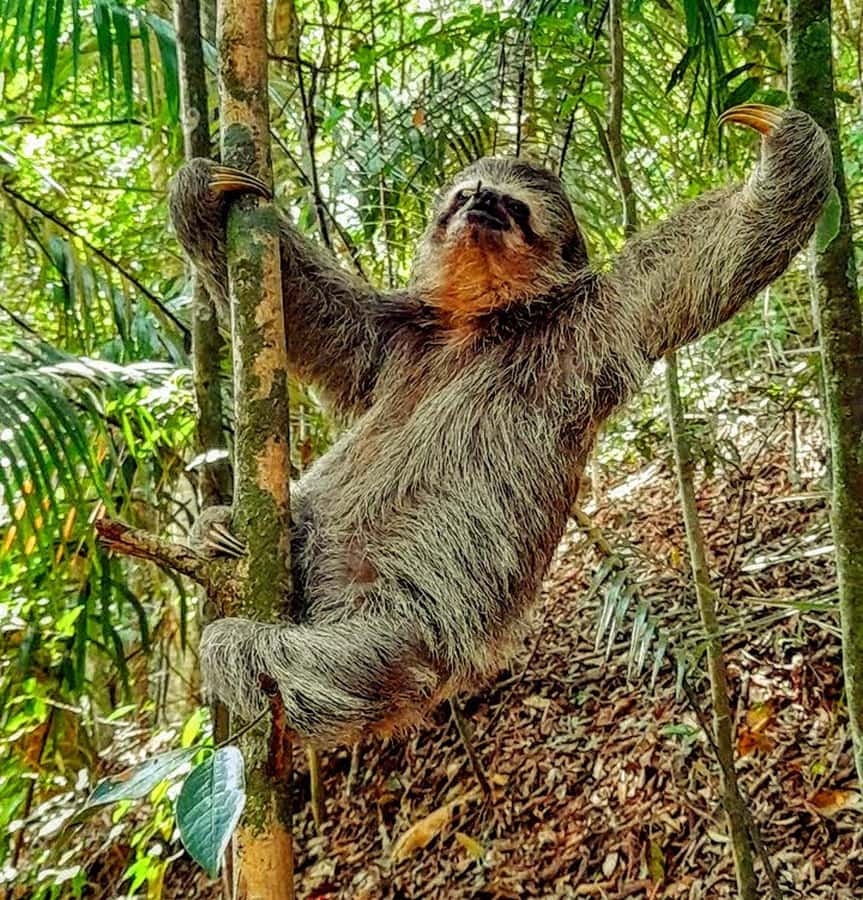
Some days, you might spot animals like coati (Brazilian raccoon), capuchin monkeys, or even a sloth seen during the driving segment around the park. On other days, you might see fewer animals and rely more on plants, textures, and bird calls that are harder to photograph.
I love that the tour doesn’t depend on wildlife as the only win. Guides point out flora and the general ecosystem details, so the day still feels full even when the animals stay quiet.
So if your main fantasy is seeing exotic wildlife every few minutes, adjust that mindset. Think of this as a guided way to understand how rainforest life works, with wildlife sightings as a bonus.
Guides and small-group energy: why people come back impressed
The small-group size is one of the reasons this works so well. Many people describe groups around five people or fewer, which changes the whole feel of the hike.
A smaller group means fewer long waits at stops and a better chance to ask questions. And the guide’s role matters a lot on a rainforest path—finding the right line, pointing out plants, and keeping people safe on uneven ground.
Guide names that show up often in real experiences include Pietro, Vinnie, Renata, Riccardo, Tito, Luiza, Gustavo, and Fernando. Across these guides, the consistent theme is energy and storytelling: you get history and geography tied directly to what you’re walking past.
One practical note: some people found the transport a little cramped. That’s more about the vehicle than the guide, so don’t let it overshadow the day.
Price and value: how $69 adds up (and when it doesn’t)
At $69 per person for about 6 hours, this tour is priced for a “half-day rainforest education plus major scenery” kind of experience.
What you’re getting for the money:
- A bilingual guide (English and Portuguese)
- Insurance
- Hotel pickup and drop-off from designated South Zone areas
What you’re paying for yourself:
- Food and snacks
- Water and drinks
That last part is important. If you arrive hungry and underpacked, the day can feel more expensive than it looks. I recommend treating this like a hike day: plan to bring snacks and water so you don’t end up buying convenience items at whatever price the park area offers.
Still, when pickup is included and the guide handles navigation and context, it’s strong value—especially for visitors who don’t want to wrestle with public transport just to get into Tijuca.
What to bring for comfort in Tijuca
Since the tour doesn’t include food, water, or drinks, bring them like you’re preparing for a moderate jungle outing.
At minimum:
- Snacks and a full water plan
- Sunscreen and insect repellent
- Sports shoes with grip and decent traction
- Sportswear you don’t mind getting slightly dirty
- A daypack for essentials
Also note the restrictions: no pets, and no luggage or large bags. Keep it simple so you’re not struggling to carry things on uneven terrain.
Who should book this Tijuca caves and waterfalls hike
This is a great fit if you want:
- A moderate rainforest workout without the challenge of self-navigation
- Multiple big sights: two waterfall stops plus a cave stop
- History mixed into nature—coffee-era trails, chapel (1850), and other built remnants
- A guide-led pace with enough time at stops for photos and questions
You might skip it if:
- You need a flat, easy walk
- You have heart problems (the tour notes it’s not suitable)
- You use a wheelchair (it’s not suitable for wheelchair users)
It also works well for first-timers in Rio who want to see a different side of the city—green, cooler, and far less “beach-and-bright.”
Should you book this Tijuca caves and waterfalls tour?
I think you should book if you want a guided day where waterfalls, caves, and historical stops all happen in one smooth circuit—and you’re ready for a real hike on rough rainforest terrain.
If you’re the type who likes understanding where you are (plants, geology, and how Tijuca recovered), this tour turns the day into more than a quick photo loop. Just pack water and snacks, wear grippy shoes, and don’t stress about perfect animal sightings—half the beauty here is learning how the rainforest works even when wildlife stays out of sight.
FAQ
How long is the Tijuca Forest hike and waterfall tour?
The experience lasts about 6 hours total, including transportation and guided stops. The hiking portion is about 2.5–3 hours.
How hard is the hike?
It’s considered moderate. You’ll walk about 6.2 km (3.8 mi) with about 448 m (1,469 ft) of elevation gain, on rough rainforest terrain with up and down sections.
Does the tour include hotel pickup in Rio?
Yes. Pickup and drop-off are provided from designated hotels in Rio’s South Zone, including neighborhoods such as Copacabana, Ipanema, Leblon, Leme, Flamengo, Santa Teresa, Gloria, Catete, and Praia de Botafogo. If pickup isn’t available from your exact address, a nearby meeting point is provided.
Are food and drinks included?
No. Food, water, and drinks are not included, so you’ll want to bring snacks and water for the day.
What should I bring to hike in Tijuca?
Bring food and drinks, snacks, sunscreen, water, insect repellent, sports shoes, sportswear, and a daypack. Also avoid bare feet and don’t bring large bags or luggage.
Is it suitable for wheelchair users or heart conditions?
No. The tour is not suitable for wheelchair users, and it’s not recommended for people with heart problems.