REVIEW · RIO DE JANEIRO
Rio: Tijuca National Park Small-Group Hike to Pedra Bonita
Book on GetYourGuide →Operated by Jungle Me · Bookable on GetYourGuide
Rainforest steps, ocean views, and Rio history. This small-group hike through Tijuca National Park is easy on paper but rich in what you notice up close, and the payoff at Pedra Bonita is the kind of viewpoint you understand immediately. I especially love how the guide turns the trail into a story about the Atlantic rainforest, the old coffee farms, and the reforestation that brought this green back. One drawback to plan for: you do need to be able to hike roughly 2 hours up and down on uneven rainforest terrain.
What makes this tour work well is pacing. You get a guided intro in the park, time to stop for photos, and then a summit walk that’s short enough to feel doable, even if your legs are not trained mountain legs. If the weather is misty or rainy, the views can get hazy, so I’d treat clear skies as part of the value.
Key tour takeaways
- Small group (max 6) keeps the hike calm and lets the guide actually point things out
- Easy distance, real terrain: about 3.5 km round-trip with 203 m elevation gain
- Pedra Bonita summit view includes a special angle on Pedra da Gavea, a major ocean-reaching monolith
- Atlantic Rainforest education: plants, wildlife spotting, and how the park recovered
- Multiple photo stops including Vista Chinesa for quick skyline snapshots
- Guides who explain more than just directions, in English and Portuguese
In This Review
- From South Zone pickup to Tijuca’s first rainforest steps
- The hike itself: easy effort, attentive footing
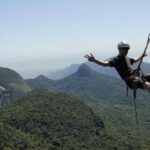
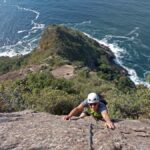
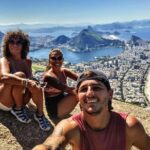
- Pedra Bonita: the summit viewpoint that frames Rio’s coast
- The history you’ll hear on the trail (coffee farms included)
- Tijuca’s Atlantic Rainforest: what you can actually spot
- Vista Chinesa and viewpoint timing
- What group size changes (and why max 6 is a big deal)
- Price and value: what $63 gets you in real terms
- Logistics that actually matter: shoes, bags, and body limits
- Who should book this hike, and who should skip it
- Should you book: Pedra Bonita with a small-group Tijuca guide?
- FAQ
- How long is the Rio: Tijuca National Park hike to Pedra Bonita?
- Is this hike easy or difficult?
- How big is the group?
- What should I bring?
- Is food and water included?
- What languages are the guides?
- Who should avoid this tour?
From South Zone pickup to Tijuca’s first rainforest steps
This tour is built around one big idea: getting you from Rio’s busy streets into the Atlantic rainforest without you having to figure out routes, timing, or transfers. Pickup covers a long list of hotels in Rio’s South Zone, so most people can start the day with minimal hassle. You also get a guide who stays with the group right from the park area, not just at the trailhead.
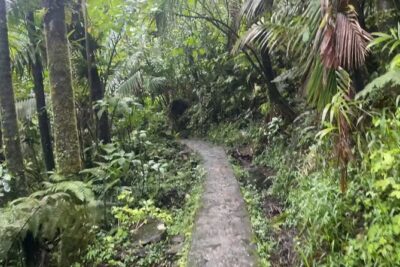
Once you’re in Tijuca National Park, the hike starts in a way that feels structured but not stiff. There’s a short guided orientation that helps you understand what you’re walking through, which matters because the rainforest can look similar if you’re not told what to look for. After that, you’re moving—on a trail that’s described as easy, but it’s still rainforest rough terrain with up-and-down sections.
The hike itself: easy effort, attentive footing
The hiking part is about 2 hours, round-trip 3.5 km (2.2 miles), with an elevation gain of 203 m (667 feet). That mix—short distance but a real climb—means this is not a flat stroll. You’re not scaling a technical route, but you should expect roots, uneven footing, and the occasional slippery patch after rain.
I like that the tour is honest about fitness expectations. It’s labeled easy, yet it still requires you to hike for about 2 hours going up and downhill. If your cardio is okay and your ankles are willing, this is a very manageable way to experience Tijuca without committing to a long, strenuous trek.
Practical tip: wear real sneakers or hiking boots. Sandals are a bad idea here, and the operator explicitly asks for footwear that can handle rough ground. Bring a small daypack, and plan on snacks plus 1 to 2 liters of water, since food and drinks are not included.
You can also read our reviews of more hiking tours in Rio De Janeiro

Pedra Bonita: the summit viewpoint that frames Rio’s coast
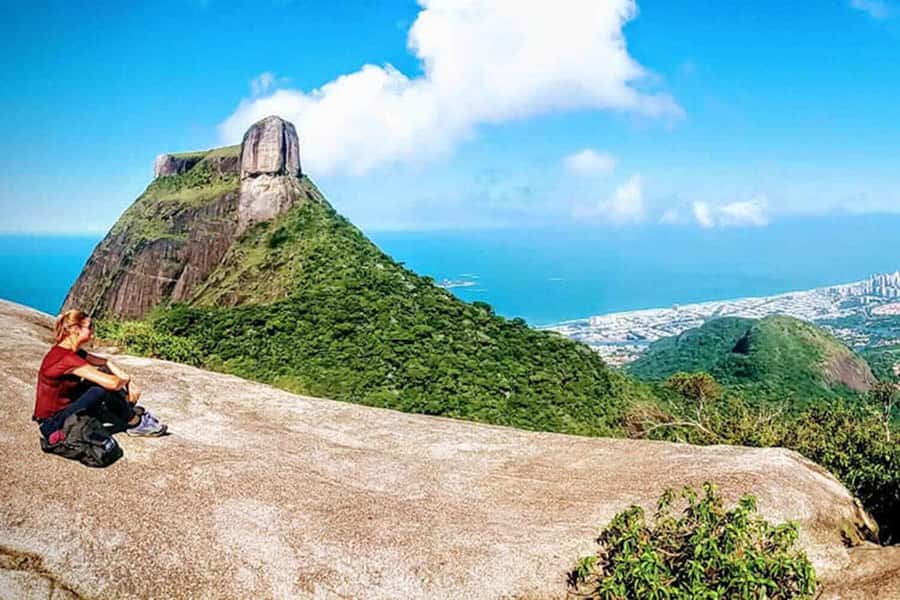
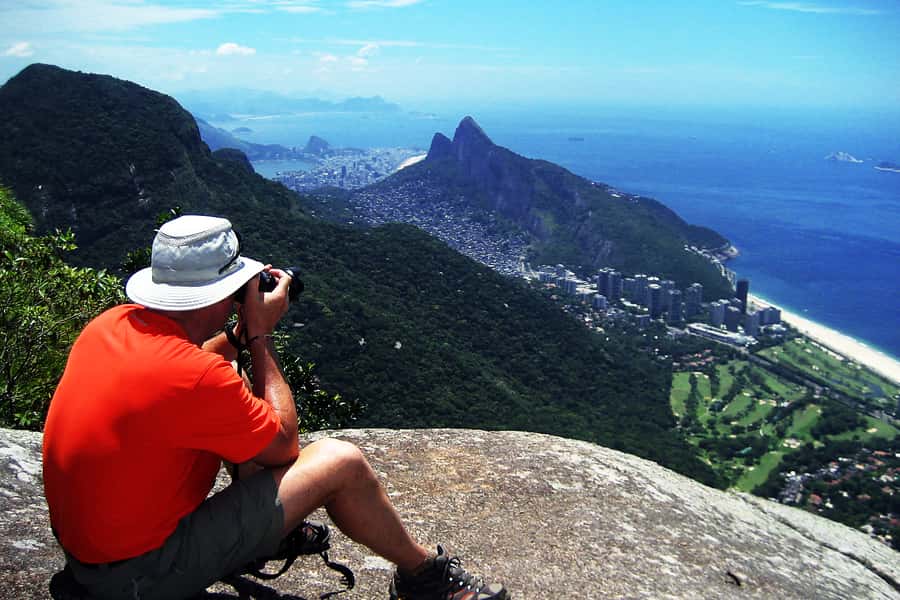
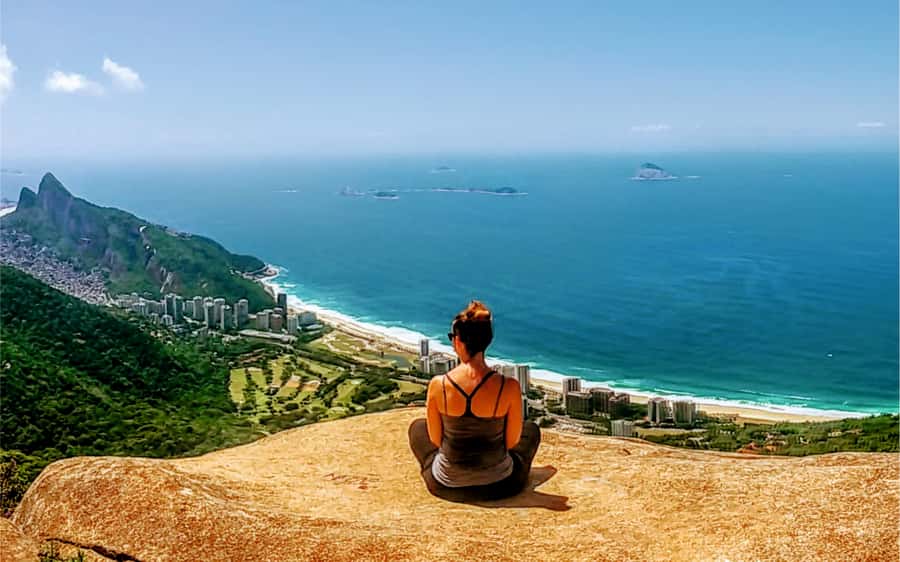
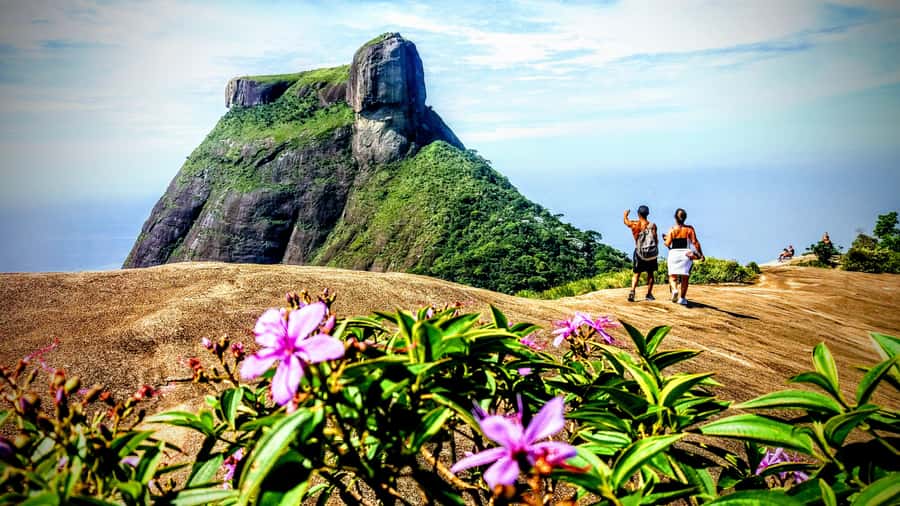
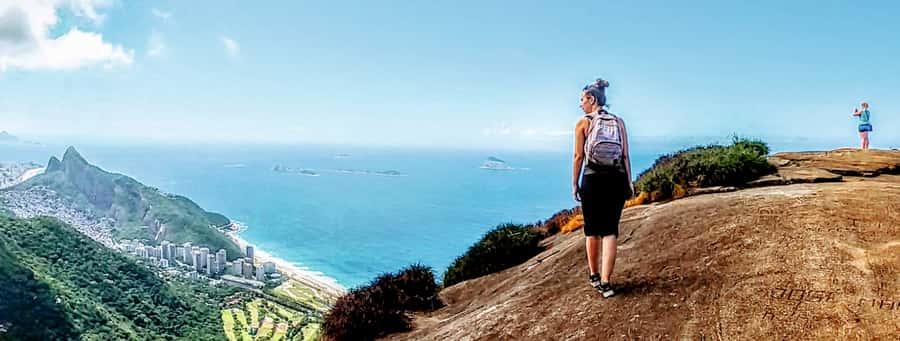
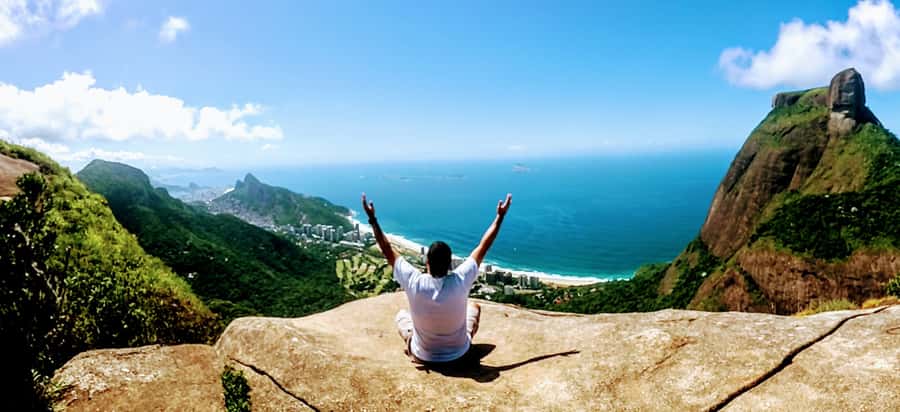
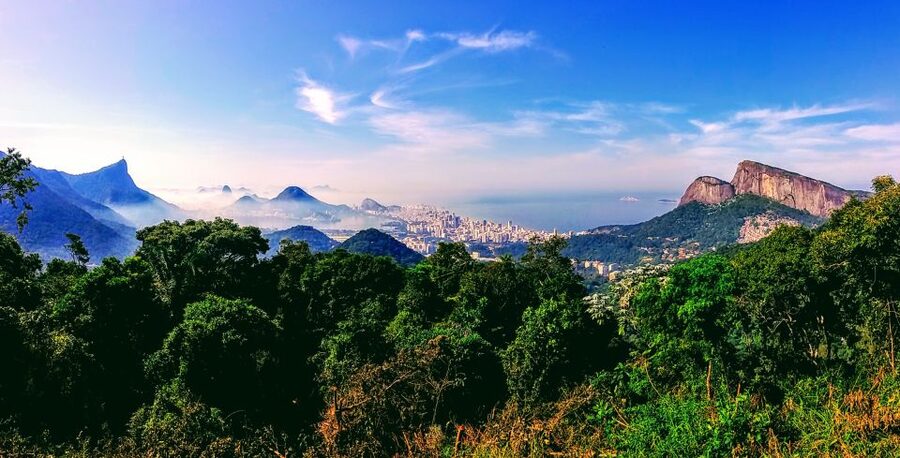
The main reason to do this hike is what happens when the rainforest ends and the rock starts. Pedra Bonita sits at 696 meters (2,283 feet), and when you reach the summit area, you get open views down and across the coast. The viewpoint isn’t only pretty—it’s clear.
One of the most interesting details is the way the guide highlights what you’re seeing relative to Pedra da Gavea. From the Pedra Bonita area, you look at Pedra da Gavea at an angle, and it’s a standout because it’s a huge monolith at 844 meters (2,769 feet) that reaches down toward the ocean. When you understand the geography, the view stops being just a photo moment and becomes a real sense of place.
Expect photo stops and short guided time at the rock area. The tour includes a photo-focused stop at the summit zone and then more guided time around the viewpoint. That’s useful because the guide can point out what direction you’re looking and what features matter.
The history you’ll hear on the trail (coffee farms included)
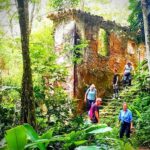
What I really appreciate about this experience is that the guide connects rainforest to Rio history. The walk isn’t only about plants. Along the way, you learn about the history of Rio de Janeiro and the Tijuca Forest, including what the area was used for before it became the national park.
A highlight mentioned in the tour description is the presence of coffee farms in the region’s past, including their golden years. You also learn about the reforestation in the 19th century, when the area was replanted and restored. That matters because Tijuca is often described as an urban forest, and it’s one of the rare places where you can see how a city’s environment can be actively shaped over time.
If you’re the kind of traveler who likes your sightseeing to have a backstory, this is one of those hikes. Even if your Spanish/Portuguese is limited, the key facts come through in English or Portuguese, and the guide’s job is to make the rainforest feel understandable rather than just wild.
Tijuca’s Atlantic Rainforest: what you can actually spot
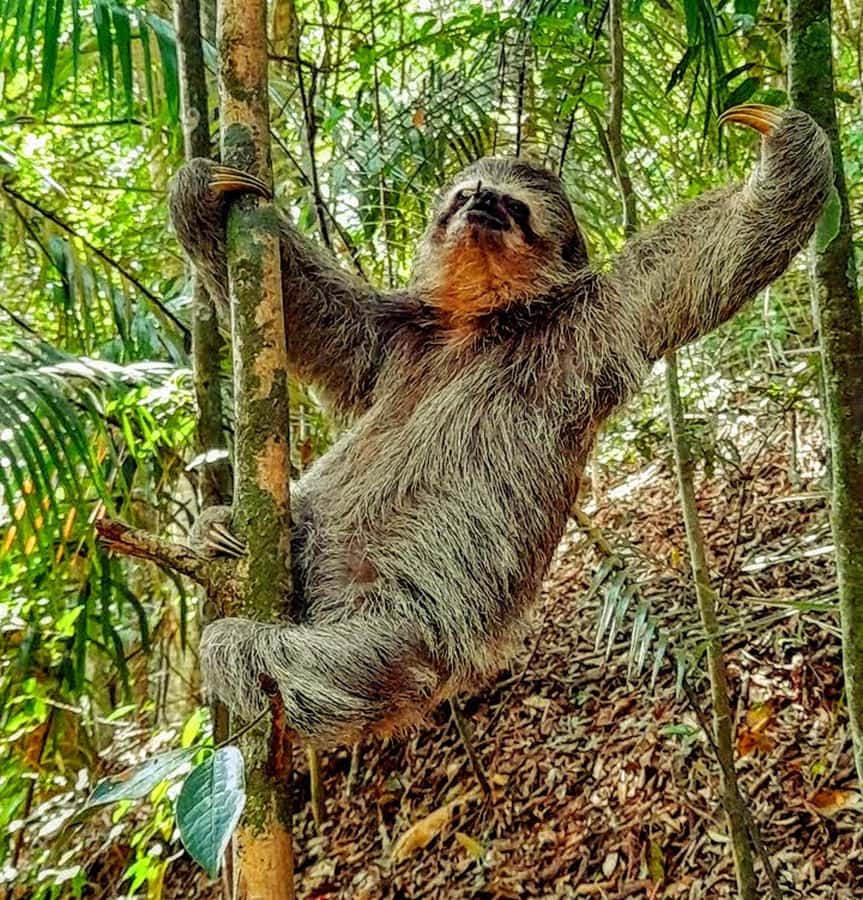
Tijuca is part of the Atlantic Rainforest, and this hike gives you a guided way to experience it. The forest here is not a museum display. It’s living, and the guide helps you notice things most people miss—tree forms, plant types, and wildlife you might otherwise overlook.
The tour is built around stopping and explaining rather than rushing. That’s especially important on a short hike. You have limited time, so the guide’s explanation helps you leave with more than a view card. You’re encouraged to keep an eye out for wildlife, and the group format helps because you’re not constantly trying to pass people or re-group every few minutes.
Also note the realism: you’re in a rainforest environment. Bring insect repellent and weather-appropriate clothing. Even when the hike is short, discomfort from bugs or sudden rain can ruin the day faster than you’d expect.
Vista Chinesa and viewpoint timing
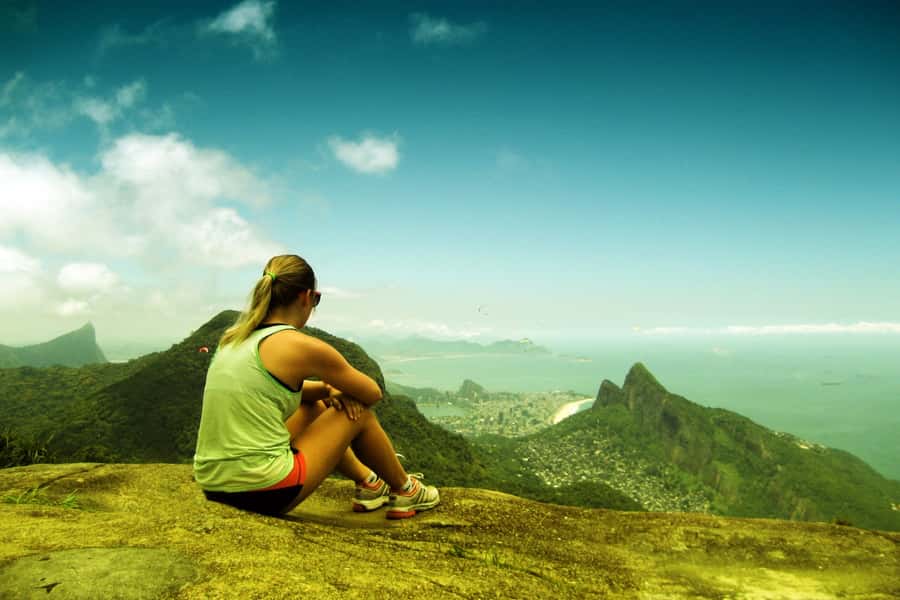
This tour includes a photo stop at Vista Chinesa, described as a short guided sightseeing stop. It’s the kind of moment that fits well in a half-day plan: enough time to get a few photos and take in the wider view, without stretching the day into a full marathon.
Along the route, there’s also mention of another viewpoint stop in the park. That’s smart for two reasons. First, it breaks up the hike so you’re not walking continuously with no landmarks. Second, it gives context for the final summit—once you’ve seen a couple of angles, Pedra Bonita clicks more clearly.
If you’re sensitive to crowds or you prefer steady pacing, these shorter viewpoint stops also feel friendly. You’re not just hiking; you’re being guided through angles of the same dramatic place.


What group size changes (and why max 6 is a big deal)
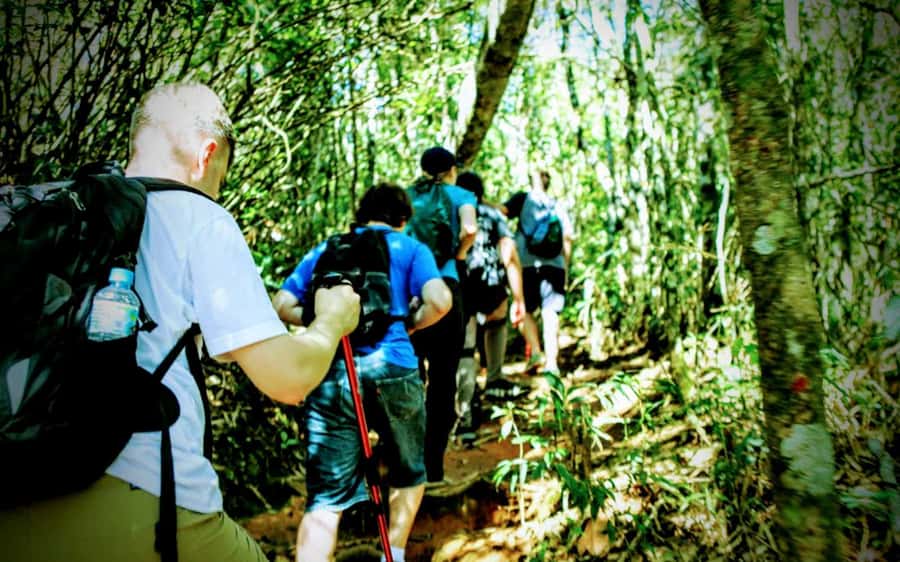
The tour keeps groups intimate, with a maximum of 6 people. That’s not just a comfort perk. It affects how the hike feels.
With a small group, the guide can slow down when someone spots something interesting and doesn’t need to bark directions to a long line. You can also ask questions without waiting, which is where the guide’s rainforest and history knowledge becomes more valuable. The experience is more like walking with a knowledgeable local, not herding through a checklist.
The guide is bilingual—English and Portuguese—so most visitors can get clear explanations. In previous outings, guides such as Tito are specifically praised for English and for tying together ecosystems, history, and economics. Other guides referenced in participant feedback, like Alex and Eddie, are also highlighted for history talk and careful pacing. Even if you don’t catch the same exact guide, the pattern is clear: they focus on explanation and interpretation, not only leading the way.
Price and value: what $63 gets you in real terms
At $63 per person for a 5-hour outing, you’re paying for three things that usually cost time and energy in Rio: guided access to Tijuca, transportation from your South Zone hotel area, and a viewpoint-focused hike that doesn’t demand that you plan a half-day route yourself.
Food and drinks are not included, so you’ll need to budget for snacks and water. But that’s also part of the tradeoff: the price stays focused on the guiding and the naturalist-style interpretation of the trail. If you show up prepared with snacks and a liter or two of water, you’re set.
Is it expensive for an easy hike? Not really, when you compare the value of a small group, bilingual interpretation, and getting you in and out with hotel pickup in the South Zone. Where you should think carefully is fitness readiness. The tour will not reshape itself for people who can’t hike 2 hours up and down, even if the distance is short.
Logistics that actually matter: shoes, bags, and body limits
This is a hiking tour, not a sightseeing bus ride. The big practical items are straightforward:
- Comfortable shoes or hiking boots; no sandals
- Small daypack only; luggage or large bags are not allowed
- Bring snacks plus water (1 to 2 liters)
- Insect repellent and sunscreen help a lot in humid, forested areas
- Wear weather-appropriate clothing
The fitness requirement is also non-negotiable. This activity is not recommended for children under 12, and it’s not suitable for wheelchair users or people with mobility impairments. It’s also flagged as not recommended for anyone with cardiovascular or pulmonary conditions, or any illness that makes difficult physical activity incompatible.
The operator can refuse participants they believe can’t endure the hike. That may sound strict, but it’s a safety and responsibility call—especially for a rainforest with uneven terrain.
Who should book this hike, and who should skip it
You should book this if you want:
- A short, guided hike in a major rainforest right next to Rio
- Big reward views at the end, with a guide who explains what you’re seeing
- A manageable climb (3.5 km) but not a flat walk
- A small-group day that feels personal rather than rushed
Skip it if you:
- Need a fully smooth, low-impact trail
- Have significant heart or lung limitations
- Are traveling with young kids and you can’t meet the age requirement
- Want food included or you dislike carrying water
This is also a good choice for first-time visitors who want something beyond the classic viewpoints. Pedra Bonita can be a more intimate and educational experience than the biggest-name icons, because the guide helps you connect the view to the geography and the forest behind it.
Should you book: Pedra Bonita with a small-group Tijuca guide?
I think this is a strong pick if you’re coming to Rio with limited time and you want a “real nature morning” that ends with a view. The small group size, the bilingual guiding, and the way the guide connects rainforest, coffee history, and the angles of the rock formations make it more than a basic hike.
Do it only if you’re comfortable hiking about 2 hours up and down on uneven rainforest ground. If you’re ready for that, you’ll likely leave with two things: a clearer understanding of Tijuca’s recovery story, and a summit view that gives Rio’s coastline context, not just scenery.
If you want, tell me your travel dates and your typical fitness level (for example: can you walk uphill for 30–45 minutes comfortably?), and I’ll help you decide if this is the right match and how to plan your day around weather and timing.
FAQ
How long is the Rio: Tijuca National Park hike to Pedra Bonita?
The total tour duration is 5 hours.
Is this hike easy or difficult?
It’s rated EASY, but you should be moderately fit. The hike itself is about 2 hours, with 3.5 km (2.2 miles) round-trip and 203 m (667 ft) elevation gain on rough rainforest terrain.
How big is the group?
The tour is small-group, with a maximum of 6 people.
What should I bring?
Bring comfortable shoes, snacks, sunscreen, water (1 to 2 liters), comfortable clothes, insect repellent, and a small backpack/daypack.
Is food and water included?
No. Food and water and drinks are not included.
What languages are the guides?
The live tour guide is available in English and Portuguese.
Who should avoid this tour?
It is not recommended for children under 12, people with mobility impairments, wheelchair users, or anyone with cardiovascular or pulmonary issues (or other conditions incompatible with difficult physical activities).
![Hiking the Historic Nakasendo Trail [1 Day Tour from Nagoya] - Pickup From Nagoya: Smooth Start, Fixed Rhythm](https://img.hikingtravelguide.com/wp-content/uploads/hiking-the-historic-nakasendo-trail-1-day-tour-from-nagoya-400x267.jpg)