REVIEW · RIO DE JANEIRO
Rio de Janeiro: Pedra da Gávea 7-Hour Hike
Book on GetYourGuide →Operated by S2 Rio - Tours Rio de Janeiro · Bookable on GetYourGuide
Pedra da Gávea is Rio’s toughest view. This hike up through Tijuca National Park is a classic “city limits to mountain top” challenge, starting near sea level and rising to around 840 meters. You’ll be led by a certified, eco-adventure specialist with climbing gear and a small group size, so it feels more like a guided scramble than a crowded trek.
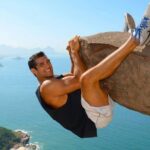
I especially like two things: the south and west panoramas from the top, and the way the guides help you handle the technical sections (including the Carrasqueira climbing area) using the safety equipment provided. Even better, many guides double as photo helpers, so you’re not stuck with only shaky phone shots.
Here’s the one consideration: this is a difficult hike with some hands-on climbing and real exposure. If heights make you nervous, or if bad weather rolls in, you may want a more mellow Rio plan.
In This Review
- Key points before you lace up
- From Itanhangá to the trailhead: how this hike really begins
- The climb through Tijuca: what makes the first phase worthwhile
- Carrasqueira: the hands-on rock section (and what “basic climbing” means)
- Summit time: getting the big south and west view
- The descent: why going down can feel like its own challenge
- What’s included (and what that actually buys you)
- Small group dynamics: up to 6 people changes everything
- Difficulty level: who this hike is perfect for
- What to bring: the list that keeps you sane
- Weather and timing: why your day can change
- Where the value really is: $56 for a technical mountain day
- Who should book this hike (and who should skip it)
- FAQ
- How long is the Pedra da Gávea hike?
- Is previous rock climbing experience required?
- What language do the instructors speak?
- What climbing equipment is included, and what should I bring?
- Is transportation included?
- What’s the group size?
- What happens if bad weather affects the hike?
Key points before you lace up
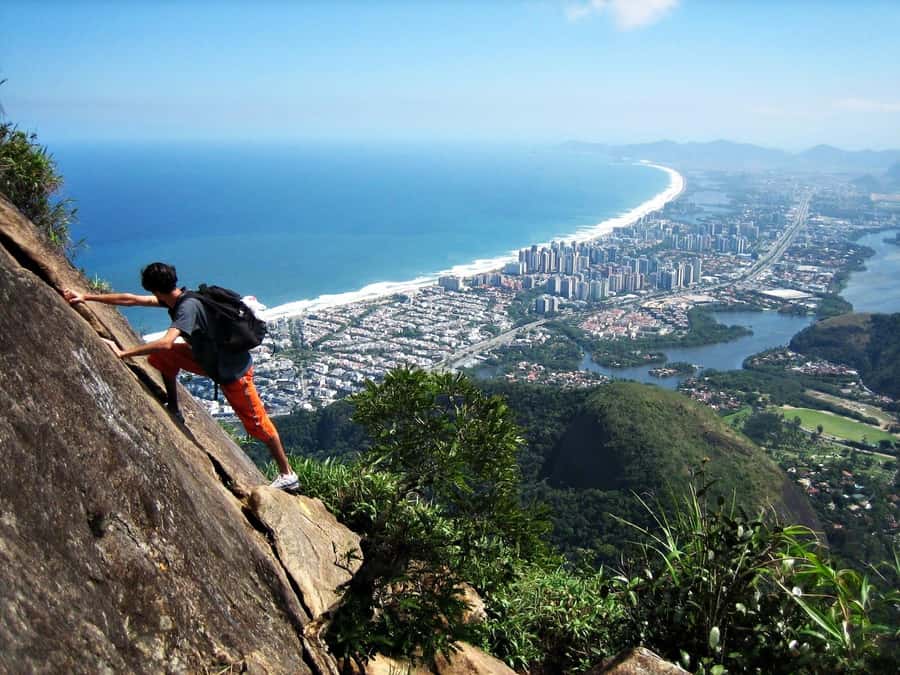
- Small group (up to 6): more attention during the tricky climbing spots
- Start near sea level, finish around 840 m: big elevation change for a day hike
- Carrasqueira section uses provided safety gear: you’re guided through the hardest moves
- Basic climbing around 30 m height: expect hands and careful footwork
- Most of the route is through Tijuca: lots of shade in the forest stretches
- Guides help with photos: you may leave with more than just scenery memories
From Itanhangá to the trailhead: how this hike really begins
This experience is based out of Itanhangá, with the meeting point at Estrada Sorimã, 932. You’re not buying private transportation with the tour price, so you’ll want to plan how you’ll get there on time (taxi, rideshare, or whatever works for your Rio base).
Once everyone checks in, the guide leads the group into the route up to Pedra da Gávea. The pacing matters here. It’s listed as an 8-hour activity, but the actual hiking time is about 3 hours. That split is a clue: the day includes technical stretches, safety checks, and time to get everyone through the climbing/bouldering-style points without rushing.
If you like hikes where you earn the view, this is that. If you want a steady “walk and chat” only, you may find the technical sections slow you down a bit.
You can also read our reviews of more hiking tours in Rio De Janeiro
The climb through Tijuca: what makes the first phase worthwhile
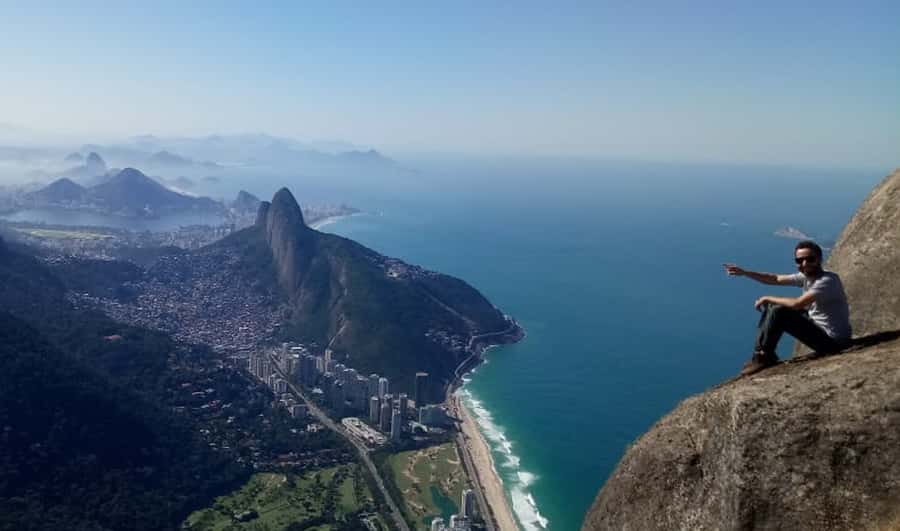
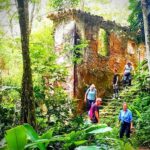
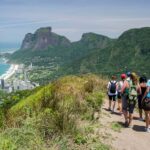
Pedra da Gávea sits right above Rio, and the route uses Tijuca National Park. That’s a big deal because you’re not just climbing rock in a vacuum—you’re moving through a forested corridor most of the way up.
Expect the trail to feel like a “progressively more serious” workout. At first it’s hiking, then it becomes steeper, then it turns hands-on in places. Several guide-led climbs emphasize foothold placement and body position, which is exactly what you want on a steep monolith. It’s also why good grip shoes matter so much (more on that soon).
What you’ll love here: You get variety. It’s not only uphill, and it’s not only technical. The forest section breaks things up, and when the rock climbing starts, you’re mentally prepared because you’ve already warmed up.
Carrasqueira: the hands-on rock section (and what “basic climbing” means)
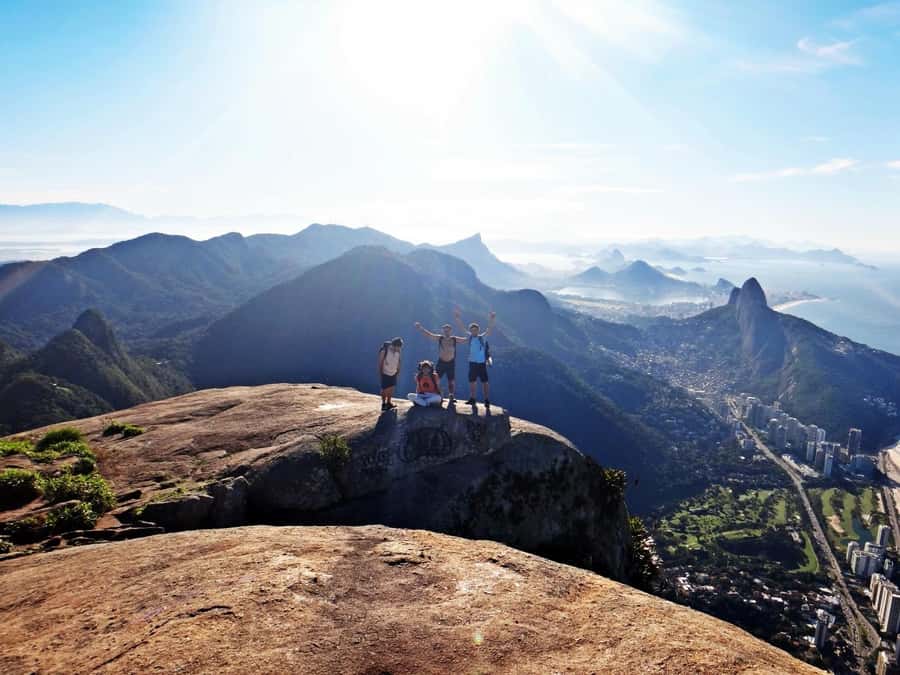
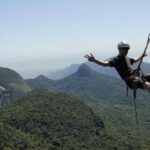
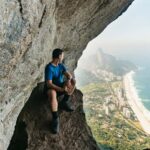
At some point, you’ll reach the Carrasqueira section. This is where the provided climbing gear comes into play, and it’s also where the hike changes character.
You should plan for:
- Some light climbing along the way up
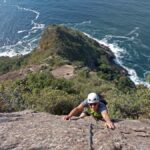
- A basic rock climbing challenge of about 30 meters
- Movements where you use your hands to shift your weight and balance
The tour listing says you don’t need previous rock climbing experience. The reviews (and the vibe of this tour) back that up: guides are helping people through the moves, not handing out a “good luck” trail map.
Still, “no experience required” doesn’t mean “effortless.” If you don’t like heights, you’ll want to think hard before booking. Even with safety equipment, the mental part can be harder than the physical part.
A practical tip: keep your focus on the next safe step, not on how far you still have to go. Most people get through fine when they follow the guide’s call-and-check method—step placement, pause, then move.
Summit time: getting the big south and west view
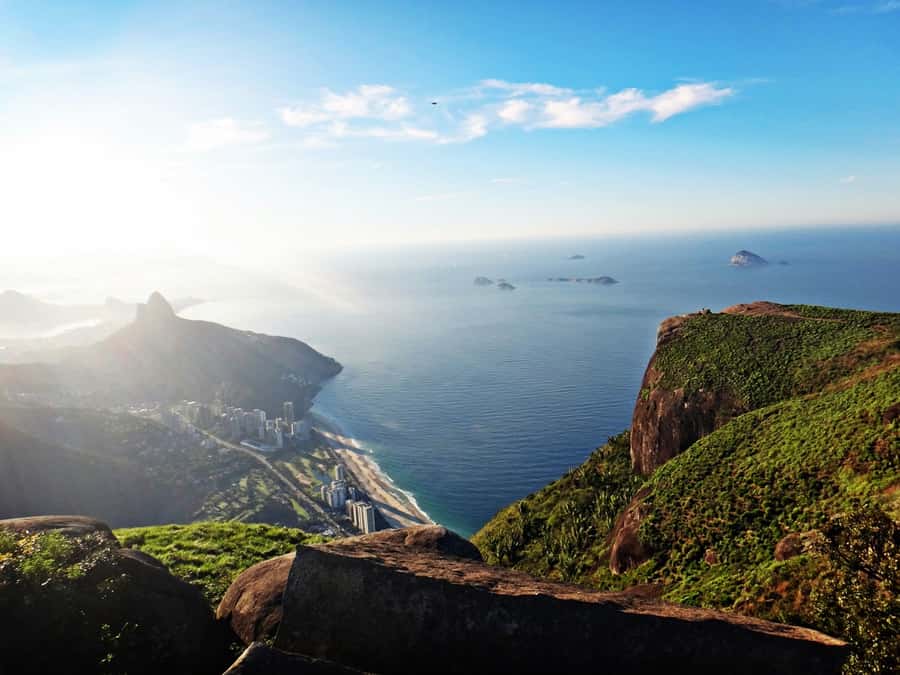
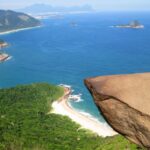
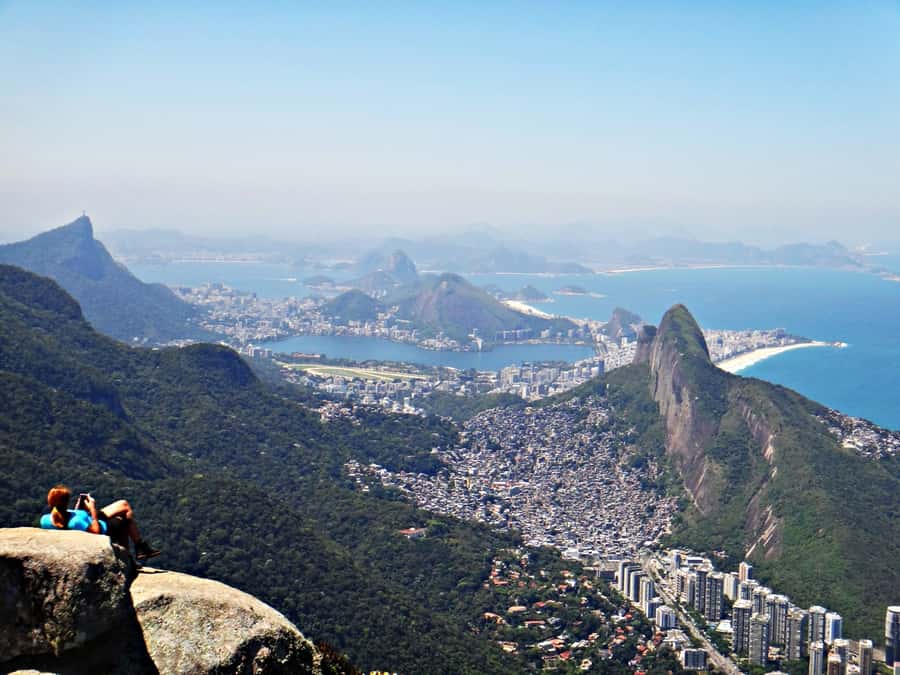
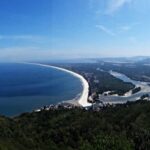
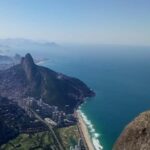
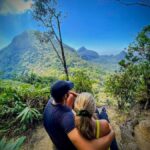
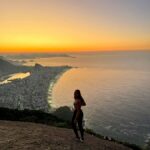
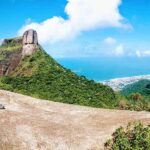
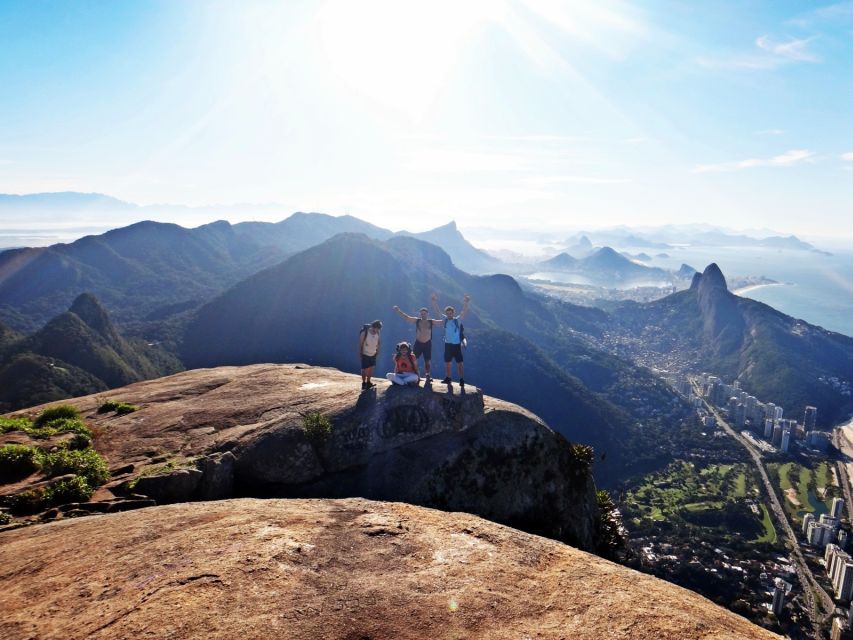
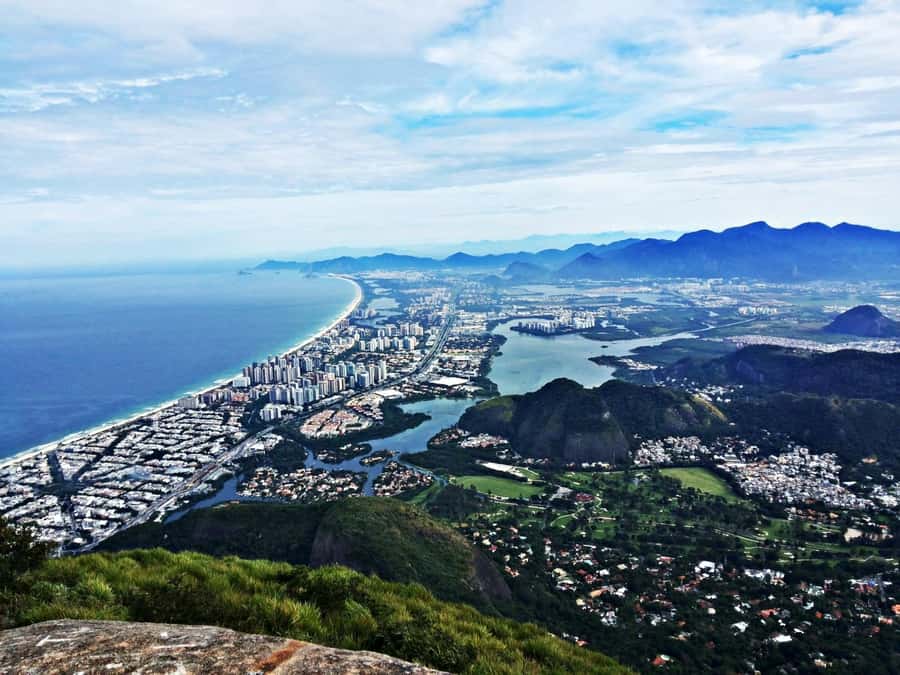
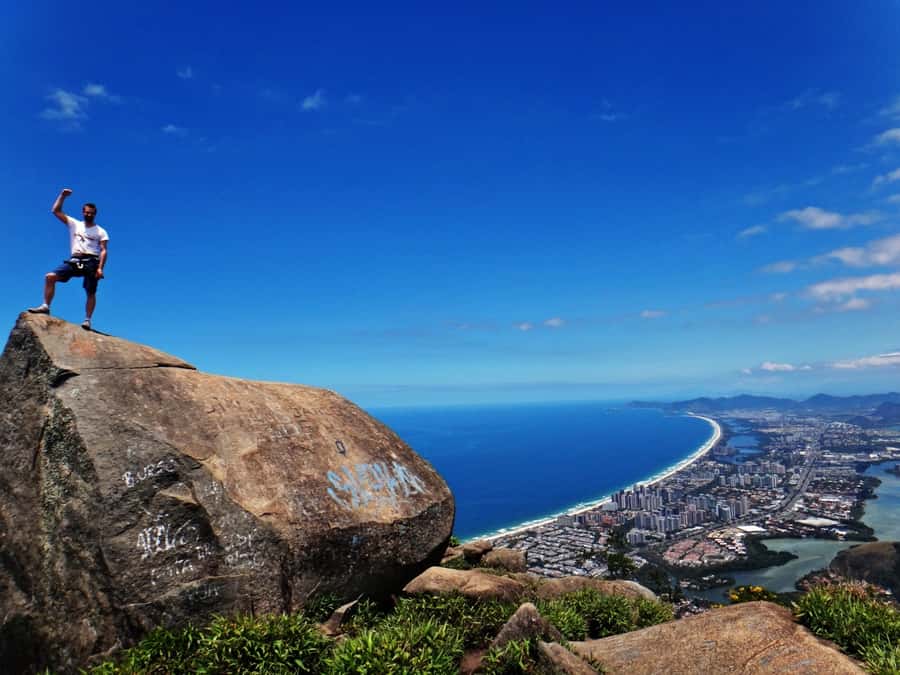
Once you clear the hardest climbing sections, you move toward the top and the reward shows up quickly. The payoff is described as amazing views of the south and west areas of Rio.
This is the moment people remember. Pedra da Gávea gives you a dramatic angle over the city, and from that height you get the sense of scale you can’t get from the beach or viewpoints that are closer to street level.
One real-world note: cloud cover can soften or block the view. If the weather is iffy, you might still get a great climb and a partial panorama, but it won’t look the same as a crisp, clear day.
If you’re hoping for photos, summit time is where the guide can help most. Many guides take pictures along the way and then share them afterward, which helps you avoid losing time stopping to pose every few minutes.
The descent: why going down can feel like its own challenge
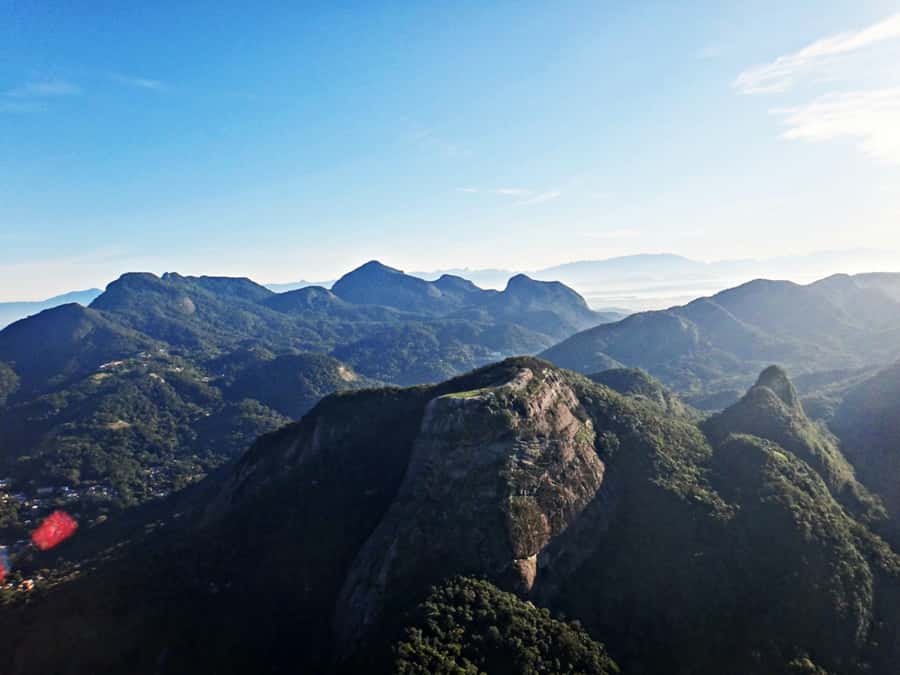
Descending is not automatically easier. With rock scrambling, slippery surfaces, and gravity doing what gravity does, the return often asks for the same attention as the climb—just in a different way.
Guides typically keep the group together at the technical points, so you’re not left wondering how to proceed at the tricky bits. Reviews also suggest that rope/helmet-style safety may be used in some segments depending on the situation and guide approach. Either way, the key principle is consistent: you move carefully, and you don’t rush just because the top is behind you.
If your legs are tired, slow down anyway. A fast descent after a steep climb is how people twist ankles. Good grip shoes plus guide timing keeps this under control.

What’s included (and what that actually buys you)
The price covers:
- A guide specialized in eco adventures
- Climbing equipment
That’s not just “nice to have.” On a hike with exposed rock and hands-on sections, gear reduces the risk and increases confidence. It also changes how the day feels. Instead of treating the technical parts as a solo problem, you’re working within a guided system.
What’s not included is private transportation. So the real cost comparison is not only ticket price—it’s also the cost of getting to Estrada Sorimã, 932 at the start time.
Also note the language options: Spanish, English, and Portuguese. That matters because the climbing sections depend on clear instructions. If English works best for you, you’re set. If not, Portuguese or Spanish usually makes communication easier for many visitors.
Small group dynamics: up to 6 people changes everything
This tour caps group size at 6 participants. That’s a huge practical upgrade. It means:
- You’re more likely to get personal attention at the trickier sections
- The guide can adjust pace based on how everyone is handling the climbs
- Waiting time at bottlenecks tends to be shorter than on big groups
It also means the tour can feel like one shared mission. People tend to support each other, and you’ll likely get encouragement when the climbing starts to feel spicy.
If you’re very sensitive to pace (for example, you hate slow technical segments), tell yourself ahead of time that this hike includes supervised climbing time. You’ll enjoy it more when you accept that the day is built around the rock section, not around a treadmill-style hiking pace.
Difficulty level: who this hike is perfect for
The hike is described as difficult. It includes steep nature trails, some light climbing, and a rope/gear-supported climbing challenge around 30 meters.
You’ll be a great match if you:
- Have basic fitness (a steep climb shouldn’t feel like a full stop)
- Are comfortable using your hands on rock sometimes
- Don’t panic at heights, or at least can follow instructions even if you feel a little nervous
You might struggle if you:
- Fear heights strongly
- Have balance issues
- Expect a casual hike only
One helpful detail: no prior rock climbing experience is required. But you do need the willingness to learn on the spot and the patience to move slowly during technical steps.
What to bring: the list that keeps you sane
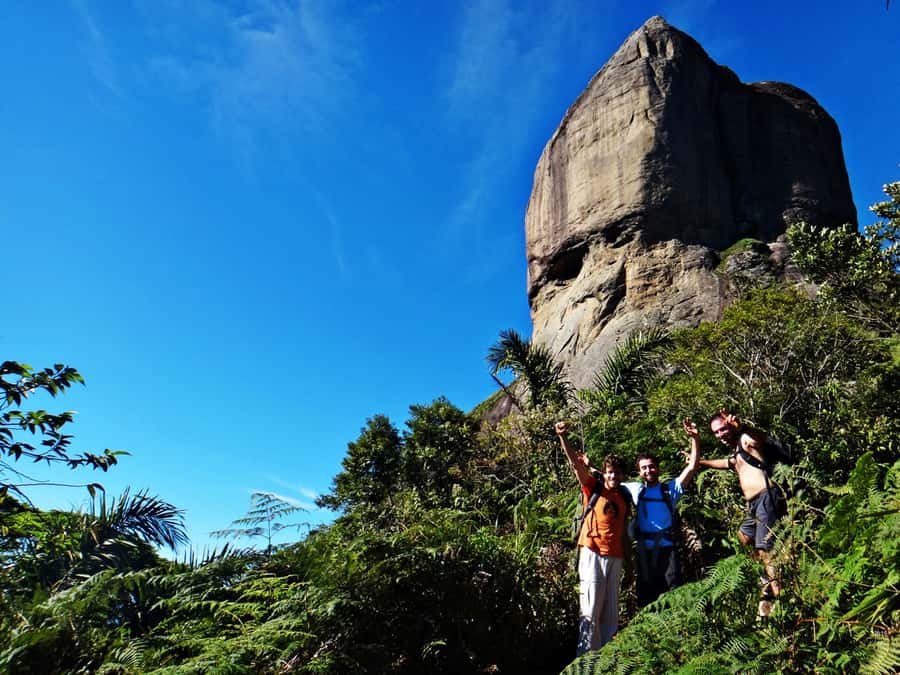
You’ll want to pack for sun, heat, and a long day.
Bring:
- At least 3 liters of water per person
- Light snacks (something simple you can eat while you’re moving on a schedule)
- Light clothing
- Sunglasses
- Sun hat
- Sunscreen
- Insect repellent
- Shoes with good grip
Don’t bring:
- Pets
- Oversize luggage or large bags
- Open-toed shoes
This is worth repeating: shoes with grip are not optional. The route includes steep and technical sections, and you need a sole that can bite into rock and uneven ground.
Weather and timing: why your day can change
The activity can be cancelled in bad weather. Pedra da Gávea is rock, and when conditions are wet, the technical sections become riskier.
Also, the tour is listed as an 8-hour experience even though the hike itself is about 3 hours. That usually means you’ll factor in meeting time, gear handling, climbing segments, breaks, and the return trip. If you’re tight on your Rio schedule, plan a little buffer around this day.
Where the value really is: $56 for a technical mountain day
At $56 per person, this isn’t a bargain hike. But it also isn’t just paying for “a viewpoint.” You’re paying for a certified eco-adventure guide plus climbing equipment, which is the core of what makes this hike special.
If you tried to do Pedra da Gávea on your own, you’d pay in other ways—time, transport coordination, and the real risk of getting wrong at the technical sections. Here, the guide controls the route timing and the safety flow. That’s what you’re buying.
For budget travelers, the only real extra cost is getting yourself to the meeting point since private transport isn’t included.
For adventure seekers, the value is stronger: you’re spending your day on the mountain, in the forest, with hands-on climbing, and finishing with city-spanning views.
Who should book this hike (and who should skip it)
Book this tour if you want a challenging day in Rio that feels like more than sightseeing. You get the mix of Tijuca forest trails, gear-supported climbing, and big summit views of the south and west. Guides like Eduardo (often called Edu), Lucas, Sergio, and others are known for keeping people safe and helping with photos when the timing allows.
Skip or choose a gentler option if you hate heights or you’re looking for an easy stroll. The climb is described as difficult, and even though previous rock climbing isn’t required, the route includes technical steps that need steady nerves.
If you’re torn, ask yourself this: can you handle a slow climb where you may use your hands and move carefully on rock? If yes, this is one of the more memorable ways to experience Rio’s dramatic terrain.
FAQ
How long is the Pedra da Gávea hike?
The hike is approximately 3 hours, but the overall experience is listed as about 8 hours.
Is previous rock climbing experience required?
No previous experience of rock climbing is required. The route includes some light climbing and basic climbing sections with instruction and safety equipment.
What language do the instructors speak?
The instructor/guide speaks Spanish, English, and Portuguese.
What climbing equipment is included, and what should I bring?
Climbing equipment is included. You should bring at least 3 liters of drinking water per person, light snacks, light clothing, insect repellent, sunglasses, sunscreen, and shoes with good grip. Open-toed shoes are not allowed.
Is transportation included?
Private transportation is not included. You meet at Estrada Sorimã, 932 – Itanhangá, Rio de Janeiro.
What’s the group size?
This is a small group limited to 6 participants.
What happens if bad weather affects the hike?
The activity will be cancelled in the event of bad weather.