REVIEW · RIO DE JANEIRO
Tijuca Forest Hike – Waterfalls & Caves, Nature & Wild Life!
Book on Viator →Operated by Hike in Rio · Bookable on Viator
Rainforest waterfalls and caves, no jet lag.
In Tijuca National Park, you start with the jaw-dropping 35m Taunay Waterfall view and then work through a route built for real cooling stops like Cachoeira das Almas. I also like how the experience mixes nature with handy storytelling, plus guides who genuinely help you spot wildlife and plants and even capture great phone photos. One thing to consider: this is a 5.5-mile hike in humid, sometimes slippery soil, so plan for moderate fitness and proper footwear.
With a maximum of 10 travelers and a certified 5-star guide, the pace stays friendly. I’ve seen multiple guide styles called out in particular, including Alli, Lucas, Sergio, Alessandra, and Juliana, and they all seem focused on keeping the walk fun, informative, and photo-ready.
In This Review
- Key highlights you’ll care about
- Tijuca National Park: what makes this hike feel different in Rio
- Price and value: is $69.59 worth a 4.5-hour rainforest day?
- The route in plain English: waterfalls first, caves next, then the return
- Stop 1 in your mind: Taunay Waterfall at the park entrance
- Floresta da Tijuca, Capela Mayrink, and the “park life” feeling
- Cachoeira das Almas: your first real cooling stop
- The caves segment: Belmiro, Archer, and Bats Caves
- Cristalina and Baronesa waterfalls: the return hike gets better
- Gabriela Fall and snack time: a calm wrap-up, not a sprint
- Trail difficulty: what mostly easy really means in humid rainforest
- Group size and guides: why small matters on this route
- Wildlife and plants: you’ll see more when someone points it out
- Photos that look natural: waterfalls plus phone camera help
- What to bring: simple stuff that prevents misery
- Weather and timing: this is a good-day-with-good-conditions plan
- Should you book this Tijuca Waterfalls and Caves hike?
Key highlights you’ll care about
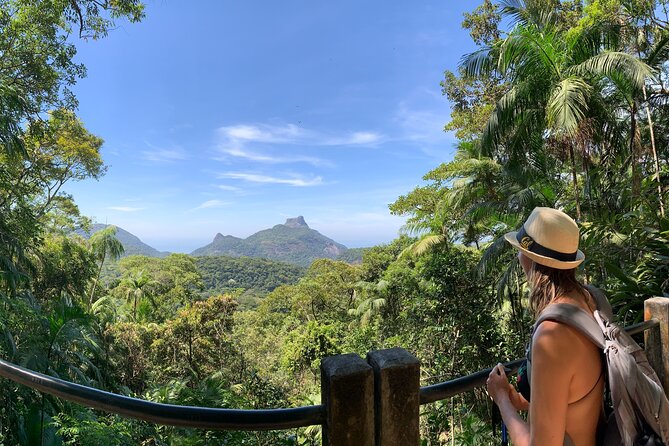
- Taunay Waterfall first impression: a classic 35m free-fall cascade to set the tone.
- Cooling waterfalls on the route: Cachoeira das Almas, Cristalina, Baronesa, and Gabriela.
- Safe cave visits: Belmiro, Archer, and Bats caves are described as safe for guests.
- Mostly easy trails, real conditions: humid, occasionally slippery ground without major technical difficulty.
- Small group size: up to 10 travelers, which usually means better attention on the trail.
- Photo help built in: guides are praised for getting strong shots with smartphones.
Tijuca National Park: what makes this hike feel different in Rio
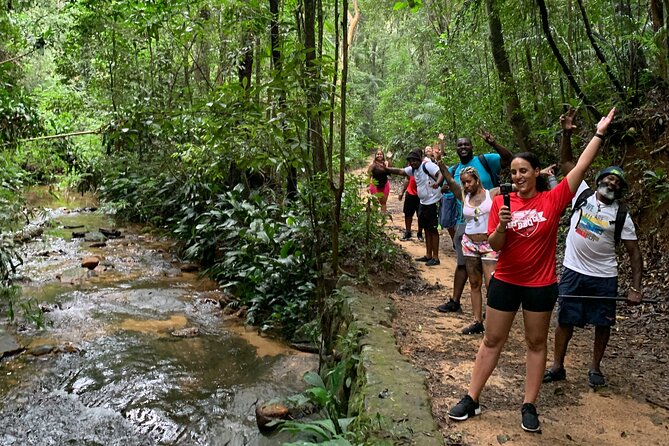
Tijuca Forest is the kind of Rio nature that doesn’t feel like a quick roadside stop. You’re walking inside a rainforest environment right after you enter the park, with big sights happening early, not at the far end of the tour.
The smart part here is pacing. You get a major landmark—Taunay Waterfall—right up front, so even if you’re still mentally switching from city mode to forest mode, the hike immediately locks your attention. Then the route keeps giving you “okay, let’s cool down” moments through multiple waterfalls, instead of one lone scenic stop.
And yes, caves are part of the mix. That adds a fun change of pace when you might think the day will just be leafy trails and wet rocks. The caves are part of a guided trail segment, with named caves on the itinerary, so you’re not just walking into darkness and hoping for the best.
You can also read our reviews of more hiking tours in Rio de Janeiro


Price and value: is $69.59 worth a 4.5-hour rainforest day?
At $69.59 per person for about 4 hours 30 minutes, you’re paying for more than a walk. You’re paying for:
- a certified 5-star guide (the guide quality is repeatedly emphasized)
- first aid coverage
- a small-group format (maximum 10 travelers)
- plus practical hiking add-ons like walking sticks and small backpacks available on request
If you compare this to doing Tijuca on your own, the guide does real heavy lifting. They help you notice plants and wildlife in a place where everything can look green and similar from a distance. Several guides are praised for explaining what you’re seeing—animals, plants, insects, and local park history—without turning it into a lecture.
And there’s value in the structure of the day: major waterfall stops, then the caves, then more waterfalls on the way back. You’re not guessing which short cuts are worth it or where the best “cool off here” spots are.
The route in plain English: waterfalls first, caves next, then the return
This hike is built like a sequence of nature “chapters.”
You start at Praça Afonso Viseu in Alto da Boa Vista, and the day centers on getting you into Tijuca National Park quickly, before the heat or your patience starts to fade. The hike itself runs about 4 hours along the trails, with total time around 4.5 hours including breaks.
From there, expect a trail rhythm like:
- waterfall views and a first meaningful stop
- a historical-feeling park area before you head toward the cave trail
- caves as the most different segment of the day
- then another set of waterfalls during the return hike
The route is described as mostly easy, but not flat and polished. You’ll walk about 5.5 miles, and you should expect humid, sometimes slippery soil. That matters because it changes your footwear and your pace more than it changes the difficulty level.
Stop 1 in your mind: Taunay Waterfall at the park entrance
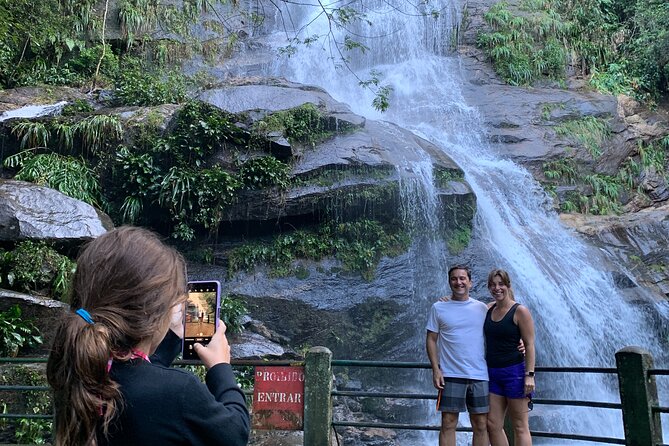
Taunay Waterfall (often the “wow, okay we’re here” moment) is called out as the most famous cascade in the park, with a 35m free fall. Starting here is a smart move. It gives you a huge reward early, and it helps orient you in a rainforest environment where depth can surprise you.
What I like about this kind of start: you don’t waste your energy trying to find the big thing. You also get a natural photo target before the day becomes crowded with smaller wonders like plants, insects, and cave walls.
Practical note: if you’re the kind of person who wants steady photos, aim for a spot where you’re not fighting constant mist. Rainforest air can be damp even when it isn’t actively raining.
Floresta da Tijuca, Capela Mayrink, and the “park life” feeling
Between waterfall moments, the route passes areas that feel more than just wilderness. You’ll walk past Floresta restaurant, described as a historical building, and also come through Capela Mayrink.
Why this matters: in a rainforest hike, people often miss that Tijuca wasn’t always just a scenic backdrop. The tour frames it as a living park with history, not just a green wall.
This segment also tends to be useful psychologically. After the initial waterfall intensity, historical spots give you a “slow down, catch your breath, reset your brain” rhythm before the cave portion.





Cachoeira das Almas: your first real cooling stop
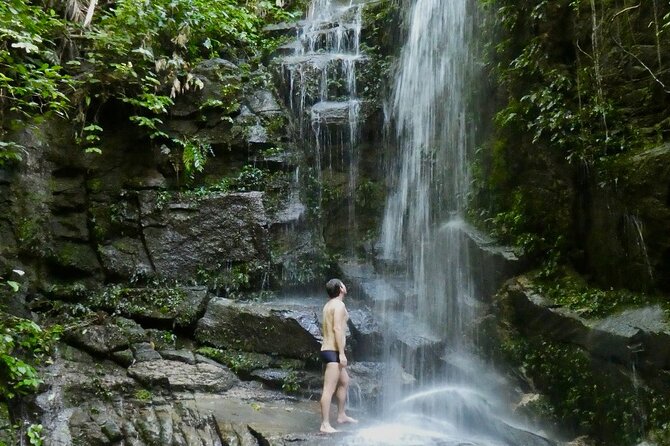
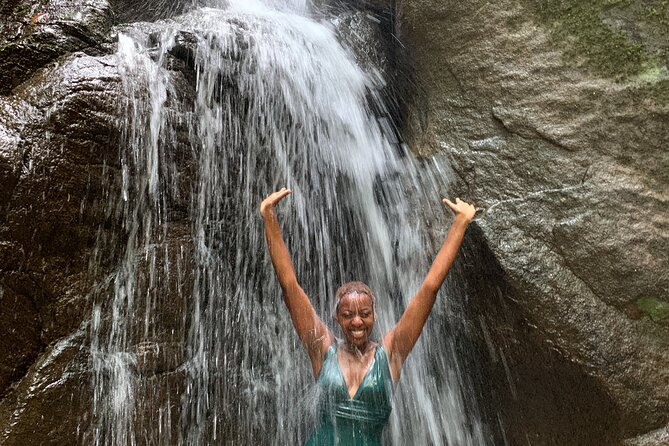
Your first waterfall stop is Cachoeira das Almas, where you can cool off under the fall. If you like rainforest hikes, this is the moment you’ll remember for the physical sensation—the damp air, the sound, and the simple relief of water during a warm day.
The tour emphasizes that the waterfalls have natural crystal water rising from the park’s basins. Even if you don’t go all-in and splash around, standing near the falls changes the whole experience. The rainforest stops being a visual thing and turns into a sensory one.
Consideration: this is still a waterfall area, so plan for wet ground and slippery spots nearby. Even when trails are described as mostly easy, rainforest edges can be treacherous underfoot.
The caves segment: Belmiro, Archer, and Bats Caves
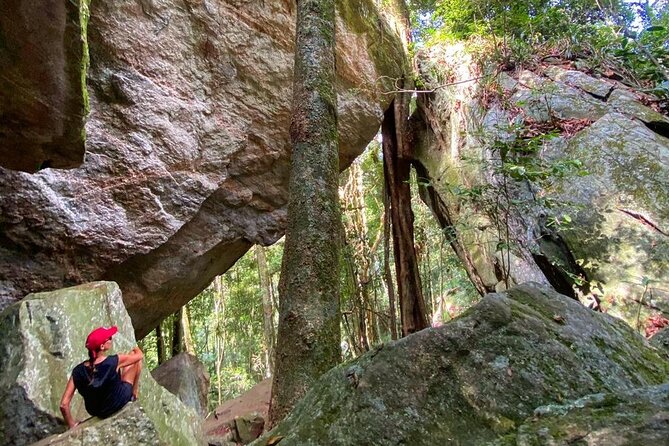
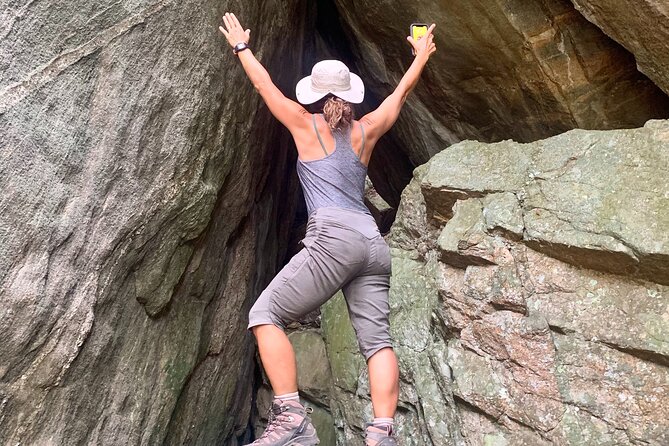
Once you hit the cave trail, the day becomes more than just walking between viewpoints. You’re moving through named cave areas—Belmiro, Archer, and Bats Caves—and the tour talks about being surprised by rocks and granite walls.
This is a great change of pace because you’re shifting from daylight rainforest textures to rock geometry and echoing spaces. It also tends to bring out curiosity, which is where good guiding pays off. A guide can help you read what you’re seeing without turning it into technical geology.
Safety note: the caves visited are described as safe and don’t pose danger to guests. That said, caves usually mean uneven footing and damp surfaces, so watch your step and keep your attention on the ground in the tricky stretches.
Cristalina and Baronesa waterfalls: the return hike gets better
After the caves, the route introduces Cristalina and Baronesa waterfalls. This is where the itinerary smartly avoids a dip in energy after the caves.
Caves can be mentally tiring—part wonder, part concentration. Returning to waterfall stops gives your senses something lighter to process again: sound, mist, and the open feeling of an outdoor pause.
The tour keeps the theme consistent: natural crystal water, rainforest views, and time to relax. It’s not just “see it, go.” The stops are built to let you actually enjoy the place, not speed-run it.
Gabriela Fall and snack time: a calm wrap-up, not a sprint
Near the end, you get time at Gabriela Fall, plus a chance to relax and have a snack. This is valuable because it turns the end of the hike into a decompression period.
If you’re traveling in Rio and want to feel like you did something real, this kind of ending helps. It’s the difference between a tour that clocks hours and a tour that lets your body cool down and your brain slow its pace.
And if you’re thinking about photos again: guides are praised for helping people take strong pictures at waterfalls and caves, including with smartphone skills. That means you’re not spending your entire break wrestling with the camera.
Trail difficulty: what mostly easy really means in humid rainforest
The trails are described as mostly easy, but you’re still walking 5.5 miles. Some stretches involve humid, slippery soil. So the right plan is not to treat this as a gentle stroll.
Instead, treat it like a moderate day hike:
- Wear closed-toe shoes with grip
- Expect wet patches even if the sky looks fine
- Use the walking sticks if you have any knee or balance concerns
Walking sticks are available upon request, and that’s a small detail that matters. In rainforest hikes, the biggest problem is often not distance—it’s footing. A stick can help you move more confidently on uneven ground.
Group size and guides: why small matters on this route
This experience caps at 10 travelers, and that’s a big deal when you’re moving through narrow trails, waterfall areas, and cave paths. Small group size helps in two ways:
First, you get more guide attention, especially when your guide is spotting animals, plants, insects, and explaining park history. Second, it’s easier to pause for photos without losing the whole group to the trail.
Guide quality shows up repeatedly in the kind of praise that actually counts. Guides like Alli, Lucas, Sergio, Alessandra, and Juliana are described as personable, patient, and informative, with a strong focus on helping people enjoy the forest rather than just covering it.
Wildlife and plants: you’ll see more when someone points it out
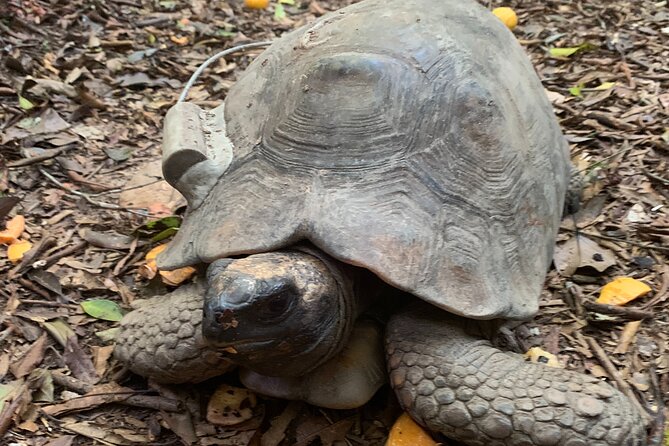
Rainforest wildlife is not like a zoo where everything is fenced and predictable. In Tijuca, you’re more likely to notice smaller signs—motion in leaves, shapes you’d miss, insects you’d never identify on your own.
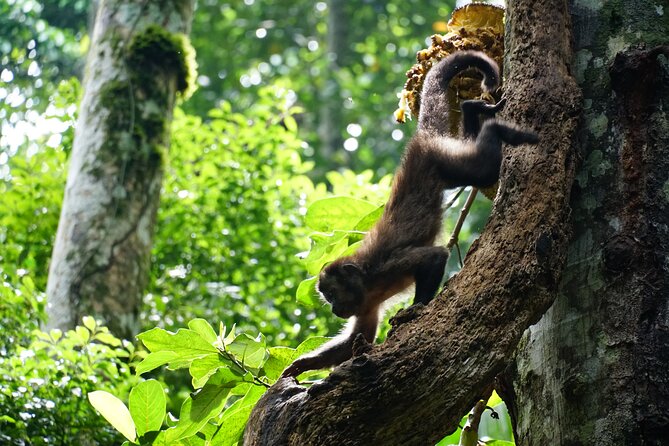
This tour is set up so the guide can point things out along the way. People also mention insects and animals being part of the story, which suggests the guide isn’t only focused on scenery.
If you like nature photography, this matters even more. You get to position yourself better and understand what you’re looking at, instead of taking random shots and hoping.
Photos that look natural: waterfalls plus phone camera help
One of the most practical joys of this hike is that guide photo help isn’t treated as an add-on. Multiple guides are specifically praised for taking great photos with smartphones and helping people get good shots at waterfalls and caves.
That changes the vibe. You’re not stopping every three minutes for a “hold still” moment. Instead, the guide seems to time photos around actual views and pauses, which makes it feel fun rather than distracting.
If you want the best results, bring your phone with a fully charged battery and don’t forget a case if you’re worried about splashes.
What to bring: simple stuff that prevents misery
You don’t need a gear list longer than your passport. But a few essentials will make the day easier:
- Shoes with grip for humid, slippery soil
- A light rain layer or poncho in case conditions shift (rainforests change fast)
- Water and a small snack if you have dietary needs beyond what’s provided
- If you want to swim under a waterfall, pack what you’re comfortable getting wet in
Also, the tour offers small backpacks and walking sticks upon request, so you can travel lighter than you might on your own.
Weather and timing: this is a good-day-with-good-conditions plan
The hike requires good weather. That makes sense for trail safety and for enjoying waterfalls without constant disruption.
If your schedule is tight, booking early is smart. The tour is described as being booked about 17 days in advance on average, which tells you it’s not always available on short notice.
The 4.5-hour window is also a sweet spot. You still get plenty of time in Rio afterward, without losing your whole day to getting muddy.
Should you book this Tijuca Waterfalls and Caves hike?
I’d book this if you want a rainforest day that mixes big sights and variety. The Taunay Waterfall start is a strong opener, and the combination of waterfalls plus safe caves gives you a full “Rio nature” story instead of a single-note hike.
You should also book it if you care about learning while you walk. The guide-led focus on plants, animals, insects, and park history makes it feel more meaningful than just taking photos.
Skip it if you dislike uneven, wet ground. Even with mostly easy trails, you’ll walk 5.5 miles over humid, slippery soil. If that’s a deal-breaker, look for something shorter or less trail-heavy.
If you’re ready for a solid half-day in Tijuca with a small group and guides who know how to make the forest readable, this is a strong choice.