REVIEW · ARUSHA
8-Day Small-group Lemosho Kilimanjaro Summit Trekking
Book on Viator →Operated by Climb Kili · Bookable on Viator
Kili turns your brain into altitude math. This 8-day trek tackles Kilimanjaro via the Lemosho route with a small group, moving through different climate zones so you can acclimatize before the big push. You’ll be hiking toward Africa’s highest freestanding peak with a scheduled midnight start for summit night, which is exactly the kind of plan that keeps your focus where it belongs.
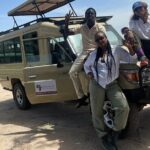
I love two things right away: the round-trip transfers from your Arusha hotel and the fact that camping operations are handled end-to-end, including equipment, meals, and park/entry fees. You also get that hands-on team vibe that shows up in the guide crew style I’ve seen highlighted by Climb Kili staff, with leaders like Amani and Raymond, plus support that keeps the pace human (and food on schedule, including chef Simon).
One consideration: this is not a casual hike. You’ll face a midnight summit climb with steep sections on non-technical trails, and camps like Kosovo are described as exposed, meaning you should plan for cold air and careful footing.
In This Review
- Key things to know before you go
- Why the 8-Day Lemosho Route Works for Acclimatization
- Getting to the Trail: Arusha Transfers and Day 1 in the Rain Forest
- Day 2 on Shira Ridge: First Big Views Above the Forest
- Day 3 Shira Plateau: The Collapsed Cone Option and Moir Camp in a Gorge
- Day 4 Lava Tower to Arrow Glacier: Acclimatization with Real Altitude Payoff
- Day 5 Barranco Valley to Karanga Camp: From Big Steps to the Arctic Zone
- Day 6 Kosovo Camp and Barafu Views: A Slow Day With Big Preparation Energy
- Day 7 Summit Night: Stella Point at Sunrise, Uhuru Peak One Hour Later
- Day 8 Mweka Gate and the Shower You’ll Remember
- Group Size, Guides, and the Support That Makes the Difference
- Price and Value: What $2,895 Covers (and Why It’s Not Just a Ticket)
- Who Should Book This Trek (and Who Should Re-think It)
- FAQ
- How long is the Mount Kilimanjaro trek on this itinerary?
- What route is this trek using?
- How big is the group?
- What’s included in the price?
- When do you start on summit night?
- Is free cancellation available?
- Should You Book This 8-Day Lemosho Trek?
Key things to know before you go
- Lemosho for acclimatization: a slower on-ramp through multiple zones, not just a straight shot upward
- Small group attention: up to 15 travelers, so pacing and check-ins feel personal
- All camping logistics included: camping gear, meals, and admissions/fees are covered
- Summit night is the steep grind: Stella Point timing and a long, mentally tough push
- Team support you can feel: guide leadership and crew details like early coffee wake-ups and tent comfort
Why the 8-Day Lemosho Route Works for Acclimatization
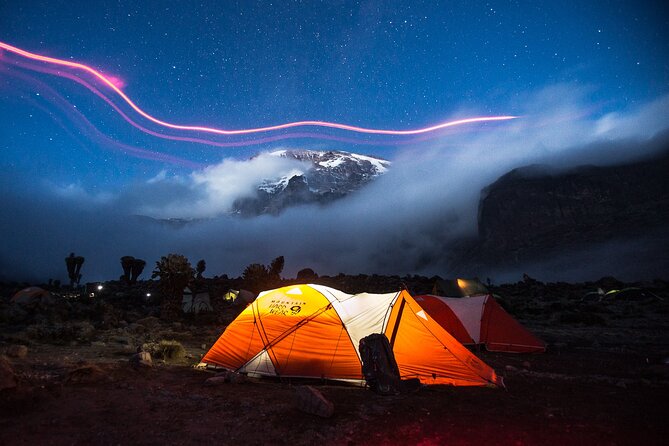
The big reason the Lemosho approach is popular is simple: it gives your body time. Kilimanjaro altitude isn’t just “higher.” It means every breath gets less efficient, and that forces your pace to slow whether you want it to or not. This route is built to help you adapt before the summit attempt.
In your first few days, you’ll travel from forest into open high-country terrain, so your hike is also learning how to move in different footing and temperature. You’re not only gaining altitude; you’re adjusting to thin air and colder nights at the same time.
I also like that the itinerary includes a clear acclimatization trek before summit night. That extra work isn’t for training your legs like a gym. It’s for helping your body handle the jump toward higher, colder zones more safely.
Getting to the Trail: Arusha Transfers and Day 1 in the Rain Forest
Your trip starts with a convenient setup: round-trip transfers from your Arusha hotel, plus a planned start time of 8:00 am. That matters more than it sounds. On day one, you want fewer unknowns and more time to get calm before climbing starts.
Then you begin from the western side and check in at the Londorossi gate. After that, you ease into the hike through montane forest, which is exactly the kind of early effort that helps you find your rhythm. You’ll be moving gently for a few hours, not sprinting up a staircase in the sky.
Day one ends at Mti Mkubwa, meaning Big Tree, under the Climb Kili camp setup. You get a camp with tents established and your personal belongings inside, which saves energy that you’ll need later. You’ll also sleep in a Kilimanjaro rain forest environment, so the air feels different than what comes later on.
Practical tip: if you hate damp clothes, use a quick-dry base layer on day one. The rain-forest humidity can cling to fabric.
Day 2 on Shira Ridge: First Big Views Above the Forest
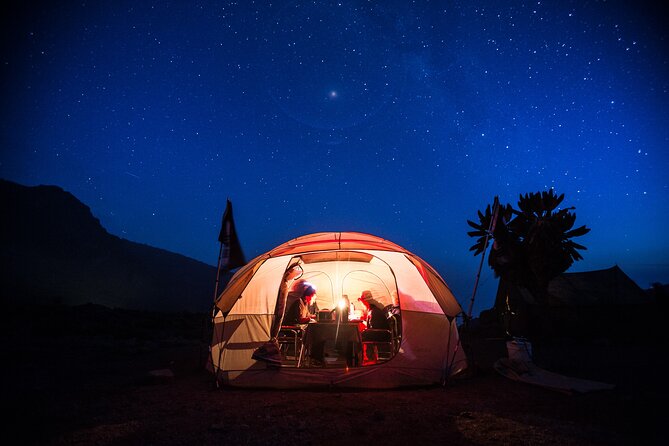
Day two starts with altitude and changes in scenery. You’ll move out of the forest and into savannah-like high ground with tall grasses, heather, and volcanic rock, sometimes draped with lichen. It looks dramatic, but the real story is how the air feels thinner as you climb.
Afternoons follow the Shira ridge, where you start getting those first long-horizon views of Kilimanjaro. You’re not just sightseeing here. This is the part of the trek where you learn to hike steadily at a lower heart rate than you’re used to, because your body will ask for that.
The hike time on this day is listed at about 5–6 hours, so it’s long enough to feel like a real trek, but not so long that you’re cooked. You finish at camp and get more time to acclimatize overnight.
Practical tip: bring a hat and gloves even early in the trek. Warm sunlight can fool you, and shade plus altitude can switch the temperature fast.
Day 3 Shira Plateau: The Collapsed Cone Option and Moir Camp in a Gorge
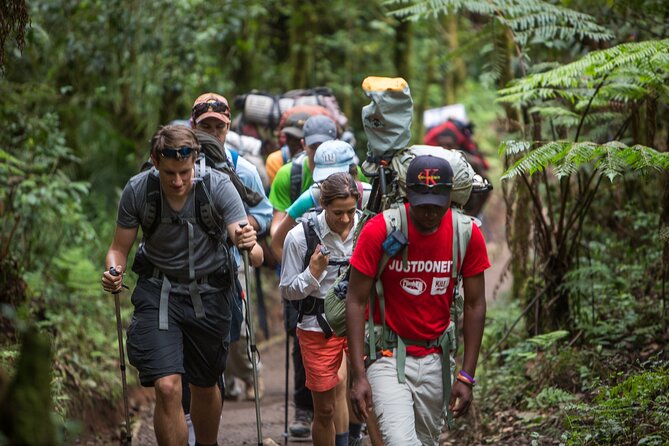
Day three is a longer day and a more focused high-altitude experience. You’ll be trekking around the Shira plateau, going east toward Kibo’s glaciated peak area. There’s an option to visit the ancient collapsed Shira cone, which is one of those “Kilimanjaro is more than one mountain” moments.
If you take the cone option, it’s worth doing carefully. It’s optional, so you can choose based on how you feel. Either way, you’ll arrive at Moir Camp, described as being in a huge gorge at the end of a dormant lava flow.
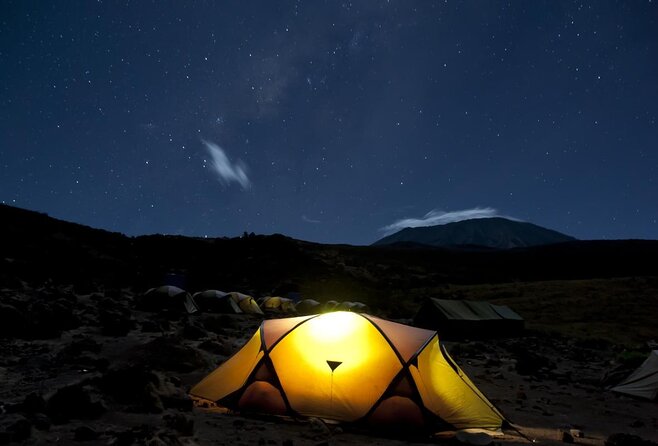
That gorge-camp detail matters. Camps like this tend to feel colder and can affect wind. It also makes the night sky feel extra sharp once you step outside the tent.
Practical tip: keep a spare layer in your daypack. When the wind rises, you’ll be grateful you don’t have to hunt through your tent bag.
Day 4 Lava Tower to Arrow Glacier: Acclimatization with Real Altitude Payoff
This is one of the smartest days on the whole trek because it’s an acclimatization trek with a point. You’ll head up toward Lava Tower (listed around 15,000 ft / 4,500 m) and then continue toward the Arrow Glacier area. Even if you’ve never studied glaciers before, the point is physical: go up, rest, then come down before you’re forced into it.
Shortly after the tower, you reach a junction that takes you up toward the Arrow Glacier. Later you’ll descend through the Senecio forest and finish at Barranco Camp. The Barranco portion sets you up for the next day, because the Barranco wall and valley terrain are a distinct kind of challenge.
This day also gets specific about where you’ll be sleeping: Barranco Camp is in the shadow of the massive Barranco wall. That can mean clouds and mist moving through the area, which changes how cold you feel at night.
Practical tip: poles help here. The descent and uneven footing in this kind of zone is where knees complain if you don’t protect them.
Day 5 Barranco Valley to Karanga Camp: From Big Steps to the Arctic Zone
Day five starts with a more adventurous segment: the Barranco Valley and up the Barranco wall. This is not technical climbing, but it can feel steep and exposed. The advantage is that you’re doing it with time and support from your guide team, not when you’re already exhausted beyond reason.
After that, you move onto the South Circuit path through the Karanga Valley and camp at Karanga Camp. This is where the trek’s “cold is coming” feeling becomes more real. The route description even frames this as moving into the arctic zone of Kilimanjaro, so expect colder nights and more intense wind chill.
If you’re a beginner, this day can feel like the first time you truly notice altitude strain. If you’re more advanced, it can still remind you that Kilimanjaro is its own sport: slow, steady, and controlled.
Practical tip: eat early on day five. Don’t wait until you feel hungry. In colder air, hunger can be delayed, then suddenly loud.
Day 6 Kosovo Camp and Barafu Views: A Slow Day With Big Preparation Energy
Day six is designed for acclimatization without burning you out. You’ll hike slowly to Kosovo Camp, and the route notes that you pass Barafu camp along the way. Barafu is known for excellent views of Kibo and Mawenzi, and that makes the hike feel less grindy even when your legs are doing their own math.
Kosovo Camp is described as being on an exposed ridge. That detail is important: exposure means cold wind and darkness management. You’ll want to get your bearings before night arrives because once it’s dark, you don’t want to be figuring out where everything is in your tent setup.
This day is also when you rest, relax, and prepare for summit night. In practical terms, this is where good guide crews shine: not by rushing you, but by organizing your energy and making sure you’re ready for the midnight start.
Practical tip: treat this day like a pre-game. Keep your warm layers accessible and plan your hydration routine before you’re tired.
Day 7 Summit Night: Stella Point at Sunrise, Uhuru Peak One Hour Later
Summit night is the core event. You’ll start around midnight, hike one of the steepest non-technical sections, and aim for Stella Point so you can see sunrise. The itinerary lists about 6–7 hours to Stella Point, and then roughly 1 hour more to Uhuru Peak from there.
The route mentions heavy scree toward the crater rim and ascent between the Rebmann and Ratzel glaciers. Scree changes your footing rhythm. It makes every step a decision. That’s why guides often keep you in a controlled pace: slow enough to protect breath and effort, quick enough to stay warm and moving.
From Stella Point, you can see the summit area and then push on to Uhuru Peak, described as the rooftop of Africa. Afterward, you descend to Mweka Camp for dinner and celebration. Even if you feel wrecked, that dinner and decompression time is part of what turns a summit into a memory, not just a trophy moment.
The names you may hear from the guide crew in other Climb Kili experiences include people like Steve, Manny, and Cinga, and the common theme is safety-first decision-making on this most demanding segment.
Practical tip: bring a headlamp you trust. Sunrise timing and getting ready in the dark is not the moment to worry about batteries.
Day 8 Mweka Gate and the Shower You’ll Remember
Day eight is the relief day. You’ll walk to Mweka gate, then head back by vehicle to your hotel for a shower. That shower detail isn’t fluff. After days of cold air, you’ll be shocked how much morale improves once you can warm up, clean up, and sleep without tent logistics.
It’s also a day for quiet reflection. Even if you came in motivated and confident, your body will probably feel different after summit night and the descent. This last stretch is what helps your legs recover without turning the trek into a marathon encore.
Practical tip: pack a change of socks and a dry base layer for the transfer. Cold hands and damp socks can ruin your “final day” mood.
Group Size, Guides, and the Support That Makes the Difference
This is a small-group trek with a maximum of 15 travelers. That matters because Kilimanjaro is not a one-size-fits-all climb. The body responses vary. The guides need room to slow down for someone who’s struggling, or speed up slightly when someone has a strong day.
The vibe you want from a summit team is calm competence. In Climb Kili’s experiences, guides like Amani, Raymond, Herment Mosha, and Steve are repeatedly described as professional, patient, and focused on safety, comfort, and summit success. You also see crew details mentioned, like Simon the chef keeping meals moving at the right times, and Balthasar providing coffee wake-up moments, plus Thomas ensuring tents are comfortable.
What that translates to for you is simple: you spend less time worrying about logistics and more time managing your effort. On a mountain, that’s the difference between feeling confident and feeling chaotic.
Practical tip: ask your guide how they track acclimatization during the trek. You want a team that uses how you’re moving and how you’re feeling, not just a schedule on paper.
Price and Value: What $2,895 Covers (and Why It’s Not Just a Ticket)
At $2,895 per person, you’re paying for more than trail time. The tour includes all camping equipment, meals, and fees/admission tickets, plus round-trip transfers from Arusha. On Kilimanjaro, that support system is the real product: guides, porters, camp setup, food planning, and permit/entry handling.
Small-group size also supports value. When there are fewer people, staff can focus more effectively on pacing and readiness. That can indirectly improve your summit odds because you reduce the chance that someone gets pushed too hard too early.
One thing to keep in mind: this price doesn’t remove the need for personal gear. You’ll still want your own warm layers, gloves, a hat, and whatever you use for comfort on long climbs. But you are not paying extra for camp operations and meal logistics, which is a major cost driver on multi-day treks like this.
Who Should Book This Trek (and Who Should Re-think It)
This trek fits you if you want a structured climb that balances hiking days with acclimatization, and you’re willing to follow guidance closely. The route is described as suitable for both beginner and advanced climbers, but the consistent thread is physical fitness and the discipline to take it slow at altitude.
It may be the wrong choice if cold exposure and steep night hiking make you anxious. Summit night is steep, and camps like Kosovo are exposed ridges. If you struggle with persistent vertigo, or you’re not ready for months of training to turn into disciplined trekking pace, you should talk to a qualified medical professional and choose a plan that matches your comfort level.
This is also a good fit for you if you like small-group communication. A maximum of 15 travelers usually means easier conversations with guides and quicker adjustments when someone needs extra time to breathe, eat, or rest.
FAQ
How long is the Mount Kilimanjaro trek on this itinerary?
The trek runs for about 8 days, with a day-by-day plan that includes acclimatization hikes and a summit attempt.
What route is this trek using?
It’s a Lemosho route climb of Mount Kilimanjaro, starting from the western side and including camps through multiple climate zones.
How big is the group?
The group is capped at a maximum of 15 travelers.
What’s included in the price?
The experience includes all camping equipment, fees/admission tickets, and meals, plus round-trip transfers from your Arusha hotel.
When do you start on summit night?
The itinerary describes a midnight start for the summit night hike toward Stella Point and Uhuru Peak.
Is free cancellation available?
Yes. You can cancel up to 24 hours in advance for a full refund. If you cancel less than 24 hours before the start time, the amount paid is not refunded.
Should You Book This 8-Day Lemosho Trek?
If you want the classic Kilimanjaro challenge with a plan that protects acclimatization, I’d say this route is strong. The Lemosho pacing gives you time to adjust, and the itinerary includes a dedicated acclimatization day before summit night.
I’d especially consider booking if you value small-group attention, all-inclusive camp logistics, and a team style focused on safety and comfort. The summit climb is steep and mentally hard, but you’ll be doing it with support from a guide and crew culture that centers careful pacing and readiness.
Just be honest about your fitness and cold tolerance. If you’re ready to hike steadily, follow guidance, and treat summit night as the serious event it is, this is the kind of Kilimanjaro trek that can turn into a story you tell for the rest of your life.