REVIEW · ARUSHA
7-Day Machame Kilimanjaro Summit Tour from Arusha
Book on Viator →Operated by Climb Kili · Bookable on Viator
Kilimanjaro feels close, then suddenly not. This 7-day Machame route turns Arusha’s day-to-day life into a week of altitude grind, from rain forest trails to a midnight summit push. What makes it interesting is the way the route climbs through climate zones on purpose, so you’re not just suffering for no reason.
I like two things a lot. First, the small group (max 6 travelers) usually means more attention, smoother logistics, and fewer moments where you’re waiting on the rest of the team. Second, the price covers the stuff that can quietly blow up your budget: all camping equipment, fees, and meals, plus admission tickets and transfers.
One consideration: this is a tougher climb than easier Kilimanjaro routes. You’re expected to have strong physical fitness and previous hiking experience, and the summit night is steep, mentally draining, and not technical—but still brutal.
In This Review
- Key things I’d clock before you go
- Machame on Your Schedule: 7 Days That Climb in the Smart, Slow Way
- Arusha Pickup and a Clean Start at Summit Lodge
- Day 1: Rain Forest to Machame Camp (Mud, Slopes, and Setup Done for You)
- Day 2: Shira Camp via Moorland and Rocky Ridge Walking
- Day 3: Acclimatization Day to Lava Tower, Then Down to Barranco Camp
- Day 4: Barranco Valley Into the Arctic Zone, Then Karanga Camp
- Day 5: Barafu Views, Then Kosovo Camp on an Exposed Ridge
- Day 6: Midnight Summit Push From Stella Point to Uhuru Peak
- Day 7: Mweka Gate Walk-Out and a Shower That Feels Like a Medal
- Guides, Crew, and the Small-Group Feel That Changes Everything
- Price and Value: $2,695 Makes Sense When the Right Stuff Is Included
- Who Should Choose Machame (and Who Should Rethink It)
- Practical Gear and Pace Tips I’d Use on This Specific Route
- Should You Book This 7-Day Machame Summit Tour from Arusha?
- FAQ
- How long is the Kilimanjaro Machame summit tour?
- Where do you start in Arusha and what time does it begin?
- What group size should I expect?
- What’s included in the price?
- Is prior hiking experience required?
- What if I need to cancel?
Key things I’d clock before you go
- Small group size (max 6): you’re less likely to get lost in the shuffle on a crowded mountain
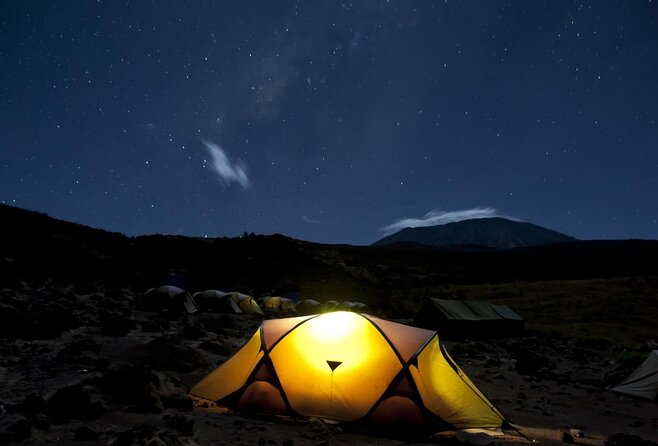
- Machame’s climate-zone progression: rain forest to moorland to arctic conditions over the week
- Included gear and meals: less logistics stress, more energy for walking
- Kosovo Camp timing matters: the ridge location means you want to be oriented before dark
- Midnight push for sunrise: you’ll climb from darkness toward Stella Point, then aim for Uhuru Peak
Machame on Your Schedule: 7 Days That Climb in the Smart, Slow Way
If you’ve heard Kilimanjaro described as a long hike, that’s true. If you’ve heard it described as a walk in the park, that part is not.
This 7-day Machame summit tour is built around climbing high enough to feel the altitude, then giving your body chances to adjust. That’s the point of the acclimatization days and the alternating “walk up, camp, rest” rhythm. It doesn’t make the mountain easy, but it does make it more sensible.
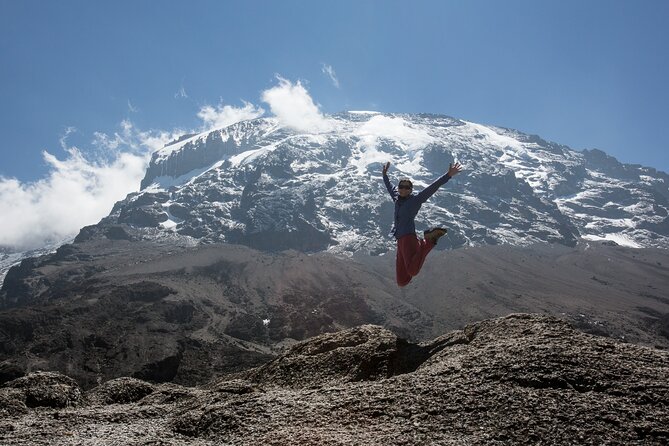
Machame itself is known for variety. You start in humid forest, then you transition to moorland and cold ridges. By the time you’re near the crater region, you’re not dressing like you’re hiking Tanzania’s lowlands anymore. You’re dressing like you’re hiking high—because you are.
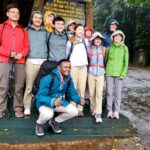
Also, the group is capped at 6 travelers. That’s a big deal on Kilimanjaro, where crowd control, pacing, and personal attention can make or break your experience.
Arusha Pickup and a Clean Start at Summit Lodge
You meet at Summit Lodge, Sakina Raskazone, Arusha. The start time is 8:00 am, which helps you move early while the day’s energy is still fresh.
You’ll be met by a Climb Kili guide and the mountain crew. Then you transfer from Arusha to the Machame Gate. Round-trip transfers from your Arusha hotel are part of the package, which means you’re not scrambling for vehicles or trying to figure out timing on your own while jet-lagged.
One small thing I appreciate: a tour that starts on schedule usually runs better overall. Kilimanjaro days are long. When the morning goes sideways, you don’t magically make it up later.
Day 1: Rain Forest to Machame Camp (Mud, Slopes, and Setup Done for You)
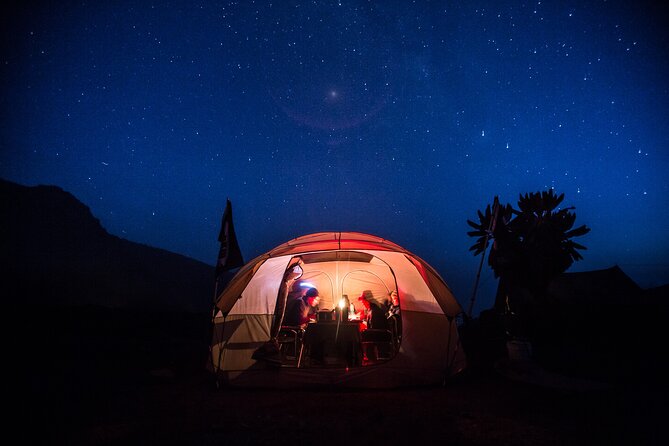
On day 1, you’ll leave the park gate and walk into rain forest, climbing a winding trail up a ridge. The elevation climbs from around 9,400 ft / 2,865 m, and you’ll be walking roughly 5–7 hours.
This is the day where terrain can surprise you. The lower parts can be muddy and slippery, so packing for grip matters. The tour suggests gaiters and trekking poles—and honestly, that’s good advice. A stable plant and better balance are what keep tired legs from turning into a wobble-fest.
When you reach Machame Camp, the tent is set up and your personal belongings are arranged. Dinner and overnight follow. That matters because your legs get enough work early; you don’t need to fight camp logistics too.
Day 2: Shira Camp via Moorland and Rocky Ridge Walking
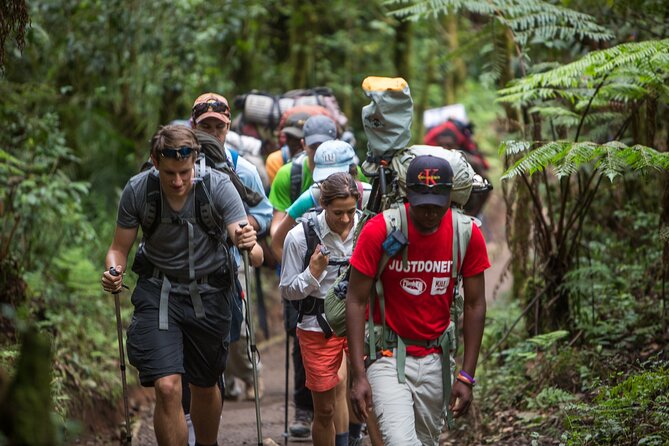
Day 2 pushes you out of the rain forest glades and into an ascending path with changes you can feel underfoot. You’ll cross a little valley and move along a steep, rocky ridge.
You then enter moorland, with heather covering the route. The day also includes a shift toward a dry river gorge vibe before reaching camp.
You’re headed to Shira Camp at around 12,500 ft / 3,810 m, with a walk time of about 4–6 hours (2.8 miles / ~5 km listed). The “shorter day” matters. Kilimanjaro is not one nonstop grind. A moderate day helps you get through the later stages with fewer issues.
At camp, you rest, eat, and overnight. Simple. Repeatable. That’s what keeps your plan from falling apart.
Day 3: Acclimatization Day to Lava Tower, Then Down to Barranco Camp
Day 3 is one of the smarter days on the calendar. You’ll do an acclimatization trek to the Lava Tower (around 15,000 ft / 4,500 m), and it’s a deliberate higher climb followed by a descent.
Shortly after the tower, you reach a second junction that brings you toward the Arrow Glacier, then you rest. After that, the route descends through the enormous Senecio forest, with a waterfall along the way, finishing at Barranco Camp.
This day also helps you learn what altitude feels like. You get the high points, then you practice coming down with less drama. That’s useful later when your legs are tired and your brain is bargaining for rest.
One detail that stands out in the plan: Barranco Camp sits in the shadow of the Barranco wall, and the breeze can carry clouds from the valley. Translation: weather can change fast, so don’t treat the sky like it’s predictable.
Day 4: Barranco Valley Into the Arctic Zone, Then Karanga Camp
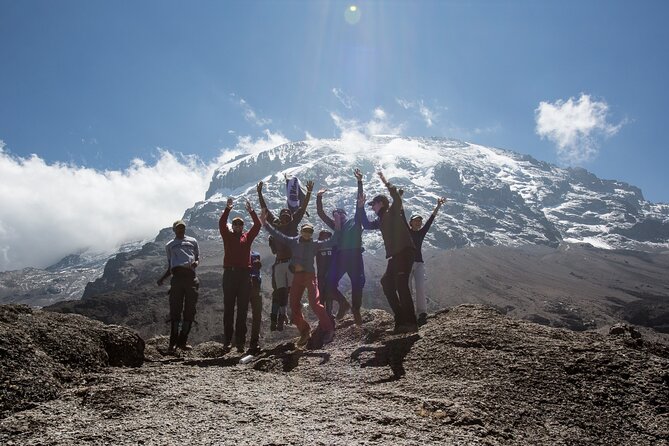
Day 4 is about conquering the Barranco Valley and climbing up the Barranco wall. The plan calls it an adventurous stretch that ushers you into the arctic zone of Kilimanjaro.
Then you continue on the South Circuit path through the Karanga Valley, ending at Karanga Camp.
The listed walking time is about 4–5 hours, with elevation around 13,100 ft / 3,992 m at this stage. Even though the day isn’t long on the clock, it can feel long because the cold and the steepness creep into your breathing.
When you camp at Karanga Camp, you’re not just “stopping for the night.” You’re positioning for the next step: the exposed ridge feel of what comes later on day 5.
Day 5: Barafu Views, Then Kosovo Camp on an Exposed Ridge
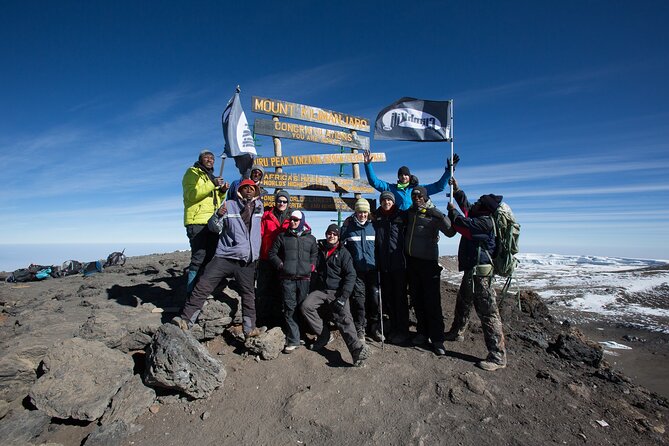
Day 5 is a slow pace day to Kosovo Camp, around 16,000 ft / 4,876 m. The walking time is about 5–6 hours, with a shorter distance listed (2.6 miles / ~3.5 km).
The plan notes that you pass Barafu Camp, where you can enjoy excellent views of Kibo and Mawenzi peaks. That’s a nice psychological boost because you can see what you’re aiming for—literally.
But Kosovo Camp is the practical warning of the trip. It’s situated on an exposed ridge, so the plan says you should familiarize yourself with the terrain before dark. That’s not just safety talk. Orientation matters when you’re cold, tired, and ready to sleep near the biggest night of the week.
This day is also when you prepare. You rest, relax, and get yourself ready for the countdown to midnight.
Day 6: Midnight Summit Push From Stella Point to Uhuru Peak
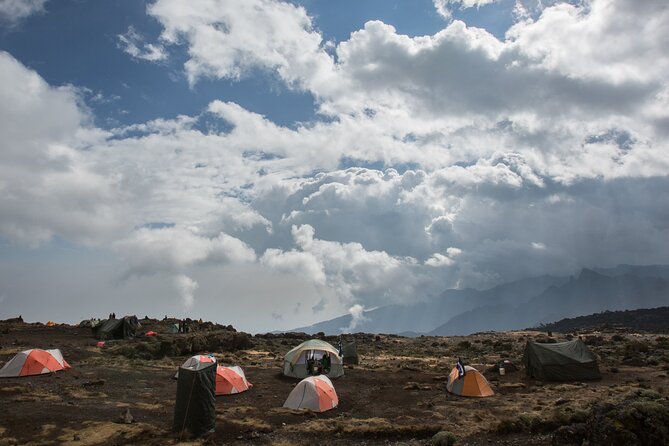
Day 6 is the moment people remember for the rest of their life. The night starts around midnight, and you’re hiking toward Stella Point to catch sunrise.
This section is described as one of the steepest on Kilimanjaro’s non-technical routes. The walk time is listed as 6–7 hours ascent to Stella Point, with 4–6 hours for descent later.
The route heads between the Rebmann and Ratzel glaciers and ascends through heavy scree toward Stella Point on the crater rim. If you’re someone who hates mental grind, this is where you’ll discover whether your brain can stay on task while your legs burn.
From Stella Point, you can see the summit, and Uhuru Peak is about 1 hour further. After you reach Uhuru Peak, you descend to Mweka Camp for dinner and celebration.
Reality check: the hardest part is often the in-between stretch—when you’re high enough to feel it, cold enough to worry, and far enough from the end to wonder if you’ll make it. The good news is that you’re going step-by-step on a well-defined route, and the crew plans the rhythm for this moment.
Day 7: Mweka Gate Walk-Out and a Shower That Feels Like a Medal
Day 7 is a calmer walking day back down, but it still counts. You start at around 5,400 ft / 1,645 m, walk roughly 3–4 hours (about 6.4 miles / ~10.3 km listed), and reach Mweka Gate.
Then you transfer back to your hotel with the promise of a very welcomed shower. It sounds basic because it is basic, and after 6 nights of sleeping in the cold with a limited wash option, you start valuing clean water like it’s a rare luxury item.
You end back at the meeting point area, closing out the trek with a return to normal life.
Guides, Crew, and the Small-Group Feel That Changes Everything
Kilimanjaro is not only a physical challenge. It’s a support challenge.
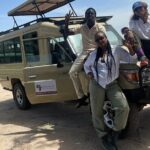
This tour caps the group at 6 travelers, which usually means your lead guide can keep eyes on your pacing and your condition. Several guide names show up in the trip feedback for Climb Kili, including Herment Moshi, Steve, and Florian. Other crew members mentioned include Godlove and Dale, and the porter teams get a lot of credit too.
A recurring theme in the feedback is that the guides and porters focus on safety and making climbers feel looked after. That can mean monitoring you daily, adjusting pace, and helping with weight or gear when needed. That’s not fluff. On Kilimanjaro, “keeping you moving” is half the job and “keeping you calm” is the other half.
If you’re the type who wants structure, this setup tends to fit. You won’t be guessing what to do next.
Price and Value: $2,695 Makes Sense When the Right Stuff Is Included
At $2,695 per person, this is not a budget trek. But it also isn’t just a “buy a permit and figure it out” deal.
The tour price includes:
- All camping equipment
- Fees and meals
- Admission tickets listed across the trek days
- Round-trip transfers from your Arusha hotel
- A small group experience
So what are you really paying for? Planning that reduces decision fatigue, gear that keeps you from scrambling for rentals, and a crew that handles camps and food. Those things can easily cost you extra money if you book them separately—or they can cost you energy if you DIY.
One caution from the overall feedback: at this price point, you may still want to sanity-check the quality of the hotel night before and after the trek. That’s not a deal-breaker for everyone, but it’s something I’d verify early.
Who Should Choose Machame (and Who Should Rethink It)
This Machame option is best for people with previous hiking experience. The route is described as tougher than the Mangaru hike, and the company asks for strong physical fitness.
You’ll love this tour if you:
- Want a structured acclimatization plan
- Prefer a smaller group with more individual attention
- Are comfortable with steep, cold walking and a midnight start
- Like the idea of climate-zone variety, not just altitude for altitude’s sake
You might want a different route or a different operator if:
- You’re new to multi-day hiking
- You don’t have the stamina for steep climbs at altitude
- You feel uneasy about exposed ridges and very cold summit-night conditions
This isn’t meant to scare you. It’s meant to help you pick the right kind of pain.
Practical Gear and Pace Tips I’d Use on This Specific Route
The plan itself hints at what you’ll need, especially early on.
- Bring gaiters and trekking poles for the muddy, slippery forest start.
- For cold nights, plan for layers that work when you stop moving.
- Treat Kosovo Camp seriously: the route notes exposed ridge terrain, and you don’t want to be figuring that out after dark.
- On summit night, expect mental work. The day includes heavy scree, a steep climb to Stella Point, and then the final stretch to Uhuru Peak.
Pace is everything here. If you go out too fast, you don’t just get tired. You risk turning the climb into a breathing contest. The tour’s pacing style is designed to support acclimatization, not ego.
Should You Book This 7-Day Machame Summit Tour from Arusha?
I’d tell most fit, experienced hikers to strongly consider it—especially if you care about small-group attention and you want a plan that handles camping, meals, fees, and transfers.
Book it if:
- You’re ready for a tougher Machame climb than easier options
- You want a guided experience with a crew that focuses on safety
- You want sunrise summit vibes from a midnight start plan
Think twice (or ask detailed questions first) if:
- You’re unsure you have the hiking background needed
- You’re very sensitive to pre/post hotel comfort, because at this price point you may want the lodging to match your expectations
If you want Kilimanjaro that’s organized, crew-supported, and built around altitude progression, this is a solid choice to put on your shortlist.
FAQ
How long is the Kilimanjaro Machame summit tour?
It’s listed as a 7-day trek (approx.).
Where do you start in Arusha and what time does it begin?
You meet at Summit Lodge, Sakina Raskazone Arusha and the start time is 8:00 am.
What group size should I expect?
The tour has a maximum of 6 travelers, which keeps the group small.
What’s included in the price?
The tour includes round-trip transfers from your Arusha hotel, all camping equipment, fees, and meals, plus admission tickets during the trek.
Is prior hiking experience required?
Yes. The tour notes that travelers should have strong physical fitness and previous hiking experience, and it describes Machame as tougher than the Mangaru route.
What if I need to cancel?
You can cancel up to 24 hours in advance for a full refund. If you cancel less than 24 hours before the experience starts, the amount paid isn’t refunded.