REVIEW · PICO
Pico Mountain: Climb the Highest Point of Portugal 2351m
Book on Viator →Operated by GOclimb Azores · Bookable on Viator
Pico Mountain is Portugal’s highest point—and it’s no stroll. This guided climb to 2351m delivers the kind of day that leaves you thinking about your own legs (in a good way). I like that guides such as Raisa and Isabel focus on steady pacing and real mountain management, and I also love how the route is on volcanic rock with enough effort to make the summit feel earned. One consideration: the climb is steep and intense (about a 30% average slope), so if you’re not ready for hours of cardio and careful footing, this won’t feel fun.
At the start, you meet at Mountain House, then you’ll get a briefing at Casa da Montanha around 1200m—where you review gear and pick up your locators before heading out. I also like the small-group setup (maximum 10 people), plus walking poles and professional guide support that helps keep the day safe when the terrain gets demanding.
Value-wise, the price (about $90.74) covers guide, insurance, and even quality photos and videos, but it does not include meals. So you’ll want to plan your own food and bring what you need to stay fueled and protected from the sun.
In This Review
- Key things I’d circle before you go
- Why Pico’s 2351m summit feels like Portugal’s big achievement
- Meeting at Casa da Montanha: briefing, locators, and getting geared up
- The volcanic-rock climb: what 8km and a 30% average slope actually means
- Summit time: how the top rewards your effort
- The descent down Pico: steep feet, careful minds
- Guide impact: Raisa, Isabel, Nunu, Haise, and the pace that keeps you steady
- Price and value: what you pay for, and what you still need to bring
- Who should book this Pico summit, and who should skip it
- Should you book this Pico Mountain climb with GOclimb Azores?
- FAQ
- How long is the Pico Mountain summit hike?
- How long is the trail?
- How high do you climb?
- Where do you meet, and where does the tour end?
- Is this tour okay if I don’t have mountaineering experience?
- Is a guide included?
- What’s included in the price?
- Are meals included?
- Do I need good weather for this experience?
Key things I’d circle before you go
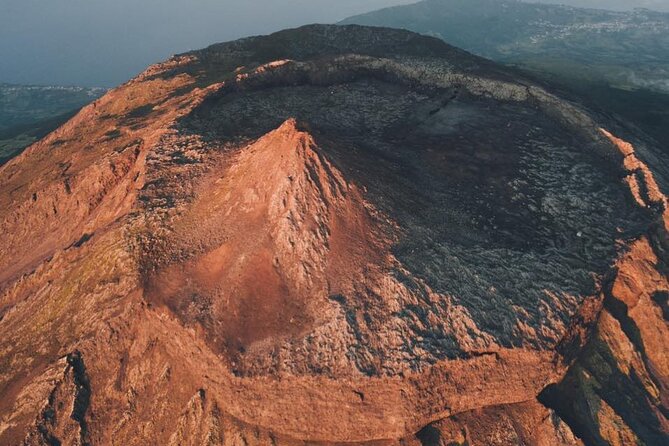
- 2351m summit payoff with big, high-altitude views and bragging rights for Portugal’s highest point
- Small groups (up to 10), which makes pacing and safety easier than in giant tours
- Volcanic-rock trail (about 8km total) with an average 30% slope—serious legs needed
- Guides who manage the day actively, often with breaks, snacks, and time awareness
- Walking poles + locators to help you handle steep sections and navigate confidently
- No meals included, so plan water, food, and sun protection before you start
Why Pico’s 2351m summit feels like Portugal’s big achievement
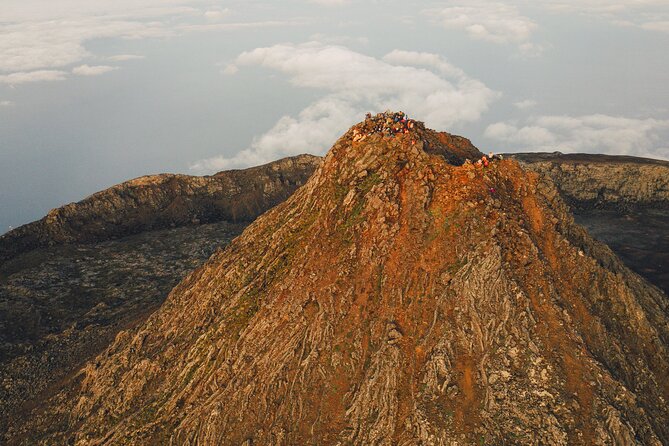
Pico Mountain isn’t just a tall number on a map. It’s the Azores’ signature mountain day: a guided hike designed for people with solid physical condition, even if you’ve never done mountaineering before. You’re going up to the highest point of Portugal at 2351m, and you’ll feel that altitude not as a science project, but as a steady climb where your breathing changes and you learn to regulate effort.
What makes this experience special is the mix of challenge and clarity. The route is entirely on volcanic rock, so you’re not walking on soft paths that forgive mistakes. You’ll earn the views with real effort, and the day has a natural rhythm: briefing at altitude starting point, a hard climb phase, then a summit reward that’s there because you worked for it.
This is also one of those hikes where the guide matters. In the experiences I saw, guides like Raisa, Isabel, Nunu, and Haise were repeatedly praised for pace management, support for different ability levels, and keeping everyone safe up and down. That’s important here, because the descent asks for concentration almost as much as the climb.
Meeting at Casa da Montanha: briefing, locators, and getting geared up
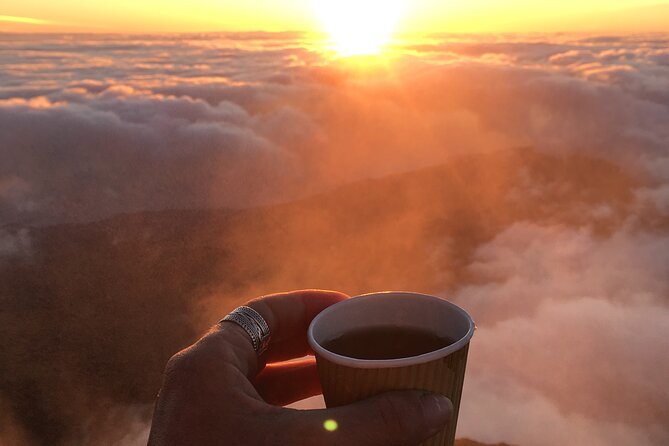
Your day starts at the Mountain House meeting point (Caminho Florestal nº 9, Candelária, 9950-000 Madalena). From there, you’ll transition to Casa da Montanha at about 1200m, where the group briefing happens.
This briefing is more than a formality. You review necessary equipment, get locators, and get a realistic sense of what the next hours will feel like. The activity description is blunt about early warning signs: if you notice an intense change in breathing or loss of balance in the first part of the trail, it’s a preview of what the rest of the climb will ask from you. In other words, they’re not trying to be dramatic. They’re trying to match the route to your body.
You’ll also be given trekking poles. That matters on a volcanic-rock route with steep grade. Poles don’t make you superhuman, but they can take pressure off your knees and help you keep stability when footing gets tricky.
One more practical note from the way the day is run: the hike is about 7 hours total and the trail is around 8km. So you’ll want to show up ready for a full work-out day, not something that lets you drift slowly in “vacation mode.”
The volcanic-rock climb: what 8km and a 30% average slope actually means
You’re hiking a route about 8km long total (out and back), and the average slope is around 30%. That’s steep. Even if you’ve hiked before, the volcanic rock changes the experience. The surface can be firm and unforgiving, and your stride has to adjust. You won’t just “walk uphill.” You’ll climb with shorter steps, controlled breathing, and careful placement.
The description is clear that the first part of the trail acts like a sampler. It’s basically telling you: pay attention early. If your body reacts strongly right away, that’s useful information. This hike is for people who are fit enough to keep moving safely for hours.
Timing can also change how you feel during the ascent. One review mentioned starting before sunrise and specifically reported a 6:30am launch. That’s a smart detail if you’re sensitive to heat: cooler air makes steep climbing easier to manage. If your slot starts early, treat it as a gift. If you’re assigned a later start, you’ll want to compensate with smart water use and sun protection.
Along the way, you can expect breaks and support. Several experiences highlighted that guides paused often enough to reset—often with small breaks and help keeping the group on track. Some even mentioned snacks and water stops. On a hike this steep, those pauses aren’t luxury; they’re how you keep the day from tipping into exhaustion.
Summit time: how the top rewards your effort
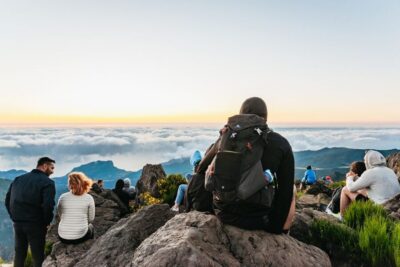
Reaching 2351m is the moment the whole day builds toward. It’s the kind of summit where you’ll likely take a long look around and realize you’ve climbed through layers of effort: steady uphill work, then careful top-of-the-mountain movement.
From the experiences shared, the views are consistently described as breathtaking. And it’s not just “pretty mountains.” People reported sightlines reaching across the Azores, with visibility that made the summit feel open and far-reaching.
There’s also a sense of achievement that shows up when the group gets there together. One review described this as a proud moment for family members—while also stressing that this is not for hikers who aren’t used to steep outdoor effort.
If you’re wondering what you’ll actually do up top: you’ll take in the views, you’ll likely have time for photos, and you’ll check in with your guide about the descent plan. Since the day includes quality photos and videos, your summit time may feel a bit more organized than a solo summit. (Still bring your own camera. You’ll want to capture what you see for you.)
The descent down Pico: steep feet, careful minds
The return hike is where a lot of people get tired—and tired people make mistakes. Multiple experiences stressed that the descent requires concentration, not just strength. You’re going back down over steep volcanic rock, so your muscles work differently. Your quads and ankles take on more load, and your footing choices matter.
One review even described minor falls during descent, with fortunately no serious outcomes. That’s not meant to scare you. It’s a reminder: treat the downhill like the technical part of the day, not the “easy part that’s almost over.”
If you’re prone to fatigue, it helps to plan your strategy early:
- slow your step frequency on the rocky parts
- keep a consistent pace rather than sprinting between pauses
- rely on the poles you’re given for stability
Also, your group’s makeup affects how the descent feels. One account mentioned the group had multiple hiking levels, which made the hike take longer and required everyone to match the pace of the slowest member. In that case, the guide later offered faster hikers the chance to break off as a smaller group for the descent. If you think you’ll be faster than average, it’s still safest to start with the main pace. Then, if the guide offers a better match, take it.
Guide impact: Raisa, Isabel, Nunu, Haise, and the pace that keeps you steady
This is the part I’d call “the real product.” Yes, you’re climbing Pico Mountain. But the guide makes the climb survivable and enjoyable.
In the reviews you provided, guides named Raisa and Isabel were repeatedly praised for responsible leadership, strong mountain sense, and patient pacing. Another guide, Nunu, was highlighted for making sure everyone made it to the top and back safely, while also sharing stories about Pico and the wider Azores. Haise was praised for managing group pace and getting people to the top with confidence. Even the style of breaks showed up as a strength: stopping enough to recover, not so much that you lose the flow.
So what does that mean for you? It means you’re not just handed a trail and a time. You’re guided through a steep day with someone monitoring pace, time, and safety. And because the group is capped at 10 travelers, the guide can actually pay attention to individuals rather than treating the climb like a conveyor belt.
If you’re nervous about your ability, this is exactly the scenario where a good guide pays off. Several comments emphasized that the climb is hard work and that you should be ready for intense cardio—then paired that with the support that helped people succeed anyway.
Price and value: what you pay for, and what you still need to bring
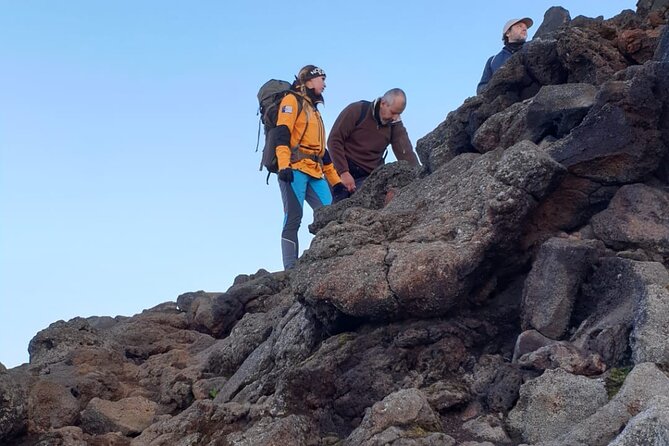
At $90.74 per person for about 7 hours, you’re paying for a guided summit climb with real overhead: professional guide, personal insurance, walking poles, and a capped group size. You’re also paying for the added production value of quality photos and videos plus the route support through locators.
There’s also an intangible value here: having the day organized around a permit-required summit process. One review mentioned they couldn’t secure permits online and booked the guided option to make the climb possible. That’s not guaranteed for every booking, but it highlights why a guided summit can be a practical solution when dates and slots sell out.
What’s not included is equally important: meals. That means you need your own food strategy. For a steep climb this long, it’s smart to bring:
- water you can drink steadily
- snacks for energy (especially for the ascent)
- something easy to eat during a planned break
- and sun protection, because the hike can last long enough to catch even careful people
Also think about footwear. The route is described as volcanic rock with steep grades. One review specifically recommended good hiking boots/shoes, and that’s exactly what I’d tell you. Comfort matters, but grip matters more.
Who should book this Pico summit, and who should skip it
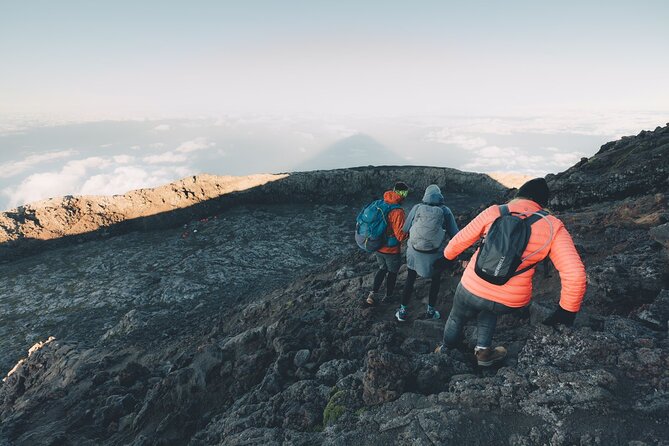
This tour is designed for people in good physical condition, including hikers without mountaineering experience. That’s the main fit.
But the rules are strict:
- Participants over 60 years old are not included
- Children under 12 are not included
- The day calls for strong physical fitness
In human terms, you should book if you’re comfortable with steep hikes, you can handle hours of uphill effort, and you won’t panic when your breathing changes early. You should also be okay with the fact that this is on volcanic rock, which means footing and balance matter.
You should skip (or consider a private or different option) if you’re mostly a casual walker, if you’re worried about balance, or if you know you get winded quickly on steep inclines. The activity description makes it clear that early signs are meaningful.
Should you book this Pico Mountain climb with GOclimb Azores?
If you want a real mountain day and you’re fit enough to take on a steep volcanic-rock hike, I think this is a great use of your time in the Azores. The summit is iconic, the group is small, and the guide support shows up again and again in the praise—especially around pacing and getting everyone up and down safely. The included poles, locators, and quality photos/videos also add value beyond just having someone point the way.
I’d book it if:
- you’re ready for steep effort (average 30% grade)
- you can handle hours outdoors
- you’ll bring your own food since meals aren’t included
- you want the summit experience managed by professionals
I’d hesitate if:
- you’re not used to steep climbs
- you have balance concerns
- you’re expecting a relaxed walk with minimal exertion
FAQ
How long is the Pico Mountain summit hike?
The total duration is about 7 hours.
How long is the trail?
The hike is approximately 8 km long.
How high do you climb?
The climb goes up to Pico Mountain’s summit at 2351 meters.
Where do you meet, and where does the tour end?
You start at Mountain House (Caminho Florestal nº 9 Candelária, 9950-000 Madalena, Portugal). The activity ends back at the meeting point.
Is this tour okay if I don’t have mountaineering experience?
Yes. The activity is designed for people in good physical condition even without any mountaineering experience.
Is a guide included?
Yes. The tour includes a professional, experienced guide.
What’s included in the price?
Included: all fees and taxes, personal insurance, quality photos and videos, a professional guide, and walking poles.
Are meals included?
No. Meals are not included.
Do I need good weather for this experience?
Yes. It requires good weather. If it’s canceled due to poor weather, you’ll be offered a different date or a full refund.