REVIEW · KATHMANDU
11-Day Hike Tour to Annapurna Base Camp Bliss in Kathmandu
Book on Viator →Operated by Himalayan Vista Trekking Pvt. Ltd. · Bookable on Viator
Annapurna Base Camp gets real fast. This 11-day trek mixes big-mountain highlights with practical support: airport pickup in Kathmandu, a flight to Pokhara to save time, and a route timed for key viewpoint moments like Poon Hill and the Base Camp sunrise. I like that the package builds in real fuel (11 breakfasts, 11 lunches, 10 dinners) so you’re not rationing energy on long hiking days. I also like the human factor that keeps popping up in the experience: caring, well-planned guidance from Raju and other team members, plus porter help. One drawback to plan for: some days are described as long, including back-to-back full trekking days, so you’ll want realistic stamina even if you’re a “moderate fitness” kind of hiker.
You also get a private setup (only your group), which changes the feel of the trek. It’s easier to ask questions, adjust pace, and handle the cold without feeling rushed.
In This Review
- Key takeaways before you pack
- How the Annapurna Base Camp trek works in 11 days
- Kathmandu pick-up and the Thamel starting point
- Kathmandu to Pokhara by domestic flight: a smart savings move
- Tikhedhunga, Nayapul, and the Ulleri stair climb
- Poon Hill: the view that sets the emotional tone
- Tadapani to Chhomrong: forests, mirrors of mountains, and culture
- Deurali: rhododendron forests and Modi Khola pacing
- Day 7: peak spotting toward Machhapuchare base area
- Annapurna Base Camp day: sunrise walking and the 4,130m moment
- The descent loop and Jhinu hot springs recovery
- Pokhara: the point where the trip becomes a holiday
- Back to Kathmandu and market time in Ason and Thamel
- Price and what you’re truly paying for
- What the best guides do: Raju, Bishal, Ramji, and porter care
- Who this Annapurna Base Camp tour fits best
- Should you book this Annapurna Base Camp tour?
- FAQ
- How long is the Annapurna Base Camp trek on this tour?
- Where does this tour start and end?
- Is pickup from Kathmandu included?
- Are meals included?
- Do I need a trekking stick?
- Is this a private tour?
- What fitness level do I need?
- What happens if the weather is poor?
- What kind of ticketing do I get?
Key takeaways before you pack
- Private group, guide-led pacing: easier communication and a safer rhythm on steep stretches.
- Flights that save legs: Kathmandu to Pokhara by domestic flight early on.
- Poon Hill morning views: a classic sunrise/wind-down-to-breakfast day to start the trek right.
- Annapurna Base Camp sunrise: an early walk to see the peaks before the day warms up.
- Hot spring payoff at Jhinu Danda: a real recovery moment after steep descent.
- Pokhara downtime: Devi’s Fall, Peace Stupa, and time on Phewa Lake, so the trip doesn’t end on a trail.
How the Annapurna Base Camp trek works in 11 days
This kind of Annapurna Base Camp hike succeeds when it balances two things: time on your feet and time spent looking up. The itinerary is built around both. You start with Kathmandu logistics, then move quickly to the trail via Pokhara. From there, it’s a steady rhythm of climbing into view-rich days, followed by descents that bring you back through village tea-house life.
One reason this route feels approachable is the structure. Even though some days run long, you’re not guessing what comes next. Each day has a clear “arrive somewhere, eat, recover, repeat” pattern. That matters if altitude is on your mind. In the reviews, people specifically called out worries about altitude sickness as a factor, and the consistent theme was that a guide helped them manage pace and anxiety instead of just sending them forward.
It’s also a trek that mixes cultures as you move. You pass through Magar village areas (like Ulleri) and then later into Gurung communities around Chhomrong, where the day-to-day feels human and close rather than just scenic.
You can also read our reviews of more hiking tours in Kathmandu
Kathmandu pick-up and the Thamel starting point
Most of your trekking stress starts before you even see a mountain. Here, you begin in Thamel, and the tour includes a Kathmandu airport representative who receives you at Tribhuvan International Airport, then transfers you by private vehicle to your hotel.
Two practical notes for your planning:
- The experience meeting time window listed is late evening (6:15 PM–10:45 PM). Plan to be able to connect at that time range and don’t schedule tight airport-to-city timing without a buffer.
- The meeting point is marked as near public transportation, which is handy if you need to handle small purchases like socks, gloves, or a simple trekking stick.
If you arrive without a plan for gear, Thamel is a good place to sort it out. The only item called out as not included is a trekking stick (not required, but easy to find in Thamel for roughly $3–$20).
Kathmandu to Pokhara by domestic flight: a smart savings move
Day 2 is the “start the trek without destroying yourself first” moment. You take a domestic flight from Kathmandu to Pokhara. That’s one of the most value-heavy parts of this itinerary for many people, because it removes a big slab of travel time and lets you pivot into trail mode.
After landing, you head toward the trek entry area and end up in the early village region (Tikhedhunga and Nayapul are part of the described stops). This day is also a gentle on-ramp compared with the later full hiking stretches. You’re still active, but it’s not the biggest altitude push.
Why this matters: if your goal is Annapurna Base Camp, you don’t want to spend your “first day of effort” stuck on roads or delayed in transit. Flights help keep the trek timeline stable.
Tikhedhunga, Nayapul, and the Ulleri stair climb
The start of the classic route includes Tikhedhunga and Nayapul as key waypoints. Nayapul is widely used as a trekking starting point in the Annapurna region, and in this itinerary it plays that same role: it’s a transition area where you switch from travel to trail.
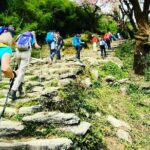
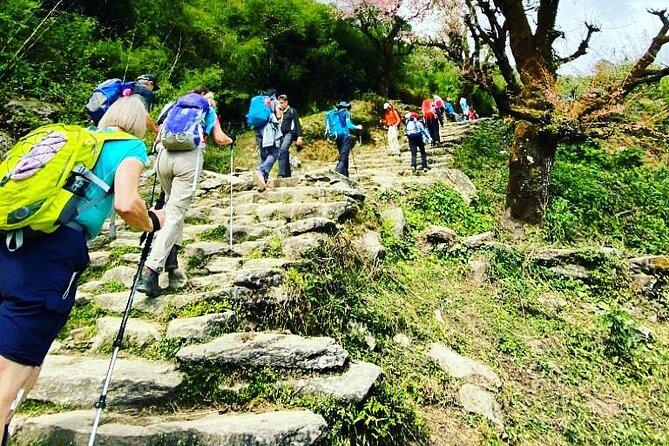
Then you reach Ulleri via a steep section described as climbing precarious stone stairs (around 3,300 steps). This is the kind of day where pacing is more important than speed. If you sprint it, you’ll pay for it later. If you take it slow, you usually get there with enough energy left to enjoy the surrounding village views and forest edges.
If you’re nervous about altitude, this stair day is your mental training. It forces you to breathe steadily, drink water, and accept that walking uphill takes time. A good guide makes that feel manageable, and that’s exactly what people highlighted with guides like Raju, who were praised for planning and care.
Poon Hill: the view that sets the emotional tone
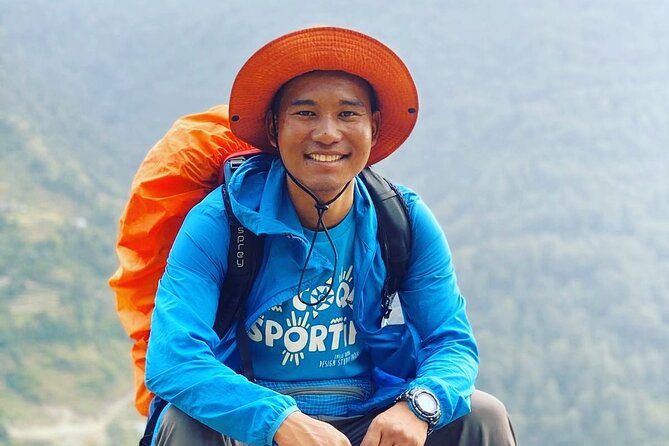
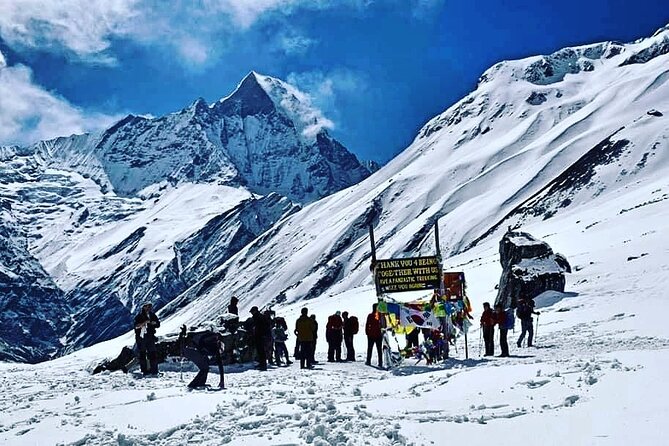
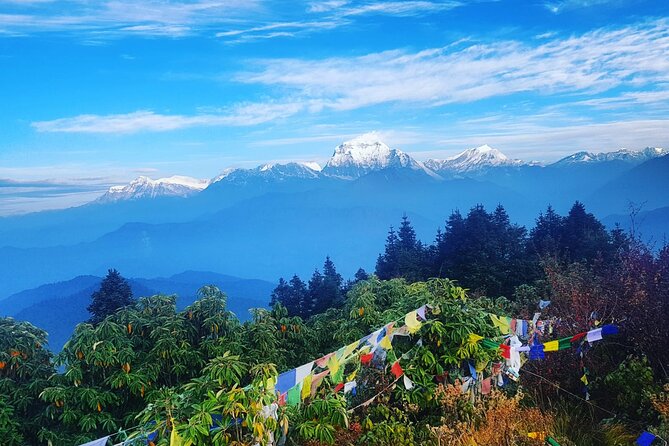
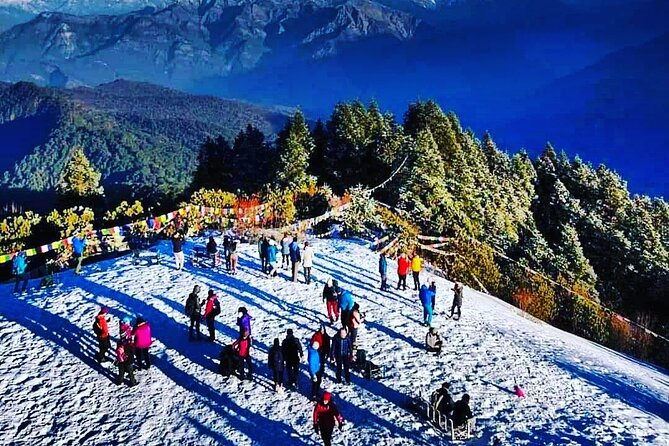
Poon Hill is on your schedule on Day 4. That matters because it’s not just another stop. It’s a “reset your brain” viewpoint. The description frames it as the best vantage point to encounter Mt. Annapurna and Fishtail views, and then you continue downhill to Ghorepani for breakfast before hiking onward to Tadapani.
Expect a day that feels like two parts:
- A short climb or viewpoint segment where you’re standing around looking at peaks and clouds doing their thing.
- A longer hiking stretch afterward, including crossing through rhododendrons and moving into higher alpine scenery.
Tadapani sits at about 2,590 meters in the itinerary description, and that’s high enough to feel cooler, especially if the weather turns. The upside is you usually get those clearer views in the mornings and evenings. The tradeoff is your body needs time to warm up after rest breaks.
Tadapani to Chhomrong: forests, mirrors of mountains, and culture
Day 5 moves through Sinuwa and toward Chhomrong. The itinerary notes a descent and crossings, plus a memorable “mirror face” view of Mt. Annapurna South and Hiunchuli from the Chhomrong area.
That’s the kind of detail you can only appreciate once you’re standing there with the air cold and the light changing every few minutes. It’s also why the Chhomrong stop is so popular on many Annapurna routes: it’s a central village where views and daily life collide.
The itinerary also explicitly mentions Gurung ethnic group culture in this segment. In plain terms, you’re not just passing through empty scenery. You’re walking through working communities where tea house hospitality is part of the experience, and where local knowledge is close at hand if you ask questions.
This day may feel long (the description lists it as a 12-hour trekking day), so plan to take your time on descents. Steep downhill walking can be as demanding on your knees as uphill is on your lungs.
Deurali: rhododendron forests and Modi Khola pacing
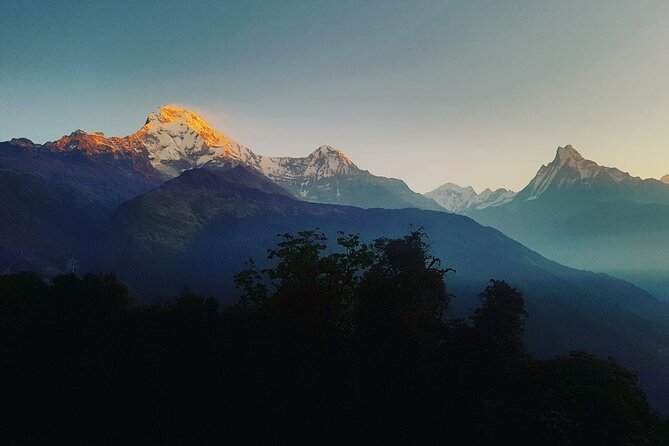
On Day 6, the trail goes up toward Deurali. The itinerary describes a rocky trail inside dense rhododendron forests and walking alongside Modi Khola.
This is a “slow and steady” day. Forest trails often look easier than open slopes, but footing can still be uneven. If you stick to a rhythm and don’t rush your breath, it feels calmer than the stair-heavy start.
You’ll also notice that as the route climbs higher, the stops become more about recovery than sightseeing. Deurali is high enough that cold can sneak in quickly. You’ll want layers that work with wind and damp, especially if mornings start early.
Day 7: peak spotting toward Machhapuchare base area
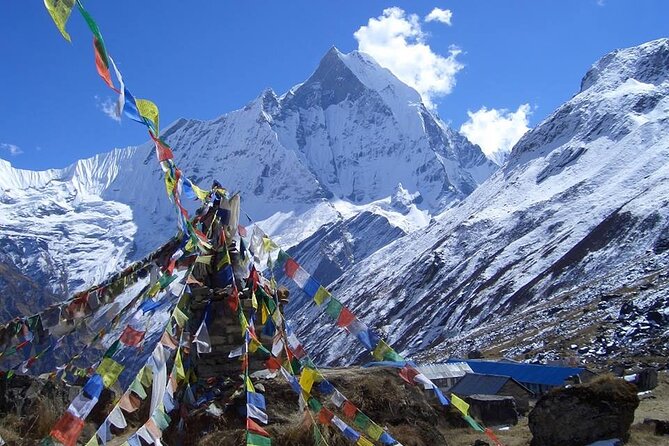
Day 7 is framed around close encounters with major peaks: Fishtail, Mt. Annapurna III, Mt. Gangapurna, and Annapurna I in your eyesight, and then continuing toward Machhapuchre base camp.
Even if you’re not a summit chaser, this is one of the days where the experience clicks. The itinerary is describing the kind of route where your view gets better not because you’re working harder in a single moment, but because the trail keeps lifting you into the amphitheater of the Annapurna massif.
The practical side: this day is listed as a long trekking day (12 hours). You’ll feel the cumulative fatigue. This is where the guide’s planning earns its keep: breaks matter, and so does not going too fast just because the view is calling.
Annapurna Base Camp day: sunrise walking and the 4,130m moment
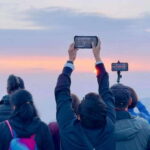
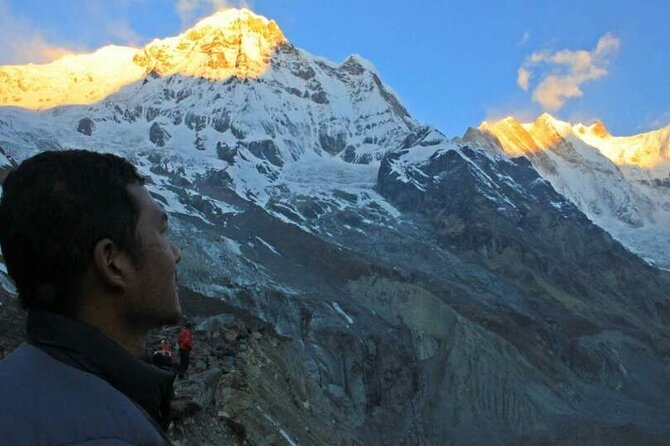
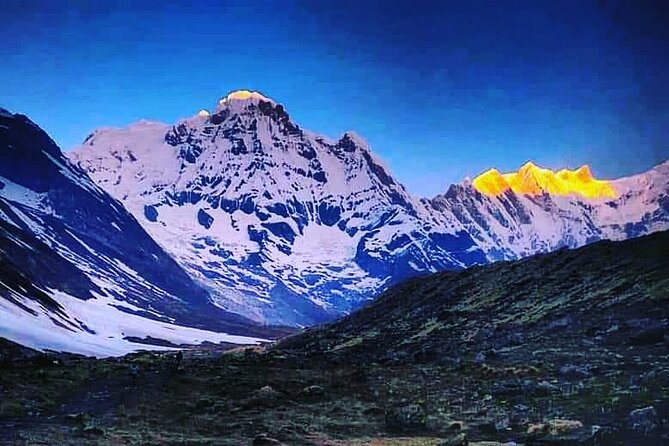
Day 8 is the Annapurna Base Camp highlight, and it’s written like the “morning shift” kind of day. You wake early, walk around the cliff for sunrise over Mt. Annapurna, then head back for breakfast before trekking down to Sinuwa.
The base camp itself is listed at 4,130 meters, which is a real altitude jump from what you’ve likely felt earlier. Sunrise at that elevation also means cold that can arrive fast, especially in wind. The fact that the tour sets this as an early wake-up segment helps you experience the peaks under good light, when clouds can still be manageable.
What I like about this schedule is that it’s not all summit fantasy. You get the “wow” moment, but then the day still has an honest purpose: you descend and you sleep in a tea-house village environment rather than trying to linger at altitude too long.
The descent loop and Jhinu hot springs recovery
Day 9 is about moving back down and adding one of the best “why we walked all day” rewards: Jhinu hot springs. The itinerary describes following the same way until Chhomrong, then taking an extremely steep trail down to Jhinu Danda.
A steep descent is exactly where you need good pacing and attention. Hot spring time is a gift for your body, but it doesn’t fix missteps. If you have a guide who keeps you steady, your legs usually appreciate it more than you think they will.
The itinerary also notes that breakfast, lunch, and dinner are included on this day, which reduces decision fatigue when you’re tired. After a long day of steep walking, the simpler your meals are, the better you’ll recover.
Pokhara: the point where the trip becomes a holiday
Day 10 transitions from mountain mode to lakeside mode in Pokhara. You drive after breakfast, then you have time for sightseeing around Devi’s Fall, Peace Stupa, and boating on Phewa Lake, plus nightlife in the Lakeside area.
This portion matters because you’ll likely be tired. It’s not “another hike day.” It’s a chance to eat normally, warm up, and let your body reset after altitude and cold wind.
The itinerary also includes Siwai as a starting point for trek segments (with an admission ticket included listed for that stop). The wording is a bit unclear, but the takeaway is that the tour uses common regional trail access points to keep the itinerary efficient.
Back to Kathmandu and market time in Ason and Thamel
Day 11 sends you back to Kathmandu by domestic flight from Pokhara. The description mentions 25 breathtaking flights; in practical terms, it’s a relatively short air transfer back to the city. Once you arrive, you hang out around the Ason market and Thamel for shopping.
This is your buffer day: you can buy last-minute snacks, souvenirs, trekking essentials, or simply wander and recover your energy. It’s also the day that makes the trip feel complete rather than abrupt. You’ll leave with photos, sore muscles, and a stronger sense of where Nepal’s trekking culture lives.
Price and what you’re truly paying for
At $1,300 per person for an 11-day private tour, the “value question” isn’t only price. You’re buying structure: pickup support, flight logistics, a guided pacing strategy, and day-by-day meals (11 breakfasts, 11 lunches, 10 dinners).
Here’s what that cost likely covers in the way you’ll feel it day to day:
- Meals reduce your day-to-day spending and help your energy stay consistent.
- A private group format means fewer delays from crowd management and more attention on your specific pace.
- A guide and porter setup is repeatedly praised in feedback, especially for beginner comfort and for handling cold or harsh weather.
What you should budget for separately (based on the data provided) is mostly gear flexibility. A trekking stick isn’t required, but it’s mentioned as easy to find in Thamel for a modest price. Beyond that, you’ll need to plan your own personal expenses like snacks, drinks, and shopping in Kathmandu and Pokhara.
If you’re comparing to cheaper packages, be careful. When a trek price drops, it often drops support or meal coverage. In this itinerary, meals are clearly included for most of the days, and that’s a big quality-of-life detail when you’re tired.
What the best guides do: Raju, Bishal, Ramji, and porter care
One of the most praised aspects shows up over and over: the human team. The feedback names Raju as a guide with good planning and good care, along with porter Sandesh. That kind of pairing matters because trekking is a team sport on uneven ground.
Other named support includes trip coordinator Bishal Gurung and guide Bishal, described as making the trek possible even with harsh weather. Another review mentions solo trekking support from Ramji with porter Ishor, with special attention to altitude sickness worries.
You can treat this as practical evidence. If the guide has a track record of planning (and porter help is stable), you get smoother daily transitions, better break timing, and calmer decision-making when the weather or trail conditions change.
Who this Annapurna Base Camp tour fits best
This trek is aimed at people with moderate physical fitness. That doesn’t mean it’s easy. It means it’s realistic if you:
- can walk uphill and downhill for long days,
- accept that some days are listed around 12 hours,
- pack for cold at higher elevation,
- and want guidance rather than DIY risk.
It also fits you if you like a classic route with real village stops (Ulleri, Ghorepani, Chhomrong, Sinuwa, Jhinu Danda) instead of only chasing viewpoints. If you want cultural encounters along the way, the itinerary explicitly mentions Magar and Gurung areas, so the trip won’t feel like a scenery-only hike.
If you’re a strict beginner who worries about altitude, you’ll likely appreciate the guide support highlighted in reviews. If you’re someone who loves having time to stop and look, the Poon Hill and base camp sunrise segments are built for exactly that.
Should you book this Annapurna Base Camp tour?
I’d book this tour if your top priorities are structured pacing, meals handled, and a private, guide-supported trek to Annapurna Base Camp without turning travel logistics into a second job.
You should think twice if long trekking days listed as 12 hours will feel like a stretch for you, or if you’re expecting everything to be “light hiking.” The route rewards endurance. But if you prepare smart—layers, slow climbs, and consistent hydration—you’ll likely enjoy the payoff: Poon Hill views, the base camp sunrise moment, and the hot spring recovery at Jhinu Danda.
FAQ
How long is the Annapurna Base Camp trek on this tour?
The trek is listed as 11 days (approx.).
Where does this tour start and end?
It starts at Thamel, Kathmandu (44600), Nepal and ends back at the meeting point.
Is pickup from Kathmandu included?
Yes. The tour description says pickup is offered and there’s an airport representative for arrivals at Tribhuvan International Airport.
Are meals included?
Yes. The package includes breakfast (11), lunch (11), and dinner (10).
Do I need a trekking stick?
A trekking stick may be useful but it’s not compulsory and can be found in the Thamel area within budget (about $3–$20).
Is this a private tour?
Yes. It’s a private tour/activity, so only your group participates.
What fitness level do I need?
The tour advises moderate physical fitness.
What happens if the weather is poor?
The experience requires good weather. If it’s canceled due to poor weather, you’ll be offered a different date or a full refund.
What kind of ticketing do I get?
The tour mentions a mobile ticket.