REVIEW · KASTRAKI
Kastraki: Meteora Via Cordata Hiking Tour to the Great Saint
Book on GetYourGuide →Operated by Visit Meteora · Bookable on GetYourGuide
Via cordata in Meteora feels huge. I love the 360-degree viewpoint from Great Saint and the small-group vibe that keeps the focus on your feet, your breathing, and your safety. One thing to consider: this is moderate to challenging scrambling, so if you struggle with heights or low fitness, it may feel like more work than reward.
You start in Kastraki at the center of the old habitation, meeting at Qastiro Meteora, with an English-speaking mountain guide. You get the needed gear (helmets and harnesses), water, and a clear safety briefing—plus rope support if the route calls for it.
Weather matters here. If it’s rainy, the tour cancels and you’ll get a full refund or an alternative date, which is smart when you’re hopping over rock.
In This Review
- Quick reasons this tour works so well
- Kastraki to Great Saint: how a 3-hour hike really feels
- What the Via Cordata and monk paths mean on the ground
- The scrambling part: where the challenge shows up (and how to handle it)
- Great Saint viewpoints: the payoff and the photo plan
- Safety and guides: why the small group feels worth it
- Avoiding crowds, without sacrificing the Meteora feeling
- Price and value: is $88 fair for what you get?
- What to bring (and what to skip) so your hike stays comfortable
- Who should book this Meteora Great Saint route
- Should you book this tour to the Great Saint?
- FAQ
- Where do I meet the guide for this Meteora tour?
- How long is the tour?
- How big is the group?
- Is there a pick-up option from Kalampaka or Kastraki?
- What safety equipment is provided?
- Is water included?
- Is food provided?
- Are sandals allowed?
- Is this suitable for children?
- What happens if the weather is rainy?
- What fitness level do I need?
Quick reasons this tour works so well
- Via cordata + monk-made path: you’re not just walking—you’re moving through Meteora’s old routes.
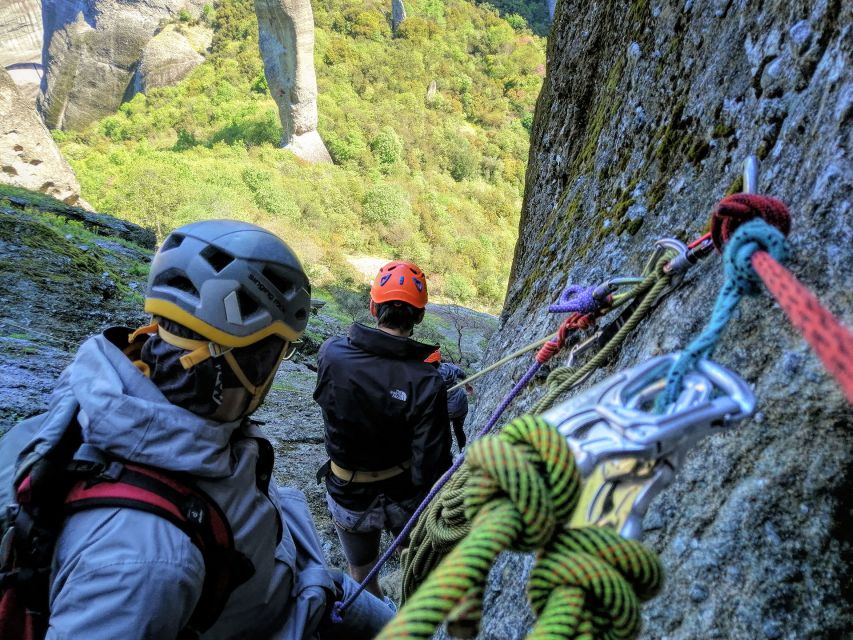
- Helmet-and-harness safety: you feel protected without making it feel like a theme-park climb.
- Small group limits: with up to 6 participants (and a guide managing small batches), you get more attention.
- 360-degree Great Saint views: a real payoff beyond the usual monastery overlooks.
- Crowd-avoidance by design: you’re out on the route instead of parked in the masses.
- Guides who tell Meteora stories: history comes with humor and stops that actually help your photos.
Kastraki to Great Saint: how a 3-hour hike really feels
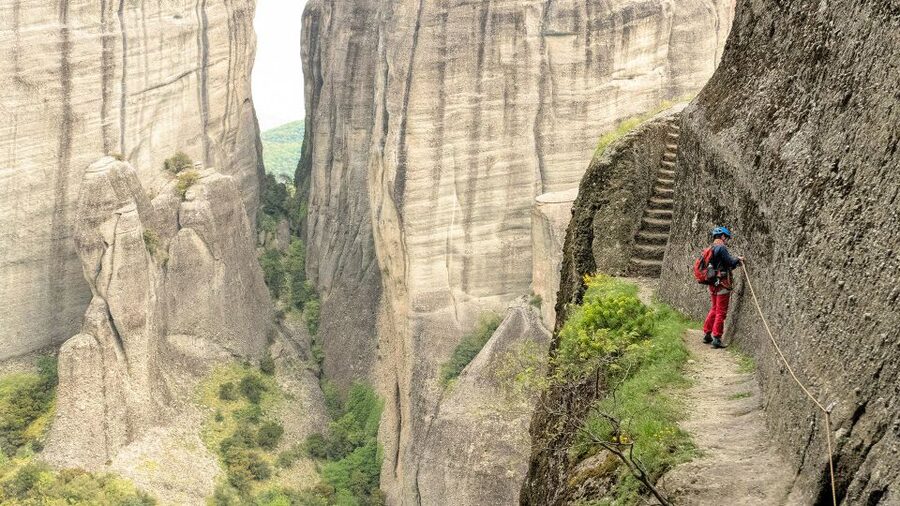
This is a short day by Meteora standards, which is a plus if you’re trying to see more than one side of the rocks. You’re on the move for about 3 hours, doing a mix of walking and scrambling, then returning down the same way—so it’s the kind of adventure you can still enjoy after, even if you’re traveling for a week.
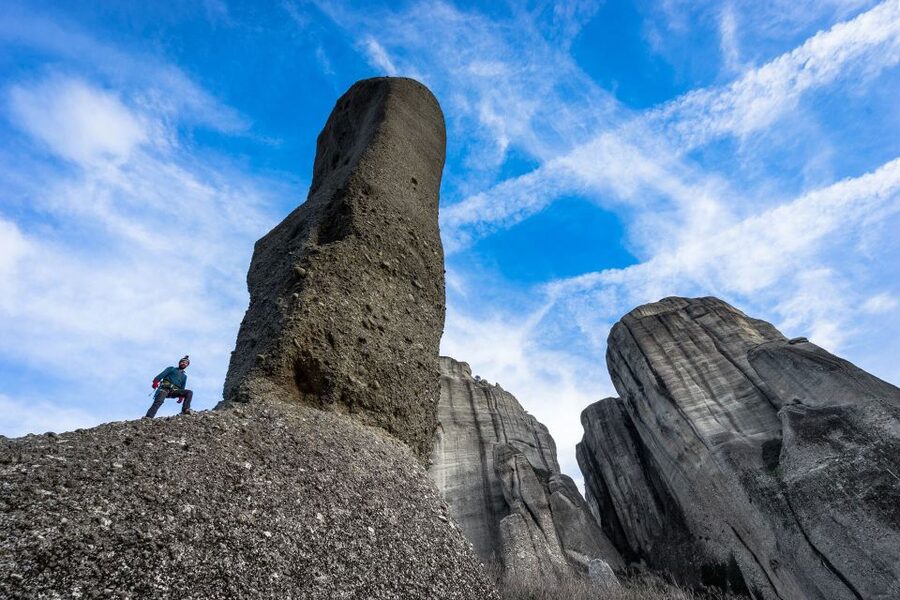
The route heads from Kastraki up into the Meteora rock world toward the Great Saint mountain viewpoint. Think sandstone towers, rock formations that ask for balance, and stretches where you’re watching your footing as much as you’re watching the views.
If you’re the type who likes a plan but hates waiting around, this timing is friendly. You’ll also appreciate that the group stays small, so you’re less likely to get stuck behind a slow pace—yet you’re not rushed either.
What the Via Cordata and monk paths mean on the ground
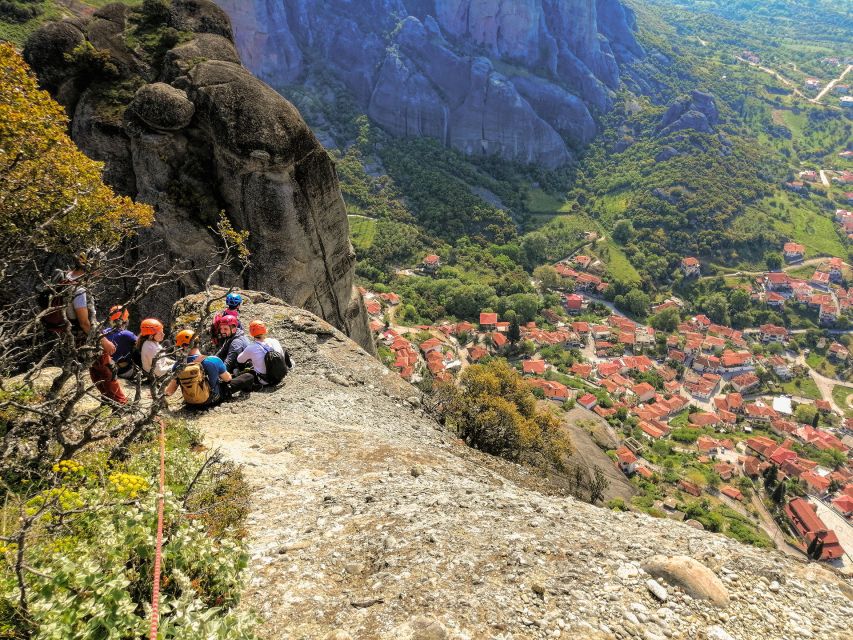
The big difference here is that you’re not just sightseeing by road. You’re doing a Via cordata experience through the Meteora rock maze, along paths shaped by monks over time. That matters because it changes the feel from sightseeing to movement.
You’ll encounter sections with rock formations where scrambling and balancing skills are useful. You’ll be supported by the guide throughout, and you’ll wear a helmet and harness for the protected parts. One of the strongest takeaways from people who’ve done similar routes: the safety system helps you feel secure, even if you’re not a regular climber.
Also, via cordata can feel more approachable than some other fixed-route climbs. In particular, one traveler noted it felt less physical and less vertiginous (less “vertigo-inducing”) than via ferrata they’d tried before. Still—don’t misread that as easy. This route does go up, and the rocks demand attention.
The scrambling part: where the challenge shows up (and how to handle it)
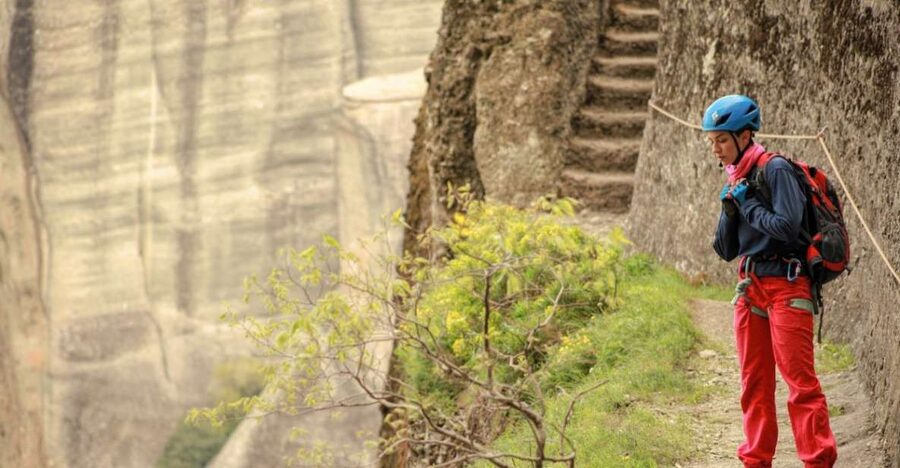
This tour is described as moderate to challenging, and that matches what you should expect when you’re working sandstone steps and uneven rock. The hardest bits are rarely long; they’re usually short stretches where you need to scramble, shift your weight, and keep your balance.
If you don’t usually exercise, you can still do it—but you’ll want to pace yourself. One visitor even said they don’t exercise regularly yet found the route manageable once they trusted the guide’s timing and safety setup. That’s the key: you’re not trying to power through. You’re trying to move correctly.
Here’s how you can make it feel easier on you:
- Keep your eyes on your next two steps, not your next ten.
- Let the guide set your rhythm on the tricky bits.
- Use the safety setup exactly as instructed. If you’re roped in at times, treat that as part of the plan, not as a surprise.
A small practical note from a real experience: gloves weren’t mentioned as included, and one person said the route would’ve been more comfortable with them. Gloves aren’t required in the provided details, but if you get even slightly bothered by rough rock or cold mornings, you might pack lightweight climbing gloves.
Great Saint viewpoints: the payoff and the photo plan
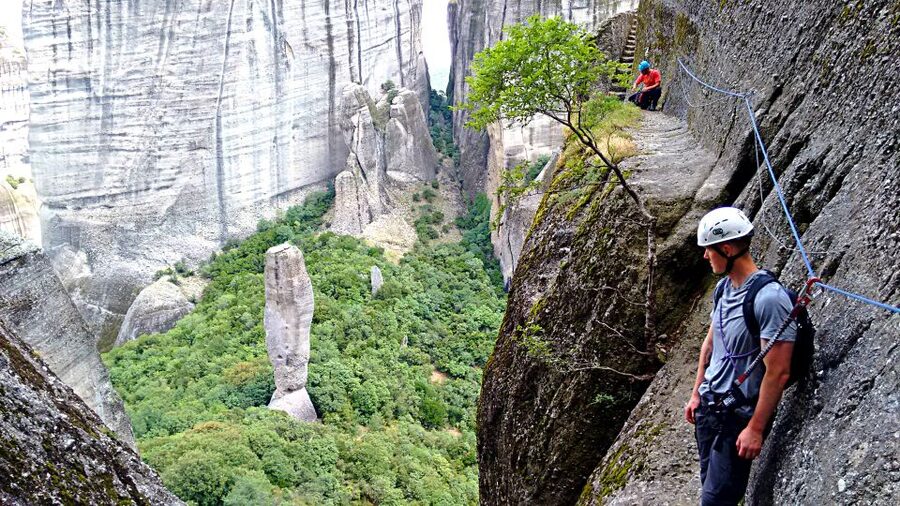
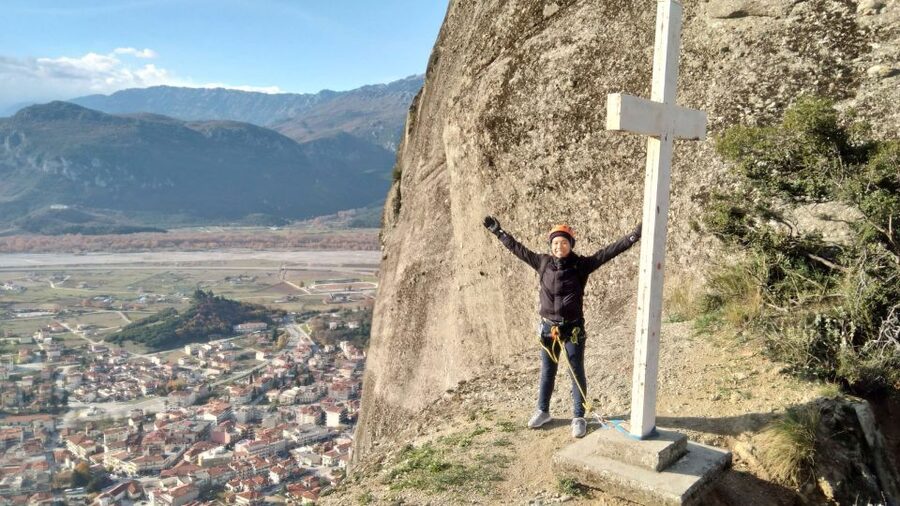
The top experience is the reason most people book. After the climb, you reach the Great Saint mountain area and get breathtaking 360-degree views of the Meteora rocks and monasteries.
What makes this feel special is that you’re getting the view as a reward for effort, not as a quick glance from a busy viewpoint. The route helps you avoid the heaviest crowds because you’re out on the hiking lines rather than standing in the same photo spots as everyone else.
Photo tip that’s not hype: the stops during the route are timed so you can actually breathe and compose. Several guides are known for helping with photos, not just watching the route. One traveler specifically praised guide Kostas for being patient and helping with amazing photos during breaks.
If you care about pictures, this is one of those tours where the guide’s role isn’t just safety—it’s also making sure you’re not scrambling one-handed while trying to line up a shot.
Safety and guides: why the small group feels worth it
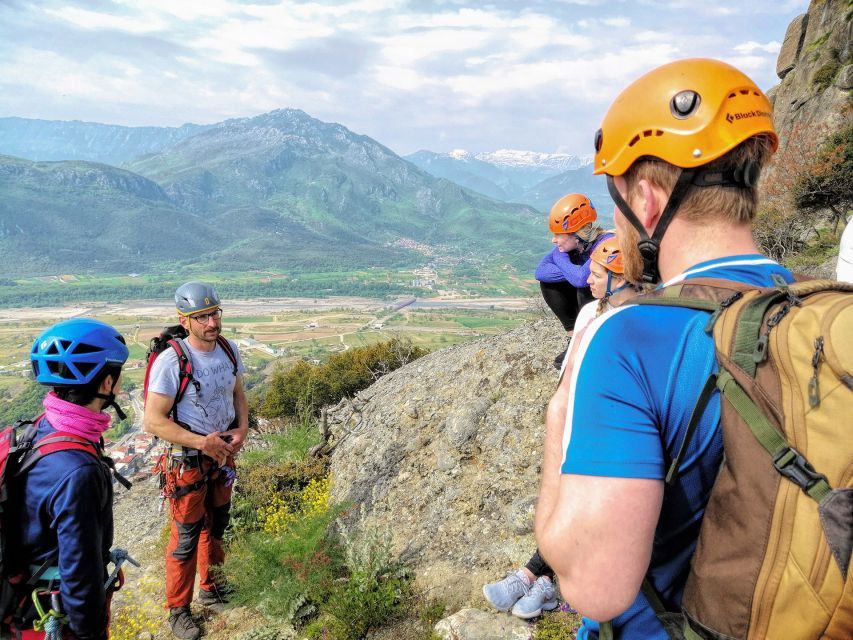
The guides are a big part of why this tour scores so high. You’re not just getting an instructor who can talk about Meteora. You’re getting someone who can manage the route, spot concerns early, and keep the energy steady.
Multiple guides were mentioned by name:
- Costa and Evin were described as fabulous and were credited with making even a scared daughter feel secure.
- Kostas was praised as professional, friendly, and full of local history, plus patient on the climb and helpful for photos.
That’s a practical win for you. On technical rock days, the best guide isn’t the loudest. It’s the one who reads you fast—your pace, your confidence level, and what kind of reassurance you actually need.
The small-group setup helps too. You can have up to 6 participants, and the tour describes a tight ratio with only a few people per mountain guide. That matters because you’re more likely to get direct instruction when you need it, instead of waiting for attention.
Avoiding crowds, without sacrificing the Meteora feeling
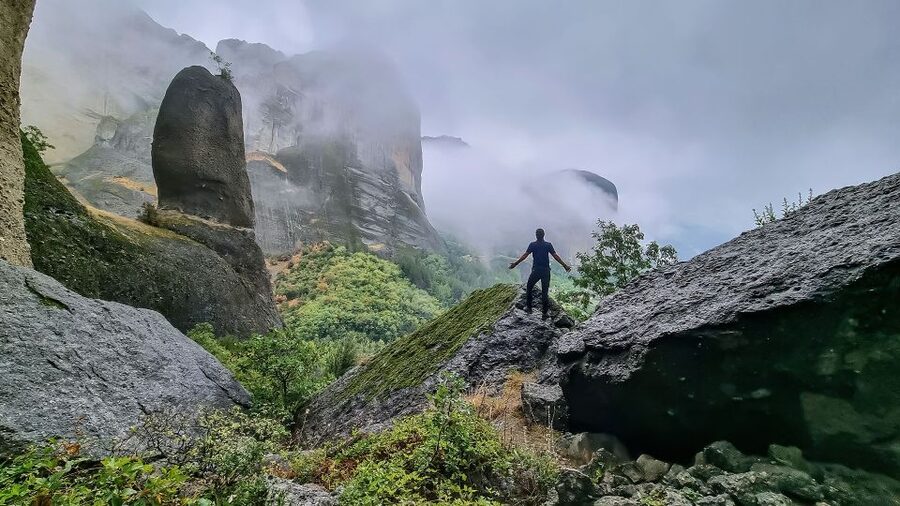
Meteora can be packed, especially around popular monastery lookouts. This tour avoids that by nature of the activity. You spend your time moving through routes that most people don’t do, which means your “Meteora moment” feels more like an adventure than a checklist.
There’s also something calming about being focused on the route. Instead of bouncing between crowds of visitors, you’re watching your footing, hearing the guide’s stories, and taking in the rocks at your own pace.
One practical note: a traveler suggested starting early helps avoid big heat, and that there’s plenty of shade during the ascent. Even if you don’t control the exact time, this is worth remembering when you pick your day in Meteora.
Price and value: is $88 fair for what you get?
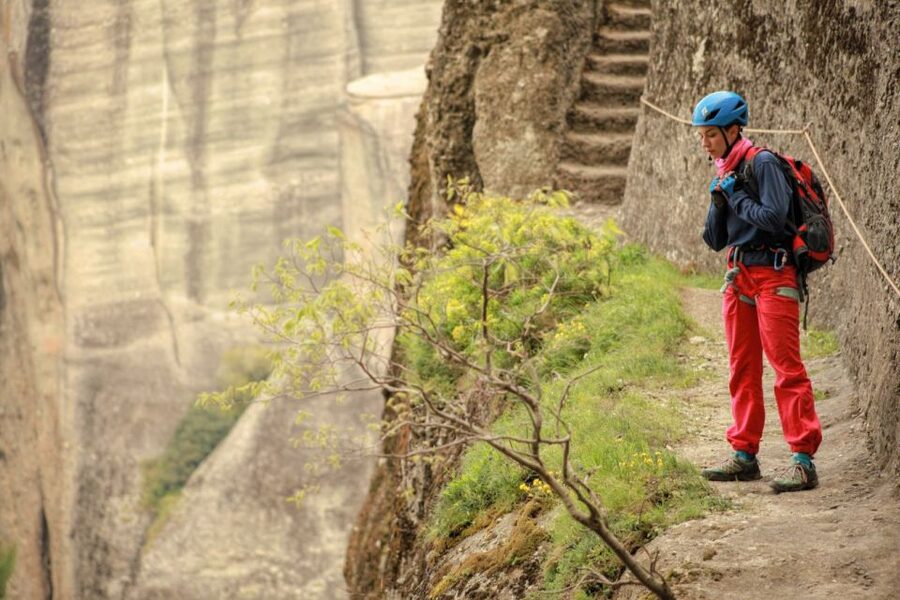
At $88 per person for a 3-hour guided route, you’re paying for a protected mountain experience with equipment, an English-speaking guide, and the “hard parts” covered by rope-and-harness safety.
Here’s what you’re getting that reduces your own stress and planning:
- A professional English-speaking mountain guide
- Helmet and harness equipment
- Water during the hike
- Help on scrambling sections and protected segments
- A small group limit, meaning more instruction time
What you’re not getting:
- Food and drinks (unless specified)
- Hotel pickup from Kalampaka/Kastraki (though optional pickup may be available)
Is that cost worth it? For most people who want a real Meteora hike without figuring out ropes and route safety themselves, yes. The value is in the combination: technical terrain + gear + guide + time efficiency. You’re paying to go from Kastraki onto the rock routes with confidence.
If you’re just looking for a simple viewpoint walk, you could spend less. But if you want the Great Saint payoff and the via cordata experience, $88 is a reasonable price for the protection and guidance you get.
What to bring (and what to skip) so your hike stays comfortable
This is where you can make or break your day. The tour is clear about footwear: bring closed-toe shoes. Sandals and flip-flops are not allowed.
You don’t want slippery soles on sandstone. You also want shoes that won’t punish you after a scramble. If your shoes feel too soft, they’ll wear your feet out faster.
Beyond shoes, the provided details only specifically list closed-toe footwear. Water is included, but you’ll still want to think about what you personally need for a moderate to challenging hike—especially if you’re sensitive to sun or temperature.
The meeting point is at Qastiro Meteora in the center of the old habitation of Kastraki village. If you want pickup, optional pickup may be available (not included by default).
Who should book this Meteora Great Saint route
This tour fits best if you:
- Enjoy outdoor movement and don’t mind a bit of rock scrambling
- Want a guided via cordata experience with safety gear
- Prefer a small group so you get real support
- Care about views and like earning them rather than rushing past them
It’s not ideal if you:
- Have low fitness or struggle with the idea of climbing and balancing on rock
- Are traveling with children under 8
- Hate heights so much that you can’t follow instructions around exposed rock (the tour provides safety, but your comfort still matters)
One family-friendly signal from reviews: a parent said it was great to do as a family, with experienced, safe guides. That said, the official minimum age is under 8 not allowed, so check your kids’ readiness honestly.
Should you book this tour to the Great Saint?
Book it if you want Meteora in a way that feels active, guided, and safe—without spending your whole day dodging crowds. The biggest draws for you are the via cordata experience, the support from a small group mountain guide, and the 360-degree Great Saint viewpoint.
Skip it if you want a flat, low-effort walk, or if scrambling sounds like a stress you’d rather avoid. This isn’t about speed. It’s about steady movement, correct balance, and trusting the safety setup.
If you match the moderate-to-challenging vibe, this is one of the more memorable ways to experience Meteora in only 3 hours—gear on, stories in your ears, views all around.
FAQ
Where do I meet the guide for this Meteora tour?
Meet your guide at the center of the old habitation of Kastraki village at Qastiro Meteora.
How long is the tour?
The duration is 3 hours.
How big is the group?
The group is limited to 6 participants.
Is there a pick-up option from Kalampaka or Kastraki?
Hotel pick-up and drop-off from Kalampaka or Kastraki is not included, but there is an optional pick-up service.
What safety equipment is provided?
The tour includes the necessary equipment, including helmets and harnesses.
Is water included?
Yes, water is included.
Is food provided?
No. Food and drinks are not included unless specified.
Are sandals allowed?
No. Sandals or flip-flops are not allowed. Closed-toe shoes are required.
Is this suitable for children?
It is not suitable for children under 8 years.
What happens if the weather is rainy?
If it’s rainy, the tour will be cancelled and you’ll receive a full refund or an alternative date.
What fitness level do I need?
It’s suitable for people with a good fitness level and described as moderate to challenging. It is not suitable for people with low level of fitness.