REVIEW · MOUNT ETNA
Mount Etna: Volcano Craters Hiking Tour
Book on GetYourGuide →Operated by Guide Vulcanologiche Etna Nord · Bookable on GetYourGuide
Hot rock and active craters in one day. This Mount Etna hiking tour gets you close to fumaroles and steaming lava flows while a specialist keeps you in safe zones. I love the hands-on feeling of warm, volcanic rocks underfoot and the way the geology talk makes the whole volcano feel real instead of just dramatic on a postcard. The main thing to think about is that the top can be cold, windy, and high—this hike is for people with real hiking comfort, not casual walkers.
You start at Etna’s cable-car area and work upward fast: Bar Esagonal at about 1,900 meters, then a ride up to around 2,500 meters before you even begin the craters portion. I also like that the experience is built around safety and structure: helmets, poles, and guided pacing help you handle narrow terrain near crater edges. If altitude, vertigo, or uneven footing worries you, this is not a gentle stroll—plan accordingly.
In This Review
- Key highlights you’ll actually feel
- Why this Mount Etna hike feels different than a day trip
- From the Esagonal Bar up to the first crater views
- Barbagallo Crater: geology walking with real crater energy
- Reaching around 3,000 meters: the altitude game and why it’s worth it
- Fumaroles and steaming lava flows: the close-up Etna moment
- The small basalt canyon (when snow allows it)
- Southeast Crater and the large craters of 2002
- Valle del Bove and the return to the cable car
- Gear, clothing, and what to pack so the hike stays enjoyable
- Safety rules that shape the experience (and who should skip)
- Price and value: what $28 covers, and what adds up on site
- The guide makes the difference: what the best ones do
- Who should book this Etna crater hike?
- Should you book this Mount Etna tour?
- FAQ
- Where does the tour start and end?
- How long is the Mount Etna crater hiking tour?
- What altitude does the hike reach?
- Do I need to pay extra for the cable car and volcanology guide service?
- Is a scientific information fee required to hike?
- What should I bring for the hike?
- Who is this tour not suitable for?
Key highlights you’ll actually feel
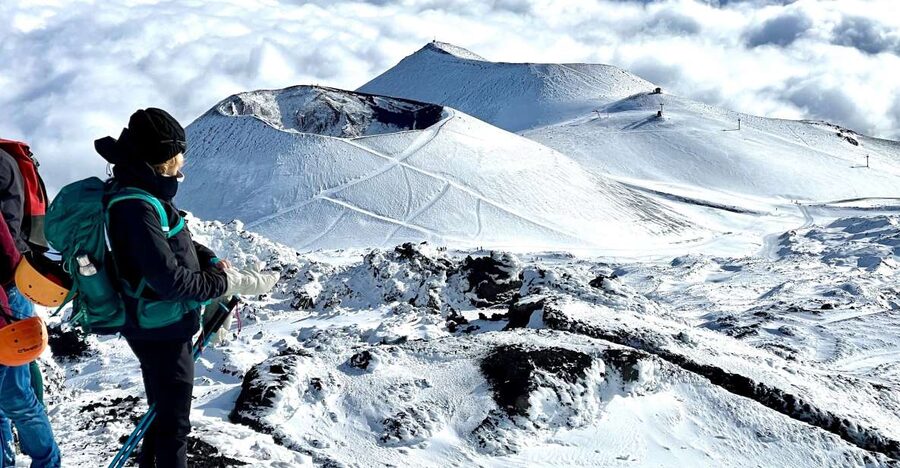
- Hot volcanic ground beneath your boots while you walk past banks of still-steaming lava
- Fumarole stops where you get close enough to understand how gases rise from underground
- A guided geology lesson that turns crater views into real explanations of volcanology
- Top-elevation walking up to about 3,000 meters (with extra scientific authorization)
- A real canyon feel in a small basalt canyon when snow hasn’t buried it
- Weather-tested logistics with warm jackets, helmets, and poles to keep you moving in cold/windy conditions
Why this Mount Etna hike feels different than a day trip
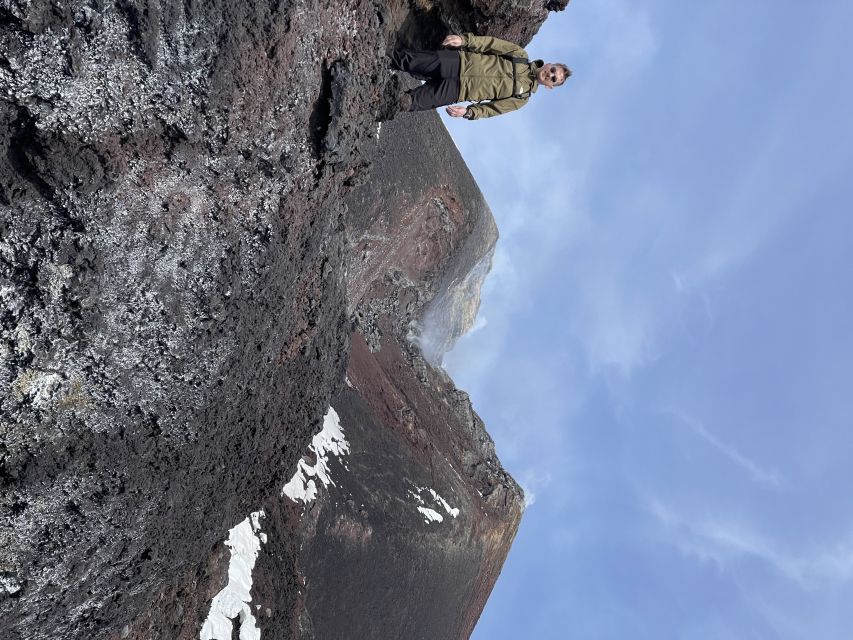
This is not a drive, not a quick viewpoint, and not a “look at the volcano from far away” situation. The whole point is contact with the volcano—walking over dark basalt, smelling the mineral heat of fumaroles, and seeing how fresh lava changes the ground.
Two things make it especially good value for what you’re getting. First, you do real hiking at altitude, so the views feel earned. Second, the guide interprets what you’re seeing: crater shapes, lava flow patterns, and the active processes you’d otherwise only hear about in museum-style text.
The “trade” is that you are walking crater-adjacent terrain. You’ll be at the edge of high-altitude reality, and wind and cold can turn the effort up a notch.
You can also read our reviews of more hiking tours in Mount Etna
From the Esagonal Bar up to the first crater views
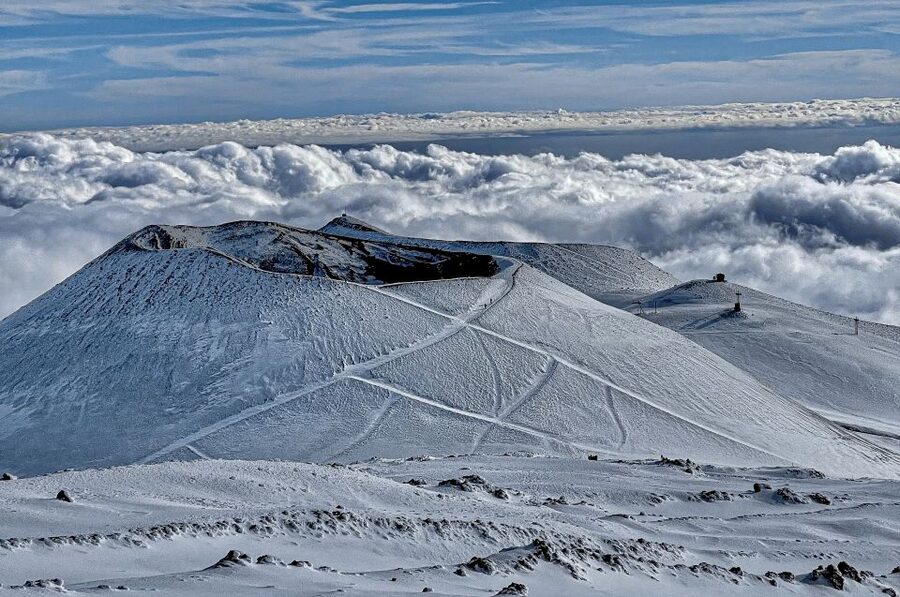
The day starts at the meeting spot in the parking area in front of the Esagonal Bar, where your guides are waiting. You’ll transfer briefly, then use the cable car to climb to roughly 2,500 meters—an efficient way to shorten the hardest portion of the climb.
At this stage, I recommend you treat it like you’re already “hiking for real.” The air gets thinner, the wind can start early, and you’ll want your layers ready before you’re fully committed. The tour provides warm jackets, trekking poles, helmets, and trekking shoes, which helps a lot if you didn’t pack for cold altitude.
One more practical note: the walking segment includes climbing and crater-edge terrain. That’s why they specifically caution people with vertigo, heart or respiratory issues, mobility limits, recent surgeries, and anyone with low fitness or no hiking experience.
Barbagallo Crater: geology walking with real crater energy
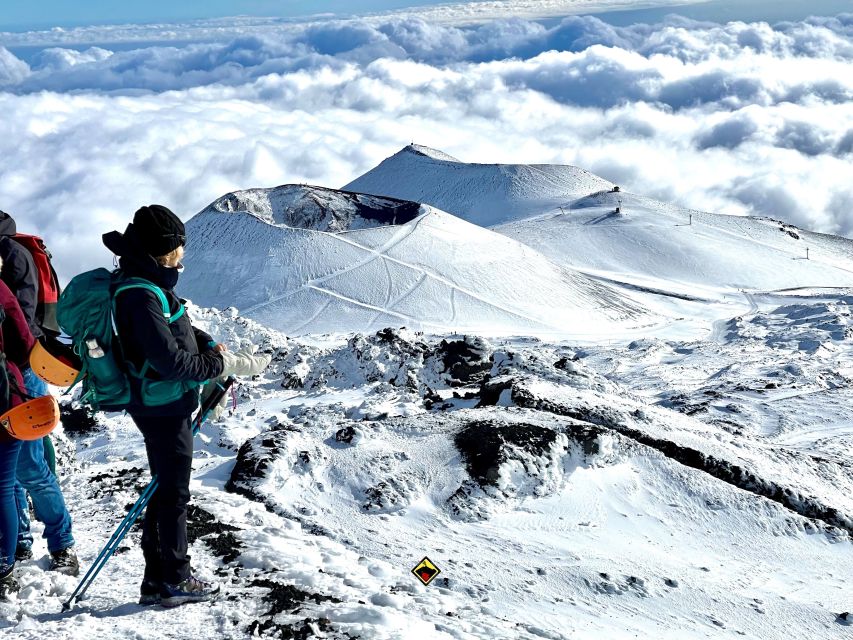
One of the guided sections focuses on Barbagallo Crater, roughly 2.33 hours of time with a guide. This part matters because it sets your “reading skills” for Etna: how to look at rock, how to spot features linked to eruptions, and how the terrain was shaped.
In plain terms, this is where you start connecting the dots between what the volcano does and what you see on the ground. A good guide (names you may hear include Vincenzo, Fabio, Andrea Montemagno, and Nikkos) tends to explain the logic of the landscape in a way that makes later stops feel clearer rather than just spectacular.
The main drawback here is pacing. Even if the hike doesn’t sound brutally long on paper, the air at altitude slows everyone down. The guide’s job is to keep the group safe and moving, which often means more frequent checks and breaks than you’d expect on a lower-elevation walk.
Reaching around 3,000 meters: the altitude game and why it’s worth it
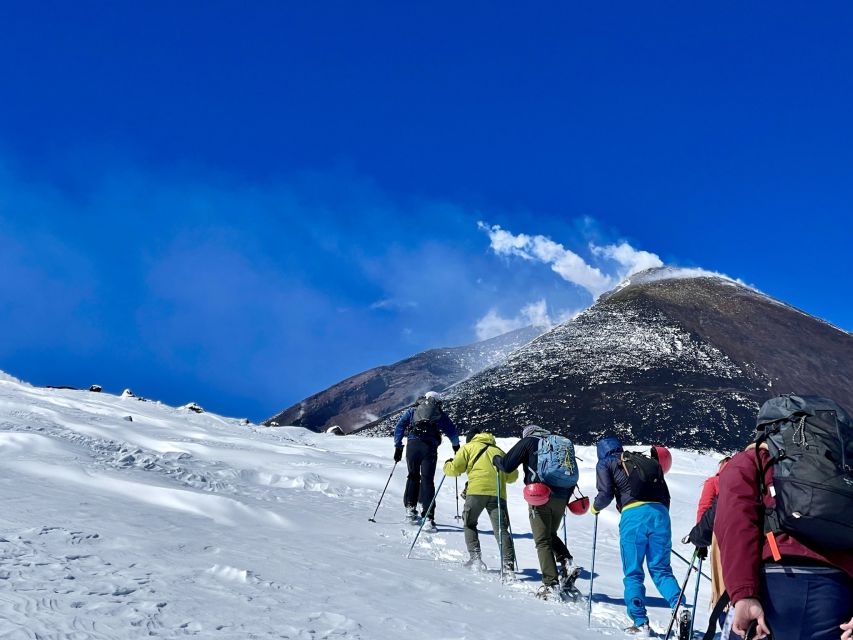
From the cable car station, the route climbs toward an altitude of about 3,000 meters with your guide. There’s an important detail: the group passes the current altitude limit of 2,750 meters under special authorization for scientific purposes, and it’s done only if the group doesn’t show major altitude sickness.
For you, the value is simple: you get a high-altitude crater experience that many casual Etna visits can’t touch. The views near the top craters are broad, dramatic, and unmistakably volcanic—this is where Etna stops being a “volcano you’ve heard of” and starts being a place you understand.
For safety, listen closely to your guide here. If you feel dizzy, unusually short of breath, or off-balance, this is not the moment to tough it out. The route involves walking along crater edges, and that matters for people sensitive to dizziness.
Fumaroles and steaming lava flows: the close-up Etna moment
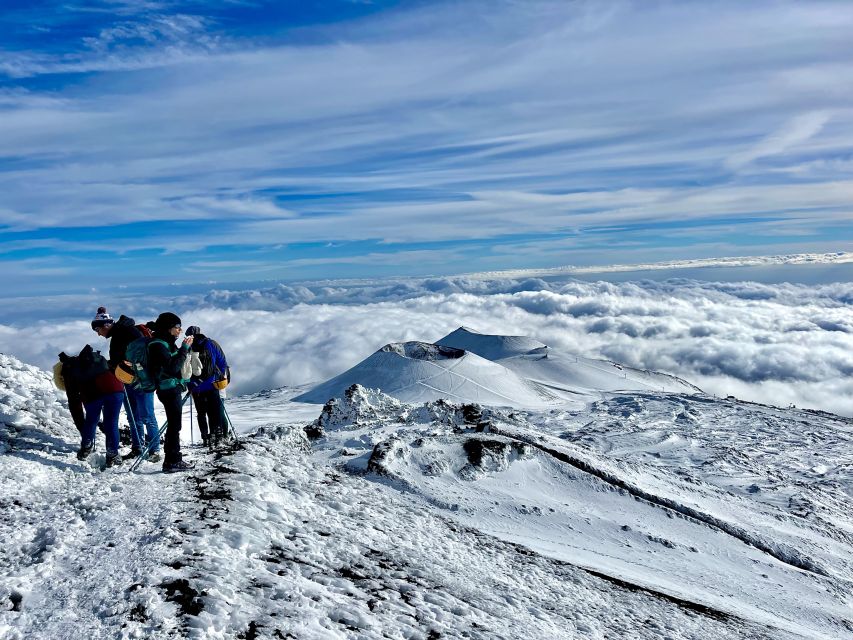
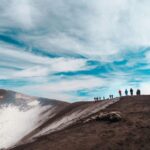
This tour’s signature sensation is heat from the ground. You pass banks of lava flows that are still steaming, so you’re walking near hot volcanic surfaces and seeing how recent activity changes the ground texture and color.
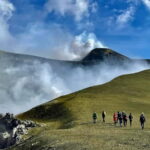
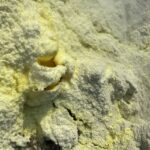
Then you get to fumaroles—openings where hot gases rise. The effect is very physical: warm air, a sense of activity, and a strong reminder that this is an active volcano, not a dormant backdrop.
This is also where a licensed volcanology guide earns their keep. With the right explanation, you’ll understand what fumaroles mean, why the gases behave differently at different spots, and what you’re seeing in terms of volcanic systems—not just “smoke coming out of rocks.”
The small basalt canyon (when snow allows it)
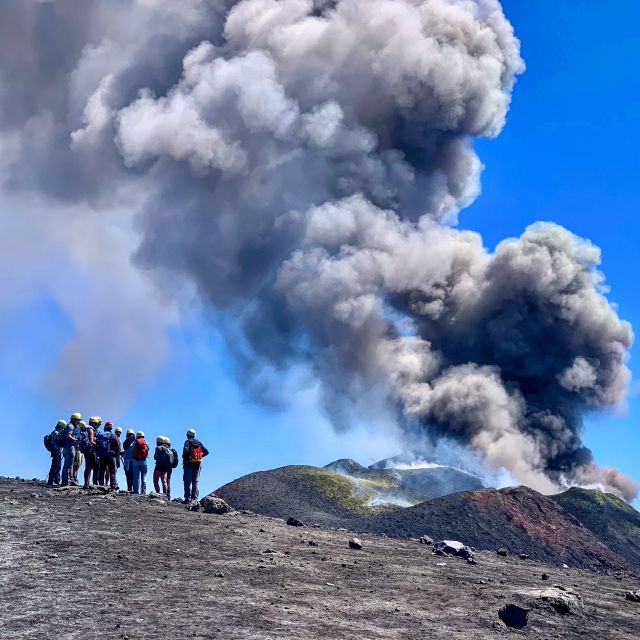
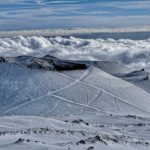
There’s a stop planned in a small basalt canyon, but the key condition is weather. If snow hasn’t buried it, you’ll get that canyon walk—more rugged, more “alien terrain,” and a great contrast to open crater ridges.
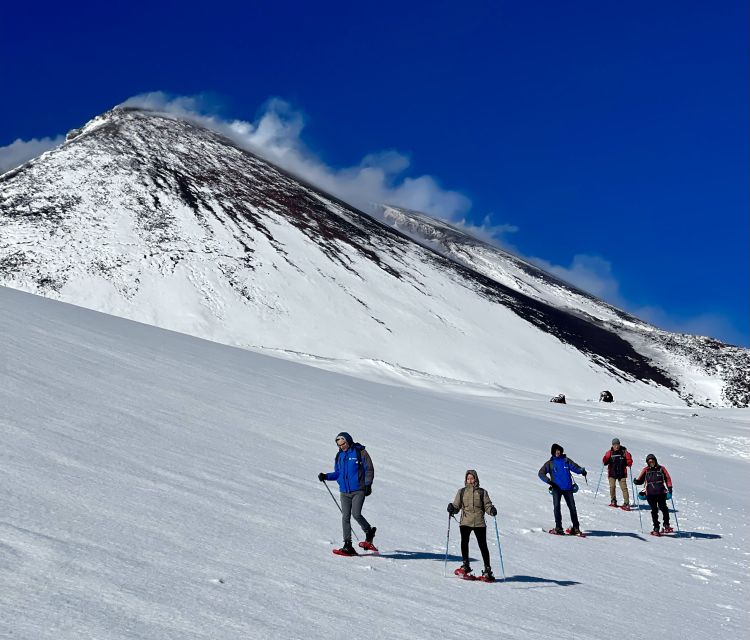
In winter and shoulder seasons, snow and ice can change the exact feel of the hike. The tour even notes snowshoe rental only if deep snow requires it, and in cold months you should expect icy patches on some paths.
This is why trekking poles are a big deal. They reduce strain on your knees during descents and help you keep balance if the footing is slick.
Southeast Crater and the large craters of 2002
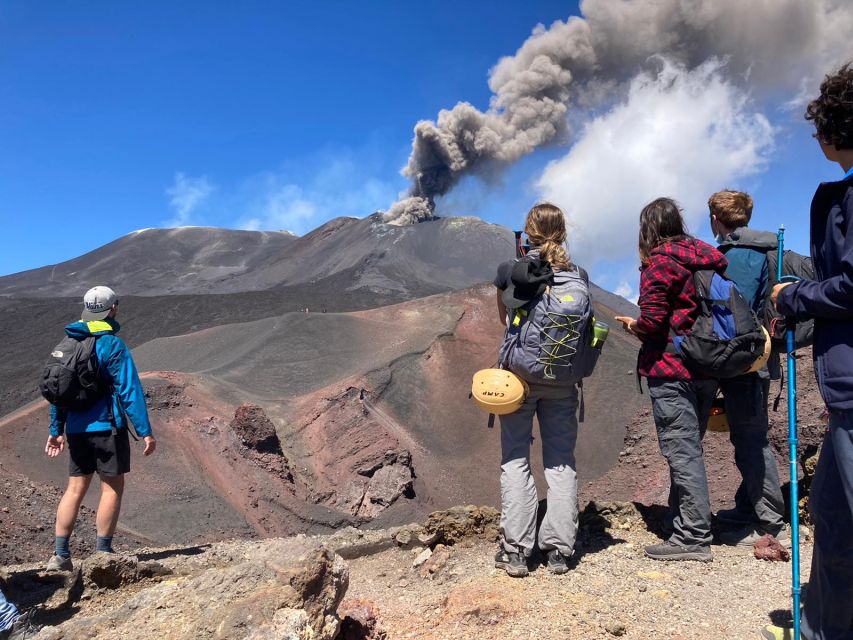
After the canyon, you arrive at the base area of the most active crater at the moment—the Southeast Crater. This is a high-impact stop because it puts the “active Etna” theme into a clear, physical location.
Next, you move toward the large craters of 2002. Even when you can’t stay long at the top due to weather or safety rules, the photo stop time makes sense: you use that short window to capture the crater geometry and the view lines that help you understand eruption history.
It’s worth saying plainly: this is not an experience for people who freeze when they look down. If you have vertigo or you’re not comfortable with heights and crater-edge walking, you’ll struggle here.
Valle del Bove and the return to the cable car
After the crater area, you descend a path that can be full of snow in winter. The descent phase can be hard on knees, and the tour’s structure includes pauses and guided movement to keep the group safe.
Then you return toward the cable car station and back down to the starting meeting point in the parking area near Etna Guides Official. The total time is about 5 hours, but if conditions slow down the route, it can feel longer—wind, cold, and snow can add time even if the schedule stays roughly the same.
The descent part is where your footwear and socks matter most. If you don’t wear proper hiking shoes and comfortable, warm layers, cold and uneven ground can drain you fast.
Gear, clothing, and what to pack so the hike stays enjoyable
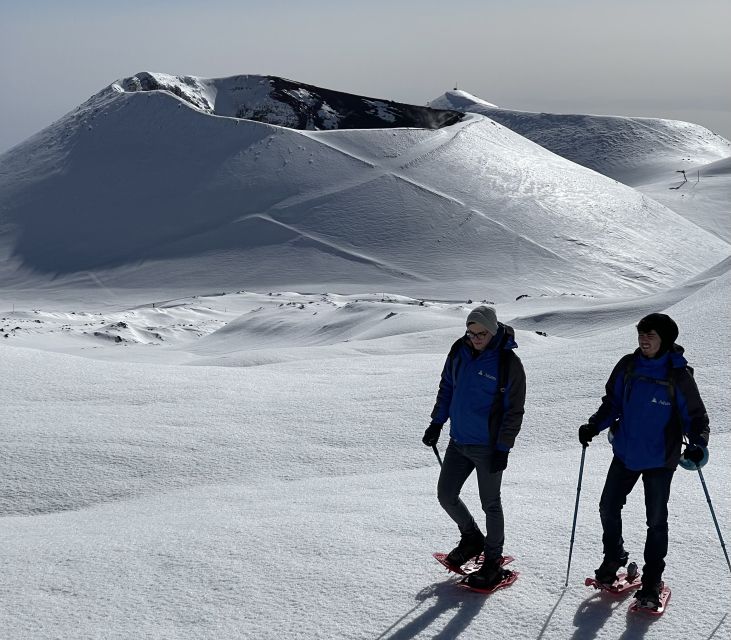
Good news: this tour includes trekking poles, helmets, warm jackets, trekking shoes, and a backpack. That removes a lot of uncertainty—especially if you’re traveling with limited luggage.
Still, you should pack smart. Bring a windbreaker, sunglasses, sunscreen, long pants, and comfortable clothes for layering. Add a change of clothes, snacks, and drinks because altitude hiking works up an appetite and cold can sap energy quickly.
Gloves and hats are not included, so bring your own. And skip anything that gets in the way on rocky ground: no sandals or flip-flops, no open-toed shoes, and no high heels.
Safety rules that shape the experience (and who should skip)
This tour has a very clear safety filter. It’s not suitable for people with mobility impairments, back problems, heart problems, respiratory issues, epilepsy, recent surgeries, high blood pressure, or low fitness. It’s also not for people with vertigo, and children under 12 aren’t allowed.
That’s not just paperwork. The route involves climbing, walking near crater edges, and handling changing ground conditions. In windy, high-altitude weather, balance becomes the main challenge—not just effort.
One more safety detail that affects your participation: the tour notes that if you don’t pay the additional fee for the scientific information provided during the experience, you won’t be able to participate in the hiking activity. So budget for that on the day so you’re not sidelined at the start.
Price and value: what $28 covers, and what adds up on site
The headline price is listed as $28 per person, but what you actually pay depends on on-site extras. Here’s the practical breakdown from what’s included vs not included:
Included in the experience price:
- Trekking poles, helmets, warm jackets
- Trekking shoes and a backpack
- Etna entry fee
- Accident insurance
- The trek itself with guide service (plus the hiking gear support)
Not included (you pay on site):
- Volcanological guide service fee: €30 per person
- Round-trip cable car tickets: €52 per person
- Snowshoe rental only if deep snow: €15 per person
So if you’re planning the full day budget, think of it as: you’re covering a guided, gear-supported hike plus climbing infrastructure that you still need to purchase separately. The good news is that the base fee looks low because the cable car and volcanology add-ons are the “real” separate costs.
If you’re already comfortable hiking, you might ask why not just buy cable car tickets and go alone. The answer is the safety and science part: fumarole proximity, crater-edge routing, and altitude pacing require a guide who knows what’s safe right now.
The guide makes the difference: what the best ones do
This tour’s reputation is strongly tied to guide quality. Names you may encounter include Vincenzo and Fabio, who are described as funny but extremely professional, with frequent stops to keep everyone steady and informed.
Other guides mentioned include Andrea Montemagno, praised for clear explanations in English and Italian, and Nikkos, praised for very clear English delivery and a pace that works for the full group. What you should take from this: a strong guide doesn’t just point at rocks—they help you understand what you’re seeing and they manage the group in harsh weather.
Also, pay attention to the advice about trousers and wind protection. Even when the hike isn’t technically extreme, wind at the top can be intense. Cold + wind changes how your body works, so your layers matter as much as your legs.
Who should book this Etna crater hike?
Book this tour if you want an active volcano experience with a guide, and you’re comfortable hiking at high altitude for several hours. It’s ideal for people who like geology, enjoy hands-on nature experiences, and want a structured route that reaches near the top craters without self-navigating.
You should probably skip if you:
- Have vertigo or dizziness risk
- Are limited by heart or respiratory conditions, recent surgery, high blood pressure, epilepsy, or mobility issues
- Don’t have hiking experience or can’t handle uneven, crater-edge paths
- Travel with young kids (children under 12 aren’t allowed)
If you’re a confident hiker visiting Sicily and you want the Etna day to feel more like a climb than a sightseeing stop, this is a standout option.
Should you book this Mount Etna tour?
Yes—if you’re physically comfortable with high-altitude hiking and you pack for wind and cold. The combination of fumarole access, walks over warm volcanic ground, and real volcanology explanations makes it far more meaningful than a short viewpoint day.
If you’re unsure about your tolerance for altitude, uneven terrain, or heights, this is the wrong “first hike.” Choose a calmer Etna option instead, or talk with your doctor before committing.
If you do book, go prepared: proper hiking shoes, long pants, wind protection, and your own gloves and hat will make the difference between a fun challenge and a miserable one.
FAQ
Where does the tour start and end?
The guides meet you in the parking lot in front of the Esagonal Bar. The tour ends back at the same meeting point.
How long is the Mount Etna crater hiking tour?
The duration is about 5 hours, depending on the specific start time available.
What altitude does the hike reach?
The trek climbs up to about 3,000 meters with your guide (with special authorization for scientific purposes).
Do I need to pay extra for the cable car and volcanology guide service?
Yes. Round-trip cable car tickets cost €52 per person, paid on site. There is also a volcanological guide service fee of €30 per person, paid on site.
Is a scientific information fee required to hike?
Yes. If you do not pay the additional fee for the scientific information provided during the experience, you will not be able to participate in the hiking activity.
What should I bring for the hike?
Bring a windbreaker, sunglasses, sunscreen, long pants, snacks, drinks, and a jacket. Also pack comfortable clothes and a change of clothes. Gloves and hats are not included, so bring your own.
Who is this tour not suitable for?
It’s not suitable for children under 12, people with vertigo, heart problems, back problems, respiratory issues, epilepsy, mobility impairments, recent surgeries, high blood pressure, or low fitness. It’s also for trained hikers only, so it’s not suitable if you have no hiking experience.