REVIEW · MARSEILLE
The Urban Hike of Marseille
Book on Viator →Operated by La Randonnée Urbaine de Marseille · Bookable on Viator
Marseille reveals itself fastest on foot. This 10-kilometer urban hike strings together working harbors, old neighborhoods, and climb-y viewpoints you’d miss on your own, all led by Olivier with a small group (max 10). You move at a slow, friendly pace, with detours into quieter streets that feel like they belong to locals.
I especially like how the route mixes sea-and-city geography with real architectural details—fisherman houses at Vallon des Auffes, Second Empire buildings near the port, and the big “how did this city grow?” questions answered as you walk. The other standout for me is the practical comfort planning: eight water points, shade breaks, and options for early morning or late afternoon when the light is easier on both feet and head.
The one drawback to consider is the physical side. This is a sporty hike with stairs and steep sections, including the climb that leads you up toward Notre Dame de la Garde, so pack for walking well and take your time on the uphill stretches.
In This Review
- Key things to know before you go
- Why this Urban Hike feels different from a typical tour
- Getting ready: timing, heat, and the walking reality
- Start at the Old Port: how Marseille’s “DNA” gets explained
- Vallon des Auffes: fisherman houses and a calmer Marseille
- La Corniche Kennedy: the sea horizon as a wayfinding tool
- Palais du Pharo: greenery, views, and Second Empire influence
- Parc Valmer: “from olive oil to tourism” in a Mediterranean park
- Bompard’s quiet paths: Chemin du Vallon de l’Oriol
- Anse de Malmousque: calm cove energy and Greek-accented Marseille
- Boulevard André Aune: a steep street that teaches architecture
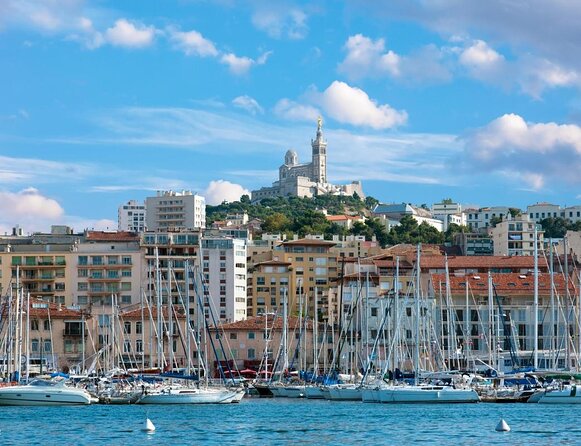
- Notre Dame de la Garde: the highlight square and 360° city logic
- End at the Old Port: where the walk turns into a rest
- Price and value: why $41.27 can make sense
- Who should book this hike (and who should skip it)
- Quick tips to make the day go smoothly
- Should you book the Urban Hike of Marseille?
- FAQ
- How long is the Urban Hike of Marseille?
- How far do you walk?
- What is the group size?
- Where does the tour start?
- Are there water breaks during the walk?
- Is the tour only for people who are very fit?
- What happens if the weather is bad?
- Is there a cancellation refund window?
- Are service animals allowed?
Key things to know before you go
- Small group, big city feel: up to 10 people means more time for questions and less rushing.
- Designed for warm days: slow rhythm, shade zones, breaks in wooded parks, and eight water points.
- Marseille’s “why” is explained while you walk: port history, geography, and how neighborhoods evolved.
- Photo-friendly viewpoints: the Old Port area, La Corniche Kennedy, and the 360° square at Notre Dame de la Garde.
- Exterior stops with no drama about entries: most stops are built around streets, squares, and viewpoints.
- A guide who brings stories to life: Olivier’s humor and clear, friendly explanations help the city click.
Why this Urban Hike feels different from a typical tour
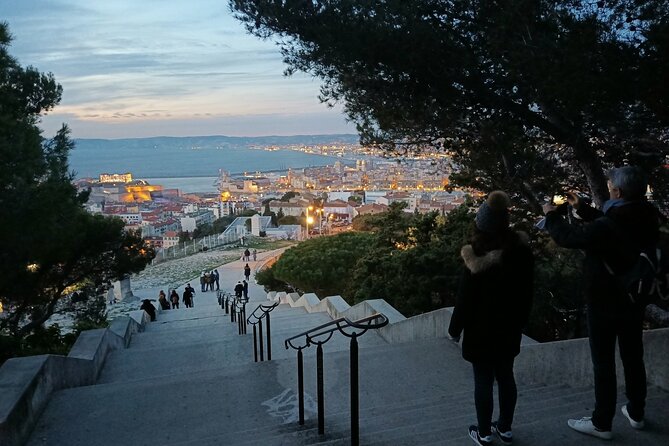
Marseille can feel loud and fast if you only visit by transit or car. This tour fights that. You get the city in layers: sea first, then neighborhoods, then the hills and stair climbs that explain why Marseille looks the way it does. The pace stays gentle for the distance, so the walk is the experience, not a chore.
I also like that the tour is built for real Marseille—tight streets, stairs, and hidden corners that are hard to reach by bus. You end up walking through the city’s “working” spaces as well as the scenic ones, so your photos and your understanding both improve.
The guide matters, too. Olivier’s style shows up in the comments people leave: humorous, courteous, and ready to point out details you’d skip. One person even notes Olivier pointing out Eric Cantona’s childhood home, which is exactly the kind of local connection that turns a view into a story.
You can also read our reviews of more hiking tours in Marseille
Getting ready: timing, heat, and the walking reality
This hike is about 3 hours 30 minutes, and it’s roughly 10 kilometers. That’s not a light stroll, but it’s also not an all-out endurance event. The big help is that the route is managed for comfort: 8 water points, a slow rhythm without time pressure, and a schedule designed for early morning or late afternoon. If you’re traveling in summer, that matters more than most people expect.
You’ll get breaks in wooded parks, plus sea breeze and shaded segments. There’s even sun cream available, which tells you the organizer is thinking about practical needs, not just selling a route.
What to bring is simple:
- Good walking shoes (you’ll be happier fast)
- A water bottle mindset, even with the provided stops
- Sun protection, even if sun cream is available
And plan to climb. There are steep sections, and Notre Dame de la Garde is on the “feet and effort” side. If you know you struggle on stairs, tell yourself up front that you’re signing up for a hill-hugging day.
Start at the Old Port: how Marseille’s “DNA” gets explained
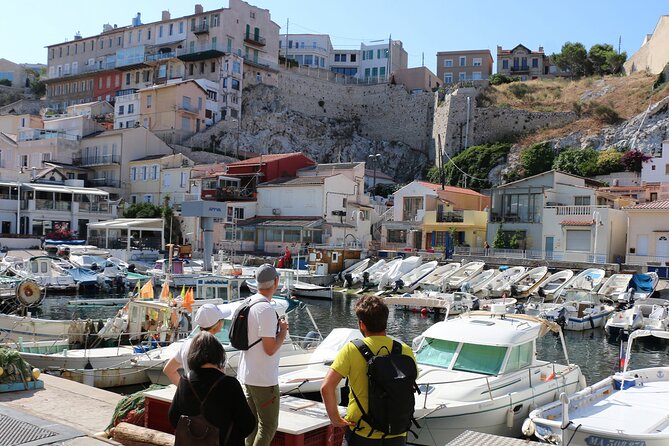
You meet at 19 Quai des Belges, in Marseille’s port district. The Old Port isn’t just where the tour begins—it’s where the story makes sense. You get a quick intro to who the guide is and what you’ll see, then you start tracing the city from early Marseille to the influence of Louis XIV.
The big idea here is Marseille’s relationship with the sea: how the port shaped daily life, why the Mediterranean mattered, and how trade and culture left visible marks. It’s a nice setup because every later stop starts to feel like an answer to an earlier question.
Even if you’ve already seen the Old Port once, walking it with context changes what you notice. It’s the difference between seeing boats and seeing a city built around movement, exports, and survival.
Vallon des Auffes: fisherman houses and a calmer Marseille
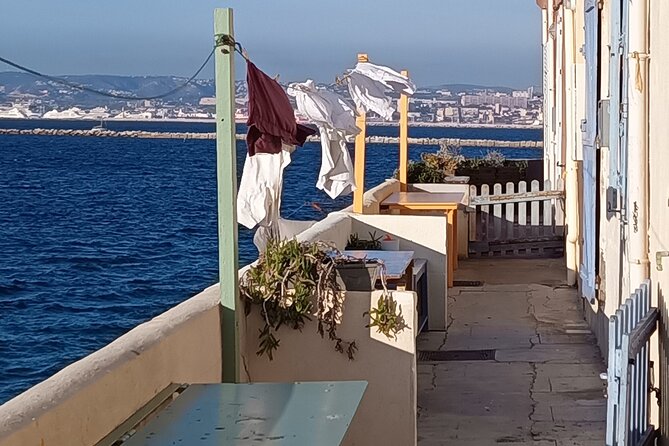
Next you head to Vallon des Auffes, one of the most photographed corners in Marseille. The reason isn’t just views—it’s the preserved fisherman habitat and the buildings that have survived development pressure.
You get a short, focused stop here, but it’s long enough to notice the textures: the feel of a working harbor zone, the way the street layout funnels toward the water, and how Marseille can protect pockets of its past even while it expands.
This is also where the tour quietly shifts. You start the day with the broad port story, then you get a small-scale human story: people building lives near the sea.
La Corniche Kennedy: the sea horizon as a wayfinding tool
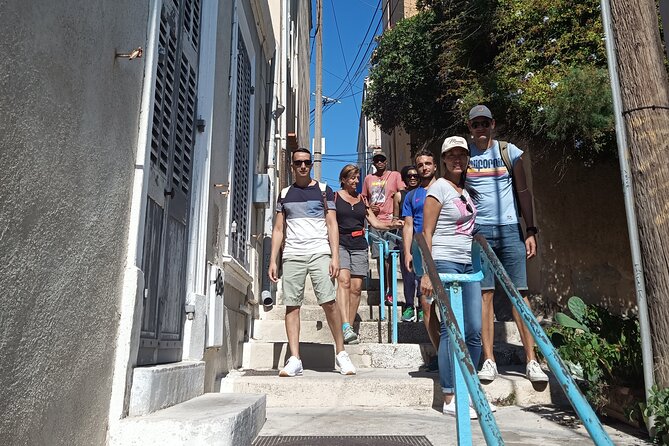
From Vallon des Auffes, you walk to La Corniche Kennedy. Think of this stretch as Marseille’s “view corridor.” You get a distant horizon on the sea and a clearer sense of how the city faces outward.
This is where you understand the city’s layout visually. When streets suddenly feel like they were designed by hills and coastline, the geography stops being abstract. You also get a breather: it’s a scenic part of the hike, and that makes the later climbs feel more earned.

Palais du Pharo: greenery, views, and Second Empire influence

At Palais du Pharo, you shift from coastal walking into a greener pause with strong sightlines toward the Old Port and the Grand Port. The stop is built around both scenery and history.
You’ll also connect Marseille’s development to Napoleon III and the broader Second Empire era. The point isn’t memorizing dates. It’s learning how 19th-century political and urban decisions shaped what you see on your walk today—especially around the kinds of buildings and city structures that still define Marseille’s center.
Parc Valmer: “from olive oil to tourism” in a Mediterranean park
Then comes Parc Valmer and the Villa Valmer area. This is the tour’s green bowl moment: a change of texture after the harbor and viewpoints. You’ll get a sense of Mediterranean park life as you move through the area.
The history angle here is about economics. You hear how Marseille shifted from older trade patterns—starting with olive oil in the 19th century—to the tourism industry that drives so much of the modern city image. It’s a good stop for two reasons: you cool down a bit, and you learn the “why” behind the changes you might otherwise chalk up to time.
Bompard’s quiet paths: Chemin du Vallon de l’Oriol
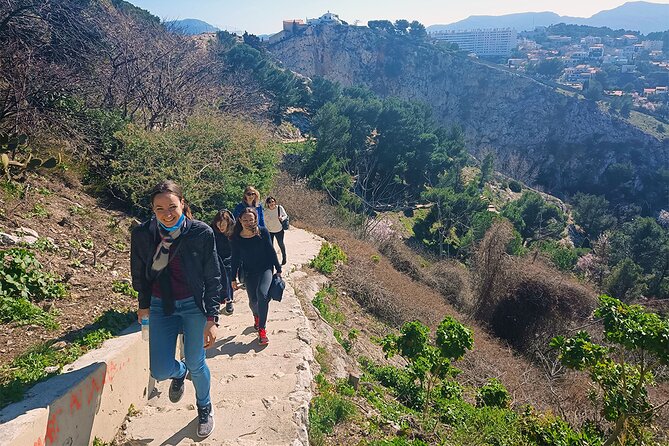
The hike continues along Chemin du Vallon de l’Oriol, a path that takes you away from the sea and into the Bompard district. This is where the tour earns its promise of stepping off the beaten track.
The walk gives you time to notice how habitat changes as you move uphill and inland. You’ll also see references to 20th-century bastides, which helps explain how Marseille’s neighborhoods grew in distinct waves rather than one uniform plan.
And it’s on this section that the tour sets you up for the final “big view.” You reach Notre Dame de la Garde quietly enough that the arrival doesn’t feel like a punishment.
Anse de Malmousque: calm cove energy and Greek-accented Marseille
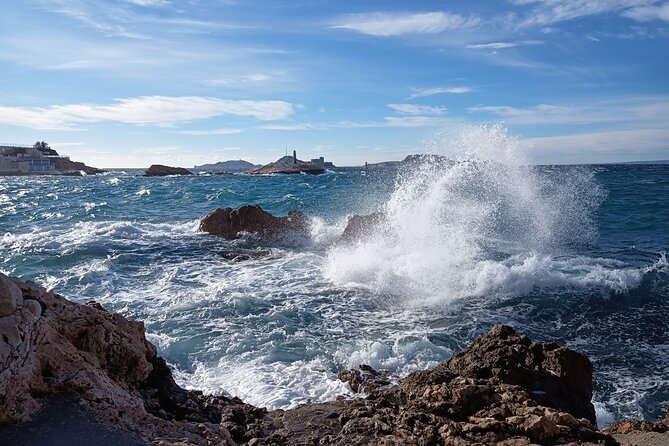
At Anse de Malmousque, you get a calmer, softer coastal feel. The cove and nearby port are described as delightfully quiet—exactly the kind of place where Marseille doesn’t look like a postcard, it looks like daily life.
This stop highlights “how people live” near the sea, plus the Greek accents in the district. You also notice the mix of buildings and fishermen habitat, which helps Marseille feel like a real city rather than a highlight reel.
Boulevard André Aune: a steep street that teaches architecture
Then you climb back toward the Old Port along Boulevard André Aune, one of the steepest routes in Marseille. You start with a viewpoint above, then you gradually step into the city center.
This is a short stop, but it’s memorable because it shows how Marseille’s culture is built into its architecture. The steepness forces you to experience the neighborhoods physically; you start to feel why certain types of housing and streets evolved the way they did.
Notre Dame de la Garde: the highlight square and 360° city logic
Notre Dame de la Garde is the tour’s headline. The basilica is impressive, yes, but the real star is the square and the breathtaking 360° views.
This is where you put the city into one mental picture. From above, you can see the structure of Marseille: major points of interest, how far the city stretches, and how the coastline and hills shape everything below. You also hear how the people of Marseille relate emotionally to this place—how it fits into daily identity, not just tourism.
If you’re a first-time visitor, this stop alone can make the rest of the day feel worth it. It turns scattered neighborhoods into a coherent system.
End at the Old Port: where the walk turns into a rest
The hike finishes back at the Old Port. You complete the loop with a sense of accomplishment: you did the walking, saw places most people don’t reach easily, and learned the geography and culture behind what you saw.
From there, you’re close to cafes on Cours Estienne d’Orves, and the practical advice is simple: grab a beer or a hot chocolate if that fits your day. It’s a nice way to let the city settle back into your head after the hills.
You’ll also pass by Palais de Justice and the Commerce Court area along the way to the end. The tour connects these Second Empire power buildings to how Marseille has long questioned central authority, especially around justice and law-making. It’s a useful reminder that Marseille’s story isn’t only maritime and artistic—it’s civic, political, and intense, too.
Price and value: why $41.27 can make sense
At $41.27 per person, this tour isn’t trying to be a budget bus ride. You’re paying for a guided route that includes:
- a full 3.5-hour walking experience
- a curated set of locations you’d struggle to stitch together by yourself
- structured comfort planning for heat (shade breaks, water stops, sun cream)
- a guide who explains what you’re seeing as you walk
For me, the value comes from the combination: you get both movement (10 kilometers of local streets) and meaning (history, geography, architecture tied to each viewpoint). If you’re the type who likes to walk first and read later, this is the kind of half-day that feels efficient.
Who should book this hike (and who should skip it)
This is a strong fit for you if:
- you like active half-days and can comfortably walk 10 kilometers
- you want Marseille’s story told through neighborhoods, not just landmarks
- you enjoy viewpoints and photo stops
- you like learning from a guide who keeps the tone light and the facts clear
You might want to think twice if:
- stairs and steep climbs are a problem for you
- you’re traveling with limited mobility
- you want a mostly flat route with minimal uphill effort
Also, if you’re counting on a specific language, I’d confirm when you book. One cancellation note in the record points to a language mismatch, so it’s worth checking to avoid stress on the day.
Quick tips to make the day go smoothly
- Go early or late if you can. The tour is built for heat-smart timing.
- Wear shoes you trust. People specifically recommend good walking shoes.
- Bring a phone that’s ready for photos. Corniche Kennedy and the Notre Dame square are photo magnets.
- Pace yourself. The tour has a slow rhythm and no time pressure, so take breaks when you need them.
Should you book the Urban Hike of Marseille?
If you want Marseille to feel like a living city instead of a list of stops, this is a great booking. It’s a small-group, hill-including walk with practical heat management and a guide (Olivier) who tells the story with humor and clarity. You’ll come away with a mental map of how the port, the hills, and the neighborhoods fit together.
Book it if you’re excited by viewpoints, streets, and a walk that actually teaches the city. Skip it if you don’t handle hills and stairs well, or if you need a very low-effort itinerary.
FAQ
How long is the Urban Hike of Marseille?
It’s about 3 hours 30 minutes.
How far do you walk?
The hike is described as a 10-kilometer route.
What is the group size?
The tour has a maximum of 10 travelers.
Where does the tour start?
The meeting point is at 19 Quai des Belges, 13001 Marseille, France, and the tour ends back at the meeting point.
Are there water breaks during the walk?
Yes. The route includes 8 water points, plus shade and breaks in wooded parks.
Is the tour only for people who are very fit?
Most travelers can participate. That said, the route includes climbing stairs and steep sections, so comfortable walking shoes help a lot.
What happens if the weather is bad?
The experience requires good weather. If it’s canceled due to poor weather, you’ll be offered a different date or a full refund.
Is there a cancellation refund window?
Yes. You can cancel up to 24 hours in advance for a full refund.
Are service animals allowed?
Yes, service animals are allowed.