REVIEW · MOSHI
The Best of Machame Route in 6 Days: Your World’s Summit Guide
Book on Viator →Operated by AFRICA NATURAL TOURS · Bookable on Viator
Kilimanjaro rewards patient hikers. This Machame route is interesting because it’s designed for acclimatization and keeps you moving through clear altitude stages with a professional guide and solid on-trail support; I especially like the Lava Tower stop (Shark’s Tooth) and the fact that trekking meals plus camping basics are included. The one catch: Kilimanjaro park fees and crew tips aren’t included in the $1,150 price, so budget a bit more than the headline cost.
You’ll start with a drive from Moshi to Machame Gate, then hike through rain forest, moorland, semi-desert, and alpine desert before the high-altitude summit bid. The daily pacing is tough, but the route’s rhythm helps you get ready for Day 5’s big push. One more practical note: this is a group trek with a maximum of 100 participants, so it’s organized, not private.
In This Review
- Machame Route: Key Stuff That Actually Matters
- Machame Route Makes Sense for Acclimatization
- Price and Logistics: What $1,150 Covers
- What’s included
- What’s not included (and you must plan for it)
- Day 1: Moshi to Machame Gate and Into the Rain Forest
- Day 1 consideration
- Day 2: Shira Camp and the Move Into Higher Moorlands
- The “soak it in” moment
- Day 3: Lava Tower (Shark’s Tooth) and the Important Acclimatization Rhythm
- Day 4: Barranco Wall to Barafu Camp and South Circuit Views
- What to expect mentally
- Day 5: Midnight Start to Stella Point and Uhuru Peak
- Sunrise and summit light
- Day 6: Mweka Descent, Certificates, and Back to Moshi
- What to Pack (Without Guessing)
- How Hard Is This, Really?
- Should You Book This 6-Day Machame Summit Try?
- FAQ
- Where does the hike start and where do you end?
- How many days is the climb?
- What meals are included?
- Is park fee included in the $1,150 price?
- Do I get camping gear?
- Do I need my own hiking gear?
- Is pickup and drop-off included in Moshi?
- Can I cancel for a full refund?
Machame Route: Key Stuff That Actually Matters
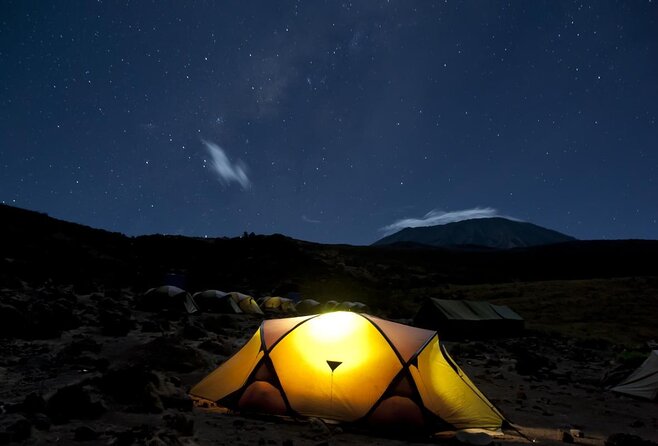
- Acclimatization-focused days, including the Lava Tower (Shark’s Tooth) and the Barranco Camp stop
- A true summit sequence: midnight-to-early-morning start, then Stella Point and Uhuru Peak
- Camping gear included (tent and mattress), plus meals every day on the trek
- Guided, structured support, including briefing and a trekking certificate
- Weather-dependent summit views, with the plan aimed at dramatic light from the top
Machame Route Makes Sense for Acclimatization
Machame is the most popular way up Kilimanjaro for a reason. The whole plan is built around helping your body adjust step-by-step instead of rushing straight to altitude.
What I like about this approach is how the hike “teaches” you altitude. You climb out of the rain forest on Day 1, rise into the moorlands on Day 2, then hit a higher high point on Day 3 before dropping back down to sleep lower at Barranco Camp. That pattern matters because it gives you more time to adapt rather than only stacking climb hours.
You should also know what the trekking feels like day to day: it’s not a casual walk with scenic breaks. Even the “acclimatization day” comes with steep climbs and real altitude—just in a more strategic order.
Price and Logistics: What $1,150 Covers
This tour is listed at $1,150 per person and averages about 90 days advance booking. For value, the best part isn’t the number—it’s what’s bundled.
What’s included
- Breakfast, lunch, and dinner during the trek
- Pickup in Moshi to Machame Gate, plus drop-off from Mweka Gate back to your Moshi hotel
- Camping equipment, including a tent and mattress
- A briefing, plus a professional Kilimanjaro hiking guide
- A trekking certificate
What’s not included (and you must plan for it)
- All Mount Kilimanjaro park fees
- Tips for the mountain crew
- Your hotel before and after the trek in Moshi
- Airport pickup/drop-off (only the Moshi hotel transfers during the trek are included)
- Flights
- Personal hiking gear
Here’s the practical way I’d think about the price: you’re mostly paying for the guided climb, meals, and the mountain logistics. The missing items—park fees, tips, and your pre/post lodging—are the pieces that commonly push the total budget higher. If you hate surprises, save extra money for those upfront.
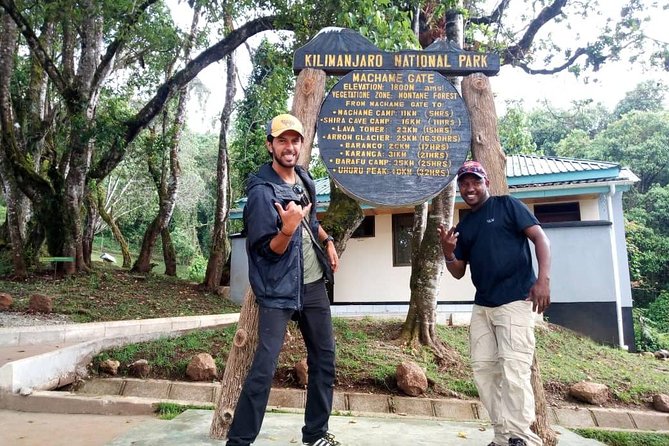
Day 1: Moshi to Machame Gate and Into the Rain Forest
Day 1 starts with a drive of about 45 minutes from Moshi to Machame Gate. The route passes through the village of Machame, then you hike once you depart the park gate.
The walk is a classic Kilimanjaro warm-up with real altitude. You climb from 1,830m (6,000ft) to 3,050m (9,950ft) over about 11km (7mi) in roughly 5–6 hours.
You’ll be in montane forest for this stretch. That means the trail is alive with trees and shade, which can help your pace early in the climb. You’ll also get lunch and dinner during the trek, then sleep at Machame Camp.
Day 1 consideration
If you’re prone to going too fast, Day 1 is where it sneaks up on you. It’s tempting to treat the forest part like a normal hike. Don’t. Your body is still getting used to higher altitude—so keep your effort steady.
Day 2: Shira Camp and the Move Into Higher Moorlands
After breakfast, Day 2 shifts gears. You leave the rain forest glades and climb along an ascending path, crossing valleys and steep rocky sections before reaching Shira campsite.
Elevation rises from 3,050m to 3,850m over about 5km (3mi) with 4–5 hours of hiking time. The habitat changes to moorland, so the feel of the hike turns more open and exposed than Day 1.
You’ll get breakfast, lunch, and dinner, then overnight at Shira Camp.
The “soak it in” moment
Day 2 is a good day to practice your summit strategy: slow breathing, consistent pace, and no big surges when the trail looks good. At these heights, how you manage effort matters more than how fast you think you can go.
Day 3: Lava Tower (Shark’s Tooth) and the Important Acclimatization Rhythm
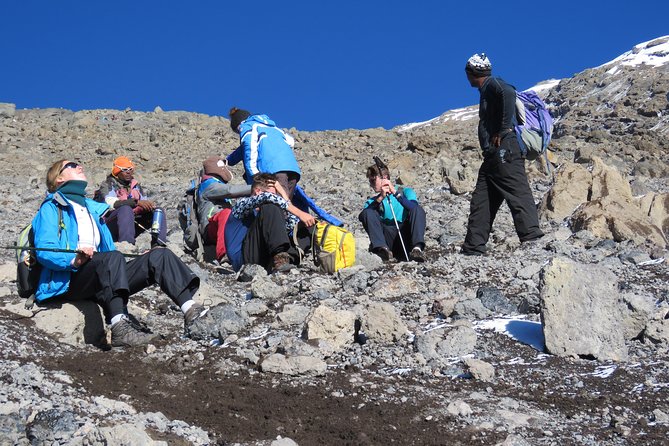
Day 3 is the big acclimatization structure. You start at Shira Camp and hike up a ridge. Along the way, you pass a junction towards Kibo, then head southeast to Lava Tower, also called Shark’s Tooth, at 4,650m (15,250ft).
After that high point, you descend to Barranco Camp, ending near the same elevation you started the day. The elevation change is described as 3,850m to about 4,000m, over 10km (6mi) in about 5–6 hours. The habitat shifts to semi-desert.
This is the day that tells you whether you’re adapting well. If you feel unusually wiped out, this is where you slow down and focus on hydration and steady effort—without inventing new goals.
Day 4: Barranco Wall to Barafu Camp and South Circuit Views
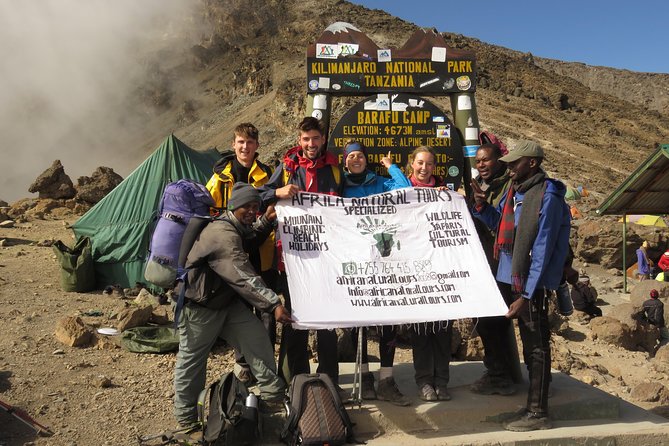
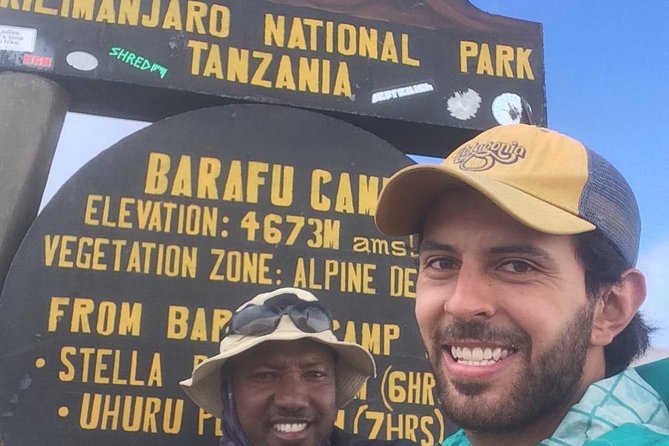
Day 4 is physically demanding. You leave Barranco and tackle the steep Barranco Wall, reaching about 4,250m (13,900ft).
From there, you traverse the Karanga Valley at around 4,050m (13,250ft) and continue on toward Barafu Camp. This section is described as completing the South Circuit, and it’s also where you’re likely to start feeling the summit close in—not in a fantasy way, but in a heavy, practical way.
You rise from 4,000m to 4,700m over about 9km (6mi), hiking 6–8 hours. The habitat is alpine desert.
You’ll have breakfast, lunch, and dinner, then overnight at Barafu Camp.
What to expect mentally
Barafu sets the tone for the summit push. You’re climbing into a zone where temperatures can drop hard at night, and the trail can feel harsher. Day 4 is your last full day of climbing before the long summit effort, so treat it like the warm-up for a hard final act.
Day 5: Midnight Start to Stella Point and Uhuru Peak
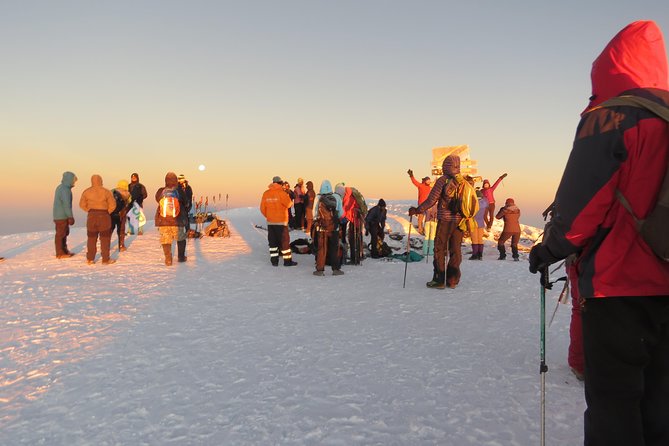
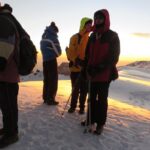
Day 5 is the one you came for. You start very early, typically between midnight and 2am, heading toward the summit.
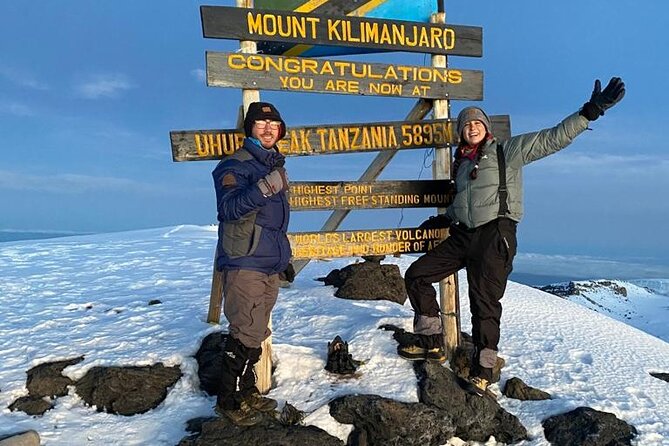
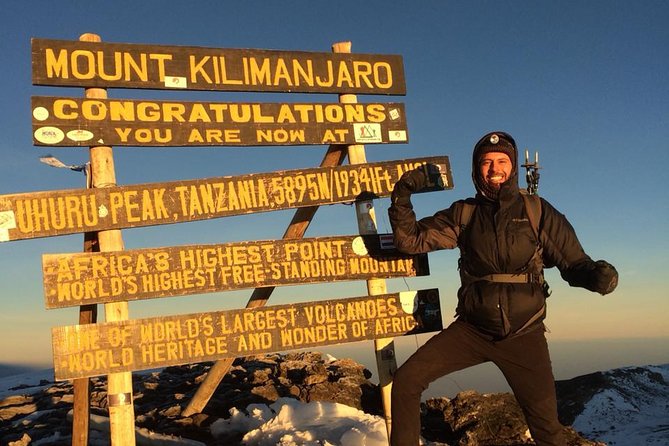
The route goes between the Rebmann and Ratzel glaciers, ascending through scree to Stella Point on the crater rim. Stella Point is your checkpoint for the final step’s intensity, and it’s where sunrise is part of the payoff. From there, you continue to Uhuru Peak (5,895m / 19,340ft), the highest point in Africa.
After summiting, you descend to Mweka Camp, with a stop at Barafu for lunch along the way.
The day’s elevation change is dramatic:
- Up from about 4,700m to 5,895m
- Then down to 3,090m
Total hiking time is listed as 10–13 hours, covering about 5km up and 13km down.
Sunrise and summit light
The plan highlights an unforgettable sunset from the summit weather permitting, and the summit timing is also built for sunrise. In real life, it depends on clouds and timing. Either way, your best bet is to prepare for cold, slow progress and then let the light show up when it can.
Day 6: Mweka Descent, Certificates, and Back to Moshi
The final day begins with breakfast, then you descend to Mweka Park Gate for your summit certificates.
Descent matters here because lower elevations can mean wet, muddy ground. The tour notes that gaiters and trekking poles are advisable, which is solid advice for protecting your feet and keeping balance when trails get slick.
You hike from 3,090m down to 1,680m, about 10km (6mi) in 3–4 hours. After you complete the descent, you’ll be picked up by the vehicle from Mweka Gate for the drive back to Moshi, about 60 minutes. Then the trek ends after breakfast.
What to Pack (Without Guessing)
The good news: your big mountain support pieces are handled. You’ll get tent and mattress as part of the camping setup.
The important part you should bring is your personal hiking gear. The one specific gear item called out for you is that gaiters and trekking poles are advisable for the muddy, wet conditions on the descent day.
If you’re not sure what counts as personal hiking gear for you (boots, layers, gloves, headwear, and so on), check with your operator before you go so you don’t show up missing essentials that make the days harder than they need to be.
How Hard Is This, Really?
This hike is listed for people with moderate physical fitness. That’s encouraging, but don’t confuse moderate with easy.
You’re looking at:
- Days that run 5–8 hours hiking early on
- A Day 3 with a longer 10km distance and a high point at 4,650m
- A Day 4 with steep climbing (Barranco Wall) and 6–8 hours
- The summit day that’s a 10–13 hour push starting in the dark
Altitude is the main challenge, and the route’s structure helps manage it. But your legs still do a lot of work. If you’re not used to consistent uphill effort, start training now with hikes that build stamina and help your knees get comfortable with long days.
Should You Book This 6-Day Machame Summit Try?
I’d book this if you want the Machame route’s acclimatization rhythm, appreciate a clear structure with meals and camping gear included, and you’re ready for Day 5 to be the hardest day of your life (in the best way).
I might hold off if your budget is tight once you account for park fees, tips, and your hotel stays before and after. Those costs aren’t included, and they matter for the final total.
If you’re choosing a Machame option, this one is a strong fit for people who want a guided, organized climb from Moshi with real support on the mountain—and who understand that summit success depends on weather and your own pace.
FAQ
Where does the hike start and where do you end?
You’re picked up in Moshi to Machame Gate to start, and after descending you’re dropped back at your Moshi hotel from Mweka Gate.
How many days is the climb?
This plan is 6 days (approx.), and Kilimanjaro hikes via this route are also described as 6 or 7 days.
What meals are included?
You get breakfast, lunch, and dinner during the trek each day on the mountain.
Is park fee included in the $1,150 price?
No. All Mount Kilimanjaro park fees are not included, and you can pay them directly to the park or via the tour operator.
Do I get camping gear?
Yes. Camping equipment is included, including a tent and mattress.
Do I need my own hiking gear?
Yes. Personal hiking gear is not included. The tour specifically notes that gaiters and trekking poles are advisable for the final descent.
Is pickup and drop-off included in Moshi?
Yes. Pickup from your Moshi hotel to Machame Gate is included, and drop-off from Mweka Gate back to your Moshi hotel is included.
Can I cancel for a full refund?
Yes. The experience has free cancellation, with a full refund if you cancel up to 24 hours in advance of the start time.