REVIEW · MOSHI
The Best & Unique Kilimanjaro Hiking tour 7 days Machame route
Book on Viator →Operated by AFRICA NATURAL SAFARIS · Bookable on Viator
Kilimanjaro rewards careful planning. The 7-day Machame route from Moshi gives you time to adjust to altitude, with guided hikes and meals handled so you can focus on steady steps. I especially like the combo of meals included and the team’s habit of running things with real structure, including flexible pacing with guides such as Maneno and Hassan. One thing to watch: the $1,200 price doesn’t include all park fees, so your total budget should account for that.
What makes this route feel smarter than the fastest versions is how it spaces the hard days. You’ll build up through the rainforest, heath, and alpine deserts, then get a more gradual lead-in to the summit night, when most people feel the pressure. Your biggest drawback may simply be the physical demand: this is a high-altitude hike with a moderate-fitness target, but you still need stamina and patience.
In This Review
- Key highlights and what they mean for you
- Entering Kilimanjaro through Machame: the route logic that matters
- Moshi logistics: starting with less chaos
- Meals, camping gear, and guide support: what you’re really paying for
- Day 1: Machame Gate to Machame Camp (rainforest reality check)
- Day 2: Machame Camp to Shira 2 Camp (heath zone transition)
- Day 3: Shira 2 to Lava Tower and down to Barranco (big altitude drama, shorter hours)
- Day 4: Barranco Camp to Karanga Camp (alpine desert, steady effort)
- Day 5: Karanga Camp to Barafu Camp (the last big build-up)
- Day 6: Barafu to Uhuru Peak, then down to Mweka Camp (the long day)
- Day 7: Mweka Camp to Mweka Gate (getting your breath back)
- Safety and pacing: why the guides matter on Kilimanjaro
- Price and value: what $1,200 really covers (and what it doesn’t)
- Who should book this Machame 7-day trek?
- Should you book the Best & Unique 7-day Machame route from Moshi?
- FAQ
- What is the duration of the Kilimanjaro Machame route tour?
- Where does the trek start and what is the pickup like?
- Are meals included during the trek?
- What camping gear is provided?
- How many days are spent before the summit attempt?
- Is the guide English-speaking?
- Are airport transfers included?
- Are park fees included in the price?
- How many people are in the group?
- Is cancellation free?
Key highlights and what they mean for you
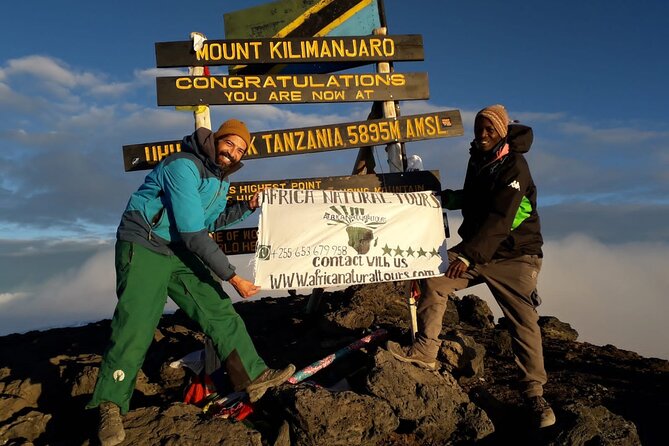
- All meals included on the trek means you won’t lug food or spend mental energy planning snacks at altitude.
- Private transportation from Moshi helps you start clean and avoid the “everyone ends up at the same place” feeling.
- English-speaking professional guide keeps the route clear and your pace realistic.
- A seven-day timeline gives you room for pauses, photos, and proper rest between altitude jumps.
- Camping setup provided (tents and mattress) cuts down what you personally have to carry.
Entering Kilimanjaro through Machame: the route logic that matters
Machame is one of Kilimanjaro’s classic routes, and it’s also one of the more practical choices if you want a balance between challenge and time. The big idea is pacing: Kilimanjaro isn’t only about walking uphill. It’s about how your body adapts as you climb from the lower rainforest zone up into colder, drier high-altitude environments.
I like the way the 7-day format supports that. Instead of forcing one very long stretch and then jumping straight into summit preparation, your trekking day structure breaks up the effort. That matters because summit night often starts around midnight, when sleep time gets squeezed. If you arrive at that moment with more saved energy, your decision-making tends to be better, too: slower steps, steady breathing, and fewer panic spirals when the air feels thin.
You also get the “Kilimanjaro in stages” feeling. Day after day, the mountain changes. You go from deep-green rainforest trails to heath-like zones, then into alpine desert, and finally into the arctic zone around the summit. If you’re a visual learner, it’s a great way to understand what altitude is doing to the environment around you.
Moshi logistics: starting with less chaos
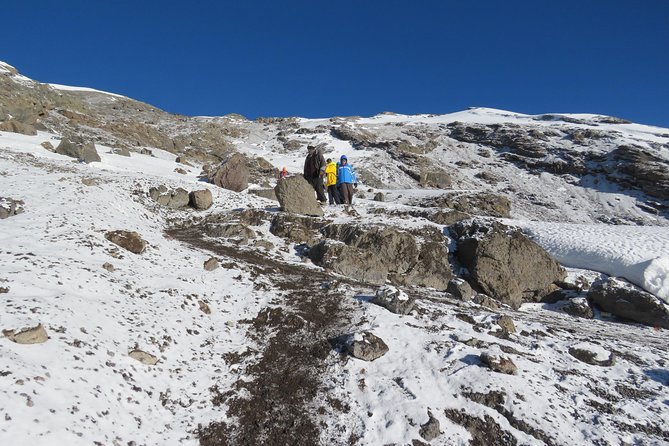
This trek starts in Moshi and includes pick-up from the Moshi town hotel you booked to Machame Gate. When you’re headed into a mountain experience, that kind of organized start is worth real money because it removes guesswork. You show up, get briefed, and you’re moving toward the gate without wasting your first morning.
The experience ends with a drop-off back to your Moshi hotel from Machame Gate. Your meeting point is listed at AFRICA NATURAL TOURS L.T.D, Mkwawa Avenue, Tanzania, which is useful if you want to line things up with local transport before the trek.
One more small plus: the tour notes near public transportation, so if your plans in Moshi are flexible, you’re not locked into one tight schedule just to get to the start.
Meals, camping gear, and guide support: what you’re really paying for
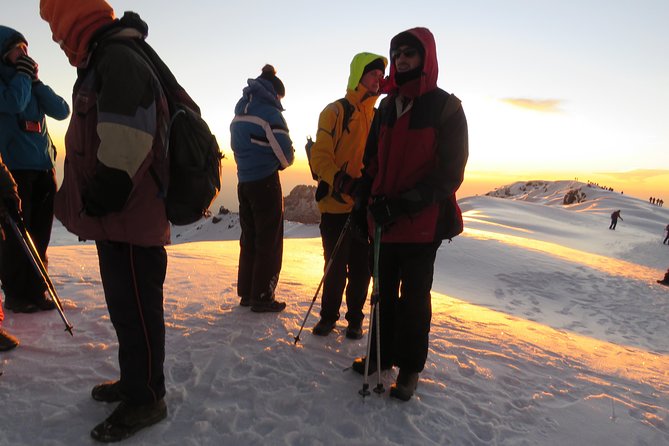
The tour includes breakfast, lunch, and dinner during the trek. That’s more than convenience. It reduces the load you carry and keeps your energy steady when your body is working harder just to walk. At altitude, your appetite can get weird, so having reliable meals planned by the crew saves you from making food decisions while you’re already tired.
You also get camping equipment such as tents and a mattress. On a mountain, that means better sleep odds. And better sleep odds matter because summit day is a long, cold push that starts in darkness and asks for patience more than speed.
The team includes a professional English-speaking guide. Guided trekking isn’t only about knowing the route. It’s about having someone help you manage tempo, keep you safe in changing conditions, and make the schedule feel doable instead of brutal. The provided notes about guides like Maneno and Hassan being flexible with hiking pace line up with what you want most on Kilimanjaro: slow and steady, but not miserable.
Day 1: Machame Gate to Machame Camp (rainforest reality check)
Your first climb goes from Machame Gate (5,380 ft) to Machame Camp (9,350 ft). It’s listed at about 11 km and 5–7 hours through a rainforest habitat.
This is your “wake-up” day. Expect the trail to feel busy with roots and greenery, and expect that you’ll start building altitude rhythm right away. The win here is that you’re not thrown into an overnight above 12,000 ft immediately. You get a solid first day that helps your body begin adapting without going straight into the deepest cold air.
A practical consideration: rainforest days can feel warmer and wetter, even if you’re working at a steady pace. If you’re unsure about rain gear, this is where it earns its spot.
Day 2: Machame Camp to Shira 2 Camp (heath zone transition)
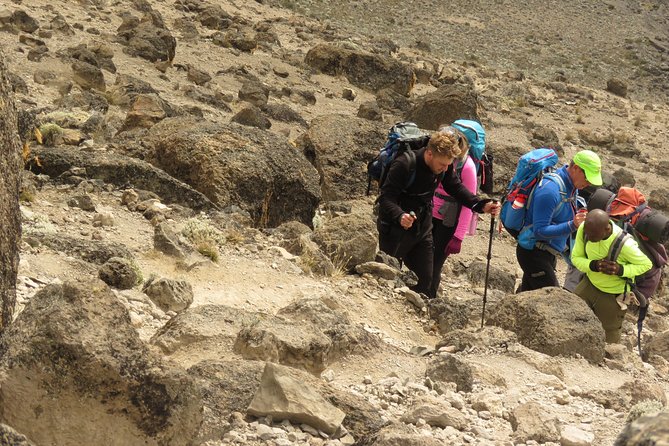
Day 2 takes you from Machame Camp (9,350 ft) up to Shira 2 Camp (12,500 ft). Distance is 5 km, with 4–6 hours of hiking, and the habitat shifts to heath.
This is a key day because your environment starts to feel drier and higher. Heath zones on Kilimanjaro are where the mountain starts reminding you that you’re not in the same world as the gate. The hike is shorter than Day 1 on paper, but don’t let the distance trick you. Altitude makes every step work harder.
The smart part of this day’s placement is that you’re gaining altitude, but you’re also getting time in between big jumps. That’s exactly what your body needs: adaptation time with enough movement to keep you strong.
Day 3: Shira 2 to Lava Tower and down to Barranco (big altitude drama, shorter hours)
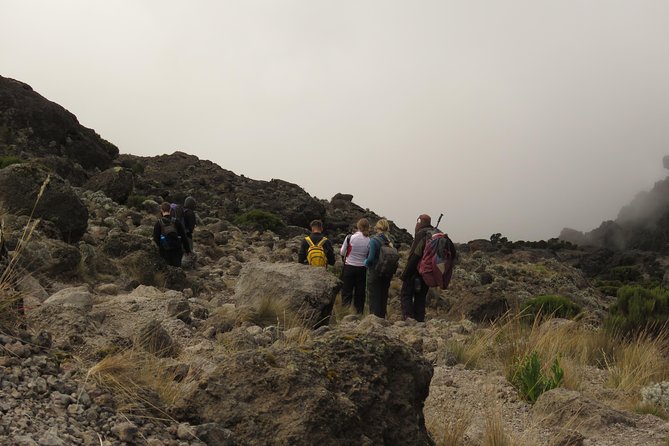
Day 3 is split into two segments. First, Shira 2 Camp (12,500 ft) to Lava Tower (15,190 ft) is listed at 7 km and 4–5 hours, in an alpine desert habitat. Then you continue to Barranco Camp (13,044 ft), dropping down 3 km for about 2–3 hours, staying in alpine desert.
This day is where Kilimanjaro feels most dramatic. Lava Tower is a high point for the route, and the approach usually brings the wide-open, rocky feel of alpine desert: fewer trees, more wind, and a sky that feels close.
The second half matters just as much: you go down to Barranco Camp. That’s intentional. A controlled descent gives your body a break from the highest altitude stress while keeping you moving. If you’re prone to feeling overwhelmed by altitude, this day often helps you regain confidence because the schedule gives you a “hard day, then a payoff” structure.
Practical tip: on descent days, your knees do the complaining first. If you can, use trekking poles and take your time on the uneven ground.
Day 4: Barranco Camp to Karanga Camp (alpine desert, steady effort)
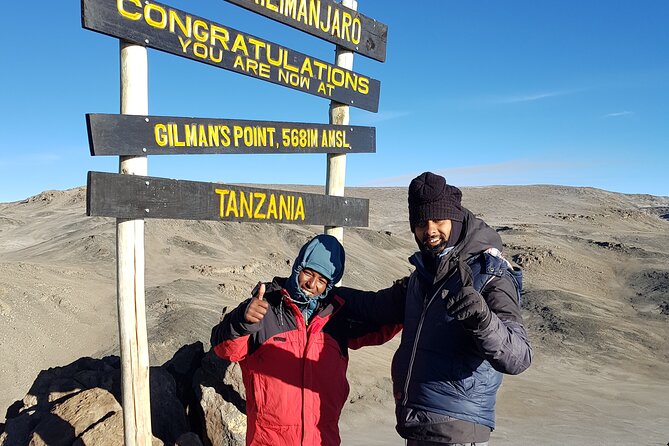
On Day 4 you hike from Barranco Camp (13,044 ft) to Karanga Camp (13,106 ft). Distance is 5 km and it takes about 4–5 hours, still in alpine desert.
The elevation gain is small here, which is the point. Karanga is a “bridge” day, giving your body extra time to adjust while still keeping you hiking. Mentally, days like this can feel like a breather. Physically, it can still be demanding because you’re already high enough that movement is work.
This is also where you practice the habits that make summit night survivable: slow steps, regular breathing, and listening to your guide when the pacing plan changes based on how you’re feeling.
Day 5: Karanga Camp to Barafu Camp (the last big build-up)
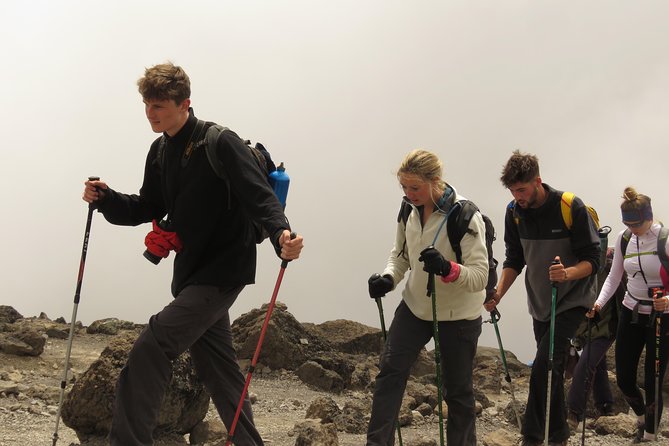
Day 5 moves from Karanga Camp (13,106 ft) to Barafu Camp (15,331 ft). It’s listed at 4 km and 4–5 hours, in alpine desert.
Short distance, long effort. That’s the pattern on Kilimanjaro once you’re high. Your body is doing extra work for every tiny gain, and the mountain often feels harsher: colder air, wind, and the feeling that you’re walking in thin space.
This day is important because it sets you up for the overnight and summit push. If you’ve ever watched people struggle on summit night, the common theme is arriving tired and rushing. This route’s structure helps avoid that by giving you a clear, staged plan instead of a last-minute scramble.
Day 6: Barafu to Uhuru Peak, then down to Mweka Camp (the long day)
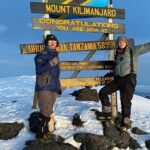
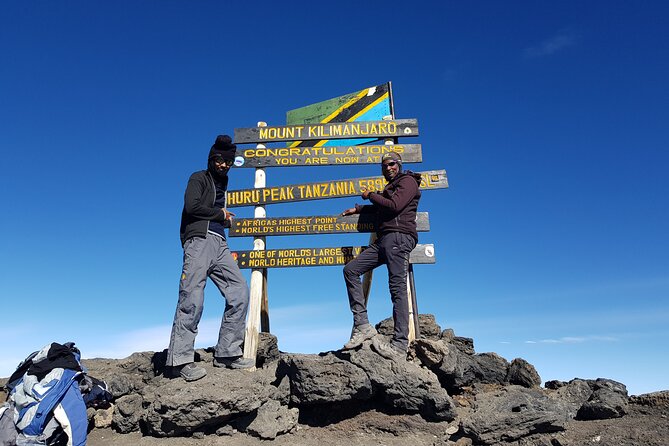
Day 6 is the big one. You start from Barafu Camp (15,331 ft) and climb to Uhuru Peak (19,341 ft). It’s listed as 5 km for 7–8 hours, in the arctic habitat. After summiting, you go from Uhuru Peak down to Mweka Camp (10,065 ft) over 12 km, with 4–6 hours of hiking, back in rainforest.
This is where your preparation shows. Summit night climbs usually start around midnight, and that timing is why the route’s earlier pacing matters. When you’ve practiced slow, controlled effort earlier in the week, you’re more likely to keep going without burning yourself out.
After Uhuru Peak, the descent to Mweka Camp is long. People often think summiting is the main event; in reality, the day’s second half is about survival comfort and managing fatigue. The rainforest return is a reminder that you’re moving through big altitude changes fast.
Practical consideration: plan for your feet to feel it. Long descents tax socks, shoes, and patience. Take your time, drink water when you can, and let your guide set the rhythm.
Day 7: Mweka Camp to Mweka Gate (getting your breath back)
Your final trek goes from Mweka Camp (10,065 ft) down to Mweka Gate (5,380 ft). Distance is 10 km and the hike takes about 3–4 hours, in rainforest.
This day tends to feel like relief with a side of soreness. You’re lower, so your breathing should improve, but the walking is still downhill and can be rough on legs that got used to thinner air.
When you reach the gate area, you’ve essentially completed the full altitude story: rainforest start, alpine deserts midweek, arctic summit, then a return to trees. It’s a satisfying way to finish because you get a clean sense of arrival.
Safety and pacing: why the guides matter on Kilimanjaro
The standout theme from the provided notes is that the team runs a tight operation. That shows up in two ways: they’re detail oriented, and they’re focused on safety and success. If you like structure, this is a comfort.
The pace adjustment from guides such as Maneno and Hassan is also a big deal. Kilimanjaro is not a race, even when people act like it is. When your guide can flex to your needs, you’re more likely to stay in the comfort zone that helps reduce altitude stress.
You’ll also benefit from not having to manage route confusion. A guide helps you stay confident on the trail, especially when the mountain changes fast and the air makes even small climbs feel bigger than they are.
Price and value: what $1,200 really covers (and what it doesn’t)
The price is $1,200 per person for this 7-day Machame experience, plus pick-up and drop-off within Moshi and trekking support. For Kilimanjaro, that number usually reflects a lot of moving parts: guide time, a planned route with day-by-day altitude decisions, and camping equipment like tents and mattresses.
What’s not included is just as important. All park fees (entry fee, rescue fee, and camping fee) are not included, and tips for the mountain crew are also not included. Airport transfers are also not included, and there’s no mention of hotel accommodations before and after the trek in town.
So here’s the value math I’d do if I were booking: if you already know you’ll pay park fees anyway and you want a guided, meal-supported expedition that reduces your own logistics, $1,200 may feel fair. If you’re trying to keep costs ultra-low and want to self-manage meals or gear, this package won’t fit. But if you want less friction and a smoother week on the mountain, it’s a practical deal.
Who should book this Machame 7-day trek?
This tour fits best if you want a classic Kilimanjaro route with enough time to do it thoughtfully. The notes point to moderate physical fitness as the target, which makes sense for a 7-day schedule with multiple ascent and adjustment days.
You’ll likely enjoy it most if you:
- like guided structure and want help with pacing
- prefer not to manage food packing and cooking logistics yourself
- want the route to feel staged rather than one nonstop grind
- appreciate that the tour plans time for stops and photos, not just walking
If you’re the kind of hiker who can handle elevation well but hates crowds and chaos, the private transportation component is another plus. And with a maximum group size of 50 travelers, you’re not dealing with the biggest mass-trekking feeling.
Should you book the Best & Unique 7-day Machame route from Moshi?
If your goal is a well-run Kilimanjaro hike with meals handled, sleep equipment provided, and a route that gives you time before summit night, I’d say this is a strong booking option. The week’s pacing, plus guide flexibility noted in the team’s approach, is exactly what you want when the summit climb starts at midnight and your body needs to be ready.
I’d only hesitate if you’re working with a tight budget and you’re uncomfortable adding extra costs for park fees. Also, if you expect a casual walk, this isn’t that. It’s challenging, and the mountain will ask for patience.
FAQ
What is the duration of the Kilimanjaro Machame route tour?
The tour lasts about 7 days.
Where does the trek start and what is the pickup like?
It includes pick-up from the hotel you booked in Moshi town to Machame Gate.
Are meals included during the trek?
Yes. Breakfast, lunch, and dinner during the trekking are included.
What camping gear is provided?
The tour includes camping equipment such as tents and a mattress.
How many days are spent before the summit attempt?
The itinerary reaches Uhuru Peak on Day 6, giving you several days of ascent and acclimatization before the summit push.
Is the guide English-speaking?
Yes. The tour includes a professional English-speaking guide.
Are airport transfers included?
No. Pick up and drop off to Kilimanjaro International Airport is not included.
Are park fees included in the price?
No. Park fees (entry fee, rescue fee, and camping fee) are not included.
How many people are in the group?
The tour has a maximum of 50 travelers.
Is cancellation free?
The policy allows free cancellation up to 24 hours in advance for a full refund. If you cancel less than 24 hours before the experience’s start time, you don’t get a refund.