REVIEW · PHOENIX
Guided Desert Sunrise or Evening/Sunset 2-Hour Hike at South Mtn
Book on Viator →Operated by Scott Z · Bookable on Viator
Sunrise or sunset on South Mountain feels personal. I love that Scott Z turns the Sonoran Desert into something you can spot and name, from saguaro to palo verde. I also love the Phoenix city views timed for cooler hiking and evening light. One heads-up: this is a moderate 5-mile outing with some rocky, steeper sections, so it is not a flat stroll.
You meet at the Pima Canyon Trailhead (4500 E Pima Canyon Rd) and head into South Mountain Park, usually for 2 hours but with some flexibility up to 3. It runs daily from 6:00 AM to 9:00 PM during the listed season, with a max group size of 60.
Expect a slow start, then a steady climb, then back the way you came. If it’s dark enough, you’ll have headlamps and flashlights available, but the guide will also tailor it to the moon.
In This Review
- Key Things to Know Before You Go
- Why a Sunrise or Sunset Hike Works in Phoenix
- Meeting at Pima Canyon Trailhead: Where the Hike Starts
- South Mountain Park: The 2–3 Hour Route You’ll Actually Walk
- What You Learn on the Trail: Sonoran Desert in Plain English
- City Views and Night Sky Moments: The Part Everyone Remembers
- Pace, Safety, and the “Beginner-Friendly” Reality Check
- What to Bring for South Mountain: Simple Stuff That Matters
- Price and Value: Admission Ticket Free and What You Get for It
- Who Should Book This Sunrise or Sunset Hike
- Should You Book the Guided Desert Sunrise or Evening Hike?
- FAQ
- How long is the hike?
- Where do we meet?
- Does the tour end where it starts?
- How far is the hike?
- What should I wear and bring?
- Is it offered in English and are service animals allowed?
- What happens if weather is bad or I cancel?
Key Things to Know Before You Go
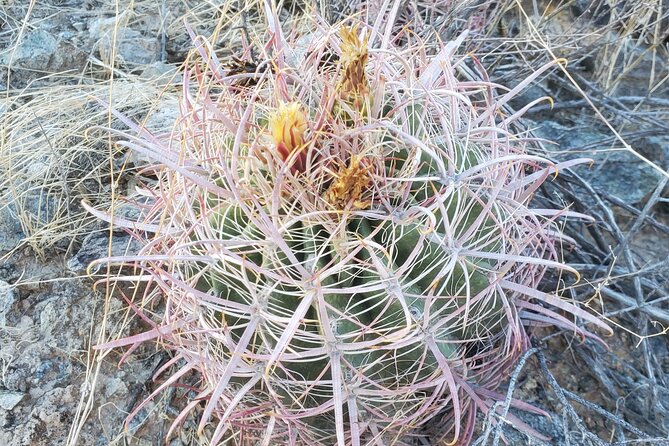
- Scott Z makes the desert feel real with plant and animal spotting you can use later.
- Pima Canyon warms up first, then you gain elevation for strong city views.
- Petroglyphs and rock formations are part of the route, not an afterthought.
- Blacklight moments can reveal algae on rocks, with scorpion spotting when conditions line up.
- Sunrise or sunset timing is the whole point: easier temps and better sky light.
- You hike with purpose, not a rushed line—stops for sites and questions are built in.
Why a Sunrise or Sunset Hike Works in Phoenix
Phoenix is great, but the daytime heat can be a bully. This is exactly why I like the sunrise or sunset format. You’re out when the air is calmer and the sky gives you that clean desert contrast, so the views feel bigger and your body feels less like it’s running on emergency mode.
The timing also changes the vibe. In early light, you’ll see plants and textures more clearly as you climb. At sunset, the mountain starts darkening while the city below stays bright. Either way, you’re trading the usual sightseeing crowds for a quieter, slower kind of experience that still ends with a payoff: Phoenix lit up from above.
And yes, you still get movement. This is a 5-mile moderate hike over about 2–3 hours, so it’s active enough to feel like you did something meaningful, not just watched the scenery from one spot.
You can also read our reviews of more guided tours in Phoenix


Meeting at Pima Canyon Trailhead: Where the Hike Starts
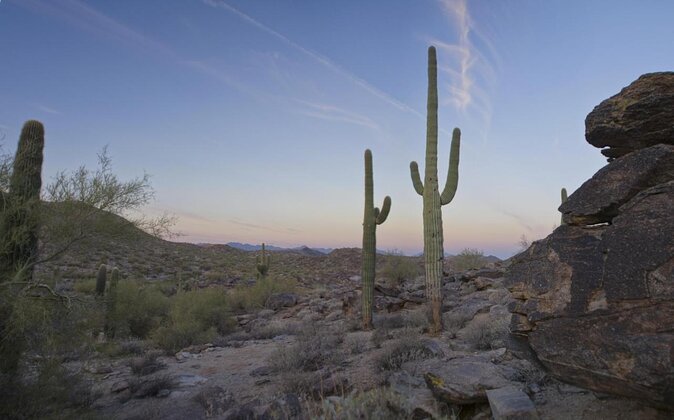
Your starting point is the Pima Canyon Trailhead at 4500 E Pima Canyon Rd in Phoenix. You’ll return to the same location at the end, which makes the whole day simple: no car shuffling, no mystery directions after dark.
The tour includes flexible start times, which matters because sunrise and sunset don’t happen the same way every day. The hike is scheduled during opening hours from 6:00 AM to 9:00 PM in the listed date range, so you can choose a time that matches your energy level.
Group size is capped at 60. That’s big enough to keep things lively, but small enough that the guide can still talk and answer questions during the walk. Also, the tour is offered in English, and service animals are allowed.
South Mountain Park: The 2–3 Hour Route You’ll Actually Walk
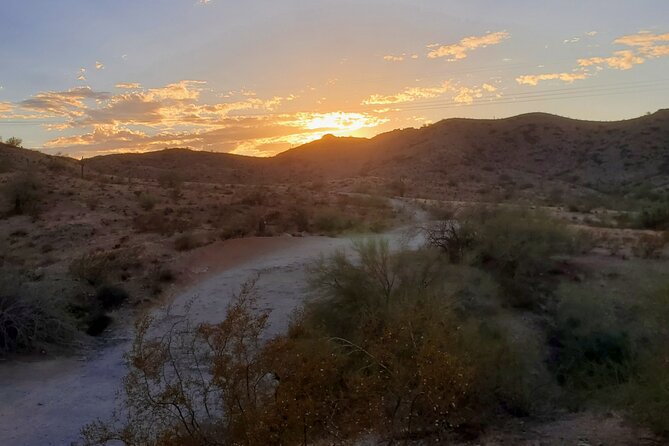
This hike is built around one main loop: warm up on a flatter stretch, climb to a view, then head back to where you started. You’ll spend about 2–3 hours covering roughly 5 miles, with some steeper and rocky sections.
Here’s how the experience typically feels from start to finish:
First, you meet near the road entering Pima Canyon and start with a warm-up. The first couple miles are relatively flat, which helps if you’re new to hiking or just don’t want to go from zero to huffing in the parking lot.
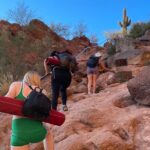
Then the hike turns into the part you came for: gaining elevation. The ground gets more uneven, with rocky bits that reward good shoes and steady steps. This is where an ankle-support shoe matters. Sneakers at minimum are fine, but if your ankles roll easily, choose something that grips and holds you better.
Along the route, you’ll also slow down. You check out ancient petroglyphs and notice rock formations up close. It’s not a “look from far away” moment. You’ll get enough context to understand what you’re seeing, even if you’re not a desert scholar.
As it gets closer to sunset or deeper into early morning, the sky and city view become the centerpiece. The goal is to reach an outstanding lookout and see Phoenix from above. For evening hikes, the city lighting adds a magical layer without you needing to do anything extra besides show up on time.
Finally, you head back. Because the hike returns to the starting point, the dark section is just one more part of the trail, not a new navigation challenge.
What You Learn on the Trail: Sonoran Desert in Plain English
The standout part here isn’t just the view—it’s the guide’s ability to connect you to what’s around you. Scott Z focuses on plant life and animals of the area, and that turns the desert from “cool scenery” into something you can identify.
You’re likely to hear about saguaro cactus and other desert plants you might see even after you leave Phoenix. One review highlighted palo verde as a new favorite plant. Even if that exact plant isn’t what catches your eye, the point is the same: you’ll learn how to look at what you’re walking past.
Wildlife listening is another big theme at dusk. As light changes, the desert gets louder in a different way. During darker portions, you may try to hear for coyotes and you might catch owls, depending on conditions. You do not need to be an expert. The guide gives you the cues so you’re not just standing there hoping for something to happen.
You also get a deeper connection to the human side of the desert through ancient petroglyphs. You’ll be pointed to what to notice and what it likely means in context, which makes the sites feel less like random marks and more like part of a long-lived landscape.
And if conditions line up, the tour can add a fun science-y twist. Under blacklight, you might see algae growing on rocks. You can even see the guide hunt for other surprises, like a scorpion. It’s the kind of moment that makes a hike feel like an event, not a workout.
City Views and Night Sky Moments: The Part Everyone Remembers
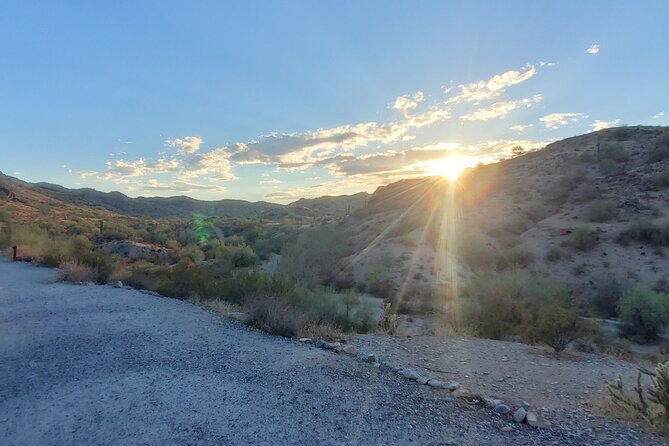
If you pick sunset, you’re basically choosing a light show. As the sun drops, Phoenix glows in layers. From higher ground, the city lights look crisp, and the desert foreground keeps the scene grounded.
If you pick sunrise, you still get the city view, but with a different mood—clean air, softer shadows, and that feeling that the day is starting with you at the edge of it.
When it gets dark, don’t worry about being totally unprepared. Flashlights and headlamps are available, and the guide will use them as needed. Depending on the moon, you might not need them the whole time, but it’s smart to go in assuming you’ll see at least some night hiking.
One more thing I appreciate: the guide doesn’t treat darkness as scary. He builds it into the experience, turning it into an opportunity to listen for wildlife and notice features on the rocks that you miss in daylight.
You can also read our reviews of more evening experiences in Phoenix

Pace, Safety, and the “Beginner-Friendly” Reality Check
This is a moderate hike, about 5 miles, with some steeper and rocky sections. That means you should treat it as a workout, even if the pace includes stops. You’ll get time to look, ask questions, and take in viewpoints, but you still need stamina for sustained hiking.
The guide’s pace and patience are key. Scott Z is known for being calm, social, and good at helping people feel comfortable—especially if you’re new to hiking. Reviews also point to extra care like providing water and small snacks during the hike, which is a practical lifesaver when you’re out longer than you planned.
Safety is handled in a straightforward way:
- You get proper light options for darker segments.
- You have a guide who knows the route well.
- You’re reminded to bring water and wear supportive shoes.
If you have knee issues or ankle instability, pick your footwear carefully and consider if rocky sections are okay for you. This is still an outdoor adventure, not a stroller-friendly walk.
What to Bring for South Mountain: Simple Stuff That Matters
The checklist is refreshingly basic, and it’s worth following.
Bring water. It’s mentioned for a reason—desert hikes pull moisture fast. Also bring shoes with ankle support. Sneakers at least are recommended because the trail includes rocky and steeper areas.
In winter, bring a light jacket. Even in desert climates, morning and evening temps can feel chilly once the sun is gone or before it warms up.
For lighting, know this: the guide may not always need a flashlight depending on moonlight, but headlamps and flashlights are provided to be safe. You do not need to bring your own light based on the information here.
One more practical thought: wear layers. Desert weather can shift quickly, especially around sunrise and sunset.
Price and Value: Admission Ticket Free and What You Get for It
The info you’ll want to notice is that admission ticket is listed as free. That matters because it means you’re not paying a separate entrance fee on top of the guided experience.
What you’re really paying for is the guide time and the extras that make the hike more than a self-guided route. You get:
- A structured 2–3 hour hike on a known trail
- Desert education tied to what you can see right then
- Stops for petroglyphs, rock formations, and viewpoints
- Light handling for darker conditions
- Snacks and water mentioned in multiple accounts
There are also group discounts, and the tour uses a mobile ticket. If you’re traveling in a small group and want a guided experience without paying for a private tour, this is the kind of setup that can feel like solid value.
Who Should Book This Sunrise or Sunset Hike
This fits best if you want a guided nature experience in Phoenix that’s more hands-on than a museum. You’ll enjoy it if you:
- Like learning while you walk
- Want city views without dealing with peak-day heat
- Are curious about Sonoran Desert plants and wildlife
- Don’t mind a moderate hike with some rocky sections
It’s also a good choice for solo visitors because the guide builds in interaction and takes care of pacing. Families may like it too, as long as everyone can handle 5 miles of hiking and uneven ground.
If you’re looking for a gentle, short, flat trail with minimal exertion, this probably won’t feel right. The payoff is real, but so is the effort.
Should You Book the Guided Desert Sunrise or Evening Hike?
I’d book it if you want the best kind of Phoenix combo: desert learning plus real city views, timed for sunrise or sunset. The guide’s approach—pointing out saguaro and palo verde, explaining petroglyphs, and using blacklight for fun observational moments—turns a simple hike into something memorable.
You should skip it (or plan extra cautiously) if you can’t handle a moderate 5-mile route with steeper, rocky parts, or if you’re not comfortable hiking as it gets dark.
One final practical point: it requires good weather. If conditions are poor, you may need to switch dates or get a full refund, so keep your schedule flexible if you can.
FAQ
How long is the hike?
The guided hike runs about 1 to 3 hours, with the main hike listed at about 2 hours.
Where do we meet?
Meet at Pima Canyon Trailhead, 4500 E Pima Canyon Rd, Phoenix, AZ 85044, USA.
Does the tour end where it starts?
Yes, the activity ends back at the meeting point.
How far is the hike?
It covers about 5 miles over roughly 2 to 3 hours, with some steeper and rocky areas.
What should I wear and bring?
Wear shoes with ankle support (sneakers at least) and bring water. In winter, bring a light jacket. Flashlights aren’t always needed depending on the moon, but headlamps and flashlights are provided.
Is it offered in English and are service animals allowed?
Yes, the tour is offered in English, and service animals are allowed.
What happens if weather is bad or I cancel?
This experience requires good weather. If it’s canceled due to poor weather, you’ll be offered a different date or a full refund. The experience itself is non-refundable and cannot be changed for any reason if you cancel.