REVIEW · SAN FRANCISCO
San Francisco Urban Hike: Castro and Twin Peaks
Book on Viator →Operated by Urban Hiker SF · Bookable on Viator
Twin Peaks and Castro in one shot is a smart way to see SF. This guided walk turns famous landmarks into a fun, hilly workout, mixing classic stops like the Castro Theatre with local oddities like the Seward Street Slides and a scramble up to summit views.
What I really like here is the mix of big sights and human-scale surprises: you’ll hike through a eucalyptus forest behind Sutro Tower and then work your way to multiple high points for wide-open city views. I also like how the hike is led by real SF guide voices like Kevin, Val, Alex, Dawn, and Max, who bring neighborhood context and keep the pace confident on steep streets and stairways.
One drawback to plan for: this is not a stroll. It’s a moderate 5-mile (8-km) urban hike with hills and steps, so if stairs are a problem (or your fitness is low), you’ll likely feel it.
In This Review
- Key highlights you’ll remember
- Castro Theatre start: the perfect launch point for hillside SF
- Seward Street Slides: a workout break that still feels totally local
- Kite Hill Open Space: where the views come with a little mystery
- Twin Peaks summit: where the city gets wide open
- Sutro Tower and the eucalyptus forest: unexpected calm before the next climb
- Tank Hill viewpoints and the Pemberton Place stairway finish
- How to pace yourself on a 3-hour, 5-mile urban hike
- Price and value: where the value comes from (not just the sticker)
- Who this hike is best for (and who should skip it)
- If you’re traveling solo, as a couple, or with a small group
- Should you book the Castro and Twin Peaks urban hike?
- FAQ
- How long is the San Francisco Urban Hike: Castro and Twin Peaks?
- Where does the tour start and end?
- What time does it start?
- How far do we hike?
- What difficulty level should I expect?
- Is this tour recommended for children?
- What should I wear and bring?
- Does the tour run in bad weather?
- Is there a guide included?
- What’s the cancellation policy?
Key highlights you’ll remember
- Seward Street Slides: slide time in the middle of the city, plus the chance to try the cardboard-cardio method locals use
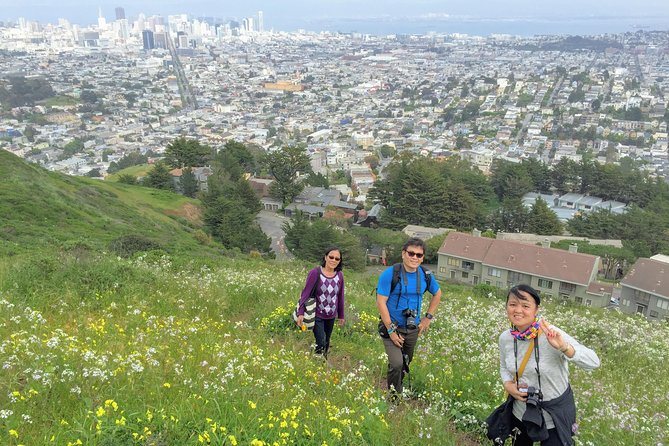
- Kite Hill Open Space: a green lookout that’s easy to see but hard to find without a guide
- Twin Peaks panoramic views: waterfront and East Bay Hills perspectives from the summit
- Sutro Tower eucalyptus forest: an unexpected quiet stretch behind an iconic landmark
- Tank Hill viewpoints: northern city views plus Golden Gate Bridge and Golden Gate Park angles
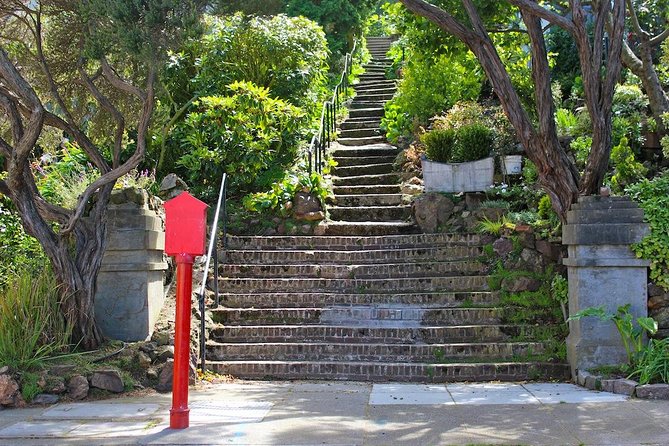
- Pemberton Place descent: a steep but beautiful finish winding through homes and private gardens
Castro Theatre start: the perfect launch point for hillside SF
You meet at 429 Castro St, right by the Castro Theatre, and you start and end there. That matters more than it sounds. After a 3-hour hike, you’re not stuck figuring out transit in the hills—you’re back where it’s easy to grab coffee, a snack, or a proper post-walk meal.
The Castro Theatre stop also gives you an SF vibe check before you start climbing. It’s a classic movie palace, and your guide shares background so the neighborhood feels more than just a backdrop for photos. It’s a nice way to get oriented, especially if you’re new to how San Francisco neighborhoods stack on top of each other like a vertical city block party.
The practical side: since the tour is capped at 15 travelers, you’re less likely to feel like you’re trapped in a slow-moving crowd. With a small group, your guide can steer you through narrow side paths and handle the natural bottlenecks that come with stairways and steep corners.
You can also read our reviews of more hiking tours in San Francisco
Seward Street Slides: a workout break that still feels totally local
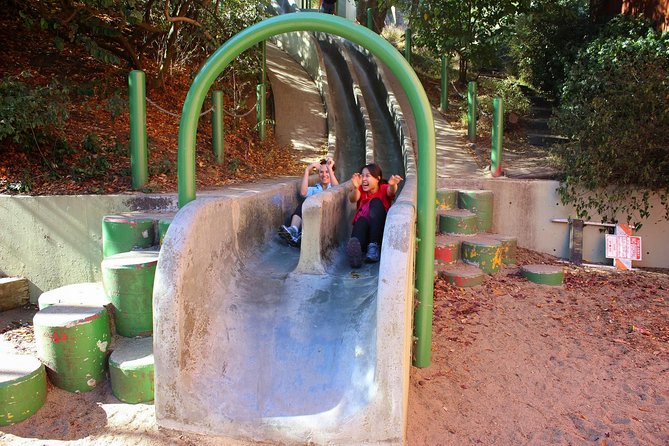
The Seward Street Slides stop is where the tour breaks out of typical sightseeing mode. You’ll find concrete slides in the middle of a city park, and the whole thing feels like an SF throwback—play infrastructure built in an era before everyone obsessed over safety signage.
What makes this stop especially fun for you is that it’s not just a photo stop. Your guide leads you through the moment, and you’ll likely see the practical local trick: bringing cardboard and sliding down the curved cement as your little personal speed test. It’s simple, silly, and oddly satisfying after the first leg of hill climbing.
One consideration: it’s an active stop in a city park, so wear shoes you trust. You’ll be moving around, and it’s better to be planted than to worry about slip risks.
Kite Hill Open Space: where the views come with a little mystery
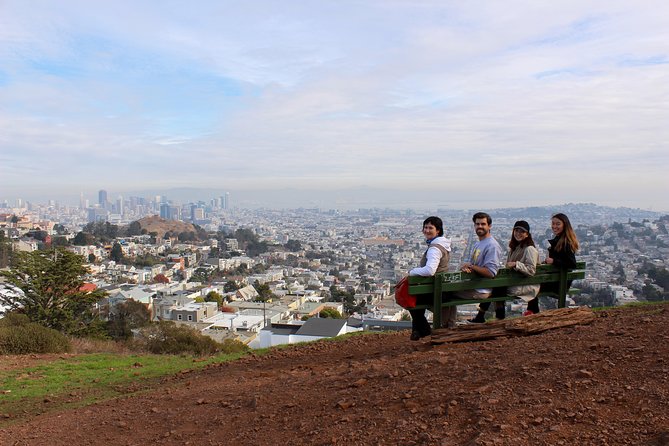
Next up is Kite Hill Open Space, a spot that’s visible, but not easy to find without direction. Your guide brings you to the top where you can pause for views over downtown and toward Twin Peaks.
This is a great kind of stop: short enough to keep momentum, but meaningful enough to reset your legs. If you’ve ever climbed a hill and only then realized you reached the wrong spot, you’ll appreciate this. The guide gets you to the payoff area—then you can take photos without racing to “beat the group.”
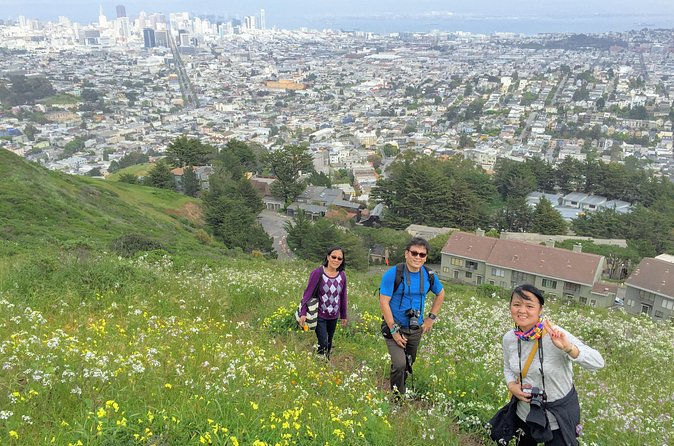
The payoff here is perspective. San Francisco can look chaotic at ground level, but from Kite Hill you start to see how the city’s geography organizes itself. That helps later when you’re heading toward the heavier view stops like Twin Peaks and Tank Hill.
Twin Peaks summit: where the city gets wide open
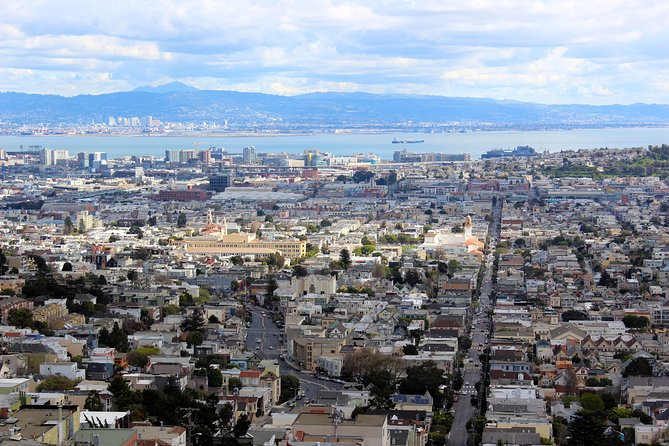
Twin Peaks is the big moment. You’ll get to an overlook with panoramic views of downtown, and you’ll have time to catch your breath and soak it in.
This stop is valuable because it’s not a quick “look and go.” You get a 20-minute window, which makes a difference when you’re climbing. It’s long enough to steady your breathing, find the best angles, and appreciate the view in sections instead of in one blur.
The other bonus: Twin Peaks gives you that classic SF “from above” sense, where you can connect what you’ve seen on the ground—streets, districts, and hills—to what’s happening beyond. You’ll be able to pick out the city waterfront area and stretches toward the East Bay Hills, which turns your hike into a real spatial understanding, not just exercise.
Tip for you: plan to bring your eyes with you. Look for patterns, not just landmarks. Your guide can point out the story lines of the skyline and the direction of views.
Sutro Tower and the eucalyptus forest: unexpected calm before the next climb
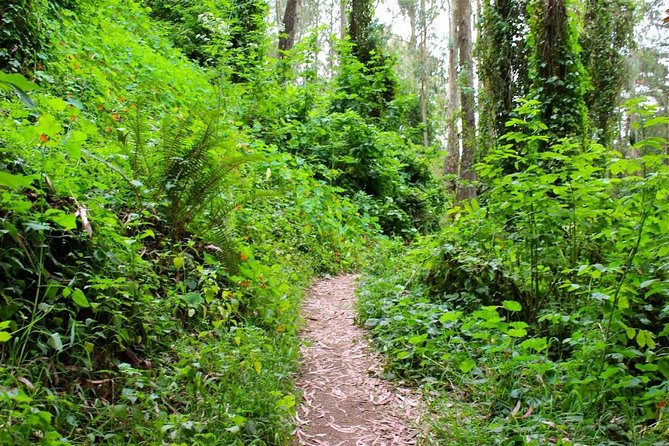
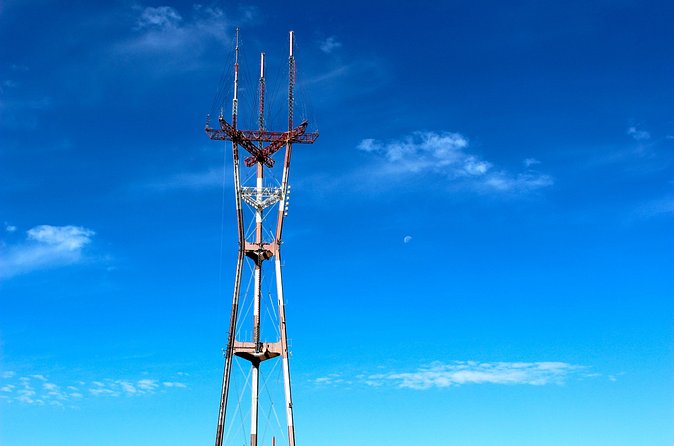
After Twin Peaks, the tour shifts from open overlooks to texture and terrain. You’ll head near Sutro Tower, one of the city’s unmistakable markers, and then walk through a hidden eucalyptus forest behind it.
This stop is a breather in the best way. San Francisco is famous for dramatic viewpoints, but eucalyptus forests feel different: quieter, slightly shadowy, and cooler. It gives your brain a pause from the relentless hill geometry.
From a travel-experience standpoint, this is where a guided hike earns its keep. Without someone leading, it’s hard to know you can move from tower-area landmark visibility into a calmer pocket of trail-like paths. Your route follows paths that feel more like resident-used routes than official tourist corridors, so the walk feels lived-in.
One consideration: eucalyptus forest paths can still be uneven. Keep your focus on footing, and don’t plan to treat this part like a casual sidewalk stroll.
Tank Hill viewpoints and the Pemberton Place stairway finish
Then comes Tank Hill, another neighborhood park stop with views of the ocean, bay, the Golden Gate Bridge, and downtown. This is a great complement to Twin Peaks because it changes the angle. You’re seeing the northern side of the city and different reach lines across the water and toward major landmarks.
The tour gives you 10 minutes here, which again hits a useful balance: enough time to appreciate the view, not so long that your legs freeze up.
The grand finale is the descent via the Pemberton Place Stairway—a winding route through neighborhood houses and private gardens, made up of 211 steps. This is one of those SF experiences where the steepness is real, but the scenery makes you forget how tired you are. The houses and gardens give the walk a human scale, so your legs may burn, but your eyes keep getting fed.
Practical note for you: on stair descents, take your time. The “faster” step strategy can turn into a slip risk if you rush.
How to pace yourself on a 3-hour, 5-mile urban hike
This is about 3 hours total for a moderate 5-mile (8-km) walk. It doesn’t just mean “a little distance.” In San Francisco terms, the hill work and stair count are the real measure.
Here’s how you’ll feel the route in plain terms:
- Expect uphill pushes early on as you climb from Castro-area energy toward viewpoints.
- You’ll take multiple short stops, so the hike never feels like one endless grind.
- You’ll do your steep work in segments, with Tank Hill and the Pemberton descent giving you the strongest intensity late in the tour.
The tour is rain or shine, so your best strategy is to dress for changing weather. Layers are a must because SF can go from mild to chilly fast, especially around higher elevations. Comfortable shoes or hiking boots matter here more than in flat walking tours.
Bring water. It’s recommended, and it’s the difference between enjoying the stops and feeling drained before the view payoff.
Price and value: where the value comes from (not just the sticker)
I can’t quote a total price here because it isn’t provided, but I can still help you judge value the smart way.
You’re paying for:
- a professional guide (and the guide time is the entire point of hitting off-the-beaten paths),
- a route that mixes free-to-enter landmark time with multiple viewpoint climbs,
- and a small group experience (maximum 15 travelers), which usually means less waiting and fewer bottlenecks at stairs.
There’s also a built-in value angle to the stops. Several parts are listed with admission ticket free, including the Castro Theatre, Seward Street Slides, Kite Hill Open Space, Twin Peaks, and Sutro Tower. Tank Hill is also marked as included. That means you’re not budgeting for separate paid entries during the hike.
So for value, the big question is simple: do you want a guide to take you to the “how do I even find this” places? If yes, this tour makes more sense. If your goal is only postcard views and you hate hills, you may prefer a shorter, flatter option.
Who this hike is best for (and who should skip it)
This one fits best if you like active sightseeing and you’re comfortable with hills and stairways. The tour asks for moderate physical fitness, and it’s not recommended for children 12 years and younger.
You’ll especially enjoy it if:
- you want a mix of views and quirky local moments (slides plus eucalyptus forest),
- you like learning how neighborhoods work, not just where the landmarks are,
- you’re happy to walk 3 hours and climb in segments.
You may want to reconsider if:
- stairs are a major problem for you,
- your pace is slow and steady rather than flexible,
- you’re traveling with someone who struggles with steep descents like the Pemberton steps.
Also, if you get motion-chunky about inclines, plan to take rests at the scheduled stops rather than trying to “power through” every hill.
If you’re traveling solo, as a couple, or with a small group
This hike works well socially because it’s small and structured. Couples often like it because it feels like an experience, not a chore, and the viewpoint time gives you chances to be together without loud sightseeing energy.
Friends or small groups also do well because the route keeps moving, and the guide can shape the pacing to the group. The guide names from past tours like Kevin, Val, Alex, Dawn, and Max suggest a consistent mix of humor, neighborhood context, and practical control on hills.
If you want a personal edge, bring your questions. This is the kind of hike where asking about neighborhood history, viewpoints, or how people actually live in the steep parts of town can turn into great conversation.
Should you book the Castro and Twin Peaks urban hike?
Book it if you want a true San Francisco walking workout that still feels playful: Castro Theatre for context, Seward Street Slides for fun, Kite Hill and Twin Peaks for major views, then Sutro Tower eucalyptus calm and Tank Hill before the 211-step descent.
Skip it if you’re chasing only flat ground, want a purely relaxing tour, or aren’t comfortable with steep hills and stairs. The route is designed to reward effort, and the effort is real.
My simple check before you go: lace up your best walking shoes, plan for hills, and mentally schedule recovery at the view stops. If you do that, this is the kind of afternoon that leaves you feeling like you saw SF from the inside—up close, above, and a little off the usual map.
FAQ
How long is the San Francisco Urban Hike: Castro and Twin Peaks?
It’s about 3 hours.
Where does the tour start and end?
It starts at 429 Castro St, San Francisco, CA 94114, USA and ends back at the same meeting point.
What time does it start?
The start time listed is 1:30 pm.
How far do we hike?
The hike is listed as 5 miles (8 km).
What difficulty level should I expect?
It’s described as a moderate hike and includes hills and lots of walking/stairs, so you should have a moderate fitness level.
Is this tour recommended for children?
No. It isn’t recommended for children 12 years and younger due to the distance and intensity.
What should I wear and bring?
Wear comfortable shoes or hiking boots, dress in layers, and bring drinking water is recommended.
Does the tour run in bad weather?
It runs rain or shine. If it’s canceled due to poor weather, you can reschedule or request a refund.
Is there a guide included?
Yes. The tour includes a professional guide.
What’s the cancellation policy?
Free cancellation is available up to 24 hours in advance for a full refund. If you cancel less than 24 hours before the start time, the amount paid will not be refunded.