REVIEW · MOUNT ETNA
Mount Etna: Summit Guided Hiking Tour up to 3,400 m
Book on GetYourGuide →Operated by Sicilying S.R.L. · Bookable on GetYourGuide
Etna feels less like a hike and more like a visit. You ride up from Rifugio Sapienza, then walk across lava and ash to craters on Europe’s highest active volcano.
I really like having certified volcanological guides with you, especially when they explain what you’re actually standing on. I also love the built-in payoff: a cable car ride that sets up huge summit views before your boots hit the ground.
One heads-up: the full 3,400 m option can be physically tough, with steep, narrow sections and loose volcanic gravel. If you’re unsure about fitness, it’s worth choosing the shorter 3,000 m route instead of forcing the harder one.
In This Review
- Key highlights at a glance
- Why Etna’s summit hikes still feel different
- Two route choices: 3,000 m Barbagallo vs ~3,400 m crater rim
- Option up to ~3,000 m (cable car + trekking)
- Option up to ~3,400 m (cable car + 4×4 + trekking)
- From Bar Monte Gebel to the cable car views
- Etna walking basics: what “lava hike” really means under your feet
- The crater stops: Barbagallo and the Valle del Bove payoff
- For the summit option: the rim walk between La Voragine and Bocca Nuova
- Guides, gear, and why the tour feels safer than DIY
- Price and logistics: what $65 really covers
- What to pack (and what to expect from the weather)
- Pacing, fitness, and who should choose which option
- Practical tips that make the day smoother
- Should you book this Mount Etna summit hiking tour?
- FAQ
- How long is the Mount Etna summit guided hiking tour?
- How high do I hike on this tour?
- Where do I meet the guide?
- Is hotel pickup available?
- What transportation is used to reach the higher altitude?
- Are tickets for the cable car included in the price?
- What’s included in the tour besides the guide?
- What language is the tour guide?
- What should I bring for the hike?
- Is the tour suitable for kids or people with health issues?
Key highlights at a glance
- Two altitude options: up to 3,000 m (moderate) or up to ~3,400 m (more demanding)
- Rifugio Sapienza base: convenient start point on Etna South at about 1,900 m
- Cable car drama: quick ride up with serious views from the windows
- Volcanic “walkable proof”: lava flows, volcanic sand, ash slopes, and crater rims
- Guides who add meaning: explanations plus practical safety talk while you hike
- Safety gear included: helmet mandatory, plus hiking equipment when available
Why Etna’s summit hikes still feel different
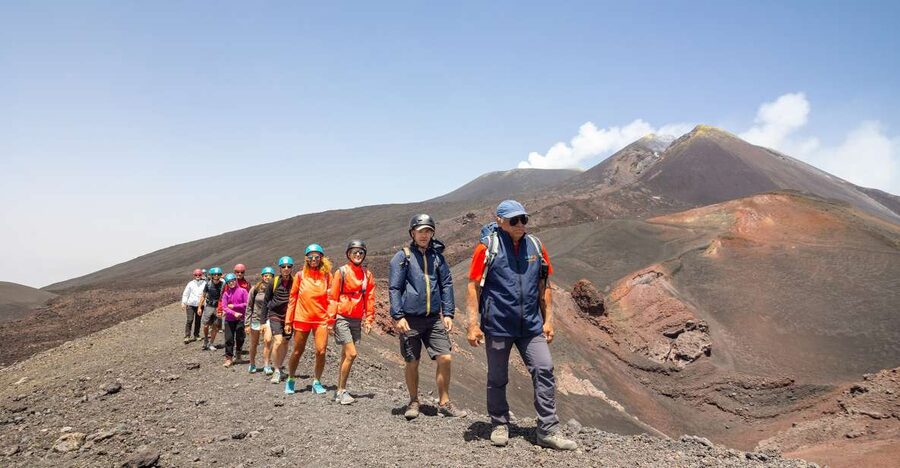
Mount Etna is the kind of place where “nature” isn’t a word on a postcard. It’s active geology in front of you—black rock, gray ash, weird textures underfoot, and big sky overhead. Even when you’re not seeing fresh eruption activity, the mountain is still doing its thing.
The tour’s format helps you get to the craters without guessing logistics. You’re not just hiking from a random trailhead. You start at Rifugio Sapienza (about 1,900 m), then use the cable car (and for the hardest option, a 4×4 leg) to reach the working altitude fast.
And the best part is the mix of “wow” and “okay, I get it.” With guides such as Eduardo and Giuseppe—who show up repeatedly in real-life accounts—you get context while you’re moving, not after the fact.
You can also read our reviews of more guided tours in Mount Etna
Two route choices: 3,000 m Barbagallo vs ~3,400 m crater rim
You’ll pick between two versions that feel very different in effort, even though they share the same start. Both begin with a cable car ascent up to about 2,500 m, so you’ll have that high-altitude transition either way.
Option up to ~3,000 m (cable car + trekking)
This is the “get the summit zone experience without going all-in on suffering” choice. After the cable car, you hike across lava flows to the Barbagallo Craters (around 3,000 m). From there, you can admire the summit area and observe volcanic activity in complete safety.
The descent goes via volcanic ash slopes to a viewpoint over Valle del Bove, then you return by cable car. It’s still real hiking on uneven terrain, but the route is built to be more manageable.
Option up to ~3,400 m (cable car + 4×4 + trekking)
This is the full-summit outing. After the cable car up to ~2,500 m, 4×4 vehicles take you up to around 2,850 m. Then you start the main hike toward the central craters.
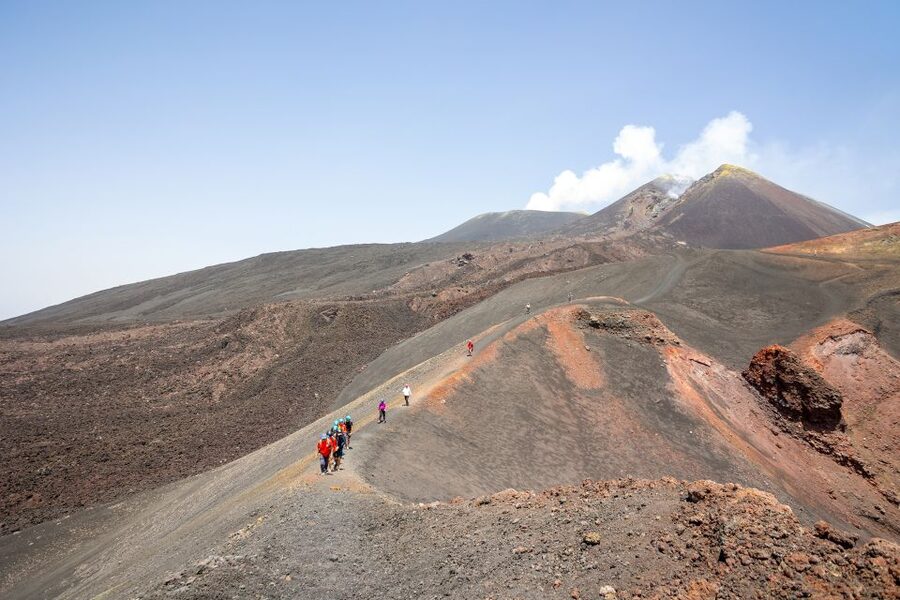
Expect about two hours walking across recent lava flows and volcanic sand to reach the maximum altitude around 3,400 m (weather and volcanic activity can shift timing). After that, you continue along the rim between La Voragine and Bocca Nuova, then head toward the Southeast Crater with views over Sicily’s Ionian coast.
The return follows sandy slopes down to about 2,900 m, then back by cable car. It’s longer, steeper in spots, and more dependent on your footing.
From Bar Monte Gebel to the cable car views
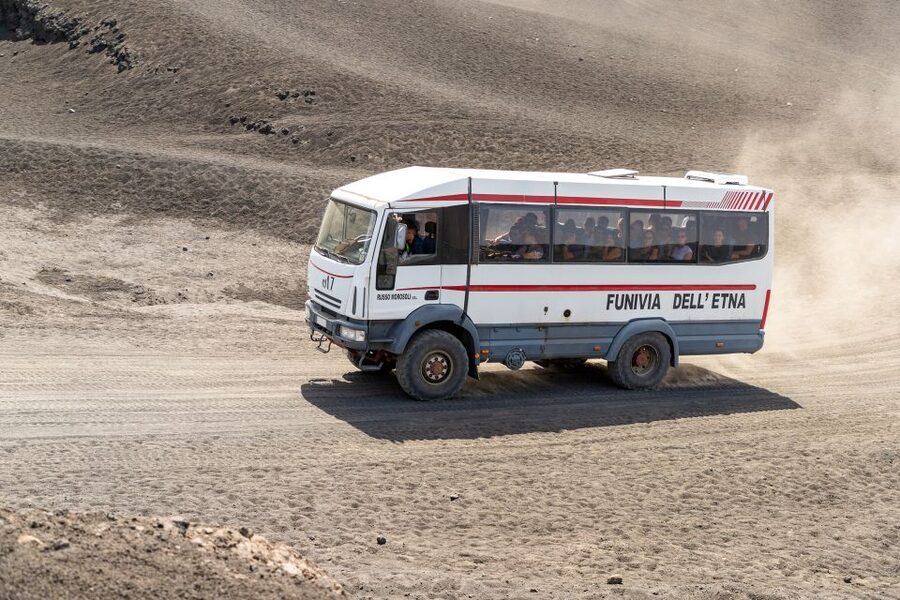
The meeting point is Bar Monte Gebel, on the right side of Rifugio Sapienza. Plan to arrive early enough to settle in—because once you’re at altitude, time and breath matter more than you expect.
The cable car portion is short (about 15 minutes), but it’s not filler. You get an immediate change in perspective: crater-adjacent terrain starts looking like a science lab and a movie set at the same time. And because this ride happens before the heavy walking, it also gives you a moment to check your energy and gear.
There’s also a quick shuttle leg included in the flow. You’ll have a short bus/coach segment (about 20 minutes) before the hiking time begins, then more transport for the return.
You can also read our reviews of more hiking tours in Mount Etna
Etna walking basics: what “lava hike” really means under your feet
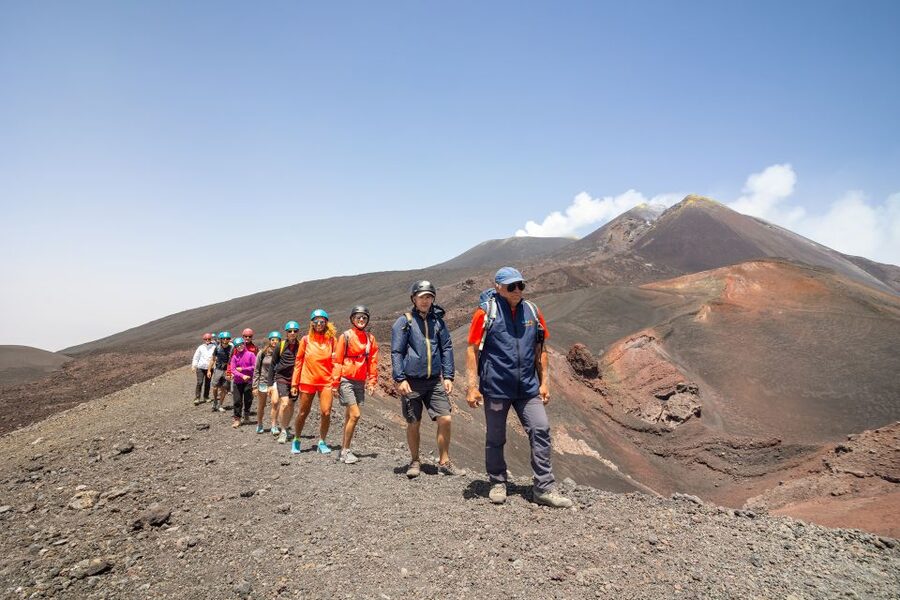
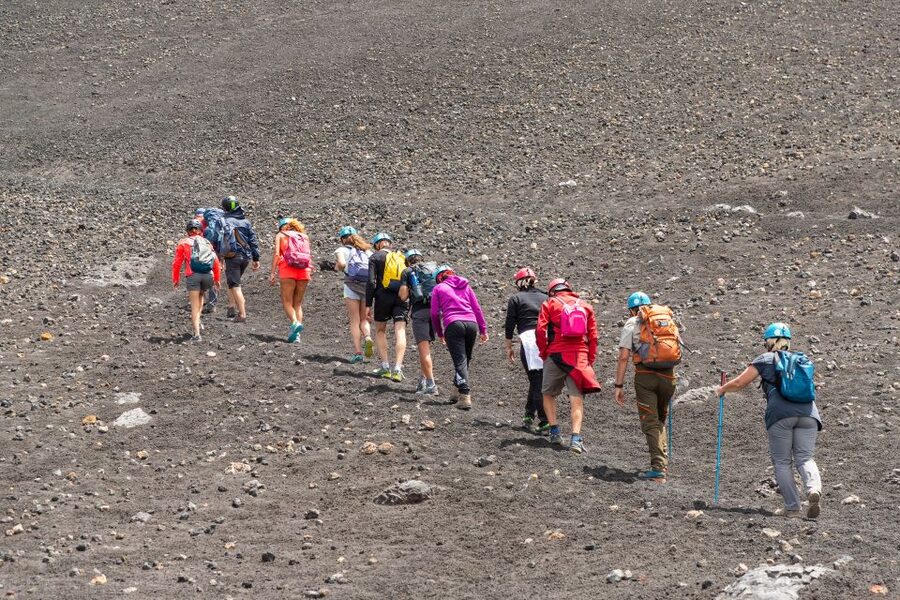
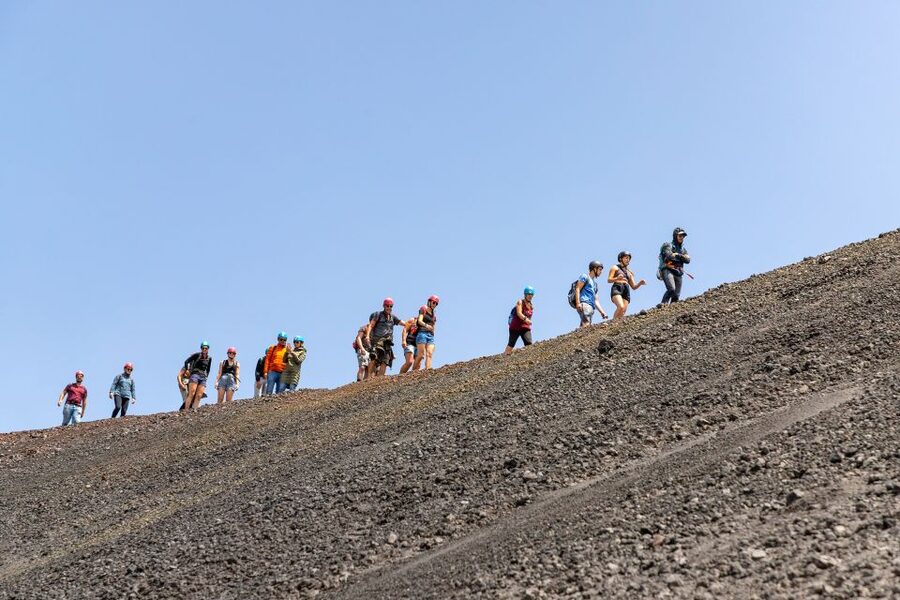
This tour is designed around walking on real volcanic material, not just normal dirt paths. You’ll spend time on lava flows, volcanic sand, and ash slopes, and your shoes will notice it.
In the shorter 3,000 m version, your hike crosses lava fields toward Barbagallo Craters, with several volcanic points of interest along the way. It’s the kind of route where you’re constantly changing your attention: watch your steps, then look up for a new crater viewpoint, then back down to the texture of the ground.
In the 3,400 m version, the footing can feel more serious. Reviews and guidance highlight narrow sections and gravel that can shift underfoot. If you’ve only hiked on well-packed trails, you’ll want to treat Etna like it’s its own sport.
Also, altitude is real. One strong practical takeaway is that oxygen levels feel lower once you’re high up, especially if you’re coming from near sea level. Slow down. Don’t try to “power through” in the early part of the hike.
The crater stops: Barbagallo and the Valle del Bove payoff
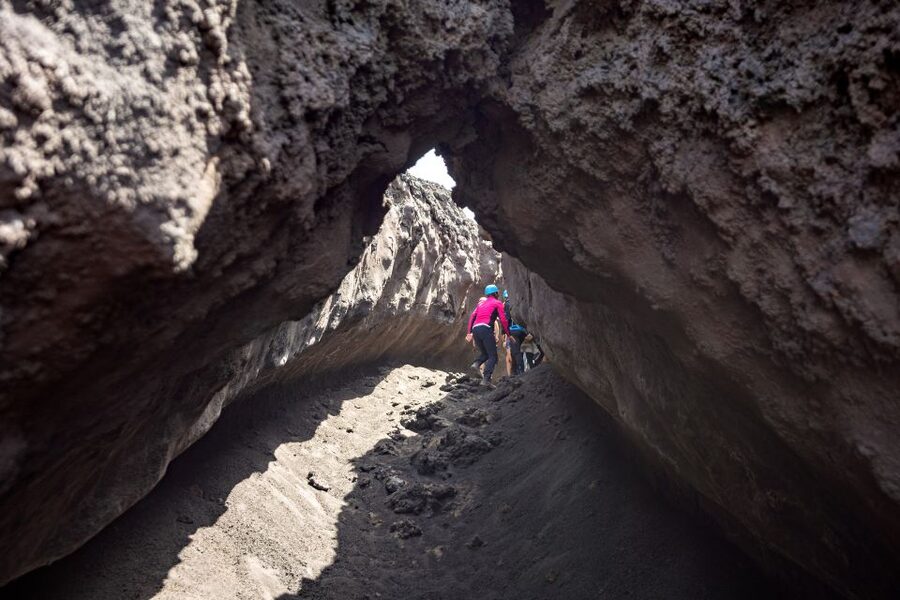
At Barbagallo Craters (about 3,000 m in the shorter option), you’ll get a photo stop plus time for guided visiting (about 30 minutes). This is where the tour’s “power and beauty” theme becomes concrete. You’re high enough that the mountain’s structure opens up, and the crater views feel like you’re standing at the edge of a giant machine.
Then comes the Valle del Bove moment. You’ll stop for a viewpoint, and there’s guided visiting time (about 30 minutes). Valle del Bove is famous for its big bowl-like shape, and it’s one of those places where your brain goes quiet for a second because the scale is so hard to fake.
Even if you choose the harder option, you still get the core payoff: you’re not just walking to a number on a sign. You’re walking through the terrain that created those shapes.
For the summit option: the rim walk between La Voragine and Bocca Nuova
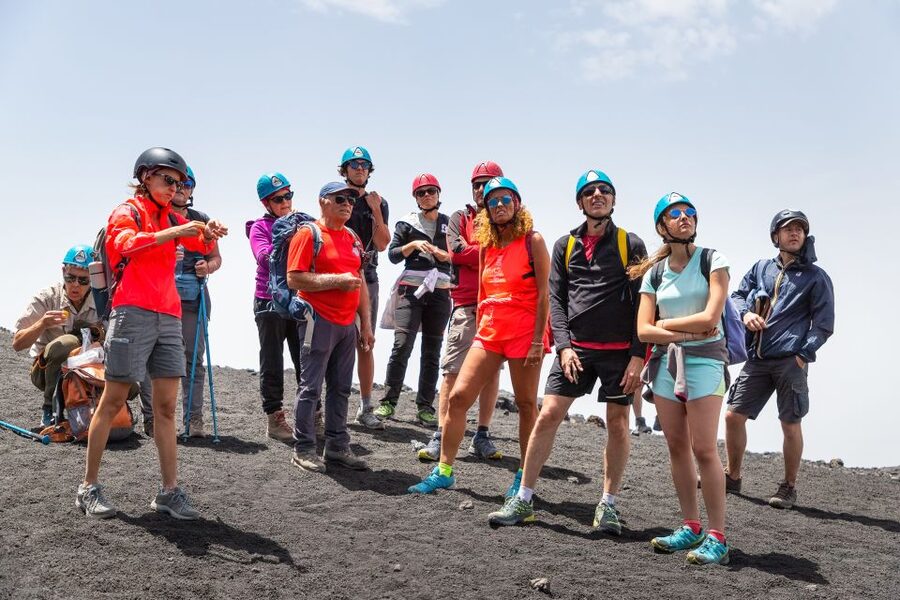
If you go for the ~3,400 m route, the big “this is why we came” section is the rim walk. You’ll continue along the crater rim between La Voragine and Bocca Nuova, then head toward the Southeast Crater for views over the Ionian coast.
This is where the tour shifts from “hiking to see volcano” to “walking inside the crater story.” You’re moving along the edges of volcanic features, and the guide can connect what you see—lava textures, volcanic sand, and the shape of the ground—to how Etna behaves.
The guiding matters here. When the explanations click, the rim walk feels less random. You start to read the mountain like a diagram with moving parts.
Guides, gear, and why the tour feels safer than DIY
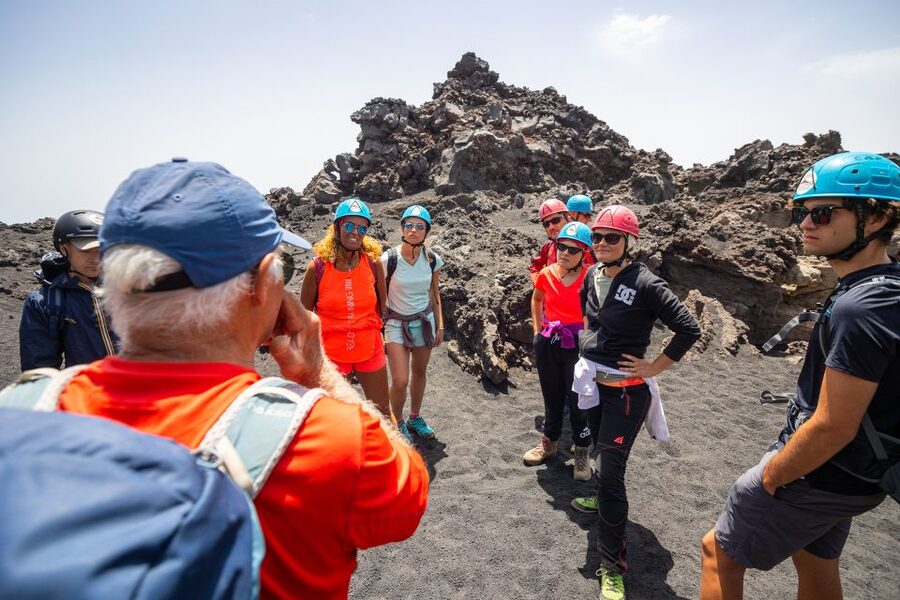
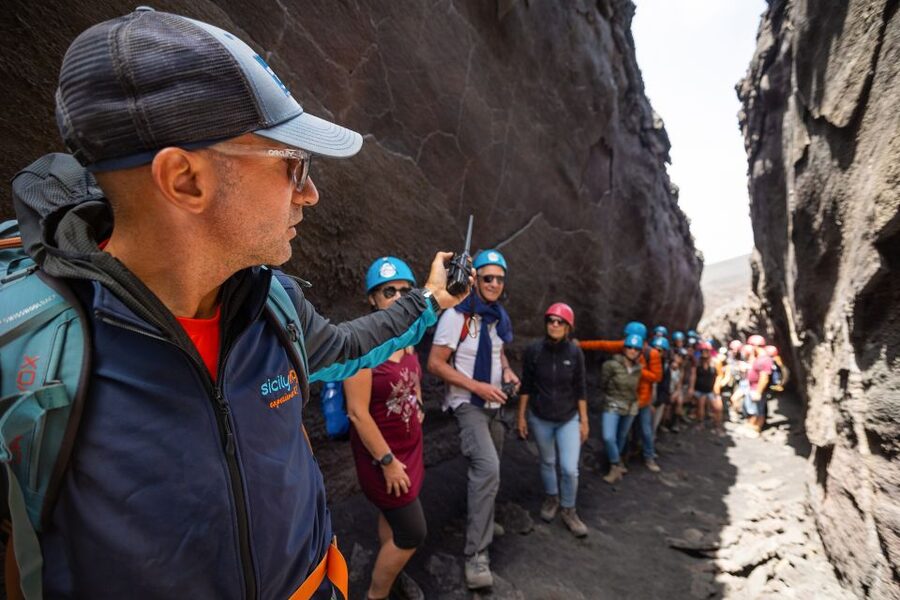
You’re with a volcanic guide throughout, and the tour includes helmet (mandatory) and insurance. The guide also has the trained, practical side covered—how to pace, where to step, and how to interpret what you’re seeing.
Real-life experiences point to a big difference in quality between going on your own and having a guide. People often call out how guides like Eduardo and Giuseppe stay helpful the whole time—informative, organized, and focused on making sure the group reaches the key points.
Gear is included “based on availability,” and some accounts mention extra support like hiking shoes/socks and walking sticks being provided. Even if you bring your own gear, treat the included items as part of the value: they’re there to keep you comfortable and safe on uneven terrain.
Price and logistics: what $65 really covers
The listed price is $65 per person, and that’s where you should look closely. The tour includes the guide, the hike itself, and core necessities like helmet and insurance. If you choose the pickup option, hotel pickup and drop-off are also included (depending on which option you select).
But the major transport ticket costs are added on site. For the 3,000 m option, you pay the round-trip cable car on site: €54 adults / €31 children up to 10 years old. For the 3,400 m option, you pay both the round-trip cable car and the 4×4: €82 adults / €51 children up to 10 years old.
So, what’s the value? You’re paying for three things you’d struggle to replicate easily on your own:
- A trained volcanic guide who explains what you’re seeing while you’re walking
- A route structure that keeps you in the right areas (including the 4×4 jump on the summit version)
- Safety-minded equipment like mandatory helmets and insurance
In short: it’s not a “cheap view from a bus stop.” It’s a guided hike experience with real risk management, and that’s why it’s priced the way it is.
What to pack (and what to expect from the weather)
Etna weather can change fast, and the tour can be adjusted or canceled in adverse conditions. That isn’t a sales pitch—it’s basic mountain reality on an active volcano.
Bring:
- Comfortable shoes and sports shoes (you want grip and support)
- Weather-appropriate clothing (layers help when temperatures drop at altitude)
One practical note from wintery conditions: cold weather makes the hike feel harder, even if the route length is the same. Another practical point: plan for lunch. Some people suggest bringing food or grabbing something from the cafe before you go, because you’re out for several hours.
Also, the itinerary can change due to volcanic activity and weather. The organizer can even change the transportation used to reach planned altitudes. The goal is safety and access, not rigid timing.
Pacing, fitness, and who should choose which option
Pick your option based on how you handle steep, loose terrain and altitude.
- Choose the 3,000 m option if you want the crater experience with a more moderate hiking effort. It still involves volcanic surfaces, but the route is set up to be less demanding than the summit maximum.
- Choose the ~3,400 m option if you’re comfortable hiking for hours at altitude and you don’t mind steeper/narrower sections and sandy/gravel footing.
The tour is not suitable for people with heart problems, and it’s prohibited for asthmatics and those with respiratory issues. It also isn’t suitable for pregnant women, and it’s not for children under 6.
If you’re traveling with kids, there’s a reason some families feel encouraged: at least some accounts describe children around 11 and 15 making it and enjoying the adventure. Still, altitude is altitude, so use common sense and talk to your guide if you’re on the fence about age or stamina.
Practical tips that make the day smoother
Small things matter on Etna. The goal is to spend your energy on the hike, not on scrambling to fix problems.
- Wear shoes that can handle loose volcanic gravel. If your sole slips on rocky paths, it’ll be worse here.
- Bring layers. Even when it’s sunny at the start, the summit zone can feel colder.
- Expect the cable car queue to vary. Even with line-skip included, one account noted a long wait on a sunny day.
- Don’t race the first part of the hike. Altitude steals speed from you whether you want it or not.
And yes, take lots of breaks when your guide calls them. The crater terrain is dramatic, but the guide also needs people to stay together and keep everyone safe.
Should you book this Mount Etna summit hiking tour?
If you want a hands-on, guided Etna experience, I’d book it. The combination of certified volcanic guidance, crater-focused routes, and included safety gear makes it feel more grounded than a DIY “let’s see what we can find” day.
Here’s the decision rule:
- Book the 3,000 m option if you want a satisfying summit-area experience without committing to the hardest physical version. It’s a great fit for many average hikers who can handle uneven terrain.
- Book the ~3,400 m option if you’re genuinely comfortable with altitude hiking and you want the rim walk plus Ionian coast views. This one is for people who don’t mind a more serious day on foot.
One last honest thought: if you have asthma, heart issues, or significant respiratory problems, skip this hike. The tour data is clear about safety limits.
FAQ
How long is the Mount Etna summit guided hiking tour?
It runs about 5 to 6 hours, depending on the selected option and the day’s conditions.
How high do I hike on this tour?
You can choose an option up to about 3,000 m, or a full summit experience up to approximately 3,400 m.
Where do I meet the guide?
Meet your guide at Bar Monte Gebel, on the right side of Rifugio Sapienza.
Is hotel pickup available?
Pickup and drop-off are available if you select that option. Pickup can be arranged from your accommodation in Catania, and drop-off locations include Catania and Monte Gebel.
What transportation is used to reach the higher altitude?
Both options include a cable car ride up to around 2,500 m. The full summit option adds a 4×4 transfer to about 2,850 m before the hike begins.
Are tickets for the cable car included in the price?
Cable car tickets are not included on the base price. You pay on site for the cable car, and for the 3,400 m option you also pay for the 4×4 ticket on site.
What’s included in the tour besides the guide?
You get a volcanic guide, the hike, hiking equipment if available, a mandatory helmet, and insurance. Food and drinks are not included.
What language is the tour guide?
The live guide is available in English, French, and Italian.
What should I bring for the hike?
Wear comfortable or sports shoes and bring weather-appropriate clothing.
Is the tour suitable for kids or people with health issues?
It’s not suitable for children under 6. The tour is prohibited for asthmatics and people with heart problems or respiratory issues, and it is also not suitable for pregnant women.