REVIEW · SEATTLE
Guided forest hike to Seattle waterfalls incl. Snoqualmie Falls
Book on Viator →Bookable on Viator
Waterfalls and old-growth forest in one outing. This half-day guided trek pairs Snoqualmie Falls with a moderate hike in Ollalie State Park, then mixes in small-town history around Snoqualmie and North Bend. You’ll also get a photo stop at a quiet lake where Mount Si can show up as a reflection, depending on conditions.
I especially like the contrast: the big, roaring 270-foot drop at Snoqualmie Falls, followed by quieter moments on the forest trail toward Twin Falls. I also like the practical pacing for a 4.5-hour outing, with an air-conditioned vehicle, a small group size (up to 14), and guides like John, Susan, Brie, and Rachel who tend to keep the walk safe, informative, and photo-friendly. One thing to consider: the hike is often described as moderate, but the rocky, rooty terrain and consistent inclines can feel harder than first-timers expect, and it’s not recommended for knee and hip problems.
In This Review
- Key points before you go
- The best part: Snoqualmie Falls plus a real forest hike
- Getting there from downtown Seattle: easy pickup, short ride, small group
- Ollalie State Park: the 2-hour moderate hike that actually needs footwear
- Twin Falls and Upper Falls: where the forest gets loud (in a good way)
- Snoqualmie Falls platforms: the 270-foot payoff
- North Bend and Snoqualmie town stops: trains, Twin Peaks, and logging roots
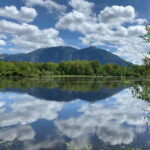
- Borst Lake and Mount Si: the quiet reflection stop
- What the 4.5 hours feels like in real time
- Price and value: is $79 worth it
- Who this tour fits best (and who should skip)
- Should you book this guided Snoqualmie Falls and Twin Falls hike?
- FAQ
- How long is the tour?
- Where do you meet and what time does it start?
- Is the hike difficult?
- How big is the group?
- Do I need tickets in advance?
- What happens if the weather is bad?
Key points before you go
- Old-growth forest hike for about 2 hours with inclines that can feel steady rather than gentle
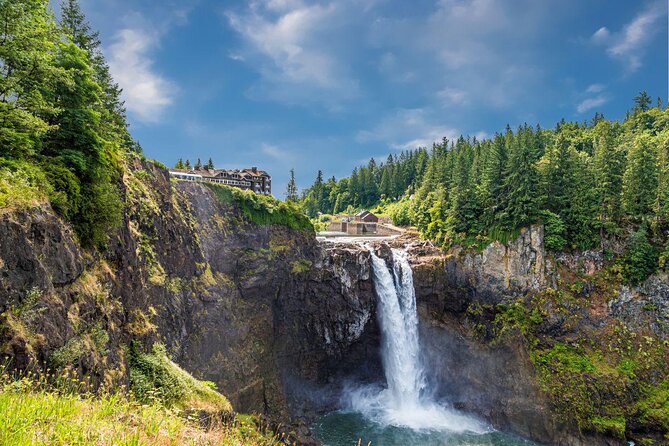
- Snoqualmie Falls at 270 feet with viewpoints from platforms, plus a scenic loop through nearby town
- Twin Falls trail in Ollalie State Park, with cascades along the way
- Borst Lake stop where Mount Si is often reflected, great for calm photos
- Small group size (max 14) and an air-conditioned vehicle for comfort between stops
- Guides who manage pace and make time for pictures, with extra stops when wildlife appears
The best part: Snoqualmie Falls plus a real forest hike
This tour works because it gives you two types of Pacific Northwest waterfall time. First, you get the showstopper: Snoqualmie Falls, one of Washington’s most famous cascades. Then you earn the views with a 2-hour hike through old-growth forest toward Twin Falls and Upper Falls, where the sound and the mist change as you move along the trail.
What I like is that the experience isn’t only about standing still and snapping photos. You’re moving through a landscape shaped by water and time—tree roots, shaded sections, and narrow trail edges that ask you to slow down and place your feet carefully. By the time you reach the big waterfall platforms, it feels like a reward, not the whole point.
Also, the route doesn’t just stick to one highlight. You get quick hits of logging-town history and a lake viewpoint on the way back. That adds variety without bloating the day into something that eats your whole schedule.
You can also read our reviews of more guided tours in Seattle
Getting there from downtown Seattle: easy pickup, short ride, small group
The day starts with a straightforward downtown Seattle pickup at 415 Pine St (near public transportation) at 9:00 am. If you request it, there’s also a pickup/drop-off option near the Space Needle. The tour ends back at the starting point.
This part matters more than it sounds. If you’ve ever tried to reach waterfall trailheads without a car, you know the time cost can be real. Here, you’re not piecing together rides—you’re handed an organized route. The group stays small (up to 14 travelers), so you’re not fighting for space constantly, and the vehicle is air-conditioned, which is a big deal in warmer months or if you’re coming from the city bustle.
Between stops, you’ll ride eastward for about 30 minutes to the trail area in Olallie State Park. Along the drive, the guides tend to point out what you’re seeing—town details, regional history, and quick context—so the ride feels like part of the trip instead of dead time.
Ollalie State Park: the 2-hour moderate hike that actually needs footwear
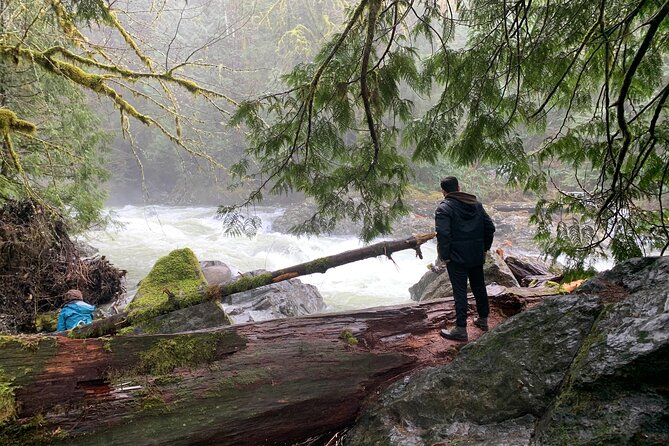
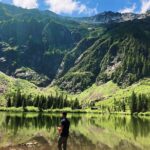
The hike is the heart of the tour. You’ll spend roughly 2 hours walking in old-growth forest along the Snoqualmie River area, heading toward the Twin Falls and Upper Falls cascades. The description calls it moderate, and that’s fair—but expect a trail that keeps you working.
Here’s how to think about the difficulty:
- There are inclines that come in short stretches (often described as several minutes at a time).
- The ground can be rocky and rooted, with uneven footing.
- Even when the trail feels manageable, you’ll move more slowly because you’re watching your steps.
A lot of guides stress safety on these narrow sections, and you’ll see why once you’re on the ground. If you’ve got knee or hip issues, skip this one—this is explicitly not recommended for those situations. If you’re simply “new to hiking,” plan to take it slow, use good shoes, and don’t assume this will feel like a flat nature walk.
Practical tip: bring hiking shoes (not just thin sneakers). Even if the “moderate” label makes you think casual, the terrain can still tweak your ankles if you’re not paying attention.
Twin Falls and Upper Falls: where the forest gets loud (in a good way)
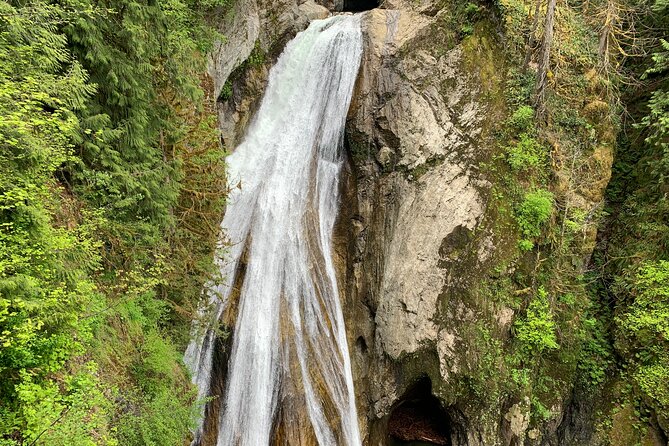
As you hike, the water becomes part of the soundtrack. Twin Falls and Upper Falls aren’t the towering spectacle of Snoqualmie, but they’re perfect for getting up close to how the Cascades move through the forest.
What makes this stop valuable is the variety in how the falls look as you approach. In shaded sections, the water can feel louder and more dramatic. Near viewpoints along the trail, you’ll get chances to pause and frame shots with trees, mist, and the river channel. It’s also the part where you’re most likely to feel like you’re truly “in” the Pacific Northwest woods rather than merely visiting a landmark.
Pace-wise, it’s built to fit within the half-day format. That also means you shouldn’t expect endless linger time at every bend. If you’re the kind of person who likes a calm, slow walk, you’ll want to balance that with the group schedule—especially on busy days.
One more real-world detail: expect layers. Even on a sunny day, forest shade can feel chilly until you warm up from walking.
Snoqualmie Falls platforms: the 270-foot payoff
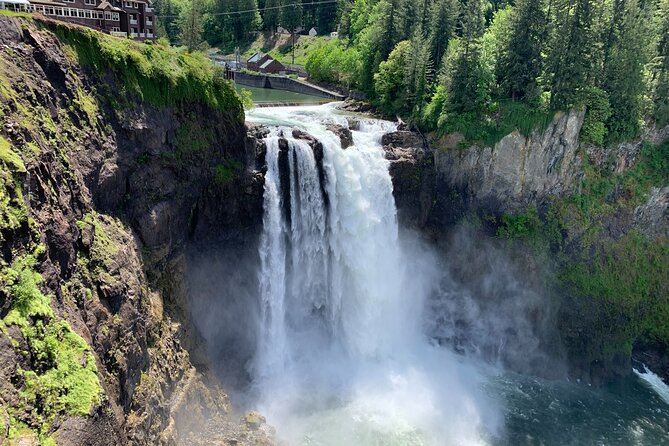
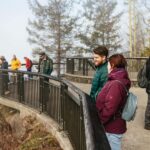
Then comes the big moment: Snoqualmie Falls at 270 feet. You’ll see it from a few platforms, which matters because different angles can change the view. From one platform you can emphasize the drop and mist; from another you can capture more of the surrounding area.
This is the kind of stop that’s hard to overstate. From street level, a waterfall this tall can feel unreal. Up close, the mist changes how you see everything—shadows, contrast, and even how quickly your camera fogs up.
If you’re sensitive to cold or drizzle, treat this as “weather-friendly walking.” A light rain can actually improve the look of the falls, but you’ll still want a rain layer in your daypack. It’s also a good idea to give yourself a couple of minutes to let your eyes adjust before you start shooting. The water creates brightness shifts that take a moment to read.
After platforms, you’ll drive through Snoqualmie town, where the guide will point out notable historic features—like an old 1890 depot and historic locomotives—so the waterfall stop connects to the region’s industrial story instead of feeling isolated.
You can also read our reviews of more hiking tours in Seattle

North Bend and Snoqualmie town stops: trains, Twin Peaks, and logging roots
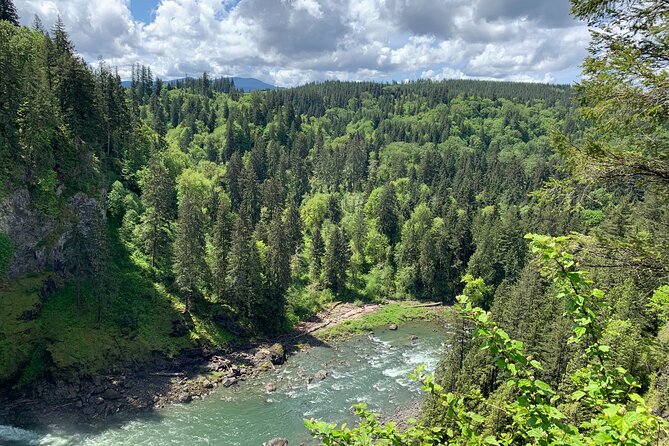
The route also includes two classic “town” moments that help you understand why these waterfalls became so iconic in the first place.
In North Bend, you’ll pass by the diner linked to the TV show Twin Peaks. If that matters to you, it’s an easy, fun context stop without turning the day into a theme-park detour.
In Snoqualmie, you’ll see the logging-town side more directly. There are old steam engines left behind on train tracks, and the town feel is still built around that history. This is one of those details that adds depth even if you’re mostly there for waterfalls. It helps you see the region as something more than a scenic drive—this is where industry, transportation, and nature collide in real, visible ways.
Between stops, you’ll cross the large floating bridge across Lake Washington on the way to the falls area. That’s a quick visual change-up: less forest, more wide water, more horizon. It can also help you reset between hiking-focused time and viewpoint time.
Borst Lake and Mount Si: the quiet reflection stop
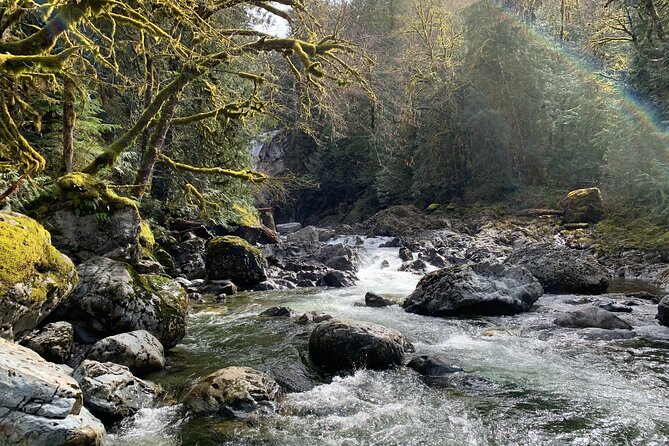
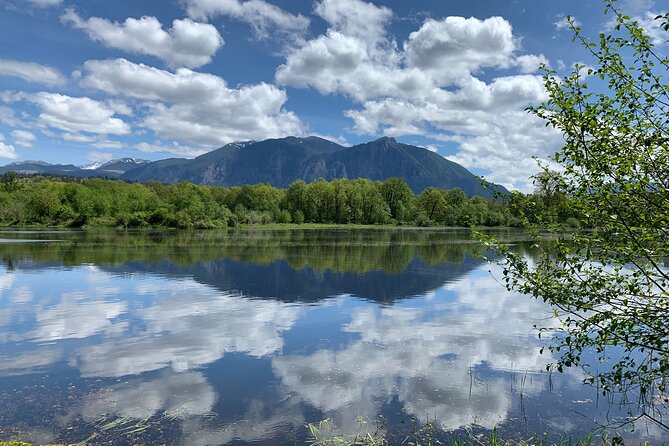
On the way back, you’ll stop at Borst Lake. The key idea here is simple: this is a calm photo moment, and Mount Si is often reflected there. You don’t control reflections, so don’t force it. But if the conditions line up—light, cloud cover, and still water—you can get a landscape-style shot that feels like a postcard without the crowds.
This part is also useful emotionally. After walking and after big waterfall platforms, Borst Lake gives you a chance to breathe, look around, and take photos without feeling rushed. Think of it as the tour’s soft landing.
If you’re traveling with someone who gets tired of constantly moving, this is the stop that usually balances the day. And if you’re a photographer, this is where you can experiment with slower shutter settings and composition without worrying about uneven hiking steps.
What the 4.5 hours feels like in real time
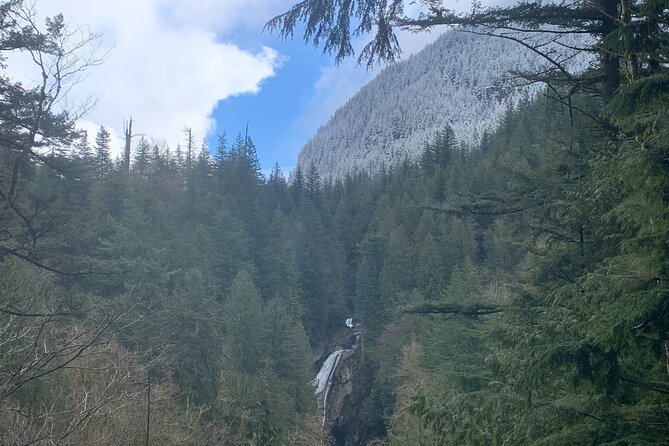
The total duration is about 4 hours 30 minutes, starting at 9:00 am. The schedule is designed to fit a half-day, so you’ll see a lot, but you won’t have an entire day to roam.
A typical rhythm:
- drive out from Seattle to the trail
- 2-hour moderate hike through the forest to Twin Falls and Upper Falls
- then viewpoint time at Snoqualmie Falls from platforms
- quick town passes in Snoqualmie and North Bend
- return route with the Borst Lake stop
In other words, this isn’t a slow “let’s explore at your pace for hours” outing. It’s more like a high-quality highlight reel with one real hike. If you love efficient travel days, you’ll enjoy it. If you prefer long, unstructured walking sessions, you might feel the schedule is tighter than you want.
Also, don’t ignore foot timing. Some sections can take extra care because of rocks and roots. That’s normal here. Good guides manage it, and they’ll keep the group together, but you’ll still walk slower than you do on a paved path.
Price and value: is $79 worth it
At $79 per person for about 4.5 hours, the value comes from three things working together:
- Guided hike through old-growth forest (not just a bus drop-off)
- Vehicle transport between viewpoints and trailheads across the Seattle area
- Multiple paid-or-logistics-heavy experiences: Snoqualmie Falls viewpoints and town stops with context
A big point here is convenience. If you’d otherwise pay for taxis or ride shares to reach the trail and return, costs can climb fast. This tour can feel like a smarter way to buy access plus a guide in one package.
So is it “cheap”? No. But it’s not overpriced for what you get: a real hike, famous waterfall platforms, and regional context, all handled for you. The small group size (max 14) also helps. You’re not squeezed into a huge crowd.
My advice: book this when you want a guided day that’s active but not full-day exhausting. If you’d rather drive yourself and linger for hours, a self-guided plan might make more sense.
Who this tour fits best (and who should skip)
This is a strong pick if:
- you want waterfall views plus a hike
- you like old forests and don’t mind some uneven footing
- you want a guide to explain what you’re seeing and keep things safe
- you prefer a small-group setup and an air-conditioned vehicle
It’s also a good match for people who love plant and nature facts, because guides such as John and Rachel are known for sharing details along the trail and stopping for photo moments.
Skip it or seriously reconsider if:
- you have knee or hip problems (the tour explicitly isn’t recommended)
- you want a flat, beginner stroll
- you can’t manage rocky, rooty terrain without careful foot placement
One more practical note: pack for changing conditions. This area can be chilly in shade, and weather can shift quickly. Layers and a rain layer are smart. A rainy day can even make the falls look better, but it won’t make the ground less slick.
Should you book this guided Snoqualmie Falls and Twin Falls hike?
If your dream Seattle day includes Snoqualmie Falls, a proper old-growth forest hike, and a couple of meaningful town stops, I’d book it. The mix of viewpoints plus walking is the main reason it works, and the tour price feels fair for the amount of guided time and transport you get.
But book with eyes open. This isn’t a gentle stroll, even if it’s called moderate. Bring good shoes, plan to move carefully on rocky ground, and accept that the day is timed. If you’re dealing with knee or hip issues, it’s better to choose something easier on the body.
My bottom line: book this if you want a compact adventure that gets you out of Seattle and into the Pacific Northwest’s waterfall mood fast.
FAQ
How long is the tour?
It’s about 4 hours 30 minutes, based on the tour duration provided.
Where do you meet and what time does it start?
The tour starts at 9:00 am at 415 Pine St, Seattle, WA 98101, and it ends back at the meeting point. There’s also an option to request pickup/drop-off near the Space Needle.
Is the hike difficult?
It includes a 2-hour moderate hike with inclines (described as a few incline sections at a time) through old-growth forest. It is not recommended for travelers with knee and hip problems.
How big is the group?
The maximum group size is 14 travelers.
Do I need tickets in advance?
You’ll have a mobile ticket.
What happens if the weather is bad?
The experience requires good weather. If it’s canceled due to poor weather, you’ll be offered a different date or a full refund.