REVIEW · REYKJAVIK
Landmannalaugar, Hekla, Sigoldugljufur 4×4 tour with Hiking
Book on Viator →Operated by Gravel Travel · Bookable on Viator
Iceland’s volcano roads feel like another planet. This 4×4 Super Jeep hiking tour strings together big-name geology, from Landmannalaugar’s geothermal colors to the Hekla region’s volcanic scars, all without you white-knuckling Iceland’s gravel roads. You’ll love the hotel pickup/drop-off and the way the guide explains what you’re seeing, from real volcanic process to the local legends of elves and trolls.
One thing to consider: it’s a long day with plenty of driving, and the Landmannalaugar walking is up-and-down, not a flat stroll.
The day is built around a few high-impact stops, so you get variety without trying to plan four separate outings. I like that Landmannalaugar gives you time to hike, then cool off in the natural pool if you want, and I also like the quick hits on cobalt-blue crater water, a canyon, and a waterfall on the way back. If you’re expecting a relaxed, slow-moving hike day, this one can feel purposeful and time-tight.
In This Review
- Key Highlights You’ll Actually Feel
- A Super Jeep Day Trip From Reykjavik Into High-Voltage Geology
- Landmannalaugar: Color Mountains, Hikes, and a Natural Pool Dip
- Fjallabak Nature Reserve and Torfajökull: Where Weather Can Change Fast
- Hekla on the Ridge: The Volcano With a Job Description
- Ljótipollur Maar Lake: The Ugly Pond With Photo-Ready Turquoise Water
- How Much Time Will You Actually Be Moving?
- Price and What Makes It Worth $280
- Who Should Book This Super Jeep and Hiking Combo
- Should You Book This Landmannalaugar and Hekla Super Jeep Tour?
- FAQ
- How long is the tour?
- What’s the pickup and drop-off like?
- Is this tour in English?
- What’s included in the price?
- Is there hiking, and how much?
- Do I need tickets for the stops?
- What should I bring for weather?
- What if bad weather cancels the tour?
Key Highlights You’ll Actually Feel
- Super Jeep, highlands-focused driving: made for rough terrain and river crossings, so you can sit back.
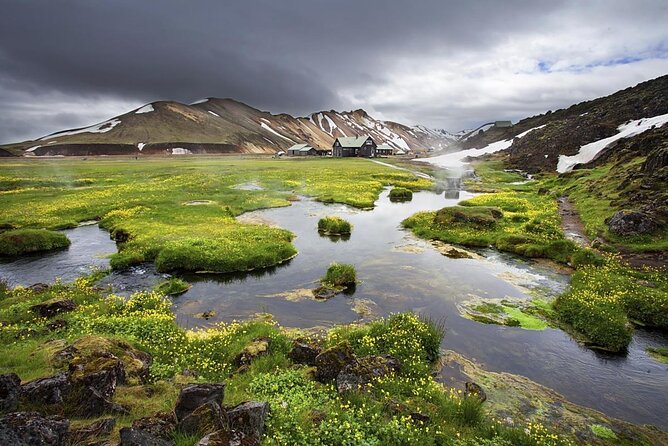
- 3 hours in Landmannalaugar: enough time for a hike plus optional natural pool time.
- Canyon + waterfall photo stops: quick windows that can turn into the best pictures of the day.
- Hekla area viewpoint moments: short but packed with volcano history and active monitoring context.
- Fjallabak’s rhyolite scenery: geothermal landforms, fumaroles, hot springs, and frequent weather curveballs.
- Small group size (max 14): easier for the guide to keep everyone on track.
A Super Jeep Day Trip From Reykjavik Into High-Voltage Geology
This is the kind of Iceland tour where the driving is part of the experience, not just transport. You start with a pickup in the Reykjavik area (the provider notes Super Jeep pickup rules mean you won’t be collected at every city-center doorstep), and the plan includes pickup on the South Coast as well (places like Hveragerði, Selfoss, and Hella, if requested). Then you head out early—start time is 9:00 am, and the full outing runs about 11 hours.
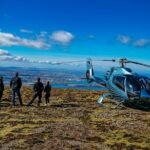
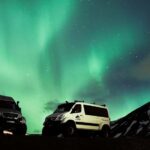
The vehicle matters here. A Super Jeep is designed for conditions like lava fields, rough ground, and river crossings (there are three in the tour description you were given). That’s why this feels different from a regular bus or a self-drive day: you’re not trying to “problem-solve” in remote terrain with a rental car.
Your driver/guide role is also a big part of the value. The tour is set up so you get explanations of geology and local history as you travel. In past experiences tied to this route, guides have shared real science alongside local stories (elves, trolls). Some guides also get described as having formal Iceland education, which you can feel in how the stops connect to each other instead of feeling like random roadside sightseeing.
You can also read our reviews of more hiking tours in Reykjavik
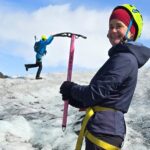
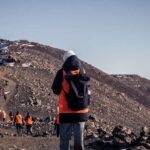
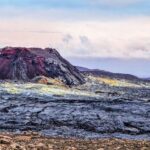
Landmannalaugar: Color Mountains, Hikes, and a Natural Pool Dip
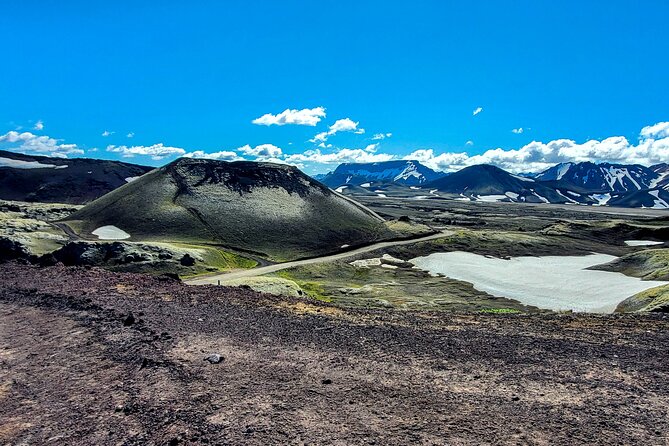
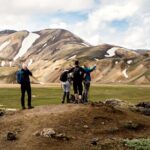
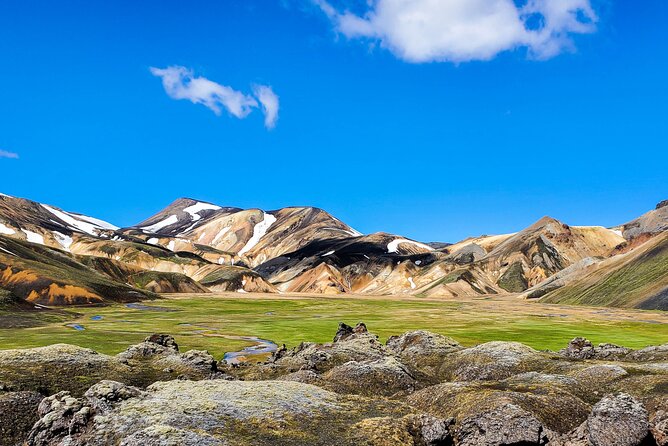
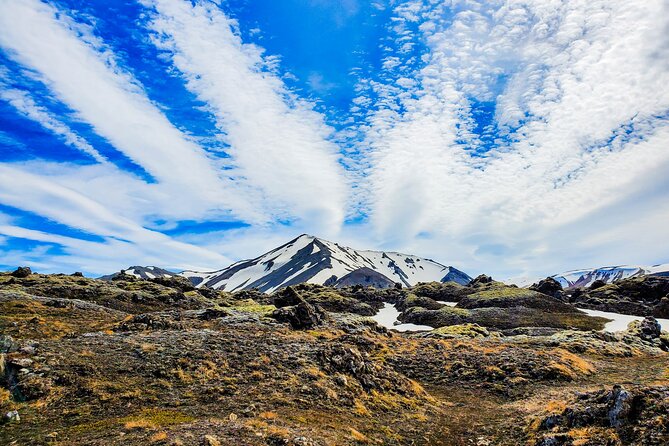
Landmannalaugar is the star of the day, with about 3 hours on site. The route builds toward it by driving into the Hekla area first, including passing through the region’s more recent lava field terrain, so when you finally step into Landmannalaugar, it feels earned.
What makes this stop so memorable is the combination:
- Hiking options: the time is long enough to choose an easier or more challenging walk depending on how you’re feeling.
- Hot spring bath option: the natural pool is part of the classic Landmannalaugar experience.
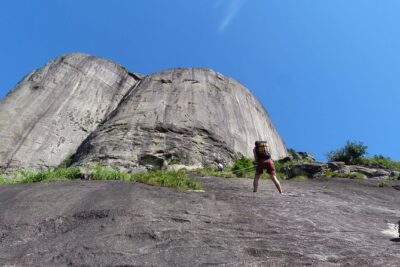
The walking is not described as flat. In a similar outing on this route, the hike was described as involving up-and-down inclines, lava hills, and sustained effort. That’s not meant to scare you—more like a reality check. If you can manage uneven ground and changing footing, you’ll be fine. If you want level walking with minimal strain, you’ll need to pick a gentler option.
A practical note about the pool: if you’re the type who really cares about dressing-room privacy, plan for a less traditional setup. One experience shared about this stop mentioned you may need to change outside in front of others and that there’s not a locker-room style arrangement. If that’s a dealbreaker, treat the pool as optional rather than a must.
On the return drive, you also get extra scenery beyond the base Landmannalaugar area:
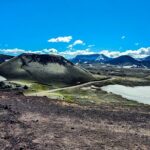
- driving on top of a crater with cobalt blue water
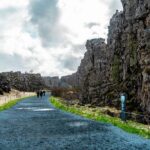
- a stop at a canyon (often called a highlight)
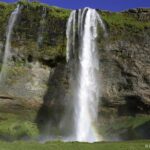
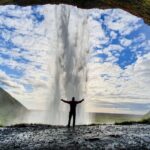
- a waterfall stop
These are shorter viewpoint-style breaks, but they add up. It’s the difference between seeing one big place and collecting several “wait, stop the car” moments.
Fjallabak Nature Reserve and Torfajökull: Where Weather Can Change Fast
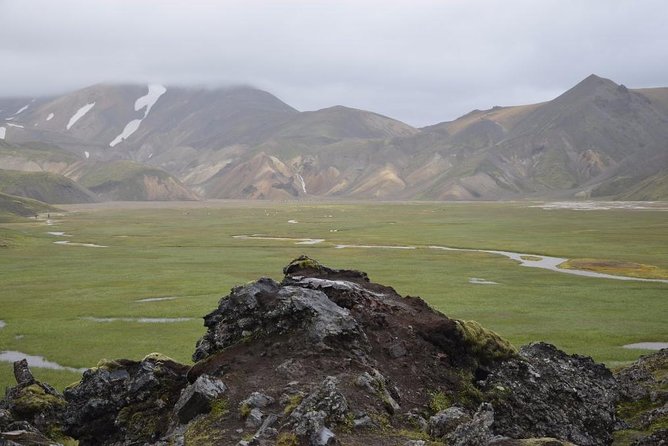
After Landmannalaugar, the tour shifts into the broader Fjallabak Nature Reserve world, with around 5 hours devoted to that region’s volcanic and geothermal character. Fjallabak is known for rhyolite mountains and deeply cut valleys, and it’s also tied to the Torfajökull volcanic system.
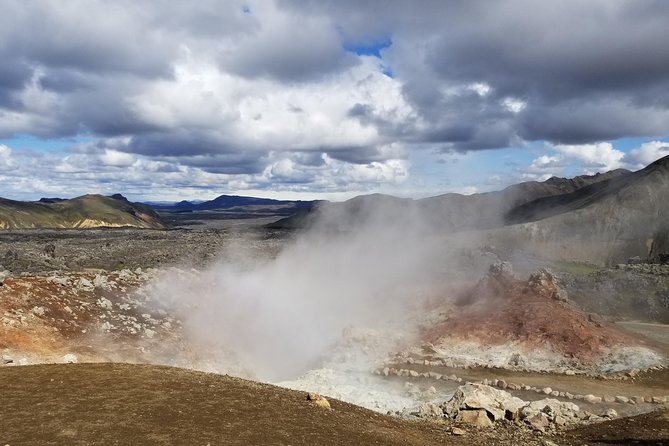
Here’s the part that helps you enjoy the scenery more: geothermal areas change the rocks and the minerals. That’s why you get intense color variations—described in your tour info as reds and yellows turning into blues and greens in the right spots. You’ll hear names like Brennisteinsalda (linked with pink tones) and Bláhnúkur (linked with blue). Even if you don’t remember every name, the guide’s job is to connect what you’re seeing to the geology behind the colors.
This area also has a lot of activity signs that are subtle if you’re not looking for them: fumaroles and hot springs are mentioned as visible evidence of geothermal energy. In your tour material, the Torfajökull system is described as being in a declining fumarolic stage, which means it may be “less loud” than a fresh eruption—but still very alive.
Then comes the real-world travel issue: weather. In Fjallabak, the temperatures are described as around 0–1 °C on average, with 5–14 °C possible in July and August. In winter, it drops to about –6 °C. The info also calls out wind, fog/mist, and rain/snow changes as frequent—and it even gives a rough weather rule of thumb: winds from the south to southeast can bring rain and bad weather, while winds from the north to northeast can bring cold but often finer conditions.
So what should you do with that? Dress like the weather is allowed to change every hour. The tour operates in all weather conditions, but that doesn’t mean the discomfort stays constant. Bring layers, and don’t rely on one “nice” forecast.
One more local land detail worth knowing: vegetation grows slowly here. The soil is described as rough and incoherent, with limited plant cover—so you’re not looking at a lush garden. You’re looking at a high-energy environment where rock, wind, and water shape what you see.
Hekla on the Ridge: The Volcano With a Job Description
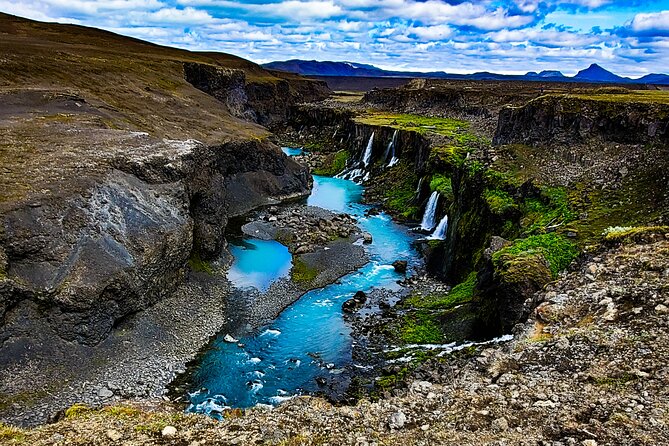
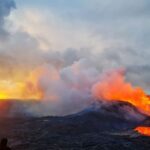
Your Hekla stop is brief—about 10 minutes—but it’s packed with meaning because Hekla isn’t just another cone. It’s described as Iceland’s most active volcano, with more than 20 eruptions since 874.
The tour info also adds texture that’s useful when you stand in the area: Hekla sits on a volcanic ridge about 40 km long, with a key fissure called Heklugja mentioned as 5.5 km long. That matters because volcanic behavior in Iceland often comes from fissures and systems, not just one “top goes boom” story.
You’ll also hear how humans interact with the volcanic environment. The land around Hekla used to be forested, but ash and pumice fall plus erosion risk have made stability harder. A reforestation project called Hekluskógar is described as restoring birch and willow woodland to help stabilize ash and reduce erosion. That turns the area from a purely destructive idea into a “what now?” story—rebuild, stabilize, protect.
The eruption timeline in your tour notes is intense:
- the big eruption of 1104 AD
- major eruptions in the 20th century, including 1947–1948, 1970, 1980, and 1991
- the last eruption noted as 26 February 2000 to 8 March
There’s also a reminder of the unpredictability: it can sometimes erupt within a decade of a previous eruption, and other times it can stay dormant for nearly a century. The tour notes say monitoring is ongoing and that the warning process has improved—so you get the sense that science is actively watching.
Finally, you’ll probably hear the cultural side. Hekla’s name is linked to the Icelandic word for a short hooded cloak, and after major eruptions there were stories that spread across Europe, including claims that Hekla was the gateway to Hell. Whether or not you buy legends, it’s a fascinating layer to add when the mountain is staring back at you.
Ljótipollur Maar Lake: The Ugly Pond With Photo-Ready Turquoise Water
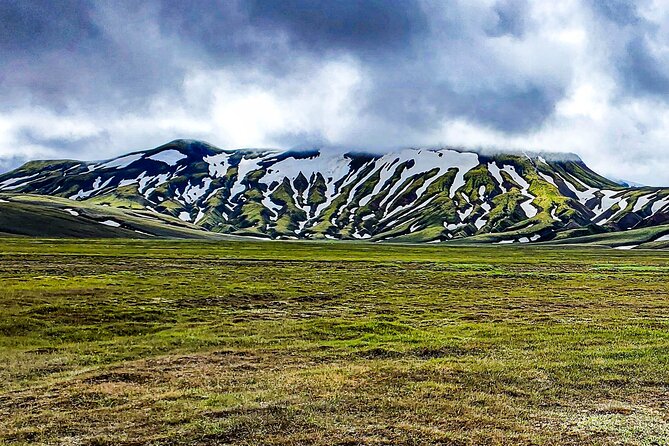
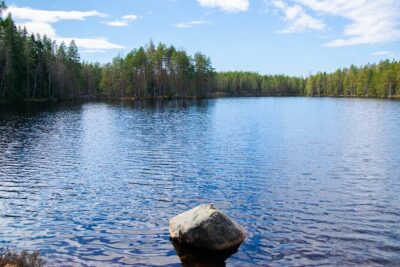
Next up is Ljótipollur, with about 30 minutes at the lake. This is a maar, and the tour info explains that “maar” refers to an “explosion crater” (in Icelandic terms). The name Ljótipollur translates as Ugly Pond—and it’s kind of funny, because the lake is described as often showing turquoise blue water.
The practical part for you: don’t just stroll and move on. Maars are typically deep, and this one is mentioned as around 14 meters deep, with no surface streams feeding it (the water comes from below). You’re looking at a bowl-like crater with water that can look unreal in the light—exactly the kind of place where a few minutes can make the difference between decent photos and great ones.
Fishing is also mentioned, so if you see someone with a line in the water, it’s not a surprise—it’s part of the area’s current use.
How Much Time Will You Actually Be Moving?
On paper, this day sounds like four stops. In practice, you’re dealing with Iceland time: the driving takes longer than you’d expect, and remote areas don’t speed up just because you want them to.
Here’s the timing you were given:
- Landmannalaugar: 3 hours
- Fjallabak Nature Reserve: 5 hours
- Hekla: 10 minutes
- Ljótipollur: 30 minutes
That adds up to about 8 hours of stop time. The rest of the day is the Super Jeep travel between them and the extra viewpoint breaks.
This is where you should set expectations. One shared experience on this route described the outing as fast-paced, with a sense of urgency. The positive side is that you don’t waste the day waiting around. The caution side is that if you want slow travel, extended meals, and long hikes, this isn’t that style.
Food is another factor. Food and drink are not included, so you’ll want to plan what you eat during the day. One practical tip shared for this kind of long route was to bring a packed lunch before boarding, because you might not have an easy chance to buy something once you’re out in the interior.
Price and What Makes It Worth $280
At $280.39 per person for about 11 hours, this isn’t a bargain-basement outing. But it also isn’t trying to be a simple bus ride. You’re paying for three things that cost money in Iceland:
1) A Super Jeep built for rough terrain, including river crossings
2) Guide time with geology and history context (not just “here’s the view”)
3) National park fees included in the tour package
Also, the tour is capped at 14 travelers, which is one reason the guide can keep everyone organized while moving through remote areas. If you’ve ever tried to DIY a day like this, you know how many pieces don’t line up: the vehicle type, timing, unpredictable weather, and the ability to hit multiple high-impact sites in one day.
What you need to decide is whether the trade-off fits you. If you’re comfortable with driving-heavy days and a hiking element that includes inclines and lava-hill footing, the value is strong. If you want a relaxed pace, lower effort, and lots of extra downtime, you may find this day feels like a sprint.
Who Should Book This Super Jeep and Hiking Combo
This tour makes sense for you if:
- you want interior Iceland without self-driving stress
- you like geology and want it explained in plain language, not just pointed at
- you’re okay with a hike that’s not flat and with uneven footing
- you want a mix of hiking + geothermal + volcano area viewpoints in one long day
It may not fit as well if:
- you want the most time possible sitting and soaking, rather than moving between several key spots
- you need a traditional, private locker-room setup for a hot-spring dip
- you’re not comfortable with a packed schedule that runs on momentum
A small but useful tip: because you’re out in cold, wind, and possible fog/mist conditions, dress for a worst-case scenario even if the start of the day looks sunny.
Should You Book This Landmannalaugar and Hekla Super Jeep Tour?
If you want the interior highlights—Landmannalaugar colors, geothermal time, Hekla-area volcano context, and a few high-impact crater/waterfall viewpoints—and you don’t mind a long, energetic day, I’d say this is a strong choice. The Super Jeep plus pickup/drop-off lowers friction a lot, and the guided explanations help you make sense of why the scenery looks the way it does.
If you’re craving a slow hike with minimal transfers, or you want extra room to linger at every stop, consider whether a shorter or more relaxed format would match your style better.
FAQ
How long is the tour?
The tour runs for about 11 hours.
What’s the pickup and drop-off like?
Pickup and drop-off are offered from your Reykjavik hotel. Because it’s a Super Jeep, pickup in the city center may not be allowed at every exact address; you’ll be directed to a nearby pick-up bus stop or to hotels outside the city center. Pickup on the South Coast (such as Hveragerði, Selfoss, and Hella) can be requested by message.
Is this tour in English?
Yes, it’s offered in English.
What’s included in the price?
The price includes national park fees, the driver/guide, hotel pickup and drop-off, and pickup from the South Coast. Food and drink are not included.
Is there hiking, and how much?
You’ll have about 3 hours in Landmannalaugar with various hike options depending on your form/fitness level. The hiking is not described as flat.
Do I need tickets for the stops?
Landmannalaugar is listed as having admission ticket free, and admission for Hekla and Ljótipollur is listed as free. Fjallabak Nature Reserve has admission included.
What should I bring for weather?
The tour operates in all weather conditions, so dress appropriately for cold, wind, and possible rain or snow. Layers are a good idea.
What if bad weather cancels the tour?
This experience requires good weather. If it’s canceled due to poor weather, you’ll be offered a different date or a full refund. You can cancel up to 24 hours in advance for a full refund.