REVIEW · SEATTLE
Mount Rainier: Day Hike on the Mountain
Book on GetYourGuide →Operated by Adventures In Seattle · Bookable on GetYourGuide
Rainier’s view hits you fast on this hike. You’re heading out on the Three Burroughs Trail from the Sunrise Visitor Center, climbing high enough to see Glacier Peak and Mount Baker on clear days, then pushing toward a front-row look at Rainier. It’s a small-group hike built for real trail time, not a drive-and-point type of day.
What I liked most is how the guide work makes the day feel smooth and personal—people like Josh and Sophia can spot what’s worth watching and keep the pace comfortable. I also like the photo bonus: at least on this tour, Josh takes photos during the hike and shares them after, so you can focus on the trail instead of constantly filming.
One consideration: you’re hiking at elevated altitude on uneven terrain, and snow or patchy ice can show up. If you’re sensitive to altitude or have heart issues, this is not the right outing for you.
In This Review
- Key highlights worth planning around
- A Sunrise start that actually earns its payoff
- The Three Burroughs Trail: where the day’s effort turns into big views
- How long you’ll be hiking (and why it’s more than a quick outing)
- Wildlife odds on the meadows: goats are the star, but you’ll notice more
- Frozen Lake, snowfields, and the reality check on weather
- Lunch at Rainier’s level: picnic breaks, climber views, and a chance to reset
- The guide and the photo benefit: why the experience feels “guided,” not managed
- Getting from Seattle without turning the day into a travel slog
- Price and value: $269 for a guide, gear, and real trail time
- Who should book this Three Burroughs day hike
- Should you book it?
- FAQ
- Where do you pick me up for the Mount Rainier day hike?
- How long is the hike, and can I turn back early?
- Is the Three Burroughs hike technical?
- What should I expect to see along the trail?
- What’s included, and what do I need to bring?
- How big is the group, and what language is the guide?
- Is there free cancellation?
Key highlights worth planning around
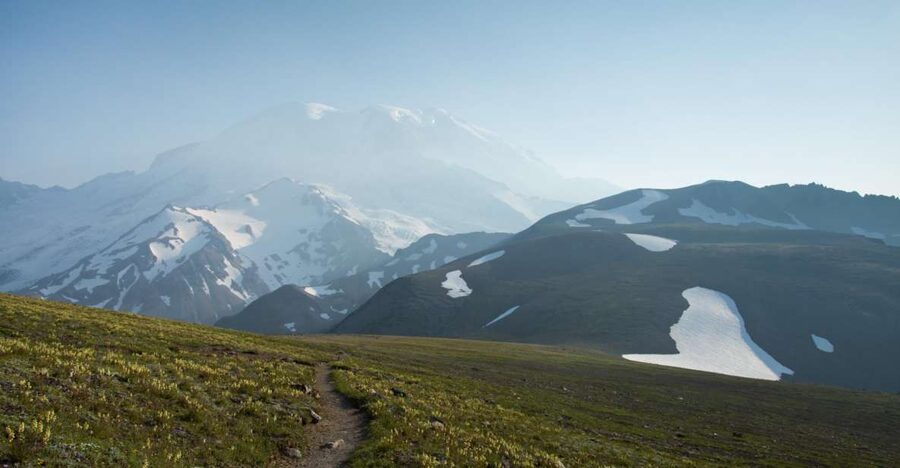
- Three Burroughs views from the ridge with Glacier Peak and Mount Baker possible on clear days
- Mount Rainier appearing at the Second Burroughs so the peak looks close and dramatic
- Mountain goats in the meadows—you’ll have chances to look above and below the trail
- Frozen Lake and snowfields that add variety even when conditions shift
- A picnic lunch while climbers move on the peak for a cool, grounded contrast
- Small group max 5 with built-in flexibility to turn back at 4, 6, or 9 miles
A Sunrise start that actually earns its payoff
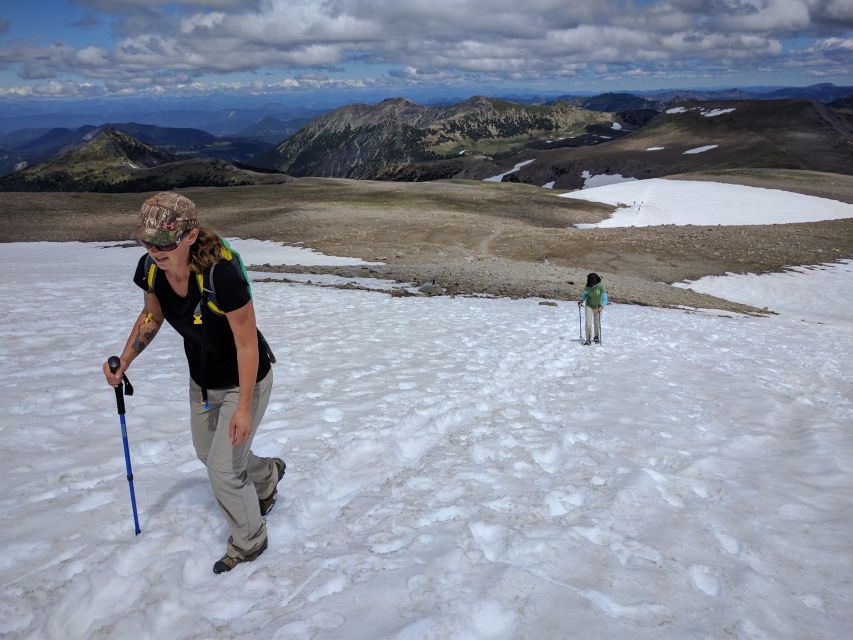
Most Mount Rainier tours sell views. This one earns them with a start time that gets you moving early, with pickup typically between 6 AM and 8 AM from the Seattle area and the North side/Sunrise side area around the park. From there, you’re looking at about a two-hour scenic drive to Mount Rainier.
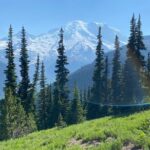
That timing matters because the Three Burroughs route climbs quickly from Sunrise. You’re not just sightseeing at the bottom—you’re earning elevation where the air gets thinner and the viewpoints start stacking. On a clear day, you can look across the region and spot other volcanoes, including Glacier Peak and Mount Baker. Even if the weather isn’t perfect, the hike itself still feels like the point.
The small-group setup also changes how you experience the day. With a max of 5 participants, you get more than a crowd-pack hike. You can slow down if altitude feels weird, and you’re more likely to notice wildlife and details because you’re not constantly weaving around other people.
You can also read our reviews of more hiking tours in Seattle
The Three Burroughs Trail: where the day’s effort turns into big views
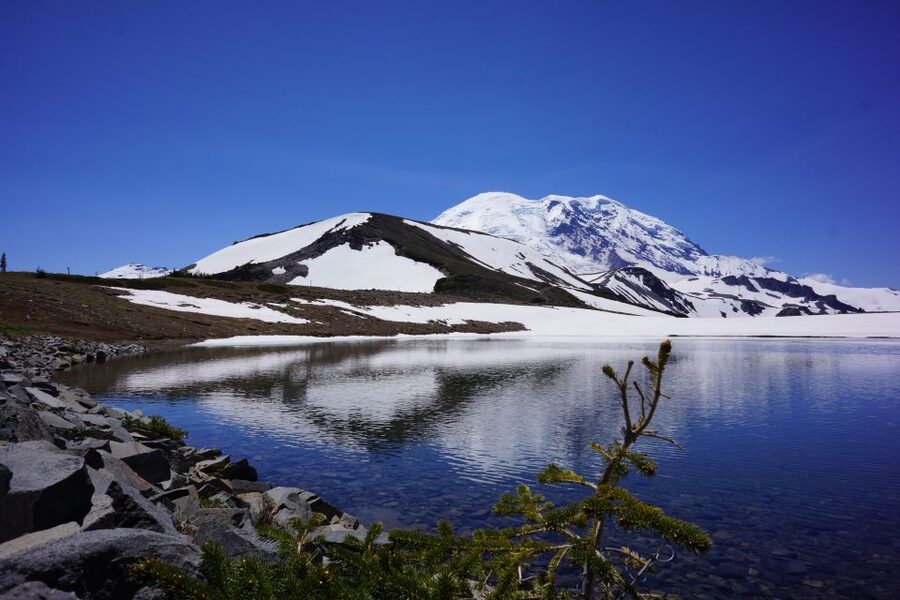
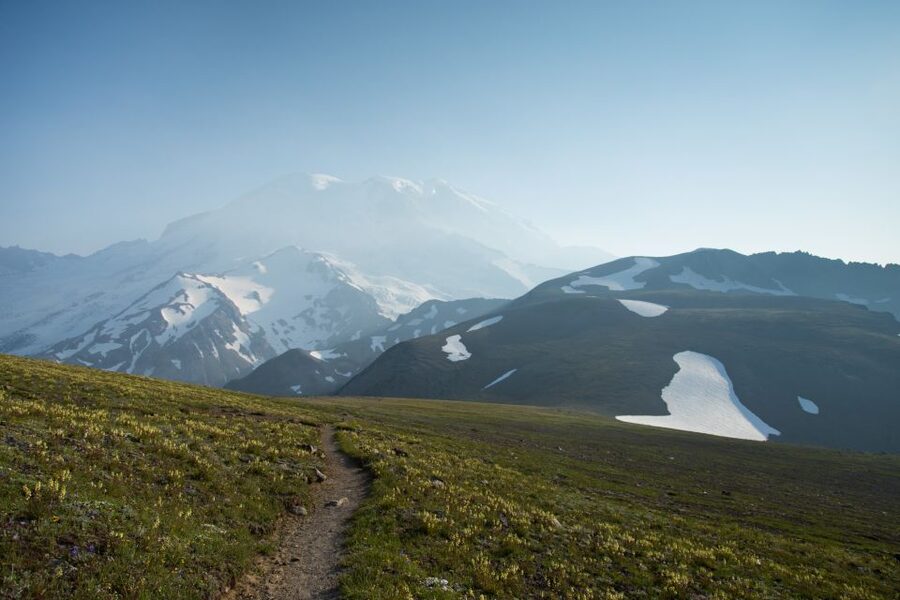
You’ll begin at the Sunrise Visitor Center, where the trail ramps up to a ridge. The first stretch is about getting you to that higher band of visibility. This is where the tour’s best “wow” potential starts: on a clear day, you can see two more Washington volcanoes—Glacier Peak and Mount Baker—from the ridge area.
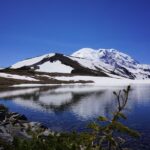
Then the trail continues past Frozen Lake. You might not always notice Frozen Lake as a single “feature,” depending on the season and snowpack, but it’s part of the route’s rhythm: climb, open views, then that quiet feeling you get when you’re moving through alpine terrain that feels more exposed than the forests lower down.
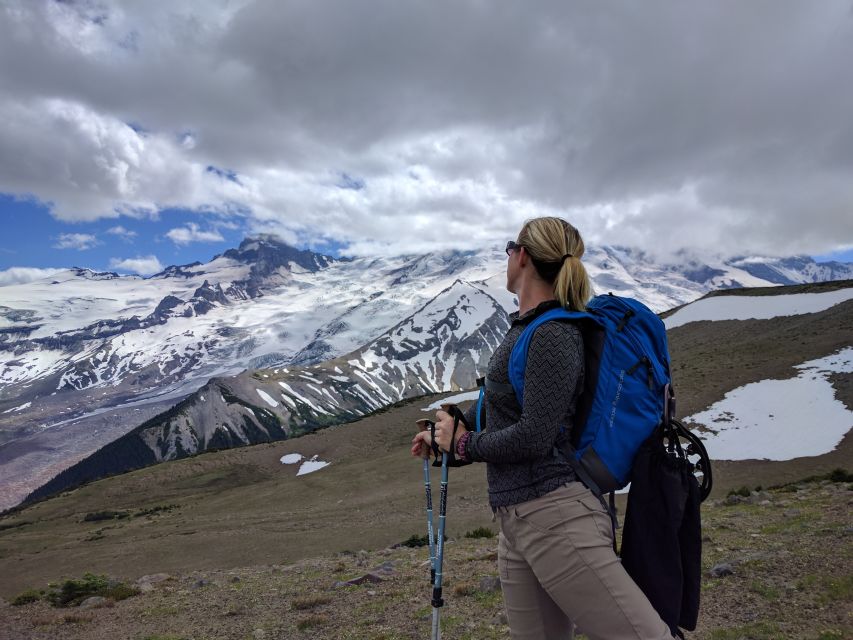
After that, you’re heading up across two snowfields toward Second Burroughs. This is the moment many people wait for: Rainier comes into view in front of you in a much more direct way than you get from the valley roads. It’s not just a distant peak—it reads like it’s right there with you.
And yes, the route is uneven. It may be covered in snow. That’s why this isn’t a casual walk and why trekking poles are included. If your knees dislike slopes or if you’re not steady on uneven ground, poles really help, especially on the snowfield sections.
How long you’ll be hiking (and why it’s more than a quick outing)
Even though the schedule breaks into blocks, plan for a real hike day. The routine pacing is roughly two hours hiking, then lunch, then about two more hours hiking. In practice, it tends to run 4+ hours of hiking for people who are turning back at reasonable distances—often in the 6+ mile range.
You’re given a built-in “choose your own distance” approach: you can turn back at 4, 6, or 9 miles depending on your condition. That’s a big deal because altitude affects people differently. So if you’re feeling good, you can push farther. If you’re not, the guide can help you manage the day without making you feel like you failed at hiking.
Wildlife odds on the meadows: goats are the star, but you’ll notice more
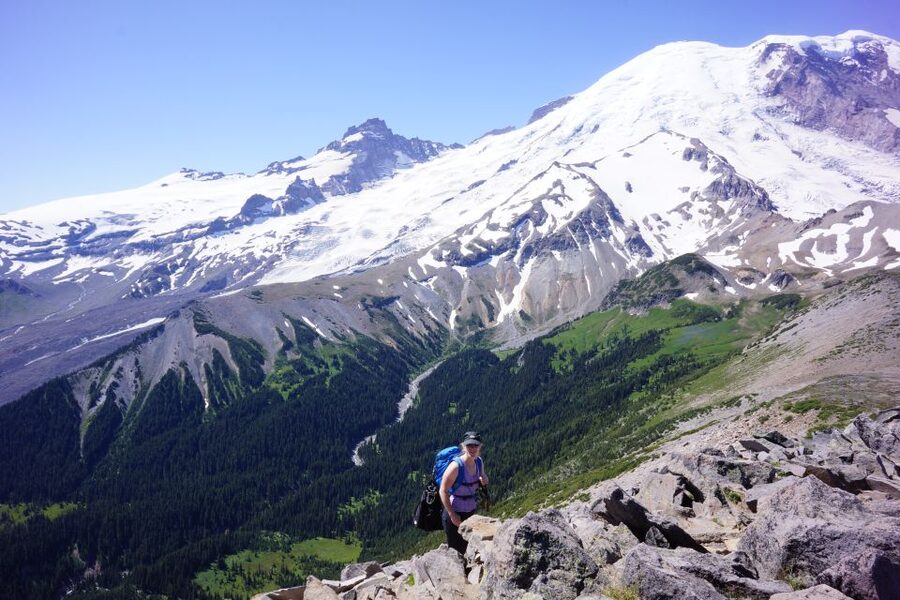
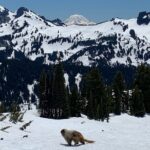
The tour is set up with one specific wildlife goal: looking for resident mountain goats grazing in the meadows. The route gives you chances to spot them in the meadows both above and below the trail. In other words, you’re not just scanning one side of the hike.
This is exactly the kind of moment that benefits from a guide. When you’re moving uphill and focused on footing, it’s easy to miss what matters. A good guide helps you slow down at the right time, look in the right direction, and understand what you’re seeing—fast.
You’re also in a park environment where the guide’s attention to plant life and animals can make the hike feel richer than just “walk, look, repeat.” One person specifically loved how Josh shared details about flora and fauna during the hike, and how that energy makes you pay closer attention without turning the day into a lecture.
A practical note: don’t assume you’ll see goats. This is wildlife. But the way the route is built gives you multiple chances to look.
Frozen Lake, snowfields, and the reality check on weather
This hike doesn’t pretend conditions are always easy. The trail is uneven and may be covered in snow, and you’re at about 6,500 feet for the route portion that’s doing the heavy lifting. Altitude can affect people differently, even if you’re fit.
So here’s the real “think ahead” part. Pack like the mountain is going to be colder and more changeable than Seattle. The tour guidance is clear: warm, layered clothing, a hat, gloves, and a windbreaker or raincoat. Sunglasses help too, especially if bright light bounces off snow.
If you get to a snowfield and you’re unsure about your footing, you don’t have to macho it. The guide is there to help you move safely. Trekking poles give you more control, and the option to turn back at a set mileage means you’re not trapped by the plan.
One nice thing: the included equipment is not just for show. If you’ve ever tried to improvise a downhill stance on snow without poles, you know why they matter.
Lunch at Rainier’s level: picnic breaks, climber views, and a chance to reset
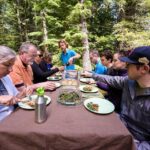
Lunch is part of the experience, not a rushed stop. You get about 45 minutes for lunch, and it’s positioned so you can enjoy views while you eat. The tour includes lunch and snacks, and a sandwich from a grocery stop was called out as delish—so the meal is designed to keep you fueled without turning lunch into a separate mission.
The best detail here is what lunch gives you visually. You’ll be able to watch for mountain climbers on the peak while you eat. It creates a cool contrast: you’re grinding uphill in the alpine zone, then you look out and see the big objective people plan for with ropes and specialized gear. It’s not the same kind of climbing, but it helps you understand scale.
This is also where the small-group format helps. A tight group means you can settle in, take a breath, and regroup. You’re more likely to get a calm moment to enjoy the views instead of being squeezed by traffic.
The guide and the photo benefit: why the experience feels “guided,” not managed
The tour’s results depend a lot on the guide. Names that came up: Josh and Sophia. Both are described as friendly and energetic, with Josh earning extra praise for knowledge and for photographing the hike and sharing photos afterward.
That photo piece is a simple but valuable idea. On a day with steep, uneven sections and changing weather, you don’t want to spend all your attention trying to frame shots. If the guide is doing some of that work, you can enjoy the hike more.
Also, good guides handle the curveballs. One person loved that the day included a flexible stop to look at a herd of elk from the roadside. You’re not buying a rigid script. You’re buying a plan with room to react when something worth seeing shows up.
Getting from Seattle without turning the day into a travel slog
This is one of the most practical reasons to book a guided day hike from Seattle. Pickup is included from your hotel or accommodation within the Seattle area and around Mount Rainier (North side/Sunrise side). The drive is about two hours each way, so you’re saving yourself the stress of figuring out parking, timing, and whether you’ll be able to get there early enough.
There’s also a local café stop on the way back (about 30 minutes). It’s a nice reset point when you’re tired and want something warm or familiar after a high-altitude hike.
When the logistics are smooth, you get something you can’t buy on a map: you can start your hike focused, not frazzled.
Price and value: $269 for a guide, gear, and real trail time
At $269 per person, this isn’t a bargain. But it can be fair value depending on what you’d otherwise pay to recreate the day on your own.
You’re getting:
- Transportation from your Seattle-area pickup, plus getting you to the Sunrise trailhead area
- Park entrance fees
- Hiking equipment like trekking poles and a backpack setup
- Lunch and snacks
- An experienced English-speaking guide
- Small group size (max 5), which is doing real work for pacing and comfort
If you were to DIY it, you’d still need a way to get there, entrance access, gear, and a plan for safe pacing at altitude. The guide also reduces the mental load of route decisions, especially with built-in turn-back mile options.
So I treat the price as paying for time, safety, and a smoother day—not just scenery. And based on the feedback about how much actual hiking time people got (not just viewpoints by car), you should feel like you’re paying for a real hike experience.
Who should book this Three Burroughs day hike
This works best if you want:
- A guided hike with big volcanic views from a ridge
- A full-day outing from Seattle with minimal hassle
- A route with built-in flexibility (turn back at 4, 6, or 9 miles)
- The chance to spot mountain goats and enjoy alpine terrain
- A lunch stop that includes a proper reset and peak-view watching
It’s not a fit if:
- You’re traveling with children under 12
- You need mobility-friendly terrain (this route is not described as accessible)
- You have heart problems
- You hate uneven footing or you’re not prepared for altitude effects
If you’re a steady hiker with decent stamina and warm-weather mountain layering skills, this feels like a strong match.
Should you book it?
I’d book this tour if you want your Mount Rainier day to be mostly about walking and earning viewpoints, with a guide who helps you spot the good stuff and keeps the pace realistic. The small group size, the included poles, and the guided lunch with peak climbers make it feel like a complete day.
I’d skip it if you’re looking for an easy, mostly flat “grab a few photos and go” outing. This is an uneven, high-altitude hike. You’ll need warm layers, closed-toed shoes, and a mindset that says I’ll adjust distance if my body asks me to.
If you’re the type who wants a real Rainier day—then this Three Burroughs hike is a smart use of your time.
FAQ
Where do you pick me up for the Mount Rainier day hike?
Pickup is included from any accommodation within the Seattle area and in the area around Mount Rainier on the North side/Sunrise side. Pickup is generally between 6 AM and 8 AM.
How long is the hike, and can I turn back early?
The tour is a full day, and the hiking time is about two hours, then lunch, then about two hours more. You can turn back at 4, 6, or 9 miles depending on your physical condition.
Is the Three Burroughs hike technical?
No special climbing skills are required, but the trail is uneven and may be covered in snow. It’s also at elevated altitude (around 6,500 feet), which can affect people differently.
What should I expect to see along the trail?
From the ridge, you may see Glacier Peak and Mount Baker on a clear day. You’ll pass Frozen Lake, look for mountain goats grazing in nearby meadows, and reach Second Burroughs where Mount Rainier appears in front of you. Lunch is timed so you can also watch for climbers on the peak.
What’s included, and what do I need to bring?
Included are transportation, park entrance fees, trekking poles, backpacks, lunch, snacks, and an experienced English-speaking guide. Bring comfortable shoes (closed-toed), warm clothing in layers, a hat, gloves, sunglasses, and a windbreaker or raincoat.
How big is the group, and what language is the guide?
The group is limited to 5 participants. The live tour guide speaks English.
Is there free cancellation?
Yes. You can cancel up to 24 hours in advance for a full refund.