REVIEW · MOSHI
5 Days Marangu Route Kilimanjaro hiking
Book on Viator →Operated by BEST Kilimanjaro CLIMB | HIKE | BIKE TREK | Tanzania Safaris from Moshi & Arusha · Bookable on Viator
Kilimanjaro, minus the chaos. This 5-day hike on the Marangu Route is a steadier, more direct way up, with hut-based nights and the payoff of Uhuru Peak plus sunrise at Gillman’s Point. You’ll get a full guide and crew looking after logistics so you can focus on the climb.
I especially like two things: the hut nights (Mandara Hut, then Horombo, then Kibo) make the trek feel more manageable day to day, and the support you read about from guides such as Mudi and David is the kind that helps you keep moving when summit night turns serious.
One drawback to plan for: even on the easier Marangu trail, the hardest stretch is the midnight-to-early-morning summit push, when it’s cold and you’re climbing steep scree or snow. If you hate early starts or you’re not ready for rough footing, this is still a real challenge.
In This Review
- Quick takeaways before you pack
- Why the 5 Days Marangu Route Kilimanjaro experience works
- Price and Logistics: what $1,014 per person is buying you
- Day 1: Kilimanjaro National Park Gate to Mandara Hut (plus Maundi Crater)
- Day 2: Horombo Encampment through moorlands and Mawenzi views
- Day 3: The saddle between Kibo and Mawenzi and the moonscape shift
- Day 4: midnight start to Gilman’s Point sunrise and Uhuru Peak
- Day 5: steady descent to Mandara Hut and out through Marangu Gate
- The crew and guides: why the human support shows up in your results
- What to pack for this exact route and schedule (based on the plan)
- Who should choose the Marangu Route (and who should think twice)
- Should you book this 5 Days Marangu Route Kilimanjaro hike?
- FAQ
- How long is the Marangu Route Kilimanjaro trek?
- Where does the trek start and what time does it begin?
- What does the tour include for meals and sleeping?
- Do I need to bring special gear for summit night?
- Is pickup from hotels included?
- What is not included in the price?
- How big is the group?
- What altitude changes should I expect?
- Is free cancellation available?
Quick takeaways before you pack
- Marangu’s gradual pace: the Coca-Cola route is known for an easier approach profile
- Hut-based comfort: sleep at Mandara, Horombo, and Kibo instead of camping every night
- Big views on the way up: Mawenzi and Kibo show up early, then the terrain turns into moonscape
- Summit timing is intense: you start around midnight to 2 am for Gilman’s Point and Uhuru Peak
- Guided teamwork matters: strong crew support shows up again and again in feedback
Why the 5 Days Marangu Route Kilimanjaro experience works
This trek is built around the Marangu Route’s reputation as a gentler climb. The idea is simple: take the long way up so your body can adapt as you gain altitude, not just muscle through it. You’ll move from rainforest into open moorlands, then up toward Kibo and Mawenzi, until the vegetation fades and the mountain turns into a high-altitude, rocky moonscape.
What makes this itinerary feel especially practical is the rhythm. You get daytime hiking blocks that increase gradually, then a planned summit push at night, and finally a long, steady descent. That structure matters because Kilimanjaro isn’t only a legs-and-lungs hike. It’s also about staying calm, staying warm, and keeping your energy steady when the air thins.
Price and Logistics: what $1,014 per person is buying you
At $1,014 per person for a roughly 5-day trek, the big value is in what’s included around the mountain. You’re not just paying for a guide’s personality; you’re paying for the whole system that keeps you moving.
Included items you should care about:
- Guide, cook, porters, and crew wages (with fair and sustainable salary)
- Hut sleeping during the climb (so you’re not building a tent plan)
- Meals: dinners (4), breakfasts (5), and lunches (5)
- Gate transfer (getting you from town logistics to the park start)
Pickup is offered, and the tour uses a mobile ticket.
What’s not included (so you don’t get surprised):
- Flights and visas
- Tipping the crew
- Park fees and tax (this is important because the day-by-day outline lists admission ticket as free, but the overall info says park fees and tax aren’t included)
- Personal items and laundry services
My advice: ask the operator one direct question before you pay the final amount—exactly what portion of park fees and tax you’ll be asked to cover in your booking. That’s the one spot where listings can conflict, and it’s easy to clarify.
Day 1: Kilimanjaro National Park Gate to Mandara Hut (plus Maundi Crater)
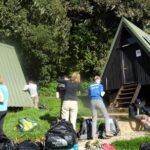
Day one starts at the Kilimanjaro National Park Gate, with a briefing and registration before you start walking. After a short drive (about 45 minutes), you hike into the rainforest toward Mandara encampment, spending about 4–5 hours on a roughly 7 km route.
This day is about getting your footing and your breathing pattern. Rainforest on Kilimanjaro isn’t just scenery; it’s also a mental warm-up. You’ll have more shade, more moisture, and fewer of the high-altitude headaches that show up later. Look out for tall eucalyptus, birdlife, and Colobus monkeys if you’re lucky (they can be surprisingly active).
There’s also a side trip to Maundi Crater. Even if you don’t love detours, this is worth it because it gives you a quick sense of what northern Tanzania and Kenya look like from high ground.
You end at Mandara Hut with lunch and dinner included. Altitude rises from about 1,700 m to 2,740 m. That range is usually friendly, which is exactly what you want on day one.
Day 2: Horombo Encampment through moorlands and Mawenzi views
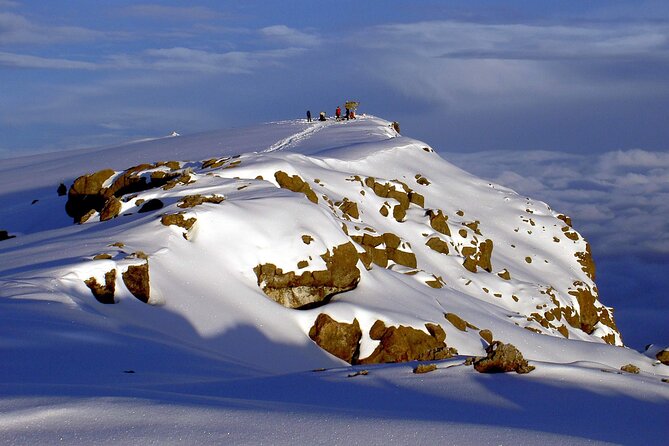
On day two, the scenery shifts. You leave the rainforest and climb through open moorlands, heading for Horombo encampment. Expect around 8 hours of hiking, with the day offering your first strong “wow” factor: views of Mawenzi and the summit of Kibo.
This is also when you might begin feeling the altitude. Not everyone feels it immediately, but the move from rainforest elevation to more exposed zones can make breathing feel a little different. Your job is to keep your pace controlled. On Kilimanjaro, a fast start is one of the easiest ways to feel bad later.
Terrain details that show up on this day:
- Giant lobelias and groundsel
- More wind exposure (so temperatures can swing even if you’re moving)
You’ll sleep at Horombo and you’ll have meals included. The big win here is acclimatization with views—slow enough to adapt, scenic enough to stay motivated.
Day 3: The saddle between Kibo and Mawenzi and the moonscape shift
Day three is where the mountain starts changing fast, and it’s also where you set yourself up for summit night. You walk up from your current position to the saddle between the peaks of Kibo and Mawenzi, and you pass the last watering point before reaching the higher zone.
The terrain transition is the standout detail: vegetation moves from upper heathland and then disappears into what’s often called moonscape. That’s not just a poetic description. It reflects how little plant cover you see, which means you feel more exposed to sun, wind, and temperature drops.
Your altitude range on this day is listed as about 3,700 m to 4,700 m, and the hike is about 10 km over roughly 6–8 hours. After you reach the saddle, you get dinner and rest, focusing on preparing for the summit climb.
This day is not the time to overachieve. Your success on Kilimanjaro is measured by how you feel and function at night, not by how fast you can walk uphill in daylight.
Day 4: midnight start to Gilman’s Point sunrise and Uhuru Peak
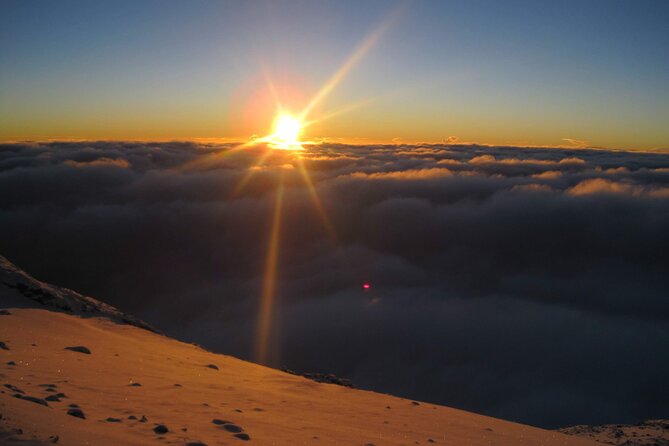
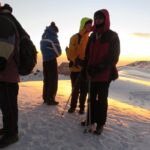
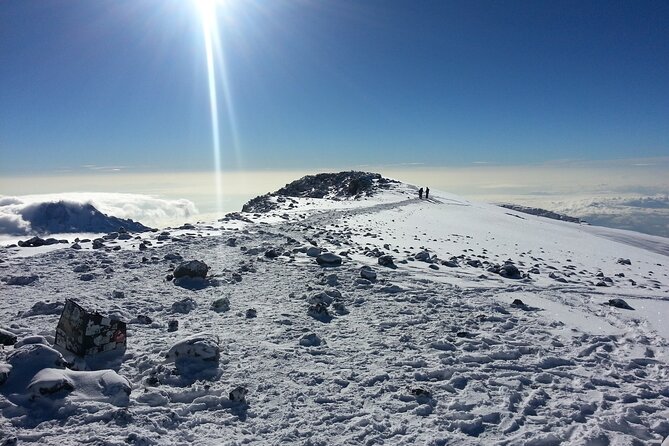
Summit day begins in the dark. The plan calls for starting the climb between midnight and 2 am, climbing steep and heavy scree or snow up to Gilman’s Point on the crater rim. From there, you continue on to Uhuru Peak, the highest point in Africa.
If you’re thinking you’ll be doing a relaxed hike here, you should rethink that. This is where you’ll likely feel the thin air most strongly, and where steady pacing becomes survival pacing.
What helps most on this day:
- Headlamps or flashlights for the initial climb (the route begins in darkness)
- Warm layers because it stays very cold until you start descending
- Expect steep footing with scree or snow
You’ll get unbelievable views on the route, and the highlight is the moment at Uhuru Peak—plus the chance to get your photo taken at the top. The experience also frames sunrise as a key payoff during your summit time at the peak area, especially with the Gilman’s Point timing.
After the summit, the itinerary builds in recovery:
- Descend and stop at Kibo for lunch and rest
- Continue down to Horombo encampment
This matters because the hardest part isn’t only reaching the top. It’s also getting down safely with your body cooling off and your energy dropping.
Day 5: steady descent to Mandara Hut and out through Marangu Gate
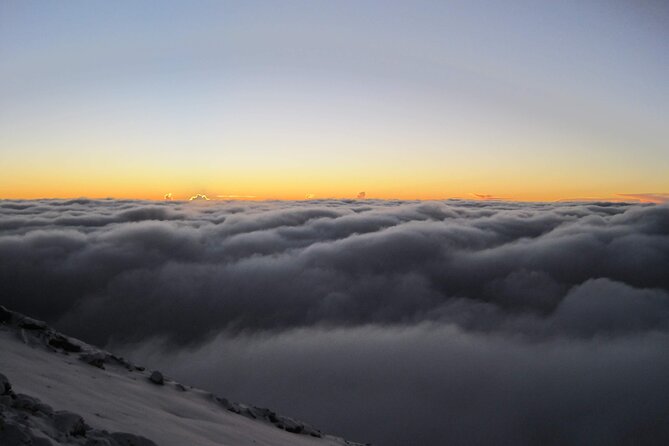
Day five is a long exhale. You start with breakfast and a steady descent back down through moorland to Mandara Hut, then continue downhill through a lush forest path to the National Park gate at Marangu.
You’ll cover around 18 km total, with a hiking time of roughly 5–7 hours. The altitude drop is big: from about 3,700 m back down to around 1,700 m.
Two practical notes for this day:
- Lower sections can be wet and muddy. This is where gaiters and trekking poles become more than optional.
- Clothing can shift quickly. The plan suggests shorts and t-shirts will often be fine, but you should still keep rain gear and warmer clothing handy because you may not stay warm if conditions turn.
When you reach Marangu Gate, a vehicle meets you to drive you back to your hotel in Moshi or Arusha. It’s also the day to celebrate, but not in a careless way—your legs still need time to cool down.
The crew and guides: why the human support shows up in your results
Kilimanjaro success is often described like it’s math: altitude, pace, hydration. But the reality is messier. When your body complains at 4,000 m and it’s dark outside, you need people who can keep your head straight.
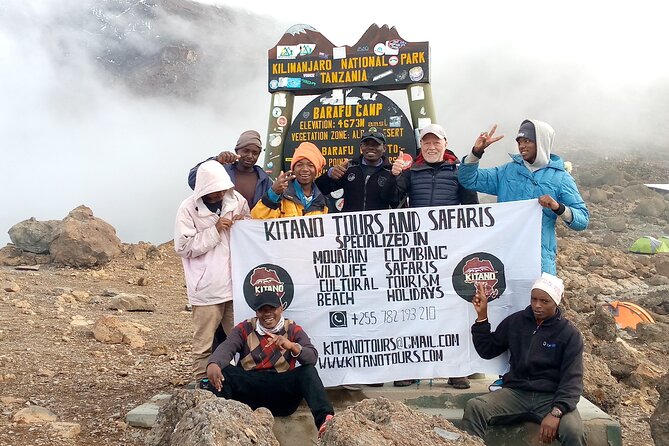
In the feedback you provided, the crew support comes through strongly. Guides and leaders named Mudi, Muddy, Tadey, Martin, Daniel, David, Emmanuel, Migaan, and Michael show up as stand-outs. People call out the crew’s ability to motivate at the right time, help when someone’s struggling, and keep everyone safe during summit night.
There’s also a theme of teamwork. One review praises a whole crew system—guides, chef, camp master, waiter, and porters—operating like a coordinated unit. Another mentions a “family” feeling rather than stiff staff-client roles, with singing, dancing, and real human connection during the trek.
You can’t control the weather or altitude. But you can control whether you’re supported by a crew that communicates well and keeps the group moving as one.
What to pack for this exact route and schedule (based on the plan)
The itinerary itself gives you clues about what you’ll need. Don’t overpack just because you can. Pack to match the mountain’s rhythm.
From the day-by-day notes:
- Headlamps or flashlights for the midnight start
- Warm layers for summit night and the cold crater-rim temperatures
- Trekking poles and gaiters for wet, muddy lower trails on the way down
- Rain gear, because lower elevations can be wet
- Shorts and t-shirts are probably fine at lower/mid elevations, but keep warmer gear accessible
If you already hike, you’ll recognize the pattern: summit night is cold and dark; descent is wet and slippery. Pack for those two realities.
Who should choose the Marangu Route (and who should think twice)
This tour says most travelers can participate, which fits the Marangu Route reputation for being easier technically. You’re mostly walking rather than using ropes or climbing gear. Still, “easier” doesn’t mean “easy.” You’re dealing with altitude, steep sections, and a midnight summit attempt.
This trek is a strong fit if:
- You want a gradual route with hut-based comfort
- You’re okay with very early and very cold conditions on summit night
- You’d like a guided group atmosphere with a full support crew
Think twice if:
- You’re strongly opposed to sleeping in huts (this plan explicitly uses huts)
- You have a tough time with early wake-ups and late-night exertion
- You’d rather do a longer acclimatization schedule than a 5-day plan allows
The distance and timings are real: up to 10 hours on key days, plus the steep early-morning summit leg.
Should you book this 5 Days Marangu Route Kilimanjaro hike?
If your priority is a guided, hut-based Kilimanjaro experience that still lands you at Uhuru Peak, this is an easy choice to seriously consider. The route’s reputation for steadier pacing pairs well with a crew that focuses on motivation and safety, and the itinerary design gives you what you need most: acclimatization time in daylight and a structured summit window.
My one caution is money and fees. Because park fees and tax are listed as not included, double-check what you’ll actually pay on the ground versus what the day-by-day notes imply about admission. Once you clarify that, the rest looks straightforward: pickup options, huts, meals, and a clear plan from the Gate to Mandara, Horombo, Kibo, Gilman’s Point, and back down through Marangu.
If that sounds like your kind of Kilimanjaro—planned, guided, and real—then yes, book it and focus on showing up rested for summit night.
FAQ
How long is the Marangu Route Kilimanjaro trek?
It’s about 5 days, based on the itinerary timing provided.
Where does the trek start and what time does it begin?
The start point is Cable Millan, 3445 Rengua Rd, Tanzania, and the start time is 8:30 am.
What does the tour include for meals and sleeping?
Meals are included throughout the hike (breakfasts, lunches, and dinners), and you sleep in huts during the climb.
Do I need to bring special gear for summit night?
The plan calls out using headlamps or flashlights for the midnight-to-early-morning climb, and it notes you will be very cold until you start descending, so warm layers are important.
Is pickup from hotels included?
Pickup is offered.
What is not included in the price?
Not included: flights, visas, tipping the crew, park fees and tax, items of a personal nature, and laundry services.
How big is the group?
The tour lists a maximum of 100 travelers.
What altitude changes should I expect?
The itinerary lists altitude changes roughly from about 1,700 m up to about 4,700 m, including the summit approach and then down to about 1,700 m by the final day.
Is free cancellation available?
Yes. You can cancel up to 24 hours in advance for a full refund.