REVIEW · STAVANGER
Lysefjorden cruise & Preikestolen guided hike – winter
Book on GetYourGuide →Operated by Rødne Fjord Cruise · Bookable on GetYourGuide
Winter silence makes Preikestolen feel personal. This Lysefjord cruise + guided winter hike is built for dramatic views in cold-weather calm, with a small group and guide-led safety. I especially love seeing Preikestolen from the boat first, then topping it off on foot for a full change of perspective.
My second favorite part is the way the day handles winter for you: you get snow spikes if needed, poles, and even a headlamp, plus a lunchpack. One drawback to plan around: this is not for people with vertigo or fear of heights, and the winter hike can feel tough if you’re not used to moving on icy ground.
In This Review
- Quick takes before you go
- A winter day that moves from fjord drama to mountain stillness
- Lysefjord cruise: waterfalls, islands, and seeing Preikestolen twice
- The minibus hop and why Forsand matters for your hike
- Guided hike to Preikestolen: spikes, poles, and a steady pace
- When Preikestolen is quiet: the view you came for
- Fjord cruise-to-hike pacing: what 9 hours feels like in your body
- Gear and clothing: what they supply vs what you must bring
- What’s included
- What you should bring
- Lunch and snacks: your energy plan for the climb
- The guide experience: Alan, Erlend, and calm winter leadership
- Value check: is $269 worth a fjord cruise plus Preikestolen?
- Who this winter Lysefjord & Preikestolen tour suits best
- Should you book this winter tour?
- FAQ
- Is this tour 9 hours long?
- Where does the tour start and end?
- How long is the fjord cruise on Lysefjorden?
- How long is the hike to Preikestolen?
- What winter hiking gear is included?
- What should I bring for winter hiking?
- Is the lunch included?
- Are there extra food and drinks available?
- Who should not take this tour?
Quick takes before you go
- Small group (max 8) keeps the hike calmer and the guide’s attention focused.
- Fjord cruise first means you see Preikestolen from below, then meet it on top.
- Winter gear support includes spikes (if needed), poles, and a headlamp.
- Fantahåla and Hengjanefossen add real variety, not just “more water and more rock.”
- Off-season timing helps you experience Preikestolen’s big views with less crowd noise.
- Return via the world’s longest undersea tunnel turns the day’s endpoint into part of the story.
A winter day that moves from fjord drama to mountain stillness
This is the kind of Norway day that makes sense in winter. Instead of spending your time just waiting for crowds to shuffle forward, you get a steady rhythm: water views, then a guided climb, then the payoff from the plateau.
You also get the best of two scales. On the fjord, the rock towers above you and waterfalls do their winter thing. At Preikestolen, the scale flips. The rock edge becomes your stage, and the fjord stretches out far below your feet.
The tour’s winter value comes from how it’s timed and guided. In colder months, the scenery is less “performative” and more real. Wind cuts through, light looks sharper, and that huge viewpoint can feel like it’s yours for a while.
You can also read our reviews of more boat tours in Stavanger
Lysefjord cruise: waterfalls, islands, and seeing Preikestolen twice
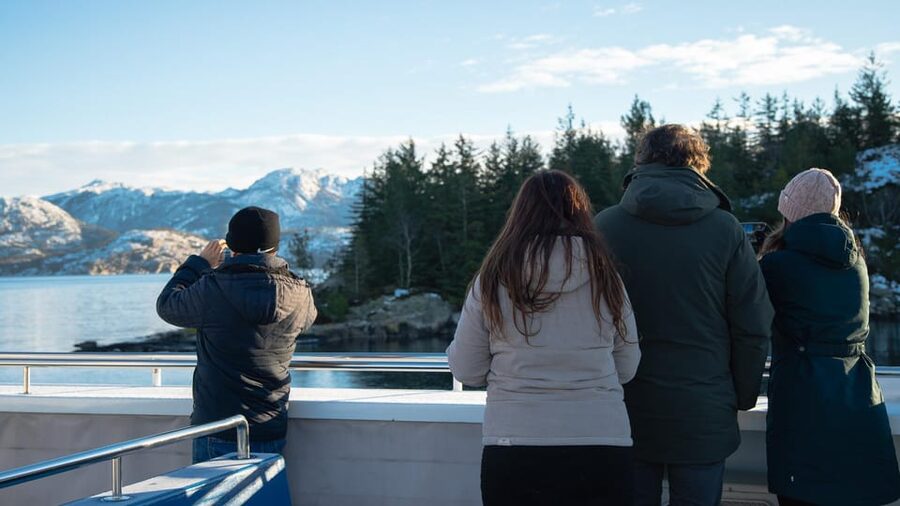
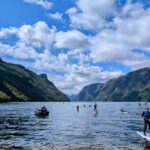
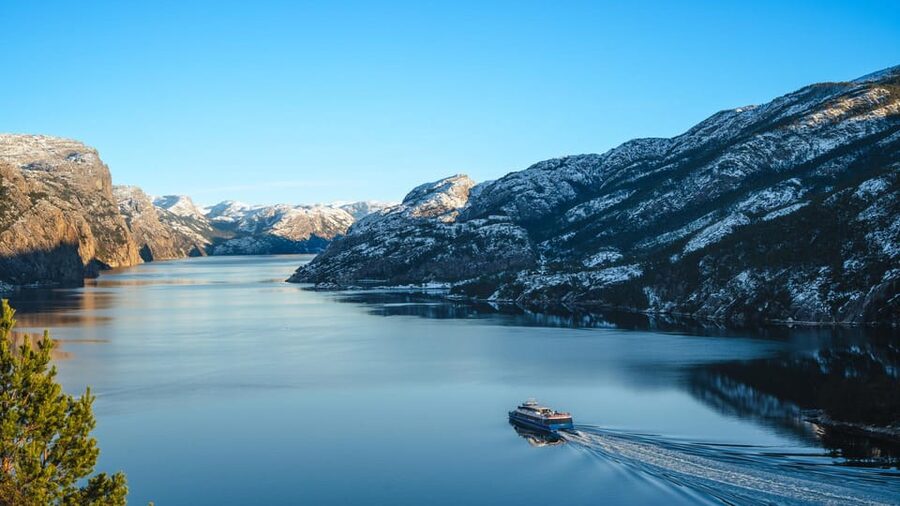
You start on boat time from Strandkaien in Stavanger. The day then shifts into a fjord cruise through classic Lysefjord country: charming islands, steep mountains, and serious falls of water.
Two details matter here:
First, you get Preikestolen’s shape from the boat before you hike to it. That makes the later climb easier to “read.” You’re not just walking toward a random cliff; you’ve already seen where it sits against the fjord walls.
Second, there are specific places you’ll likely look for as the boat moves:
- Fantahåla (Vagabond’s Cave), which you see from the water.
- Hengjanefossen waterfall, where the crew brings the bow close enough for a real winter-show moment. In winter, it can even freeze, which changes the feel of the waterfall from flowy to sculptural.
If you’re the type who loves “one moment” more than “ten moments,” this cruise phase is that. The boat doesn’t just transport you. It sets the emotional tone.
Practical note: winter on the water can mean colder air on the deck, so bring warm layers and keep your windbreaker handy.
The minibus hop and why Forsand matters for your hike
After the cruise, you switch to ground transport in the Forsand area. This is one of those days where you feel the schedule tighten a bit: you’re moving from sightseeing mode to hiking mode.
That bus/coach time isn’t a waste. It’s your buffer for the transition:
- You shift gear.
- You let your body wake up after time on a boat.
- You get oriented before the 5-hour hike portion.
It also helps you avoid a common winter mistake: going into cold conditions too relaxed. When the bus stops, winter hiking becomes real. Your guide’s job is to keep it calm and controlled—and you’ll feel that more after you’ve had the transport time to settle.
Guided hike to Preikestolen: spikes, poles, and a steady pace
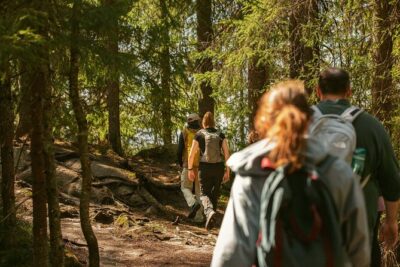
This is the heart of the day: a guided ascent to the Preikestolen plateau for those famous views.
Here’s what I like about the way this hike is set up for winter:
- The guide provides snow spikes if needed and helps with the right seasonal equipment approach.
- You get hiking poles to manage footing and reduce strain.
- You receive a headlamp, which matters if light shifts while you’re out on the mountain.
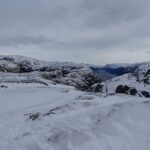
The hike is described as about 5 hours, which tells you the expectation: this is not a casual walk. It’s a winter hike with time on uneven ground, and the guide’s winter knowledge is there for a reason—traction and pacing.
Also, safety isn’t theoretical here. The group is small (limited to 8), and recent guide notes you might see attached to this experience include real attention to keeping everyone comfortable and confident. People highlight that guides help with gear readiness and don’t leave anyone behind on the tricky parts.
Photo stops are part of the rhythm. You’ll have chances to catch your breath and take pictures around you—exactly the right kind of breaks for winter, when the temperature can make you want to rush.
One honest consideration: the tour is not suitable if you’re afraid of heights or have vertigo. Even in winter, Preikestolen is a dramatic cliff experience. If your comfort level is shaky with exposures, skip the edge moment and choose a gentler fjord hike instead.
When Preikestolen is quiet: the view you came for
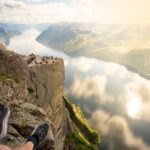
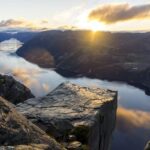
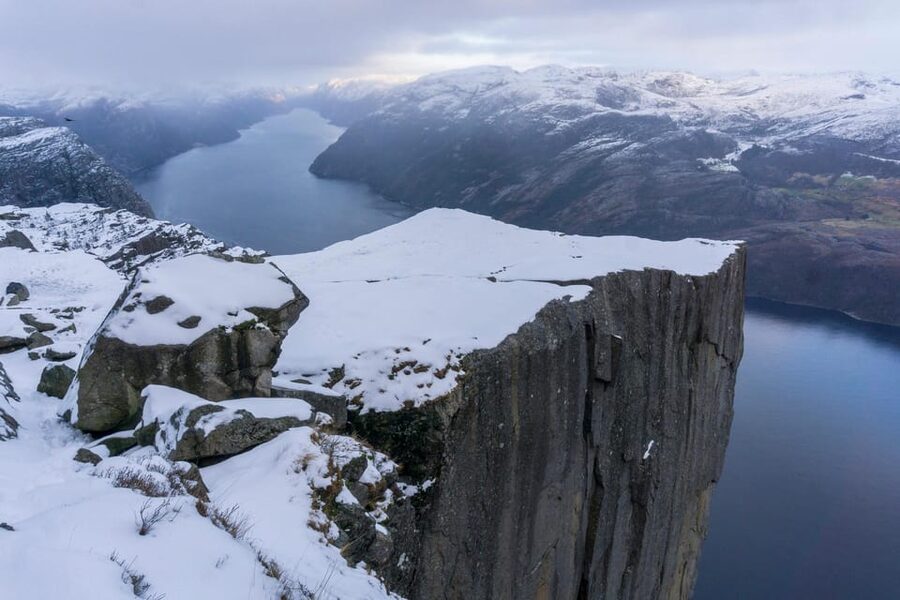
The best reason to do Preikestolen in winter is the feeling of space. Off-season stillness changes everything. The viewpoint becomes less about crowds and more about scale and silence.
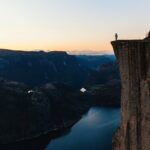
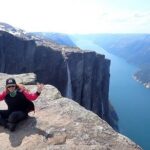
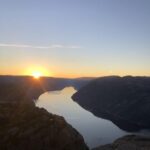
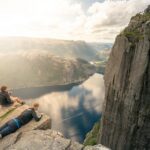
When you reach the plateau, you’re rewarded with panoramic views of some of the most dramatic Fjord Norway has to offer. From up there, your earlier cruise observations snap into place. You realize how the fjord walls and waterfall lines connect, and you understand why this spot is so iconic.
Winter also makes the rock and air feel sharper. Wind can move through quickly. Light can shift fast. The air looks crisp rather than soft.
In the recent winter experience notes, people also point out that there may be times where you’re not surrounded by other hikers at the rock. That doesn’t mean “guaranteed empty,” but winter timing strongly improves your odds of enjoying the edge without constant crowd noise.
You can also read our reviews of more guided tours in Stavanger
Fjord cruise-to-hike pacing: what 9 hours feels like in your body
The total duration is 9 hours, with a structure that’s easy to visualize:
- A boat cruise/sightseeing block on the Lysefjord (listed as 2.5 hours in the plan, with a 2-hour fjord cruise included).
- A short bus transfer.
- A hike of about 5 hours.
- Another transfer back to Stavanger by minibus through the undersea tunnel.
So, what should you expect as a physical day?
- You’re mostly active during that 5-hour hike.
- You’ll also deal with cold exposure on the water and during pauses.
- You’ll likely feel your legs the most on the approach and on the return sections where footing requires focus.
If you have low fitness, this may feel like too much. If you’re prone to seasickness, the cruise is also a concern. This is winter—so your comfort planning should include both ground traction and water motion.
The good news: the group size is small, which usually helps keep the pace steady.
Gear and clothing: what they supply vs what you must bring
This is one area where the tour is straightforward. They provide key winter supports, and you bring the right base layers.
What’s included
- Snow spikes (if needed)
- Hiking poles
- Headlamp
- Winter hike approach gear support (seasonal equipment guidance)
- Lunchpack (and you can email about dietary needs to [email protected])
- Transportation by minibus
- Stavanger hotel drop-off
What you should bring
Think layers, wind protection, and warmth. Bring:
- Warm clothing and thermal clothing
- Windbreaker
- Hat and gloves
- Hiking shoes and warm socks
- Hiking pants and a daypack
- Jacket and outdoor clothing
- Winter sports gear (as you have it)
- Water
- Camera (yes, you’ll want it)
If you’re new to winter hiking, don’t guess on footwear. Shoes and socks matter. Cold feet make a good trip turn into a miserable one fast.
Lunch and snacks: your energy plan for the climb
You’ll get a lunchpack. This is important because winter hiking is a long day, and you don’t want to rely on finding enough food at the wrong moment.
Dietary issues are handled through an email process ([email protected]), so if you have restrictions, do that ahead of time.
On the boat, there’s also an onboard kiosk for additional snacks and drinks at extra cost. That gives you flexibility, but the included lunchpack should be your base plan.
The guide experience: Alan, Erlend, and calm winter leadership
A tour like this rises or falls on the guide. Here, recent guide names tied to this experience include Alan and Erlend, and the consistent theme is practical care: safety, pacing, and help with photos.
People also mention a guide dog named Baba, described as a Border Collie who made the hike joyful and helped take some of the “burden” off people who were less experienced with winter hiking. If a calm, friendly dog is part of your day, it can change the mood fast.
What to look for in a good winter guide day:
- You get gear support before you feel stressed.
- The guide keeps the group together without rushing.
- The guide knows when to pause so you can enjoy the view without freezing your motivation.
This tour’s small-group format supports that. With fewer people in the group, it’s easier for the guide to read your pace and help you adjust on the spot.
Value check: is $269 worth a fjord cruise plus Preikestolen?
At $269 per person, you’re paying for a full winter day with several “included” items that add up:
- 2-hour fjord cruise with commentary
- A professional guide for the hike
- Winter hike support gear (spikes if needed, poles, headlamp)
- A lunchpack
- Transport by minibus and Stavanger hotel drop-off
- A complete itinerary that returns you via the undersea tunnel
A lot of Norway experiences charge for each segment separately. Here, you’re bundling transport + guide support + winter gear into one price.
The biggest “value” question for you is simple: can you do winter hiking comfortably? If yes, this becomes a good deal because you get real access to Preikestolen and meaningful fjord time without the guesswork.
If you’re not confident in cold-weather footing or you know heights are a problem for you, the cost doesn’t matter—you’ll lose enjoyment fast. In that case, you’d get more satisfaction choosing something more comfortable and less exposed.
Who this winter Lysefjord & Preikestolen tour suits best
This is ideal if you want:
- Big fjord views and a dramatic plateau viewpoint in winter
- A guided hike where winter traction is handled responsibly
- A smaller group experience (max 8)
- An itinerary that mixes boat time and mountain time
It’s not for you if:
- You have vertigo or fear heights
- You have mobility impairments
- You’re prone to seasickness
- You have low fitness
- You’re traveling with children under 8
If you’re an active adult who enjoys cold conditions (or is willing to dress for them), this can be one of the most memorable winter days in Rogaland.
Should you book this winter tour?
Book it if you want a winter-focused version of Preikestolen that feels calmer than peak season, and you like the idea of seeing the viewpoint twice—first from the fjord, then from the edge.
Skip it if you know you’ll struggle with cliff exposure, or if winter footing feels intimidating. And if seasickness is a common issue for you, take that seriously before committing.
One more practical reason to lean toward booking: the plan includes a small group and winter gear support, and the day is built to run as one unit. If the weather shifts, you also have free cancellation up to 2 days in advance for a full refund, which makes trial-and-error easier.
If you want my quick decision rule: if you can handle a winter hike and you’re okay with heights, this is a strong choice for value and atmosphere.
FAQ
Is this tour 9 hours long?
Yes. The total duration is listed as 9 hours.
Where does the tour start and end?
It starts at Strandkaien and returns back to Strandkaien by minibus.
How long is the fjord cruise on Lysefjorden?
The experience includes a 2-hour fjord cruise, and the plan also shows about 2.5 hours total for the Lysefjord sightseeing portion.
How long is the hike to Preikestolen?
The hike portion is listed as about 5 hours.
What winter hiking gear is included?
You’re provided snow spikes (if needed), hiking poles, and a headlamp.
What should I bring for winter hiking?
Bring warm clothing and layers, a windbreaker, hat and gloves, hiking shoes, warm socks, a jacket, thermal clothing, and a daypack. Also bring water and any winter sports gear you have.
Is the lunch included?
Yes. You receive a lunchpack, and you can email [email protected] with dietary issues.
Are there extra food and drinks available?
Yes. There’s an onboard kiosk with additional snacks and drinks for extra cost.
Who should not take this tour?
It’s not suitable for children under 8, people with mobility impairments, people afraid of heights, people with vertigo, people prone to seasickness, or people with low level of fitness.