REVIEW · STOCKHOLM
Stockholm: Sunset Hike in Tyresta National Park with Meal
Book on Viator →Operated by Stockholm Nature AB · Bookable on Viator
Stockholm feels busy during the day. A sunset hike in Tyresta National Park flips the script—forest sounds, dim paths, and a proper meal break.
I particularly like the small-group feel and the way you get into the woods without having to figure out routes after dark. The guides also bring the place to life with local nature stories and smart pacing.
One drawback: this is still hiking. You’ll face a few small uphill bits (about 20 meters), and you’re in the forest when ticks and bugs are a real possibility.
Small-group hike, maximum 8 people
Halfway lakeside stop for fika and a Swedish meal
Dusk-to-night walking for views you won’t get in daytime
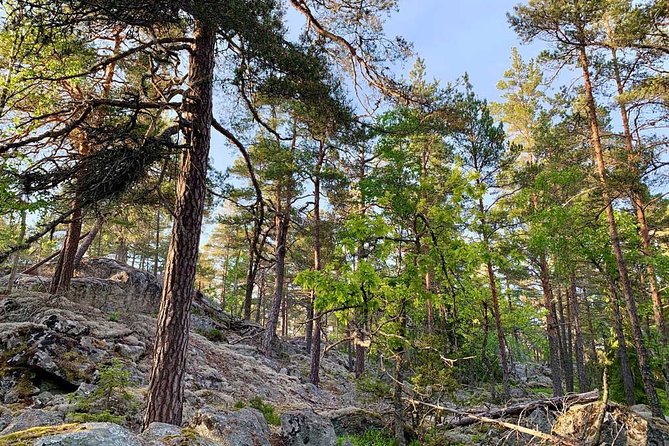
Off-trail moments in ancient forest and around granite cliffs
Return to the same meeting point, so plan your next move (especially if you’re on a cruise)
Bring hiking shoes and plan for bugs, no drinking water provided
In This Review
- Why Tyresta at dusk is a Stockholm reset
- From Gullmarsplan to Tyresta: the simple transport plan
- Forest hour one: winding trails, off-trail moments, granite cliffs
- Lakeside fika and the Swedish meal break (midsummer vs winter soup)
- Night hike phase: quiet woods, limited sunset views, and wildlife chances
- Guides in practice: how small groups stay together
- What to pack: boots, bug spray, water, and bathroom reality
- Price and value for $149.15
- Should you book the sunset hike with meal?
- FAQ
- How long is the Tyresta sunset hike?
- What’s the hiking distance?
- What food is included?
- Is drinking water provided?
- Where does the tour start?
- How big is the group?
- Is it suitable for older travelers or limited mobility?
- What happens if weather is bad?
Why Tyresta at dusk is a Stockholm reset
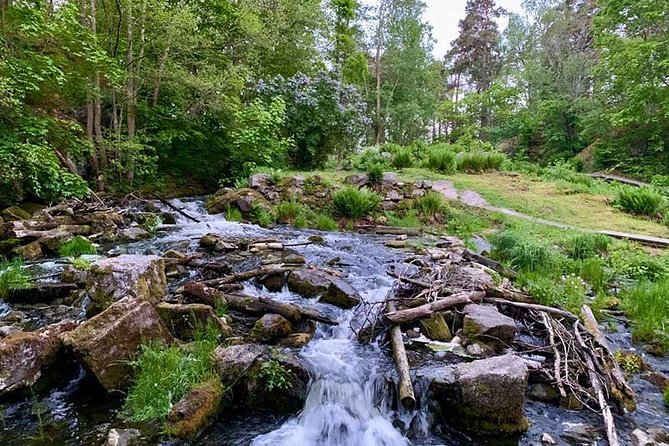
You come to Stockholm for museums, canals, and cafés. Then night arrives, the city fades, and the forest takes over. Tyresta at dusk feels different in a good way: sounds change, light slants through trees, and the trails feel calmer because you’re not fighting day-time crowds.
What I like most is the mix of easygoing walking with genuine “out there” nature time. You’re not just strolling through a paved loop. You’re moving through ancient forest, crossing terrain that opens up to lake views, and heading deeper as darkness sets in.
The second big win is that the meal break doesn’t feel like a gimmick. It’s a real pause—something warm in winter and a summer-style midsummer meal when the season fits. And yes, you get fika (coffee or tea plus pastries) before the main food stop.
The only real caution is expectations. Sunset itself might not come with huge panoramic photo lines at every stop. But dusk light and night quiet are the point.
From Gullmarsplan to Tyresta: the simple transport plan
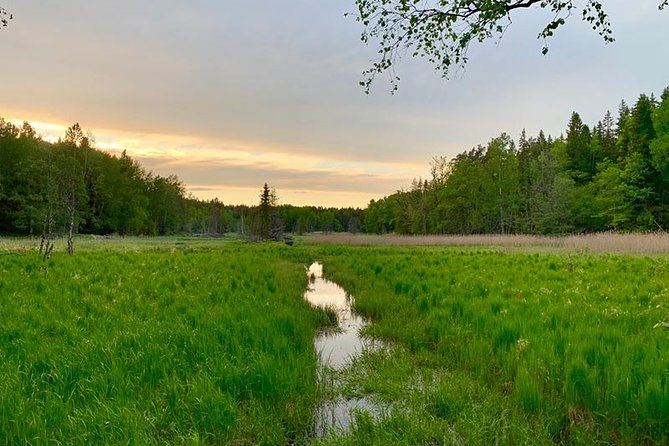
The tour starts in central Stockholm at Gullmarsplan 2 (Johanneshov), a spot that’s easy to reach by public transit. From there, you take a public bus ride of about 30 minutes to get out of the city and into Tyresta.
This is practical value. Instead of renting a car or wrestling with complicated connections, you get a straightforward “get on the bus, show up, hike” rhythm. It also matters because the whole experience is built around the timing of dusk—being late can cut into the night-hike part.
You’ll end back where you started: the experience returns to the meeting point rather than dropping you at your hotel or the pier. If you’re pairing this with a cruise or another timed plan, give yourself buffer time and rely on your own navigation for onward travel.
Also note: you’ll likely be out late enough that you’ll feel it the next day if you overbook your evening schedule. Plan something low-key afterward—rest works better than “one more thing.”
You can also read our reviews of more evening experiences in Stockholm
Forest hour one: winding trails, off-trail moments, granite cliffs
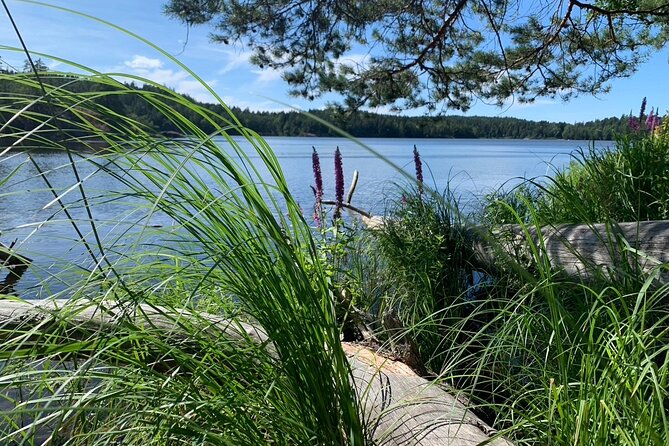
The walking portion starts with an about 1.5-hour hike through the woods as dusk settles. The route isn’t just a single-file line on one obvious path. You follow winding trails and you’ll sometimes go off the beaten track to reach quieter spots.
Terrain includes everything from softer forest ground to short, steeper sections. One review highlighted that the hike is often described as easy, but the uphill parts can catch you if your fitness isn’t “normal hiking” level. Expect that a little climb may slow you down, even if it’s not long.
A standout feature is crossing high granite cliffs with lake views. Granite in this part of Sweden isn’t just “rocks.” It changes how you feel the trail. You’ll get that open horizon moment—water far below, trees around you—and then you head back into thicker woods.
This first segment is also where the guide’s job matters most. In small groups, they can keep you together, decide when to pause for views, and adjust pacing when someone needs to catch up. You’ll feel that attention.
Distance-wise, the total hike is around 6–8 km, so the tour stays in the “reachable” range—just not “no effort at all.”
Lakeside fika and the Swedish meal break (midsummer vs winter soup)
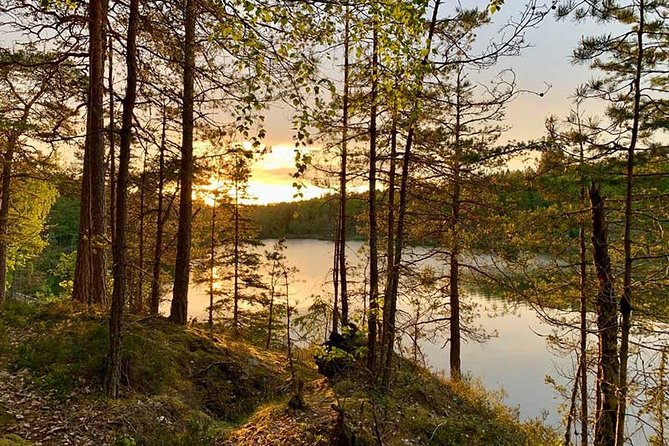
Halfway through, you get a 30-minute break by a serene lakeside. This is where the experience stops being just a walk and becomes a full evening.
You’ll start with Swedish fika: coffee or tea plus pastries. Then, at the lakeside break, you’ll get the main warm food. In summer, the meal is a Swedish midsummer-style option. In winter months, it’s a hot soup.
I love this setup because it’s timed for comfort. You’re not waiting until the end when you’re cold and tired. You pause while you still have energy to enjoy the setting—trees reflected in water, the quiet hum of nature, and the simple fact that someone is feeding you something good.
One practical thing: bring your hunger expectations to the right size. This isn’t a gourmet restaurant course-by-course meal. It’s an outdoors meal done well—warm, filling, and made in the field by the guide.
Also remember the “real woods” part of the trip. There aren’t bathroom facilities in the park, so handle that before you go and treat the lakeside stop as a refresh moment, not a convenience stop.
Night hike phase: quiet woods, limited sunset views, and wildlife chances
After the meal break, you continue for another about 1.5 hours as dusk becomes night. This is the magic part for me. Daytime forest is about movement. Night forest is about listening.
The guide keeps the group together on uneven ground and dim footing. You’re not out there alone with a headlamp and hope. You’re still walking naturally, but with a plan and the experience to keep it safe.
Wildlife moments are possible. Reviews mention things like moose sightings and beavers gnawing trees. You can’t count on sightings, but you do get a higher chance than you would on your own because you’re moving through the right habitats and pausing when something interesting shows itself.
One caution: the “sunset views” part depends on conditions and the exact route. Some people felt sunset views were limited, while others loved fika with sunset light on the horizon. So treat sunset as part of the vibe, not a guarantee of a postcard viewpoint.
If you’re sensitive to late nights, consider that you finish after dark. In at least some cases, people reported ending around 9:30 pm. Factor in the return ride and your own travel time afterward.
Guides in practice: how small groups stay together
This hike is built for personal attention. With a maximum group size of 8, you’re not lost in a crowd. You can hear the guide, ask questions, and get adjustments to your pace.
The guides you might encounter include people such as Sofia, Max, Leo, Jakob, Bobby, and Francisco—each mentioned for being friendly, capable, and tuned in to group dynamics. The vibe is usually social without being chaotic. People often connect because you’re all in the same weather, the same forest sounds, and the same short breaks.
The off-trail component is another reason small groups work. Off-trail doesn’t mean impossible. It means you may walk through mossy, uneven ground and you might do short scrambles in cliff areas. That’s great if you’re wearing the right shoes and you don’t mind “trail” rather than “sidewalk.”
The biggest practical benefit is safety-by-guidance. Evening hikes have one annoying risk: you can get turned around fast when light drops. Here, you’re guided so you can enjoy the quiet forest instead of worrying about where the path goes.
You can also read our reviews of more hiking tours in Stockholm
What to pack: boots, bug spray, water, and bathroom reality
Pack like you’re doing real walking outdoors, not like you’re taking an evening city stroll.
Start with footwear. Reviews specifically called out that you should bring hiking boots or proper walking shoes, not street shoes. Off-trail sections and rocky or mossy ground can be slippery. Your feet will thank you.
Bugs and ticks are also part of the deal. You might run into high grass and mosquitoes. One review advised bug spray, and another suggested long pants that you can tuck in to reduce tick exposure. After the hike, check your skin when you get back.
Layering matters because you start in dusk and finish at night. Even in a mild season, the temperature can drop after you stop moving. A light rain layer helps too. People also recommended lightweight rain gear, since showers can happen.
A small but important detail: drinking water is not included. Bring water in a small bottle or hydration pack.
Finally, yes, there’s no bathroom in the park. Plan for it before you leave the city.
Price and value for $149.15
At $149.15 per person, this isn’t a cheap add-on. So the real question is value: what do you get for the money?
You’re paying for four things at once:
- A real guide who manages pacing, route choices, and the evening/night part
- Transportation from central Stockholm by local bus (round trip)
- Food that’s part of the plan, not an optional snack
- A small-group limit that keeps the experience personal
It’s also a timing purchase. You’re hiking at dusk and into darkness, when the woods are quieter and the experience is less about crowds and more about atmosphere. Most people in Stockholm don’t want to plan an evening nature trek solo. Here, the logistics are handled, and you get the meal break baked in.
Is it worth it? If you want a guided “nature reset” that includes food and transport in one smooth package, yes. If you mostly want a short walk without effort, you may feel the price more than the trail.
For me, the best value signal is that people consistently talk about the guide, the meal spot, and the forest time as the highlight—exactly the stuff that’s hardest to replicate on your own.
Should you book the sunset hike with meal?
Book this if you want an evening in Sweden that feels real. You’ll likely enjoy it most if you:
- like guided outdoor time and don’t want to worry about finding the way at night
- enjoy walking in forests and you’re okay with uneven ground
- want fika plus a warm lakeside meal, not just sightseeing
- like small groups and chatting while you move
Skip—or at least message the provider first—if you’re not in normal hiking shape. There’s a short uphill section (around 20 meters) and off-trail moments can be challenging. Also, the tour isn’t recommended for people over age 70 unless you confirm suitability in advance.
If you’re the type who plans every minute, remember this returns you to the meeting point, and it runs late enough that you should keep your follow-up plans simple.
FAQ
How long is the Tyresta sunset hike?
It’s about 4 hours 30 minutes total, including the hikes, the lakeside break, and the return ride.
What’s the hiking distance?
The total walking distance is about 6–8 km.
What food is included?
You get Swedish fika (coffee/tea and pastries), plus a warm Swedish meal at the halfway lakeside break. In summer, it’s a midsummer-style meal; in winter, it’s hot soup.
Is drinking water provided?
No. Drinking water isn’t included, so you should bring your own.
Where does the tour start?
The meeting point is Gullmarsplan 2, 121 40 Johanneshov, Sweden.
How big is the group?
The tour runs with a maximum of 8 travelers.
Is it suitable for older travelers or limited mobility?
It’s not recommended if you’re not in normal physical condition. There’s a small uphill section of about 20 meters. It’s also not recommended for travelers over age 70 unless you contact the provider in advance to confirm suitability.
What happens if weather is bad?
This experience requires good weather. If it’s canceled due to poor weather, you’ll be offered a different date or a full refund. If it doesn’t meet the minimum number of travelers, you’ll also be offered a different date/experience or a full refund.