REVIEW · BARCELONA
Medieval Villages & La Garrotxa Volcanic Zone Hiking. Small Group Tour
Book on Viator →Operated by Catalan Trails · Bookable on Viator
Volcano walks feel oddly peaceful, and that’s the point. This 9-hour small-group day trip blends a guided hike through the La Garrotxa Volcanic Zone Natural Park with time in two medieval towns—Besalú and the cliff-hung village of Castellfollit de la Roca—run from Barcelona in an air-conditioned minivan with a real local guide.
I really like two things here: the balance between geology and easy-to-follow hiking, and the way the guide turns streets, churches, and stone scars into something you can actually understand on the spot (Ramon, the guide, is a standout name you’ll hear). One drawback to plan for: it’s a packed day, so you’ll get free time, but not hours and hours in Besalú.
In This Review
- Key highlights worth your morning
- Getting from Barcelona to La Garrotxa without burning your whole day
- Fageda d’en Jordà: the beech forest hike on lava
- Santa Margarida crater and the Romanesque church
- Croscat volcano (160 m) and the quarry scar you can still see
- The post-hike meal: what’s included, what you’ll want to plan
- Castellfollit de la Roca: basalt cliffs, two lava flows, one dramatic town
- Besalú medieval streets: guided context plus free wandering
- Small-group value: what you’re paying for (and what you still need to add)
- Weather, pace, and who this day trip suits best
- Should you book this Medieval Villages & La Garrotxa hiking tour?
- FAQ
- What time does the tour start, and how long does it last?
- How big is the group?
- Is lunch included?
- What language is the tour offered in?
- Do I need hiking shoes?
- Is the tour canceled for bad weather?
- Is the hike suitable for me?
- Is there free cancellation?
Key highlights worth your morning
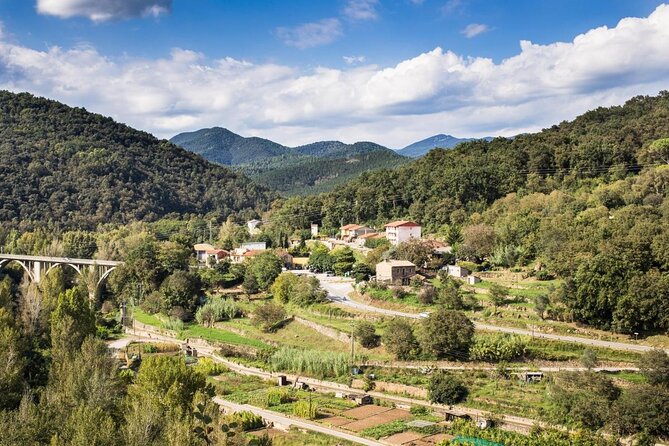
- Small group size (max 8): more questions, more pacing control, less waiting around.
- Fageda d’en Jordà beech forest: a cool, quiet walk over lava terrain at about 550 m elevation.
- Santa Margarida crater + Romanesque church: a volcano explosion turned into a place of worship.
- Croscat volcano (160 m) and the quarry scar: you can literally see “past activity” in the rock.
- Castellfollit de la Roca basalt crag: a dramatic town perched on two lava flows and shaped by the Fluvià river.
- Besalú with guided streets + free time: medieval Catalonia with just enough structure to make it meaningful.
Getting from Barcelona to La Garrotxa without burning your whole day
You start at 8:30 am at Pg. de Gràcia 26 in Barcelona’s Eixample. Then you’re on the road for about one and a half hours in a comfortable, air-conditioned minivan. This matters because it saves you from the hassle of trains or bus connections when you also have a hike to fit into the day.
Once you arrive, you don’t waste time. The tour sets you up for the walking portion quickly, with the included gear (hiking poles) and basic hydration support (bottled water). The whole day is designed around one idea: you’ll get outside for the best parts of La Garrotxa, then return to Barcelona territory for medieval towns while you’re still in the “wow, this place is different” mood.
A small practical note: La Garrotxa can feel colder than Barcelona, especially in winter, so dress for the park, not for the morning you left.
You can also read our reviews of more hiking tours in Barcelona
Fageda d’en Jordà: the beech forest hike on lava
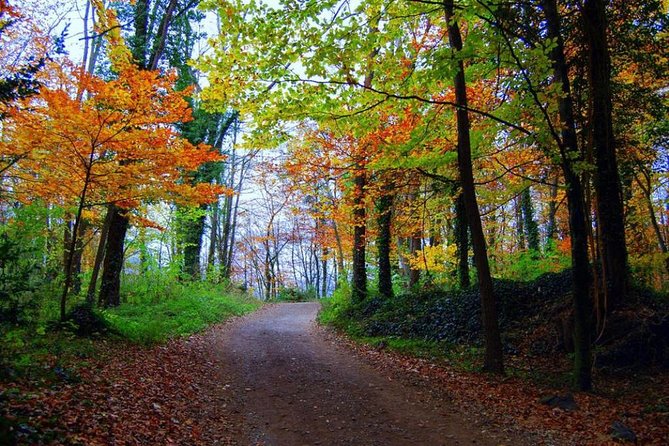
The first hiking section runs through the Fageda d’en Jordà, a beech forest that grows at low altitude (around 550 m). What makes it special is the setting. The forest spreads over rugged, undulating lava flows emitted by the Croscat volcano. Translation: you’re not hiking through flat parkland. The ground feels alive—swoops, slight rises, and natural texture underfoot.
This portion is often described as “magic” and “peaceful” in the best way. On hot days, the beech trees are a real relief because you get shade and a cooler feel than you’d expect. The hiking pace is generally comfortable, but it’s still a hike, so keep a steady effort and don’t sprint early just because the path looks manageable.
If you’re visiting in autumn, this forest is where color shows up most dramatically. Even if you’re not chasing fall colors, it’s a good warm-up section before you move into more obviously volcanic terrain.
Practical tip: wear proper hiking or sport shoes. The tour notes moderate fitness is enough, but it also emphasizes being active—this isn’t a stroll where you can forget your footing.
Santa Margarida crater and the Romanesque church
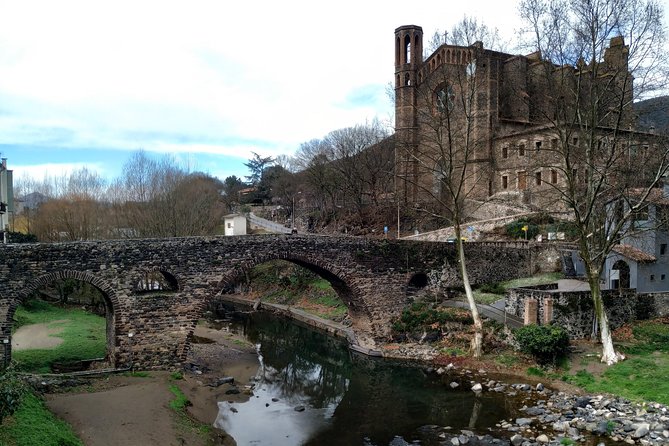
After you leave the beech forest, the hike transitions into the volcanic area. The first big landmark is Santa Margarida, a volcano whose explosion formed a wide circular crater. In the center sits the eponymous Romanesque church.
This stop does something clever: it connects the “science of a volcano” to real human use of land. Instead of treating geology like a museum display, you see how people built and lived around a dramatic crater landscape. You’re walking in a place shaped by violent forces, and then you come upon a church that feels calm and anchored. That contrast is the point.
Hikes like this can sometimes feel like a checklist of rocks. Here, the guide’s job is to connect those rocks to visible architecture and local land use, so you’re not just seeing a crater—you’re learning how that crater became part of the region’s identity.
Also, the route here starts to feel more “volcano-forward,” which keeps your attention as the day moves along.
Croscat volcano (160 m) and the quarry scar you can still see
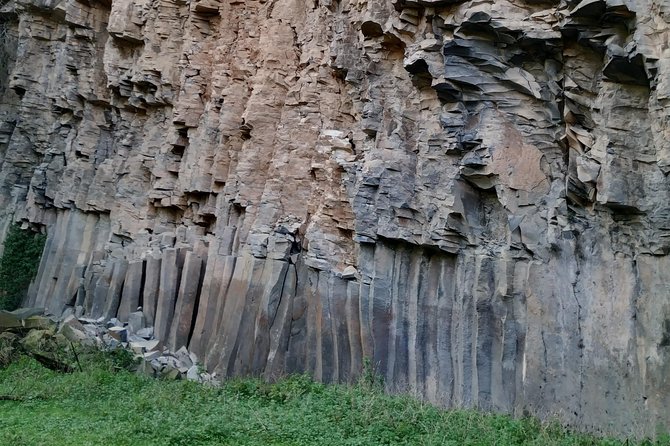
Next you’ll head toward Croscat volcano, listed as the highest volcanic cone in the Iberian Peninsula at about 160 m. And yes, you can see the lasting marks from a past quarrying history: for many years part of the flank was quarried, and an impressive scar remains today.
That scar matters. It’s a reminder that geology isn’t only ancient history. It’s also human history—people used stone, and the landscape still holds the evidence of that activity. On a guided hike, that’s where “seeing” becomes “understanding.” You don’t just photograph a mountain; you read what happened on its sides.
You’ll likely notice this part of the hike is a little more demanding than the beech forest, depending on the day’s conditions. In general, the walking is described as mostly flat with a few steeper up hills. Hiking poles (included) help a lot on those moments.
Expect the hiking portion overall to last around 3.5 hours at a pleasant pace.
The post-hike meal: what’s included, what you’ll want to plan
Once you’re done with the hike (after about 3.5 hours), the tour goes straight to a traditional local restaurant for a well-deserved 3-course meal. Lunch itself is not automatically included in the base tour price, but the operator can book that restaurant experience for you.
This is where you should choose your strategy. If you’re hungry after the hike, booking the meal is usually the easiest way to keep the day running on time. It also keeps you from hunting for food right when your energy is lowest.
If you want to manage your food more independently, the tour guidance strongly suggests bringing snacks for the hike. That advice is practical because walking time and timing can make late hunger awkward. Many people appreciate a little fuel before you settle into lunch.
One more thing: the day moves fast after you finish hiking, so keep your meal choice simple and filling. You don’t need gourmet perfection—just something that lets you enjoy the rest of the towns.
Castellfollit de la Roca: basalt cliffs, two lava flows, one dramatic town
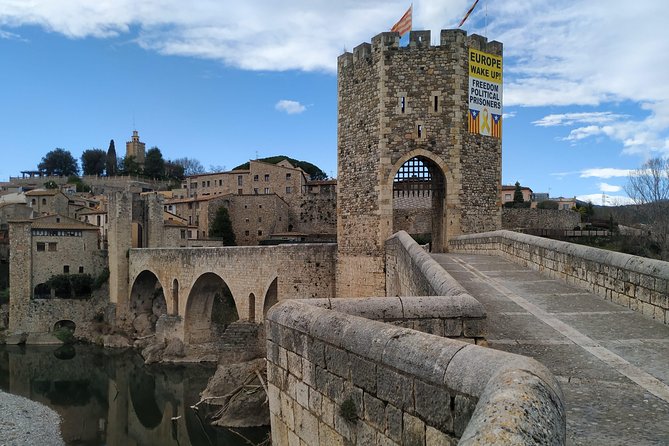
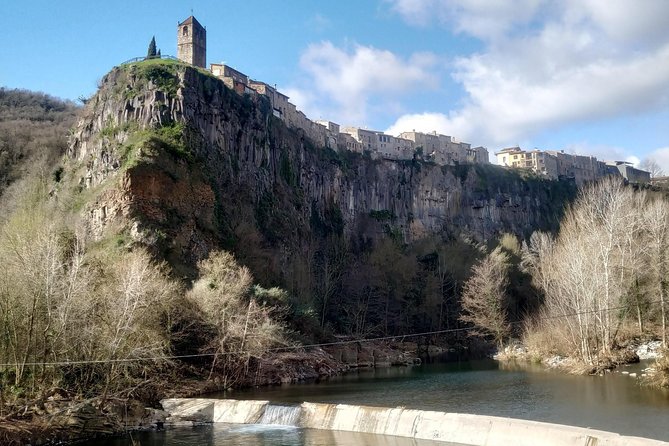
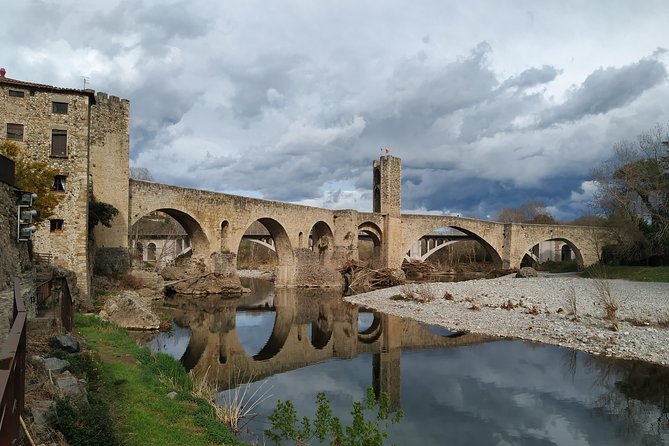
After lunch, the tour includes a stop for Castellfollit de la Roca, a picturesque town that rises on a spectacular basalt crag. The geology here is the story: the area was formed by the superimposition of two lava flows, and the Fluvià river helped shape it over time. The town sits about 50 m above the river in a stretch that’s nearly a kilometer long.
This is the “wow view” stop. You’ll get photo opportunities and a real sense of how volcano terrain can create instant drama. It’s not just scenery for scenery’s sake—this is the kind of place where you can look at rock layers and understand why a town grew exactly where it did.
Time here is limited, so I recommend you do two things quickly:
- Walk to a main viewpoint early for context.
- Use your free minutes to take photos and then enjoy the town streets, not just the cliff edge.
If you hate rushing, this is the part where you’ll feel the schedule. Still, the payoff is visual, and it fits well after the longer hike.
Besalú medieval streets: guided context plus free wandering
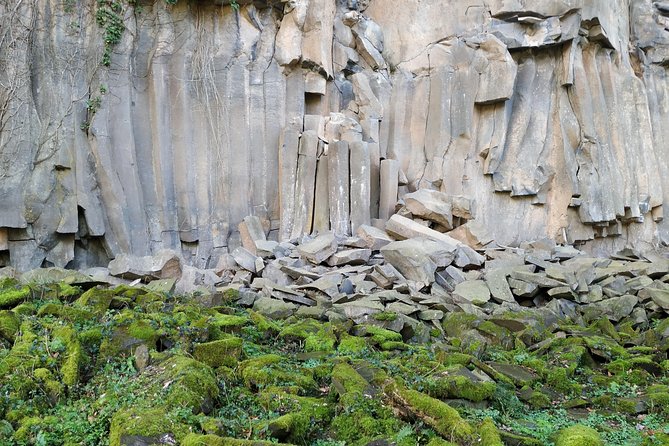
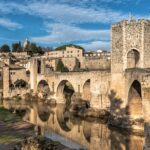
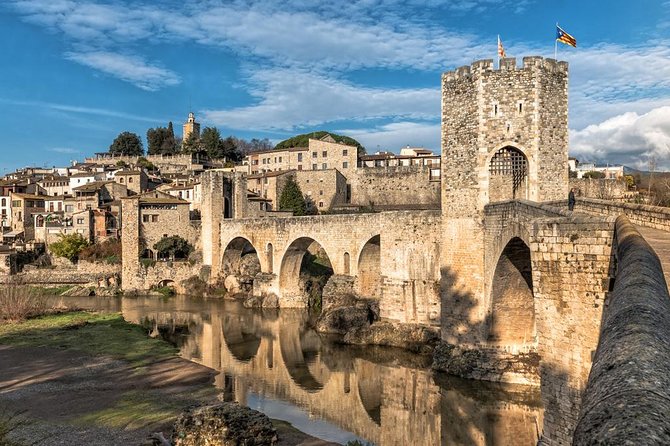
Then you head to Besalú, one of the best-preserved medieval towns in Catalonia. The tour includes a guided visit, plus free time afterward. The guided portion matters because Besalú’s medieval details can feel like “pretty buildings” if you don’t know what to look for.
A well-led walk helps you connect architectural features to how people lived and why specific structures were built. This is also where the guide’s personality shows. Ramon is known for making the conversation stick—history, daily life, and why towns like Besalú developed the way they did.
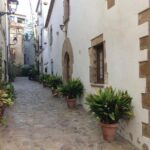
For your free time: keep it simple. Wander the streets, pause where the stone details catch your eye, and pick one or two spots to linger. You won’t get a full day here, so choosing a focus makes the most of what you have.
One consideration: the day is busy, and you may feel you wanted more time in Besalú. That doesn’t mean it’s poorly planned—it just means your priorities should lean toward the full-day blend, not single-town deep immersion.
Small-group value: what you’re paying for (and what you still need to add)
At $150.51 per person, this trip can feel pricey until you break down what you’re actually getting. You’re paying for:
- Transport in an air-conditioned minivan
- A professional local guide (English/Spanish-speaking)
- The guided hiking experience through La Garrotxa’s key areas
- Hiking poles plus bottled water
- Personal insurance
- Guided Besalú visit
The big “not included” items are straightforward: tips are optional, and lunch isn’t automatically included (though the restaurant can be booked). You’ll also want snacks for the hike.
When this is good value: if you want a structured day that mixes nature and medieval towns, and you don’t want to organize the logistics yourself. When it’s less ideal: if you prefer slow travel with long unstructured afternoons in one place, because this schedule is built to cover multiple highlights.
Weather, pace, and who this day trip suits best
This is a rain or shine tour. That’s helpful if you’re planning around Barcelona, but it also means you should treat weather seriously at the park. The tour recommends dressing appropriately and includes the reminder that La Garrotxa can run colder than Barcelona.
Fitness-wise, the hike is described as moderate. One review notes a mostly flat route with a few steep up hills, and the overall hiking time is about 3.5 hours. That puts it in the “active day” category. If you can handle a few steeper bits and stay steady for several hours, you’ll likely be fine.
Who I think should book:
- You want a guided, small-group hike without getting lost
- You like geology that explains itself through real places
- You want medieval towns with context, not just wandering
- You’re okay with a packed day and using free time wisely
Who might hesitate:
- You want a laid-back day with minimal walking
- You want lots of unhurried time in only one town
- You’re sensitive to cold weather and don’t plan to dress for the park
Should you book this Medieval Villages & La Garrotxa hiking tour?
Yes—if your ideal Barcelona day includes countryside, volcanic terrain, and medieval towns in one go, and you like the comfort of a small group. The mix is smart: you get the quiet beech forest hike first, then the more dramatic volcano features, and you finish with stone towns that reward your attention.
Before you book, decide what you want most: the hike or the towns. If your priority is the walking and you’re comfortable with an active day, this tour fits nicely. If your priority is soaking up one town for hours, you may feel rushed—so be honest about your travel style.
One last practical nudge: pack snacks for the hike, wear proper shoes, and bring a layer for La Garrotxa. Those little choices make the whole day smoother.
FAQ
What time does the tour start, and how long does it last?
The tour starts at 8:30 am and runs for about 9 hours.
How big is the group?
It’s a small-group tour limited to a maximum of 8 people.
Is lunch included?
Lunch is not included, but the tour can book a traditional local restaurant for you.
What language is the tour offered in?
The tour is offered in English, with a professional guide who can speak English/Spanish.
Do I need hiking shoes?
Yes. You’re advised to wear hiking or sport shoes and comfortable clothes.
Is the tour canceled for bad weather?
It runs rain or shine. If it’s canceled due to poor weather, you’ll be offered a different date or a full refund.
Is the hike suitable for me?
It requires moderate physical fitness and includes an active hike, generally with a few steeper up hills during the walking.
Is there free cancellation?
Yes, you can cancel for a full refund up to 24 hours before the experience’s start time.