REVIEW · BIG BEAR
Big Bear Fall Colors Hiking Tour in Southern California
Book on Viator →Bookable on Viator
Big Bear turns golden fast, and this hike is built for that moment. A local fall-colors walk means the guide picks the best trail conditions on your date, plus you get the small, calmer forest paths that make October feel special. I also like that the route can be tuned to your pace and mileage, not a rigid parade. One heads-up: these hikes usually go uphill, so you’ll want to be ready for some effort, even if you move slow.
The vibe is simple: show up, meet a licensed in-person guide, and let the forest do the heavy lifting—especially as you climb toward Big Bear Lake viewpoints through an oak forest. Based on what I see people consistently value, the best part is often how the guide connects the plants and trees to what you’re seeing right now. If you’re expecting a flat, easy stroll, plan for a workout.
If you’re bringing kids or you’re newer to hiking, you’re not forced to rush. You can hike as many or as few miles as you want, and the guide can slow things down. Just bring proper shoes and the basics—water, sunscreen, and sunglasses—because the outing is outdoors and you’ll be thankful.
In This Review
- Key things I’d plan around on this Big Bear fall hike
- Big Bear fall colors: why the day-of trail choice matters
- Meeting at 840 Elm St: what the first 15 minutes set up
- The Big Bear Lake and oak-forest walk: where the payoff comes from
- Pacing, uphill effort, and how families fit in
- What the $45 price really buys you in value terms
- What to bring: small items that prevent big problems
- When this Big Bear hike is the best match
- Should you book the Big Bear Fall Colors Hiking Tour?
- FAQ
- How long is the Big Bear fall colors hiking tour?
- Where do I meet for the hike?
- What’s included in the $45 ticket price?
- Is the hike easy?
- What should I bring?
- What happens if the weather is bad or I cancel?
Key things I’d plan around on this Big Bear fall hike
- A guide who matches the trail to the day’s peak colors, so you’re not stuck with a one-size-fits-all route
- Big Bear Lake views as you climb into the oak forest
- Flexible mileage and pace (slow is fine), even though the trail is often uphill
- Optional hiking poles available if you request them in advance
- Small-group feel with a maximum group size of 40
Big Bear fall colors: why the day-of trail choice matters
Fall colors in Big Bear aren’t one single event. October and early November can look wildly different from week to week. That’s why I like this setup: your guide leads you to the best autumn color area they’re targeting on that specific day. Instead of giving you a route and hoping for the best, the plan is built around what’s peaking when you arrive.
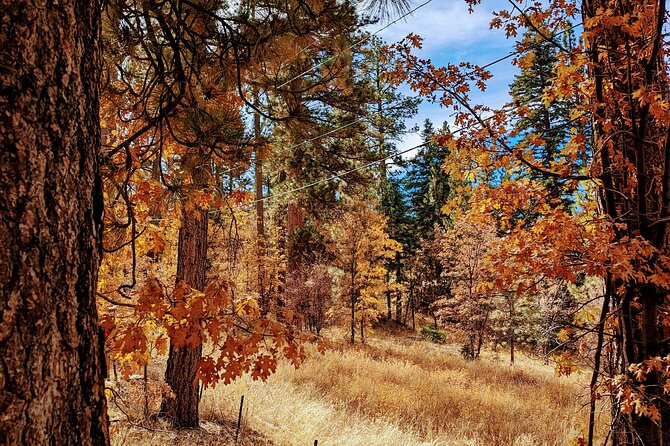
You’ll start on leaf-covered trails and work your way into an oak forest. As you climb, the forest opens up to views of Big Bear Lake—exactly the kind of scenery you want when the leaves are doing their thing. Even if you’ve seen fall photos from Big Bear before, the real difference is timing. When you’re hiking on the day the guide expects peak color, you’ll spend your effort where it’s most rewarding.
This also makes the experience feel more local. A guide who actually hikes these areas can steer people toward the best sightlines and the best photo stops. You’re not just walking; you’re being pointed to what to notice.
The main trade-off is that you don’t get a guarantee of a specific trail name. You’re buying the guide’s judgment on that date, and you’ll get more value if you’re open to where the hike goes.
Meeting at 840 Elm St: what the first 15 minutes set up
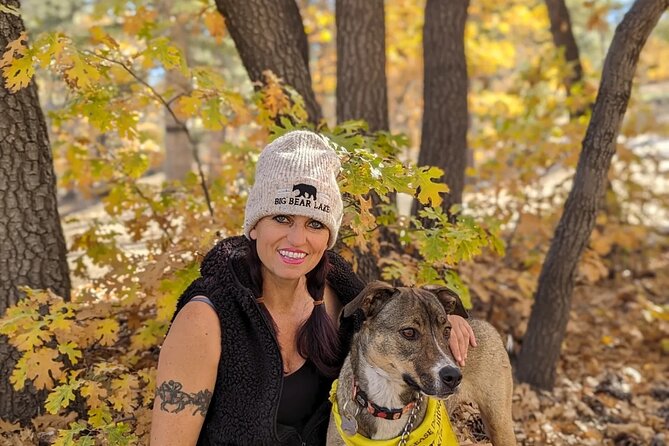
You’ll meet at 840 Elm St, Big Bear, CA 92314, and the hike ends back at the same spot. That loop style is practical. It reduces stress around transportation at the end of the hike, and it keeps your day from turning into logistics.
The tour runs about 2 hours, which is a sweet spot. It’s long enough to get into the woods and earn those higher views, but short enough that you’re not stuck planning your whole day around one activity. In fall, that matters because the lighting changes fast and weather can shift.
You’ll also get a mobile ticket, which is handy. Less paper to manage. Show up, check in, and you’re moving.
One more detail that affects your comfort: this is an in-person licensed guide outing in English. That’s important for a hike where the best value comes from knowing what you’re looking at—trees, plants, and the way Big Bear life works in these seasons.
If you’re the kind of person who likes structure, you’ll appreciate that the plan has a clear start and end point. If you’re the kind of person who hates rushing, you’ll still have room to slow down.
The Big Bear Lake and oak-forest walk: where the payoff comes from
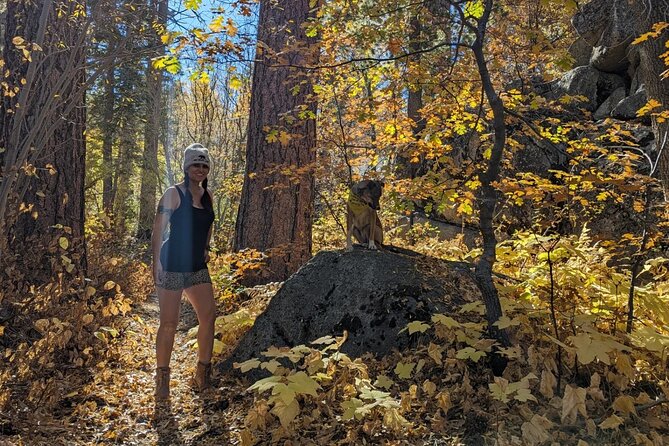
The heart of the hike is climbing from a scenic color area toward the oak forest, with Big Bear Lake views along the way. The descriptions you’ll hear before you start usually focus on one thing: you’ll be trekking through fall color while getting higher and higher.
I like this because it’s a visual progression. You begin in an area where the leaves are already doing the work, then you keep moving upward until the scenery opens. That means your hike isn’t just one static view. You should expect multiple photo moments as the forest changes and the lake becomes more visible.
Most of these routes go uphill, so don’t treat this like a recovery walk. But the good news is that the guide can pace you based on who’s in the group. If you’re new to hiking, you can ask for a slow pace and keep the focus on breath, footing, and enjoying the plants around you.
You can also choose how far to go. The hike distance is flexible: the guide will hike as many or as few miles as you’d like. That turns the outing into something you can scale. Want a shorter loop for kids or for a quick fall fix? You can do it. Want more climb for better views? You can keep going.
Also, this kind of forest time tends to feel calming. One of the strongest themes in the feedback is that a walk in the woods is a form of stress relief—especially in a place like Big Bear, where the air and trees do a lot of the work for you.
Pacing, uphill effort, and how families fit in
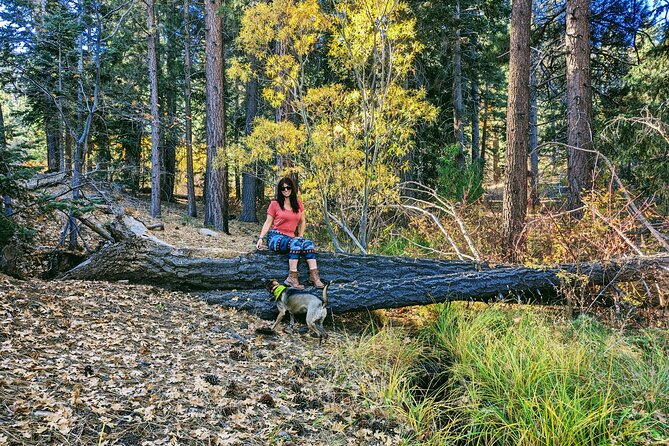
This is where you should be honest with yourself. The hike is not labeled as easy, and it often includes uphill sections. But it’s also not the kind of hike where you have to keep a fast tempo. The guide can slow down, and you can hike at the pace you prefer.
That makes it workable for beginning hikers—especially people who bring patience. If you’ve ever felt intimidated by “moderate” trails, this is still worth considering if you’re willing to move slowly and take breaks. You won’t be forced into a sprint.
For families, it’s not about forcing kids to match adult speed. It’s about letting the guide adjust the experience. The plan explicitly allows for a slower pace when kids or beginners are on the walk.
One practical consideration: bring the right footwear. This is a fall hike on trails that can be leaf-covered. Leaves can hide uneven ground, and cooler temps can make you slip. Good walking shoes are one of the easiest ways to keep the hike comfortable.
If you’re traveling with anyone who gets tired fast, build in extra margin. Even with flexible pacing, the uphill segments will still be uphill.
And if your group is the type that wants constant motion, you might get frustrated. This is a looking-and-walking hike. It works best when you’re okay slowing down to notice trees, plants, and the view changes.
What the $45 price really buys you in value terms
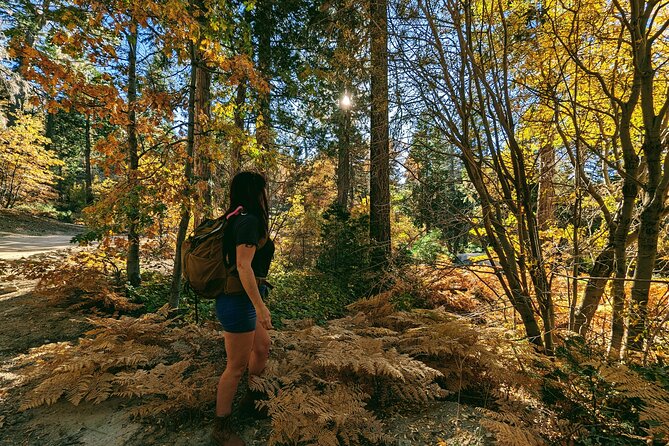
At $45 per person, the big question is what you’re paying for besides access. Here’s what makes the price feel more reasonable than a generic hike:
- You’re paying for a licensed in-person guide, not just a trail map.
- You’re paying for someone who can spot good conditions for fall colors on your exact day.
- You can request hiking poles ahead of time, which can make uphill sections easier and reduce strain.
That combination matters. In fall, trail conditions can shift. A guide’s judgment can mean the difference between walking through okay color and walking through genuinely strong color. You also get photo opportunities built into the walk, which helps turn the hike into more than exercise.
The outing is also priced for people who don’t want to over-commit. About 2 hours is short enough that you can fit it between meals, scenic drives, or other Big Bear plans. You’re not paying for a half-day that might feel too long if you just want one great autumn walk.
The cost does not include the outdoor basics. You’ll need to bring walking shoes, sunscreen, water, and sunglasses. I always treat those as non-negotiables on a fall hike. They’re not expensive, and they prevent the common “we felt fine at the start” problems.
If you’re comparing this to a DIY hike, the value comes down to time and confidence. The guide saves you from guessing where the best colors will be that day.
What to bring: small items that prevent big problems
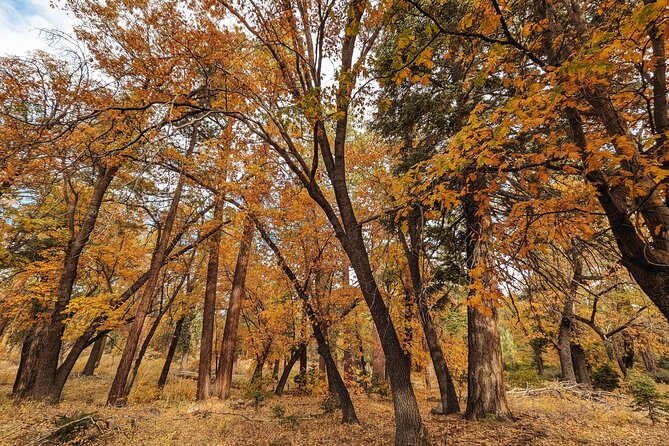
This hike stays outdoors for about two hours, usually with uphill walking and leaf-covered trail sections. So pack like you’re going to be outside long enough to get tired and slightly sun-exposed.
Here’s the practical list from the tour guidance:
- Walking shoes you trust on uneven ground
- Water
- Sunscreen
- Sunglasses
If you’ve got a history of sore knees or you’re not used to uphill walking, consider hiking poles. Poles are available if requested in advance, so you don’t have to carry gear if you’d rather travel light.
Service animals are allowed, and that’s worth noting if your travel needs include that kind of support. Also, most people can participate, which suggests the guide isn’t trying to run a fitness boot camp. Still, the uphill reality means you should judge your own comfort level.
One odd line to be aware of: the activity notes that travelers must have it’s own baby courier. That’s unusual wording, but it’s listed as a requirement. If that applies to your situation, make sure you understand it before you go.
When this Big Bear hike is the best match
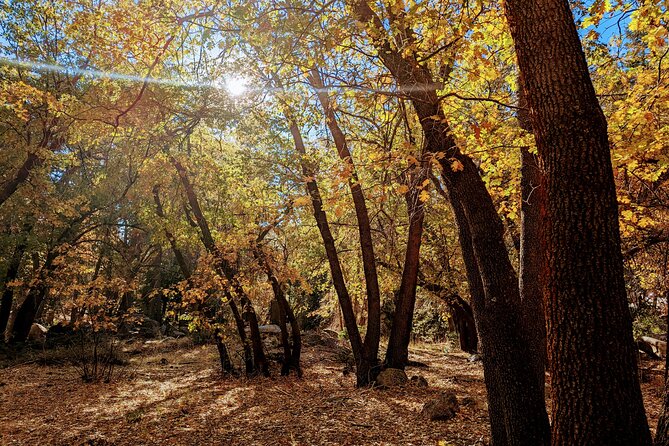
This is a great fit if you want fall scenery with the added benefit of local guidance. You’ll likely enjoy it most if you:
- Like walking through oak forest while watching views open up toward Big Bear Lake
- Want flexibility on distance and pace rather than a fixed route
- Appreciate a guide who can point out trees, plants, and what’s happening in Big Bear during fall
- Are okay with uphill sections as long as you can move slowly
It’s also a strong choice for families looking for something outdoors that isn’t a full-day commitment. The short duration helps. The pacing flexibility helps more.
If you want a totally flat trail, this might feel like too much. If you hate waiting even a few minutes to enjoy photo stops, you might prefer a self-guided drive-and-walk plan instead.
Should you book the Big Bear Fall Colors Hiking Tour?
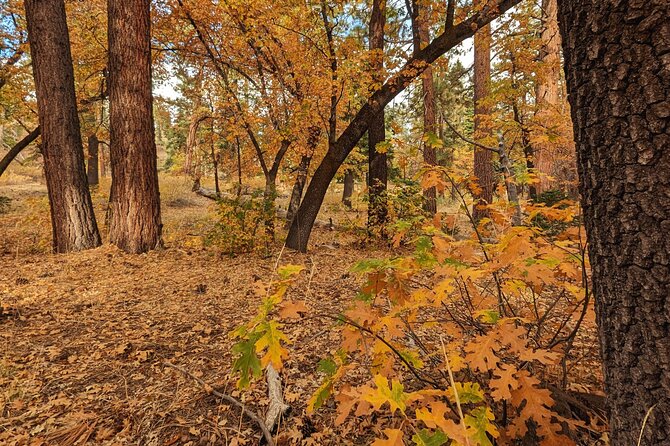
I’d book it if you’re traveling to Big Bear in October or early November and you care about seeing strong fall color at the right moment. This tour is built around that timing, and you’ll get more out of it if you like guided hikes and don’t mind some uphill walking.
I wouldn’t book it if you’re looking for an easy, flat walk or you want a fully predictable distance and route. The whole point is that the guide adjusts the experience to what’s peaking that day.
If you’re on the fence, do this: aim for good walking shoes, bring water and sun protection, and be ready to move at your own pace. With that mindset, you’ll get a calm, scenic woods walk that feels more “local day out” than “check-the-box activity.”
FAQ
How long is the Big Bear fall colors hiking tour?
It runs about 2 hours.
Where do I meet for the hike?
The meeting point is 840 Elm St, Big Bear, CA 92314, USA, and the tour ends back at the meeting point.
What’s included in the $45 ticket price?
The included items are a licensed in-person guide and hiking poles available if requested in advance.
Is the hike easy?
Most of these hikes go uphill, so it’s not classified as an easy hike. You can hike at a slow pace, and you can do as many or as few miles as you want.
What should I bring?
Bring your own walking shoes, sunscreen, water, and sunglasses.
What happens if the weather is bad or I cancel?
Cancellation is free if you cancel up to 24 hours in advance for a full refund. The experience requires good weather, and if it’s canceled due to poor weather, you’ll be offered a different date or a full refund.