REVIEW · BARCELONA
Costa Brava and Girona Small Group Easy Hike from Barcelona
Book on Viator →Operated by Mont Escape Tours · Bookable on Viator
Coastal paths and medieval Girona in one day. This small-group trip pairs an easy Costa Brava shoreline walk with a full guided sweep of Girona’s medieval sights. One watch-out: the hike is rated easy, but it’s not recommended if walking is difficult for you, so be honest about your pace.
I like how the day is built for time efficiency. You start at Pg. de Gràcia 69 (8:30am), ride in an air-conditioned minivan, and get live English commentary while you move between picture stops and major landmarks. And yes, it helps that the group is capped at 8 travelers, so you’re not shouting over wind and bus horns.
In This Review
- Key Highlights You’ll Actually Feel During This Trip
- Why Costa Brava and Girona Fit Together So Well
- Getting From Barcelona: The 8:30 Departure That Sets the Tone
- Cami de Ronda: The Easy Coastal Walk With Big View Payoff
- La Cala S’Alguer: A Pleasant Water Stop (Not a Marathon)
- Placa de la Independencia Lunch Break: Eat Local, Choose Your Spot
- Entering Girona Medieval Streets via Pont de les Peixateries Velles
- The Onyar River Walk: Where the City Turns Into Views
- Jewish Quarter to Sant Domenec: Story-Layered Old Town Walking
- Passeig de la Muralla and Girona Cathedral: Big Views, Real Scale
- El Cul de la Lleona: Closing the Loop on Girona’s Medieval Feel
- Guides and Commentary: What You Get When the Day Isn’t Just Sightseeing
- Price and What It Covers: Is $97.99 a Good Deal?
- Weather, Footwear, and the Real Meaning of Easy
- Who This Small-Group Day Trip Suits Best
- Should You Book This Costa Brava and Girona Easy Hike?
- FAQ
- How long is the Costa Brava and Girona tour?
- What is the meeting point and start time?
- Is lunch included?
- How big is the group?
- What language is the tour offered in?
- Is the coastal walk really easy?
- What is the minimum age to join?
- Are admissions included for the stops?
- What happens if the weather is poor?
Key Highlights You’ll Actually Feel During This Trip
- Small group (max 8) means you get closer to the guide and slower, calmer stops.
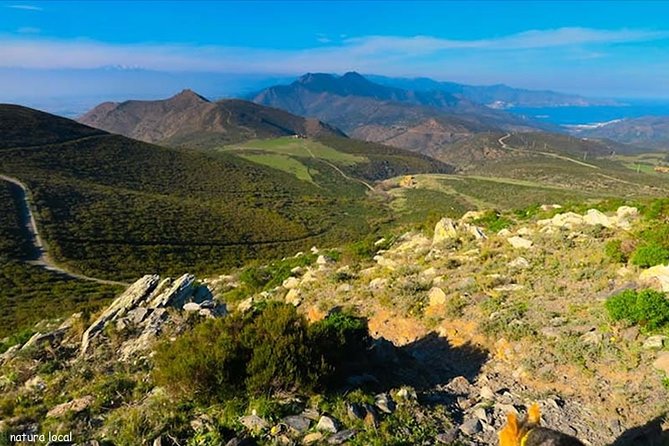
- Cami de Ronda gives you coastal views without needing serious hiking skills.
- Girona’s medieval circuit is guided step-by-step, not just “go see stuff.”
- Eiffel Bridge (Pont de les Peixateries Velles) brings a fun world-history twist.
- Placa de la Independencia lunch break gives you time to eat on your own schedule.
- Guided stops list free admission on the schedule, which helps your budget.
Why Costa Brava and Girona Fit Together So Well
Costa Brava and Girona are close enough that doing both in one day makes sense. You get the best contrast: morning coastal walking with sea air, then a change of pace into inland stone streets and river views.
The “easy hike + guided city walk” combo is also good value. Instead of spending all day in transit, you’re doing real activities in real locations. You’ll be glad for the early start once you see how much gets packed into the roughly 9-hour day, including the guided segments.
You can also read our reviews of more hiking tours in Barcelona
Getting From Barcelona: The 8:30 Departure That Sets the Tone

The day begins at Pg. de Gràcia, 69 in the Eixample. Pickup is set for 8:30am, and the tour ends back at the same meeting point. That matters because you’re not trying to solve Barcelona logistics mid-trip.
You travel in an air-conditioned minivan with parking fees included. Small-group transport is one of those details you only notice when it’s missing. Here, it helps you stay comfortable while you switch from the coast to Girona.
Also, you’ll hear the story as you go. The trip includes live commentary on board, offered in English, with notes that guides may be multi-lingual depending on the departure.
Cami de Ronda: The Easy Coastal Walk With Big View Payoff
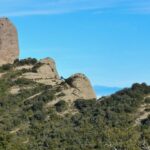
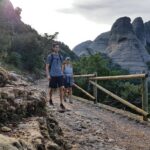
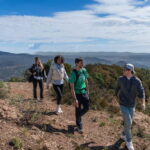
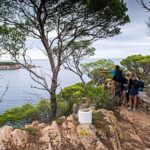
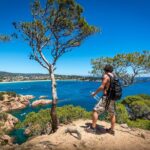
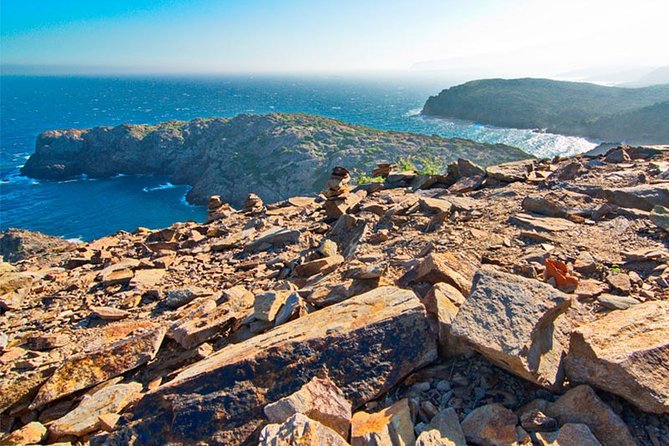
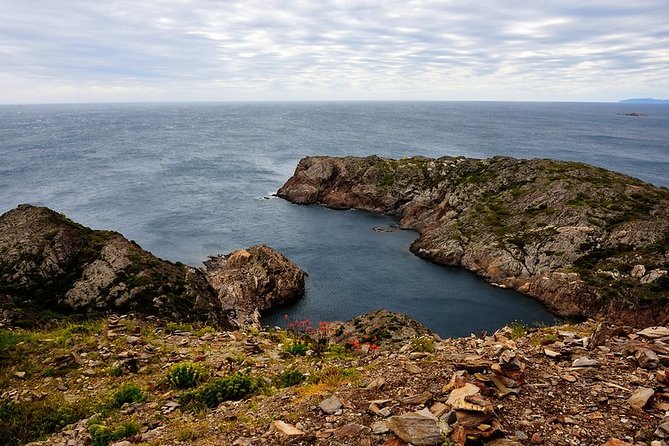
This is your main hiking moment: Cami de Ronda, a coastal path walk with free admission listed and about 1 hour on the ground.
Why it works: “easy” here doesn’t mean boring. Coastal trails typically give you frequent sight lines—sea on one side, cliffs and coves on the other—so you’re not stuck staring at the same stretch of pavement. The best strategy is simple: walk steadily, pause for photos often, and don’t treat it like a race. It’s a view-first route.
Practical note: even on an easy hike, you still need solid footwear. The walk is described as easy, but paths can be uneven. Bring shoes you trust, not brand-new sneakers with slippery soles.
La Cala S’Alguer: A Pleasant Water Stop (Not a Marathon)
Next comes La Cala S’Alguer, a shorter 30-minute stop. This is the kind of break that helps you reset before Girona, and it’s timed like a breather rather than another endurance challenge.
The value here is variety. After a coastal path segment, you shift to a cove-style pause. Even if you’re not planning to swim, you’ll likely enjoy the change in scenery and the chance to grab quick photos without feeling rushed.
Placa de la Independencia Lunch Break: Eat Local, Choose Your Spot
Lunch is built into the day at Placa de la Independencia. You get about 1 hour 30 minutes, and this stop is not included for food and drinks.
The key detail: you’ll need a plan for lunch before you’re hungry. Since you pay on your own at nearby restaurants, think in terms of speed and comfort:
- If you want a quick meal, pick somewhere close to where you finish lunch break exploration.
- If you want a calmer sit-down, budget extra minutes for walking from place to place.
A longer lunch break can be tempting, but remember: Girona’s guided portion continues after. I’d treat lunch as a recharge, not a full second tour.

Entering Girona Medieval Streets via Pont de les Peixateries Velles
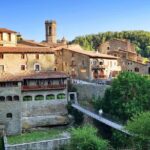
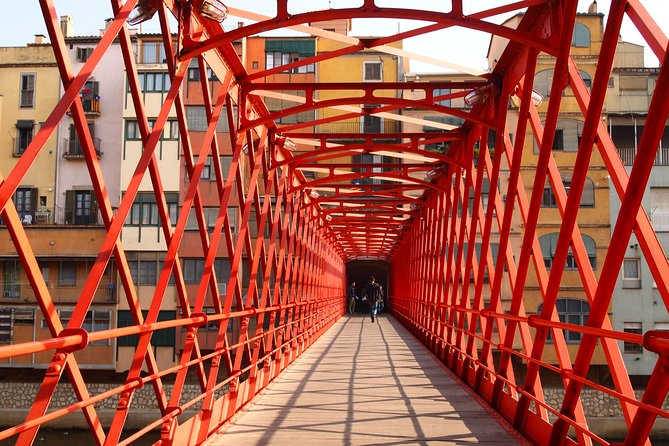
Once you arrive, the Girona portion is a series of guided segments through the medieval quarter. It starts at Pont de les Peixateries Velles, also called the Eiffel Bridge.
This bridge gets bonus interest because it’s tied to the world-famous name of Gustaf Eiffel—and that detail makes the area feel connected to more than just local architecture. You’ll also likely get context for how Girona’s river and old town shape daily life and city layout.
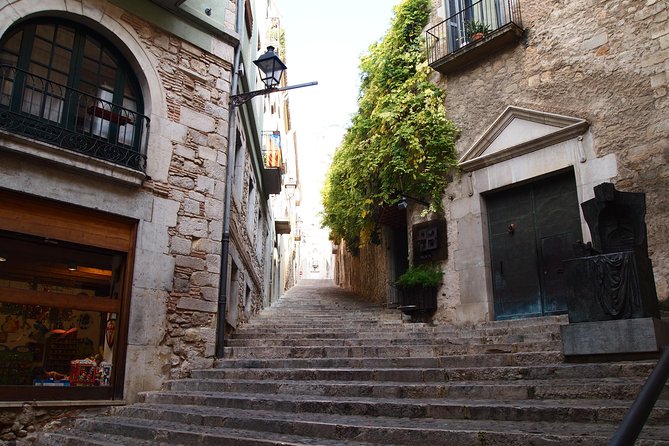
This first stop is about orientation. You start seeing how the old streets flow, where the river sits in relation to the stone buildings, and what makes this town walkable even when it feels like a maze.
The Onyar River Walk: Where the City Turns Into Views
Next is the Onyar River stop, guided for about 2 hours. River segments are one of those travel themes that never disappoint, because your photos don’t need planning. The view does the work.
This part is less about one single “attraction” and more about understanding the town’s shape. The river lines your path, and Girona’s buildings respond to it—different colors, angles, and viewpoints as you move through the medieval area.
If you like photography, this is a good time to slow down. Ask questions, then walk two steps and stop again. The best angles in older towns often require small repositioning.
Jewish Quarter to Sant Domenec: Story-Layered Old Town Walking
The itinerary then moves into Patronat Call de Girona, typically your guided stop centered on the Jewish quarter area, followed by Pujada de Sant Domenec.
Why this matters: Girona isn’t just scenic. It’s layered. You’re walking through parts of the city where history is part of the street map, not stuck inside a museum room. The guided approach helps you connect what you see to what those places meant over time.
Also, the pace and route choices matter. “Pujada” suggests an uphill feel in name alone, and even if it’s part of a guided walk, you’ll want to be prepared for some extra effort compared with flat river strolling. If you’re already watching your energy, manage it here: small breaks beat big pauses.
Passeig de la Muralla and Girona Cathedral: Big Views, Real Scale
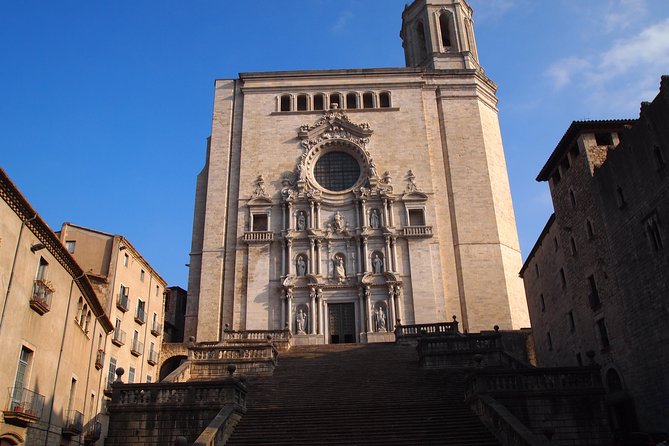
After that, you’ll walk Passeig de la Muralla, which is the wall promenade. This is one of the best chances for a broader look at the city, because medieval walls were built for visibility and defense—and modern eyes still benefit.
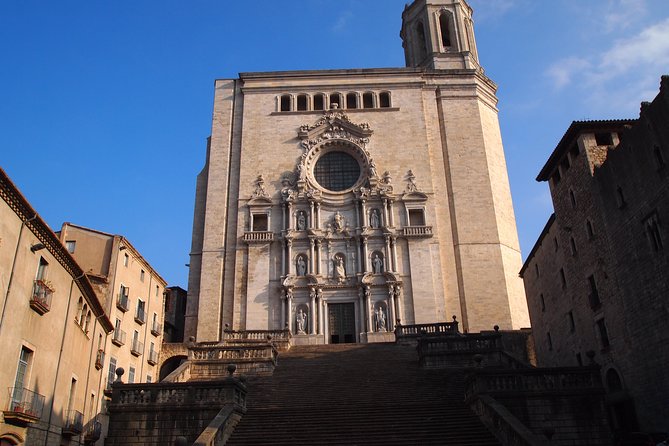
The guided wall walk also connects nicely with later stops. When you reach Girona Cathedral, you can better appreciate scale. Cathedral stops tend to feel more meaningful once you’ve seen how the town works around them.
Even if you don’t go into every corner, you’ll get the main idea: Girona’s religious landmark isn’t random. It’s part of how the city grew, shaped by power, community, and geography.
El Cul de la Lleona: Closing the Loop on Girona’s Medieval Feel
The day ends in Girona with El Cul de la lleona, guided for about 2 hours.
This stop works as a finishing emotional note. By the time you get there, you’ve already seen the bridge, river, historic quarters, wall views, and the cathedral. So this final segment feels like a wrap-up—one last guided piece that helps everything click into a cohesive town picture rather than a series of disconnected stops.
It’s also a nice point to ask a few “how did it all fit together?” questions. At this stage, you’ll understand what to ask because you’ve already walked the streets.
Guides and Commentary: What You Get When the Day Isn’t Just Sightseeing
A huge reason this trip scores high is the live commentary and the guide’s ability to make the places understandable. In the provided examples, guides have included Ferran and Ivan, plus other English-speaking guides named Mark, Marc, and James.
What that signals for you: Girona and Costa Brava can look beautiful on their own, but guidance turns beauty into context. When the guide explains the significance of what you’re seeing—buildings, neighborhoods, and the “why” behind the route—you spend less time wondering and more time enjoying.
And because the group is small, questions land better. In a larger tour, your question becomes a whisper. Here, it’s part of the conversation.
Price and What It Covers: Is $97.99 a Good Deal?
At $97.99 per person, this day trip is built around a mix of guided time and transportation. Here’s the value math that matters:
- Included: air-conditioned minivan transport, professional guide, live onboard commentary, and parking fees.
- Not included: food and drinks.
- Admission: the schedule lists free admission tickets for the stops (so you’re not paying entry fees as you move).
So what are you really buying? You’re paying for the combination of:
1) comfort getting out of Barcelona early,
2) a guided Costa Brava coastal segment, and
3) a structured Girona medieval walk where the guide keeps the story moving.
If you know you’ll spend lunch money anyway, this price can feel like a bargain for the guided portions—especially with the small-group cap.
Weather, Footwear, and the Real Meaning of Easy
This experience requires good weather. If weather isn’t cooperating, the operator offers a different date or a full refund.
Even in good weather, the word easy should be read correctly. The coastal hike is described as easy, but it’s explicitly not recommended for individuals who have trouble walking. That’s the right call. Don’t let the word easy persuade you to overestimate your limits.
My practical recommendation:
- Wear comfortable, supportive shoes.
- Keep an eye on your pace around any uphill-feeling segments in Girona.
- Bring a light layer. Coastal mornings can feel cooler than you expect, and comfort keeps you happy for the full day.
Who This Small-Group Day Trip Suits Best
This trip fits best if you want:
- a relaxed day outside Barcelona without committing to long, intense hikes,
- a guided old-town experience where you don’t have to piece together history alone, and
- a small group that doesn’t feel like a moving crowd.
It’s also a strong family option in the right group. One family experience included kids around the 8-year-old range, and the trip worked as a whole-day outing with an attentive guide. Minimum age is 5, with kids needing an adult.
If you’re the type who likes photos but also wants the story behind what you’re photographing, you’ll likely enjoy this format.
Should You Book This Costa Brava and Girona Easy Hike?
Book it if you want one efficient day that delivers both coastal views and medieval Girona without doing the planning yourself. The small group size, A/C transport, and free-admission schedule for stops make it feel like a thoughtful way to spend your time in the Barcelona area.
Skip—or at least choose another option—if you know walking is a struggle for you. The hike is called easy, but the tour is still walking-focused, and it’s not recommended for difficulty walking.
Also, this one tends to be booked ahead (average booking around 57 days in advance), so if you have your heart set on a specific day, don’t wait.
FAQ
How long is the Costa Brava and Girona tour?
It runs for approximately 9 hours.
What is the meeting point and start time?
You meet at Pg. de Gràcia, 69, L’Eixample, 08008 Barcelona, and the start time is 8:30am. The tour ends back at the meeting point.
Is lunch included?
No. There’s a lunch stop at Placa de la Independencia, but food and drinks are not included.
How big is the group?
This is a small group experience with a maximum of 8 travelers.
What language is the tour offered in?
The tour is offered in English, with notes that the guide may be multi-lingual.
Is the coastal walk really easy?
It’s described as an easy hike, but it’s not recommended for individuals who have difficulty walking.
What is the minimum age to join?
The minimum age is 5 years old, and children must be accompanied by an adult.
Are admissions included for the stops?
The schedule shows free admission for each listed stop, and the tour includes guide-led time at those locations.
What happens if the weather is poor?
This experience requires good weather. If it’s canceled due to poor weather, you’ll be offered a different date or a full refund.