REVIEW · BIG ISLAND OF HAWAII
Kilauea Summit to Shore from Kona: Small Group
Book on Viator →Operated by The Volcano Van Private Tours · Bookable on Viator
Kīlauea in one long day feels like a whole course. This small-group Kona-to-volcano trip strings together rainforest, waterfalls, black-sand coast, and Kīlauea’s summit in about 8–9 hours, with a guide who actually explains what you’re seeing. I especially like the focused Kīlauea/Hawaiʻi Volcanoes National Park time, and the fact that pickup and drop-off mean you’re not wrestling a car schedule all day. The only real catch: it’s a full-day loop, so if weather forces quick changes, you may feel a bit “on the move” rather than lingering.
I went for the geology, stayed for the variety. The van route gives you microclimates from higher elevation down to the Puna coast, then puts you on the crater rim and around steaming, scorched ground where active processes shape the views. If you love a slow, leisurely pace and long photo walks at every stop, this may feel tighter than you’d like.
In This Review
- Key things I’d plan around before you go
- Kilauea Summit to Shore: what this 8–9 hour day really delivers
- Small-group comfort from Kona: pickup, pacing, and who it fits
- Saddle Road microclimates on the way to Hilo
- Mauna Loa lava tubes, Kaumana Caves, and Rainbow Falls
- Hilo lunch at Hilo Sharks Coffee and the Pahoa Red Road drive
- Kalapana’s lava story and the south-coast contrasts
- Hawaii Volcanoes National Park and the Kilauea summit caldera viewpoints
- Guide Scott’s volcano teaching style and how to get more out of it
- Timing, weather, and what to wear so the day stays fun
- Price and value: is $235 worth it for a Kona-to-Kilauea day?
- Who should book (and who might prefer something else)
- Should you book the Kilauea Summit to Shore small-group tour?
- FAQ
- What is the duration of the Kona to Kīlauea tour?
- How much does the tour cost per person?
- What time does the tour start?
- Is hotel pickup and drop-off included?
- What group size should I expect?
- Is lunch and water included?
- Does the tour include admission tickets?
- Does the tour run in bad weather?
- Can I cancel for a full refund?
- What language is the tour offered in?
Key things I’d plan around before you go
- Max 6 people per booking means you get a more personal guide-to-van ratio than big group buses.
- Pickup + drop-off included so your day starts and ends with less stress.
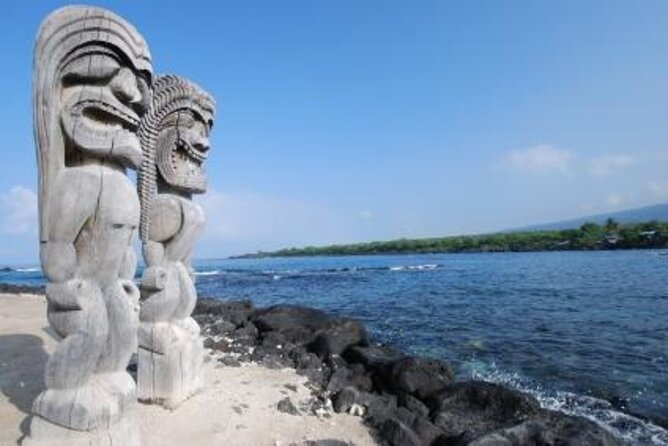
- Rainbow Falls, Kaumana Caves, and Kaʻū/Red Road coastal stops give you contrast beyond the volcano park.
- Kīlauea summit caldera viewpoints are the main event, with frequent chances to stop and look.
- Weather can change the timing, so plan to stay flexible and dress for shifting conditions.
- Lunch and snacks are included (picnic lunch plus bottled water and snacks), keeping the day from turning into a food scavenger hunt.
Kilauea Summit to Shore: what this 8–9 hour day really delivers
This is built for people who want a one-day hit of Hawaiʻi Volcanoes National Park, not a half-day glance at a single overlook. You’ll move from the east side forests around Hilo, then cut south and east toward the Puna coast, before finishing at Kīlauea’s summit area.
The best part is the flow: you’re shown how the island changes with elevation and geography. You’ll go from lush, wet environments to areas shaped by lava activity, and you’ll get context for why those scenes look so different from one mile to the next.
Small-group comfort from Kona: pickup, pacing, and who it fits
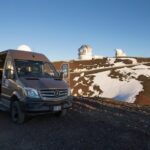
Pickup and drop-off are included, and that matters on the Big Island. Instead of spending your day on directions and parking, you get transportation by a private vehicle built for this route and a guide to manage the timing.
A key detail: the group tops out at 6 travelers. That smaller size helps you get more direct answers as you stop, and it also makes it easier for the guide to adjust the plan if the weather or road conditions shift.
This is a great fit if you’re:
- short on time and want a full Kīlauea-focused day,
- traveling with a mix of ages who still want to see a lot,
- more interested in explanations than in standing in line with a crowd.
Saddle Road microclimates on the way to Hilo
The route starts with a hotel pickup and then heads toward the east side via Saddle Road. Along the way, you’ll climb to almost 6,800 feet (2,072 m), and the island’s microclimates show up fast.
This part isn’t just a transfer; it’s an education in geography. You’ll pass different environmental zones where the air, cloud cover, and vegetation can change in ways that feel surprising from the road.
If your photos usually come out best when you have time to watch the light, keep your expectations realistic here. The journey is scenic, but you’ll be moving—this isn’t a drive that pauses for long, slow viewpoints at every turn.
Mauna Loa lava tubes, Kaumana Caves, and Rainbow Falls
As you approach Hilo, there’s a stop connected to molten rock and the role of lava tubes in Hawaiʻi’s formation. That sets up what you’ll see later: how older lava pathways can be replaced, reshaped, or exposed as conditions change.
Then you’ll make a quick visit to the Kaumana Caves. It’s a short break, but it’s the kind of stop that helps you connect the words “tube” and “conduit” with something you can actually stand near.
After that, it’s Rainbow Falls (Waianuenue), an 80-foot (24 m) drop. Even when clouds or mist change the look, the waterfall is a strong landmark—one of those places that gives you a clear sense of how wet and wind-driven the east side can be.
Hilo lunch at Hilo Sharks Coffee and the Pahoa Red Road drive
Lunch is at Hilo Sharks Coffee. The value here is not only the meal, but the rhythm: you’ll be fed and ready before the day shifts from rainforest energy to volcanic-coast drama.
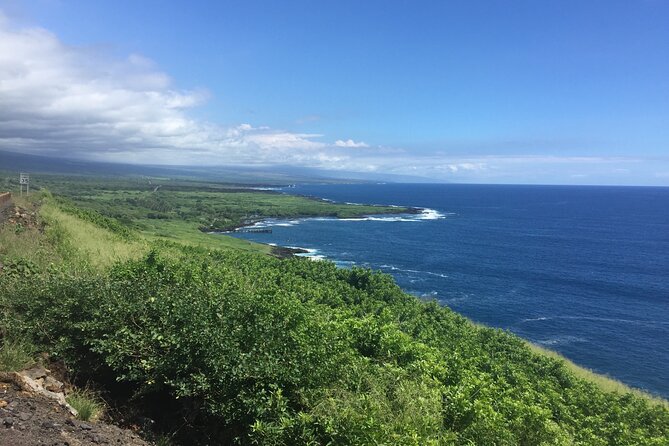
After lunch you head to Pahoa, then onto the famous Red Road along the Puna Coast on Kīlauea’s southeast flank. This stretch is a mood change. Rain forests thin out into black cliffs, rocky coastlines, and wave noise that makes the stops feel more alive than a distant overlook.
One practical tip: if you’re prone to motion sickness, sit where you feel best in the van and go easy on heavy snacks earlier in the day. The coast roads aren’t listed as rough, but you’ll be on the move enough that it’s worth planning.
Kalapana’s lava story and the south-coast contrasts
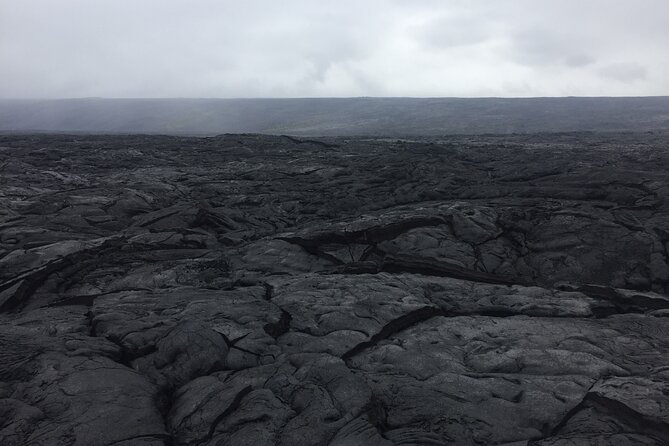
The drive ends at Kalapana, a town that was mostly buried by lava in 1990. That detail matters because it anchors what you’re seeing to real, recent history of the ground changing.
This is one of the stops where the day’s theme becomes very clear: Hawaiʻi isn’t frozen in time. You’re not just looking at scenery—you’re looking at evidence of what’s happened and what’s still happening.
Also, you’ll likely notice how the coast can look different from day to day with wind, spray, and cloud cover. If the weather isn’t perfect, don’t assume the stop is wasted—sometimes the contrast between sky and rock makes the shoreline feel even more dramatic.
Hawaii Volcanoes National Park and the Kilauea summit caldera viewpoints
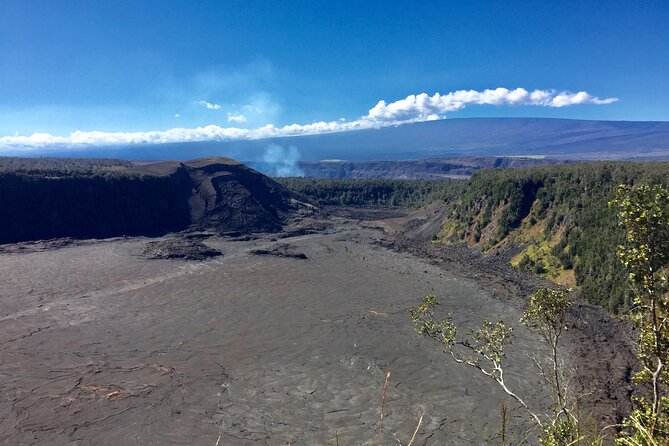
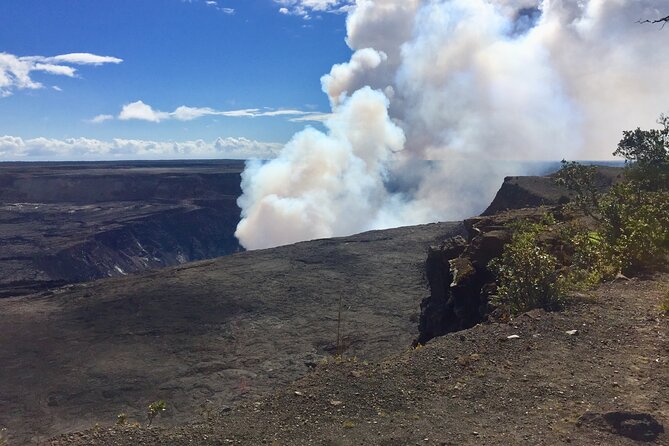
This is the main attraction. Once you reach Hawaiʻi Volcanoes National Park, you’ll drive up toward the summit of Kīlauea and around the areas where the ground shows layers of activity.
You’ll look into Kīlauea’s vast summit caldera, formed about 500 years ago. And instead of one single photo stop, the route includes multiple chances to pause: you’ll pass pit craters, scorched earth, steaming ground, and lava flows old and new.
Here’s the way to get the most out of this part of the day: plan to listen while you look. The guide’s job is to connect what you see—steam patches, darker vs. lighter rock, different textures of flow—to what’s happening below the surface.
One caution from real-day experience: sometimes the day can feel rushed if weather changes quickly. If you’re hoping for long crater-rim wandering, keep some patience for the fact that access, visibility, and conditions can shape how long you can safely stay in each spot.
Guide Scott’s volcano teaching style and how to get more out of it
Many tours show you places. This one leans harder into explaining the “why.” Your guide—often Scott with The Volcano Van—has a reputation for making the geology click without turning it into a lecture.
A few things that stand out from how the guide runs the day:
- You get talk-track explanations while you drive, not only when you’re stopped.
- Stops are chosen with an eye for fewer crowds when possible.
- The guide stays responsive if plans need adjustment due to conditions.
For example, there’s sometimes an attempt to see lava-tube-related areas, but access can depend on practical factors like parking availability and tour traffic. That doesn’t ruin the day—the rest of the route still delivers big-picture understanding—but it’s good to know that not every add-on can be guaranteed in every weather window.
Timing, weather, and what to wear so the day stays fun
This tour operates in all weather conditions. That’s great in one way: you’re not simply canceled because of clouds or mist. It’s also a sign you should dress like the Big Island can change its mind in an hour.
Bring close-toed shoes. You’ll be getting in and out of the van at viewpoints, walking short distances, and standing around lava-shaped terrain where the ground can feel slippery or uneven.
Also, wear layers. Even if the temperature isn’t extreme, wind and mist can make the summit area feel colder than the coast. If you run hot, you’ll still appreciate having something you can shed quickly.
Price and value: is $235 worth it for a Kona-to-Kilauea day?
At $235 per person, this is not a budget gamble. What you’re paying for is a full-day package where transportation, guidance, and food are bundled into one plan.
The value comes from the combination:
- Round-trip hotel pickup and drop-off (big time saver),
- small group size capped at 6 (easier questions, less waiting),
- snacks plus a picnic lunch and bottled water,
- and a concentrated focus on Kīlauea and the national park, rather than a scattershot route.
If you were to buy transportation separately, then add paid entry for key stops, then cover your own lunch, you’d likely spend similar money—often with less time actually spent learning and looking.
That said, consider your priorities. If you mainly want a quick, cheap ride to the park gates and don’t care about the broader east-side-to-south-coast story, you could find cheaper options. But if you want the whole “how this island changes” arc in one day, this price starts to make sense.
Who should book (and who might prefer something else)
Book it if you want:
- a single-day plan that centers Kīlauea and Hawaiʻi Volcanoes National Park,
- small-group pacing with a guide who answers questions,
- and a route that shows you more than just one viewpoint.
Consider a different style of tour if:
- you dislike packed itineraries and want lots of free time per stop,
- you need a very slow walk-heavy itinerary with long hikes,
- or you know you struggle with weather uncertainty and schedule changes.
Should you book the Kilauea Summit to Shore small-group tour?
I’d book it if you’re coming to Kona for a limited number of days and you want the volcano day to feel complete. The small group size, the built-in meal plan, and the way the route connects rainforests, caves, waterfalls, coast, and Kīlauea make it a strong value for your time.
If weather is a concern, I still think it’s a solid choice—just be realistic. Dress for changing conditions, bring the right shoes, and plan to treat the day as a guided route through living terrain, not a guaranteed photo studio.
FAQ
What is the duration of the Kona to Kīlauea tour?
It runs about 8 to 9 hours.
How much does the tour cost per person?
The price is $235.00 per person.
What time does the tour start?
The start time is 9:00 am.
Is hotel pickup and drop-off included?
Yes. Hotel/Airport pickup and drop-off are included.
What group size should I expect?
The tour is limited to a maximum of 6 travelers per booking.
Is lunch and water included?
Yes. You’ll have a picnic lunch, plus snacks and bottled water.
Does the tour include admission tickets?
The experience is marked as Admission Ticket Free, but it’s wise to confirm details at booking.
Does the tour run in bad weather?
It operates in all weather conditions. You should dress appropriately since conditions can change.
Can I cancel for a full refund?
Yes. You can cancel up to 24 hours in advance for a full refund.
What language is the tour offered in?
The tour is offered in English.