REVIEW · BIG ISLAND OF HAWAII
Big Island GOAT Experience: Mauna Kea Summit, Sunset & Stars
Book on Viator →Operated by Hawaii Island Holidays · Bookable on Viator
Mauna Kea at night is magic with altitude. This small-group sunset and stars trip gets you up to the summit in a 4×4 van, then pairs Hawaiian culture stories with real astronomy tools for a sky show you can actually see with your own eyes.
What I like most is the built-in warmth setup (provided jackets and gloves) and the guided setup for spotting what matters in the dark. One drawback to plan for: it can be very cold and windy up top, and some parts of the experience involve standing outside for a while.
For starters, I love that you’re not stuck doing the driving yourself—you’re in a comfortable 4×4 with round-trip transit from Hilo, Waikoloa Village, or Kailua-Kona, and the group stays limited to keep the evening feeling personal. I also like the way the guide uses a laser pointer plus a professional telescope, so the stargazing turns from random staring into targeted looking.
The main consideration is simple: weather and cold run the show. On clear nights, it’s a hit; with clouds or wind, stargazing can be less dramatic, and you still need to dress for near-freezing conditions at high elevation.
In This Review
- Key things you’ll remember from this Mauna Kea sunset and stars tour
- Mauna Kea by 4×4: what the drive really means for your night
- Sunset hour at the Mauna Kea summit: warmth, timing, and what to watch for
- Stargazing with a laser pointer and a professional telescope
- Halepōhaku / Onizuka Center stop: where astronomy meets Hawaiian sacred tradition
- What’s included (and what you should bring anyway)
- Guides, photos, and the “small touches” that make it feel worth it
- Price and value: is $289 for a Mauna Kea night a fair deal?
- Who should book, and who should skip Mauna Kea summit stargazing
- Should you book this Mauna Kea sunset and stars tour?
- FAQ
- What pickup locations are available for this Mauna Kea tour?
- How cold should I expect the summit to be, and what should I wear?
- How strenuous is the experience?
- How high is the Mauna Kea summit area?
- Do we get to use a telescope during the tour?
- Are there age limits for joining?
Key things you’ll remember from this Mauna Kea sunset and stars tour
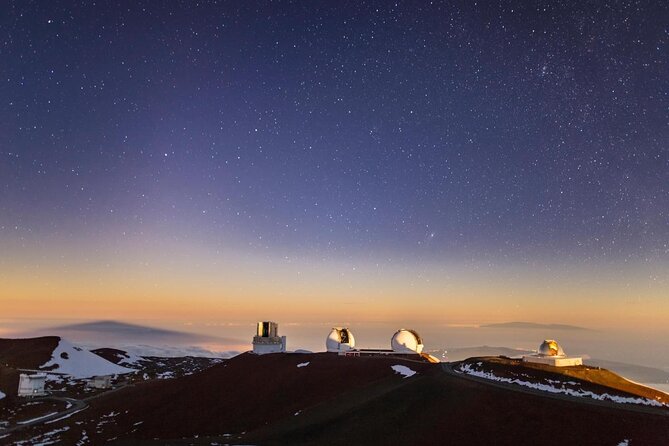
- Small-group 4×4 ride up to the summit so you can focus on the sky, not the road
- Provided warm jacket and gloves plus hot drinks and snacks before the stars come out
- Summit sunset viewing at one of the highest points you can reach by vehicle
- Laser pointer + professional Celestron telescope for hands-on “look right here” astronomy
- A stop at Halepōhaku/Onizuka Center where astronomy connects to Hawaiian sacred traditions
- A free night photo captured with a professional camera to save you hassle in the cold
Mauna Kea by 4×4: what the drive really means for your night
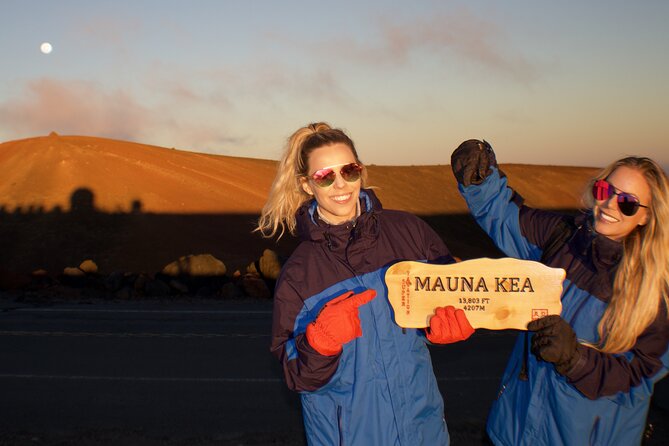
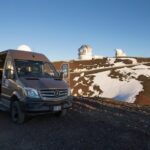
The whole experience is timed around one thing: getting you to Mauna Kea when the sky is ready for you. After pickup in the afternoon, you ride in a comfortable 4×4 passenger van with a small group (up to 14). You’re not just “transported”—you’re taken uphill in stages to match the evening’s light and temperature changes.
This is also where I’d set expectations. You’ll spend a good chunk of the outing in transit, because the summit isn’t a quick hop from the visitor areas down low. That’s not a reason to skip it. It’s part of the value: with the right vehicle and experienced guide, you’re more likely to arrive at the best time window rather than stressing about route, access, or timing on your own.
Altitude matters too. The visitor station sits around 9,200 ft (2,800 m), while the summit reaches about 13,796 ft (4,205 m). Even if you feel fine at sea level, plan for thin air and cold air. The tour asks for moderate physical fitness and cautions against serious medical issues or heart problems—so you should treat altitude as a real factor, not a fun detail.
Sunset hour at the Mauna Kea summit: warmth, timing, and what to watch for
At the summit, the tour shifts from the “getting there” phase to the “slow down and look” phase. You’ll be suited up with a provided jacket and gloves, and you’ll get a hot beverage and snacks as you wait for the sun to drop.
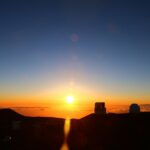
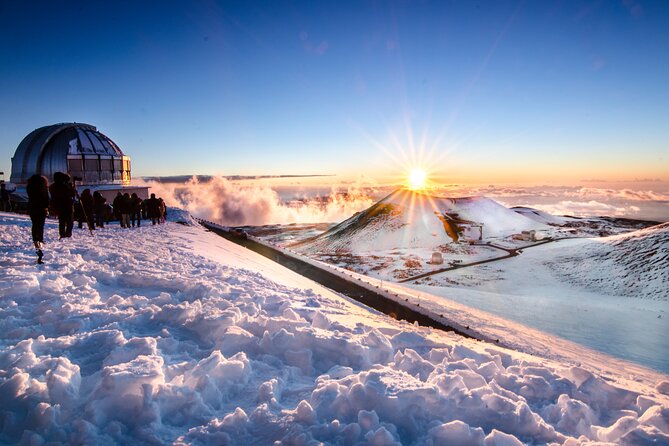
Here’s what makes sunset at Mauna Kea work so well: the light changes fast at altitude. Clouds can also play a huge role. On nights when the sky clears, the sunset can look crisp and dramatic, especially with the light reflecting off layers of cloud below. Even if it’s not perfect, you still get the core payoff—your eyes adapt, and the summit atmosphere makes the moment feel bigger than a typical beach or viewpoint sunset.
The guide is part of the show, too. You’ll hear explanations tied to Hawaiian stories and the mountain’s significance, while you watch the sky transition from day colors to the first stars. Some guides you may be assigned include John, Tay, Chris, Valerie, Kellah, or Kella—based on guide names seen with past departures. What matters for you: you get more than a silent photo stop. You get context, plus help staying comfortable enough to actually enjoy the hour.
Practical reality check: cold at the summit isn’t a maybe. Dress as if you’re going outside in winter weather—because you are. Even with provided gear, many people find they need extra layers underneath, warmer socks, and good head coverage (a beanie helps more than you’d guess). If you’re sensitive to wind, expect it to bite.
Stargazing with a laser pointer and a professional telescope
Once the sun is gone, the tour turns into guided astronomy. This is one of the biggest reasons to book a tour instead of trying to wing it. The guide uses a laser pointer to show where to look, then takes you to view objects through a professional Celestron telescope (weather permitting).
The experience is built for “I can’t find anything” people. The guide points out constellations and sky highlights, and the telescope gives you views you simply won’t get from naked-eye stargazing. Depending on the night, you might see planets, star clusters, and distant galaxies—plus bright satellites. Some past nights have included sightings like the ISS and Starlink satellites passing across the sky.
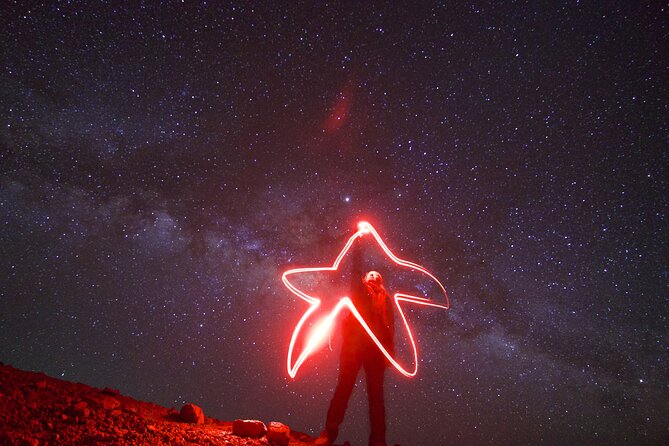
If you’re planning your gear, think about comfort and visibility. You’ll likely be standing still outside for stretches, so layers matter. If you use a headlamp, consider a red-light style so your night vision stays intact (a simple red light makes the whole experience feel easier when it’s dark). Also, if clouds roll in, the guide will still do their best to make the visible breaks in the sky count—just know that heavy cloud cover can cut down what you’ll see.
One more altitude note: if you’re prone to feeling lightheaded at elevation, pace yourself and keep breathing easy. The guides prioritize getting everyone back safely—so if you feel off, speak up early.
Halepōhaku / Onizuka Center stop: where astronomy meets Hawaiian sacred tradition
Between the summit moments, you’ll also spend time at Halepōhaku (Onizuka Center for International Astronomy). This stop is shorter—about 30 minutes—but it’s meaningful. The mountain and the sky aren’t presented as just science; you get cultural context tied to Hawaiian traditions and beliefs.
The guide’s storytelling often centers on the idea that Mauna Kea is sacred. You’ll hear about Poli‘ahu (the snow goddess), plus connections to other deities like Lilinoe and Waiau. You may also learn that, in older times, access to the summit was restricted (kapu), reserved for high chiefs and priests, with Queen Emma making a famously difficult journey to the top in 1881. That mix of reverence and explanation helps you understand why the telescopes are there—and why visitors are asked to be respectful.
You can also catch info about community astronomy speakers hosted by MKVIS on the fourth Saturday of many months. Even if your visit doesn’t line up with a talk, the stop adds a layer that many stargazing trips skip: it reminds you that people lived with this sky long before modern observatories.
The main drawback is time. It’s a quick stop, so don’t expect it to replace the summit hour. Think of it as a bridge—science after cultural context.
What’s included (and what you should bring anyway)
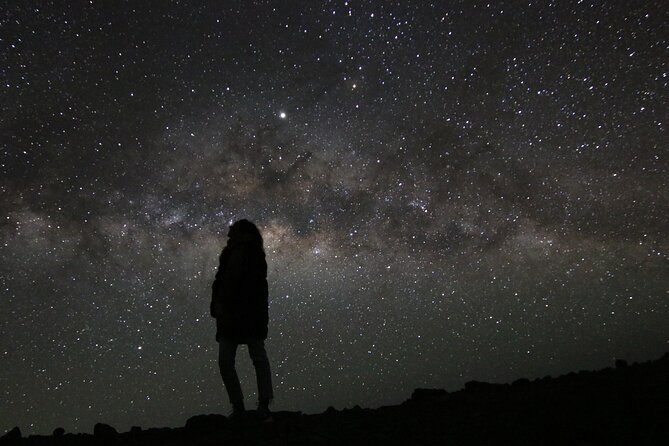
This tour bundles the key altitude comfort items: round-trip 4×4 transportation, snacks and a hot beverage, and jacket and gloves for the summit period. You also get an experienced guide plus access to the telescope experience (weather permitting). Best of all, you get a free night photo taken with a professional camera—so you can spend your hands on warm layers and your eyes on the sky.
But don’t treat “included gear” as your full plan. Many people find the provided coats and gloves aren’t enough for all bodies and all weather. Especially in strong wind, you’ll want to add your own defenses:
- Bring warm gloves if you run cold; provided gloves may not fit every hand or block wind well
- Wear warmer socks and consider extra layers (thermal top, fleece, and a beanie help)
- If you get cold easily, hand/toe warmers are a smart add-on
- If you’re staying outside for long periods, plan for your feet—cold toes can ruin the experience
Also consider bathroom reality. Restrooms are available at the visitor center, and portable restrooms are near the summit. Still, if you want peace of mind, bring your own basic backup items since services can be limited at high elevation.
Dinner isn’t included. You can bring your own packed meal. The good news is the tour does feed you with snacks and hot drinks during the timing windows, but you’ll want a solid plan before or after.
Guides, photos, and the “small touches” that make it feel worth it
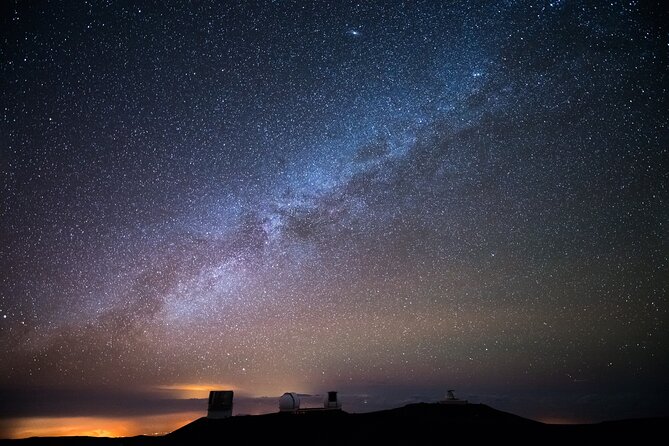
If you’re hoping for a smooth, photo-friendly night, this tour is set up for that. The guides take a pro night photo with a professional camera. That matters because trying to photograph Mauna Kea in the cold with your own device is harder than it looks. You’ll be moving between light and dark, wearing layers, and likely dealing with wind.
The guides also focus on more than just pointing. Many past guides—again, names like John, Tay, Chris, Valerie, Kellah, and Kella show up—bring humor and a steady rhythm, so you don’t feel rushed or lost. They also keep an eye on safety and comfort, which comes through when conditions shift (wind, cloud cover, or weather changes).
If you’re the type who cares about photos, here’s a practical tip: double-check how you’ll access the photo link and save it right away after the trip. Waiting until you’re back home, tired, and in warm lighting can make it harder to find what was taken.
Price and value: is $289 for a Mauna Kea night a fair deal?
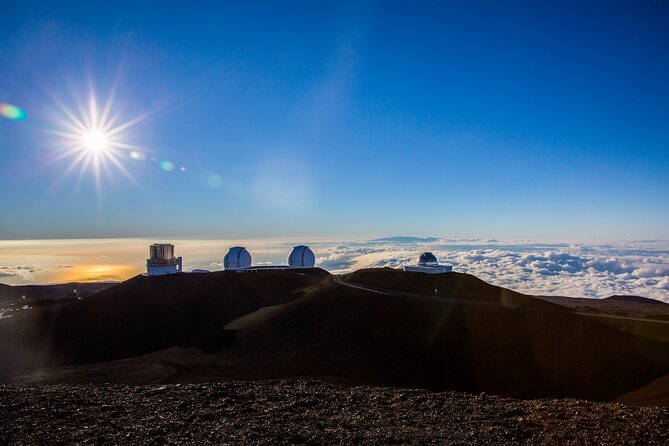
At $289 per person for a 7 to 8 hour outing, this isn’t a cheap sunset. But you’re also paying for a very specific recipe: summit access by 4×4, small-group guiding, warm gear, and telescope time with a professional instrument—plus a professionally taken night photo.
What makes the value feel solid is the combination. You aren’t only buying transportation. You’re buying:
- timed pickup and uphill driving when the sky transitions
- cold-weather comfort support (jacket/gloves, hot beverage, snacks)
- guidance for what to look for in the dark (laser pointer)
- a telescope view that most self-guided visitors can’t replicate
- a professional photo so the night doesn’t hinge on your phone camera in the cold
Could you do something similar on your own? Sure, in theory. But you’d need the right vehicle setup, the confidence to handle altitude timing, and the ability to make sense of the sky without a guide pointing and explaining. For many people, this is the most stress-free way to get the Mauna Kea summit experience without turning your vacation into a logistics puzzle.
If you’re the kind of traveler who wants maximum time outside with minimal vehicle time, you might feel the “mostly driving” factor. Still, the structure is why the timing works.
Who should book, and who should skip Mauna Kea summit stargazing
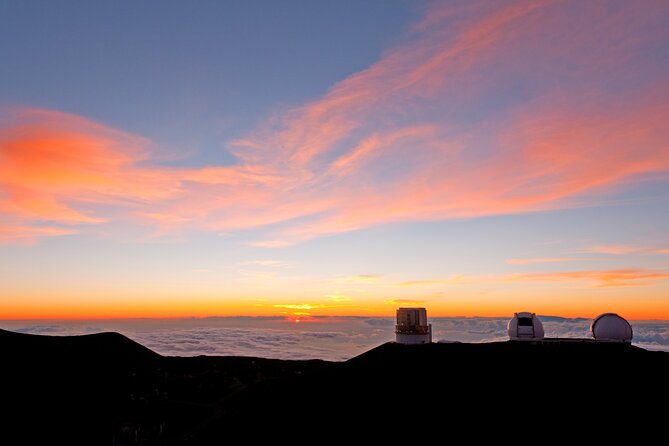
This tour is a strong match for you if:
- you want a guided stargazing plan (not just standing in the dark)
- you’re okay with cold weather and elevation
- you like science explanations paired with Hawaiian cultural context
- you want small-group comfort and someone else handling the driving
It may not be a great fit if:
- you’re pregnant or have heart problems or serious medical conditions (the tour lists these as not allowed)
- you don’t tolerate altitude well
- you hate chilly outdoor waiting (even with provided gear, summit conditions can be intense)
- you’re under 13 years old (this tour doesn’t allow younger participants)
Also, plan for some physical effort. Even if it’s not a big hike, you may have short uphill walking and standing at high elevation. Pack layers for staying warm while you wait, and keep your expectations realistic: at 13,000+ feet, your body feels different.
Should you book this Mauna Kea sunset and stars tour?
Book it if you want the “right way” to do Mauna Kea at night: summit sunset, guided stargazing, telescope viewing, and a culturally informed stop at Halepōhaku—all handled by a small-group setup with warm gear and a pro night photo. The cost makes sense when you count the included telescope experience and the guided, timed access to the summit.
Skip (or rethink) if you’re not prepared for real cold and wind, or if altitude is a concern for you. This tour runs on conditions, so if your top priority is seeing specific celestial events no matter what the sky does, know that weather can limit what you’ll see.
If you book, do yourself a favor: pack extra warmth beyond what’s included, and show up ready to slow down. The payoff is the view—plus the feeling that you understand what you’re looking at once the stars finally show up.
FAQ
What pickup locations are available for this Mauna Kea tour?
Pickup is offered from select locations on the Big Island: Hilo, Waikoloa Village, or Kailua-Kona. You choose your pickup option when booking.
How cold should I expect the summit to be, and what should I wear?
It can get very cold on Mauna Kea, and the tour provides warm jackets and gloves. You should still dress in warm layers for summit conditions.
How strenuous is the experience?
It’s listed as suitable for people with moderate physical fitness. There is a significant change in altitude as the group ascends.
How high is the Mauna Kea summit area?
The Visitor Station is at about 9,200 ft (2,800 m), and the summit is about 13,796 ft (4,205 m).
Do we get to use a telescope during the tour?
You may not use the large observatory telescopes run by other organizations, but you do get viewing close-up through a professional Celestron telescope (weather permitting).
Are there age limits for joining?
Yes. Travelers under 13 years old are not allowed due to the high altitude.