REVIEW · BIG ISLAND OF HAWAII
Big Island: Mauna Kea Summit and Stars Small-Group Adventure Tour
Book on Viator →Operated by Hawaii Forest &Trail · Bookable on Viator
Mauna Kea changes the way you see the sky. I love the private 11-inch Celestron telescope session and the fact that you’re not just dropped off at a viewpoint—you’re guided through the whole altitude-to-night-sky arc. I also like the practical comfort touch of hooded parkas, gloves, hot cocoa, and dessert so you’re not freezing through the best part. One drawback: the summit area is high and cold, and the ride up on the access road can be bumpy, so you need to take altitude and weather seriously.
This is built for a small group (up to 12) in custom off-road vans, not a packed shuttle. You’ll get picked up from central Kona meeting points (Courtyard by Marriott King Kamehameha’s Kona Beach Hotel for many guests), then do a few planned stops to acclimate. If you hate waiting in line for restrooms or you can’t handle altitude discomfort, this might feel like a long day.
In This Review
- Key things I’d plan around before you go
- First: What you’re really buying for $329.84
- Kona pickup and the ride that sets the tone
- The mid-mountain picnic stop: acclimate before you go for it
- Sunset above the clouds: the view everyone talks about
- Private stargazing: 11-inch telescope plus digital astro photography
- The hot cocoa and “second viewing” at a lower elevation
- Cold-weather essentials: what’s provided and what you should add
- The itinerary pace: short windows, big payoffs
- Altitude reality check (and how to handle it)
- Value: guided astronomy beats DIY for most people
- Who this tour suits best—and who should skip
- Quick tips to get the most out of your night
- Should you book this Mauna Kea Summit and Stars tour?
- FAQ
- What time is the tour, and will my pickup time match what I see online?
- Where do I meet for pickup on the Big Island?
- What does the tour provide for cold weather?
- Is the stargazing session private, and what telescope equipment is used?
- Do I need to bring water and what should I wear?
- Is it cancelable, and what if weather is bad?
Key things I’d plan around before you go
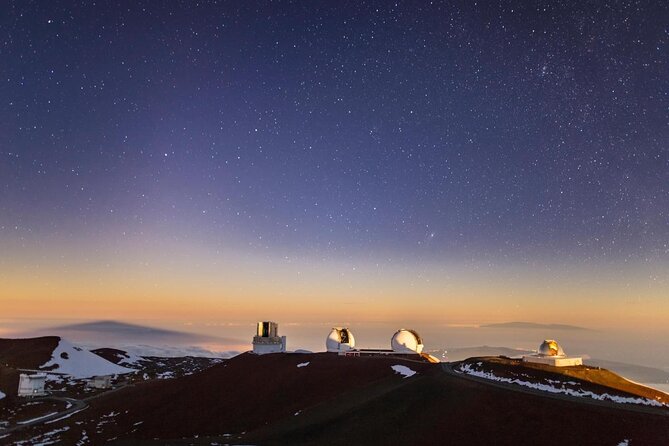
- 4×4 off-road vans to the summit area: the access road is 4-wheel-drive only, and the ride can feel rough.
- Warm picnic dinner at mid-elevation: you eat before the summit so you’re fueled while your body adjusts to altitude.
- Sunset from above the clouds: you get that “ocean of cloud” moment with views toward Maui you can’t see from the coast.
- Private stargazing with real gear: a Celestron telescope plus a digital astro-photography scope (and guide-led sky explanations).
- Cozy cold-weather kit included: parkas and gloves are provided, plus hot cocoa and cookies once it gets dark.
- Limited time at each stop: it’s efficient, but you’ll want to use restroom and layering breaks smartly.
First: What you’re really buying for $329.84
This tour costs about $329.84 per person for roughly 8 hours, which is not cheap. What makes it feel worth it is the pairing of logistics + astronomy setup. You get a coordinated 4×4 van ride up to Mauna Kea, plus a guided night-sky session with telescope viewing and digital astro-photography tools—things that are hard to replicate comfortably on your own.
You’re also paying for safety and pacing. Mauna Kea isn’t just scenic; it’s high altitude and cold, and the access road is rough enough that the operator uses custom off-road transit vans for the out-and-back. In other words, this isn’t a “drive up and wander” plan.
Kona pickup and the ride that sets the tone
Most guests meet at the Courtyard by Marriott King Kamehameha’s Kona Beach Hotel in Kailua Kona, with a curbside meeting point near the parking lot entrance. There may be additional meeting location stops along the way to Mauna Kea, so double-check your exact pickup time since it can differ from what you see online.
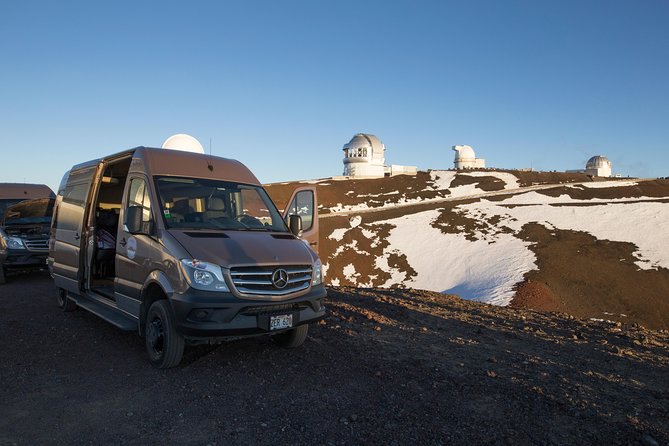
The van portion matters. The road to Mauna Kea is four-wheel drive only, and the trip can be bumpy. The upside is that you’re in a purpose-built off-road vehicle with a small group (maximum 12), so you’re not fighting for space while you climb.
The mid-mountain picnic stop: acclimate before you go for it
Before you reach the summit, you’ll spend time at the Maunakea Visitor Information Station. This isn’t just a scenery break. It’s your warm picnic-style dinner stop, and it’s there to help you settle in at higher elevation before you go higher.
A big practical bonus here is mental pacing. Eating warm food helps you feel human instead of shaky, and it gives you a buffer before the summit sunset window. You’ll also get context on Hawaiian star navigation and how the sky fits into Hawaiian culture and ecology—information that makes the nighttime part land better.
Sunset above the clouds: the view everyone talks about
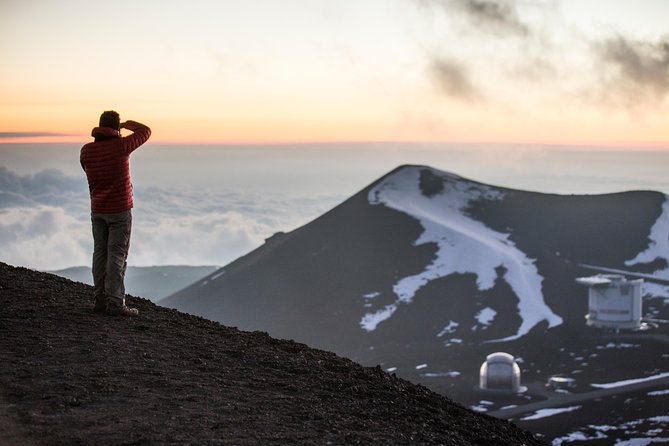
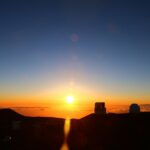
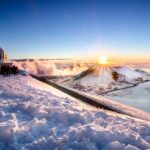
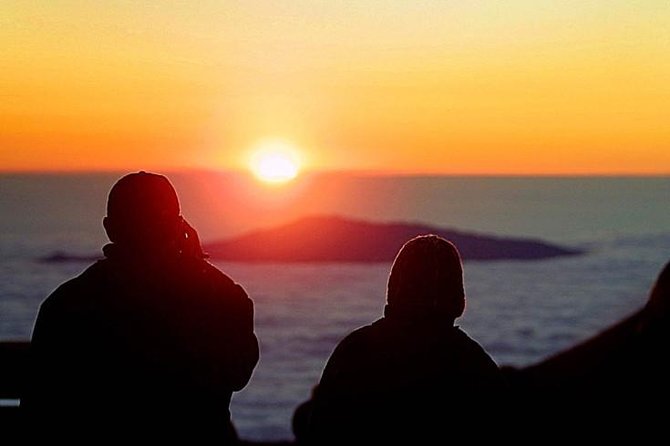
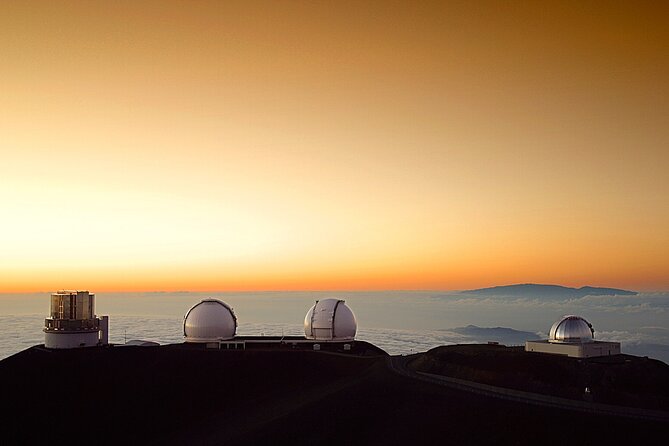
At the summit, your plan centers on sunset and cloud drama. You’ll rise to the top area and watch the Pacific Ocean unfold below, often with the feeling of being above an ocean of clouds. The operator specifically points out views of Maui you can’t get anywhere else, which is one of the moments that makes this trip feel like more than just astronomy.
After sunset, you don’t stay parked at the coldest altitude. You travel down to a more comfortable elevation for the stargazing session. That’s a thoughtful design choice—because for most people, the goal is to see the sky clearly, not just to suffer beautifully.
Private stargazing: 11-inch telescope plus digital astro photography
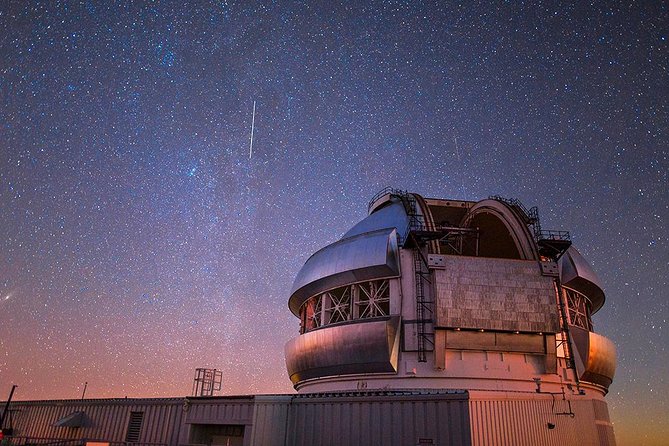
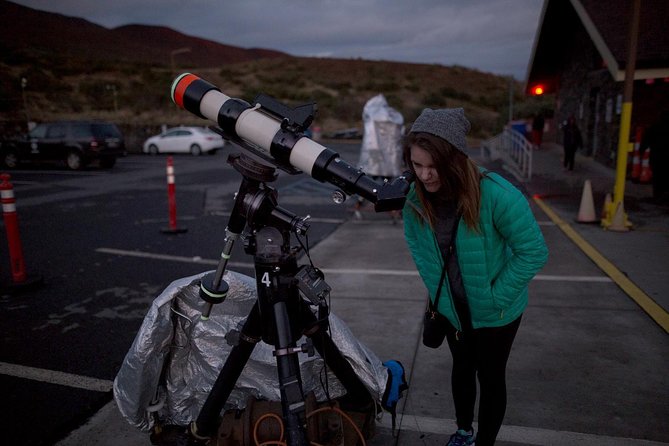
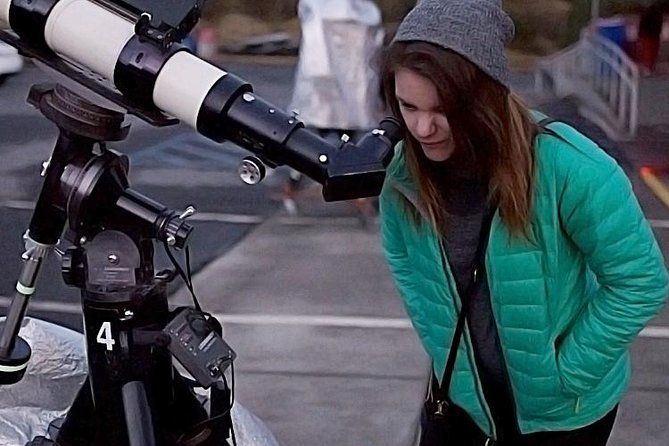
This is where the tour earns its name. Once the sky opens up, you get a private star show led by your guide, using an 11-inch Celestron telescope. You’ll also have access to a digital astro-photography scope (and a Stellina digital telescope) so you can view and capture what you’re seeing.
What I like about this setup is that it covers two kinds of fun. First is the classic eyepiece view—planets, stars, and deep-sky objects. Second is the modern photo angle, where you can share images with friends and family without needing to already be skilled with a camera tripod and settings.
Your guide will help connect the dots, pointing out constellations and guiding you through what the telescope is showing. Some guides—like Jon, Wilson, Jeff, Jason, and Eugene—have been singled out for keeping the night organized and for making sure you’re comfortable and safe while you watch the sky.
The hot cocoa and “second viewing” at a lower elevation
After the summit moment, the tour lowers elevation again and keeps the stargazing going. You’ll return to the Visitor Information Station area for another warm-and-cozy star experience, this time paired with hot chocolate and cookies.
This stop is smart for your body. If you start feeling altitude effects, being at a slightly more comfortable spot helps you stay engaged instead of counting minutes until you can sit down. It also means you can keep watching the sky as conditions change.
Cold-weather essentials: what’s provided and what you should add
You’ll be given hooded parkas and gloves, and the cold is not a small detail here. Mauna Kea is a high-altitude environment, and snow is seasonal, with the heaviest in winter months. Even on a clear night, wind can make temperatures feel harsher than you expect.
What you should bring is a layering mindset: closed-toed shoes, long pants, and a sweatshirt or sweater for extra warmth. Tour staff refills filtered water, but you’re required to bring your own water bottles—so plan on staying hydrated while you’re at altitude.
The itinerary pace: short windows, big payoffs
A standout part of this tour is how it uses time. The schedule is built around a few critical moments: acclimation, sunset timing, then telescopes while it’s dark. That means you’ll move through stops efficiently, not slowly.
You’ll also want to think about restroom strategy. There are restroom breaks, but busy periods can mean lines. If you’re the kind of person who freezes up when you’re cold, handle bathroom and layering early rather than waiting until you’re already uncomfortable.
Altitude reality check (and how to handle it)
This trip reaches about 9,000 feet (2,743 meters) and involves higher summit exposure. That makes the “how you feel” part as important as the “what you see.”
The operator is clear about who should not do this: it’s not suitable for people with respiratory, circulatory, or heart conditions, for pregnancy, or for poor health. If altitude is a question for you, don’t guess—ask a medical professional and be honest about your limits.
Practical tip: pace yourself. One guide style that shows up in the tour experience is frequent reminders to take slow deep breaths as you climb. Even if you feel okay in the first leg, altitude can sneak up on you once you’re higher and windier, so treat breathing and hydration like part of the activity.
Value: guided astronomy beats DIY for most people
Could you rent a Jeep and try to drive up yourself? Sure, but Mauna Kea access is serious business. The road is 4-wheel-drive only and can be bumpy, and night driving or trying to self-manage gear at altitude is a lot for one trip.
This tour packages the difficult parts: transportation to a dark-sky location, warm comfort planning, and guided telescope time. At this price point, the big value is not just the equipment—it’s having someone manage the night so you can focus on the sky.
If you’re traveling with people who want a safe, structured experience (or if you simply don’t want to fight with logistics at elevation), this is a strong fit.
Who this tour suits best—and who should skip
This is ideal if you want a dark-sky stargazing experience on the Big Island without needing astronomy knowledge before you arrive. It also works well for couples, friends, and families over age 13 (minimum age is 13; no children under 13).
You’ll likely enjoy it most if you can handle cold and altitude and you’re willing to dress for it. If you’re sensitive to elevation changes or have any medical conditions listed by the operator, skip this and choose a lower-elevation stargazing option instead.
Quick tips to get the most out of your night
- Layer like it’s winter: parkas help, but layers help more.
- Bring water bottles: filtered refills are provided, but you still carry your own bottle(s).
- Plan for slow breathing and steady pacing: altitude is part of the experience, not just a background detail.
- Use the restroom early: lines can form, especially once it gets dark.
- Aim for a moonless night if possible: the clearest star views tend to come on darker evenings.
Should you book this Mauna Kea Summit and Stars tour?
If your goal is to see a world-class night sky with real telescope viewing, plus a guided explanation of Hawaiian star navigation and Mauna Kea’s culture and ecology, this is a very solid pick. You’re also protected from the biggest DIY headaches: rough access road logistics, cold-weather comfort planning, and staying organized through sunset into the darkest hours.
I’d book this if you’re comfortable dressing for cold, you can handle altitude, and you want a structured experience that gets you to the summit and back efficiently. I’d hesitate only if altitude is likely to be a problem for you, or if you want a relaxed day with lots of flexibility—this trip is timed to hit key moments, so there isn’t much slack.
FAQ
What time is the tour, and will my pickup time match what I see online?
Your pickup time may differ from the tour start time shown online. Confirm your meeting time and location so you don’t miss the departure window.
Where do I meet for pickup on the Big Island?
Many guests meet at the Courtyard by Marriott King Kamehameha’s Kona Beach Hotel in Kailua Kona. There may also be additional meeting location stops along the way to Mauna Kea.
What does the tour provide for cold weather?
You get hooded parkas and gloves. You should also wear long pants and closed-toed shoes, and it’s smart to bring a warm layer like a sweatshirt or sweater.
Is the stargazing session private, and what telescope equipment is used?
Yes, you’ll get a private star show with an 11-inch Celestron telescope. You’ll also use a digital astro-photography scope and a Stellina digital telescope for viewing and shared images.
Do I need to bring water and what should I wear?
Bring your own water bottle(s). Filtered water refills are provided. Wear closed-toed shoes and long pants, and dress in layers for cold and wind.
Is it cancelable, and what if weather is bad?
Free cancellation is available up to 24 hours in advance for a full refund. The tour requires good weather; if it’s canceled due to poor weather, you’ll be offered a different date or a full refund.