REVIEW · ST KITTS
Hike St. Kitts: Highest peak Mount Liamuiga Volcano
Book on Viator →Operated by JB Taxi & Excursions (Janeel) · Bookable on Viator
St Kitts turns into a serious climb. This guided hike up Mount Liamuiga (Mount Misery) takes you from the forest floor toward the crater rim with local leaders like Janeel and Djae. You’ll earn wide views over the Caribbean, the caldera, and even the neighbor volcano on a route that’s equal parts nature lesson and leg workout.
I like that the trip is built around real local guiding and pacing with plenty of encouragement. I also like the value: pickup by air-conditioned vehicle, a small-group size (max 25), light snacks, and bottled water are included for a full half-day in the mountains.
The main thing to consider is difficulty: this is not a casual walk. It’s steep, hot and humid, and slippery on the way down, so it’s not a good match if you have hip or knee issues or you’re not used to regular cardio.
In This Review
- Key highlights worth showing up for
- Mount Liamuiga is more than a hike. It’s the island’s altitude problem
- Getting to the volcano: the drive is part of the story
- Where you meet and how cruise timing works
- The climb plan: from first steps to crater rim
- What the rainforest sounds like when you’re working for it
- Views from the top: crater rim drama and island-to-island sightlines
- Guides make the difference: Djae, Elly, Janeel, DJ, Quan, Sunshine
- How hard is it, really? My straight answer for your body
- What to pack: shoes, water strategy, and the change of clothes
- Value check: $109.99 for a guided volcano workout
- Who should book this, and who should skip it
- Should you book Mount Liamuiga with JB Taxi & Excursions?
- FAQ
- How long does the Mt. Liamuiga hike take?
- Where does the tour start and where do you return?
- Is pickup available?
- What’s included in the price?
- Is lunch included?
- Is there a limit on group size?
- Is this hike suitable for people with knee or hip problems?
- Can people with asthma join?
- What if weather is bad?
- What is the cancellation policy?
Key highlights worth showing up for
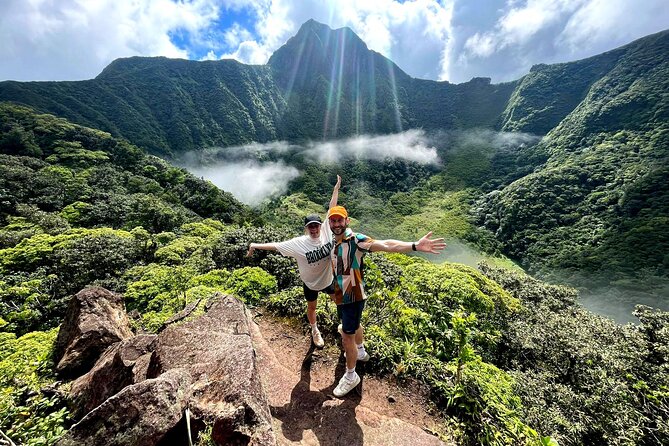
- Highest peak focus: You’re climbing to St. Kitts and Nevis’ top summit area (3792 ft / 1156 m), not just strolling near a viewpoint
- Local trail coaching: Guides like Janeel, Djae, and Elly help with pacing, footing tips, and staying hydrated
- Crater rim payoff: You look over the caldera/crater plus see back down toward communities and the neighboring island volcano
- Small-group feel: Maximum 25 travelers, and the guides keep a close eye on everyone
- Hot-weather reality: Expect humid conditions and muddy roots/rocks, so the right shoes matter
- Cruise-friendly operations: You’ll get help coordinating timing so you don’t have to stress about reboarding
Mount Liamuiga is more than a hike. It’s the island’s altitude problem
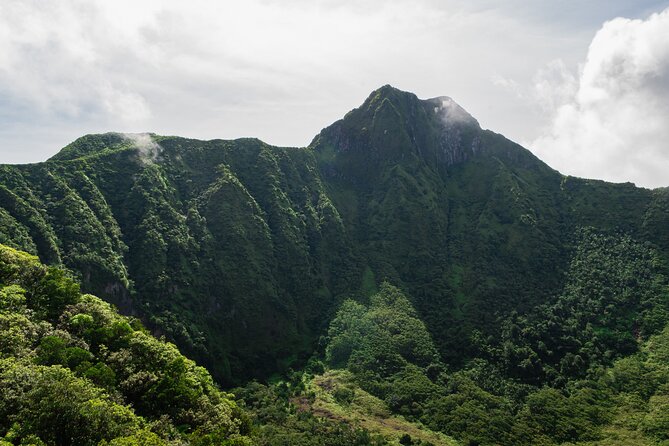
Mt Liamuiga (often called Mount Misery) is St. Kitts’ big natural vertical push. The route starts around 700 feet above sea level and climbs up to roughly 3100 ft, and then you spend time at the higher crater rim looking out. The summit you’re working toward is listed at 3792 ft (1156 m)—the highest point in St. Kitts and Nevis. That’s why this excursion gets such strong marks: the effort lines up with the reward.
Even if you’re not an expert hiker, the hike is set up as a guide-led climb with stops along the way. Guides coach pacing so you’re not blowing up early and then cooked halfway up. From the way the guides operate, it’s clear the goal isn’t to race; it’s to get you to the top in a controlled way, with enough energy left to enjoy the views and then descend safely.
Also, this isn’t just about rocks and elevation. Along the way, you’re in a rainforest environment where you can hear birds, crickets, and vervet monkeys echoing through the trees. And the guiding includes education about tropical plants and the natural landscape you’re walking through. That turns the hike from a cardio chore into a living, changing place you’re moving through.
You can also read our reviews of more hiking tours in St Kitts

Getting to the volcano: the drive is part of the story
Most “volcano tours” are basically drive, dump you at a trailhead, then disappear. This one keeps the island context going before you even lace up your shoes.
You’ll start with a ride from your cruise port or hotel area to the caldera/crater area. On the drive, you pass through university school zones, the main town, and communities such as a former slave “free village.” You also get glimpses of the mountains while looking out toward the Caribbean Sea.
For me, the practical value here is simple: it helps you understand what you’re looking at once you’re higher up. When you later look back down toward the communities below and across to the neighboring island volcano, your brain has already been primed with the geography.
The transportation is in an air-conditioned vehicle, and the tour includes free transportation within predefined locations. If you’re staying around the Park Hyatt or Reggae Beach Pier area, there can be an extra transport fee if the group is under four people, listed as $10 per person in that case.
Where you meet and how cruise timing works
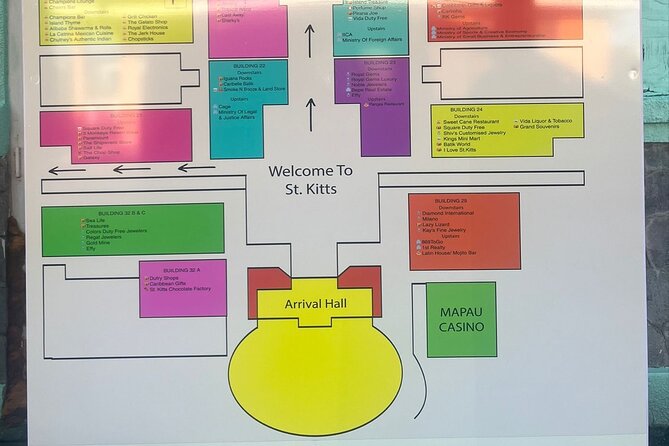
The meeting point is MaPau St Kitts Casino & Entertainment Centre, with the location shown as 77RH+W2C, Basseterre. The tour also ends back at that same meeting point.
If you’re on a cruise, timing is the big anxiety trigger for most people. This operator addresses that directly: you’re told not to worry if your ship leaves early, and they’ll still make sure you board on time. They also ask you to choose a 9 a.m. departure only if your ship arrives later than 7:30 a.m., and to add your arrival time in the notes. If your ship arrives earlier, you’ll want to follow their guidance so the pickup and hike schedule fit your dock time.
Even if you’re an organized traveler, this kind of planning matters. On St. Kitts, a late-return scramble can ruin your day. Here, the whole operation is built to keep you from turning your vacation into a transportation math problem.
The climb plan: from first steps to crater rim
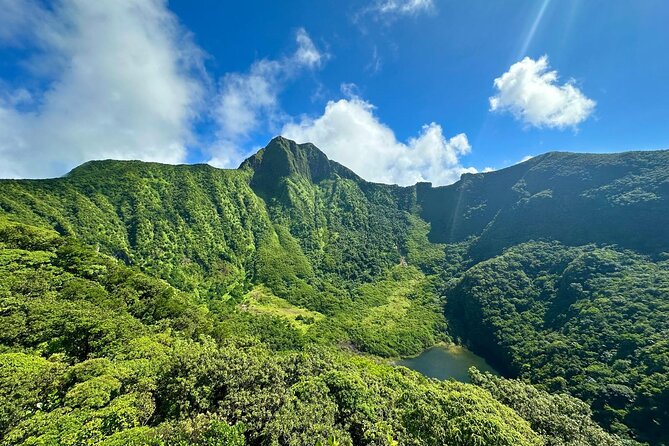
The hike itself begins at about 700 feet above sea level and rises to about 3100 ft during the main push. You’ll reach the crater rim area and then spend time with the big views: the crater below, the summit area around 3792 ft, and the wider panorama that includes the neighboring island’s volcano.
A key detail: you’re not hiking in a single, straight line with no structure. Guides work with multiple stops. In practice, people describe around six stops during the ascent, which gives your body short recovery windows without breaking the flow completely. Depending on fitness and heat, your total ascent can come out around 2.5 hours, and your descent can be around 3 hours. Some hikers report different timings (like faster ascents), but the theme is consistent: the climb takes time, and the return takes it right back.
Here’s what that means for your planning:
- If you’re hoping to “power through” with minimal breaks, you might still end up doing planned recovery stops, because guides pace for safety and hydration.
- If you’re nervous about steep terrain, those stop points help psychologically. You get to reset your breathing, check your footing, and regroup.
You’ll also notice the route is described as hot, humid, and often muddy with steep inclines. One common lesson from the experience is that going up is hard, but going down is just as demanding. Roots, rocks, and slick sections can turn an easy descent into careful stepping. Guides pay close attention to footing, and they often help with where to place your feet when the trail gets awkward.
What the rainforest sounds like when you’re working for it
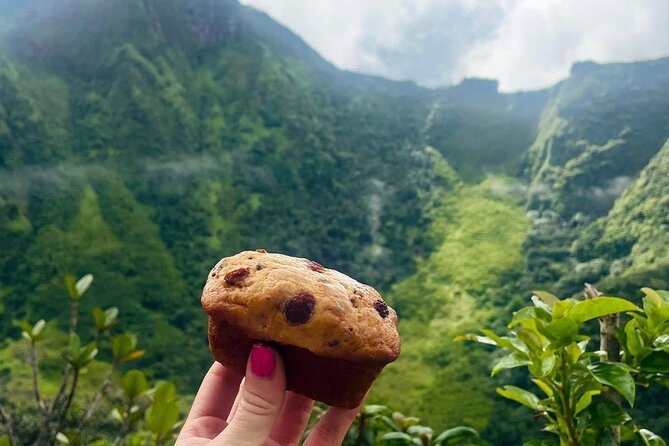
One of the most memorable parts of this hike is the “in-between” moments—those stretches where you’re moving slower, looking around, and realizing you’re not just climbing a mountain in silence.
As you rise through the forest, you’re likely to hear birds and crickets, and there’s a chance of spotting vervet monkeys moving through the trees. It’s not a theme-park nature show. It feels more like you’ve stepped into someone else’s rhythm. The guides add to it with explanations of tropical plants and what you’re seeing around you, so the hike feels like a guided walk through an ecosystem rather than a human obstacle course.
And if the weather is cloudy or rainy, that can actually help the hike feel more tolerable. One important note from the experience: rain can cool things down and clouds may clear quickly, giving you access to the crater views anyway. So you shouldn’t automatically treat weather as a full washout for your hopes. Still, you should be ready for muddy footing if conditions turn wet.
Views from the top: crater rim drama and island-to-island sightlines
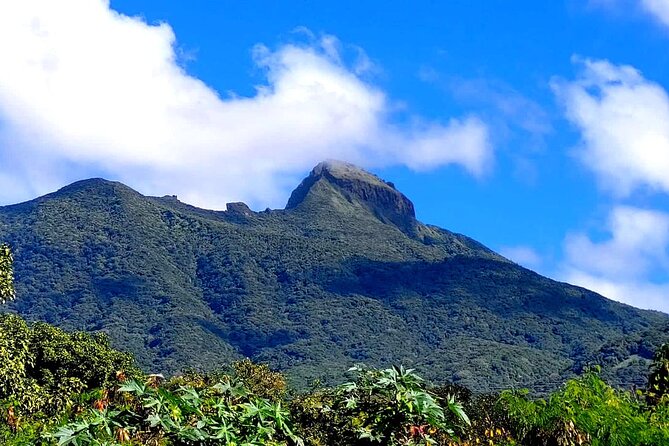
The view is the whole reason people return to St. Kitts and talk about this hike afterward.
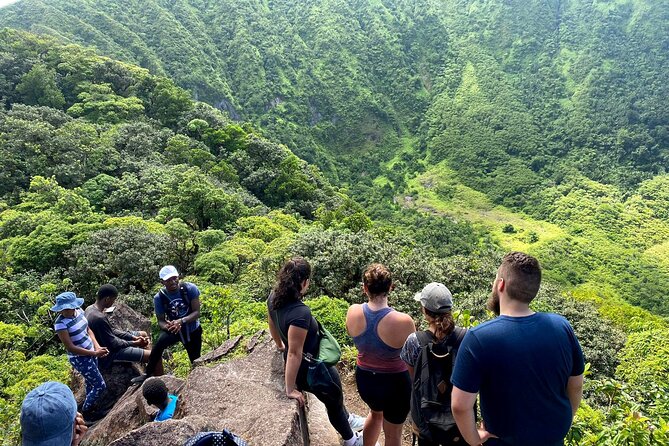
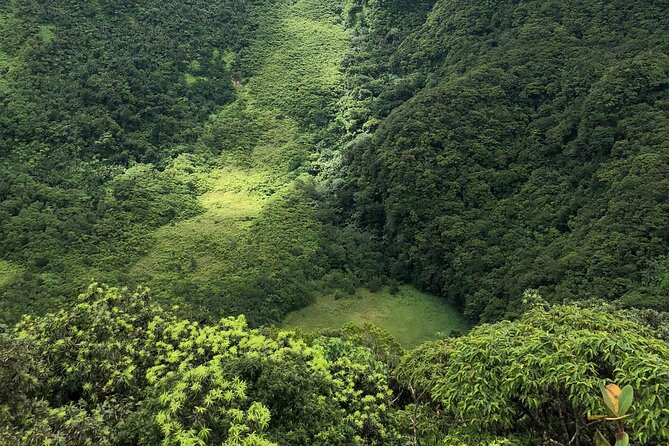
From higher up, you’re looking over the caldera/crater and then out toward the summit area at 3792 ft. At that elevation, the scene changes from “green trees” to “the island as a whole system.” You can look down toward communities below and you can also see the neighboring island’s volcano.
This is also where the “worth it” factor becomes real. Multiple guides’ descriptions of pacing and pushing at each stage make sense when you realize you’re not getting a quick payoff. The top is the reward for sustained effort, and people describe it as surreal once they reach it.
Plan your expectations for time at the rim: you shouldn’t count on lingering for an hour-long picnic. The emphasis is on getting up, enjoying the crater views, and then descending at the right pace.
Guides make the difference: Djae, Elly, Janeel, DJ, Quan, Sunshine
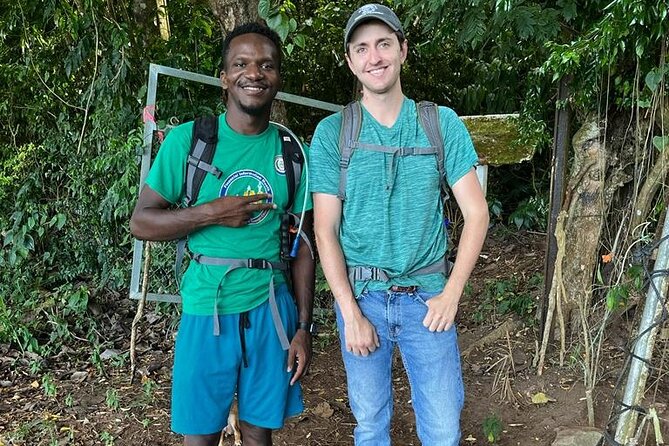
This experience’s most consistent strength is the human element. People don’t just praise the views; they praise the guides’ ability to manage a demanding hike with humor, patience, and real trail knowledge.
Names that show up repeatedly include:
- Janeel, often described as top-notch for trail guidance and safety
- Djae, praised for support and encouragement, especially when people start to flag
- Elly, frequently mentioned as a helper on the trail and in the overall crew
- DJ and Quan, noted for making the climb more enjoyable with information and motivation
- Sunshine, singled out for patient assistance when needed
What I take from these patterns is that the guides aren’t just “walking ahead.” They’re adjusting to the group. People report that guides help with hydration and in-step pacing, and they also share tricks for stepping in tough sections. That matters because on a muddy volcano trail, technique is as important as grit.
There’s also a safety theme: guides slow down when needed, and they work with multiple stops so you don’t just stumble forward hoping for the best. And when someone has to turn back early, guides are described as patient and supportive about it.
How hard is it, really? My straight answer for your body
Based on the information given, you should treat this as a challenging hike that requires strong physical fitness. The experience includes a warning that it’s not recommended for travelers with hip or knee problems. There’s also a “strong fitness level” requirement in the details.
People describe the terrain as involving:
- steep inclines
- slippery roots and rocks
- mud
- heat and humidity
- a steep descent that can be just as hard as the climb
That’s why it’s praised as an accomplishment hike. If you’re active and you handle uphill walking, you’ll probably be okay. If you’re doing rare workouts and you’re expecting a gentle rainforest stroll, you’ll likely struggle.
For asthma: it says asthmatic travelers can take the hike, but they should share in advance and ensure they have the needed aid such as a pump. If you have any other major health concerns, you should share them too.
What to pack: shoes, water strategy, and the change of clothes
This is where most people either win the day or suffer it.
Shoes are non-negotiable. Trails can be muddy and wet. People recommend sturdy, grippy shoes because hiking shoes will get wet and the ground can turn slippery. If you only have nice sneakers, you’ll feel it fast.
Bring extra clothes for after the walk. You’re on a humid rainforest climb and the trail conditions can get muddy, so you’ll want something clean and dry for the ride back.
Water planning matters. The tour includes bottled water (one 625 ml / 21 fl oz bottle) plus light snacks and a soda/pop energy/sugar drink. That said, you might still want to bring more water, especially if you’re heat-sensitive. Reviews also emphasize that you need water due to hot humidity and suggest carrying your own water if you’re comfortable doing so (like using a small backpack or a hydration system).
Other practical packing notes:
- Light, breathable clothing tends to work well in the heat.
- A small backpack is useful for carrying extra water and snacks.
- If you’re worried about rain or clouds, pack for damp conditions, not just sunshine. Rain can cool things down, but it can also mean extra mud.
Value check: $109.99 for a guided volcano workout
At $109.99 per person, you’re paying for more than “access to a trail.” You’re buying:
- operator-led guiding through a steep environment
- transportation in an air-conditioned vehicle from your area
- a small-group format (max 25)
- light refreshments and bottled water
- educational context about the forest and volcanic terrain
When I evaluate value for hikes, I look at two things: how much risk management you’re getting, and how much time you lose if the operation is sloppy. Here, the repeated praise for guide support, pacing, and getting people safely to the crater rim suggests you’re not doing this as a solo DIY hike. You’re getting people who know the trail style and can keep the group moving without turning it into a race.
Potential “budget surprises” are limited, but there is that possible extra transport fee ($10 per person) if you’re starting from Park Hyatt or Reggae Beach Pier area and the group is under four.
Lunch isn’t included. Alcoholic beverages aren’t included. So if you want to eat after, plan to buy it yourself or eat before you start. Also, hats/rags are available as merchandise at $25 per person, which is optional.
Who should book this, and who should skip it
This hike fits best if you:
- like a real workout and you want the bragging-rights feeling of climbing to a volcano summit
- enjoy guided nature learning, not just views from the roadside
- can handle steep uneven footing and don’t mind going slow when needed
- want a smaller-group experience with active coaching
It might not fit if you:
- have hip or knee problems (not recommended)
- are not in regular physical shape
- want an easy stroll with minimal effort
- are expecting a long, lounging view stop (the schedule emphasizes ascent and timely descent)
For families: it’s been done by kids in the group ranges mentioned (including children as young as 7 in one case), but the hike is still described as strenuous. If you bring kids, you should be realistic about endurance and muddy footing, and you should rely on the guide’s judgment about pacing and safety.
For people with special health needs, asthma is specifically mentioned as possible with proper planning (share in advance and bring your pump).
Should you book Mount Liamuiga with JB Taxi & Excursions?
If you want a St. Kitts experience that feels earned, book it. This is the kind of tour where the views make sense only after you’ve worked for them, and the crew’s job is to help you do that without breaking the group.
Book it especially if you value:
- a serious guided climb
- strong local trail support
- crater rim and summit views tied directly to the effort
Skip it if you need a gentle walk, have hip/knee limitations, or you’re not prepared for heat, humidity, and slippery mud.
If you do book, one smart move is to train a little before you go: practice uphill walking or stairs if you can. And for the trail itself, plan around traction and hydration. With the right footwear and a realistic pace, you’ll turn a tough volcano day into one of the most memorable parts of your trip.
FAQ
How long does the Mt. Liamuiga hike take?
The tour is listed at about 6 hours total.
Where does the tour start and where do you return?
You start at MaPau St Kitts Casino & Entertainment Centre and the hike ends back at the same meeting point.
Is pickup available?
Yes. Free Transportation is offered within predefined locations, and pickup is described as available for port or hotel areas.
What’s included in the price?
Included are light snacks, bottled water (1 x 625 ml), an air-conditioned vehicle, free transportation within predefined locations, and one soda/pop energy/sugar drink.
Is lunch included?
No, lunch is not included.
Is there a limit on group size?
Yes. The maximum group size is 25 travelers.
Is this hike suitable for people with knee or hip problems?
No. It is not recommended for travelers with hip/knee problems.
Can people with asthma join?
Asthmatic travelers can take the hike, but they should share in advance and bring the necessary aid such as a pump.
What if weather is bad?
This experience requires good weather. If it’s canceled due to poor weather, you’ll be offered a different date or a full refund.
What is the cancellation policy?
Free cancellation is offered up to 24 hours in advance of the experience start time for a full refund. Within 24 hours, the amount paid is not refunded.