REVIEW · HAKONE
Hike Japan Heritage Hakone Hachiri with certified mountain guide
Book on Viator →Operated by Coconuts Hike Japan · Bookable on Viator
Stone paths, Edo stories, and Fuji views. This Hakone Hachiri hike on the Old Tokaido Highway is interesting because it turns a steep mountain route into a guided timeline, with Japan Heritage history you can actually walk. I like that the day is led by a certified mountain guide (with wilderness first aid), not just a normal city guide.
I also like the mix of effort and payoff: you hike cobblestones and quiet trails, then use local transport to connect the big sights without wasting hours. The route focuses on Lake Ashi and the Hakone checkpoint area, and you’ll have a shot at Mt Fuji and the Heiwa no Torii when the weather plays along. The main drawback is simple: it’s weather-dependent, and the tour requires moderate fitness with some uphill stretches.
You’ll start at Hakone-Yumoto Station at 9:00am and finish at Mishima Station, so it feels like a day that moves forward instead of looping back.
In This Review
- Key things to know before you go
- Walking the Old Tokaido High Road: Hakone Hachiri in plain human terms
- Your guide matters more than you think
- Start at Hakone-Yumoto: cobblestones, tea, and craft village vibes
- Lake Ashi and the Heiwa no Torii: the day’s big visual payoff
- Cedar trees to the Hakone checkpoint: why immigration mattered on the trail
- Lunch near the checkpoint, then a bus skip around a closure
- Yamanaka Castle Ruins: a shorter stop with an extra view gamble
- Mishima Station finish: shrines, Genba River, and an easy train exit
- Price reality check: is $158.52 worth it?
- What to wear and expect on the ground
- Who this tour fits best
- Should you book Hakone Hachiri with a certified mountain guide?
- FAQ
- How long is the Hakone Hachiri hike?
- Where does the tour start and end?
- About how far will I walk?
- What’s included in the tour price?
- Is lunch included?
- Do I need to pay for local transportation?
- Are there any other major costs besides lunch and local transport?
- What if the weather is bad?
- What fitness level do I need?
- How many people are in the group?
Key things to know before you go
- Certified mountain guide + wilderness first aid: built for real trails, not just sightseeing walking
- 8km hike, plus smart bus connections: you get the “old road” feel without nonstop trudging
- Lake Ashi scenery hits: Motohakone-Ko Pier, shoreline walking, and the Heiwa no Torii area
- Hakone checkpoint context: you’ll learn why this place mattered for travelers
- Mishima landing: Mishima Taisha and Genba River, ending at Mishima Station for an easy train ride onward
- Small group size (max 6): easier pace control and more personal guidance
Walking the Old Tokaido High Road: Hakone Hachiri in plain human terms
Hakone Hachiri is one of those Japan routes that feels like a time machine, but it’s not fantasy. It’s an actual old travel corridor from the Edo period, built around the problem every traveler had here: you want to go between regions, but the mountains make that hard. This tour follows the Japan Heritage path concept, so you’re not just taking photos—you’re tracing how people moved when their options were feet, horses, and shared transport.
The big value is the guidance. A certified mountain guide with wilderness first aid keeps the day grounded in what you can handle physically, while also explaining the historical “why” behind each stop. You’ll hear background tied to travel life, the steep route feel, and the checkpoint functions that controlled movement—stuff that’s easy to miss if you walk on your own.
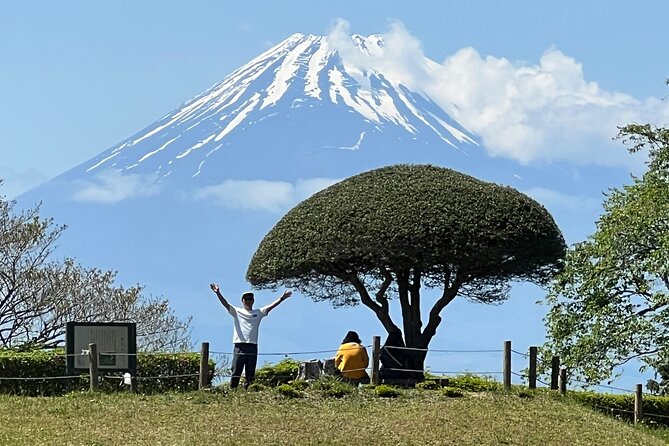
And yes, the views matter here. Hakone is one of those places where Mt Fuji can appear like a reward for patience. When it shows up, it changes the whole vibe—Lake Ashi reflections, cedar-road sight lines, and distant angles from higher ground. When it doesn’t, you still get a serious hike through forested backroads and old-stone-feeling sections.
Your guide matters more than you think
This is a max-6-person group tour with a National Certified Pro Guide and wilderness first aid. That might sound like paperwork—until you realize how much of the day is walking on uneven terrain and hopping between trail segments.
I like that the guide is set up to explain both sides of the day:
- the physical side (where the footing is tricky, what to expect, and how to pace)
- the historical side (how this corridor worked for Edo travelers)
In the reviews, the most repeated theme is the guide’s calm, kind approach—plus a real focus on history. Names mentioned include Aki and Akihiro. That same pattern shows up in how the day is run: your guide helps you get from point to point with buses and trail choices so you spend less time figuring it out and more time watching what’s in front of you.
There’s also a practical “group comfort” angle. With a small crew, you don’t have to fight the crowd rhythm. You’re more likely to get timely photo help and pacing that matches your group rather than forcing everyone to sprint to the next stop.
Start at Hakone-Yumoto: cobblestones, tea, and craft village vibes
The day starts at Hakone-Yumoto Station at 9:00am. That timing is useful. You’ll get moving early enough to avoid the worst of the day’s crush and still have time for transport connections without rushing every stop.
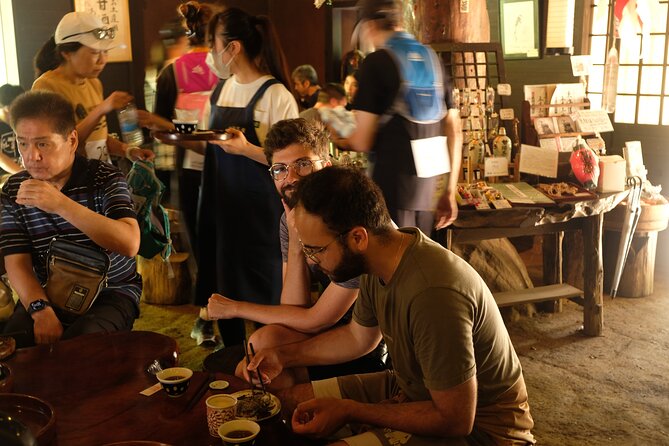
From there, you take a shared taxi to the trailhead and then walk for about an hour to reach the Amazake Tea House area (Stop 1). One detail worth knowing: you’ll reach a wood crafting village along the way, where you can see artisans using traditional techniques. That’s a nice bridge between “history as explanation” and “history as everyday craft,” which makes the whole route feel more grounded.
The Amazake element is part of the flavor of this stop. It’s a sweet, drinkable local touch that fits the theme: Edo travelers needed calories and comfort, not just scenery. Admission here is listed as free in the tour highlights, which helps the value.
Lake Ashi and the Heiwa no Torii: the day’s big visual payoff
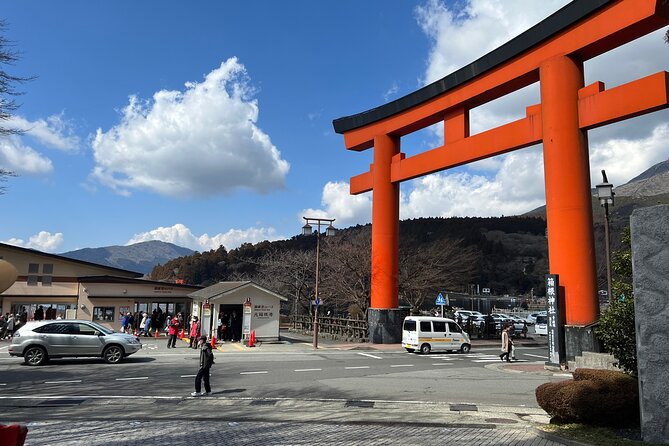
Once you reach Lake Ashi, the tour leans into the famous views. You head to Motohakone-Ko Pier for a sightseeing cruise, then continue with shoreline walking.
Two things you’re aiming for at Lake Ashi:
- the Heiwa no Torii
- Mt Fuji in the background, weather permitting
Even if Fuji is hiding, the cruise-and-walk rhythm breaks up the hiking in a way that keeps the day from feeling like one long grind. The route also takes you through a cedar avenue later on, so you’re moving from open water views into shaded, older-looking road feel.
This is also one of those places where timing inside the day matters. Because the tour connects multiple segments, you don’t need to plan your own ferry schedules or wonder which pier gets you closest to the best angles. You just follow the guide and the day’s flow.
Cedar trees to the Hakone checkpoint: why immigration mattered on the trail
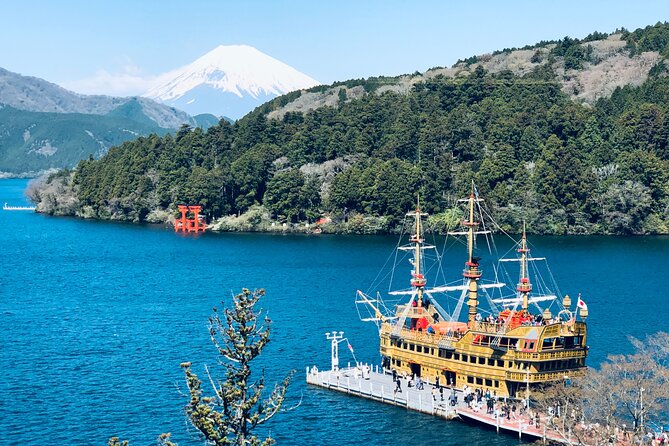
After Lake Ashi, you walk past the cedar avenue and reach the Hakone checkpoint area (Stop 3). This is one of the most story-heavy parts of the tour.
A checkpoint here worked like a travel-control system: it wasn’t just a random building. The guide explains the significance, and that’s the whole point. If you only see the structure, you miss the real story. If you understand why it existed, suddenly the route feels like a lived corridor, not a postcard trail.
Stop 3 is brief—about 30 minutes—but it’s the kind of stop where a good guide can turn a quick pause into a “now I get it” moment. You’re not stuck in a museum; you’re learning why people slowed down, checked in, and how movement was managed.
Lunch near the checkpoint, then a bus skip around a closure
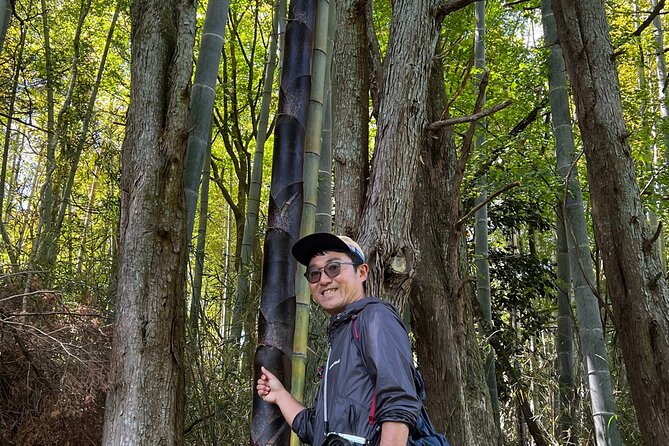
After the checkpoint area, you take a bus to Hakone-machi for lunch at a local Japanese restaurant (Stop 4). Lunch is not included in the price, and the tour estimate puts it around 2,000 yen for your group.
Right after lunch, there’s a smart logistics move. The tour uses buses to skip a temporarily closed part and then resumes the walk toward the Shizuoka side of the route. This is one of the quiet strengths of a guided day like this: you don’t have to guess what’s open today or waste time trying to reroute yourself with limited local language skills.
If you hate waiting, this kind of planning is a big win. If you love independent wandering, you’ll still have trail time—but you’ll trade spontaneity for efficiency.
Yamanaka Castle Ruins: a shorter stop with an extra view gamble
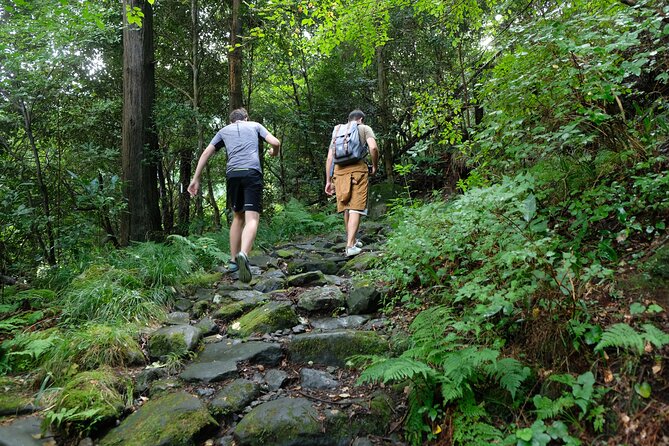
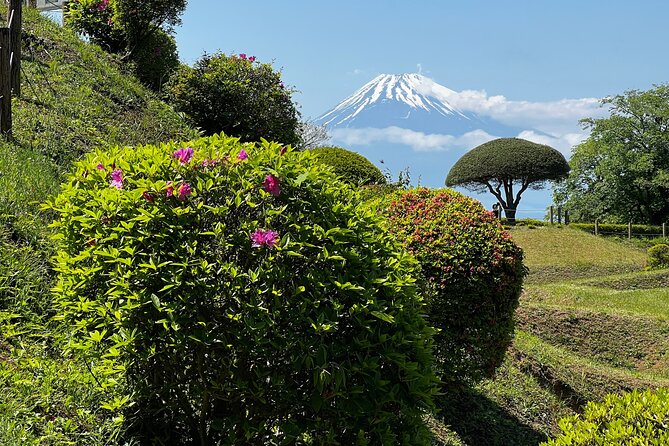
Next comes Yamanaka Castle Ruins (Stop 5). It’s part of the Hachiri heritage path, and it’s also one of the spots where Mt Fuji might show up if the sky cooperates.
This stop is about an hour. That’s enough time to walk the area, take in the terrain, and understand why castle sites often landed on strategic ground. If visibility is good, you’ll likely get that “why this route was worth the effort” feeling again—like, okay, this is where you’d watch the road and the weather.
If it’s cloudy, don’t panic. The point here is the historic setting and the route continuation, not only one perfect photo moment.
Mishima Station finish: shrines, Genba River, and an easy train exit
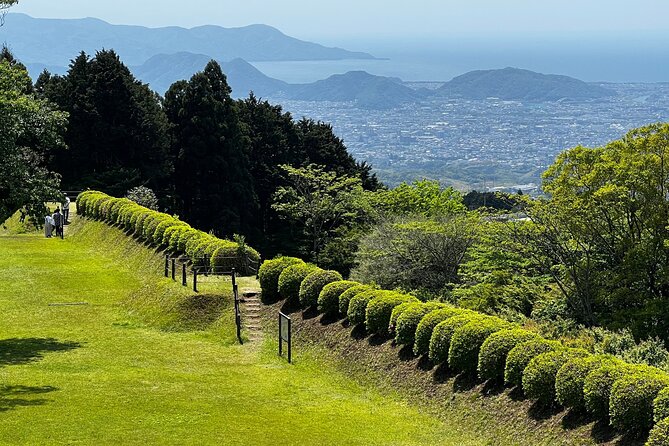
The tour ends at Mishima Station after reaching Mishima (Stop 6). Before you finish, you visit Mishima Taisha and Genba River.
This matters for two reasons:
1) You’re ending in a different place than you started, so the day feels like a true crossing rather than a loop.
2) Mishima Station is a clean exit point for onward travel.
From Mishima Station, you can take the Shinkansen back to Odawara (about 15 minutes, around 2,500 yen) or to Tokyo (about 45 minutes, around 4,400 yen). Those times aren’t just convenient—they help you keep the rest of your itinerary realistic on the same day.
Also, admission for these stops is listed as free within the tour highlights, which helps the value math.
Price reality check: is $158.52 worth it?
The listed price is $158.52 per person, for a day around 7 hours and about 8km of hiking. The group limit is 6 travelers, and you get a certified mountain guide with wilderness first aid. You also get a mobile ticket, plus the tour notes group discounts.
Here’s the honest value breakdown:
- Included: guide, and stop admissions listed as free (cruise and key heritage stops are included as free in the tour highlights)
- Not included: lunch (around 2,000 yen), transportation costs between sites/trailhead (around 2,000 yen by shared taxi/buses), plus snacks and Amasake/snacks
- Often not included by default: the Shinkansen ride after the tour (the tour estimate mentions it separately)
When a tour bundles the guide + multiple heritage stops, you’re paying for two things: context and logistics. You don’t need to figure out which pier, which checkpoint angle, which bus hop, and which trail segment is working today. For many people, that’s worth more than the total ticket cost, especially in Hakone where weather can shift fast.
One more practical note: this experience is commonly booked about 61 days in advance on average. If you travel in busy seasons, earlier booking is smart.
What to wear and expect on the ground
This tour calls for moderate physical fitness. That’s the right phrasing: it’s not described as a full-on mountaineering expedition, but it is still an Edo-route mountain corridor with walking segments that can feel longer than the headline 8km.
Wear shoes that handle uneven ground. Expect steep sections on an old highway-style path, plus walking around Lake Ashi shoreline and through cedar-road areas. If you get tempted to wear fancy shoes because the itinerary looks “light,” don’t. Hakone trails punish soft soles.
The weather requirement is also explicit: the experience needs good weather. If conditions are poor and the tour is canceled, you’re offered another date or a full refund.
Who this tour fits best
This is a great match if you want:
- an Edo period walking route with real context (not just names on plaques)
- a guide who handles transport connections between sites
- a small group pace where you can actually hear the story
You might also like it if you care about the combination of history + nature + practical movement: lake cruise, cedar road, checkpoint explanation, then ruins and shrine time before you head back by train.
If you dislike buses or short time windows at each stop, the mixed walking-and-transport style could feel a bit structured. And if Mt Fuji visibility is your only goal, remember the tour itself depends on weather.
Should you book Hakone Hachiri with a certified mountain guide?
If you want the Hakone Hachiri experience to feel guided and meaningful—especially the checkpoint history and the way the route connects—you should book it. The small group size, certified mountain guide, and the fact that admissions for key stops are handled for you all add up.
I’d skip it only if you can’t handle moderate hiking or you’re traveling with a very inflexible schedule where a weather-based reschedule would be painful. Also, plan on budgeting for lunch and transport between sites, since those aren’t baked into the base price.
In short: this is a smart day trip plan for people who want to walk the Old Tokaido Highway story correctly, with less guesswork and better timing.
FAQ
How long is the Hakone Hachiri hike?
It runs about 7 hours (approx.).
Where does the tour start and end?
It starts at Hakone-Yumoto Station at 9:00am and ends at Mishima Station.
About how far will I walk?
You hike around 8km during the tour.
What’s included in the tour price?
You get a certified mountain guide with wilderness first aid, a mobile ticket, and admissions listed as free at the tour stops.
Is lunch included?
No. Lunch is not included and is estimated at around 2,000 yen for your group.
Do I need to pay for local transportation?
Yes. Transportation fee to the trailhead and between sites is estimated at around 2,000 yen by shared taxi or buses.
Are there any other major costs besides lunch and local transport?
The tour notes Shinkansen fees from Mishima to Odawara or Tokyo as not included (about 2,500 yen to Odawara or about 4,400 yen to Tokyo).
What if the weather is bad?
The experience requires good weather. If it’s canceled due to poor weather, you’ll be offered a different date or a full refund.
What fitness level do I need?
You should have a moderate physical fitness level.
How many people are in the group?
The tour has a maximum of 6 travelers.