REVIEW · HAKONE
Hike Hakone Hachiri
Book on Viator →Operated by Walk Hakone Hachiri · Bookable on Viator
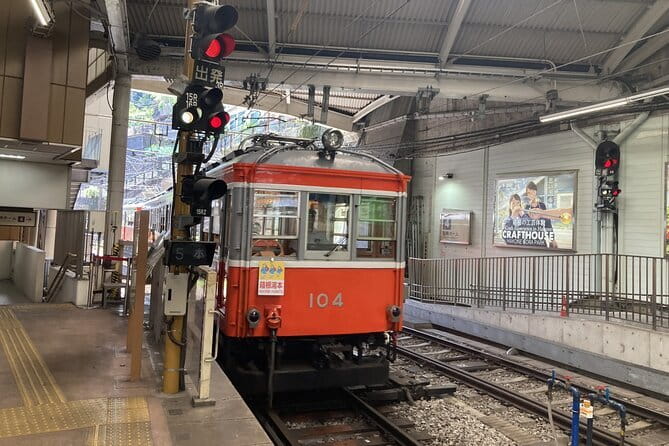
History sticks to your boots here. I like starting at Mishima and having my guide Tony translate the old-world details as we meet Mr Yamamoto at Amasake Chaya, and I like the long shaded walk down Cedar Avenue, planted to shelter Tokaido travelers. The day is built around Japan Heritage sites, so you get story, not just photos.
One possible drawback: this is an active day at about 9 hours with a moderate-fit pace, including a stretch of old road that can feel rugged if you’re used to flat walks. Weather also matters for Mt Fuji views, so pack for rain just in case.
In This Review
- Key highlights you will feel right away
- What Hakone Hachiri actually means on the old Tokaido
- Mishima at 8:30: start fast, plan for a full day
- Stop 1: Amasake Chaya with Mr Yamamoto and the 13th-generation story
- Stop 2: Lake Ashinoko lunch by the water and the red tori gates
- Stop 3: Cedar Trees of the Hakone Old Road and the shade effect
- Stop 4: Hakone Sekisho and the checkpoint logic of Edo travel
- Stop 5: Yamanaka Castle Ruins, Mt Fuji when weather cooperates
- Stop 6: The 12km Old Tokaido Foot Highway stretch between Odawara and Mishima
- Stop 7: Genbegawa World Water Heritage Area walk near Mishima
- Price and logistics: is $231.18 a good value?
- What to pack (and the shoe rule is real)
- Weather and Mt Fuji: plan for the day, not the forecast promise
- Who should book this Hakone Hachiri hike
- Should you book this private hike?
- FAQ
- Where is the tour meeting point and where does it end?
- What time does the hike start, and how long does it last?
- Is lunch included?
- Are admissions included for the stops?
- How fit do you need to be for this hike?
- What happens if the weather is poor?
Key highlights you will feel right away
- A private small-group day with guide Tony and helpful Japanese translation
- Amasake Chaya with Mr Yamamoto, a 13th-generation teahouse manager
- Lake Ashinoko breaks with lunch by the water and red tori gates
- Cedar Avenue shade under very old Japanese cedar
- Edo-period checkpoint and castle-ruins context that makes the hike make sense
- A 12km section of the Old Tokaido Foot Highway, plus a short water-heritage walk
What Hakone Hachiri actually means on the old Tokaido
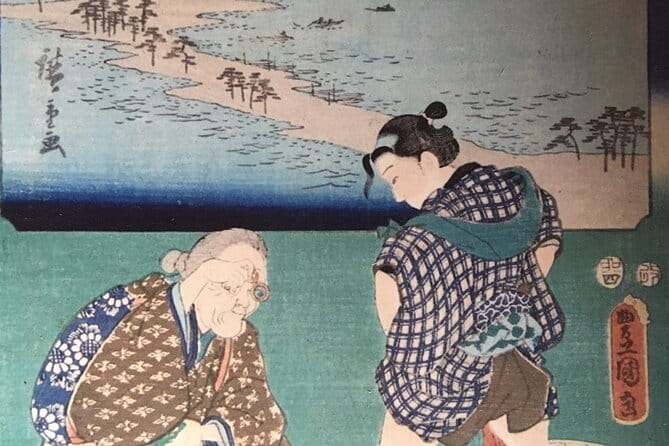
Hakone Hachiri is a hike section of the ancient Tokaido Highway, the road that linked Tokyo with Kyoto and Osaka. The point is not to race through pretty spots. It’s to walk the same kind of route travelers once used, then pause at the human-made landmarks that controlled movement and protected the shogun’s world.
This area is also marked as a Japan Heritage Area, which matters because it keeps the history from feeling like trivia. You’ll repeatedly connect the landscape to decisions people made: where to place checkpoints, where to plant shade trees, and how to defend a border.
And yes, the setting is scenic. But the real payoff is learning how the route functioned as a system. When you understand that, every stop feels earned.
Mishima at 8:30: start fast, plan for a full day
You start and end at Mishima Station (address listed as 16-1 Ichibanchō, Mishima). The start time is 8:30am, and the full hike runs about 9 hours.
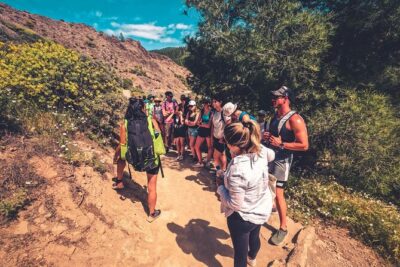
Because it’s a private tour, you’re not squeezed into a big crowd where your pace and questions get swallowed. You get a group that stays together, guided through the route’s changing scenes—tea house, crater-lake break, cedar shade, checkpoint, then castle ruins and the longer historic foot highway stretch.
One practical note: the price includes the guide fee, but it does not include lunch. So you should treat the day as a walking and touring program with a paid food stop you’ll handle yourself.
Stop 1: Amasake Chaya with Mr Yamamoto and the 13th-generation story
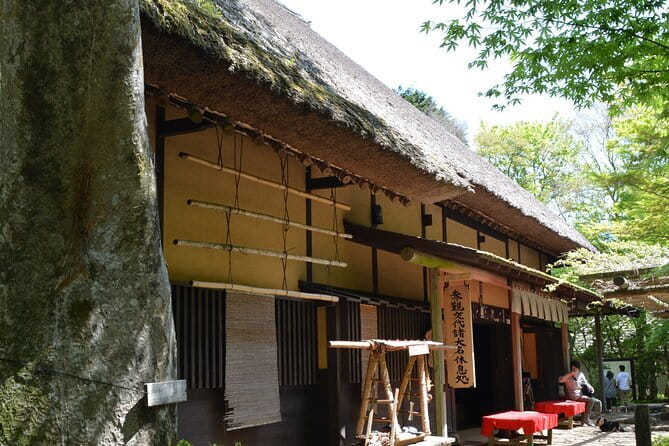
The day kicks off at Hakone Amazake Tea House, where you meet Mr Yamamoto, the 13th-generation manager of the Amasake Chaya Teahouse. That detail is key. This isn’t a generic museum stop. It’s a working teahouse family continuing a route tradition tied to the old Tokaido.
Amazake is a sweet, fermented rice drink, and teahouses along the old road served travelers with rest and small comforts. Here, you’re not just tasting a drink; you’re hearing how a place like this survives through time and how the family understands its role in the route’s past.
From a value standpoint, this first stop is excellent because the experience is included with an admission ticket, so you don’t have to “pay extra to start.”
In terms of what to watch for: tea house pauses can involve a bit of standing and slow moving. Wear shoes that feel stable even if you’re stepping over small indoor/outdoor thresholds.
Stop 2: Lake Ashinoko lunch by the water and the red tori gates
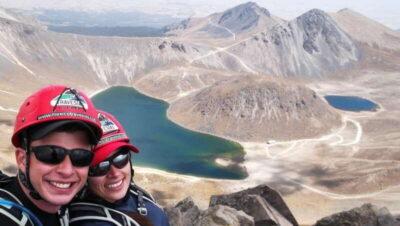
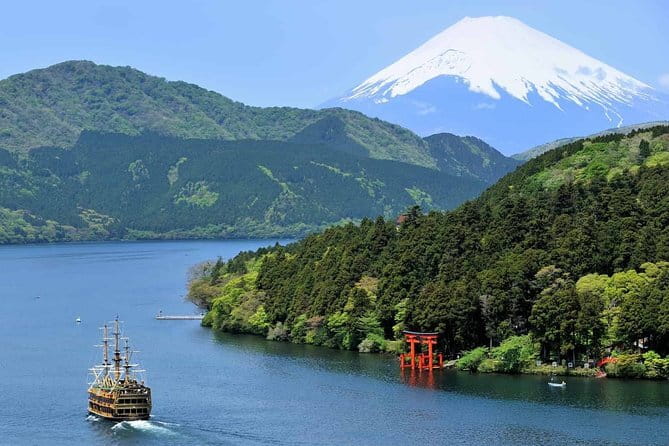
Next comes a break at Lake Ashinoko. This is a deep, crater lake (listed as about 700 meters deep), and the vibe is calmer after the teahouse storytelling.
You’ll have lunch by the lake—and this is where you’ll want to adjust expectations: lunch is not included in the tour price, even though the schedule gives you a dedicated time block. Plan to buy it on-site or nearby.
The standout visual here is the red tori gates in the water. Even if you’ve seen torii from beaches or shrines, seeing them sitting out on a lake surface changes the feel. It looks like a simple background detail until the day’s history theme clicks: sacred markers often traveled with road culture.
Stop 3: Cedar Trees of the Hakone Old Road and the shade effect
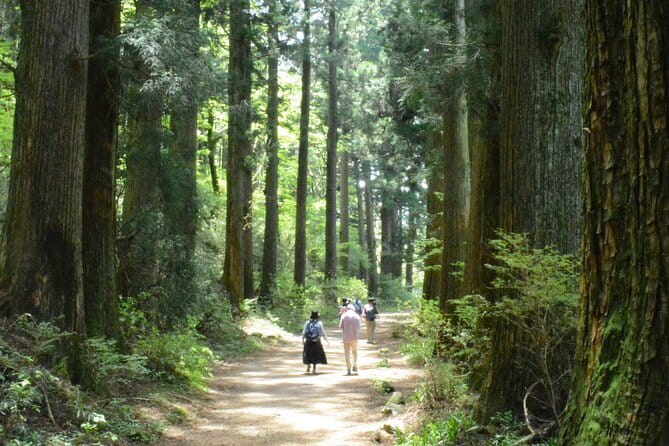
Then you step into the Cedar Avenue section of the Hakone old road. The important detail: these are Japanese cedars planted about four centuries ago on both sides of the old route. The second Edo-period shogun, Tokugawa Hidetada, ordered the planting to provide shade for travelers.
This is one of those stops where the benefit is physical, not just educational. Shade trees mean cooler walking, and the corridor-like feel of a tree-lined path makes it easier to focus on the route ahead. You get a sense of how infrastructure can protect people from sun and weather.
If you want a small strategy: use this section to slow your pace. The cedars are the kind of feature that rewards noticing, not sprinting. Also, since the hike uses old footpath surfaces in places later, this early cedar stretch is a good “warm-up” for your footing.
Stop 4: Hakone Sekisho and the checkpoint logic of Edo travel

Checkpoint time. Hakone Sekisho was one of the key Tokaido controls closest to Edo, which meant it was also heavily policed to verify that people were legitimate travelers and to protect the shogun.
You’ll also visit the Hakone Sekisho Museum for context. What I like about checkpoint stops is that they turn wandering into understanding. Instead of thinking of travel as free movement, you see it as regulated—organized around identity and security.
This stop is only about 30 minutes, but it’s dense in meaning. You’ll come away with a clearer picture of what it took to move along the road in the Edo period.
One consideration: checkpoint areas can involve walking on uneven surfaces around ruins. If you tend to get tired fast in museums, pace yourself and save energy for the longer stretch later.
Stop 5: Yamanaka Castle Ruins, Mt Fuji when weather cooperates
Next up is Yamanaka Castle Ruins, tied to the year 1590 and the defensive boundary of the Hojo. The name matters here: “castle in the middle of the mountain” points to how this site was shaped for protection.
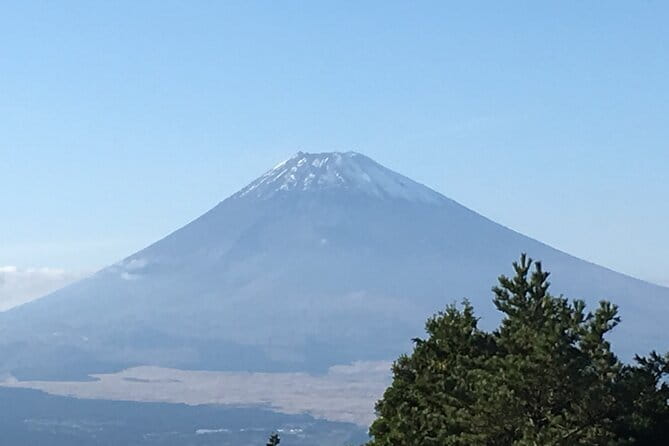
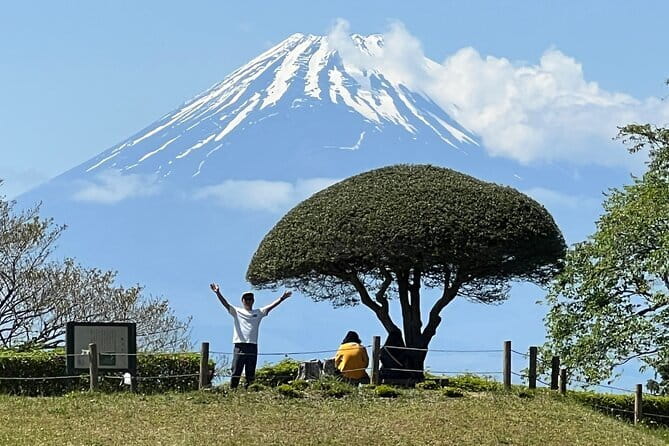
This is also the part where Mt Fuji views may appear, depending on weather. The tour explicitly frames Fuji as weather-permitting from this area, so don’t plan your day around a guarantee. Instead, treat it like a bonus if the sky clears.
Why I think this stop works: earthworks and ruin layouts are easier to understand with a little guidance. When you can visualize why walls and gaps were where they were, the site stops being random dirt and becomes a story you can read.
If it’s rainy or damp, this portion can feel slippery depending on ground conditions. Bring shoes you trust.
Stop 6: The 12km Old Tokaido Foot Highway stretch between Odawara and Mishima
This is the long one: Tokaido Odawara Shuku to the preserved Old Tokaido Foot Highway between Odawara and Mishima. The schedule gives it as about 5 hours, and the distance is listed as 12km.
Also important: this specific segment is preserved as a Japan Heritage Area, which means you’re not only walking history—you’re walking a maintained path where the route’s character is protected.
What you’ll likely feel: it’s a longer sustained walk, so you’ll want steady rhythm rather than stopping every minute. This is where the guide’s job matters. If Tony times your pauses right, you get the historical points without turning the hike into a series of interruptions.
What can be a drawback: 12km of old road can feel more demanding than people expect, especially if you thought the rest of the day was mainly cultural stops. The reviews highlight that the hiking can be rigorous and challenging, and that matches the structure here. Plan for a workout, not a stroll.
Stop 7: Genbegawa World Water Heritage Area walk near Mishima
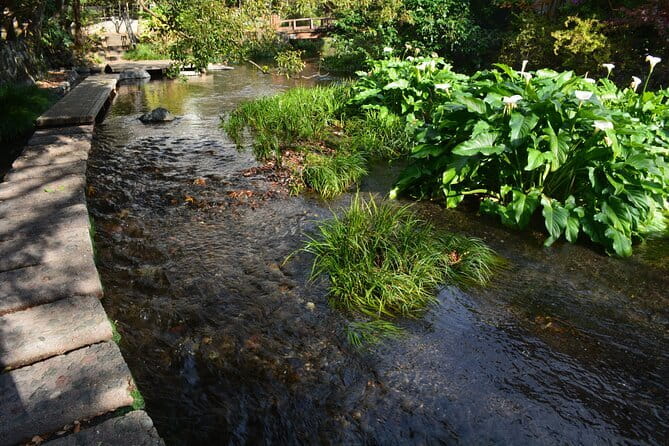
The day doesn’t end the moment the long walk finishes. You also get a short stroll along the Genbegawa World Water Heritage Area.
This stop shifts your attention from road history to water systems and how they shape life around the route. Even if you don’t know the background yet, the concept helps: rivers and water management were part of travel planning too, from supply to terrain.
It’s only about 30 minutes, so keep it in the right mental box—this is a concluding piece that ties the day into the broader natural heritage of the region.
Price and logistics: is $231.18 a good value?
At $231.18 per person, this hike is not a bargain-basement outing. The question is what you get for your money—and you actually get several things that add up.
First: the guide fee is included, and the guide is doing more than translating directions. You get route context at multiple stops: teahouse family history, cedar planting decisions, checkpoint function, and castle boundary explanations. When a day is built around meaning, the guide becomes part of the product.
Second: at least one admission ticket is included (the Hakone Amazake Tea House ticket), while several other stops have admissions marked as free. That’s good cost control.
Third: it’s private, meaning your time is not diluted across large groups. Your pace is less likely to be dragged down by crowd flow.
Where you need to budget extra: lunch is not included, and coffee and/or tea is also not included. The schedule gives you a lunch time near Lake Ashi, but you’ll still pay for food.
If you want a quick rule for deciding: if you enjoy walking history with a human guide and you’d rather not piece the day together yourself, this can be good value. If you prefer self-guided routes with no structured stops, the price can feel steep.
What to pack (and the shoe rule is real)
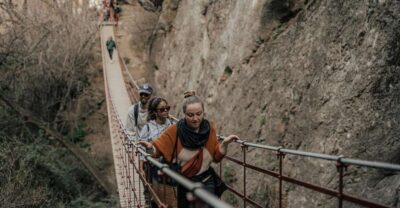
This is a walking day with varied surfaces: tea house area steps, cedar road paths, checkpoint and ruin terrain, then a longer historic foot highway section.
Here’s the practical takeaway from what the day demands:
- Wear sturdy, comfortable shoes with good grip.
- Bring layers for changing weather around Hakone and along older paths.
- If rain is possible, pack something rain-ready. The day is weather-dependent for the best conditions.
Also note: the tour lists air-conditioned vehicle as not included. That suggests you shouldn’t expect much “ride comfort” to reset you between stops. Think of it as a largely walk-forward itinerary.
Weather and Mt Fuji: plan for the day, not the forecast promise
The experience requires good weather, and the tour notes that Mt Fuji views are weather permitting from Yamanaka Castle Ruins. The practical mindset is: plan for learning and walking as the main event, and treat Fuji as a bonus if the sky allows.
There’s also a cancellation reality here. The policy says the experience is non-refundable and cannot be changed for any reason. But if the experience itself is canceled due to poor weather, you’ll be offered a different date or a full refund.
So if you’re booking close to your trip window, make sure your schedule can flex if weather goes sideways.
Who should book this Hakone Hachiri hike
This tour fits best if you:
- Like the old Tokaido theme and want it explained stop by stop.
- Prefer a private day pace with your guide doing the heavy context lifting.
- Can handle moderate physical fitness and a longer 12km portion.
It’s also a great match if you don’t want to build your own route through multiple sites. The structure is doing the work for you: teahouse, lake break, cedars, checkpoint, ruins, long historic walk, then water heritage.
If you’re traveling with someone who’s happy with history but also wants fresh air and a real physical effort, it’s a strong pairing.
Should you book this private hike?
I’d recommend booking if you want an authentic Tokaido experience where the history feels practical, not lectured. The strongest reasons are the guided explanations tied to real locations and the early stop at Amasake Chaya with Mr Yamamoto, plus the longer Old Tokaido Foot Highway section that actually puts you on the route.
I’d think twice if you’re looking for an easy, casual walk. The day is about 9 hours, includes a 5-hour long stretch, and expects moderate fitness. Add in weather uncertainty for Fuji, and you need the right mindset: come for the hike and the context, and be flexible if conditions shift.
FAQ
Where is the tour meeting point and where does it end?
The tour starts and ends at Mishima Station (16-1 Ichibanchō, Mishima, Shizuoka 411-0036, Japan).
What time does the hike start, and how long does it last?
It starts at 8:30am and runs for about 9 hours.
Is lunch included?
No. Lunch is not included in the tour price, even though the schedule includes a lunch break near Lake Ashinoko.
Are admissions included for the stops?
The Hakone Amazake Tea House admission ticket is included. Other stops listed in the itinerary have admission listed as free.
How fit do you need to be for this hike?
The tour is listed for people with moderate physical fitness. You should be comfortable with a full hiking day and a longer historic walking section.
What happens if the weather is poor?
The experience requires good weather. If it’s canceled due to poor weather, you’ll be offered a different date or a full refund. The policy also states the experience is non-refundable and cannot be changed for any reason.
If you want, tell me your travel dates and whether you’re okay with a 12km day. I can help you judge if the timing and fitness level match your itinerary.