REVIEW · HAKONE
Hike Japan Heritage Hakone Hachiri (Half Day)
Book on Viator →Operated by Coconuts Hike Japan · Bookable on Viator
A morning hike through old Japan sounds simple, until you step onto Hakone’s cobbled Tokaido. This half-day Hakone Hachiri walk mixes quiet forest time with real Edo-era road vibes, and you finish with a shot at Mt Fuji across Lake Ashi. I love the way the route moves between history and nature without feeling like a museum stop.
My second favorite part is the human touch: a certified national mountain guide who can explain what you’re seeing in plain language, plus real breaks like the 400-year teahouse amasake. You’ll also pass through Hatajuku, a wood-crafter village that makes the region feel lived-in, not staged.
One thing to consider: you’re hiking for about 2 to 3 hours with a moderate fitness level. If you’re not comfortable walking on uneven cobbles or forest trails, plan to move slowly and keep your expectations flexible, especially when the weather is less than ideal.
In This Review
- Key highlights you’ll feel right away
- Why the Hakone Hachiri works as a half-day plan
- Starting at Hakone-Yumoto: quick, practical, and geared for walkers
- The old Tokaido stretch: cobbles, shade, and that off-the-beaten feeling
- Hatajuku wood-crafting village: history you can see with your own eyes
- Skipping the steepest bit by bus, then arriving at a 400-year teahouse
- Lake Ashi finish: forest-bathing style calm with a Mt Fuji bonus
- Price and what you’re really buying (not just the number)
- What to pack and how hard it feels in real life
- Should you book the Hakone Hachiri hike?
- FAQ
- How long is the Hakone Hachiri half-day hike?
- What time does the tour start, and where do we meet?
- Where do we end, and how do we get to our next destination?
- What’s included in the price?
- Is transportation to the trailhead included?
- How physically demanding is it?
- Will I be able to see Mt Fuji?
Key highlights you’ll feel right away
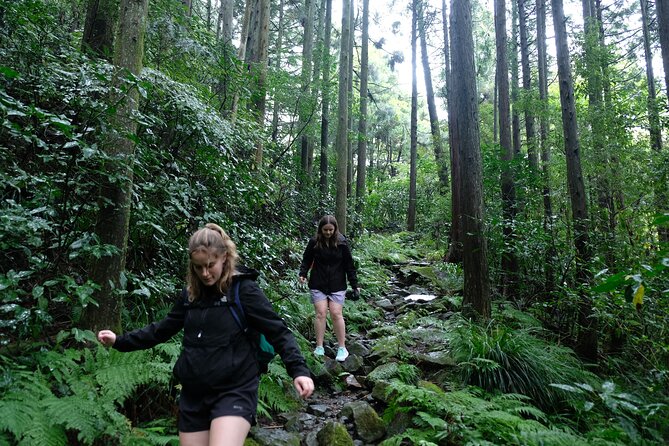
- Old Tokaido cobblestones + forest trails on the same half-day route
- Hatajuku wood-crafting village and a guided skip of the steepest section by bus
- A 400-year teahouse stop with energizing amasake
- Hakone checkpoint storytelling to connect the scenery to Japan’s travel history
- Lake Ashi finish with Mt Fuji views if conditions cooperate
- Small group (max 6) plus a certified national mountain guide
Why the Hakone Hachiri works as a half-day plan
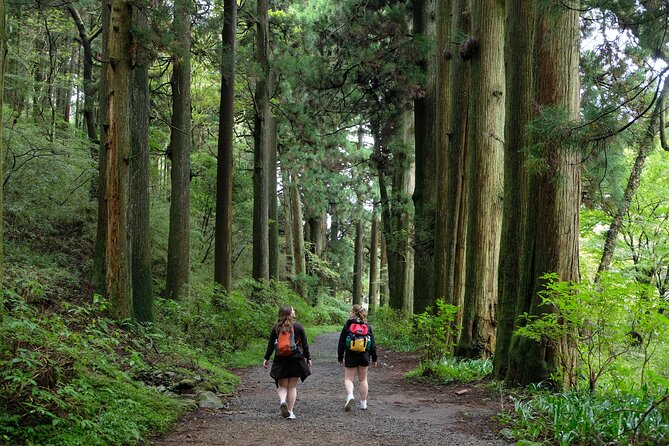
Hakone can eat up your day fast. Between ropeways, day-trip crowds, and transit shuffles, it’s easy to end up doing a lot of riding and not much walking. The Hakone Hachiri is different: it’s built around a serious footpath experience, but sized to fit into a morning or early afternoon.
What I like is the balance. You get a stretch on preserved cobbled Tokaido path, then you drop into quieter forest sections where you can actually hear yourself think. You’re not just getting a view at the top of something; you’re learning the rhythm of an old highway—step, shade, curve, then another small change in scenery.
And because the hike is only about 4 hours total, you’re not trapped. After you finish around 1:00 pm, you can catch a bus or ferry-style boat to your next destination. That matters in Hakone, where plans often depend on weather, lines, and timing.
Starting at Hakone-Yumoto: quick, practical, and geared for walkers
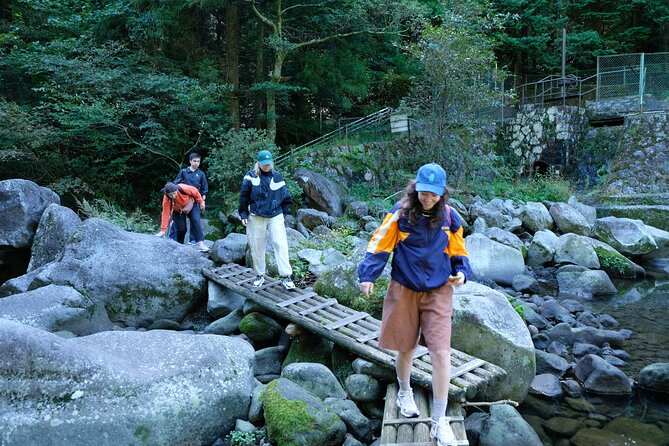
Your day starts at Hakone-Yumoto Station at 9:00 am. It’s a good meeting spot because you’re already in the Hakone hub, so you’re not trying to coordinate complicated transfers just to begin hiking.
The route is designed for a small group—up to 6 people—so you don’t spend half the time waiting for stragglers. The pace also tends to fit the idea of an educational walk: you’re moving, then pausing to look, then moving again.
One logistics detail I appreciate: your itinerary includes a bus skip for the steepest part of the trail. That means you still get the hiking experience, without having your legs blown up before you reach the historical sections and the teahouse stop.
If you’re the type who likes to know what’s coming, plan on about 2 to 3 hours of actual hiking, with breaks and guide talk filling the rest of the half-day.
The old Tokaido stretch: cobbles, shade, and that off-the-beaten feeling

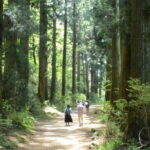
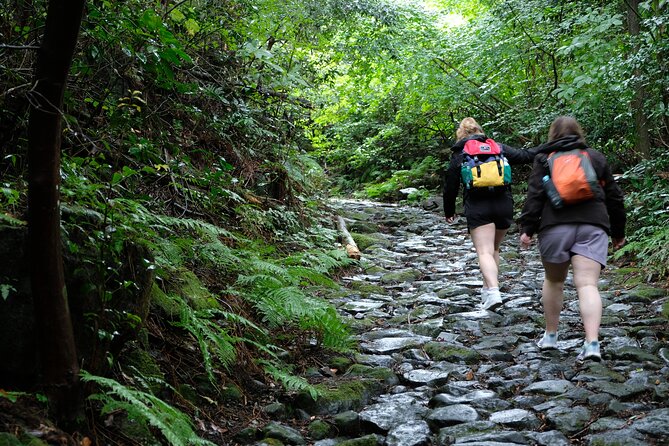
This is the core of the Hakone Hachiri experience. You’ll walk along the old Tokaido highway between Hakone-Yumoto and Lake Ashi, alternating between cobbled sections and forest trails.
The most memorable part for me is what happens to your senses as the trail changes. Cobblestones make your footing more deliberate. Forest trail time slows you down naturally. And because some portions are off the busiest track, you often get stretches where the forest feels mostly yours.
This matters because the trail isn’t just about reaching Lake Ashi. It’s about moving through the physical character of the route—how it’s built, how it feels underfoot, and why it shaped travel in centuries past.
Do note one reality: cobbled and uneven surfaces can be a little unforgiving. Wear shoes you trust. If you’re used to clean city streets only, this will gently remind you that Japan has plenty of terrain that demands real traction.
Hatajuku wood-crafting village: history you can see with your own eyes
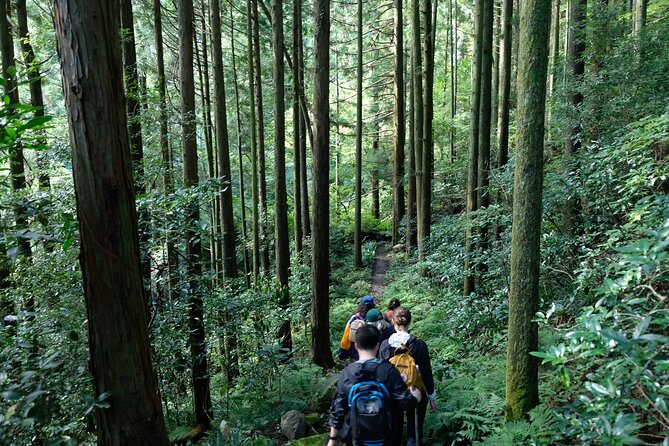
After about an hour of hiking, you reach Hatajuku, a wood-crafting village tied to Hakone’s past. This isn’t a quick photo stop. You’ll get context for the traditional craft culture of the area, and it helps explain why Hakone mattered as a place people passed through—especially when travel routes turned into busy corridors.
One practical benefit: the village break gives your legs a chance to reset before you head toward the teahouse section. It also breaks up the hike so it doesn’t feel like a straight grind from start to finish.
What you’re really paying attention to here is the contrast. You’re walking an old highway, then stepping into a workshop-style environment where the region’s identity shows up in everyday materials—wood, tools, craft tradition—rather than only in scenery.
And if you love history told through places, you’ll likely enjoy how the guide ties together the Edo-era travel story with what’s in front of you. In past tours, guides like Akihiro (also referred to as Aki) have been praised for clear English and the kind of local context that makes the road feel real.
Skipping the steepest bit by bus, then arriving at a 400-year teahouse
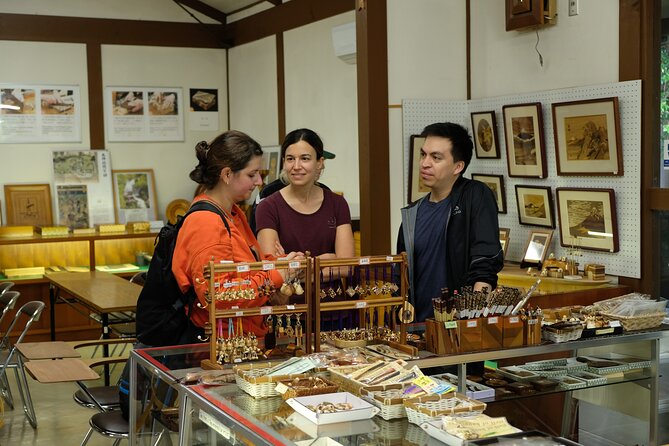
One smart design choice on this hike is the bus ride to skip the steepest segment. That’s not cheating; it’s responsible route planning. It keeps the hike enjoyable and keeps your energy for the stretches that are most rewarding—especially the historical segments and the atmosphere around the teahouse.
Once you reach the Hakone Amazake Tea House, you get a short stop that’s both functional and atmospheric. You’ll enjoy amasake, a sweet fermented rice drink. The key point is the timing: you’re refueling before the final push toward Lake Ashi.
The teahouse has a history of about 400 years, and the guide helps you connect that age to the bigger story of travelers passing through Hakone over generations. This is where the hike stops being only physical. It turns into a real sense of place—like you’re tasting something that belongs to the path, not just to a pit stop.
If you’re sensitive to sweetness, take small sips at first. But if you want the break to feel energizing (and it usually does), it’s a satisfying way to break up the walk.
Lake Ashi finish: forest-bathing style calm with a Mt Fuji bonus
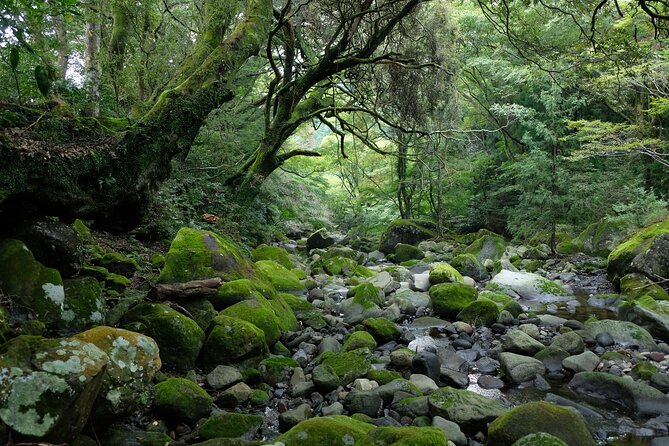
From the teahouse, you continue to Lake Ashi, and the vibe shifts again. The route keeps you moving, but the focus becomes calmer: water nearby, open sightlines starting to appear, and that quiet end-of-hike decompression.
You’ll have about one hour in this final area, with the big visual payoff being a possible view of Mt Fuji across the lake. Weather is the deciding factor, so don’t assume you’ll see it. But even without Fuji, Lake Ashi can still feel dramatic because the views are framed rather than blank.
Here’s what I like about ending on Lake Ashi instead of turning back to the station. It gives your morning hike a clean payoff, and it naturally sets you up for onward travel. You’ll finish at a place where you can take a bus back to Odawara/Hakone-Yumoto or use ferry-style options toward your next stop.
If you’re planning a full Hakone day, this is helpful: the hike ends early enough that you can still adapt to weather and crowds.
Price and what you’re really buying (not just the number)
At $114.95 per person for about 4 hours, the price might look steep if you’re thinking only of hiking. But you’re not just buying walking time.
You’re paying for:
- A certified national mountain guide
- A structured route that includes a smart bus skip for steep terrain
- Carefully timed stops, including the amasake teahouse stop
- A small group size (max 6), which often makes the experience feel less chaotic
Also, the tour uses a mobile ticket, which helps reduce friction on a day when you’ll already be moving between station, bus, and walking sections.
What’s not included is transportation to the trailhead via shared taxi—listed as 2000 yen total to be shared among the group—plus the bus fee to the teahouse (less than 400 yen). These are minor compared to the overall guiding service and route planning, but they are real costs you should budget so you don’t get surprised.
In practical value terms: if you want an authentic trail experience with context, this is a good way to avoid guessing your way through old paths and historical stops on your own.
What to pack and how hard it feels in real life
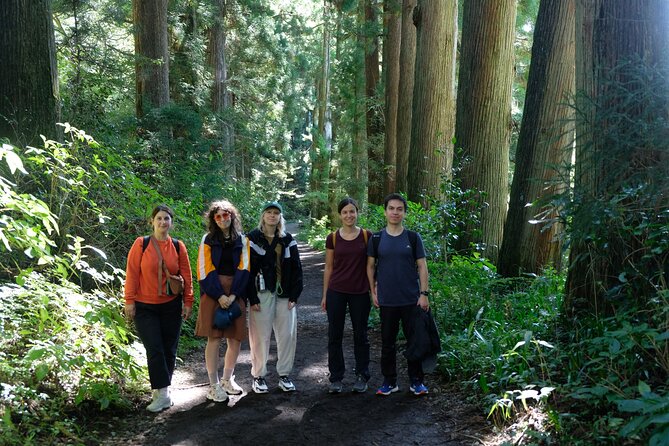
This hike is rated for moderate physical fitness. You’re hiking 2 to 3 hours, and some surfaces are cobbled or uneven. That’s not mountain-climbing territory, but it is not a flat promenade either.
Bring:
- Shoes with good grip for cobbles and forest dirt
- Light layers for forest shade and sun shifts
- Water for the walking segments (the teahouse stop is a food/drink break, not a full meal)
If you’re traveling with kids or teenagers, it can work as a bonding hike, especially if the guide is good at making the history and surroundings understandable. In past tours, people specifically mentioned enjoying the historical storytelling while still having enough movement to keep everyone engaged.
One more practical note: the experience is weather dependent and requires good conditions. If the day turns, you’ll be offered a different date or a full refund, so you should check forecasts rather than assuming you’ll power through.
Should you book the Hakone Hachiri hike?
If you want Hakone without spending your day riding from one view to the next, I think you should book this. It’s a smart half-day format, it keeps you on meaningful footpaths (cobbles and forests), and it ends where you can keep traveling immediately.
Book it especially if:
- You like walking trails with built-in story context
- You care about seeing places like Hatajuku beyond a quick glimpse
- You want a chance at Mt Fuji across Lake Ashi without locking yourself into an all-day plan
- You prefer a small group guided experience
Skip it or be cautious if:
- Uneven cobbles and forest trails would frustrate you
- You’re expecting a guaranteed Mt Fuji view (it’s weather-permitting)
Overall, this is one of those tours where the value is in the mix: history + trail time + guide context, all within a timeframe that won’t wreck the rest of your Hakone itinerary.
FAQ
How long is the Hakone Hachiri half-day hike?
The tour runs for about 4 hours in total, including hiking time and stops. You’ll hike roughly 2 to 3 hours along the route, with additional time for village, teahouse, checkpoint, and Lake Ashi.
What time does the tour start, and where do we meet?
The start time is 9:00 am. You meet at Hakone-Yumoto Station.
Where do we end, and how do we get to our next destination?
You finish at Motohakone near Lake Ashi. From there, you can catch a bus back to Odawara/Hakone-Yumoto or continue by ferry (pirate ship) to other destinations.
What’s included in the price?
Included is a certified national mountain guide. Stops such as admission for the Hatajuku, teahouse, checkpoint, and Lake Ashi listed as free are not extra costs during the tour.
Is transportation to the trailhead included?
No. Transportation to the trailhead may involve a shared taxi, listed as 2000 yen total shared among the group. You’ll also pay a small bus fee to reach the teahouse (less than 400 yen).
How physically demanding is it?
It’s intended for travelers with moderate physical fitness. You’ll hike on a mix of cobbled and forest-trail surfaces for a few hours, and there is a bus skip to avoid the steepest part.
Will I be able to see Mt Fuji?
You can have a picture with Mt Fuji across Lake Ashi if weather permits. Conditions aren’t guaranteed, but the tour is timed so you reach Lake Ashi during the dedicated viewing portion.