REVIEW · ANTIGUA GUATEMALA
Antigua, Guatemala: Volcano Acatenango Overnight Hiking
Book on GetYourGuide →Operated by Tours & Activities SA · Bookable on GetYourGuide
Two volcanoes. One steep night.
The Acatenango overnight hike from Antigua pairs a sunrise-from-the-top moment with a camp setup that puts you close to Volcán de Fuego—including nighttime glow when conditions cooperate. You’ll climb through otherworldly volcanic terrain, sleep high in the Form-A cabins, and wake up for the return trek with a front-row seat to Guatemala’s mountain drama.
I love how this trip keeps things human: small groups, real guide attention, and steady pacing that helps you manage the grind. I also like the practical creature comforts for a cold altitude camp—hot drinks like chocolate, solid meals, and a setup that actually helps you rest.
The main drawback to plan for is the reality check: this is a hard, cold, windy hike at high elevation. If you don’t pack layers and water, or if your body isn’t ready for steep uphill all day, you’ll feel it fast.
In This Review
- Key things to know before you go
- Why Acatenango overnight feels different from a day hike
- Getting there: Antigua pickup and the trailhead start
- Day 1 climb: a steep trek into volcanic terrain
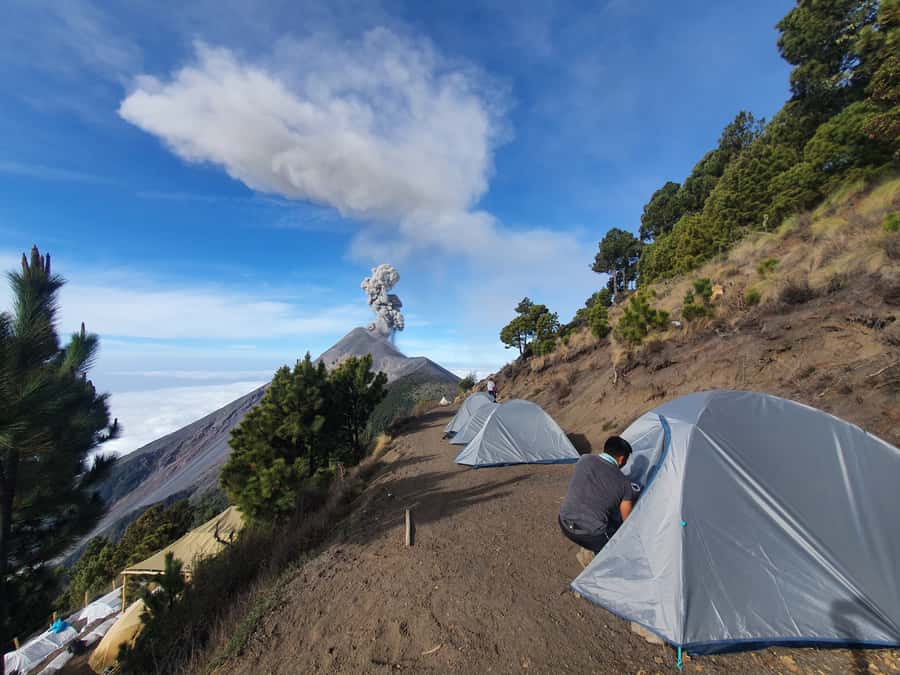
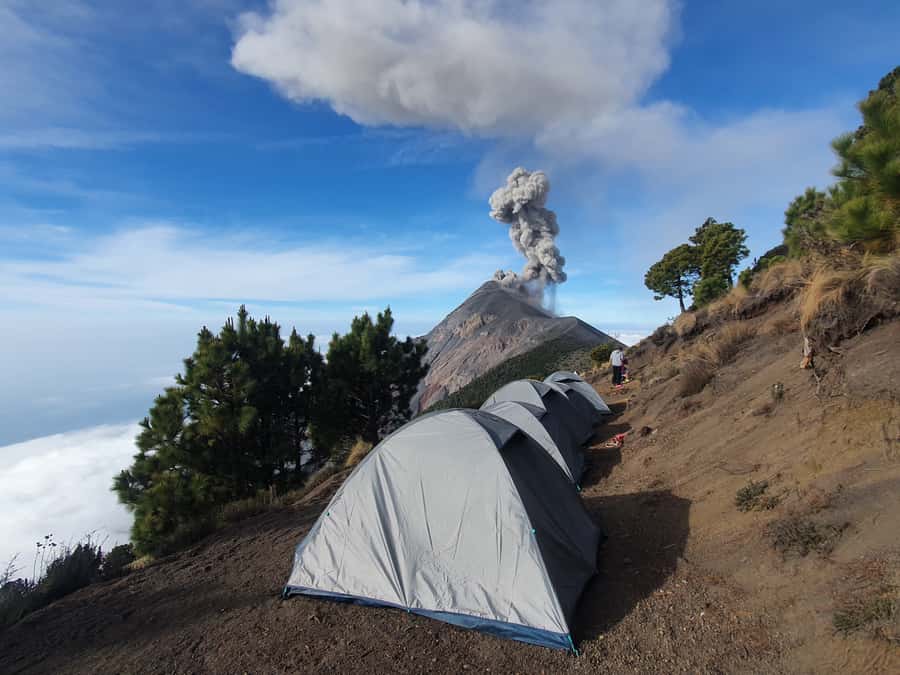
- Camp at basecamp: Form-A cabins and a night aimed at Fuego
- Sleeping setup
- Dinner with volcano sounds (and sometimes lava)
- Day 2 sunrise and the trek back toward La Soledad
- Optional add-ons: Fuego and sunset hikes (and when to skip)
- What the guides really do (the part that makes or breaks the hike)
- Food on trail and at camp: fuel that matches the effort
- Price and value: $90 makes sense if you’re prepared
- What to pack for Acatenango (so the cold doesn’t win)
- Bring
- Strongly consider adding
- Don’t bring
- Altitude and who should be cautious
- Should you book this Acatenango overnight hike?
- FAQ
- How long is the Acatenango overnight hike?
- Where do I meet for the tour in Antigua?
- What is included in the price?
- Is water included?
- What meals are included?
- Do I have to pay an entrance fee?
- Do I need to bring hiking gear?
- Are the cabins warm enough?
- What should I pack for sunrise and the cold night?
- Can I request vegetarian meals?
Key things to know before you go
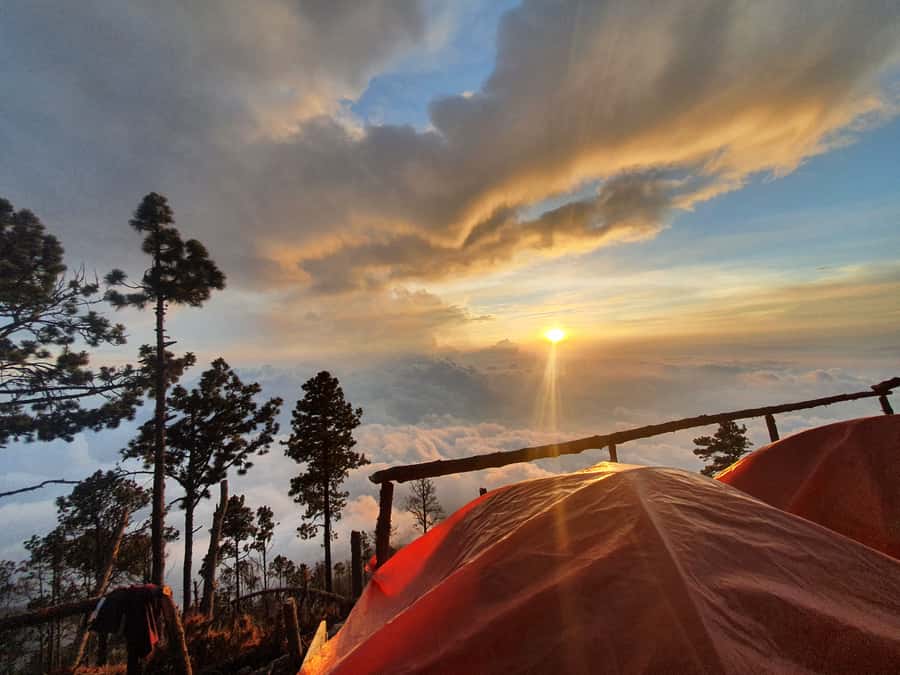
- 3,700 meters up: you’re sleeping and waking at altitude, so cold hits early
- Sunrise from Acatenango: day two starts with an early push
- Fuego views from basecamp: you may catch lava glow and eruption sounds at night
- Smaller groups (often around 6–12): easier to move at a pace that fits you
- Guides who manage pace and safety: you’ll get help on the tough stretches
- Basic cabins, not hotel comfort: warm enough with a sleeping bag, but don’t expect plush
Why Acatenango overnight feels different from a day hike
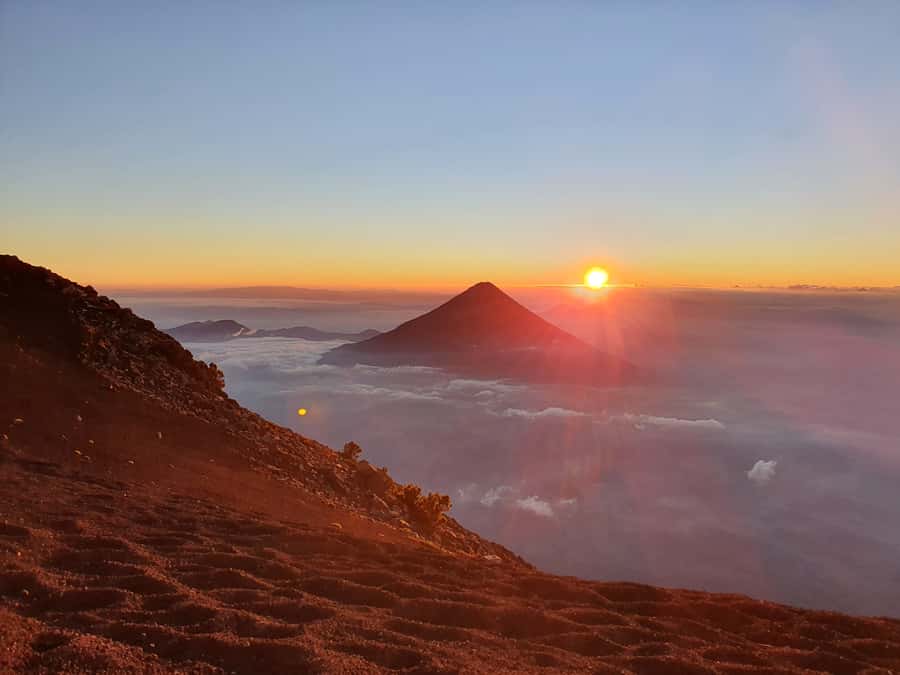
Day hikes are about getting up and getting back. Overnight is different. You earn the views twice—first the sunset drama at basecamp, then sunrise when the air is still and the mountains look extra sharp. It also gives you time to settle into camp life at ~3,700 m, where the wind can be fierce but the payoff is that you’re watching an active volcano from a close, lived-in vantage point.
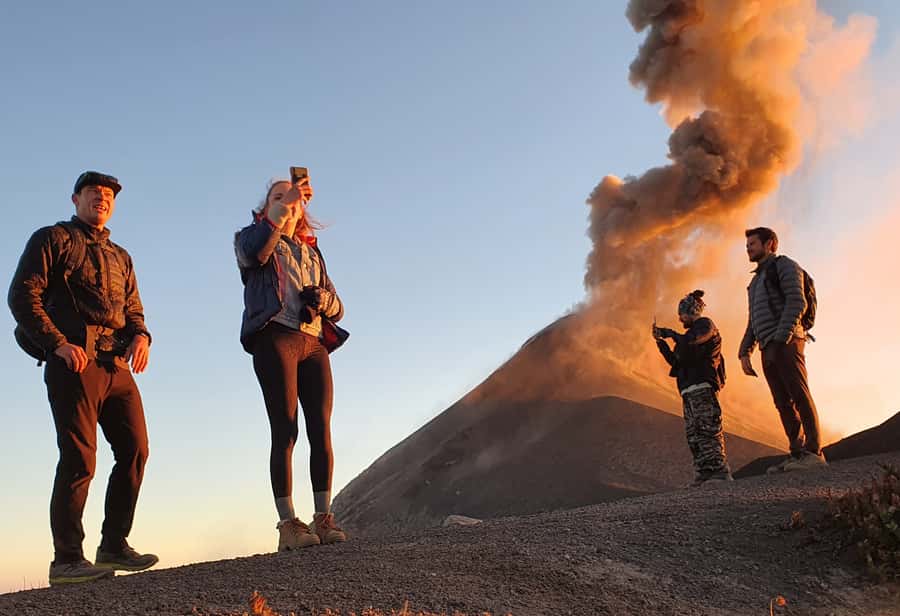
And there’s the unique combo this trip delivers: a summit goal (Acatenango) plus a front-row seat to Volcán de Fuego from camp. When the sky cooperates, it can feel like you’re camping inside the volcanic story instead of merely passing through it.
You can also read our reviews of more hiking tours in Antigua Guatemala
Getting there: Antigua pickup and the trailhead start
You meet the group in Antigua at Tanque La Unión (6a Calle Oriente). From there, the tour uses round-trip transportation, which matters because the hike itself is demanding enough without you figuring out timing and logistics on your own.
This isn’t just a shuttle drop and disappear. You’ll meet a professional guide in Antigua, get oriented, and then move as a group toward the start of the trek. The best part here is that you arrive with your plan already made: how the day will go, when you’ll stop, and what to expect on the ascent.
If you’re the type who likes to get your bearings fast, you’ll appreciate how the guides keep the group together. Multiple guide names show up in different seasons—people specifically praised guides like Cristian and Francisco, Adán, Luis, Miguel, Javier, Willy, and Eduardo for pacing and calm communication.
Day 1 climb: a steep trek into volcanic terrain
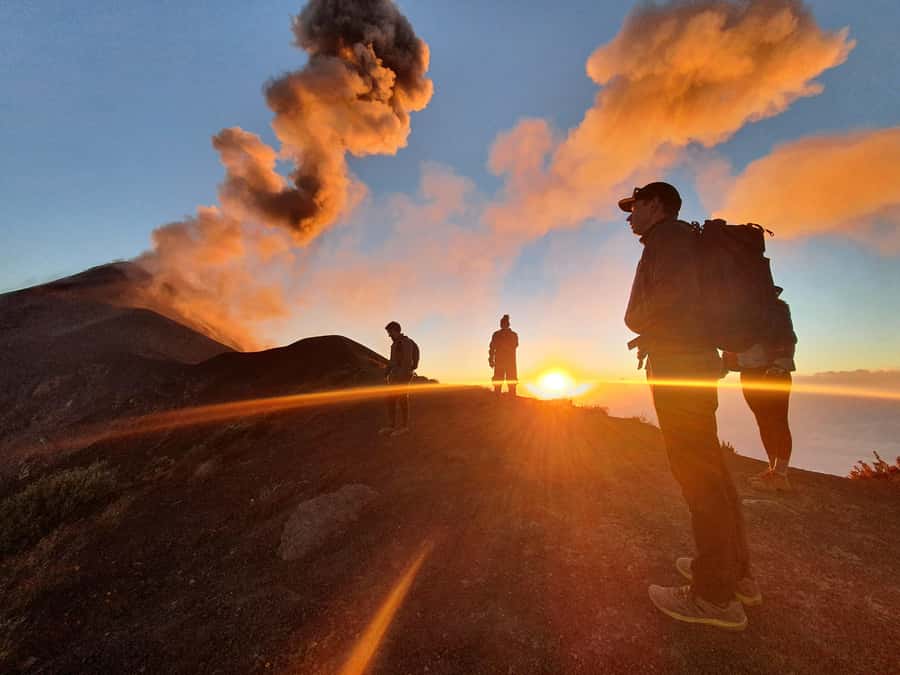
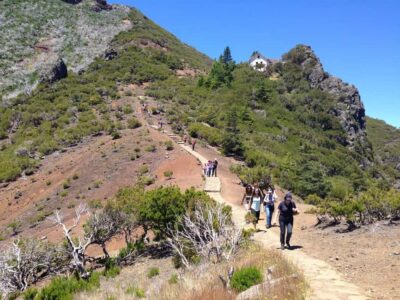
Day one starts with the hike up toward Acatenango. The route is built around changing terrain and big altitude gains. Even when you’re moving steadily, you’ll feel it early because the climb isn’t a slow stroll—it’s a real uphill grind with breaks built in.
Two things help make this manageable:
- Guided pacing: guides regularly stop and regroup, which protects you from burning out too soon. Several people noted the guides didn’t pressure slower hikers and kept everyone included.
- Breaks at view points: you’re not only climbing; you’re getting pauses where you can breathe, take photos, and reset.
You’ll also enjoy a lunch on the hike (grilled chicken, mashed potato, and green salad). That meal matters more than it sounds. On steep hikes, the biggest enemy is running low on fuel—so having a planned lunch (rather than “maybe we find something later”) keeps the day from turning into a struggle.
Also keep your eyes open along the way. The terrain here is volcanic and dramatic—lava-rock textures and unusual-looking ground that makes the climb feel like you’re walking through a landscape you’ve only seen in videos.
Camp at basecamp: Form-A cabins and a night aimed at Fuego
After the daytime ascent, day one ends at basecamp with a sunset focus over the mountains and a very special camp location facing Volcán de Fuego. This is where the “overnight” part pays off.
Sleeping setup
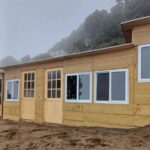
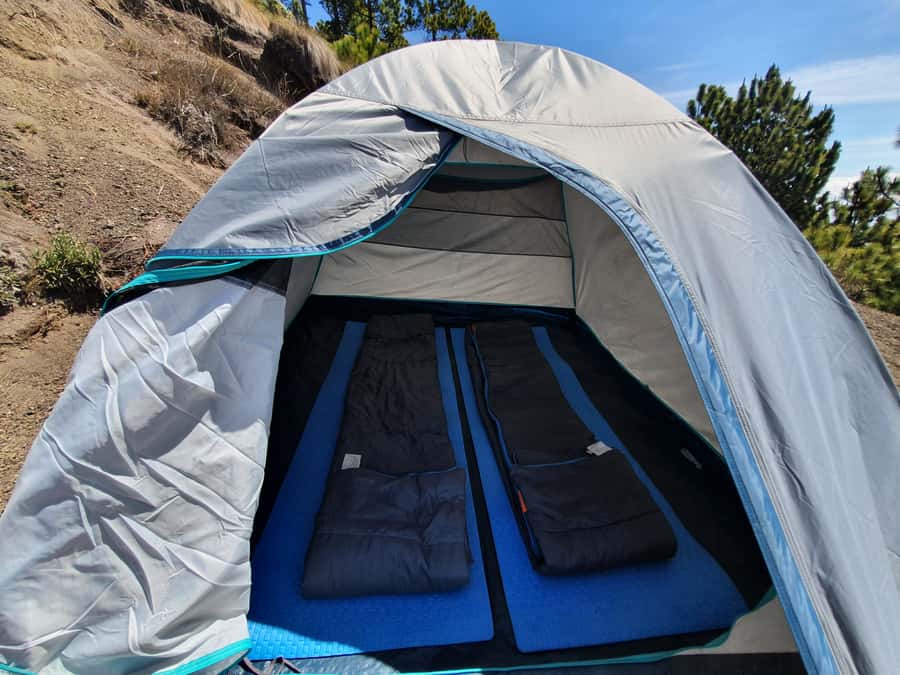
You sleep in Form-A cabins (or an Alpine-style setup, depending on the arrangement) at 3,700 meters. You get a sleeping bag and mattress, so you’re not stuck trying to improvise warmth. Most important: expect the cold. The sun drops quickly, and wind can cut right through layers.
The cabins are basic. Think: a protected shelter with mattresses on the floor and a sleeping bag that’s meant to do the heavy lifting. People also suggested bringing comfort upgrades like a sleeping liner or pillowcase if you’re picky.
Dinner with volcano sounds (and sometimes lava)
Dinner is included (chop suey and rice). After that, basecamp becomes your viewpoint. When conditions are right, you might see lava flowing and even catch eruption activity in the distance. Some hikers also described hearing the explosions when they get closer to Fuego.
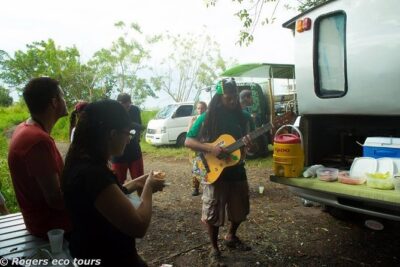
Even if you don’t see lava clearly, you’ll still get the atmosphere: a high-altitude camp night, a fire, hot drinks, and the feeling of being in the middle of an active volcanic system—not behind a fence, not from far away.
Day 2 sunrise and the trek back toward La Soledad
Day two starts early. You’ll wake in time for sunrise from the Acatenango area, then eat breakfast at basecamp (oatmeal, pancakes, and banana). Breakfast on this kind of morning hits hard—in a good way. You’re already moving, the air feels sharper, and having warm, carb-heavy food helps you keep energy for the return.
Then you pack up and hike back down to the point where the group boards the bus. The route back is typically a different kind of hard: you’ll be grateful for gravity, but your knees and ankles still work overtime on rocky, uneven ground. If you’re prone to knee strain, go slow and keep your footing deliberate.
A practical note that comes up often: many people say the hardest stretches are at the beginning and also the “last effort” moments. If you treat those like checkpoints rather than finishing lines, the day feels more doable.
Optional add-ons: Fuego and sunset hikes (and when to skip)
This trip can include additional experiences beyond the core Acatenango overnight. The big one is an extra hike toward Fuego for closer views during sunset or at night. There’s also a sunset option some groups take after setting up camp.
In real-world terms, these add-ons are not small. People described them as extra hours round trip and extra difficulty after you’ve already climbed. Some hikers said they went for it and called it out-of-this-world. Others chose to skip because altitude, cold, or fatigue made it smarter.
Here’s the balanced way to decide:
- If you’re strong, steady, and you still have energy after camp dinner, the Fuego option can be worth planning around.
- If you’re already strained on day one, or you know your body struggles at altitude, staying with basecamp can still deliver an unforgettable experience.
Also, budget matters. Entrance fees and optional add-ons can add up. People reported paying extra for the Fuego add-on in the range of 200Q to 300Q depending on timing and circumstances.
What the guides really do (the part that makes or breaks the hike)
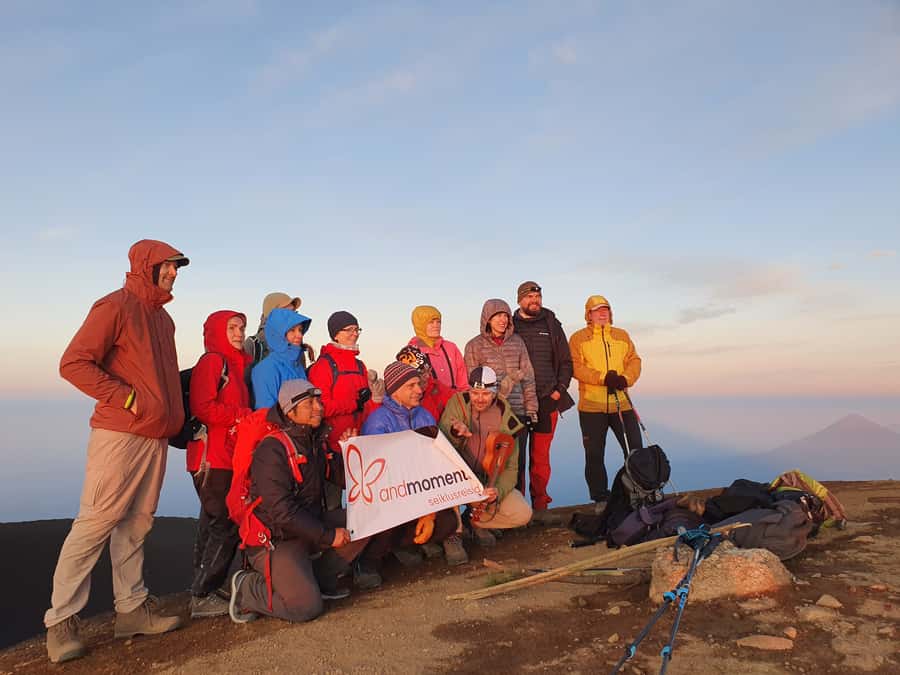
The guides are a major reason this hike gets such strong feedback year after year. You’ll see the pattern in the names people mention—Cristian, Francisco, Adán, Juan, Eduardo, Aiden, Jesus, Alex, Miguel, Javier, Luis, Eden, and others—and across all seasons, the common thread is care plus control.
What that looks like in practice:
- They pace you with regular regrouping, so nobody feels abandoned on the steep sections.
- They help manage timing for sunrise and camp activity so you’re not wandering around trying to figure things out.
- They support slower hikers without turning the climb into a sprint.
Even the “tiny” details can matter at altitude. People mentioned warm drinks around camp, fire time, and the sense that the team is paying attention to how everyone is doing.
Food on trail and at camp: fuel that matches the effort
The included meals aren’t gourmet, but they’re timed like they know you’ll be working hard.
Included meals:
- Lunch (day 1): grilled chicken, mashed potato, green salad
- Dinner (day 1): chop suey and rice
- Breakfast (day 2): oatmeal, pancakes, banana
- Hot drinks: chocolate included
What to take from this: you should still pack snacks and water. Multiple hikers recommended extra snacks because meals alone can’t cover every craving, and the burn rate on steep uphill is real.
Also, hydration isn’t optional here. Bring enough water for the hike, not just for camp. Some hikers recommended 2.5–3 liters as a practical planning range.
Price and value: $90 makes sense if you’re prepared
At $90 per person for a two-day overnight trek, the base price is often fair for what you get: a professional guide, round-trip transportation, sleeping gear (sleeping bag + mat), and all the key meals. That’s a lot of cost bundled into one price.
But you should budget for two additional realities:
- Entry fee: Q100 per person is not included
- Water and gear: water isn’t included, and you’ll need to bring gear or rent it (if you rent, you’ll pay extra)
And if you’re considering the Fuego add-on, plan extra cash. People reported needing additional funds for that portion too.
If you show up with your own boots, layers, and hiking poles, you’ll likely feel like the price is strong value. If you show up needing everything, the rental total can surprise you.
What to pack for Acatenango (so the cold doesn’t win)
This hike runs on layers. At altitude, temperatures can swing fast—especially at night. Use the packing list as your base, then tune it to your comfort.
Bring
- Warm clothing and winter-appropriate layers
- Hiking shoes with good grip (no slip-on soles)
- Hiking pants (saves you from wind and rough ground)
- Water (the hike is long and steep)
- Flashlight/headlamp (early mornings are dark)
- Flashlight is especially useful for cabin life at night
- Cash for entry fee and extras
- Weather-appropriate clothing
- Winter sports gear if you run cold
Strongly consider adding
- Hiking poles: people repeatedly recommended them because the trail is steep and tires your legs fast
- Gloves and a beanie: cold at summit and basecamp can get serious
- Snacks beyond included meals
- Hand wipes and toilet paper if you’re comfortable doing basic prep
One practical toilet detail: people described a hole-in-the-ground setup with no toilet paper and no place to wash hands, so plan accordingly.
Don’t bring
- Sandals or flip-flops
- Pets
- Smoking indoors
- Alcohol and drugs
- Speakers
Altitude and who should be cautious
This hike is not for everyone. It’s strenuous, it’s at high altitude, and conditions can be cold and windy.
This activity is specifically not suitable for people with:
- back problems
- heart problems
- epilepsy
- people prone to seasickness
- people over 254 lbs (115 kg)
Even if you’re generally healthy, remember altitude can still hit. Some hikers mentioned altitude symptoms around the summit area and appreciated having guide support. If you’re unsure, talk with a clinician before you go and take altitude seriously.
Also, be honest about your fitness. Many people called Acatenango one of the hardest hikes they’ve done, with a steep climb and a long time commitment.
Should you book this Acatenango overnight hike?
Book it if you want a real mountain challenge with a high payoff: sunrise from Acatenango, a basecamp campfire night aimed at Volcán de Fuego, and guides who manage the pace so you don’t get left behind.
Skip or rethink if you:
- hate cold and refuse layers
- can’t handle steep uphill for hours
- need easy footing
- have any of the health conditions listed for unsuitability
My bottom line: if you come prepared with proper footwear, layers, and enough water, this overnight adds depth that a day trip can’t match. The “close to Fuego” camp experience is the kind of memory you’ll still talk about long after your legs recover.
FAQ
How long is the Acatenango overnight hike?
The duration is 2 days.
Where do I meet for the tour in Antigua?
You meet at Tanque La Unión, 6a Calle Oriente, Antigua Guatemala.
What is included in the price?
The price includes a professional guide, round-trip transportation, hot drinks (chocolate), sleeping bag and cabin/mattress setup, and meals: lunch, dinner, and breakfast.
Is water included?
Water is not included.
What meals are included?
Lunch is grilled chicken with mashed potato and green salad. Dinner is chop suey and rice. Breakfast is oatmeal, pancakes, and banana.
Do I have to pay an entrance fee?
Yes. An entry fee of Q100 per person is not included.
Do I need to bring hiking gear?
Gears are not included. You should bring your own hiking shoes and warm layers, and you may be able to rent items if you arrange it in advance.
Are the cabins warm enough?
The sleeping bag and mat are provided, and people note it can get very cold at night. You should pack warm layers to stay comfortable.
What should I pack for sunrise and the cold night?
Bring warm clothing, hiking shoes, flashlight or headlamp, a lot of layers, and winter accessories like gloves and a beanie if you run cold.
Can I request vegetarian meals?
Yes, you can request vegetarian meals by contacting the provider via WhatsApp in advance.