REVIEW · ANTIGUA GUATEMALA
Acatenango Volcano 2-Day Hike
Book on GetYourGuide →Operated by Old Town Outfitters · Bookable on GetYourGuide
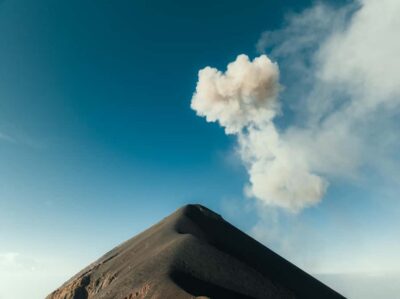
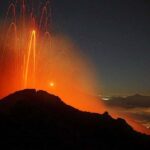
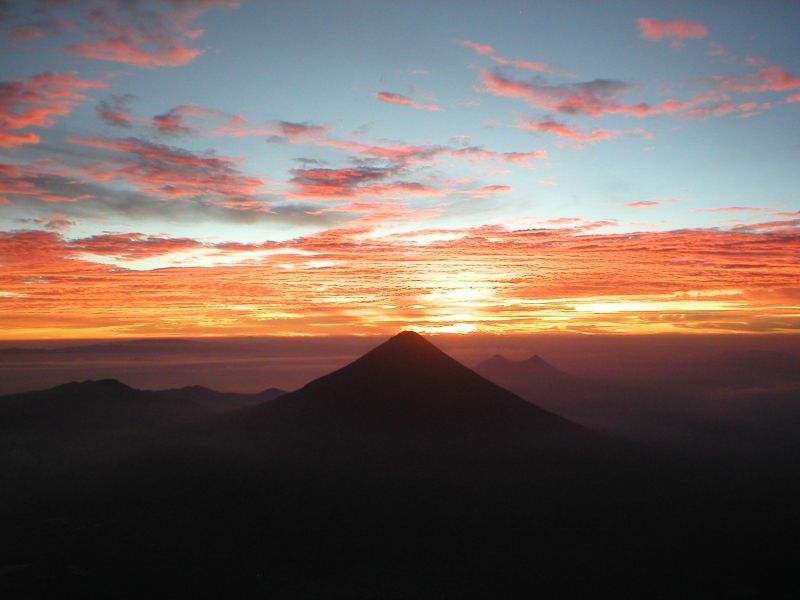
Fuego glows while you sleep at Acatenango. This 2-day, 1-night hike pairs big altitude work with something you can actually see: Volcán Fuego erupting from about 4 km away. I love that the drama isn’t saved for a quick photo stop; it’s part of your campsite routine on the mountain.
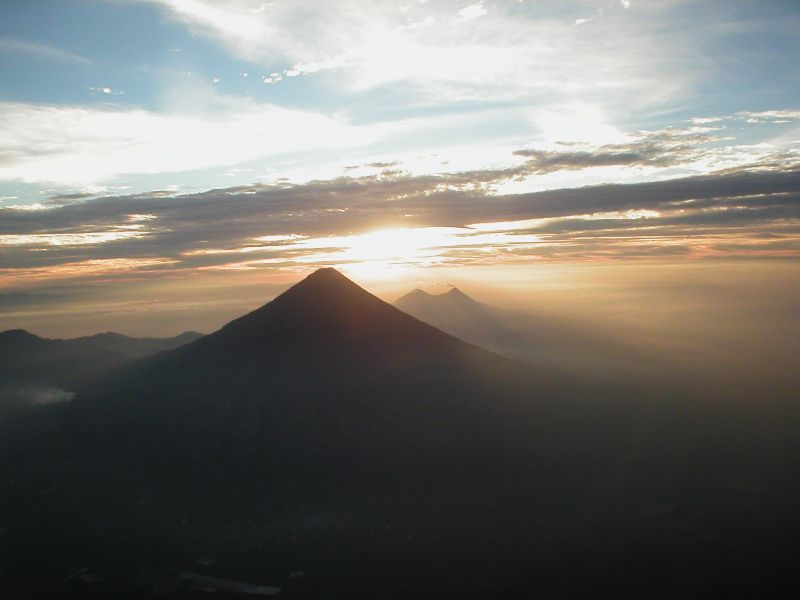
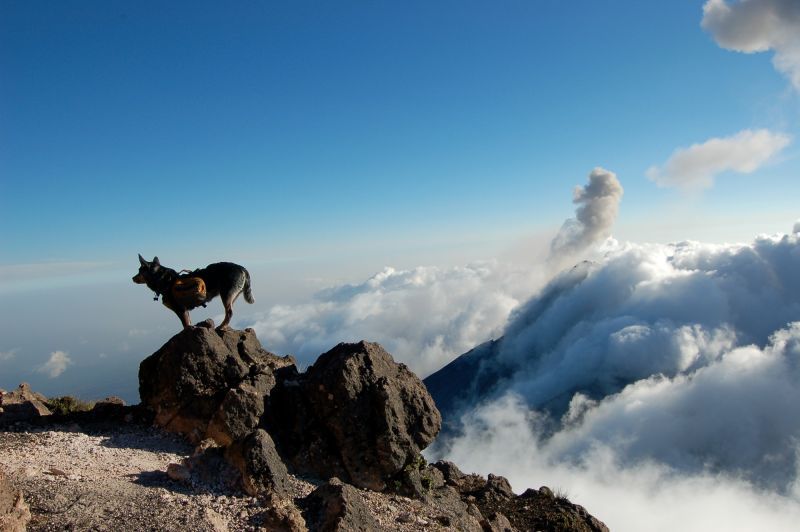
You also get 3,975m payoff. I love the moment you hit the summit and get true 360° views over the Guatemalan highlands, stretching toward the Mexican border on clear days. One real consideration: the last push is steep and rocky (scree), and camp nights can be near-freezing—so your warm layers and proper shoes matter more than you think.
Good support helps a lot. You’ll meet at Old Town Outfitters in Antigua, head out with local expertise from La Soledad, and hike with bilingual guides who keep things moving at your pace (and yes, you may even pick up some Spanish along the way—names I saw include Rudy, David, Willy, Lukas, and Giovanni).
In This Review
- Key highlights that make this hike special
- Why this Acatenango 2-day hike feels different from a day trip
- Getting from Antigua to La Soledad: the warm-up phase
- Day 1: from farm fields to cloud forest, then to camp at ~3,750m
- The summit day: 45 minutes of scree to 3,975m
- Descent with more microclimates: how the mountain keeps changing
- Camp comfort and food: the hidden value in included gear
- Price and what makes it feel like a fair deal
- What to pack so your night doesn’t ruin your summit
- Who this hike suits best (and who should think twice)
- Old Town Outfitters support: guides, pacing, and real service
- Should you book Acatenango with Old Town Outfitters?
- FAQ
- Where do we meet in Antigua?
- What time does the tour start?
- What languages does the guide speak?
- What’s included in the price?
- Do I need to bring hiking boots or trekking shoes?
- Do I need cold-weather clothing for the night?
- How much water should I bring?
- Is there free cancellation?
Key highlights that make this hike special
- Eruptions with your campsite view: Volcán Fuego is close enough to watch while you eat and wind down.
- Multiple forest types in one hike: farm fields, cloud forest, conifer forest, and dry forest all show up.
- Camp just below the tree line (~3,750m): expansive views without the summit grind—yet.
- A short, steep summit push: a focused 45-minute ascent to Acatenango’s top.
- 360-degree highland panorama: Guatemala’s range of terrain stretches out in every direction.
Why this Acatenango 2-day hike feels different from a day trip
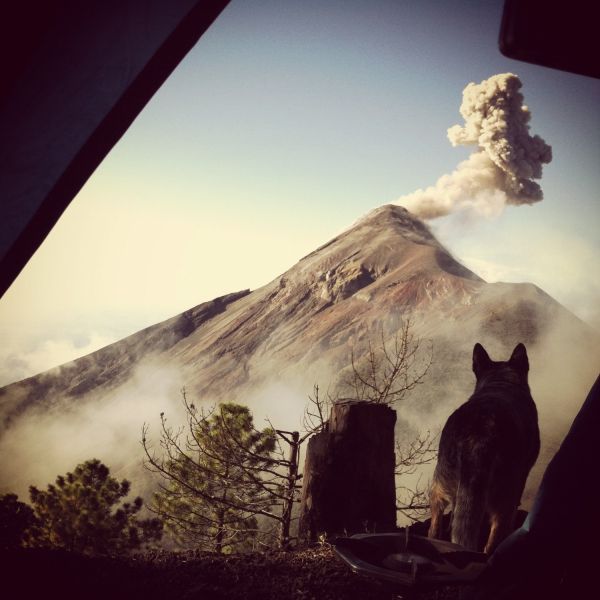
Acatenango is no casual hike. But the format here does something smart: you don’t just climb up and come right back down. You spend a full night near the tree line, where the temperature drops and the mountain air gets sharp. That timing matters because it turns the experience into a real overnight story—sleep, wake, hike, and then watch the volcano again from a new angle.
What makes this version stand out is the combination of effort and payback. Day 1 builds you up through changing terrain and altitude. Day 2 ends with a concentrated summit climb and a descent that shows you even more microclimates. And throughout, you’re watching the neighboring volcano—close enough to feel like it’s part of the same landscape.
It’s also designed for value. You get round-trip transportation from Antigua, community guide support, entrance fees, meals, and camping gear (sleeping bags, pads, and tents) bundled into one price. Your job is basically to bring yourself, your footwear, and the weather protection that keeps the cold from ruining your night.
You can also read our reviews of more hiking tours in Antigua Guatemala
Getting from Antigua to La Soledad: the warm-up phase
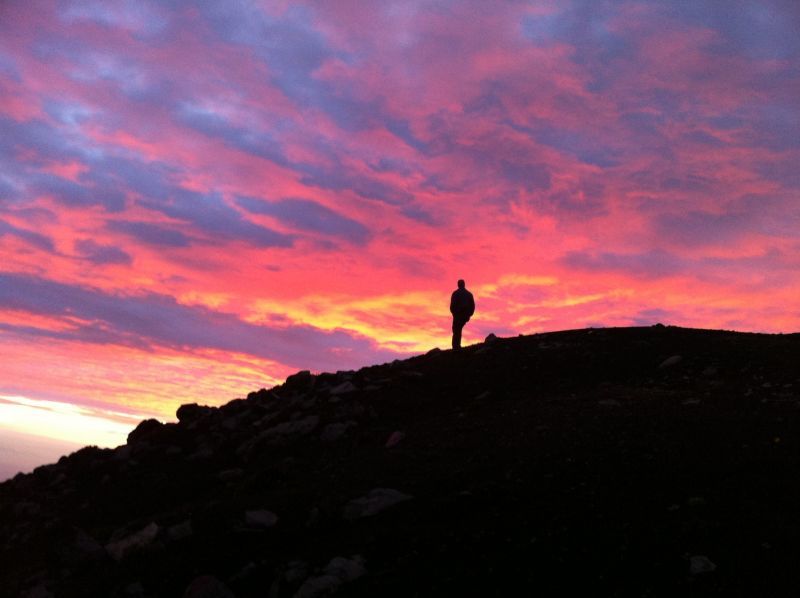
The trip begins in Antigua at Old Town Outfitters (5a. Avenida Sur #12, on the corner of 5th av and 6th calle, one block south of Central Park). The shop is open daily from 8:00am to 6:00pm, but your group meeting is tied to your departure window. Plan for a morning start and confirm the exact timing on your booking confirmation so you don’t rush breakfast.
Once you’re picked up, you drive to La Soledad and start walking. The first stretch is all about warming up your legs: a steep ascent through local farm fields. It’s not scenic in the postcard way—it’s practical. You’re getting your breathing under control and transitioning from town life into hiking mode.
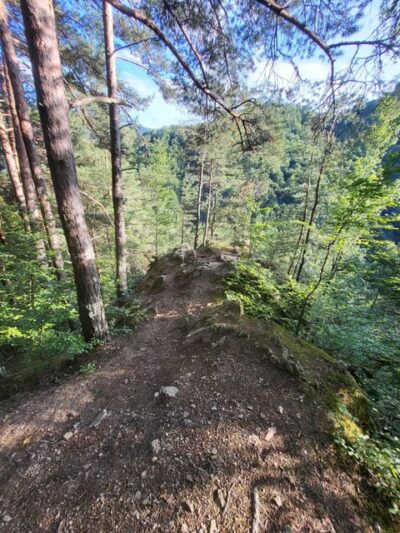
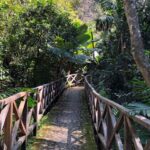
Then the trail changes its personality. After the farm fields, you move into ancient tropical cloud forest, where the air is cooler and the biodiversity shows up in the birds and vegetation. You might even catch sight of the quetzal that’s often associated with Guatemala’s forests. As you keep climbing, the environment shifts again into coniferous and tropical dry forest, and you can feel the tree line world forming around you.
This “many ecosystems” setup isn’t just nature trivia. It’s what makes the hike interesting even before you see the volcano drama from camp.
Day 1: from farm fields to cloud forest, then to camp at ~3,750m
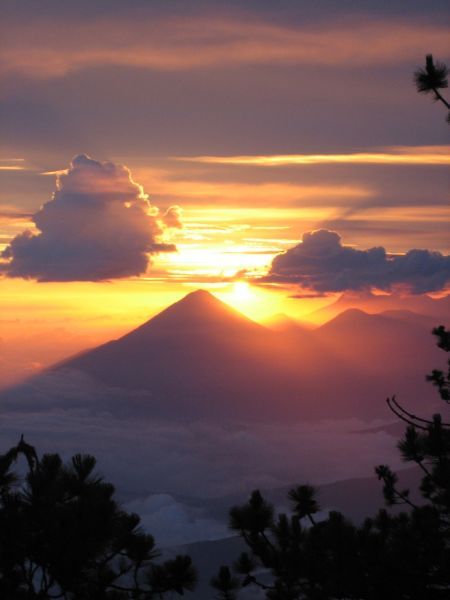
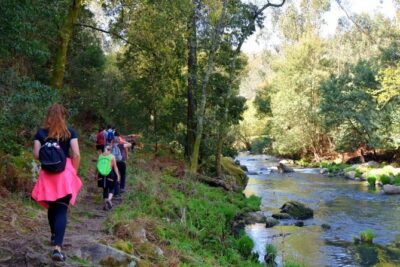
Day 1 is the leg-builder. You start with that steep ascent through farm fields, then gradually trade the open views for forest shade. The cloud forest portion is where the hike turns from tough to fascinating. Rich biodiversity and native birds mean your attention stays active, not just stuck on your next step.
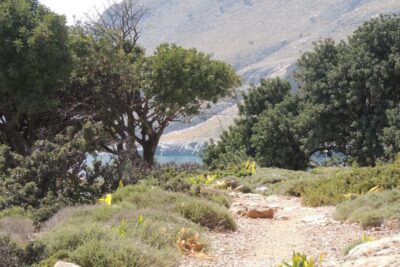
As you climb toward higher elevations, the forest zones keep switching. You transition into temperate coniferous areas and then tropical dry forest. This matters because it changes how you feel on the trail. Shade, wind, and ground conditions all shift. One moment your hike feels damp and cool; the next it’s brighter and drier.
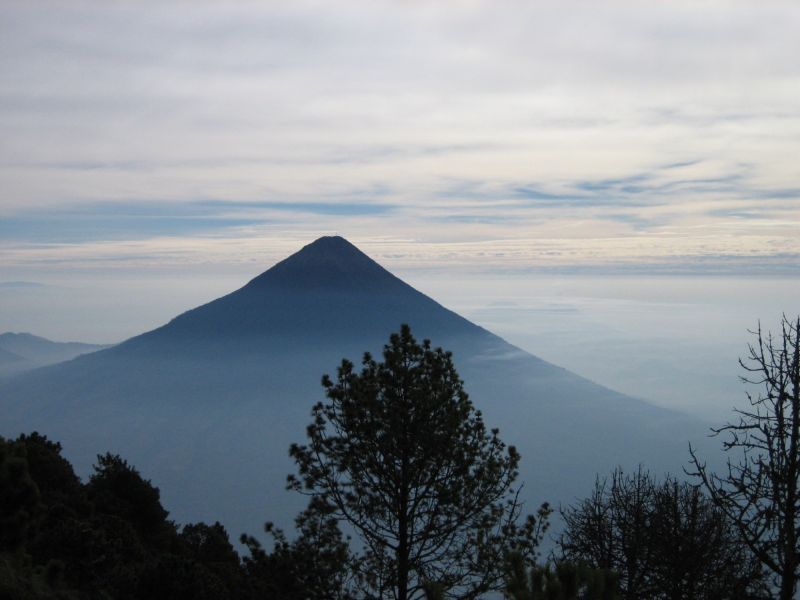
You’ll eventually reach the campsite at around 3,750m, just below the tree line. That “just below” detail is huge. It’s high altitude camping without the summit exposure, and it sets you up with expansive views over the Antigua valley and toward Volcán Fuego.
After setting up, you’ll rest, take in the view, and eat well. Dinner is freshly prepared, and hot beverages are part of the plan. In past runs, cooks like Lukas have been praised for meals that are healthy and actually fresh—exactly what you want when your body is busy fighting altitude.
If you want the best experience at this elevation, be ready to go from active hiking to quiet, cold mountain night. Dry socks and warm layers will make you love your own decisions.
The summit day: 45 minutes of scree to 3,975m
The next morning starts with breakfast at camp. This is one of those times where being a bit disciplined pays off: eat early, drink what you brought, and get moving.
Then comes the key summit push. You’ll head toward Acatenango’s summit at 3,975m using a steep, rocky scree trail. It’s short on the clock—about 45 minutes—but it’s intense on the legs. Scree doesn’t roll gently; it shifts. Expect to plant carefully, keep your balance, and use steady pacing rather than speed.
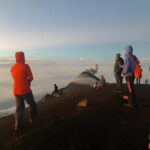
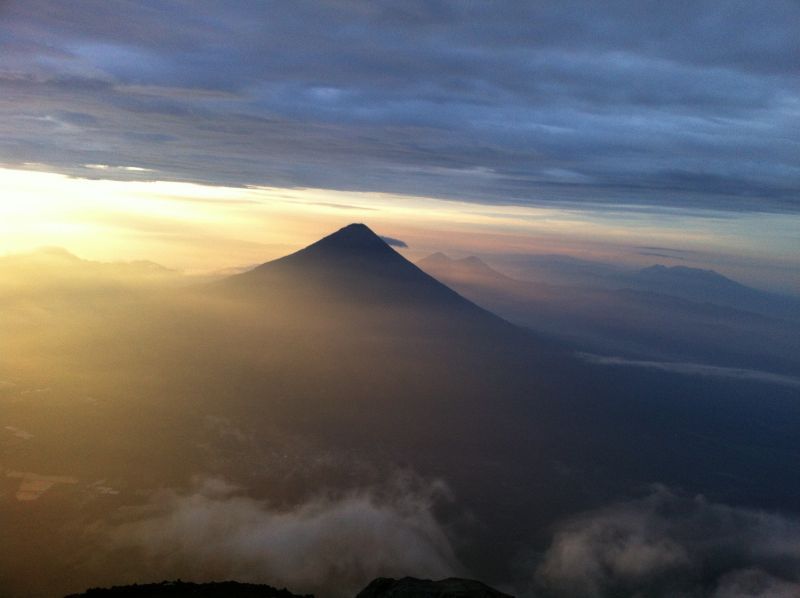
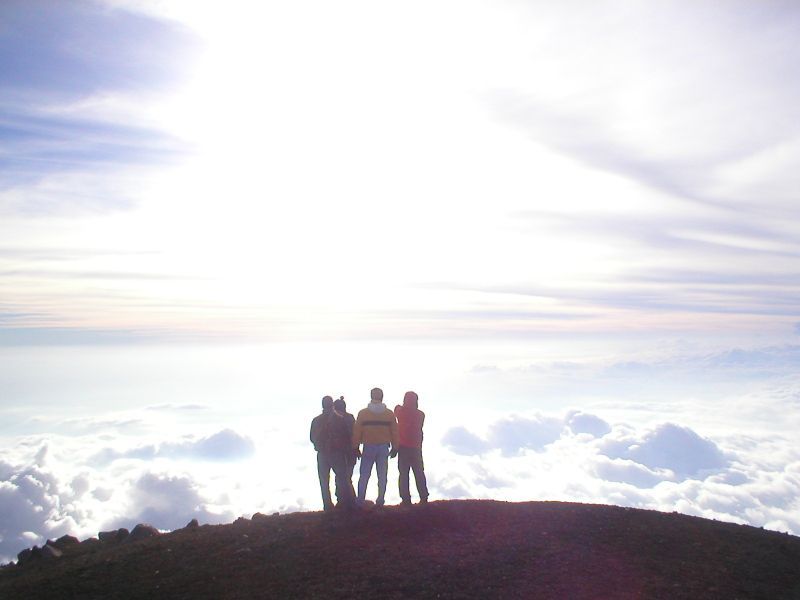
Once you reach the top, you’re rewarded with big, wide-open views—360 degrees across Guatemala’s highlands, with visibility that can extend up to the Mexican border on clear conditions. This is the moment where your brain stops counting steps and starts counting horizons.
Spending time at the summit is part of the experience, not a quick tick-box. You’re meant to look around, breathe, and take in how the volcano system shapes the region.
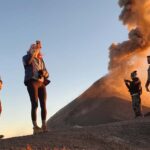
And yes, having erupting Fuego nearby is the bonus that keeps reappearing. It’s not just “summit views.” It’s “summit views plus active volcano theater.”
Descent with more microclimates: how the mountain keeps changing
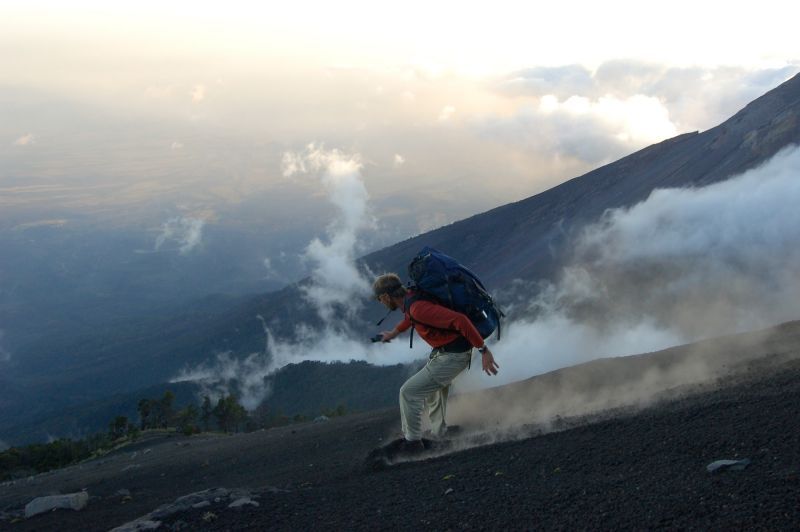
After the summit, you start descending via an alternate route. The descent is about 3 hours and still has enough rocky terrain to keep you working. That’s why the second half matters: it shows you more microclimates than the ascent did.
Descending also helps your perspective. When you’re going down, you can see patterns in how the vegetation stops, starts, and changes. The earlier zones you hiked through—cloud forest vibes, conifer and dry forest—become more obvious when you’re moving away from the highest point.
By the time you return to La Soledad, the day ends with a transfer back to Antigua. The plan targets an arrival back in the early afternoon, around 13:00hrs, depending on conditions and group pace.
A few more Antigua Guatemala tours and experiences worth a look
Camp comfort and food: the hidden value in included gear
A lot of volcano hikes sell the view and forget the comfort. This one includes what you actually need to sleep and refuel at altitude: sleeping bags, sleeping pads, and comfortable tents. That saves you from trying to guess what gear you’ll want at near-freezing night temperatures.
Meals are also included: a picnic lunch, dinner, and breakfast, plus juice/coffee/tea and snacks. You don’t have to worry about finding food choices during the hike itself. At altitude, stable calories are not optional—you’ll feel the benefit once you’re off the steep sections.
One practical advantage: guides and support staff set up camp smoothly. In a real-world example, Giovanni was praised for getting everything set up quickly and neatly at the base camp so people could enjoy the hike without extra hassle.
Your job is to bring your own clothing for the cold and your own hydration strategy. The tour requires you to bring water (details below), and that means you need to think about how you’ll carry it.
Price and what makes it feel like a fair deal
At $245 per person, the price isn’t just “a guide and a view.” You’re paying for the full package: round-trip transportation from Antigua, park entrance fees, a local community guide from La Soledad, and a bilingual guide with certified first aid training. On top of that, you get the camping setup (sleeping bag, pad, tent) and all meals for the 2 days.
What’s not included is also clear, and that’s part of the value equation. You supply hiking footwear, a big chunk of your cold-weather clothing, and your water. If you already have decent hiking shoes and you pack smart layers, the cost feels very reasonable for a high-altitude overnight with summit access.
If you’re missing key gear—like proper footwear, rain protection when it’s rainy season, or warm layers—you’ll need to spend extra or buy something locally. That’s the only scenario where the $245 can feel tight.
What to pack so your night doesn’t ruin your summit
You’ll get a list of what to bring, but here are the priorities that matter most for a comfortable hike to Acatenango.
Footwear and cold protection
- Hiking boots or trekking shoes are required; no sandals.
- You’ll want a warm layer and/or windbreaker plus a jacket.
- Cold-weather clothing for near-freezing night-time temperatures at camp is not optional.
- Sunscreen, sunglasses, and a sun hat matter because high altitude sun can sneak up on you.
Small items that change everything
From advice people shared from prior hikes, don’t skip the boring stuff:
- Wet wipes and tissues for hands and face.
- A head lamp or torch for early morning.
- Hiking poles if you have them; they make a big difference on both steep scree and long descents.
Clothing and pack rules
You’ll want clothes that can get dirty, breathable hiking pants, and a daypack. Oversize luggage is not allowed, and you shouldn’t plan to bring large bags.
Water
Bring at least 4 liters of water. It’s not included, and you’ll feel the difference if you try to “make it work” with less.
A good rule: if you’re thinking I can probably skip that warm item, you’re the exact person who will feel the cold hardest at camp.
Who this hike suits best (and who should think twice)
This is best for hikers who:
- Are comfortable with steep uphill and a rocky scree summit trail.
- Can handle high altitude camping and early starts.
- Want a real overnight experience with big volcano drama at night.
It might not be the best match if you:
- Have trouble with balance on loose rock.
- Hate cold nights or aren’t willing to pack warm layers.
- Expect sandals or heavy casual shoes to work. Closed-toe hiking footwear is part of the deal here.
If you like hikes that change terrain often—farm fields to cloud forest to conifer and dry forest—this route keeps you engaged even between the big view moments. The microclimates aren’t just a slogan; you feel the shifts as you climb, camp, summit, and descend.
Old Town Outfitters support: guides, pacing, and real service
A big reason this hike works for most people is how the team supports you. You’re not stuck with a strict, fast group pace. Guides like David and Willy have been praised for walking at the group’s pace and giving supportive help when the track gets tough.
There’s also language support. Guides operate in Spanish, English, and French, and you may even get help learning some Spanish along the way—useful if you’re trying to travel with more than just a phrase book.
Meals and setup matter too. Lukas has been praised for meal prep that keeps energy steady, and Giovanni has been credited for quick, neat camp setup so you can focus on the hike rather than logistics.
Finally, the operator’s communication has been mentioned as smooth even for last-minute bookings. If you tend to organize trips quickly, that responsiveness is worth noting.
Should you book Acatenango with Old Town Outfitters?
If your dream Guatemala moment is a summit view plus erupting Fuego from camp, this is a strong choice. The included transportation, meals, park fees, bilingual guiding, and the high-altitude sleeping setup make it feel practical—not just scenic.
Book it if:
- You want an overnight volcano watch experience, not a quick pass.
- You’re willing to pack warm layers and bring trekking-ready footwear.
- You enjoy hikes where ecosystems change as you climb.
Skip or reconsider if:
- You’re not comfortable with steep rocky sections and scree.
- Cold nights would feel like a deal-breaker.
- You don’t want to carry and manage at least 4 liters of water.
If you’re on the fence, the decision usually comes down to two things: can you handle the effort, and are you bringing real cold-weather gear. If yes, this climb is the kind of adventure you’ll remember when the rest of your Guatemala itinerary starts to feel routine.
FAQ
Where do we meet in Antigua?
You meet at the Old Town Outfitters shop at 5a. Avenida Sur #12, Antigua (one block south of Central Park, on the corner of 5th av and 6th calle).
What time does the tour start?
The group meeting time is listed as 9:00am at the Old Town Outfitters shop.
What languages does the guide speak?
The live guide supports Spanish, English, and French.
What’s included in the price?
Inclusions include round-trip transportation from Old Town Outfitters in Antigua, all park entrance fees, a local guide from La Soledad, freshly prepared meals (picnic lunch, dinner, breakfast, plus juice/coffee/tea and snacks), and camping gear (sleeping bags, sleeping pads, and tents). You also get a full tour of Volcán Acatenango with a bilingual guide certified in first aid.
Do I need to bring hiking boots or trekking shoes?
Yes. Hiking boots or trekking shoes are not included, and open-toed shoes are not allowed.
Do I need cold-weather clothing for the night?
Yes. You should bring cold-weather clothing for near-freezing night-time temperatures at the camp.
How much water should I bring?
Bring at least 4 liters of water.
Is there free cancellation?
Yes. You can cancel up to 24 hours in advance for a full refund.
If you want, tell me your hiking experience level and when you’re traveling (rainy season or not), and I’ll suggest a tight, realistic packing checklist for this exact trip.