REVIEW · MAURITIUS
Mauritius: Le Morne Mountain UNESCO Eco Hike
Book on GetYourGuide →Operated by Eco Explorers Mauritius Lmt · Bookable on GetYourGuide
Le Morne goes from postcard to workout fast. This Mauritius UNESCO eco hike takes you up to a 465-meter summit with real scrambling and climbing, plus sunrise views over the turquoise lagoons that feel like they go on forever. I like that the morning includes wildlife and nature context before you even hit the mountain trail.
What I love most is the way safety and coaching are built into every step, especially during the rock sections around 340 meters. You’ll also get memorable photo stops throughout so the effort doesn’t vanish into blur. One drawback to plan for: it’s not a casual walk—there are multiple scrambling/climbing sections, and the activity isn’t suitable for several medical and mobility situations.
In This Review
- Le Morne Mountain hike: the key things that matter
- First steps: medical check, private estate drive, and a nature lesson
- The start of the climb: warm-up path and two big viewpoints
- The scramble sections near 340 meters: where technique matters
- Rest points, family photos, and the summit pause
- Descending with the same attention to safety
- Wildlife, history, and conservation: why the eco part feels real
- How long it takes, what it costs, and what you’re really buying
- Getting there: pickup limits and the meeting point you should memorize
- What to bring (and what to avoid)
- Who this hike suits best
- Should you book Le Morne Mountain with Explorers Mauritius?
- FAQ
- How long is the Le Morne Mountain eco hike?
- Where do I meet for this hike if there’s no pickup?
- Is there a medical briefing before the hike?
- What type of terrain is involved?
- What clothing or footwear should I bring?
- What about asthma or inhalers?
- Is food included?
- What’s included in the price besides the guide?
- Can the hike be postponed due to weather?
Le Morne Mountain hike: the key things that matter
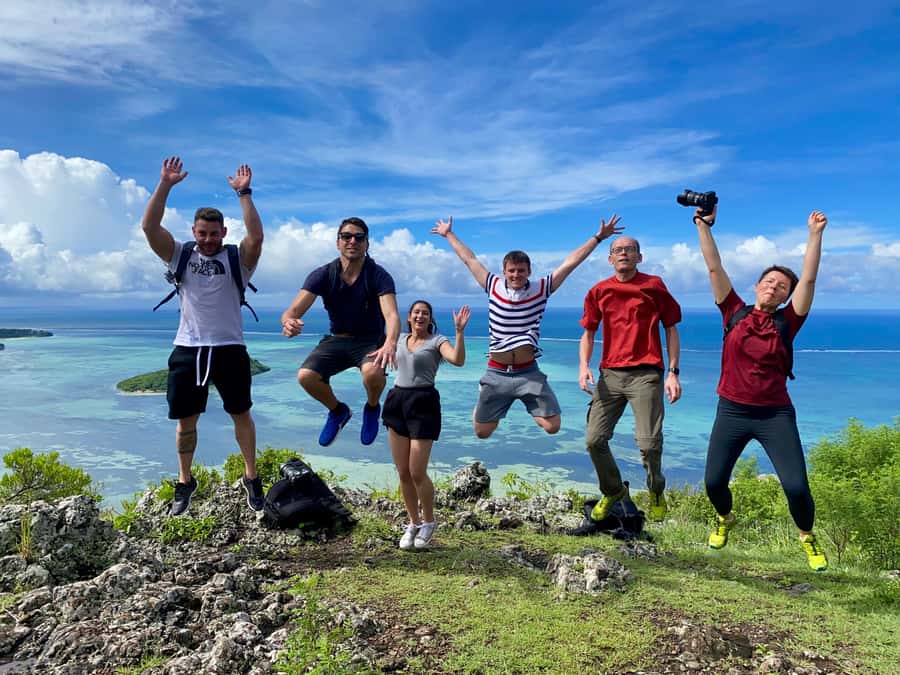
- Technical scrambling sections near the top (70m, 25m, 15m, 12m) with a security briefing before you start
- 4WD transfer into a private estate where you can spot RUSA deer, wild pigs, and birds (peacock, pheasant, quail, guinea-fowl)
- Sunrise-style timing so you see the sea and sky in great light, then descend before the heat builds
- Bryn James–led guidance with 25+ years of mountain, ocean, and river experience and a “go at your pace” style
- Photo coverage included, plus many guests report a strong extra video/photo keepsake afterward
- Fitness-aware pacing with rest points for breaks and photos, not just a grind to the summit
First steps: medical check, private estate drive, and a nature lesson
The day starts with a medical briefing and evaluation. It’s not just paperwork. You’re asked to think about anything that could matter on a steep, technical route—especially asthma (you’re told to bring your bronchial inhaler) and diabetes management (the rules also say it’s not suitable for people with diabetes, so you’ll want to be extra careful and confirm with the local partner if that applies to you).
Then comes the 4WD vehicle ride into a private estate area. This part adds something most hikes in Mauritius skip. As you drive, you’re moving through a setting where you might see RUSA deer and wild pigs, and birdlife such as peacock, pheasant, quail, and guinea-fowl. It makes the mountain feel less like an isolated climb and more like a connected ecosystem.
If you want an easy win on the day, show up ready to listen and follow instructions. The briefing isn’t filler. It sets you up for what the hike asks your body to do—warm up first, then handle the scramble sections with technique.
You can also read our reviews of more hiking tours in Mauritius
The start of the climb: warm-up path and two big viewpoints
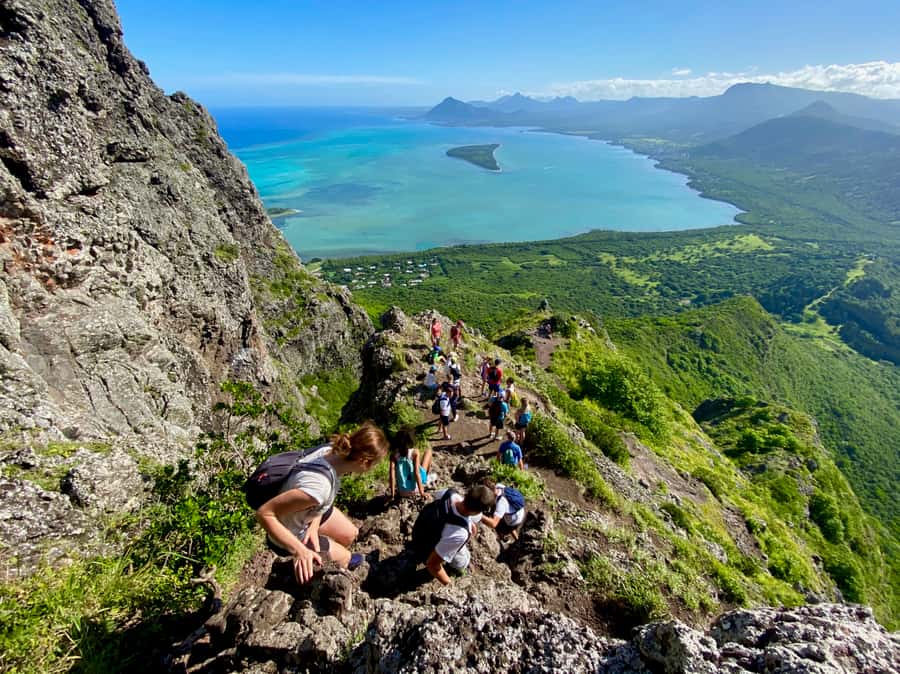
Once you begin, the route initially follows an undulating path designed to warm muscles and lift your heart rate. I like this approach because it reduces the shock of going from flat ground to rock scrambling immediately. You’re building readiness in a practical way.
You’ll also move along the north-western base of Le Morne and get two panoramic perspectives of the mountain—one toward the north-western flank and one toward the south-eastern side. That means you’re not waiting until the summit to feel like you’re getting value. You get early “wow” moments, and then you get the real test of the route later.
The scramble sections near 340 meters: where technique matters
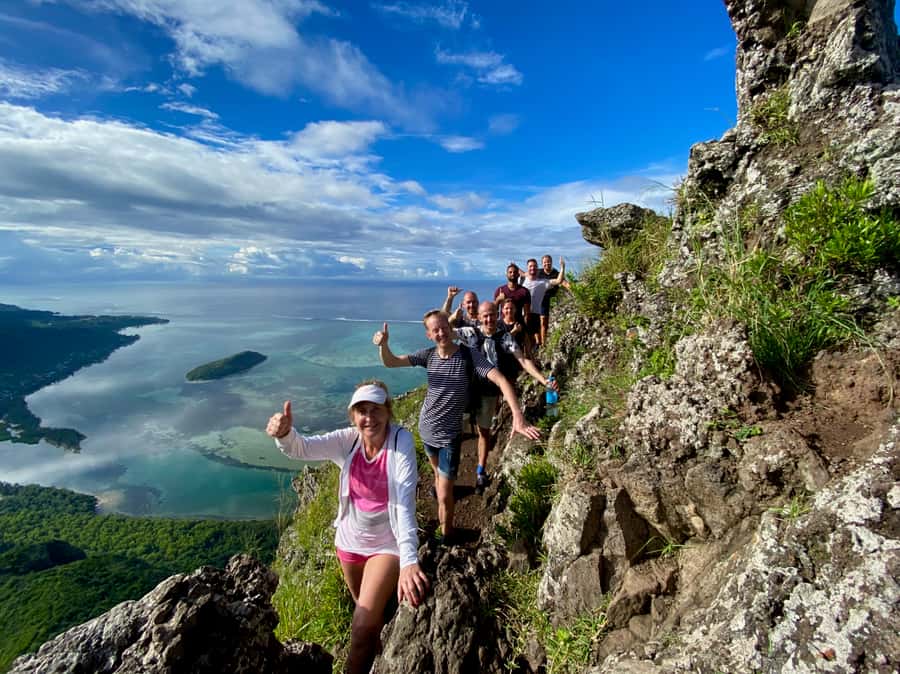
At around 340 meters above sea level, you get a safety and mountain security briefing before the technical climbing begins. This is the part that separates an ordinary hike from a proper adventure.
There are four scrambling and climbing sections:
- 70 meters
- 25 meters
- 15 meters
- 12 meters
These segments are where the views really reward you, because each section is positioned to reveal lagoon and coastlines to the horizon. The route also looks outward toward the lush mountain ranges of Chamarel.
What makes this section work for real people—not just elite hikers—is that the guide teaches you how to handle the climbing. Multiple guests highlight that Bryn James gives clear tips and makes sure the group keeps moving safely. If you’re a first-time scrambler, this is where you’ll feel the difference between “someone leading the way” and “someone teaching you how to climb.”
Practical tip from what’s been emphasized: wear comfortable shoes with grip. Sandals and flip-flops are not allowed. And if you feel tight in the body, tell the guide early. The pacing is built around the team making sure you’re comfortable at each stage.
Rest points, family photos, and the summit pause
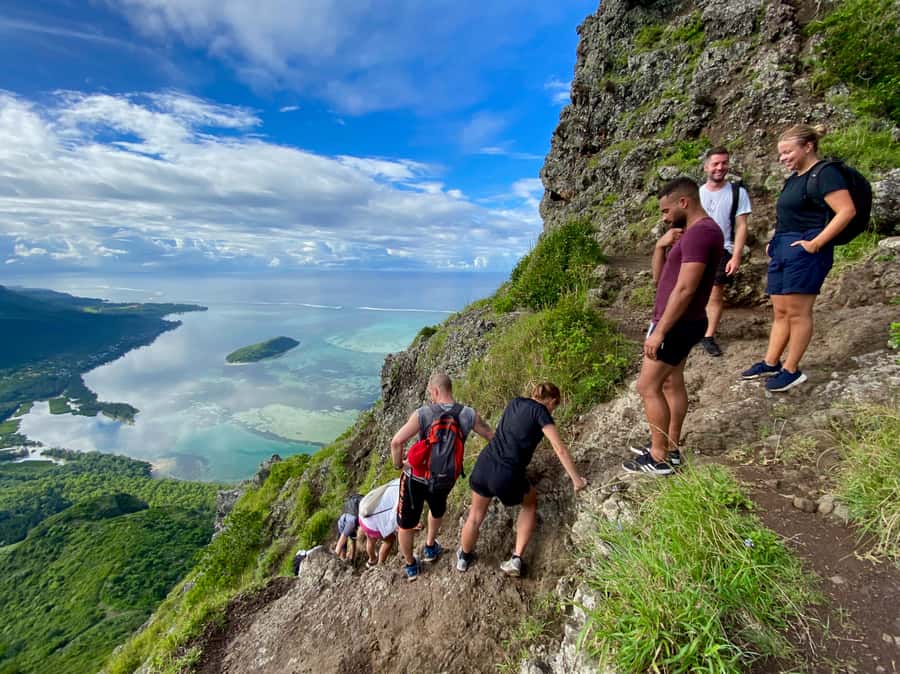
On a tough climb, it’s easy to think you’ll remember everything. You won’t. That’s why I appreciate the structure here: rest points are built into the climb, and the team takes photos at different stages so you can actually keep a record of the effort.
The guide also provides additional information while you’re stopped—historical, botanical, and conservation-related details are part of the experience. That matters because it turns the summit from just a view into a story. You’re not just looking at Mauritius; you’re learning what you’re standing in.
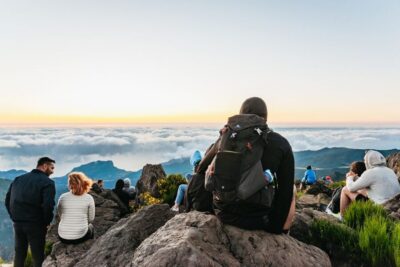
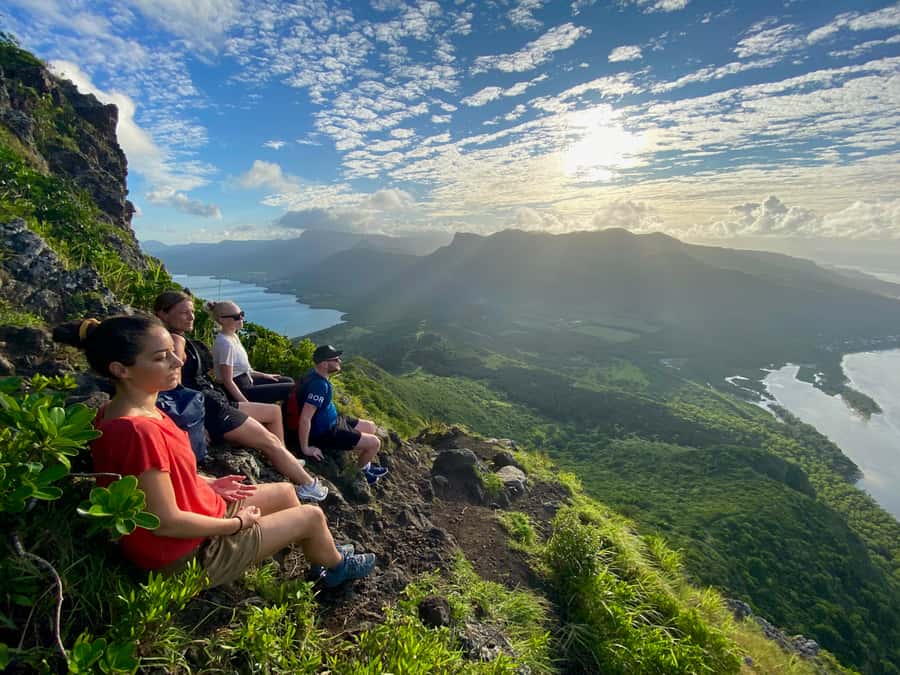
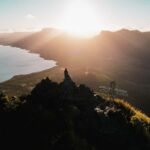
At the summit, you reach that “just reward” moment after the work. Expect time for a break and photo moments, with the guide explaining points as you take it in. Many hikers say the sunrise light makes a big difference, and starting early helps you hit the best sky and sea colors before the heat becomes a bigger factor.
Descending with the same attention to safety
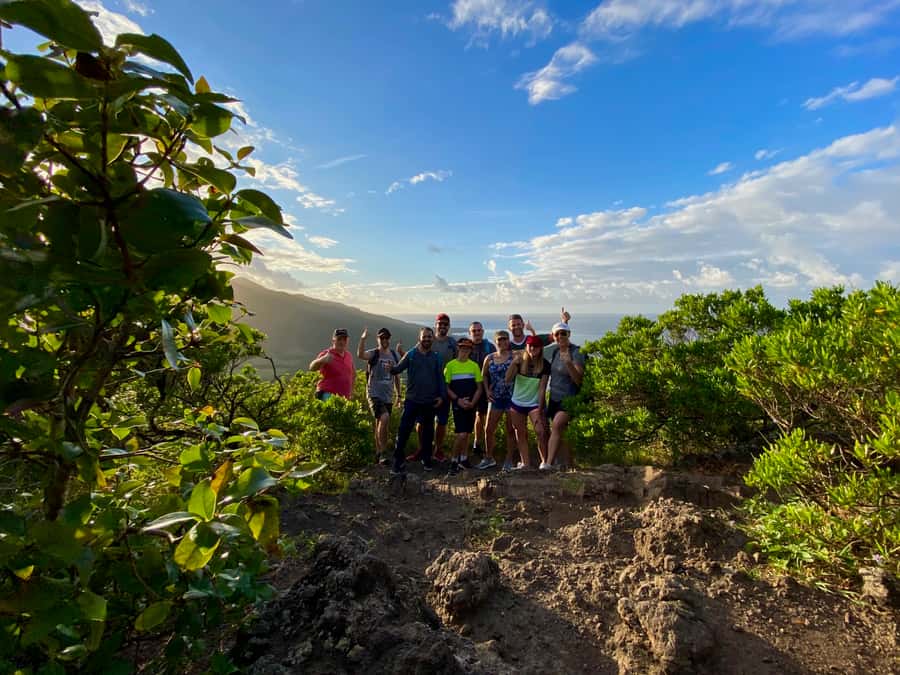
The descent begins under watchful guidance. That matters because coming down is often harder on your confidence than climbing up—especially when the route includes rock sections.
You’ll likely feel the descent challenge in your legs and feet, and the temperature can rise as the morning moves on. Reviews repeatedly mention that the early start helps you beat the heat. So the timing isn’t only about sunrise. It’s also about comfort and risk management.
If you tend to feel nervous around heights or exposed rock, this is where having an experienced guide matters most. The rules also list vertigo and heart problems as not suitable, which tells you the route can be demanding in ways that go beyond “fitness level.”
Wildlife, history, and conservation: why the eco part feels real
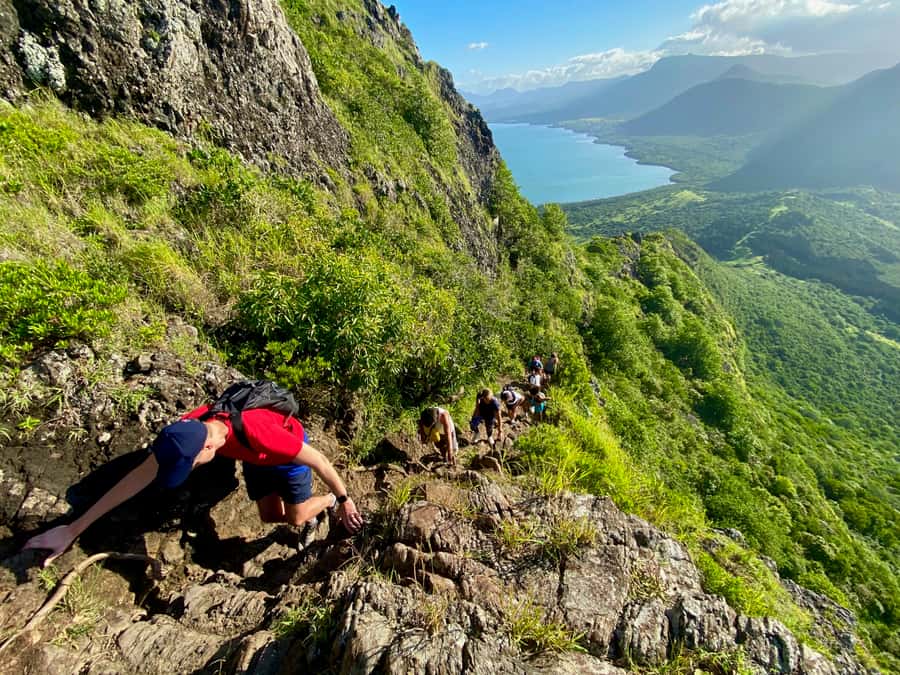
This is called an eco hike, and the “eco” part isn’t just marketing language. It shows up in three ways you can actually feel:
- Wildlife encounters before the climb
You may see deer, pigs, and multiple birds while you’re still getting your bearings.
- Information on the move
You get historical, botanical, and conservation related knowledge from the guide, so you understand what you’re seeing rather than just passing by.
- An organized route
The experience is clearly positioned as the official, protected way to access the mountain. One review notes how other groups may access through closed or broken routes, and it’s a good reminder: the “eco” label works best when you respect the boundaries and the landowners’ access rules.
In short, I like that the hike connects nature, culture, and conservation without turning into a museum tour. You’re moving, sweating, and learning at the same time.
How long it takes, what it costs, and what you’re really buying
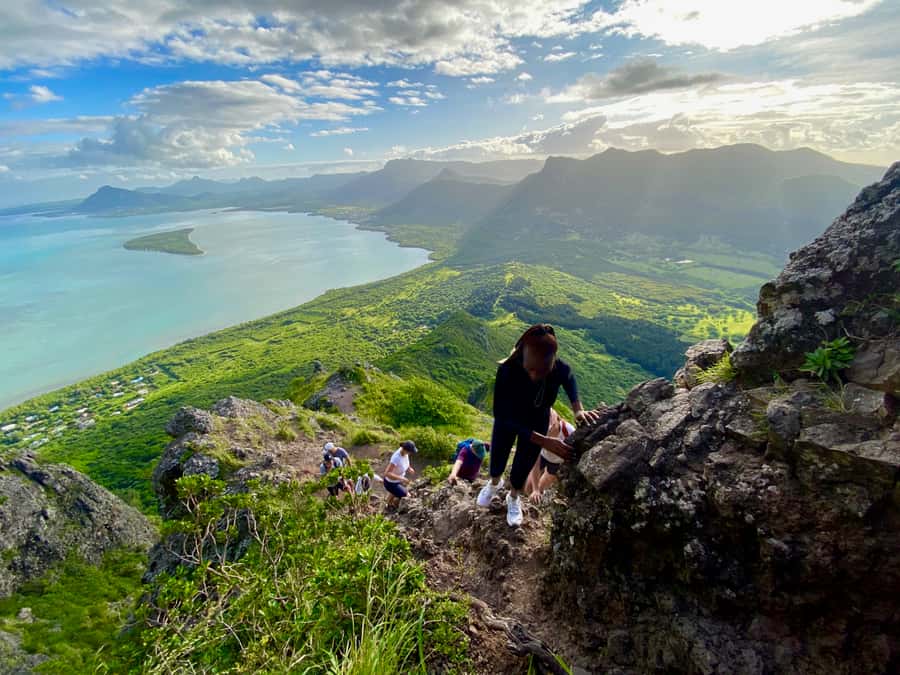
The duration is 4 hours. That’s a smart length for a technical hike because you’re getting a serious adventure without spending your whole day on the mountain.
Price is $82 per person. On paper, that’s not cheap for a hike. In practice, you’re paying for several things that add value:
- A professional mountain guide (and specifically a leader with decades of climbing and local terrain experience)
- Comprehensive insurance
- Photographs included
- The built-in safety briefings and climbing coaching
The day also includes a private estate game drive/off-road adventure component that gives you wildlife value before the main climb. If you’re the type who likes a guide who can teach and manage a group, that’s where the money feels justified. If you only want a basic viewpoint with no technical climbing, you might feel the price is higher than you need.
One important note: food or drink isn’t included. The plan includes a break with breakfast/picnic time, but the rules say food and drink aren’t included. So treat this as a “bring your own plan” situation: you may want to budget for what you’ll eat, and you may want to carry snacks and water for comfort.
Getting there: pickup limits and the meeting point you should memorize
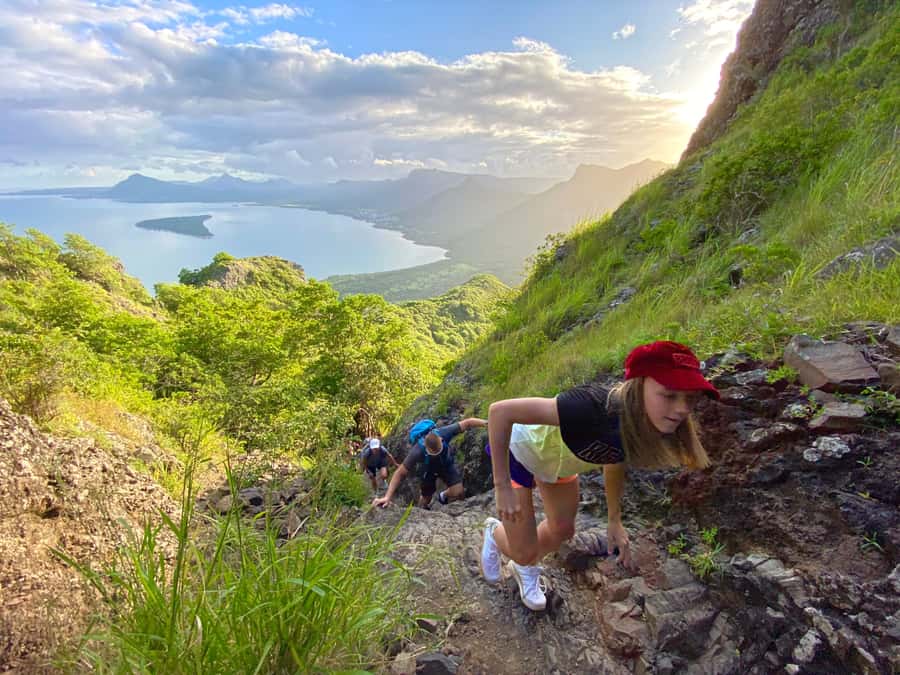
Collection is only available on the Le Morne Peninsula, so don’t assume pickup everywhere around the island. If you’re not collected, the instructions say to meet at Explorers Mauritius, Route Cotière, Le Morne Brabant 91202, Mauritius.
In a morning this early, it helps to be proactive: confirm your pickup arrangements with the local partner ahead of time. You don’t want to spend your pre-hike minutes figuring out where to stand.
What to bring (and what to avoid)
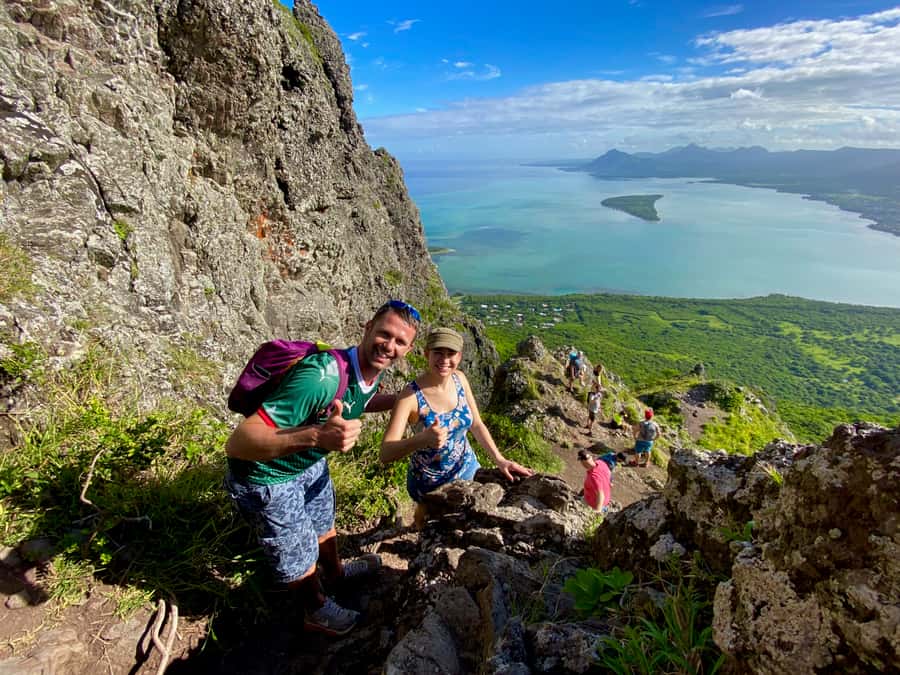
Keep your packing simple and practical:
- Bring comfortable shoes
- Leave the sandals/flip-flops at the hotel
- If you’re asthma-prone, bring your bronchial inhaler
- If you’re diabetic, monitor sugar levels and carry necessary medication—but remember diabetes is also listed as not suitable, so you should clarify eligibility with the partner
And if you’re in early pregnancy or you’ve had corrective surgery to your knees or spine, you should advise the local partner ahead of time.
Who this hike suits best
This hike is described as a challenge with rich rewards for guests of all ages and fitness levels, but that’s only true if your body can handle rock scrambling and steep footing.
You’ll likely love it if:
- You want a guided technical climb, not just a scenic walk
- You care about safety coaching and want a guide like Bryn James who gets groups moving comfortably
- You want sunrise views plus learning about the island’s natural side
- You want photo keepsakes without hiring your own photographer
You should probably skip it if you have:
- Back problems
- Mobility impairments
- Heart problems
- Vertigo
- A recent surgery situation (especially spine/knee corrective surgery)
- Diabetes, based on the “not suitable” rule
Should you book Le Morne Mountain with Explorers Mauritius?
Book this hike if you want your Mauritius day to feel like a real adventure—technical scrambling, big views, and a guide who focuses on safety and teaching. The included photos and the pre-climb wildlife/game drive make it feel like more than a single-point hike, and the early timing helps you enjoy the mountain without the worst of the heat.
Don’t book it if your health situation falls into the not-suitable categories or if the rock scrambling part would make you unsafe or overly anxious. And if you’re on the edge fitness-wise, do it with the right footwear and a mindset that you can go step by step—this route is built for pacing, not rushing.
If you fit the safety profile, this is one of the stronger ways to experience Le Morne: sunrise views, real climbing skill, and a morning that teaches you about the place you’re standing in.
FAQ
How long is the Le Morne Mountain eco hike?
The experience runs for about 4 hours.
Where do I meet for this hike if there’s no pickup?
If you aren’t collected on the Le Morne Peninsula, meet at Explorers Mauritius, Route Cotière, Le Morne Brabant 91202, Mauritius.
Is there a medical briefing before the hike?
Yes. You’ll get a medical briefing and evaluation before setting out.
What type of terrain is involved?
It includes an initial warm-up walk followed by multiple scrambling and climbing sections, with a safety briefing before the technical parts.
What clothing or footwear should I bring?
Bring comfortable shoes. Sandals and flip-flops are not allowed.
What about asthma or inhalers?
If you’re susceptible to asthma, you must bring your bronchial inhaler.
Is food included?
Food or drink is not included.
What’s included in the price besides the guide?
The included items are a professional mountain and river guide, comprehensive insurance, and photographs.
Can the hike be postponed due to weather?
Yes. The local partner may postpone the hike due to bad weather at no additional cost.