REVIEW · MAUI
Maui: Guided Hike of Haleakala Crater with Lunch
Book on GetYourGuide →Operated by Hike Maui · Bookable on GetYourGuide
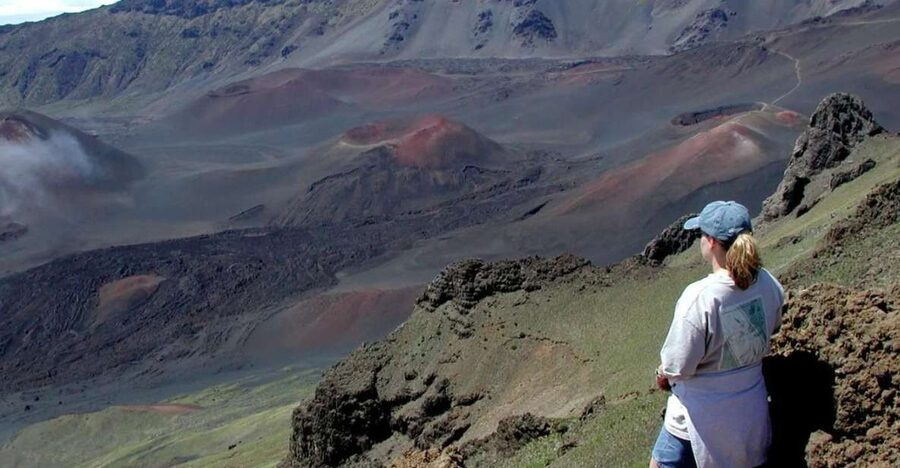
Haleakala feels like another planet. I love the guided stories that connect Maui’s heritage to what you’re walking through, and I love the volcanic crater terrain—all wide views and strange rock textures. The only real drawback is that this is a tough, rocky hike at high elevation, so careful footing and decent fitness matter.
You’ll cover both sides of the dormant volcano, starting with a 2-mile push to a 10,000-foot summit of cinder cones and then continuing on to a lava trail around 8,000 ft. I also like that the basics are handled: snacks and a picnic lunch keep you fueled when the air gets thinner.
In This Review
- Key things I’d zero in on before you go
- Haleakala’s crater hike: why it’s worth your 7 hours
- The two-part route: from cinder cones to a lava trail with native plants
- The 2-mile climb to the 10,000-foot summit
- The second 2-mile hike at about 8,000 ft
- What the guide brings (and why you’ll feel it on the trail)
- Snacks, lunch, ponchos, and the small comforts that matter at 10,000 ft
- Meeting point near Hwy 311 and 380: plan your timing
- What to wear and bring for Haleakala’s colder, thinner-air reality
- How hard is it, really? (And who should think twice)
- Price and value: what $208 buys on this 7-hour crater hike
- Weather, changes, and what to expect when the day isn’t perfect
- Should you book the Haleakala guided crater hike with lunch?
- FAQ
- How long is the Maui guided Haleakala crater hike?
- What’s included in the tour price?
- Where do I meet the tour group if I don’t get hotel pickup?
- What should I bring for the hike?
- Is this tour suitable for children or limited mobility?
- Are there any extra costs for large groups?
Key things I’d zero in on before you go
- Professional guide with wilderness training plus permit access for the National Park area
- Two altitude zones: 10,000 ft cinder cones, then a lava trail at about 8,000 ft
- Free supplies that actually help: bottled water, snacks, picnic lunch, backpacks, ponchos
- Native plants and rare natural features on the lower lava trail section
- English-only live guide during the 7-hour outing
Haleakala’s crater hike: why it’s worth your 7 hours
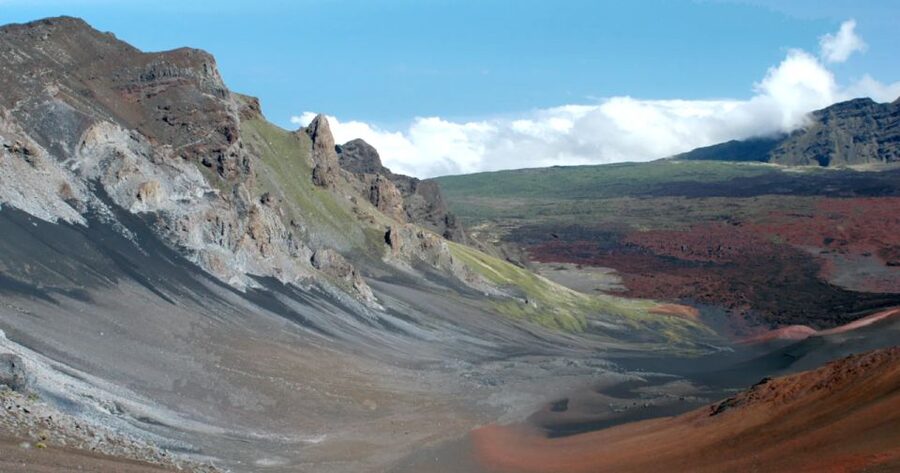
This hike works because it does two jobs at once. You get big, otherworldly crater scenery, and you also get a guide who turns that scenery into a story about Maui—heritage, land, and how the volcanic setting shaped what’s living here.
What makes it feel special is the way the trail changes. You’re not doing a long, samey walk. First you’re climbing into a high, barren-feeling area packed with cinder cones. Then you shift onto a lava trail with rare native plants. It’s the kind of contrast that makes you stop more than once, even when you’re busy watching your step.
And yes, it’s a serious altitude hike. One of the main things to plan for isn’t just the distance—it’s the steep, rocky nature of the surfaces and the reduced oxygen up high.
You can also read our reviews of more guided tours in Maui


The two-part route: from cinder cones to a lava trail with native plants
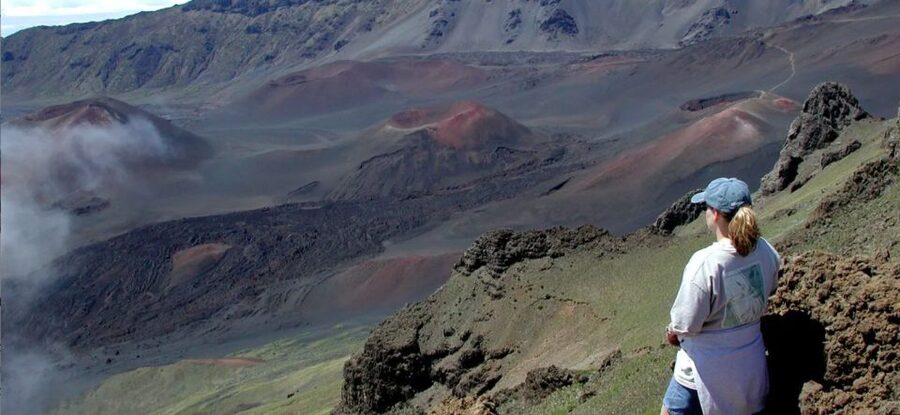
Your day is built around two connected hikes, each with a different feel.
The 2-mile climb to the 10,000-foot summit
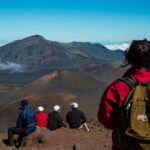
You’ll start with a 2-mile hike toward the 10,000-foot summit. This is where huge cinder cones dominate the view—dry, desert-like terrain with an expansive, open feel.
This section is also where the guide’s explanations land hardest. As you move through the volcanic setting, you’ll learn about Maui and see rare natural wonders at the top of the crater area. It’s not just photos from a scenic overlook; it’s learning while your legs are working.
Practical tip: if you’re a slower hiker, you still need to keep moving steadily. Expect slippery, rocky surfaces at altitude. Take breaks, but don’t stop so long that your breathing cools down and you feel stiff.
The second 2-mile hike at about 8,000 ft
Next you head onto another 2-mile hike at roughly 8,000 ft on a lava trail. Here the terrain is still volcanic, but you’re walking among lava formations lined with rare native plant species.
This part tends to feel more grounded and alive. You’re still in alien-looking ground, but now there’s biology in the mix—plants that belong to Hawaii, not just rock and wind.
On a clear day, the views can feel endless. One of the most common payoffs with this kind of crater hike is that moment when you look out and realize you’re above much of the cloud deck.
What the guide brings (and why you’ll feel it on the trail)
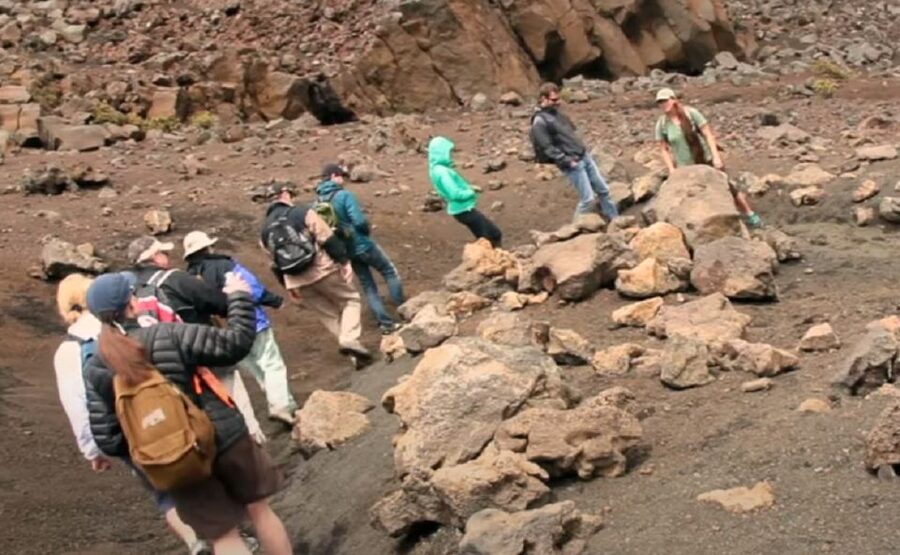
A big value here is the guide. This isn’t a self-guided walk where you rely on a phone map and guesswork. You have a live guide, in English, with certifications that include advanced CPR, first aid, and wilderness training, plus a permit for hiking in the National Park.
That matters because the trail is remote and high. If conditions shift, safety has to lead the whole show. The tour notes that it runs in most weather conditions, but it may be altered if safety issues arise—exactly what you want to hear for a crater environment.
It also helps that the guides focus on participants’ limits. One person described guide George as great and considerate of different capabilities, with safety always on his mind. That matches what you should look for in this kind of hike: someone who guides pace and decision-making, not just scenery talk.



Snacks, lunch, ponchos, and the small comforts that matter at 10,000 ft
The included food and gear are practical here, not just a marketing checkbox.
You get:
- bottled water
- snacks
- a picnic lunch
- backpacks
- ponchos
When you’re hiking high, the “small comforts” become big deals. Warm clothes and decent shoes help, sure—but if you also have water and calories handled, you can focus on steady movement. A picnic lunch also lets you recover without hunting for food in Kahului after a long crater day.
Ponchos are worth noting. Weather in volcanic country can shift, and a rain layer on rocky ground turns a hike into a slip-and-slide. Having ponchos included means you’re not scrambling for last-minute gear.
Meeting point near Hwy 311 and 380: plan your timing
Hotel pickup and drop-off aren’t included, so you’ll need to get yourself to the start.
The meeting point is at the intersection of highways 311 and 380. Look for the location in front of a large concrete wall with a single row of parking facing Hwy 380 west of Hwy 311, just before entering Kahului.
This detail matters more than it sounds. A 7-hour hike plus transit time can get tight if you’re unsure where to go. Give yourself buffer time so you arrive early enough to check in, get your backpack, and settle before starting.
What to wear and bring for Haleakala’s colder, thinner-air reality
The tour’s essentials are simple, and they line up with what you’d expect on Maui at altitude.
Bring:
- warm clothing
- sports shoes
That warm clothing isn’t a suggestion for comfort—it’s for function. Even if Maui is sunny at sea level, the crater can feel colder and harsher, especially around 10,000 feet. One review noted it was sunny and gorgeous and not as cold as expected, but you should still dress for colder air than you think you’ll need.
Shoes matter because the surfaces are rocky. Sports shoes with good traction beat flimsy footwear. If you’re prone to slipping on uneven trails, this is not the time to experiment.
Also, the tour includes backpacks and ponchos, so you don’t need to bring that gear. You do need to be ready with the clothing and shoes that keep you steady.
How hard is it, really? (And who should think twice)
This hike isn’t for everyone. It’s not suitable for children under 8, and it’s not suitable for people with mobility impairments.
Even if you meet age requirements, consider the difficulty. One review called it very difficult for older hikers or anyone with health issues that would impact their ability to walk on slippery, rocky surfaces. That’s the real warning.
So who is it best for?
- Active adults who hike regularly
- People comfortable with uneven, rocky ground
- Travelers who want guided learning, not just views
Who might struggle?
- Anyone who gets winded quickly at altitude
- People who avoid trails with slippery footing
- Anyone who needs a more accessible route
If you’re on the edge, ask yourself a simple question: do you handle rocky trails without rushing or needing frequent long stops? If the answer is no, this might feel like a grind instead of a win.
Price and value: what $208 buys on this 7-hour crater hike
At $208 per person, you’re paying for a guided, high-elevation experience with real support.
Here’s what helps justify the price:
- a live guide for the full 7 hours
- advanced safety training credentials and wilderness experience
- National Park permit hiking access
- bottled water, snacks, and a picnic lunch
- backpacks and ponchos
If you were trying to DIY this, you’d still face the big costs: gear, transport, and the risk of not having someone manage the pace and safety. The value here is that someone with training is leading you through the hardest parts, while you’re also getting cultural and nature-focused explanations along the way.
In plain terms: $208 buys you less stress and more meaning on a difficult trail. If that’s what you want for your Maui time, it’s a reasonable deal.
Weather, changes, and what to expect when the day isn’t perfect
This tour runs in most weather conditions, but it may be altered for safety. That’s not a buzzkill—it’s the correct approach for a crater hike where visibility, footing, and wind can change quickly.
A sunny day can be a dream. One review described a sunny, gorgeous outing and less cold than expected. Still, you should dress and plan as if you’ll get cooler air and potentially messy surfaces. Bring warm layers, wear shoes you trust, and expect the guide to call the shots if conditions shift.
Should you book the Haleakala guided crater hike with lunch?
Book it if you want:
- a structured hike with cinder cone summit views and a second lava trail section
- a knowledgeable English guide with first aid and wilderness training
- included lunch and supplies so you can focus on hiking
Skip it (or choose a gentler option) if:
- you struggle with slippery, rocky surfaces
- you need an accessibility-friendly route
- you don’t want to deal with high-altitude exertion
If you’re fit enough and you like guided walks that combine scenery with real context, this is a strong choice for a Maui day. The combination of crater terrain, cultural talk, and practical included food is exactly the kind of value that makes a harder hike feel worth it.
FAQ
How long is the Maui guided Haleakala crater hike?
The experience lasts 7 hours.
What’s included in the tour price?
It includes bottled water, snacks, a picnic lunch, backpacks, and ponchos.
Where do I meet the tour group if I don’t get hotel pickup?
The meeting point is at the intersection of highways 311 and 380, in front of a large concrete wall with a single row of parking facing Hwy 380 west of Hwy 311 just before entering Kahului.
What should I bring for the hike?
Bring warm clothing and sports shoes.
Is this tour suitable for children or limited mobility?
No. It’s not suitable for children under 8, and it’s not suitable for people with mobility impairments.
Are there any extra costs for large groups?
For parties of 10 or more, a gratuity of $250 will be collected before the trip.