REVIEW · DRAKE BAY
Jungle Hike with Canyoning and Rappelling in Drake Bay
Book on Viator →Operated by Sukia Travel · Bookable on Viator
Rappelling starts with a jungle hike here. In Drake Bay, this guided Corcovado outing mixes rainforest walking, river crossings, and canyon descents into waterfalls with infinity pools—with a small group so you’re not herded. You’ll spend the morning moving through thick Osa jungle, then turn that effort into swimming, rappelling, and a park-side picnic.
I love two things most: the safety focus and the guide energy. You’ll get harnesses, helmets, and vests, and guides like Emilio and Allen (with standout support from Bryan and David) keep the pace moving while they make sure everyone’s secure on the rappel parts. I also like the picnic-style lunch in the middle of the park—after hours of wet hiking, it feels like a real meal, not a snack break.
One consideration: this is physical. You’ll hike uphill and downhill, get wet through multiple sections, and you should expect cold moments in the waterfalls, especially if you don’t come prepared. Plan for solid shoes (no shoes or wetsuit are included) and bring dry backup clothes, because you’ll likely finish the day soaked.
In This Review
- Key highlights you’ll feel in your body
- Drake Bay at 7:00 am: getting set up for a wet, active day
- Into Corcovado with 4×4 transport and real jungle gear
- The jungle hike: river travel, machete paths, and wildlife spotting
- Waterfalls, infinity pools, and rappel parts where the route turns vertical
- Chest-deep water, swimming moves, and why strong shoes matter
- Picnic-style lunch in the national park: fuel where it counts
- Price and value: what $115 buys in a small-group Corcovado day
- Who should book, and what to bring so the day feels fun
- Should you book this jungle hike with canyoning and rappelling?
- FAQ
- How long is the jungle hike with canyoning and rappelling in Drake Bay?
- What is the price per person?
- How big is the group?
- What time does the tour start, and where do I meet?
- Is Corcovado National Park admission included?
- What safety gear is provided?
- What fitness level do I need?
- What happens if weather is bad?
- Are shoes or wetsuits included?
Key highlights you’ll feel in your body
- Max 8 people means more time with your guide and less waiting around
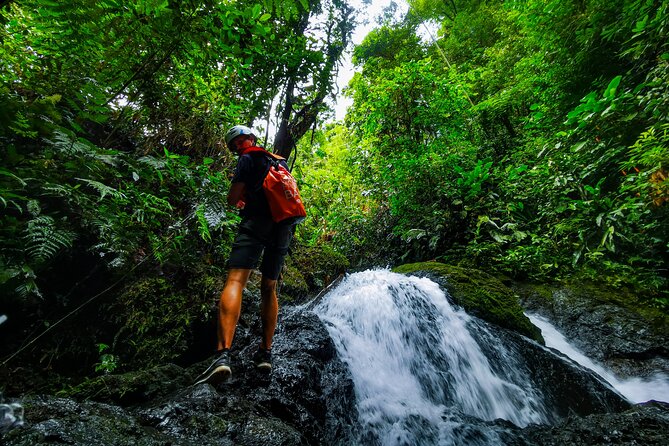
- Harness, helmet, vest prep before you enter the main jungle sections
- Four waterfalls with infinity pools, with rappelling as the only way to continue
- Multiple wet sections where water can hit waist, chest, or require swimming to move ahead
- Picnic-style lunch inside the national park, right after the water section
Drake Bay at 7:00 am: getting set up for a wet, active day
This tour runs about 6 hours and starts at 7:00 am. You meet at Sukia Travel at Agujitas, in front of restaurant La Choza in Drake Bay, and the day ends back at the same meeting point.
If you’re staying in Drake Bay, the experience also includes pickup and drop-off at your hotel, so you’re not stuck organizing a ride right before the tour starts. The early start matters in Costa Rica for two reasons: you get cooler morning air for the hike, and you’re more likely to be moving before conditions shift later in the day.
Bring a realistic mindset. You’re starting your morning with a workout, then spending part of it in and around waterfalls. If you want a relaxing nature stroll, this one won’t match that mood.
Into Corcovado with 4×4 transport and real jungle gear
Corcovado National Park is the big stage, reached first by 4×4 transport that gets you into the deeper rainforest. Once you’re there, you’re kitted up with the core safety gear: harnesses, helmets, and vests. This matters because the day isn’t only about hiking—it includes rappelling, and the safety kit tells you the route is planned, not improvised.
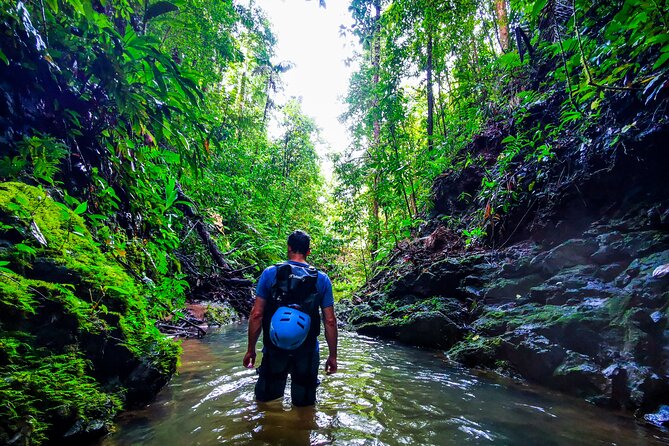
Then you step into the primary jungle of Osa. Expect thick growth where sunlight only reaches the forest floor in patches. You’ll move along river banks, and parts of the trail are described as so overgrown that the team may use machete work to get you through.
The big value here is that you’re learning while moving. Your guides point out plants and explain what you’re seeing in the forest, including wildlife like frogs, lizards, birds, and (in one memorable moment) a spider monkey high overhead. If you’re the type who likes nature with names and context—not just photos—this part is for you.
The jungle hike: river travel, machete paths, and wildlife spotting
After the initial gear-up, your route is a mix of walking, navigating, and paying attention. The thick rainforest isn’t just scenery; it changes how you move. You’ll be on jungle paths that can feel narrow, and you’ll spend real time with the sounds of running water and insects all around.
The route also follows water in a smart way. You’ll travel along river edges, then later shift toward a green stream area where the water and jungle colors contrast in a way that feels almost unreal. This isn’t just for looks—the shift in terrain is how the tour sets you up for the canyon crossings and waterfall section.
This is also where the guide style shows. Multiple guides (including Emilio and Allen, plus David in one group) brought plant-and-ecosystem explanations, while still keeping the hike moving. And yes, wildlife can pop up at random times: frogs, lizards, and birds are all part of the pattern if you keep your eyes up and your pace steady.
If you get impatient with slow trails, you might feel the day is demanding. But if you like active nature—moving through the forest while learning as you go—it’s a strong fit.
Waterfalls, infinity pools, and rappel parts where the route turns vertical
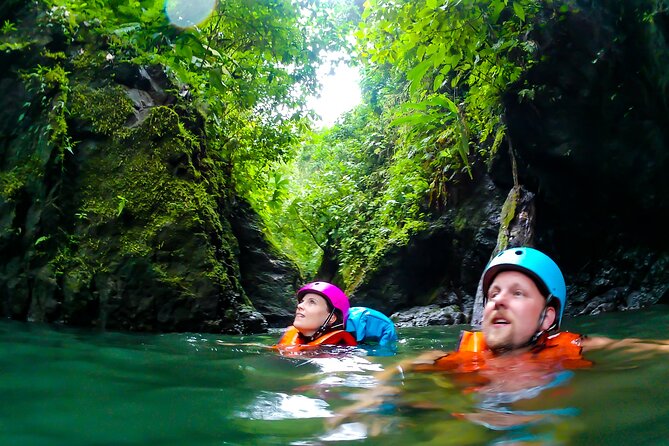
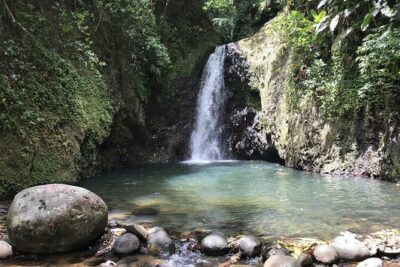
The most dramatic section comes when you reach the waterfalls area—four waterfalls with infinity pools, described as being out in the middle of nowhere. This is where the tour stops being a hike and becomes canyon work.
At this point, the only way to keep going is via rappelling. Plan for that reality: at least a few rappel segments will be part of the overall journey, and you’ll likely get fully wet during them. One group noted three rappelling sections and mentioned that you may have to jump or slide into water at certain points.
That sounds intense, and it is physical. The reassuring part is how the tour frames safety and instruction. People who were first-time rappellers still described the instruction as professional and the process as safe. The goal is that you understand what to do before you’re on the line, and your guide keeps the group’s safety front and center.
If you’re nervous around heights, don’t ignore that. The rappel parts aren’t for people who fear getting secured to a harness and trusting the system. But if you can follow directions and you’re okay being wet and a little shaken, it can become the highlight of the trip.
Chest-deep water, swimming moves, and why strong shoes matter
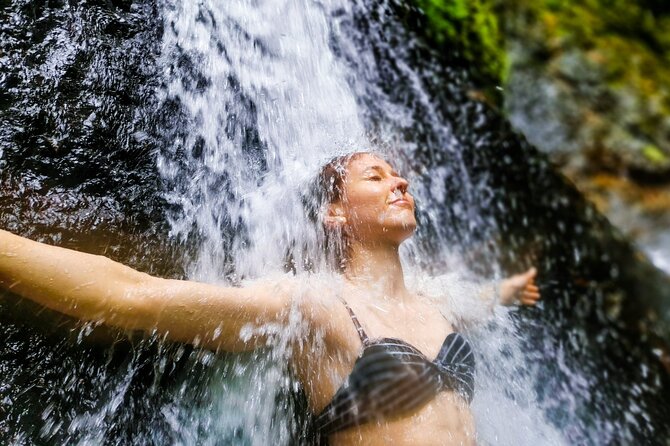
After the waterfalls and bathing, you continue through sections where the water can be at your waist or chest, and sometimes you’ll swim to reach the next platform. This is not a “stay dry” day. It’s a “move with confidence in wet terrain” day.
In practice, that means your footing and balance matter. You’ll be navigating slick areas, water edges, and natural platforms where slipping would be easy if you’re wearing the wrong shoes. One review called out how sandals didn’t last even early in the hike, which is exactly what you want to avoid. This is why I’d treat strong shoes as non-negotiable.
Also: the day can involve waiting between segments when your group is larger or when the flow of the rappel line requires it. One person mentioned having to wait for other participants before advancing. With a max group size of eight, that waiting is usually limited, but it’s still possible you’ll pause while other people finish their rappel turns.
So bring your calm. Keep breathing, listen to your guide’s instructions, and remember: the wet sections are part of the point. The payoff is getting to swim and move through the canyon in a way that most visitors never experience.
Picnic-style lunch in the national park: fuel where it counts
Eventually, you reach a natural platform where you stop for a picnic-style lunch. The lunch comes after you’ve been in the water and after the more physical segments. That’s important: you’re not going to feel hungry just because lunch is late. You’re going to feel hungry because you’ve earned it.
The tour also references admission ticket free, which is a big piece of value. You’re not only paying for guide time and adventure; you’re also getting covered access to the national park experience.
In at least one case, the lunch was described as delicious, with the overall day being the highlight of a Costa Rica trip. Another comment suggested the lunch can feel more like a snack for some appetites, so I’d plan for the possibility that you may want a small personal extra—something simple you bring along—just in case your energy needs run high.
Either way, the setting helps. Eating in the park right after the water work turns lunch into a break that feels earned rather than rushed.
Price and value: what $115 buys in a small-group Corcovado day
At $115 per person for about six hours, this is one of those costs that makes sense when you look at what’s included. You get:
- pickup and drop-off in Drake Bay
- small-group size (maximum eight)
- safety gear (harnesses, helmets, vests)
- a national park day (with admission noted as free)
- a picnic-style lunch
The small-group setup is the silent value here. With fewer people, you’re more likely to stay engaged, get clearer instruction, and spend less time in awkward queues. You also feel like your guide can notice if someone’s struggling before it becomes a problem.
The other value is the mix of activities. You’re not just hiking, and you’re not just swimming. You’re doing walking, river movement, and rappelling in a single day. If you want a “one day, big experience” outing while you’re based in Drake Bay, this offers that.
And yes, the day is physically demanding. If you know you get tired quickly, or if you don’t like wet, rocky terrain, you might consider skipping. But if you’re game for an active nature day and you can follow safety instructions, $115 starts to look pretty reasonable.
Who should book, and what to bring so the day feels fun
This tour asks for a strong physical fitness level. That’s not marketing language. You’ll hike uphill and downhill, move through slippery water terrain, and rappel in a planned safety setup. The people who get the most joy from it tend to be the ones who like doing, not watching.
It also helps if you enjoy learning while you move. Guides spent time identifying frogs, lizards, birds, and plants, and groups reported seeing a spider monkey overhead. If you’re into naturalist-style guidance, you’ll likely appreciate the way the hike is explained.
Now for packing—keep it simple and practical:
- Footwear with grip: sandals can fail fast on wet terrain
- Swimsuit or quick-dry clothes you don’t mind ruining
- Extra dry clothes in a bag you can seal
- Something to protect from sun if you burn easily (the jungle still lets light through)
- A towel, if you can carry one
- If you run cold: think about a warmer layer for waterfall areas, since no wetsuit is included
If you hate getting soaked, this won’t feel worth it. If you accept that you’ll be wet from start to finish and you’re ready to move, it can be a standout day in the Osa region.
Should you book this jungle hike with canyoning and rappelling?
Book it if you want a small-group Corcovado day that mixes hiking, swimming, and rappelling with real safety gear and hands-on guide instruction. It’s also a good fit if you like nature explanations and want chances to spot wildlife beyond the basics.
Skip it if you’re looking for an easy walk, you can’t handle the physical strain, or you’re unwilling to deal with wet, potentially cold waterfall conditions. This is not a day to wing your footwear, and it’s not a day to expect dry comfort. When you’re prepared, it’s the kind of adventure that actually changes how you remember Costa Rica.
FAQ
How long is the jungle hike with canyoning and rappelling in Drake Bay?
The tour lasts about 6 hours (approx.).
What is the price per person?
It costs $115.00 per person.
How big is the group?
This experience has a maximum of eight travelers.
What time does the tour start, and where do I meet?
The start time is 7:00 am. You meet at Sukia Travel Agujitas in Drake Bay, in front of restaurant La Choza. The tour ends back at the meeting point.
Is Corcovado National Park admission included?
The tour notes Admission Ticket Free for Corcovado National Park.
What safety gear is provided?
You prepare with harnesses, helmets, and vests.
What fitness level do I need?
The tour says travelers should have a strong physical fitness level.
What happens if weather is bad?
This experience requires good weather. If it’s canceled due to poor weather, you’ll be offered a different date or a full refund.
Are shoes or wetsuits included?
No—shoes or a wetsuit are not included, so plan your own footwear for wet, uneven ground.