REVIEW · TERCEIRA
Hiking Trail Baías da Agualva | Terceira Island
Book on Viator →Operated by Azores Nature Tours · Bookable on Viator
That cliff-and-lagoon feeling hits fast. The Baías da Agualva hike on Terceira mixes ocean views with real walking—lava ground, coastal cliffs, and calmer lagoon scenes—plus a guide who explains how the volcanic setting shapes what you see.
Two things I really like: the variety of terrain (from forest shade to darker volcanic rock) and the way the route treats viewpoints as part of the walk, not just a quick stop. One consideration: it can feel more challenging than you expect, especially if the day turns hot and sunny.
If you’re lucky enough to get Amélia Lopes leading your group, you’ll get that steady, patient guidance. She’ll slow down for the tougher bits and help you keep your footing.
In This Review
- Quick hits before you lace up
- Baías da Agualva on Terceira: why this hike is worth your morning
- What you’re walking through: cliffs, lava, forests, and rocky bits
- The meeting point at Canada Das Baleeiras: how to start without stress
- Baías da Agualva: the core stretch where lava meets the blue sea
- Fajãzinha viewpoint and the Alagoa scene: where the geology clicks
- Forest-to-rock transitions: how to hike smarter on uneven ground
- The guide experience with Amélia Lopes: patience and practical help
- How long is 2 hours, really? Pace, effort, and group size
- Price and value: what $60.21 buys on Terceira
- Weather rules: how to choose the right day
- Who should book this hike (and who should skip it)
- Should you book Baías da Agualva with Azores Nature Tours?
- FAQ
- FAQ
- How long is the Baías da Agualva hiking trail?
- Where does the hike start and end?
- What does the hike include?
- Is pickup available?
- What language is the tour guided in?
- How many people are in the group?
- Who can participate?
- Is the hike weather-dependent?
- What should I do if I want to cancel?
- What is the price?
Quick hits before you lace up
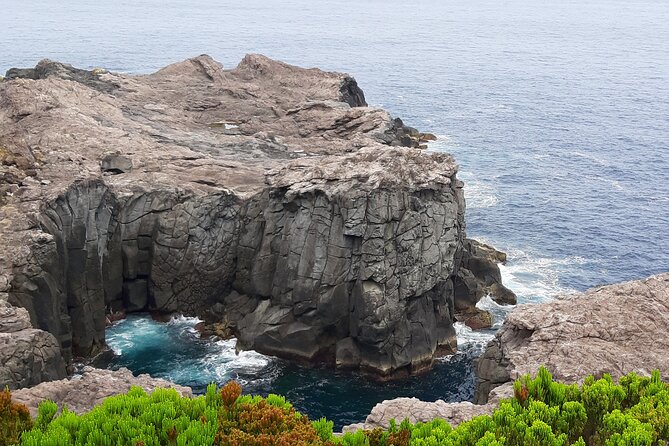
- Small group pace (max 16) means fewer rushing moments and more hands-on help when the trail gets rocky.
- Cliffs + lagoons on the same route gives you constant variety instead of one long “same view” stretch.
- Fajãzinha viewpoint and the Alagoa moment turns geology into something you can actually picture.
- Volcanic activity explained along the way helps the scenery make sense, not just look good.
- About 2 hours is long enough for real trail time, but short enough to keep it doable for many people.
Baías da Agualva on Terceira: why this hike is worth your morning
Terceira has a way of making nature feel both dramatic and calm. This hike hits that balance hard. You’re not just walking through a pretty place—you’re moving along a shoreline shaped by volcanic rock, then switching gears to wider coastal views that include lagoons and cliff lines. It’s a clean slice of what the island does best: geology you can see with your own eyes.
The tour is built around a simple idea: get you out to the Baías da Agualva area and let the coast do the storytelling. When the pace is right, you can pay attention to how the trail changes under your feet and how the ocean light shifts over lava and water. That’s the kind of experience you remember later, because you actually participated in it.
And yes, the scenery is a big part of it. But what makes this one feel especially satisfying is the mix of environments. Forest sections give you breathing room. Exposed volcanic areas give you bigger views and that classic Azores sense of raw coastline.
You can also read our reviews of more hiking tours in Terceira
What you’re walking through: cliffs, lava, forests, and rocky bits
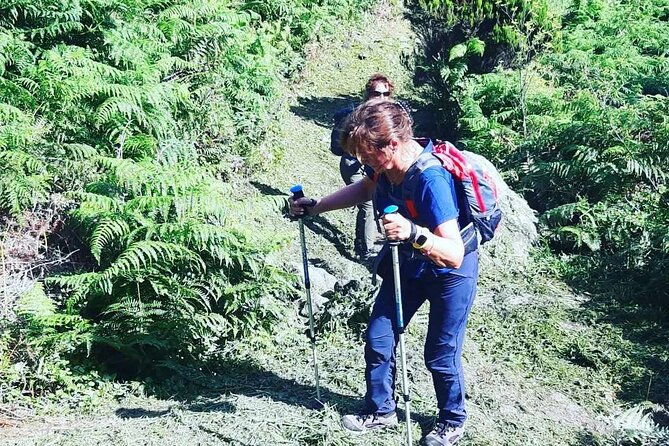
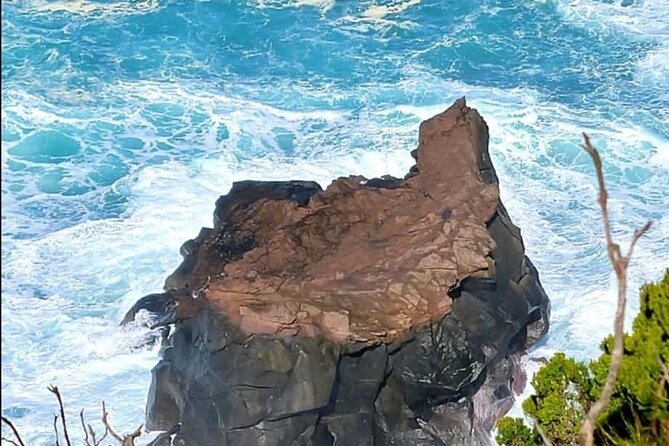
Expect a route that plays with contrast. The trail runs over pure lava (so the ground can be uneven or sharper underfoot) and alongside coastal features where cliffs and sea air show up quickly. You’ll also pass through sections that feel more enclosed—think forest tones—before you’re out in more open, rockier terrain again.
The terrain variety matters because it changes how you feel during the hike:
- In quieter, shadier bits, you can settle your breathing and focus on balance.
- In rockier sections, you’ll want to slow down and place each step instead of power-walking.
One caution from real-world days: this hike can come in tougher than you imagined, particularly on very sunny, hot mornings. A bright forecast is great for photos, but it can turn “short hike” into “steady effort,” especially if you’re not used to rocky paths.
If you want a smooth hike day, pack a mindset of slow and sure. The views are worth it, but the trail doesn’t feel like an easy sidewalk.
The meeting point at Canada Das Baleeiras: how to start without stress
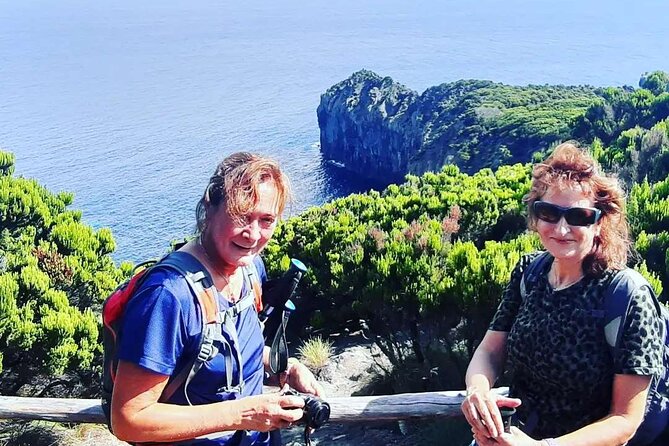
The experience starts and ends back at the same meeting point: Canada Das Baleeiras 9760, Portugal. Knowing that helps you plan the rest of your day—you’re not committing to a long transfer timeline after the walk.
Also, pickup is offered. If you’re coordinating with family or you’d rather not deal with a bus schedule, this can make the morning simpler. That matters on Terceira, where the best hiking days often come down to timing.
One practical note: bring what you need before you arrive, not after. This is a roughly 2-hour activity, so you don’t have much buffer for searching for sunglasses, water, or a missing layer. Show up ready to walk, and you’ll enjoy the route more.
Baías da Agualva: the core stretch where lava meets the blue sea
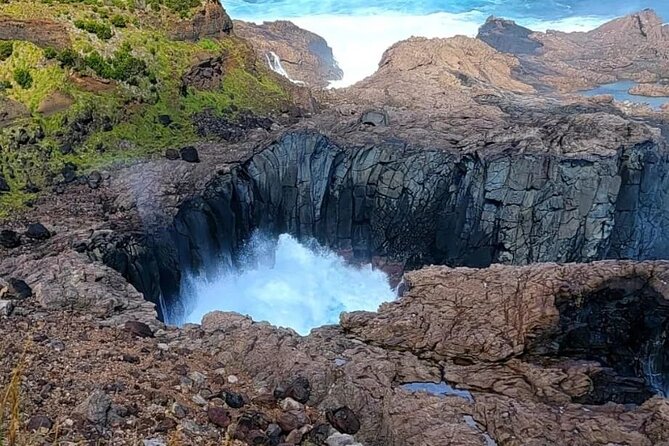
The heart of the hike is the Baías da Agualva area north of the island. The name alone hints at what you’ll experience: sea views paired with striking coastal rock. What stands out is the quiet feeling you get when you’re near lava formations and open water at the same time.
As you move along this section, you’ll likely notice how the environment shifts your perspective. Closer to the water, the coastline feels more grounded and textured—lava is visible, uneven, and real underfoot. A little farther along, cliffs and distance take over, and suddenly the ocean becomes the main “scene.”
This is where the tour’s pacing tends to feel worthwhile. The walk doesn’t treat viewpoints like a rushed checklist. Instead, you get time to look around and understand what you’re seeing—especially because the guide ties it back to the area’s volcanic story.
Fajãzinha viewpoint and the Alagoa scene: where the geology clicks
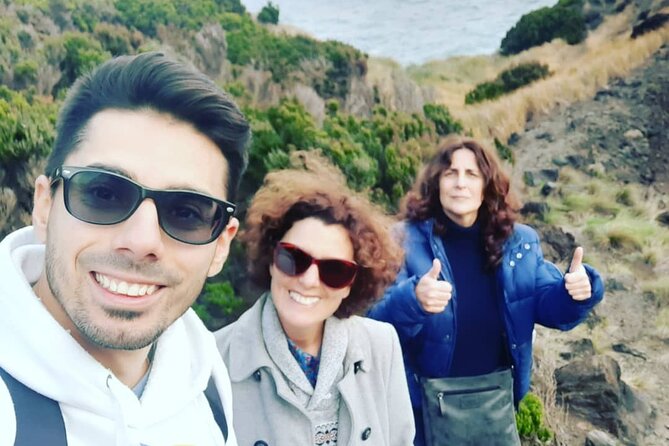
One of the most memorable parts is the moment at the Fajãzinha viewpoint, when you get to see the Alagoa. This is one of those scenes that’s easy to admire, but even better when someone helps you read it.
The value here is simple: the guide doesn’t just point outward. They connect what you’re seeing—water in a lagoon-like setting, coastline shape, and the rocky surroundings—to the island’s volcanic activity. That turns a pretty view into something you understand.
If you’ve ever stood at a viewpoint and thought, Nice, but what caused all this?—this part is the answer. It’s also a great photo opportunity, because the angle helps you understand the relationship between landform and sea.
Just remember: viewpoints often mean more sun and wind. If you’re sensitive to heat, plan to pause, drink water, and don’t take too long standing in direct light.
Forest-to-rock transitions: how to hike smarter on uneven ground
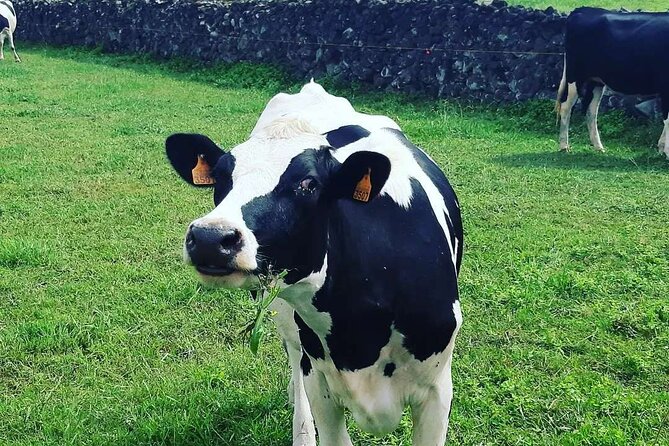
A big reason people enjoy this walk is the variety. The route goes from areas that feel more sheltered—like forest sections—to more exposed, rocky terrain with volcanic formations.
That change is the reason you’ll want good footwear. Even when the trail isn’t steep, lava rock and uneven ground can be slippery or awkward depending on the surface. The “step rhythm” changes, and if you rush, your ankles will notice.
Here’s how I’d approach it:
- Keep your eyes down for a few seconds at a time to find the next safe footing.
- Use a slower stride on rocky parts. You’ll arrive less tired, even if it takes the same total time.
- If you’re unsure, ask the guide for a quick pointer. Having a pro show you where to put your feet can save energy.
The guide support is a key part of the experience, and the reviews back that up. Amélia Lopes is noted for taking her time and helping with navigation on the trickier segments. That makes a difference when you’re hiking on volcanic rock and the route isn’t a perfectly groomed path.
The guide experience with Amélia Lopes: patience and practical help
A hiking tour lives or dies on the guide. Here, Amélia Lopes is repeatedly praised for her patience and attentiveness. That doesn’t just mean friendliness—it means she adapts to the group’s pace when the trail gets more difficult.
On a rocky route, confidence matters. If you’re stepping through uneven ground, you don’t want vague directions. You want clear, calm guidance and reassurance that you’re on track. That’s what a patient guide gives you.
This matters even more on hot days. When the weather is sunny and intense, hikers get more tired faster. A guide who can slow down and help you keep your energy level makes the hike feel manageable instead of stressful.
In other words, you’re not just paying for a route. You’re paying for safer, smoother movement through the terrain.
How long is 2 hours, really? Pace, effort, and group size
The tour runs about 2 hours. For many people, that’s the sweet spot: enough time to walk a real segment and see meaningful coastline, but not so long that you’re wiped out for the rest of the day.
Group size is capped at 16 travelers. That small number is part of the practical value. In a bigger crowd, uneven trails can turn into bottlenecks. Here, it’s easier to spread out, hear instructions, and pause when needed.
Still, don’t assume “2 hours” means effortless. The route includes rocky terrain, and at least one experience day included a hotter-than-expected hike. If you’re someone who easily feels the heat, plan your pace accordingly and consider sun protection as non-negotiable.
If you like active mornings—walking with stops, learning a bit, and taking photos without sprinting—this one fits your style.
Price and value: what $60.21 buys on Terceira
At $60.21 per person, this hike isn’t a budget “walk around the block.” But it also isn’t overpriced for what you get: a focused route, expert guiding, and a small group size that supports real trail navigation.
Here’s what you’re paying for, in practical terms:
- A guide who handles more difficult trail moments with patience
- A route that combines forest, volcanic rock, and cliff/coastal views
- A short, high-impact morning that’s easier to fit than longer hikes
- Pickup offered, which can reduce hassle depending on where you’re staying
When you compare price to the total experience quality—terrain variety, guide attention, and the viewpoint payoff—it feels like fair value. Especially if you’d rather pay a bit more than spend your time guessing where the best spots are.
Weather rules: how to choose the right day
This experience requires good weather. That’s not just a legal note—it’s a real hiking factor. Poor conditions can affect visibility on coastal cliffs and make rocky ground more hazardous.
From the day-to-day reality, a sunny morning can also be tough. One account described hot, bright conditions that made the hike feel harder than expected. So you’ll want to be smart even when the forecast looks perfect.
Bring:
- Water (don’t rely on luck)
- Sun protection (hat, sunscreen)
- A light layer if the wind picks up near the coast
If you can be flexible with dates, you’ll likely enjoy the hike more. Good visibility makes the lagoon and cliff views far more rewarding.
Who should book this hike (and who should skip it)
This hike makes the most sense if you want:
- A short morning walk with real scenery payoff
- Guided help on rocky, uneven trail surfaces
- Viewpoints that include a lagoon-like Alagoa moment from Fajãzinha
- A volcanic-focused explanation that helps you read the coast
You might want to pick something easier if you:
- Struggle with uneven terrain
- Hate heat and won’t pace yourself on exposed sections
- Expect fully smooth paths
If you’re an “I can handle some rough footing for beautiful views” type of hiker, this is a strong match.
Should you book Baías da Agualva with Azores Nature Tours?
Yes, if you want a tightly focused hike on Terceira that blends volcanic scenery, cliffs, and lagoon views in about two hours. The best reason to book is the guide support—Amélia Lopes is praised for patience and careful help during the harder parts, which is exactly what you want on a rocky volcanic trail.
If you’re the kind of traveler who enjoys learning while you walk, you’ll appreciate how the volcanic activity theme makes the landscape feel logical, not random. Just go in with the right expectations: it’s not a flat stroll, and the sun can make it harder.
FAQ
FAQ
How long is the Baías da Agualva hiking trail?
The hike lasts about 2 hours.
Where does the hike start and end?
It starts at Canada Das Baleeiras 9760, Portugal, and it ends back at the same meeting point.
What does the hike include?
You’ll walk in the Baías da Agualva area, including views from the Fajãzinha viewpoint toward the Alagoa, and you’ll experience mixed terrain with forests and volcanic rock formations.
Is pickup available?
Yes, pickup is offered.
What language is the tour guided in?
The tour is offered in English.
How many people are in the group?
The group size is limited to a maximum of 16 travelers.
Who can participate?
Most travelers can participate.
Is the hike weather-dependent?
Yes. The experience requires good weather, and if it’s canceled due to poor weather, you’ll be offered a different date or a full refund.
What should I do if I want to cancel?
You can cancel for free up to 24 hours in advance for a full refund.
What is the price?
The price is $60.21 per person.