REVIEW · GOREME
Hiking and Underground City Tour
Book on Viator →Operated by Tourmania · Bookable on Viator
Cave churches and tunnel stairs in one long day. I really like how this tour combines a Cappadocia hike with real cave settlement sights, and I also love the way the underground portion turns history into something you can walk through—rooms, corridors, and functional spaces carved into soft rock. One catch: it’s a long day with real walking, plus the underground areas can feel tight if you don’t like enclosed spaces.
You’ll start with hotel pickup in Cappadocia and head out with a licensed guide (one highlight from past trips is Medina sharing lots of on-the-ground context). The group stays small, up to 15 travelers, which keeps the pace friendly even when you’re moving between valleys, viewpoints, and the underground city.
In This Review
- Key takeaways before you go
- Why this hike-and-underground day feels worth your time
- Getting started in Göreme: easy pickup, quick orientation
- The Red Valley style hike: 4 km of history you can feel
- Cavuşin rock churches and panoramic viewpoints
- Underground city time: Kaymaklı/Derinkuyu energy and practical comfort
- Lunch and breaks: where you recharge before the later sights
- Ihlara Valley canyon walk and the green-side scenery
- Pigeon Valley and Ortahisar rock castle moments
- What the price covers (and how to think about entrance fees)
- Pace, group size, and what to pack
- Guides and service quality: the small details that matter
- Should you book this tour?
Key takeaways before you go
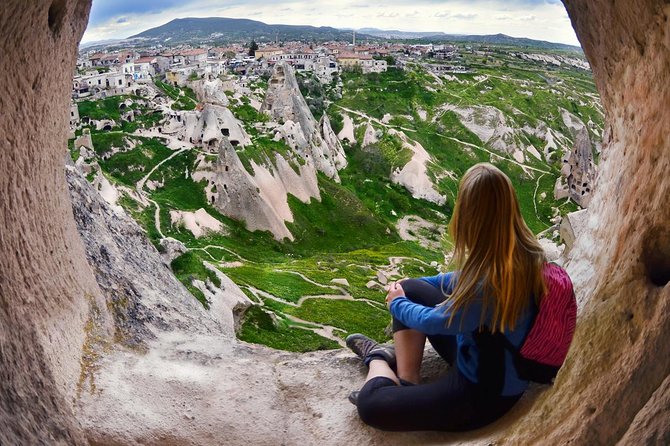
- 4 km hiking section in Red Valley areas with fairy chimneys, cave churches, and cave tunnels (bring comfy shoes).
- Underground-city experience that includes spaces for everyday life, not just show rooms.
- Lunch in a local restaurant so you’re not hunting for food mid-tour.
- Hotel pickup and drop-off that saves you time (and headaches) during a full day.
- Photo stops and viewpoints around Göreme and the pigeon-house cliff zones.
Why this hike-and-underground day feels worth your time
This is the kind of Cappadocia day that helps everything click. Instead of treating the region as a list of sights, you get a rhythm: walk above ground to understand the geography (valleys, rock cones, fairy chimneys), then go underground to see how people adapted to the rock and the threats of the past.
The value here isn’t just that you see several big names in one go. It’s that the tour connects the dots. When you walk through a valley lined with cave churches and carved spaces, you start to grasp why people chose these areas in the first place. Then, when you step into an underground city, the caves stop feeling random. They feel like an extension of what you just walked through.
The tour also keeps things grounded and practical: pickup, a structured route, and included entrance coverage where listed as included. You’ll still want to think about comfort and pacing, because this is built as a full day, not a short outing.
You can also read our reviews of more city tours in Goreme
Getting started in Göreme: easy pickup, quick orientation
The day typically begins at 9:30 am, with pickup from your hotel lobby. That matters in Cappadocia, where distances add up and parking is not always your friend. With pickup handled, you can focus on the sights instead of negotiating with traffic and timing.
Early on, you may stop at Göreme Panorama for wide views over the fairy-chimney skyline and the valleys stretching into the distance. It’s a good way to “get your bearings fast,” because later parts of the day make more sense once you’ve seen the overall shape of the area.
There’s also often a stop connected to Göreme Onyx, where craftsmen shape volcanic stone into jewelry and ornaments. This isn’t required for everyone, but it’s a quick cultural angle. If you’re not interested in shopping, you can treat it as a short break and focus on what you’ll actually be walking to later.
The Red Valley style hike: 4 km of history you can feel
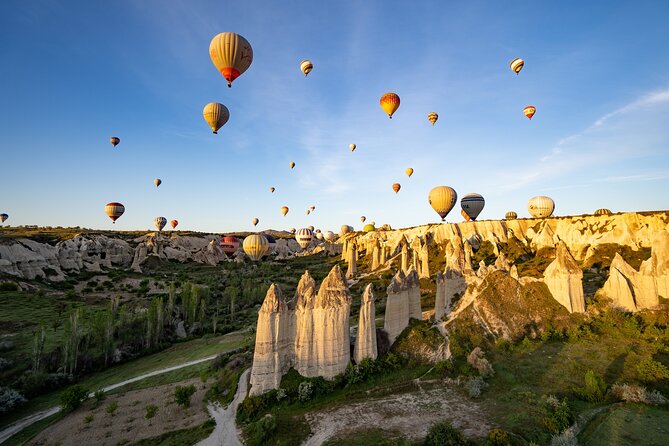
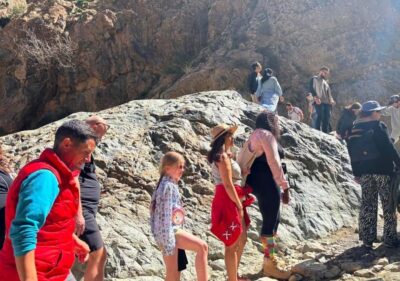
One of the core experiences is a guided walk through a Red Valley area known for rock tones—pink, red, yellow, and orange. This is the part of the day where the terrain starts doing the storytelling. Fairy chimneys rise like natural sculptures, and you’ll see evidence of human use: cave churches, cave houses, and cave tunnels.
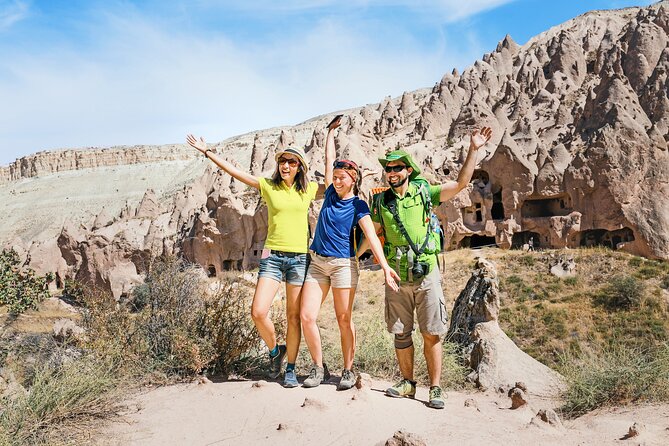
The hike itself is about 2.5 miles (4 km). That’s long enough to feel like a real outing, but short enough that you can do it without needing marathon legs. Still, I’d treat it as moderate walking. Wear shoes you trust. The ground can be uneven, and you’re on foot for most of the valley stretch.
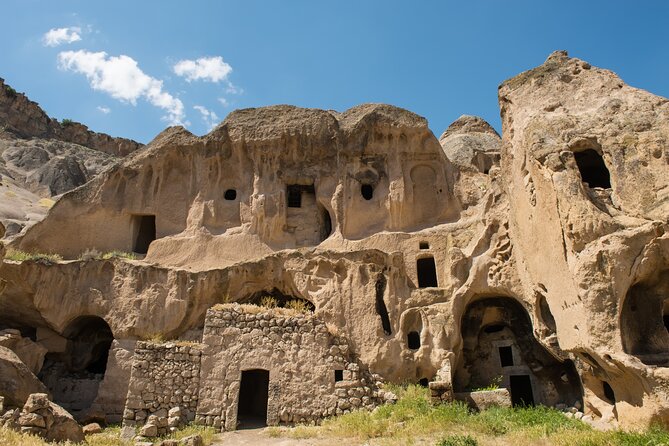
What makes this segment satisfying is the mix of “scenery” and “infrastructure.” Cave churches aren’t just a pretty backdrop. They show worship spaces carved into the rock. Cave tunnels and houses hint at how people lived and moved through the area. Even if you’re not a history buff, you’ll get a strong sense of adaptation—people shaped their environment instead of fighting it.
If you’re traveling with kids, it can work well for families as long as everyone is comfortable walking and taking breaks. The best approach is a steady pace with a few photo pauses, not racing between viewpoints.
Cavuşin rock churches and panoramic viewpoints
After the valley walk, you’ll head toward Cavuşin, an old Greek village where rock-cut churches were carved and used long ago, then abandoned centuries ago. The focus here is on what’s left: ruined churches you can walk toward, plus views back across the valleys.
This is a good “breather” in the sense that it shifts you from continuous walking to more point-to-point exploring. It also gives you a bigger perspective. Standing on the hill area, you start to see how Red Valley and neighboring valleys interact—where the rock formations cluster, and how the terrain funnels you through the region.
If you like photos, this is prime time. If you’re less photo-driven, it’s still useful because it clarifies where you’ve been and where you’re going next.
Underground city time: Kaymaklı/Derinkuyu energy and practical comfort
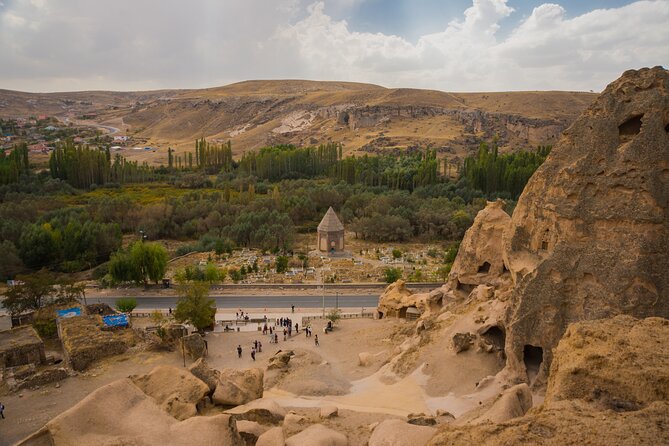
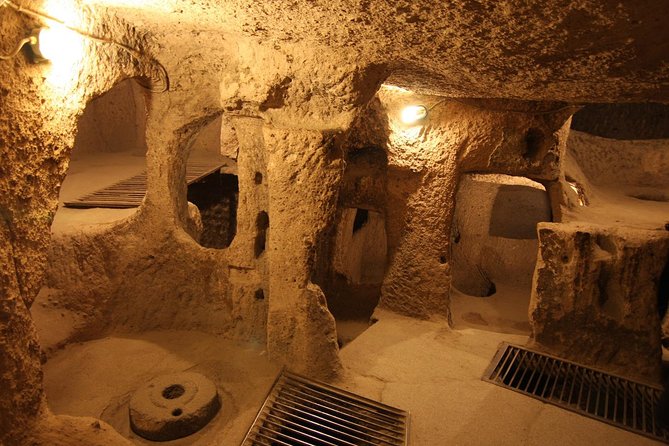
The underground-city portion is the emotional centerpiece of the tour. Your route may feature Kaymaklı or Derinkuyu as the subterranean highlight, but either way the format is similar: corridors, rooms, and life spaces carved into volcanic rock.
This is not a quick glance-and-go. You’ll spend about an hour exploring inside, moving through church spaces, rooms, kitchen areas, and stairs built into the layout. That’s what makes it memorable. You’re not just looking at a model. You’re walking through what people used to occupy and navigate.
One important consideration: the underground city can feel claustrophobic. If you get anxious in enclosed spaces, take that seriously. Even if you’re fine with caves generally, the underground setting has tight passages and a low, enclosed feel. I’d rather you plan for a calmer day than force it and hate the experience.
The good news is that the guiding helps. When someone explains how the caves were organized—wells, corridors, rooms—you’re better able to orient yourself while you’re inside.
You can also read our reviews of more hiking tours in Goreme
Lunch and breaks: where you recharge before the later sights
You’ll have lunch in a local restaurant included. This is a big deal for value, because full-day tours often leave you paying extra for meals on your own. Here, at least the main meal is handled.
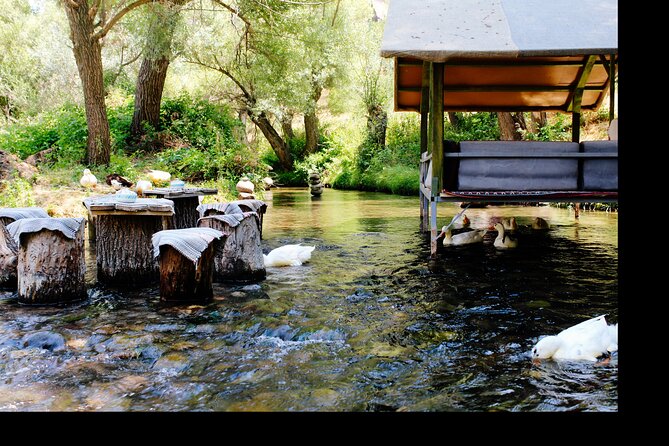
Depending on the exact route you’re on, lunch can be tied to village stops like Belisırma in the Ihlara-area setting, which is known for a riverside break. Even without getting overly detailed, the point is simple: you get a proper sit-down meal before the afternoon continues with walking and viewpoints.
Bring the mindset of a day that includes both hiking and indoor exploration. That means eat like you’ll still be active afterward: don’t go super light, but don’t overdo it either.
Ihlara Valley canyon walk and the green-side scenery
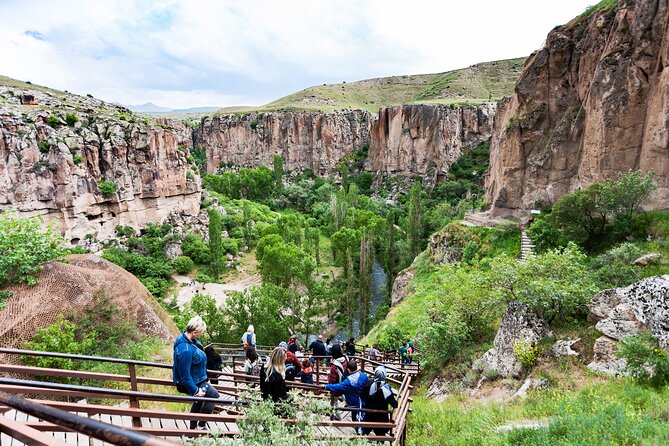
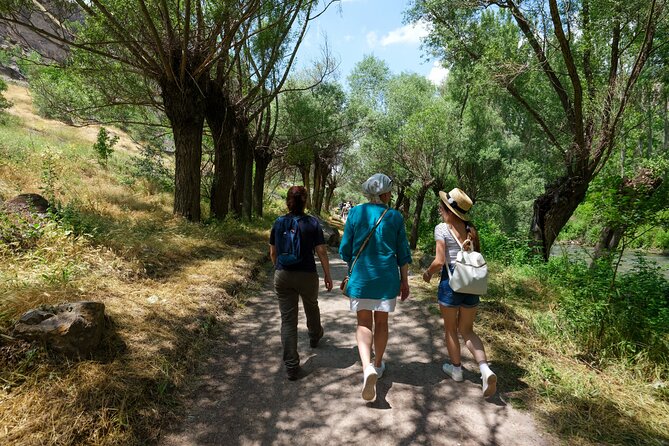
Some departures add a canyon walk through Ihlara Valley, which runs through lush greenery and includes rock-carved churches. This isn’t the same feel as Red Valley. It’s more shaded and green, and it tends to feel like a different mood shift in Cappadocia.
The walk portion is timed (around 50 minutes in the itinerary details), and while exact entrance status can vary by site, the idea is consistent: you’re getting another guided step into the rock history, this time in a canyon setting rather than open valley formations.
If you’re planning what to wear, keep it simple: comfortable shoes first. If the day turns warm, you’ll appreciate breathable layers because you’re moving outdoors.
Pigeon Valley and Ortahisar rock castle moments
Later in the day, you’ll often get time in Pigeon Valley, known for pigeon houses carved into cliff walls and cave dwellings worked into the rock. Even in short stops, pigeon houses give you a vivid sense of how people used the rock beyond the big religious sites.
If Ortahisar is included on your route, you’ll also get a view of the rock castle—a fortress carved into a massive chimney-like rock. It’s one of those “how did they build their lives around this?” moments that sticks.
These final segments are great for two reasons. First, they’re visually rewarding. Second, they don’t require the same level of effort as the underground-city walking. It’s a good close to a full day.
What the price covers (and how to think about entrance fees)
The listed price is $42.17 per person for about 7 to 8 hours of guided touring. That’s fairly strong value when you factor in hotel pickup/drop-off, a licensed guide, and lunch.
Entrance fees are where it gets a little tricky in the details you’ll see at booking. The tour description says entrance fees are included, but specific site notes also mention that certain tickets may not be included unless you select the option (with an approximate extra cost around €20). Here’s the practical approach: before you finalize, check your booking notes for whether the underground city and any canyon-side churches require separate payments on your exact departure.
Also remember that beverages aren’t included, so budget for water and any drinks you want.
Pace, group size, and what to pack
This tour caps at 15 travelers, which helps keep the day from feeling chaotic. With hotel pickup and a route that runs across multiple zones, you’ll still feel the schedule. Plan on being on the go most of the day.
What to pack:
- Comfortable walking shoes (really—this is not the day for flimsy sandals)
- A light layer (mornings and shaded canyon spots can feel cooler)
- Sunglasses and sunscreen (valley viewpoints can be bright)
- A small daypack for water and a snack
- Camera or phone with enough space for long photo sequences
If you’re sensitive to stairs or tight spaces, consider the underground city carefully. The experience is worth it for many people, but it’s also the part where comfort varies the most person to person.
Guides and service quality: the small details that matter
One of the best parts of this tour style is the way the guide connects what you’re seeing to why it mattered. A named highlight from past tours is Medina, who shared detailed history while keeping the day moving.
Service also shows up in the basics: safe, careful driving and an organized flow between stops. That’s not glamorous, but it’s what makes a 7–8 hour day feel manageable instead of stressful.
Should you book this tour?
Book it if you want a single full-day plan that blends Cappadocia hiking with a genuine underground-city visit, plus lunch and pickup so you don’t have to wrestle logistics.
Skip or choose carefully if:
- You’re strongly claustrophobic or really dislike enclosed spaces.
- You don’t handle moderate walking well (the 4 km hike portion plus additional valley time adds up).
If you can handle a full day and you’re excited by cave churches, carved life spaces, and dramatic rock formations, this is a solid way to see multiple sides of Cappadocia without spending your trip piecing everything together yourself.