REVIEW · NICOLOSI
Etna Summit Craters
Book on GetYourGuide →Operated by ETNA QUAD E TREKKING · Bookable on GetYourGuide
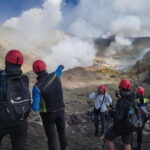
Sicily’s volcano hike turns the volume up. On this Etna day trip, you ride up, then hike into active summit craters at 3,340 meters, seeing where explosive activity has shaped the mountain. The craters are ringed by sulfur-filled depressions, and the whole place feels powerful in a way few other sites do.
I love that you go with qualified volcanological and alpine guides, and you get real safety talk before you move. I also like the on-foot focus: recent lava flows, major crater areas like Bocca Nuova and Voragine, and the Belvedere della Valle del Bove viewpoint after the summit.
One drawback: this is a challenging hike with lots of altitude. It’s strictly not for people with heart problems (or similar limits), and it’s not a gentle stroll even if you’re fit.
In This Review
- Key highlights worth knowing
- Etna Summit Craters: what makes this hike different
- Meeting at Bar Ristorante Crateri Silvestri, then heading uphill
- Cable car up, then the 4×4-style push toward 2,800 m
- From 2,800 m to 3,340 m: the rhythm of a real summit trek
- Summit crater walk: Bocca Nuova, Voragine, and the active cone zones
- The Belvedere della Valle del Bove viewpoint after the summit
- Laghetto crater cone and the finish back by cable car
- What’s included: guides, gear, and the small things that save your trip
- Price and value: what $70 covers (and what to budget for)
- Difficulty and who should skip this one
- Best day conditions and what to bring with you
- How the guiding feels in real life
- Before you go: a simple checklist to feel confident
- Should you book the Etna Summit Craters hike?
- FAQ
- Where is the meeting point for the Etna Summit Craters excursion?
- How long is the hiking portion of the tour?
- What is the highest point you reach on the tour?
- What does the tour price include?
- What extra tickets do I need to pay on site?
- What languages are the guides available in?
- Is this tour suitable for children or for people with mobility issues?
Key highlights worth knowing
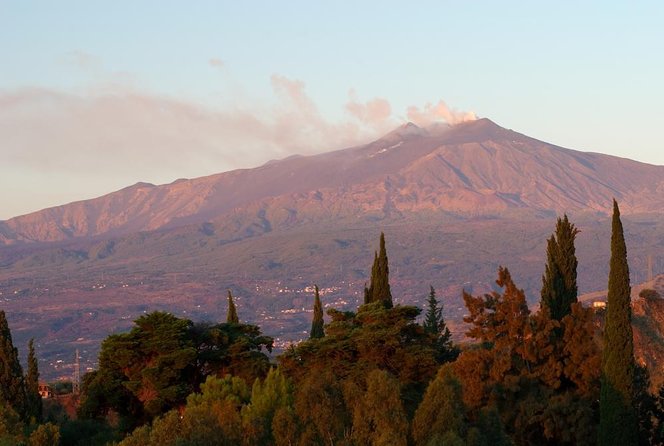
- Summit hike to 3,340 m with a total on-foot time of about 5–6 hours
- Guides with volcanology + alpine training, plus helmets, poles, and a safety briefing
- Walking through fresh lava and volcanic ash slopes on the way up and down
- Crater circuit views including Bocca Nuova, Voragine, and the Northeast and Southeast Craters
- Belvedere della Valle del Bove caldera viewpoint as a major payoff
Etna Summit Craters: what makes this hike different
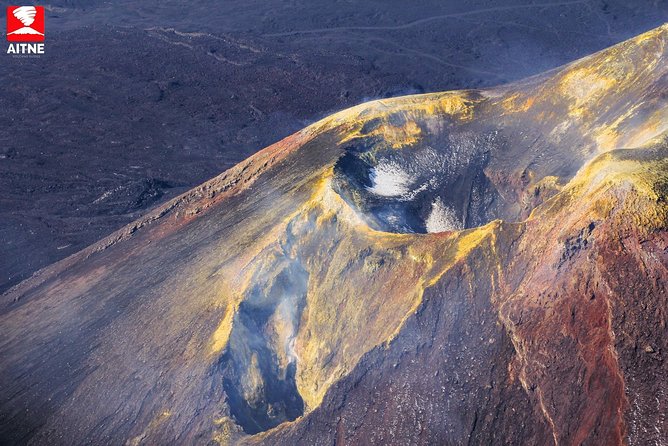
If you only do one Etna activity that feels like true “mountain time,” this is it. You’re not just stopping at a viewpoint. You’re walking through the mountain’s geology, moving from ash and slope to crater depressions and back again.
What makes it special is the combination of altitude and access. You reach the summit zone, then come away with a clear sense of how Etna’s activity works—faster than reading about it later. You’ll see craters linked to explosive phases and steam-and-sulfur areas that help explain the volcano’s constant changes.
Meeting at Bar Ristorante Crateri Silvestri, then heading uphill
Your day starts at Bar Ristorante Crateri Silvestri, where you meet the guide inside. This matters because the rest of the route is paced around the group, not around individual check-ins.
Once you’re grouped up, you’ll go for quick initial transport legs—short time on a cable car and then a bus/coach segment—before you settle into the longer guided phase on the mountain. The schedule is built around keeping you safe and together, especially at higher elevations where footing can change quickly.
Cable car up, then the 4×4-style push toward 2,800 m
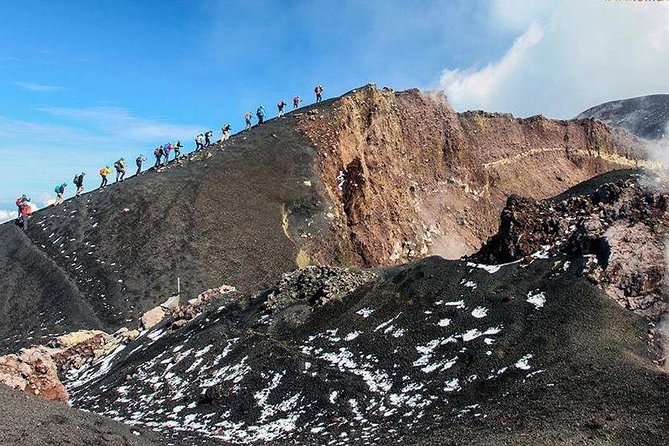
The big idea is altitude management. You don’t start the hike at base level; you’re lifted to around 2,800 meters before you continue on foot to the summit zone.
That matters because the climb is still serious, but it’s more focused. Instead of spending all day just gaining elevation, you spend your energy on the crater walk and the descent, which is where the real payoff is.
From 2,800 m to 3,340 m: the rhythm of a real summit trek
From the higher drop-off point, your route becomes a guided hike up to about 3,340 meters. You should expect a steady effort rather than a short photo sprint. The tour is designed for people used to challenging hikes, and that’s the honest baseline.
You’ll also get a safety briefing as you’re moving. It’s not just generic advice; it’s the kind of talk you want before you’re walking near volcanic terrain where footing and wind can matter.
And yes, you might smell the sulfur. That isn’t something you can “prepare” for like a language phrase, but it’s part of the experience. When the route lines up with crater depressions, the area feels more alive and active than you’d expect from a static map.
Summit crater walk: Bocca Nuova, Voragine, and the active cone zones
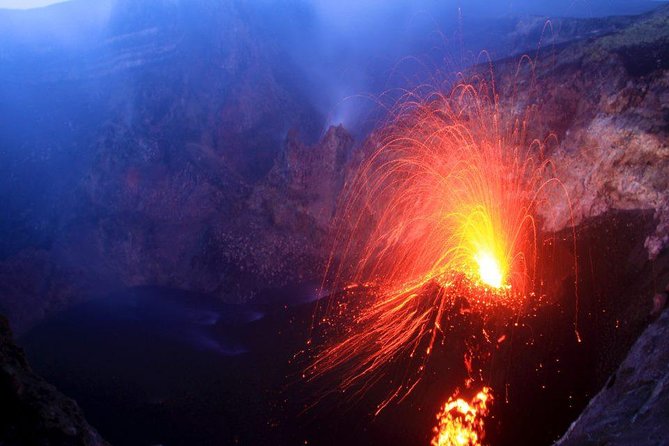
At the top, the tour becomes geology in motion. You’re moving through a crater world that includes active zones like Bocca Nuova and Voragine, plus the Northeast Crater and Southeast Crater areas you’ll be guided to observe.
The best part for me is that you’re not just looking down. You’re walking in proximity to where the volcano has been doing its work—so scale makes sense. The sulfur-filled crater depressions and the way the terrain is carved into bowl-like shapes make the volcano’s power feel real instead of abstract.
Recent lava flows are a key highlight too. Sometimes the “recent” part is what makes your brain click: this is not ancient scenery. It’s ground shaped by activity that’s closer to your own timeline.
The Belvedere della Valle del Bove viewpoint after the summit
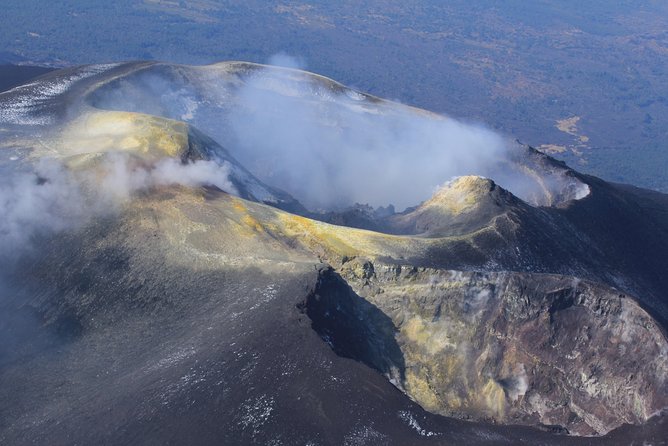
After you’ve taken in the craters, you don’t head straight back down to the same place. You descend on foot along slopes of volcanic ash, which changes how the hike feels underfoot—more loose, more shifting, more demand on balance.
Eventually you reach the Belvedere della Valle del Bove, an incredible caldera belonging to ancient eruptive centers. This is where the day expands from “active summit” to “bigger volcanic system.” You start to see how old eruption centers connect to the larger shape of Etna.
This portion is also a mental reset. The summit area can be intense; the viewpoint gives you a wider frame and lets you appreciate why the mountain is so complex. It’s the kind of stop where your photos will not fully capture the scale, but you’ll still want them.
Laghetto crater cone and the finish back by cable car
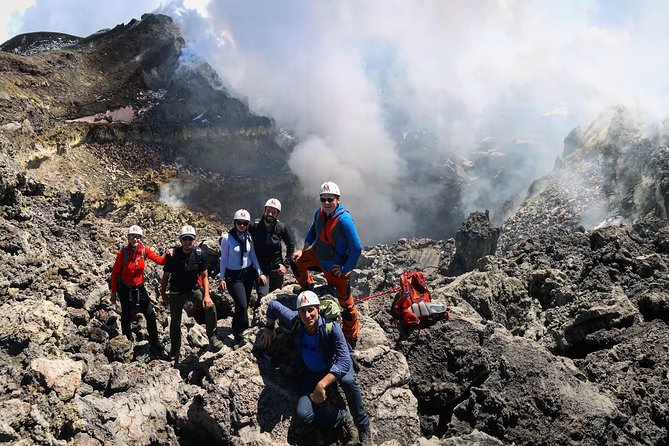
Before you wrap up, the route skims past the eruptive cone of the “Laghetto” crater. You’re still on a hiking track, but this part feels like the final act before the easier return.
Then you reach the cable car terminal, and the cable car takes you back comfortably to the starting area near Rifugio Sapienza (about 1,900 m). It’s a good contrast: a challenging stretch on foot, followed by a relief moment where your legs can cool down while you watch the slope drop away.
What’s included: guides, gear, and the small things that save your trip
This excursion is built around safety and readiness, not just “show up and go.” You get volcanological or mountain guide service, and you also get gear designed for this kind of ground.
Included items:
- Hiking shoes with high collar
- New socks
- Windbreaker
- Trekking poles
- Protective helmet
These details matter on Etna. High-collar shoes and poles help with traction and stability, especially when ash slopes start testing your balance. A helmet isn’t something you think about until you’re on rugged terrain near rock and crater edges, so having it provided keeps the day more straightforward.
There’s also a practical food benefit: a 20% discount on sandwiches, snacks, and drinks. Even if you pack a plan, you may end up buying something on the mountain.
Price and value: what $70 covers (and what to budget for)
The listed price is $70 per person, and that’s a solid baseline for a guided, altitude-focused volcanic hike. But you should budget for two day-of transport costs you pay on site:
- Cable car ticket: €52
- Bus/coach (4×4 style) ticket: €25
So you’re looking at a total that’s more than the $70 headline figure. Still, you’re not paying again for the essentials that can add up elsewhere: guide expertise and the trekking gear (shoes, poles, helmet, windbreaker, socks).
If you were planning to rent boots or hunt down basic gear, this format can feel like better value. If you already travel with your own proper footwear and poles, the financial benefit drops, but the guided crater access is still the main cost driver.
My take: treat it as a full-day activity with real logistics, not a cheap add-on.
Difficulty and who should skip this one
This is a challenging hike. The route includes meaningful elevation change, crater walking, and descent over volcanic ash. The tour specifically says it’s suitable only if you’re accustomed to challenging hikes.
It’s strictly not recommended for:
- People with heart conditions
- People with high blood pressure
- People who are unfit
- Children under 10
- Pregnant women
- People with mobility impairments or wheelchair users
- People afraid of heights or with vertigo
- People with epilepsy
- People with haemophilia
- People with recent surgeries
- People over 95
Even if you’re healthy, consider how altitude affects you. One helpful signal from past experiences: guides can be very considerate and keep checking in, but the hike itself is still high-altitude and physical.
Best day conditions and what to bring with you
The tour provides key gear, but you still need personal items. Recommended equipment includes:
- Long pants
- Cap
- Gloves
- Sunglasses
- Protective creams
- Scarf
You’ll likely want layers. Etna can feel different between lower and summit elevations, and wind is a factor you’ll appreciate being able to manage. A scarf and gloves are not about style; they help you stay comfortable when the temperature drops or the wind picks up.
Also bring your own sunglasses even if you think you won’t need them. Bright light and high elevation can make glare feel intense fast.
How the guiding feels in real life
One reason this hike earns strong ratings is how the guides handle people. I’ve seen that the tone is careful: guides keep an eye on how you’re doing, ask if you’re okay, and adjust the pace when needed.
Names that come up in real experience include Peppe, Giuseppe, and Giovacchino. Beyond the name, the pattern is the same: informative talk about what you’re seeing, delivered in a way that keeps you focused on safety and enjoyment. You should expect explanations tied to what’s around you, not a lecture that floats above the hike.
Before you go: a simple checklist to feel confident
You’ll feel better if you plan your day like a hike, not like a sightseeing loop. Here’s what I’d do to stay comfortable:
- Wear long pants and sturdy high-traction shoes (you’ll be given boots, but confirm they fit right)
- Bring gloves, a cap, and sunglasses from the recommended list
- Use trekking poles you’re given if you have balance concerns
- Plan for 5–6 hours of hiking time on foot
- Don’t assume lava will be visible; sometimes you may see lava activity and sometimes the terrain is more about crater shapes and ash
Should you book the Etna Summit Craters hike?
Book it if you want the real Etna experience: active summit craters, a serious on-foot walk, and a guided route that explains the volcano as you move through it. The included gear and specialist guide service make it easier than doing this kind of hike independently.
Skip it if you don’t handle altitude well, if you’re managing medical limitations listed by the tour, or if you’re looking for a casual “mostly flat” outing. This is a day for steady hikers who want to earn their views.
If you fit the challenge level, you’ll come away with a sharper sense of how Etna works—because you walked through it.
FAQ
Where is the meeting point for the Etna Summit Craters excursion?
You meet your guide inside Bar Ristorante Crateri Silvestri.
How long is the hiking portion of the tour?
The hike lasts about 5–6 hours.
What is the highest point you reach on the tour?
You reach the Summit Craters at around 3,340 meters.
What does the tour price include?
The price includes the guide service (volcanological or mountain guide), hiking shoes with high collar, new socks, a windbreaker, trekking poles, and a protective helmet, plus a 20% discount on sandwiches, snacks, and drinks.
What extra tickets do I need to pay on site?
You pay for the cable car ticket (52 euros) and the bus/coach ticket (25 euros) on site.
What languages are the guides available in?
The live tour guide is available in English and Italian.
Is this tour suitable for children or for people with mobility issues?
No. It is not suitable for children under 10, and it is also not suitable for wheelchair users or people with mobility impairments.